EduNinja
[Maximum number: 3]

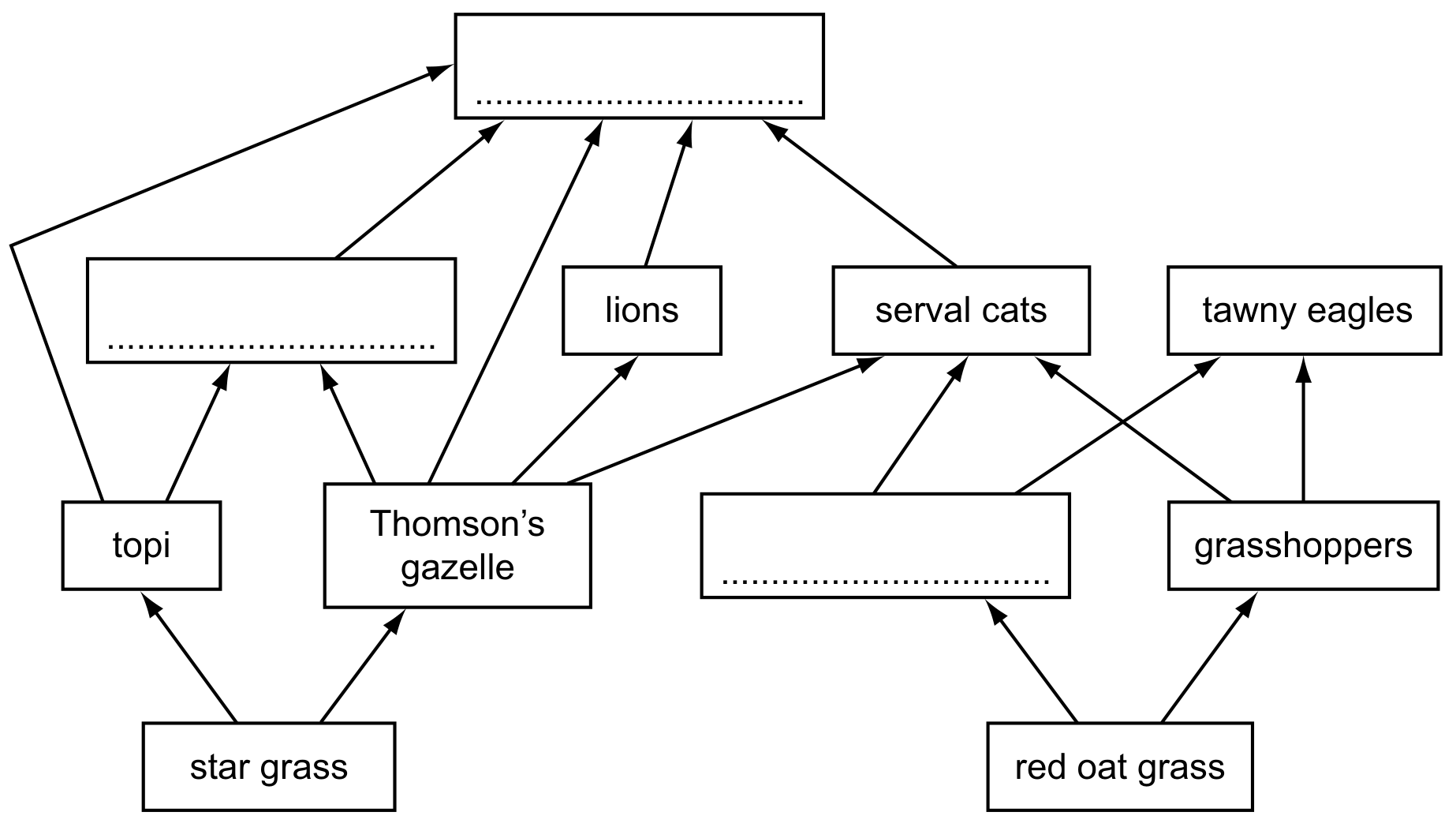
The dominant grass species in an African grassland ecosystem are star grass and red oat grass.
- Star grass is eaten by antelope species, such as topi and Thomson's gazelle.
- Smaller animals such as mice and grasshoppers feed on red oat grass.
- Topi and Thomson's gazelle are eaten by predators such as cheetahs, lions and serval cats.
- Grasshoppers and mice are eaten by serval cats and tawny eagles.
- Vultures feed on dead mammals.

Fig. 1.1 shows part of the food web for this ecosystem.
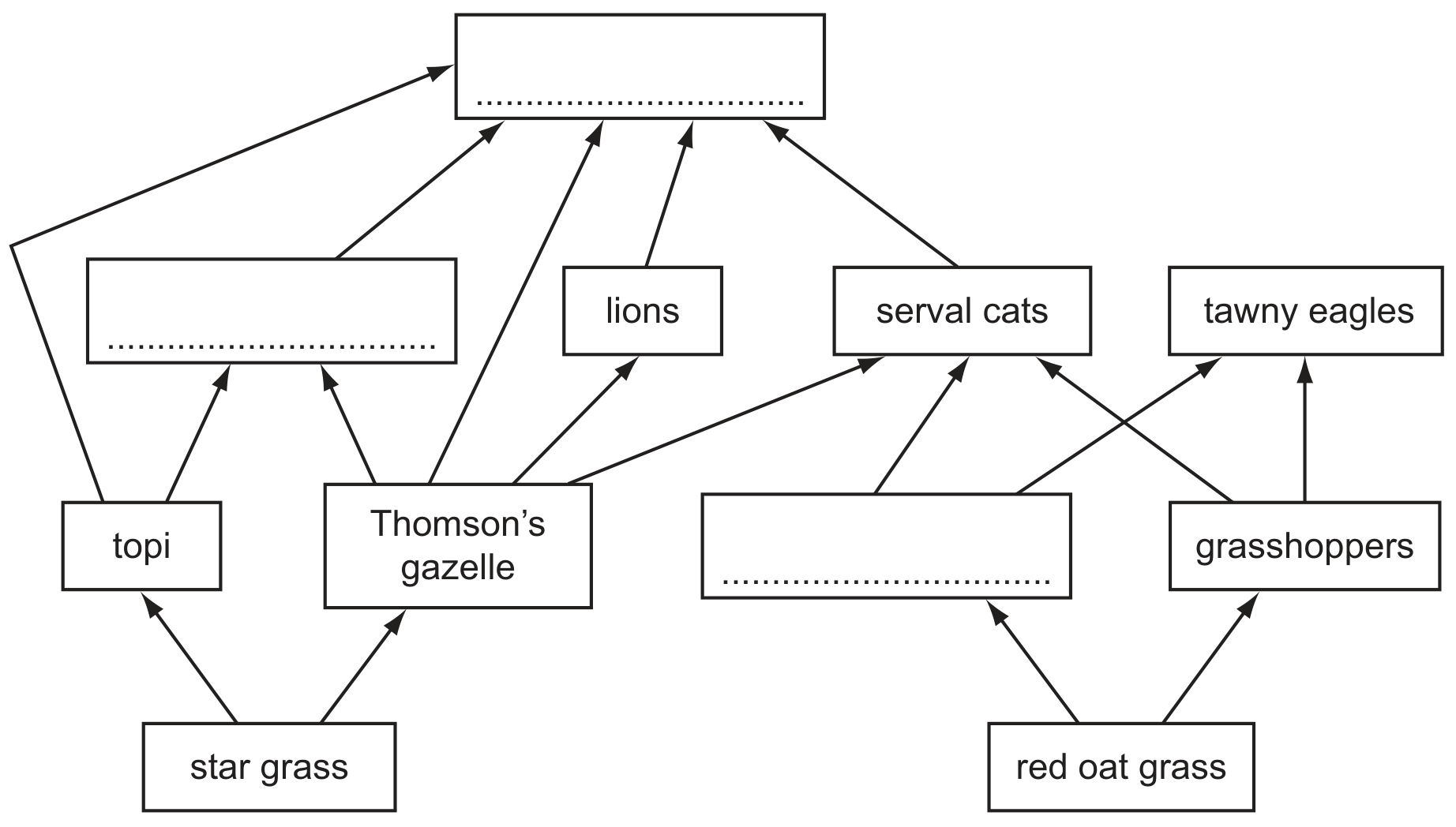
Fig. 1.1

Fig. 1.1

(a)

Fish such as salmon can be reared intensively in fish farms. They are fed on high protein food made from animals. When eating this food, the fish are feeding as secondary consumers.

Describe the disadvantages of intensive farming, such as salmon farming, for producing human food.
[ 3 ]
[Maximum number: 7]

Wheat is a crop plant grown to produce flour.

(a)

Farmers grow crop plants such as wheat to provide food.

[ 3 ]
(i)

The increasing human population is another reason for food shortages.

Explain how the increasing human population contributes to food shortages.

[ 3 ]
(b)

Many farmers grow crop plants as monocultures to improve yields.

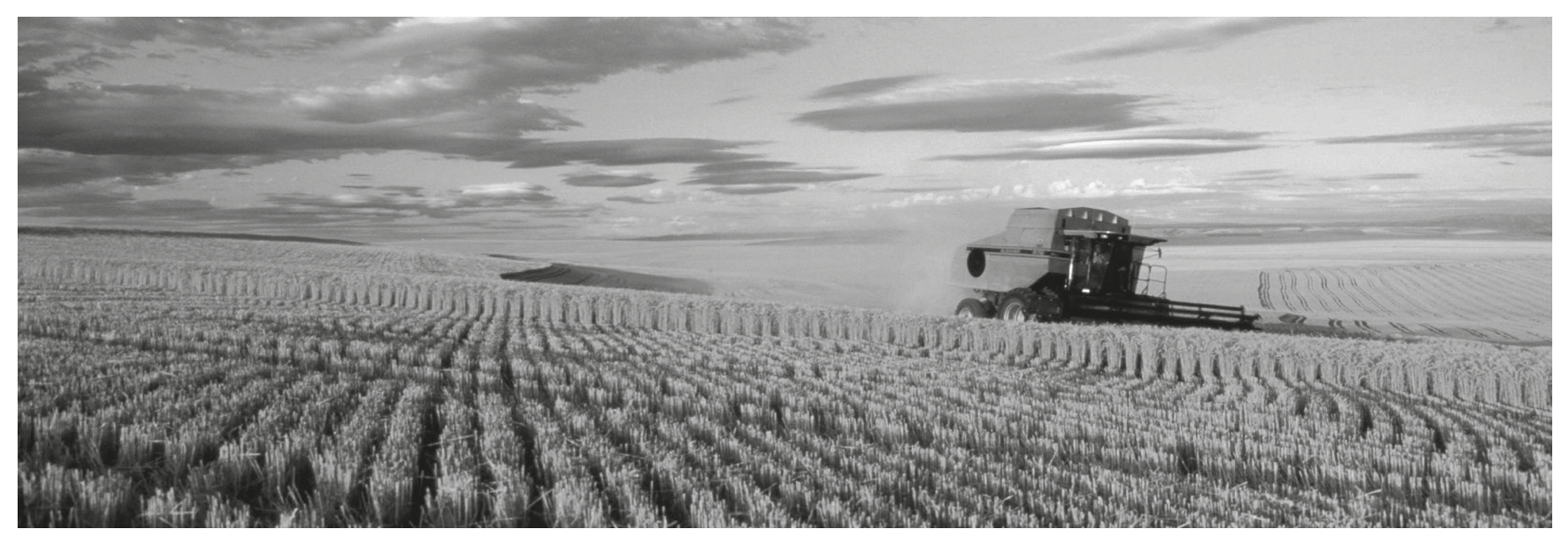
Fig. 1.1 shows a monoculture of wheat.

Fig. 1.1 shows a monoculture of wheat.

Describe the impact of large-scale monocultures on the environment.

[ 4 ]
[Maximum number: 3]

The dominant grass species in an African grassland ecosystem are star grass and red oat grass.
- Star grass is eaten by antelope species, such as topi and Thomson's gazelle.
- Smaller animals such as mice and grasshoppers feed on red oat grass.
- Topi and Thomson's gazelle are eaten by predators such as cheetahs, lions and serval cats.
- Grasshoppers and mice are eaten by serval cats and tawny eagles.
- Vultures feed on dead mammals.

Fig. 1.1 shows part of the food web for this ecosystem.

Fig. 1.1

Fig. 1.1

(a)

Fish such as salmon can be reared intensively in fish farms. They are fed on high protein food made from animals. When eating this food, the fish are feeding as secondary consumers.

Describe the disadvantages of intensive farming, such as salmon farming, for producing human food.
[ 3 ]
[Maximum number: 3]

Phloem is used to transport sucrose and amino acids in plants. Sucrose is a carbohydrate.

(a)

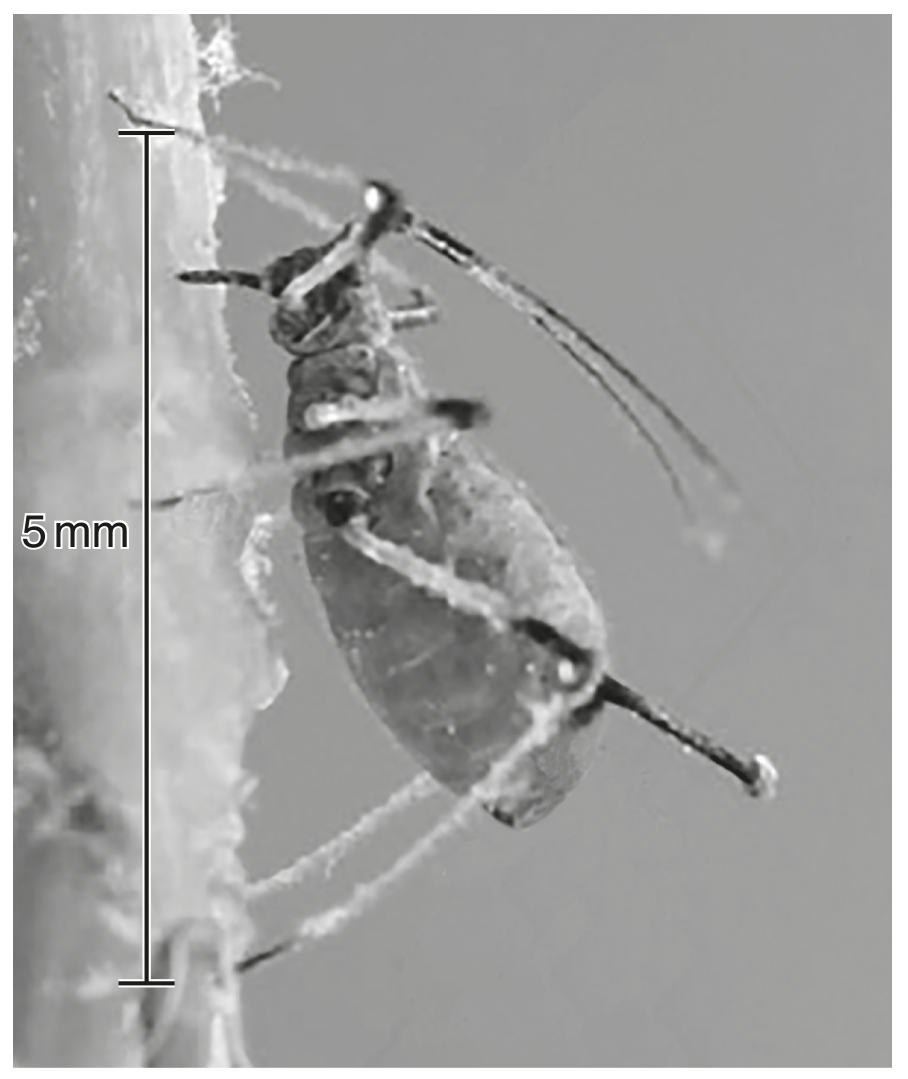
Aphids are used by investigators to discover how plants transport sucrose.

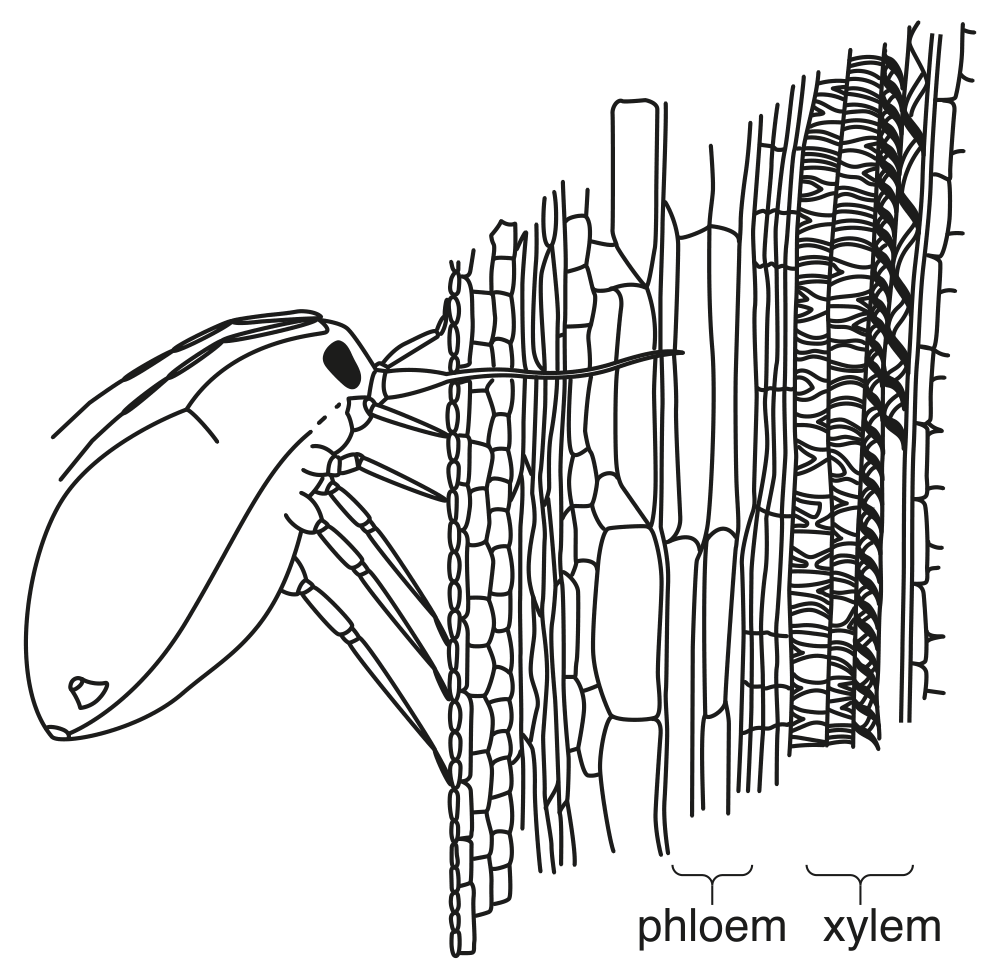
Fig. 2.2 shows an aphid with its mouthparts inserted into a plant stem to feed on the liquid in the phloem.

Fig. 2.2

Fig. 2.2

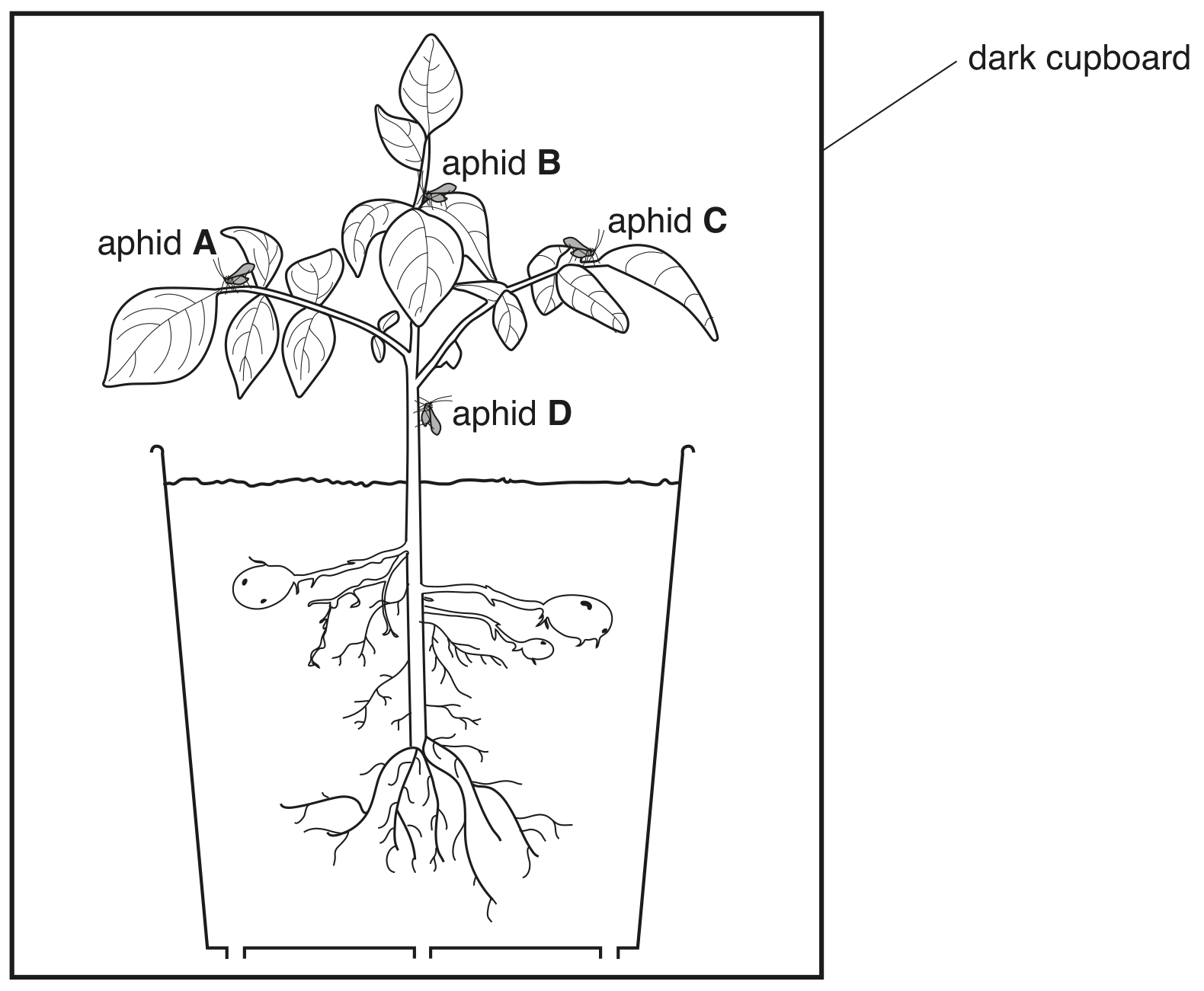
A plant was put in a dark cupboard for several days.
Four aphids, A, B, C and D, were then placed on the plant in the dark cupboard as shown in Fig. 2.3.

Fig. 2.3

Fig. 2.3

[ 3 ]
(i)

Many crop farmers try to prevent insects such as aphids from damaging their plants.

Describe how modern technology is used to reduce damage to crop plants by insects.

[ 3 ]
(a)

Some countries have invested in biofuels such as ethanol, biomass and biodiesel.

[ 4 ]
(i)

Some countries use large areas of land to grow maize plants. This crop plant can be used to produce biofuels.

Discuss the negative impact on the environment of growing large-scale monocultures of crop plants such as maize.

[ 4 ]
(a)

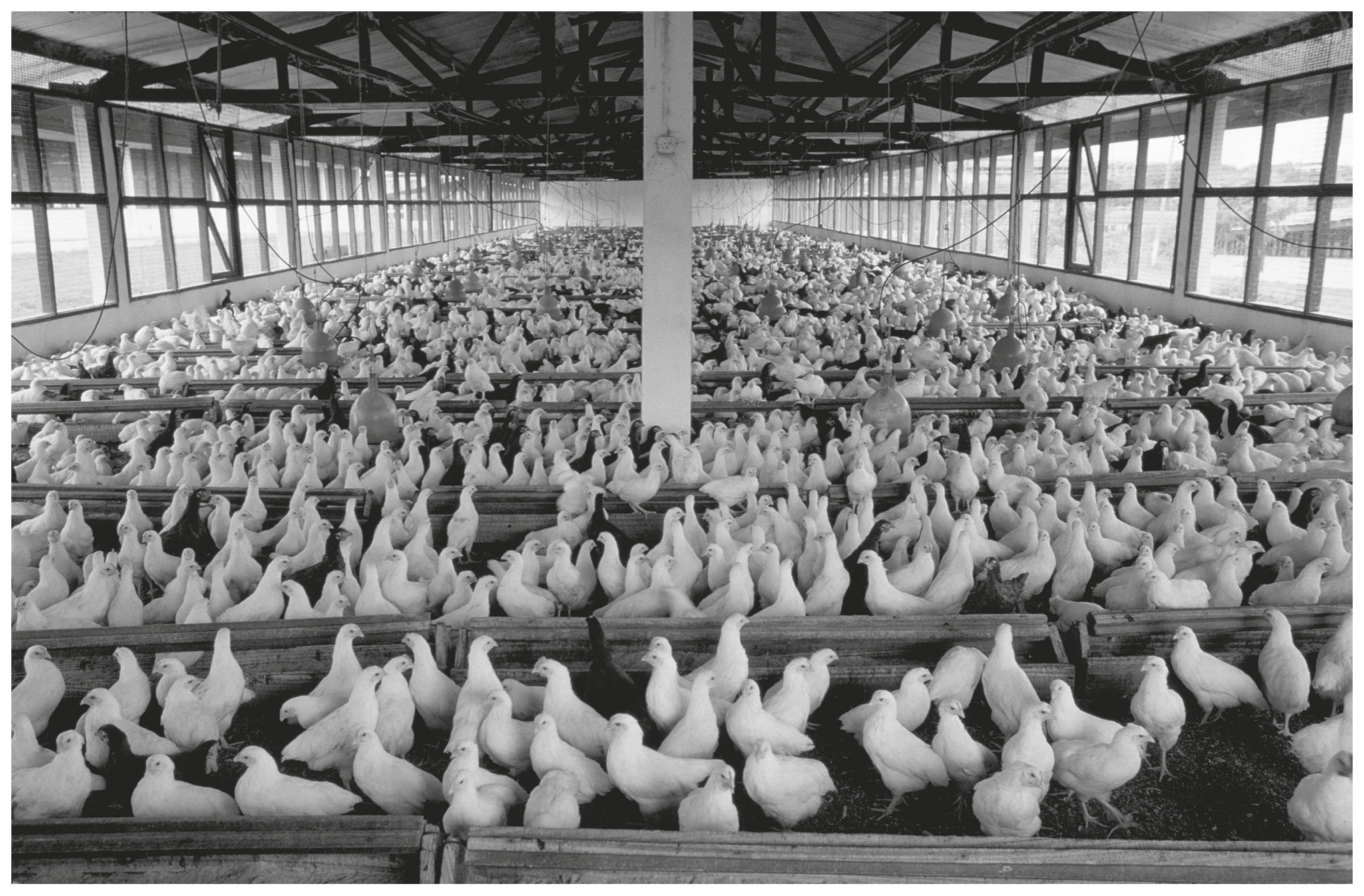
Intensive livestock production can be damaging to natural ecosystems.

Fig. 3.3 shows intensive farming of chickens.

Fig. 3.3 shows intensive farming of chickens.

[ 3 ]
(i)

Describe the negative impact on an ecosystem of the intensive production of livestock, such as chickens.

[ 3 ]
[Maximum number: 2]

Aphids are insects that feed on the phloem sap in plants.
Fig. 3.1 shows a diagram of an aphid with its mouth parts inserted into the stem of a plant.

Fig. 3.1

Fig. 3.1

(a)

Some farmers spray their crops with insecticides to kill pests such as aphids.

Explain the benefits of killing pests.

[ 2 ]
[Maximum number: 6]

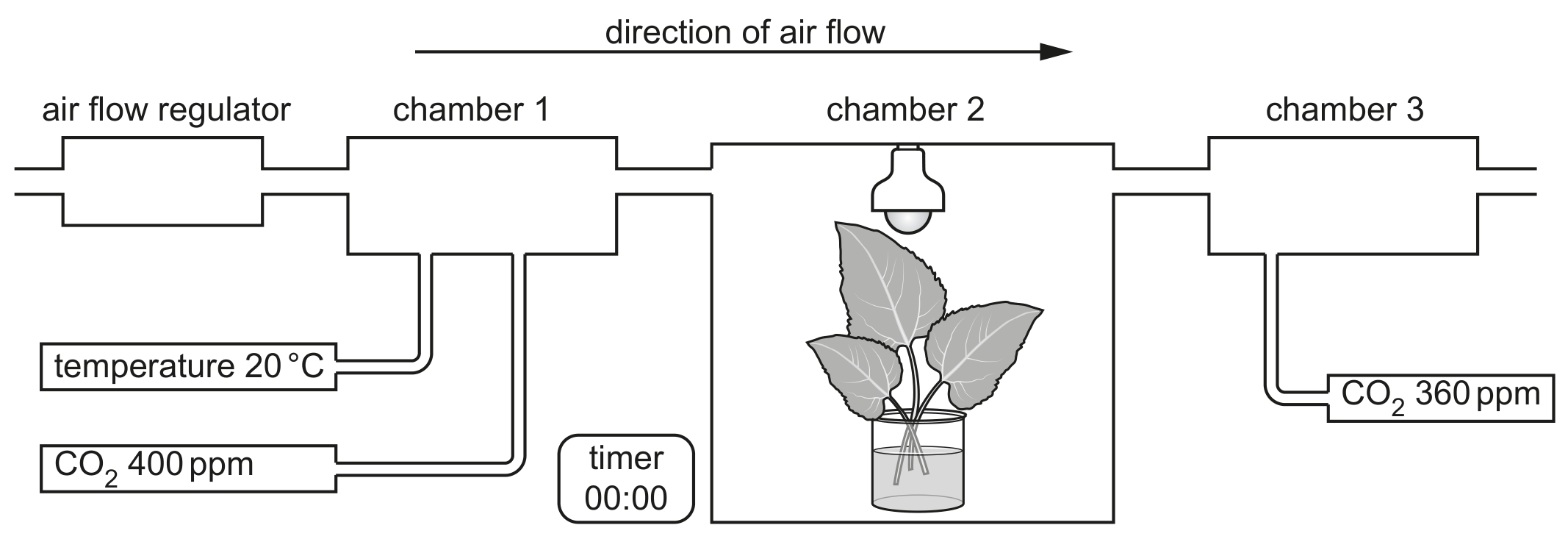
Scientists measured the rate of photosynthesis in the leaves of a sunflower plant, Helianthus annuus.

The scientists used the apparatus shown in Fig. 3.1 to measure the rate of photosynthesis.

Fig. 3.1

Fig. 3.1

(a)

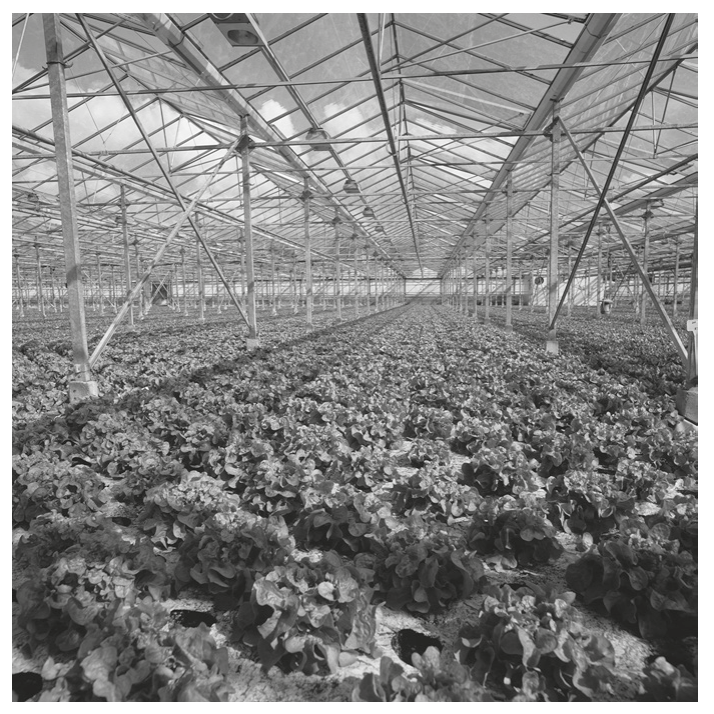
Some crops are grown in controlled environments. Glasshouses are an example of a controlled environment. Fig. 3.3 shows a glasshouse where lettuces are growing.

Fig. 3.3

Fig. 3.3

Discuss the advantages of growing crops in glasshouses.

[ 6 ]
(a)

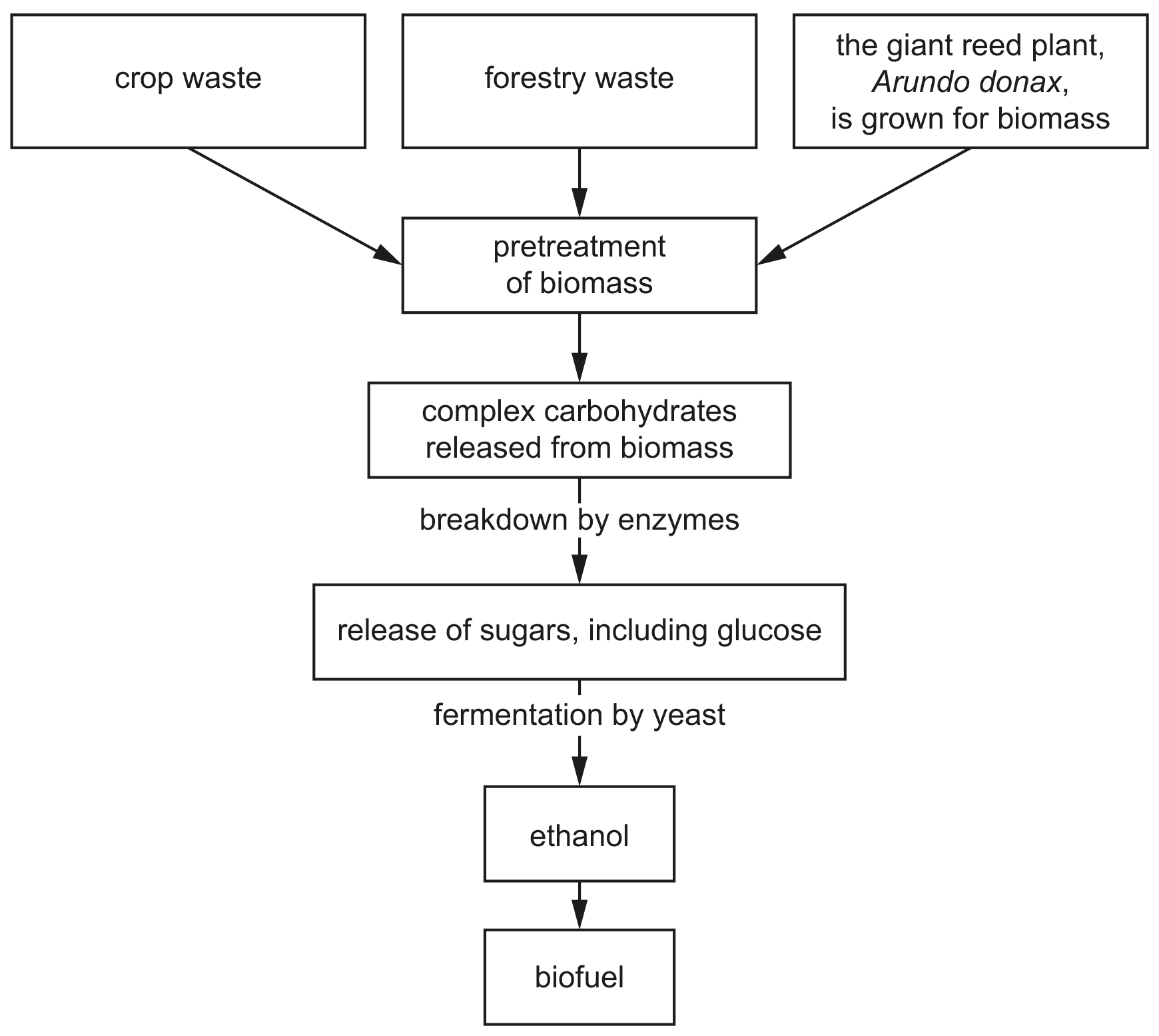
Fig. 4.1 is a flow chart showing some of the processes that occur in a biofuels power plant.

Fig. 4.1

Fig. 4.1

[ 5 ]
(i)

Using the information in Fig. 4.1, suggest the environmental advantages of using ethanol as a fuel.

[ 3 ]
(ii)

Farmers grow giant reed plants as monocultures.

Describe the disadvantages of growing giant reed plants to provide biomass for the production of biofuels.

[ 2 ]
(a)

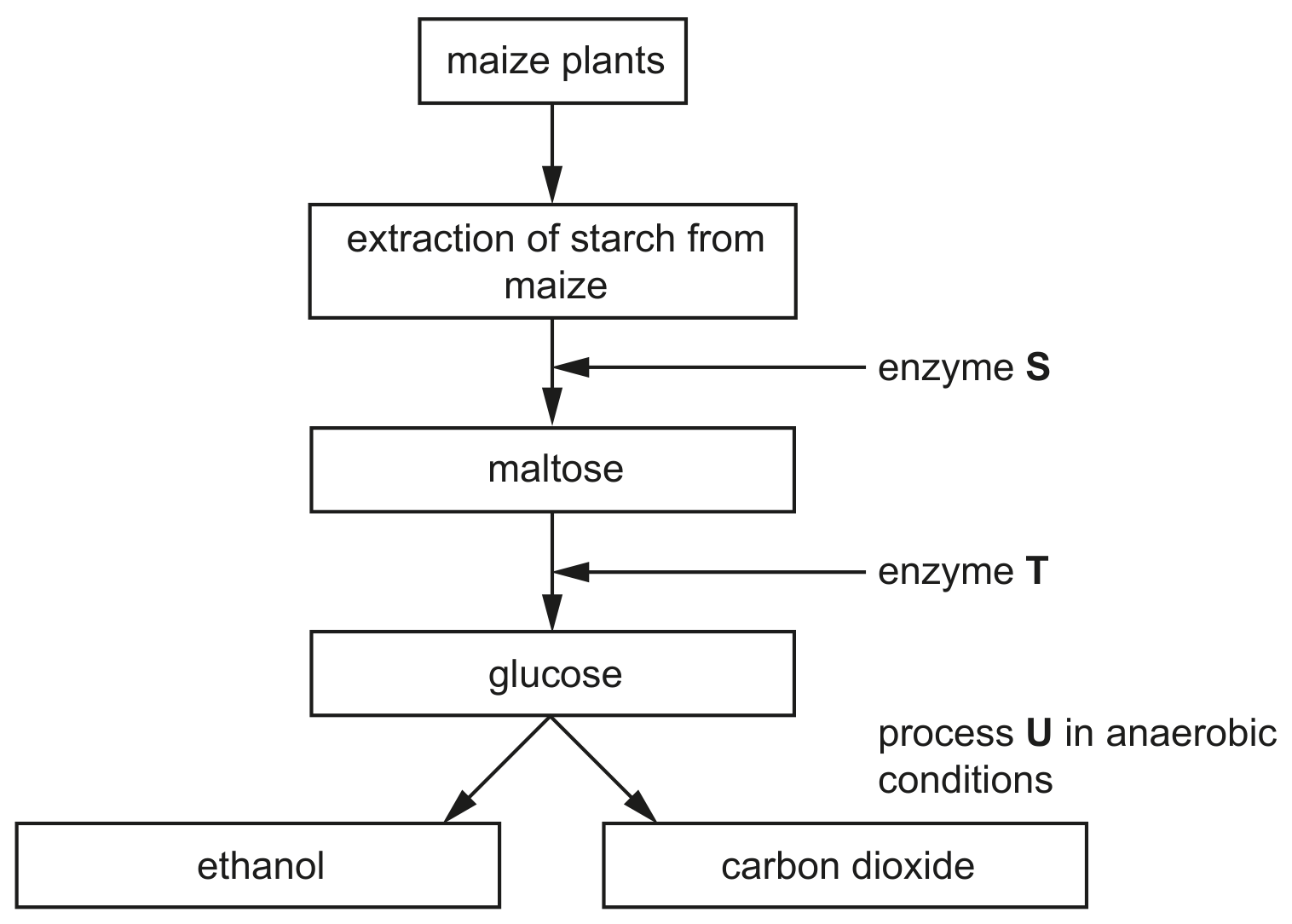
Yeast is used in the production of ethanol to manufacture a type of biofuel.

Fig. 4.2 is a flow chart of the process.

Fig. 4.2

Fig. 4.2

[ 3 ]
(i)

Suggest the advantages of using biofuels instead of fossil fuels.

[ 3 ]
0