EduNinja
[Maximum number: 8]

The dominant grass species in an African grassland ecosystem are star grass and red oat grass.
- Star grass is eaten by antelope species, such as topi and Thomson's gazelle.
- Smaller animals such as mice and grasshoppers feed on red oat grass.
- Topi and Thomson's gazelle are eaten by predators such as cheetahs, lions and serval cats.
- Grasshoppers and mice are eaten by serval cats and tawny eagles.
- Vultures feed on dead mammals.

Fig. 1.1 shows part of the food web for this ecosystem.
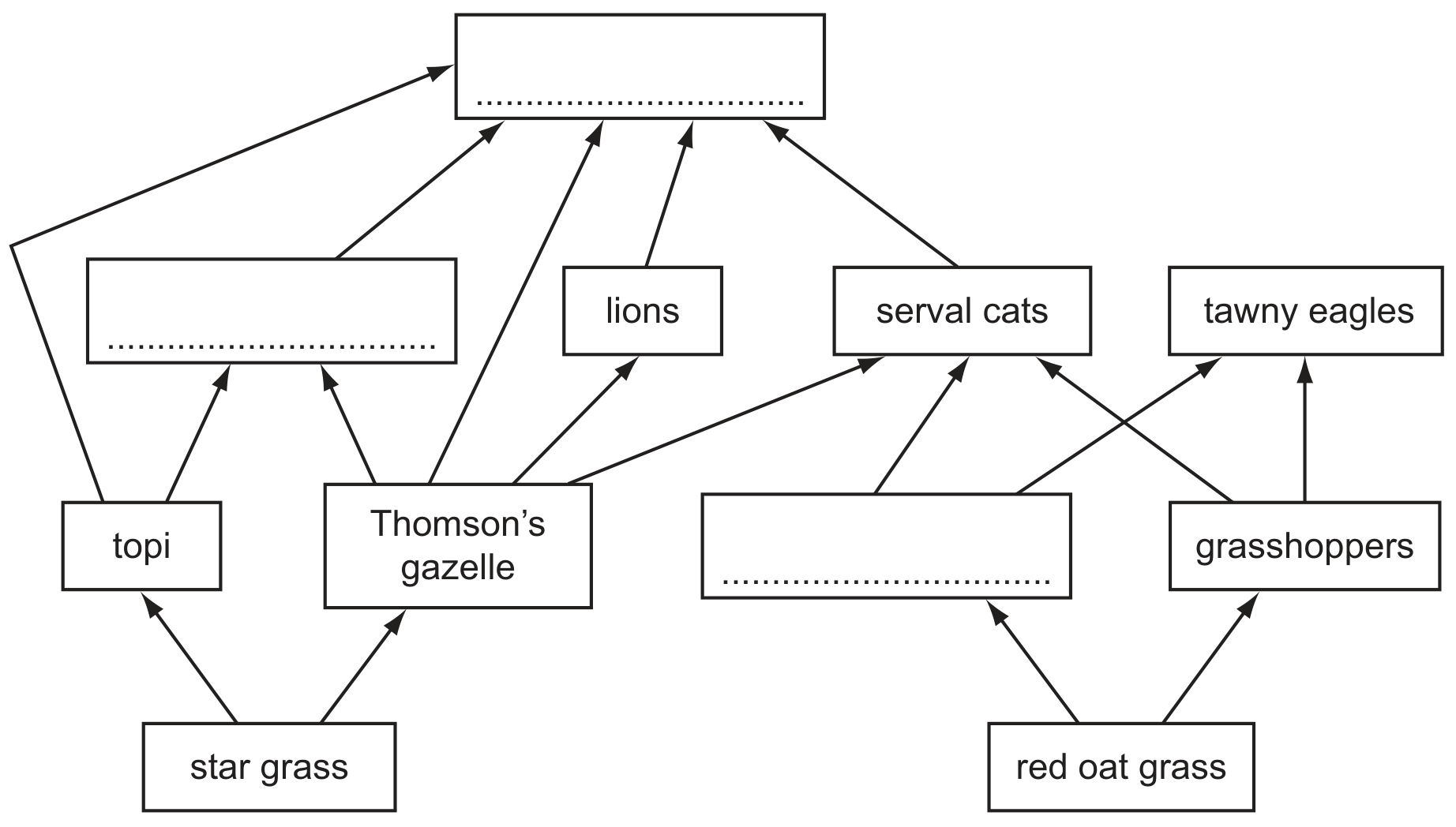
Fig. 1.1

Fig. 1.1

(a)

Complete the food web by writing the names of the correct organisms in the boxes in Fig. 1.1.

[ 3 ]
(b)

Name the trophic level of the following species.
star grass
topi

[ 2 ]
(c)

Explain why there are no more than four trophic levels in the food web shown in Fig. 1.1.

[ 3 ]
[Maximum number: 3]

Phytoplankton consist of many species of single-celled and many-celled algae.

(a)

Phytoplankton are photosynthetic organisms.

Describe the importance of phytoplankton in the food web of lake ecosystems.

[ 3 ]
[Maximum number: 8]

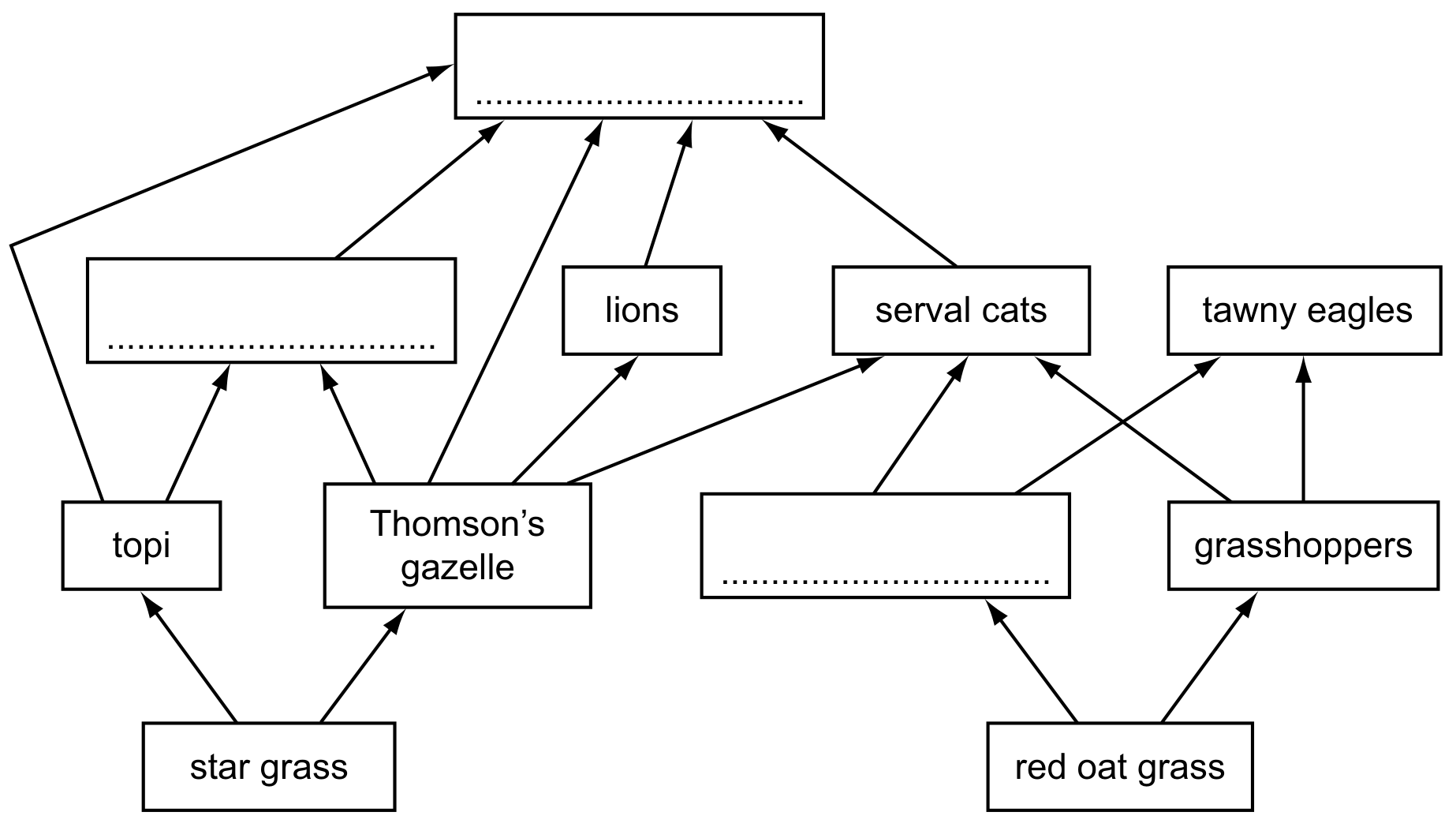
The dominant grass species in an African grassland ecosystem are star grass and red oat grass.
- Star grass is eaten by antelope species, such as topi and Thomson's gazelle.
- Smaller animals such as mice and grasshoppers feed on red oat grass.
- Topi and Thomson's gazelle are eaten by predators such as cheetahs, lions and serval cats.
- Grasshoppers and mice are eaten by serval cats and tawny eagles.
- Vultures feed on dead mammals.

Fig. 1.1 shows part of the food web for this ecosystem.

Fig. 1.1

Fig. 1.1

(a)

Complete the food web by writing the names of the correct organisms in the boxes in Fig. 1.1.

[ 3 ]
(b)

Name the trophic level of the following species.
star grass
topi

[ 2 ]
(c)

Explain why there are no more than four trophic levels in the food web shown in Fig. 1.1.

[ 3 ]
(a)

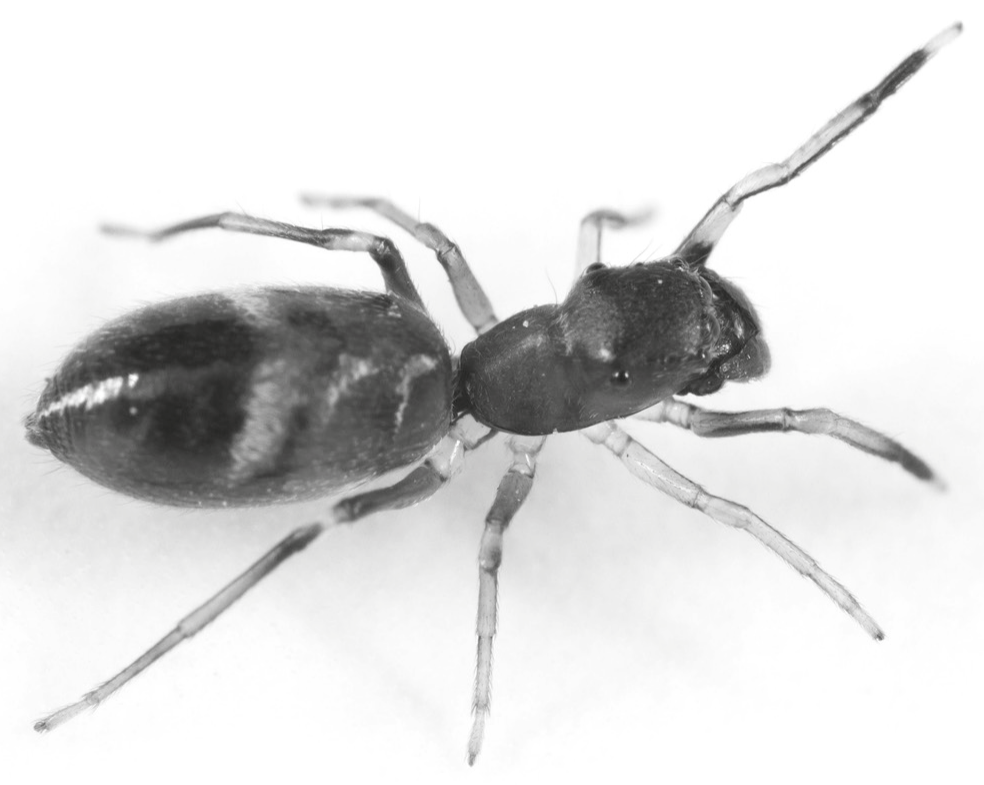
The ant-mimic jumping spider, Myrmarachne formicaria, is shown in Fig. 1.1.
The common name of this species describes its behaviour. It is an arachnid that tricks its prey because it looks like the insects that it eats.

Fig. 1.1

Fig. 1.1

[ 1 ]
(i)

Suggest which trophic level in a food chain M. formicaria could belong to.

[ 1 ]
[Maximum number: 6]

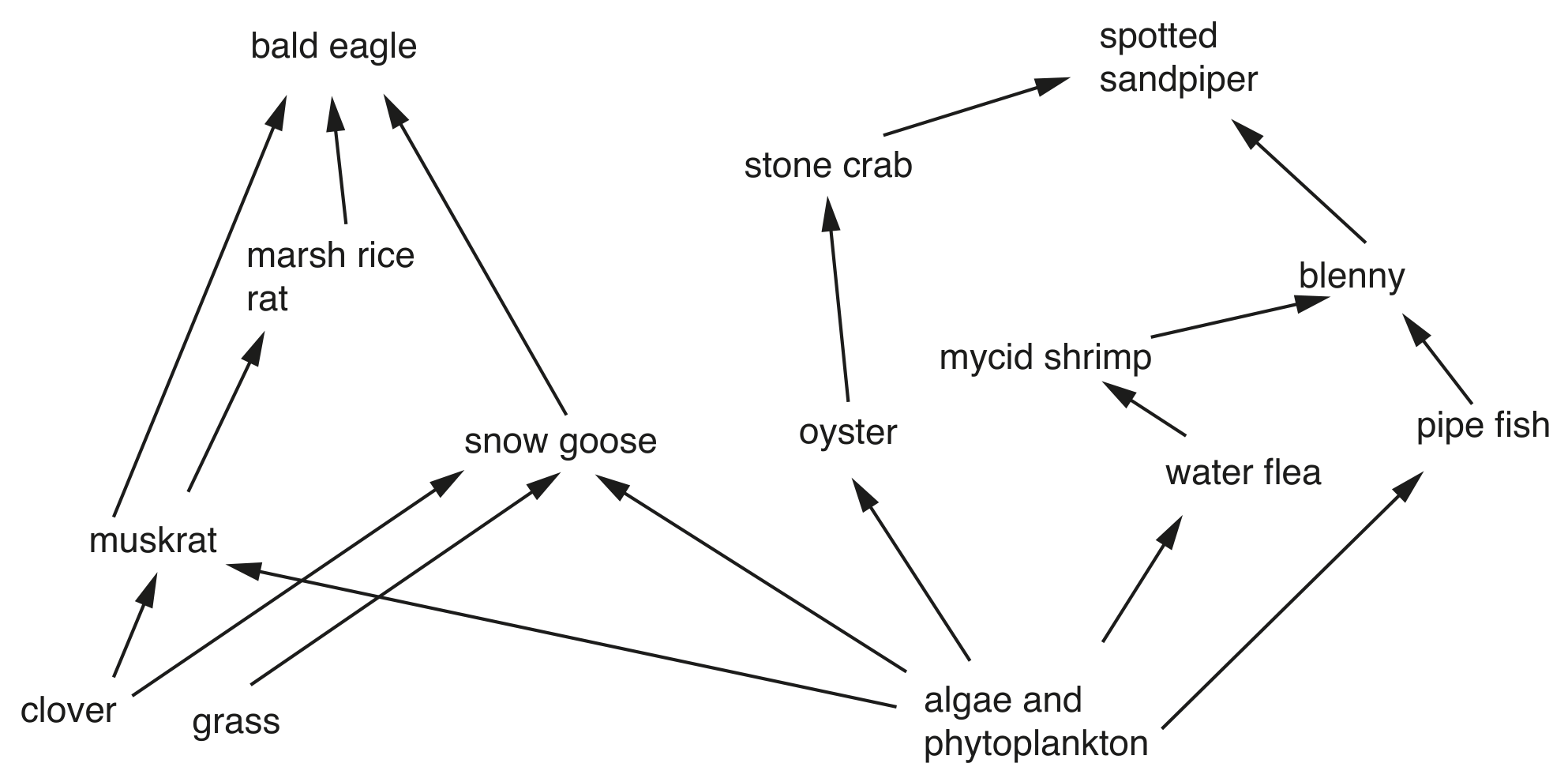
Wetlands are important ecosystems. Researchers studied the feeding relationships between the organisms in an area of wetland on the coast of Texas.

Fig. 1.1 shows part of the food web that they studied.

Fig. 1.1

Fig. 1.1

(a)

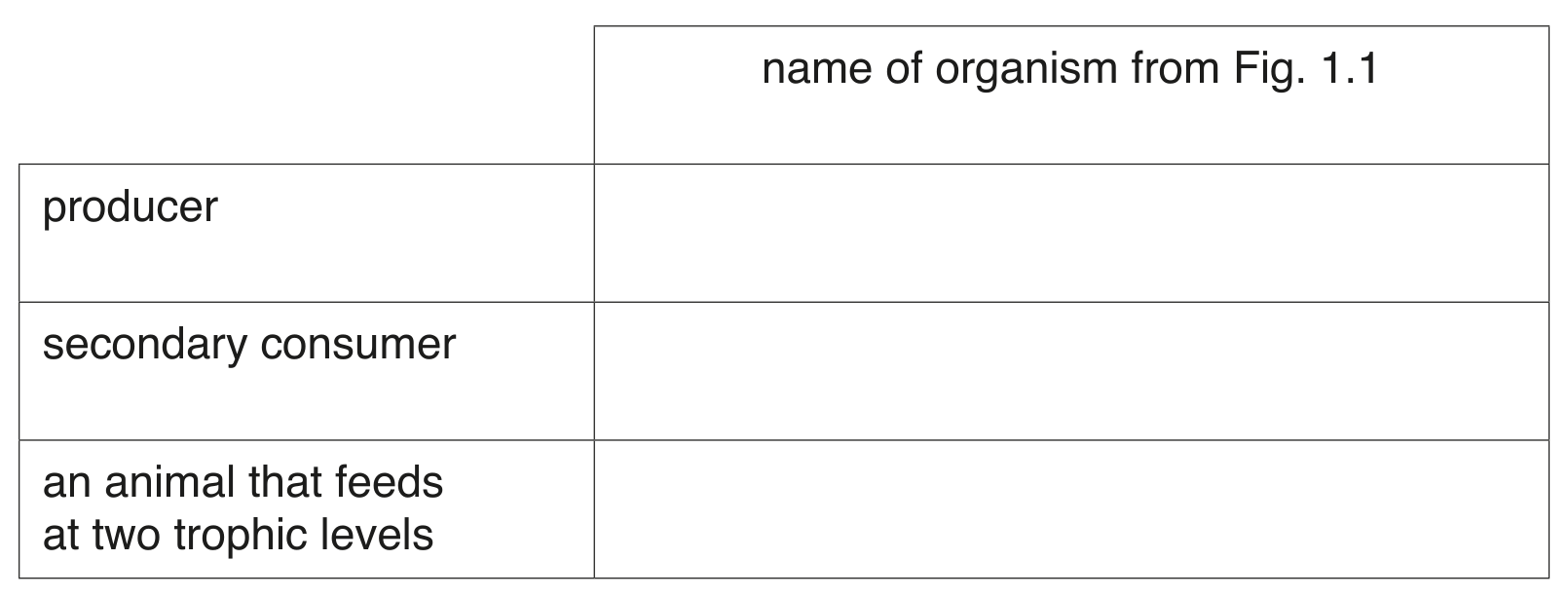
Complete Table 1.1 by giving the name of one organism from the food web in Fig. 1.1 for each row.

Table 1.1

Table 1.1

[ 3 ]
(b)

A pyramid of numbers for the wetland ecosystem showed that there were very large numbers of organisms at the base of the pyramid and very few at the top.

Explain why.

[ 3 ]
[Maximum number: 6]

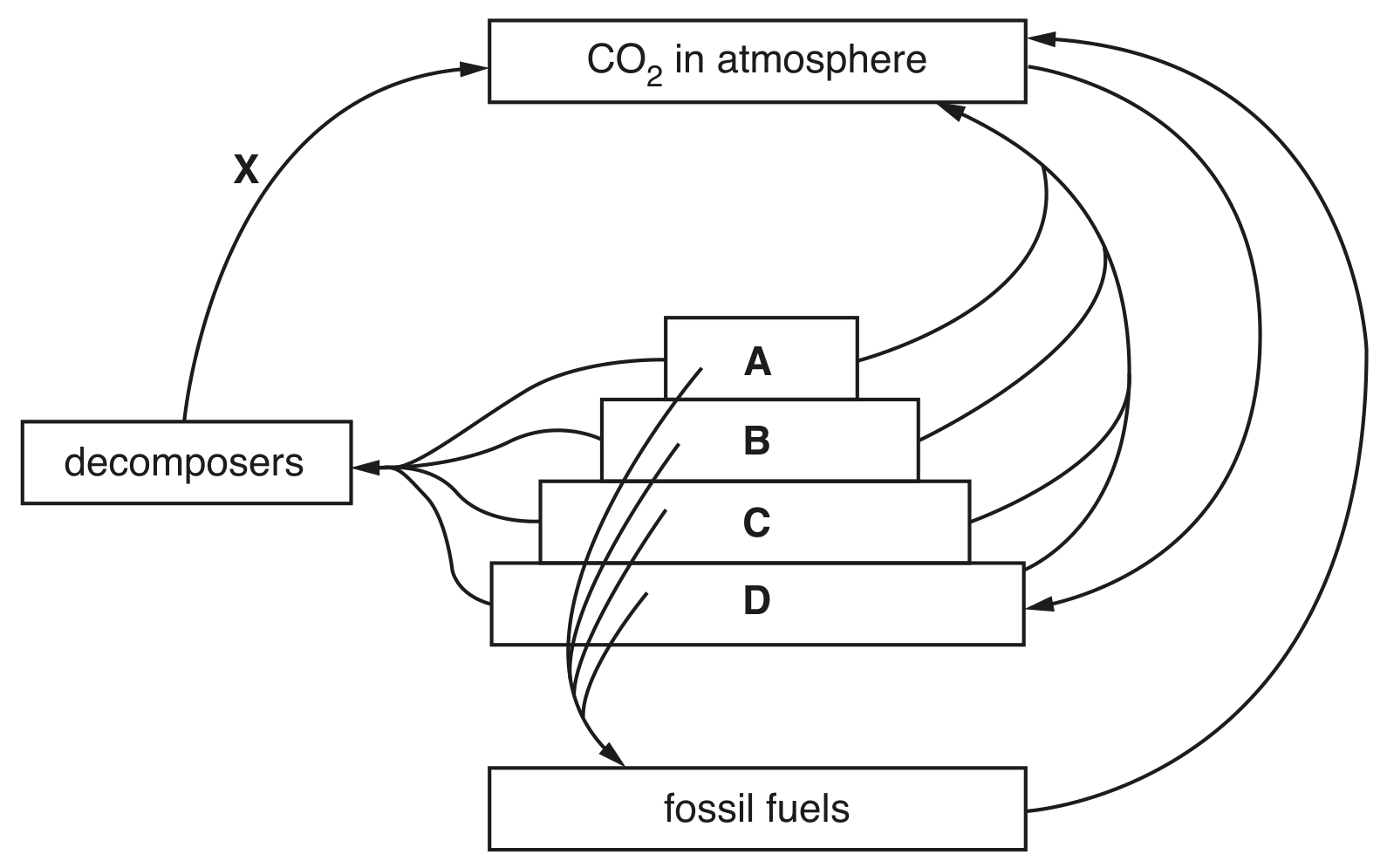
Fig. 1.1 shows a pyramid of biomass and part of the carbon cycle.

Fig. 1.1

Fig. 1.1

(a)
(i)

State the letter that represents the primary consumers in Fig. 1.1.

[ 1 ]
(ii)

State how carbon is transferred from producers to primary consumers.

[ 1 ]
(iii)

Explain why trophic level A is smaller than trophic level B in the pyramid of biomass in Fig. 1.1.

[ 3 ]
(b)

Some fungi and bacteria are decomposers.

[ 1 ]
(i)

Define the term decomposer.

[ 1 ]
[Maximum number: 6]

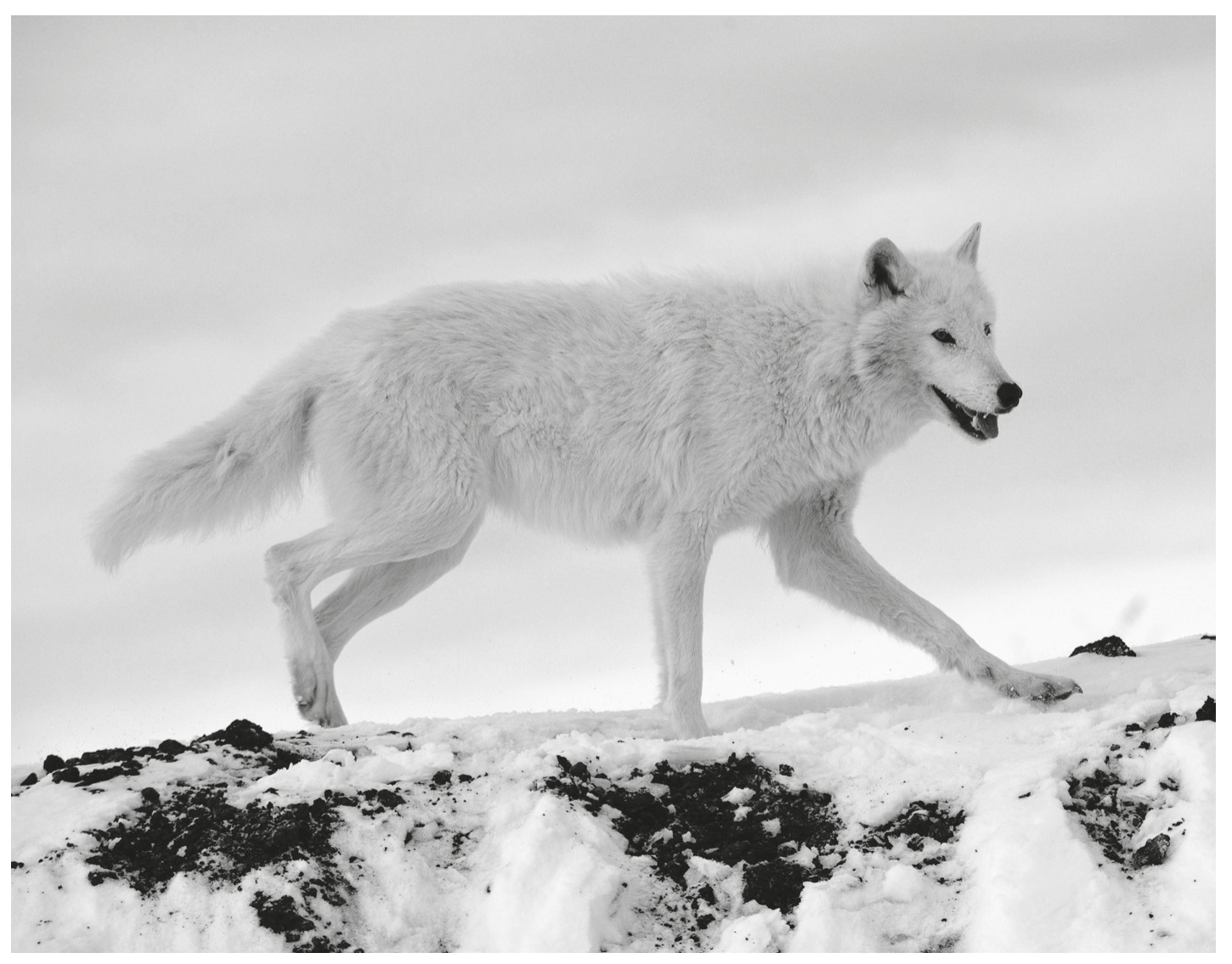
Fig. 2.1 shows an Arctic wolf, Canis lupus. These wolves are one of the few mammals adapted to the extreme cold of the tundra in the Canadian Arctic and in Alaska.

Fig. 2.1

Fig. 2.1

(a)

Arctic wolves are the top carnivores in the food web in the tundra.

Explain why the number of Arctic wolves is so small in this ecosystem.

[ 6 ]
[Maximum number: 1]

Phloem is used to transport sucrose and amino acids in plants. Sucrose is a carbohydrate.

(a)

Aphids are used by investigators to discover how plants transport sucrose.

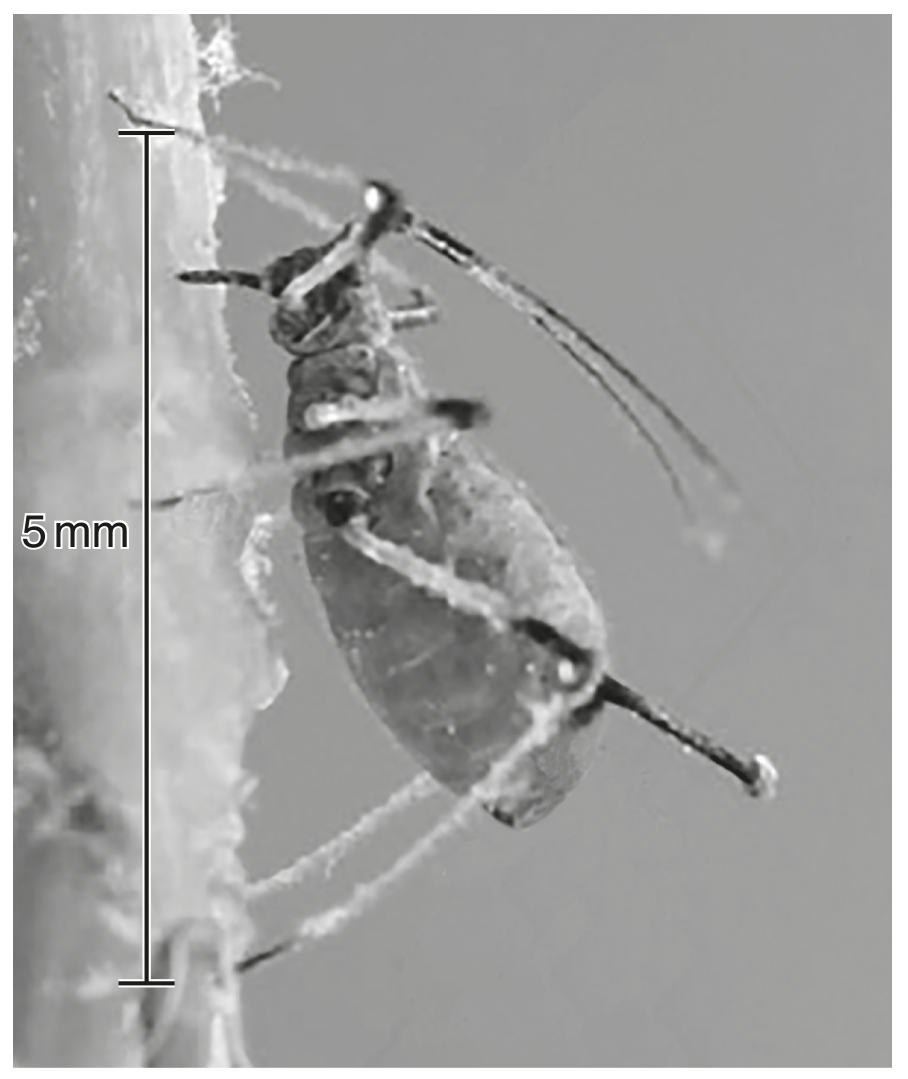
Fig. 2.2 shows an aphid with its mouthparts inserted into a plant stem to feed on the liquid in the phloem.

Fig. 2.2

Fig. 2.2

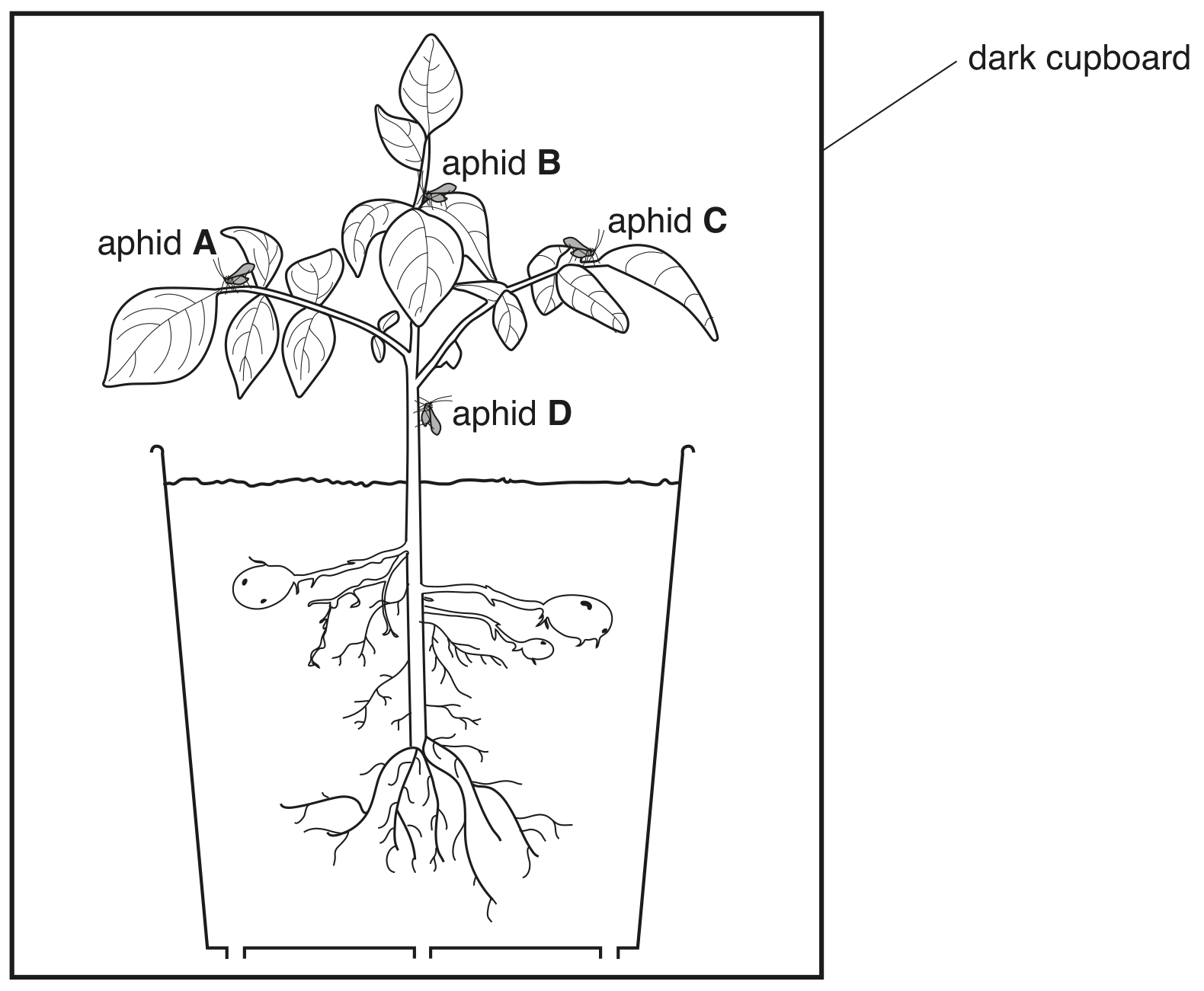
A plant was put in a dark cupboard for several days.
Four aphids, A, B, C and D, were then placed on the plant in the dark cupboard as shown in Fig. 2.3.

Fig. 2.3

Fig. 2.3

[ 1 ]
(i)

Other insects are useful to crop farmers.

Give one example of how insects are useful to farmers.

[ 1 ]
[Maximum number: 9]

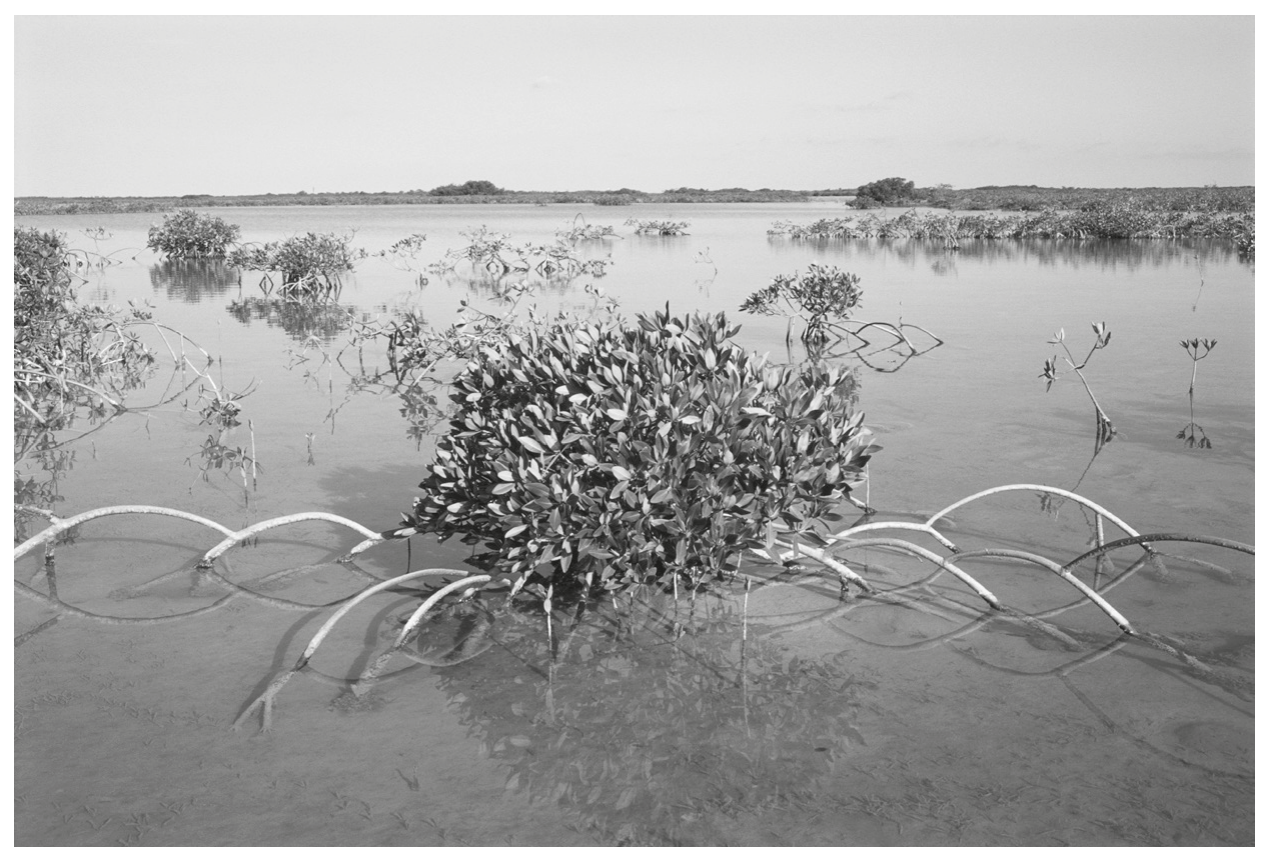
Mangrove trees are hydrophytes because they grow in water.
Fig. 2.1 shows a young mangrove tree.

Fig. 2.1

Fig. 2.1

(a)

Fig. 2.2 shows a food chain in a mangrove forest.

mangrove tree → fiddler crab → seagull

Table 2.1 gives the number of organisms and their biomass in a mangrove forest.

Table 2.1

Table 2.1

[ 9 ]
(i)

Estimate the biomass of one fiddler crab in grams.

Write your answer to two significant figures.
Show your working.

[ 2 ]
(ii)

Sketch a pyramid of numbers, using the information in Table 2.1, for the food chain shown in Fig. 2.2.

Write the number of each trophic level on the appropriate part of your pyramid.

[ 3 ]
(iii)

Explain why the shape of a pyramid of biomass, for the information given in Table 2.1, would be different from the shape of your pyramid of numbers.

[ 4 ]
[Maximum number: 6]

Very small pieces of plastic, called microplastics, are found in many products such as soaps and toothpaste.

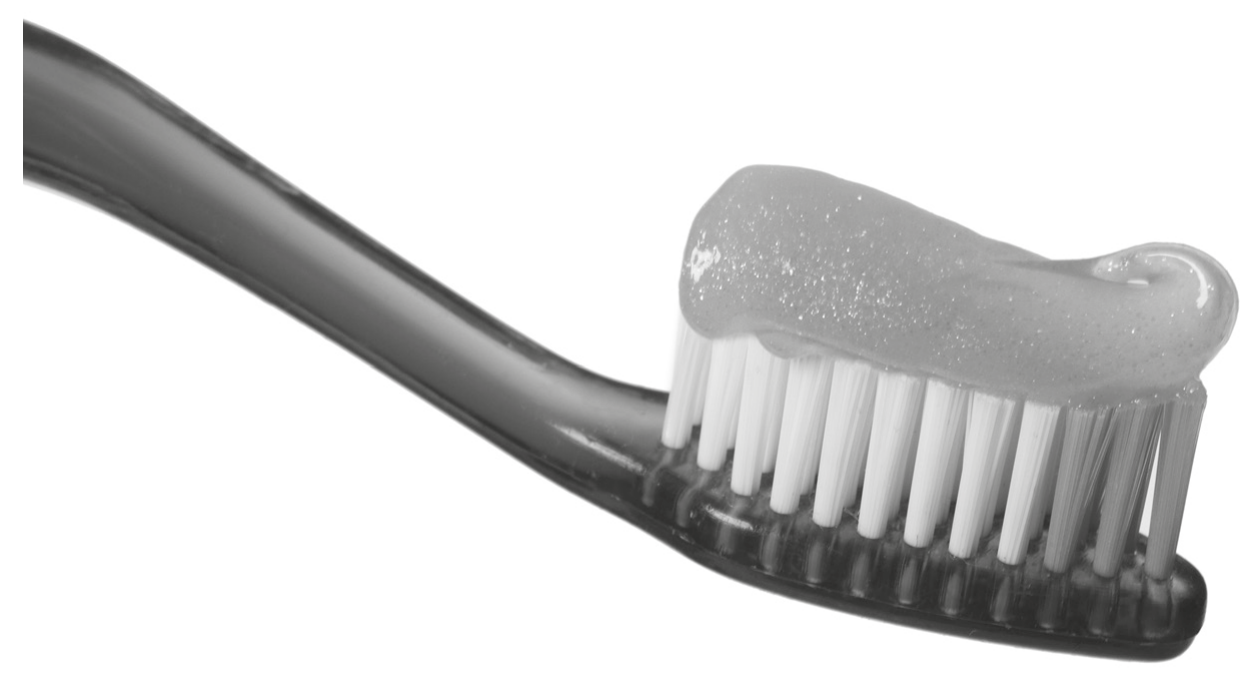
Fig. 3.1 shows toothpaste that contains microplastics.

Fig. 3.1

Fig. 3.1

(a)

Lugworms live in sand on coastal beaches and are eaten by wading birds. Lugworms feed on diatoms. Diatoms are photosynthetic protoctists that require ammonium ions as a source of nitrogen. Beach sand contains ammonium ions.

[ 6 ]
(i)

Construct a food chain for these marine organisms.

[ 2 ]
(ii)

There is some evidence that microplastics affect ammonium ions. Affected ammonium ions cannot be used by diatoms. A group of researchers thought that this could affect lugworms living in sand polluted by microplastics.

The researchers collected 30 healthy lugworms, all with the same initial mass.
They divided them into three groups, A, B and C. Each group contained 10 lugworms.
Each group of lugworms was placed in a bucket containing the same mass of beach sand and ammonium ions and:

A biodegradable microplastics

B non-biodegradable microplastics

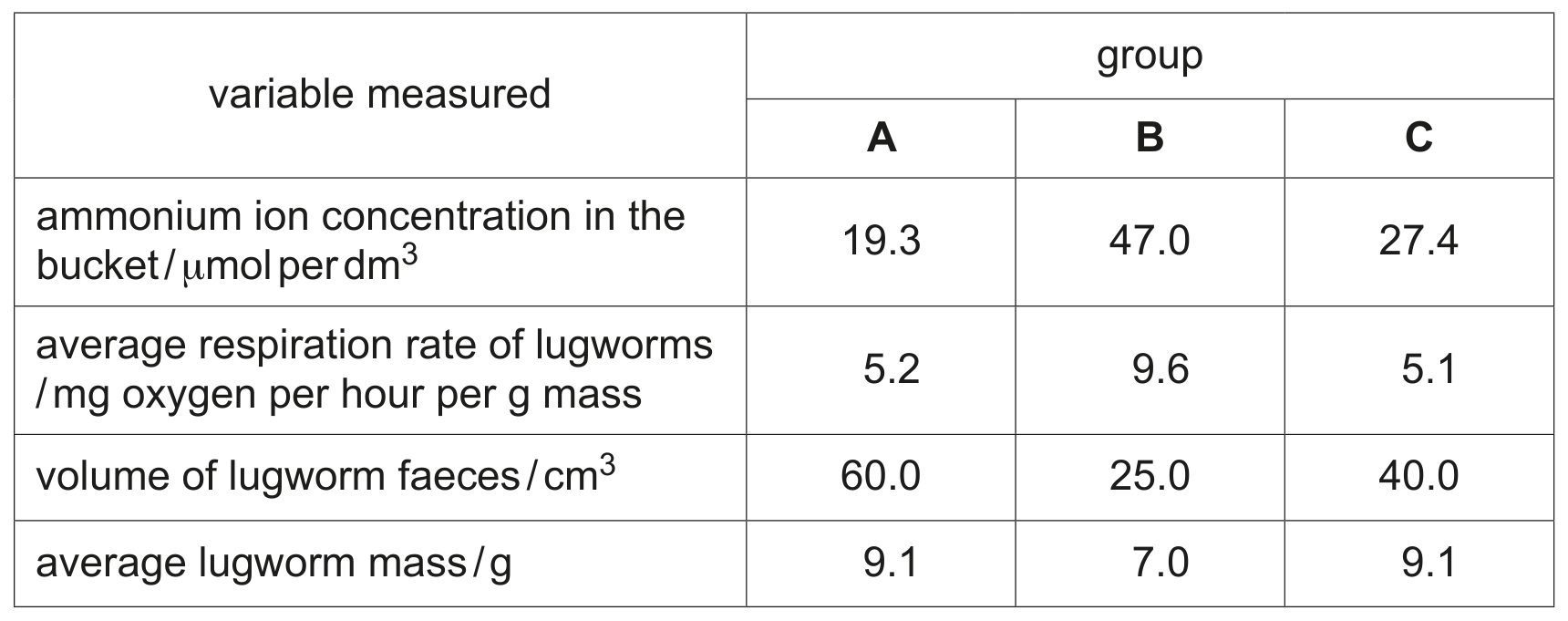
C no microplastics. The measurements that were recorded at the end of the investigation are shown in Table 3.1.

Table 3.1

Table 3.1

Describe and explain why the researchers concluded that non-biodegradable microplastics are the most harmful to lugworms.

Use the information in Table 3.1 in your answer.

[ 4 ]
0