EduNinja
[Maximum number: 8]

All commercial breeds of sheep belong to the species Ovis aries.

(a)

Merino sheep in South Africa have high quality wool with very thin hairs.

Breeders in New Zealand have used selective breeding programmes to improve the wool of their sheep to match the quality of South African wool.

Describe the steps that breeders would take to breed sheep that have wool with very thin hairs.

[ 5 ]
(b)

Explain how natural selection differs from selective breeding.

[ 3 ]
[Maximum number: 4]

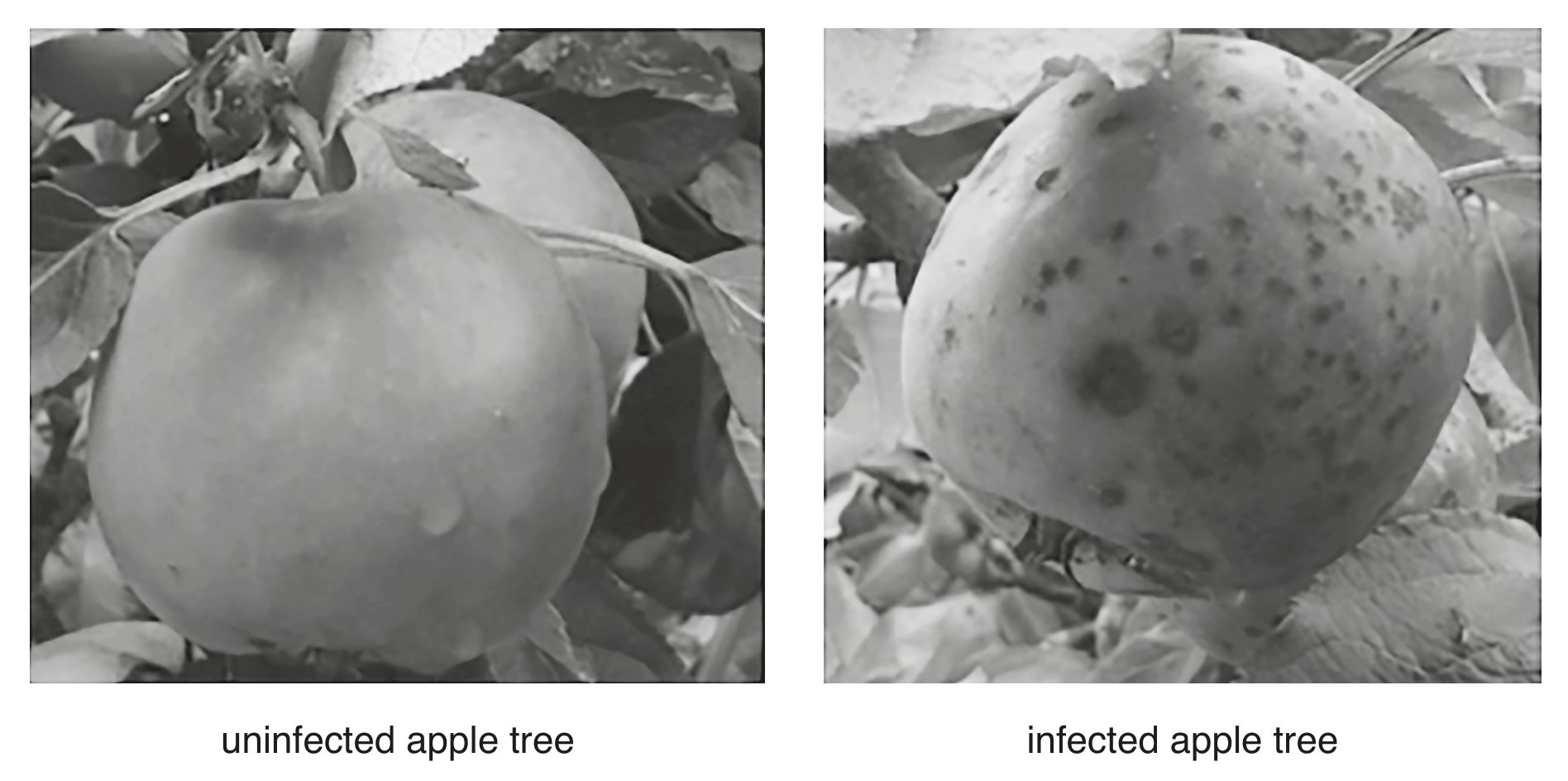
Apple scab is a disease that infects apple trees.
Fig. 3.1 shows apples from uninfected and infected apple trees.

Fig. 3.1

Fig. 3.1

There is a gene that determines whether or not apple trees are resistant to apple scab disease.
There are two alleles for this gene:
- disease-resistant, R
- not disease-resistant, r

(a)

The farmer wanted to breed disease-resistant apple trees.

[ 4 ]
(i)

He decided not to use heterozygous disease-resistant apple trees in his selective breeding programme.

Explain why.

[ 2 ]
(ii)

Describe how artificial selection differs from natural selection.

[ 2 ]
[Maximum number: 4]

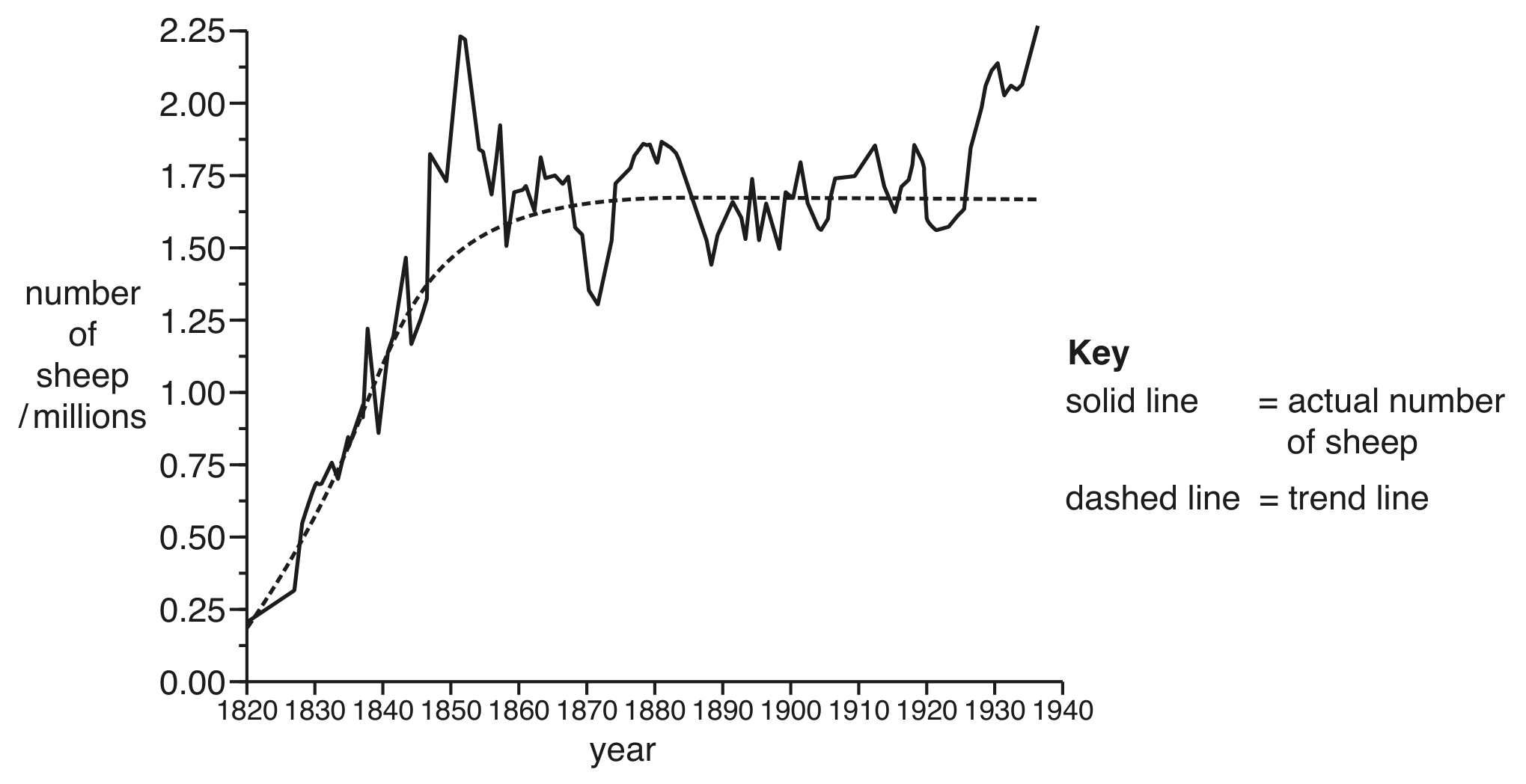
Tasmania is an island off the south coast of Australia. Sheep were introduced to Tasmania in the nineteenth century.

Fig. 3.1 shows the population of sheep in Tasmania from 1820 to 1940. The dashed line shows the trend in the population growth.

Fig. 3.1 shows the population of sheep in Tasmania from 1820 to 1940. The dashed line shows the trend in the population growth.

(a)

The sheep that were first introduced to Tasmania were not well adapted to the environment.

Describe how farmers can use selective breeding to improve their sheep so that they are better adapted to the environment.

[ 4 ]
[Maximum number: 8]

Characteristics of plants are controlled by genes. Alleles are alternative forms of a gene.

(a)

The number of hours of daylight affects when plants produce flowers. This ensures that flowers are produced at an appropriate time of year for each species.

This response to the number of hours of daylight is controlled by genes.

[ 6 ]
(i)

Wheat is a crop plant. A farmer wants to produce a type of wheat that flowers when there are fewer hours of daylight.

Describe how the farmer could selectively breed this type of wheat.

[ 3 ]
(ii)

Different types of wheat have also evolved through natural selection.

Explain how natural selection differs from artificial selection.

[ 3 ]
(b)

Scientists can selectively breed for increased pest resistance in wheat.

Explain the benefits of growing wheat with increased pest resistance.

[ 2 ]
[Maximum number: 5]

Anthocyanin is a red pigment found in carnation flowers. Some carnation plants have a gene for making anthocyanin.

(a)
(i)

A flower grower bred red carnations.

Describe how growers selectively breed plants.

[ 3 ]
(ii)

Explain the disadvantages of using sexual reproduction to breed red carnations.

[ 2 ]
[Maximum number: 3]

A researcher investigated genetic variation in fruit flies, Drosophila melanogaster.
The bodies of fruit flies can be black or yellow. A yellow body colour is a recessive feature in fruit flies.

(a)

The ancestors of C. caeca had pigmented bodies.

The lack of a coloured pigment in C. caeca is called albinism and was caused by a mutation many thousands of years ago.

[ 3 ]
(i)

Explain the mechanism that has resulted in the allele for albinism becoming common in recent generations in populations of C. caeca.

[ 3 ]
[Maximum number: 4]

Tobacco smoke is made up of over 7000 chemicals.
Nicotine is a component of tobacco smoke.

(a)

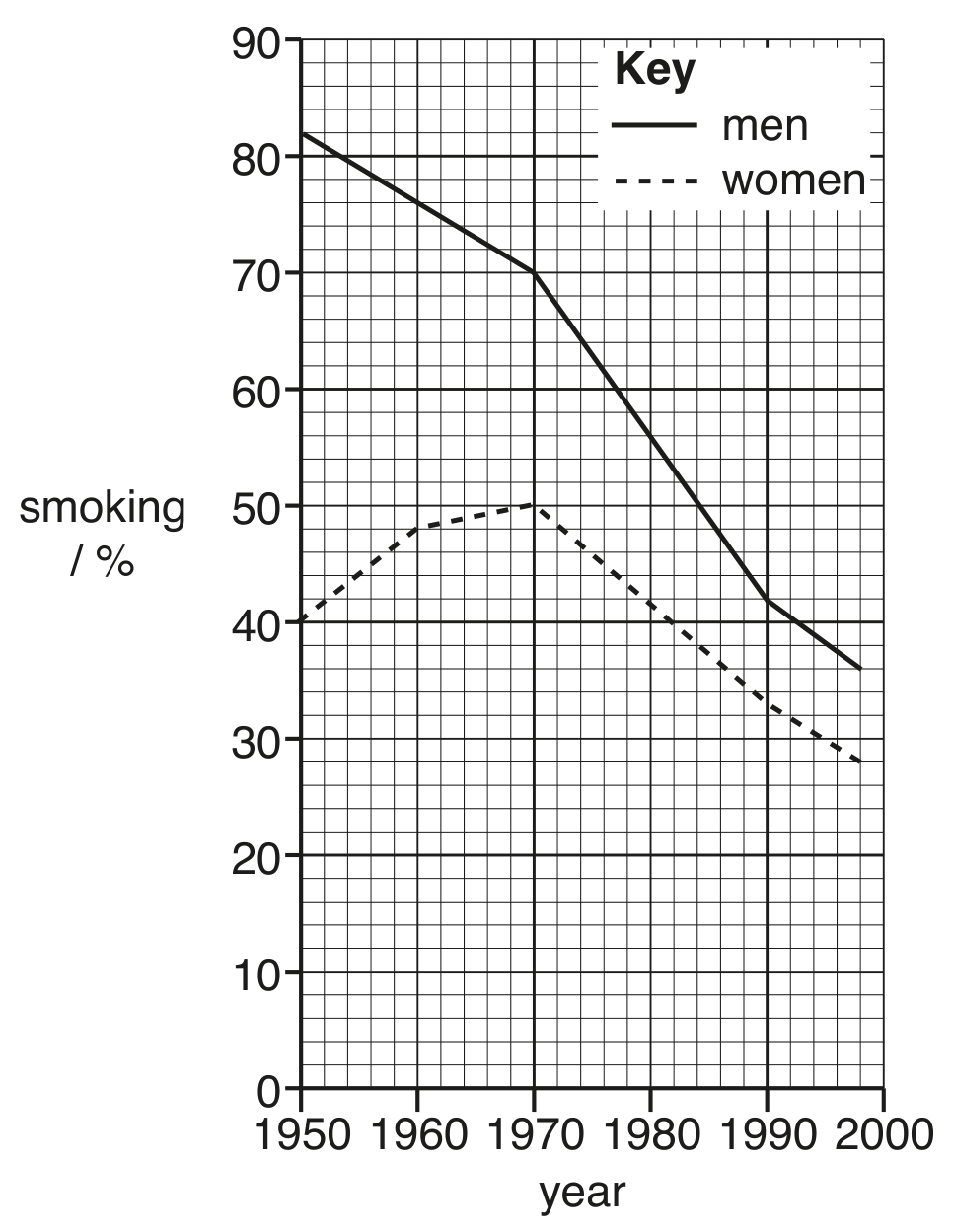
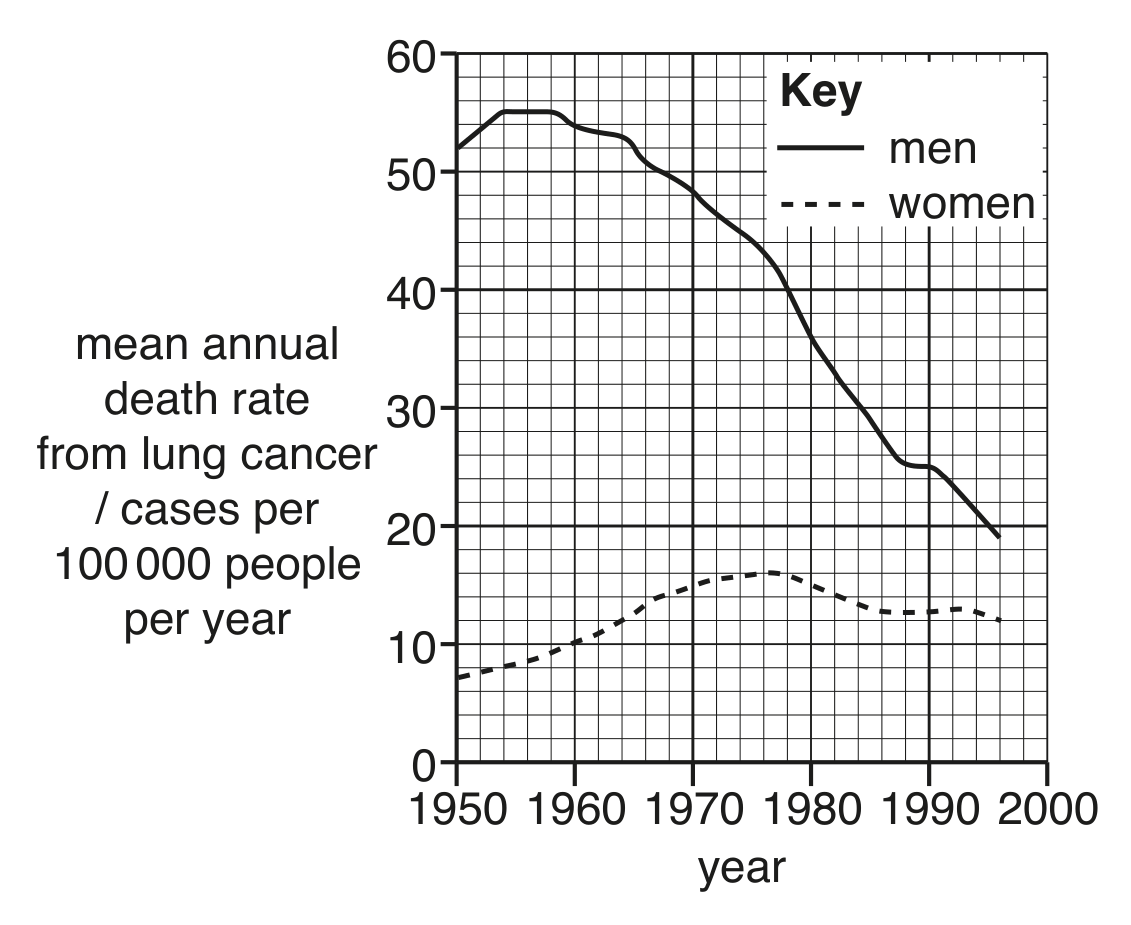
A study compared the percentages of men and women aged between 35 and 54 years who smoked cigarettes. The annual death rate caused by lung cancer was also recorded.

The results are shown in the two graphs in Fig. 4.1.

Question image
Fig. 4.1

Fig. 4.1

[ 4 ]
(i)

Use the information from both graphs in Fig. 4.1 to discuss the link between smoking and lung cancer.

[ 4 ]
[Maximum number: 4]

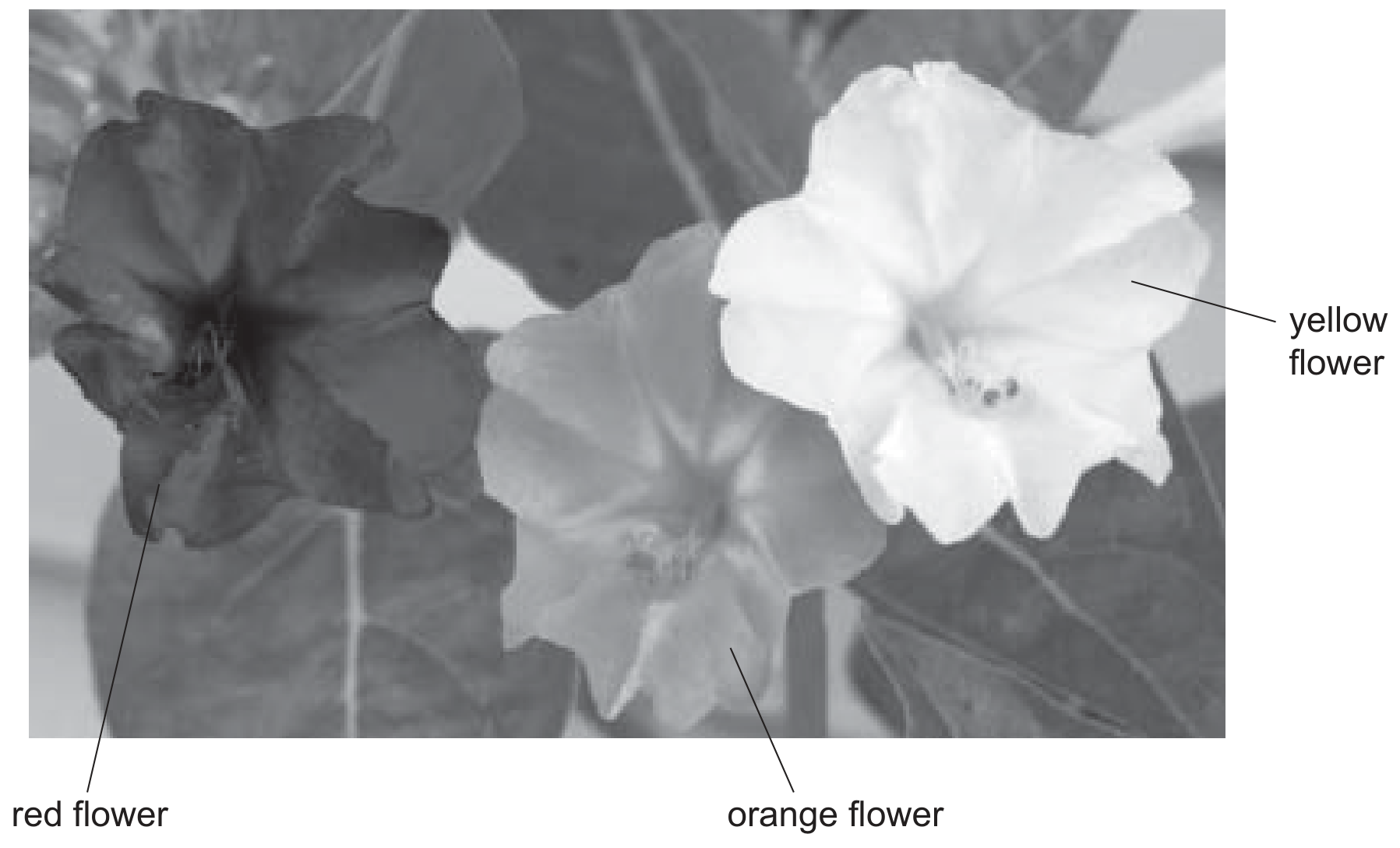
The four o'clock plant, Mirabilis jalapa, can have flowers of three different colours as shown in Fig. 4.1.

Fig. 4.1

Fig. 4.1

(a)

Some plant species are self-pollinated.

Discuss the long-term effects of self-pollination on the evolution of these plant species.

[ 4 ]
[Maximum number: 1]

Bacteria such as MRSA are resistant to antibiotics.
These processes can occur in bacteria.
1 artificial selection
2 genetic variation
3 mutation
4 natural selection
What would contribute to the development of antibiotic resistance?

A

1, 2, 3 and 4

B

1, 2 and 3 only

C

2, 3 and 4 only

D

2 and 4 only

(a)

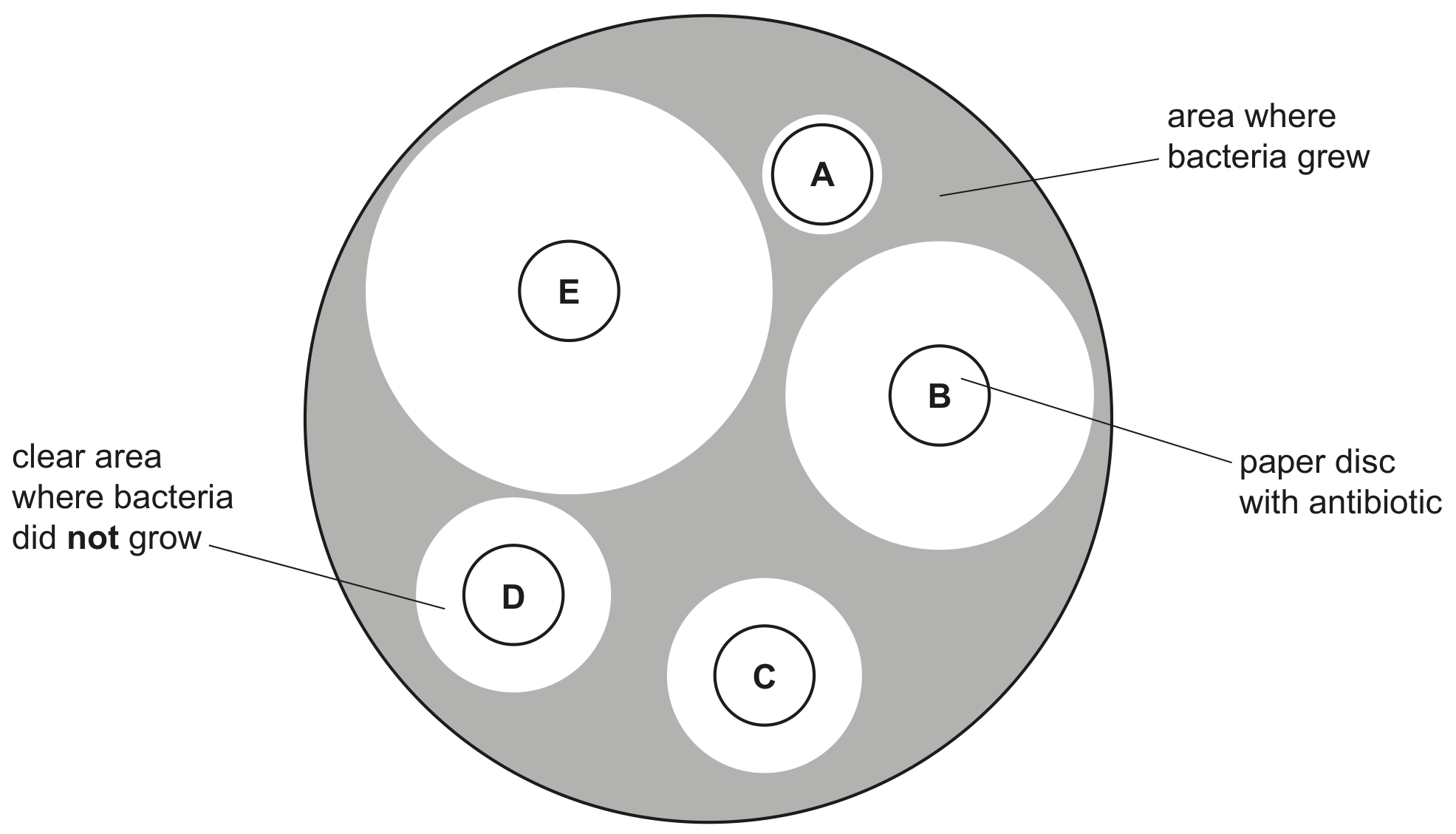
A scientist tested the resistance of one strain of bacteria to different antibiotics.

The scientist tested solutions of five different antibiotics, A to E.

She soaked a paper disc in each antibiotic solution.
The paper discs with antibiotics were placed in a Petri dish containing bacteria on agar jelly.
Fig. 4.2 is a diagram of the appearance of the Petri dish after 48 hours. The shaded areas show where bacteria grew. The clear areas show where bacteria did not grow.

Fig. 4.2

Fig. 4.2

[ 4 ]
(i)

The results in Fig. 4.2 show that this strain of bacteria is resistant to antibiotic A.

Five years ago, a similar investigation found that the clear area for antibiotic A was the same size as antibiotic B is in Fig. 4.2.

Explain how bacteria become resistant to antibiotics.

[ 4 ]
0