[Maximum number: 1]
Water is a very important molecule for all living organisms.
(a)
(i)
State the name of the organ in plants where most water is absorbed.
[ 1 ]
 EduNinja
Water is a very important molecule for all living organisms.
State the name of the organ in plants where most water is absorbed.
Wetlands are important ecosystems. Researchers studied the feeding relationships between the organisms in an area of wetland on the coast of Texas.
Fig. 1.1 shows part of the food web that they studied.
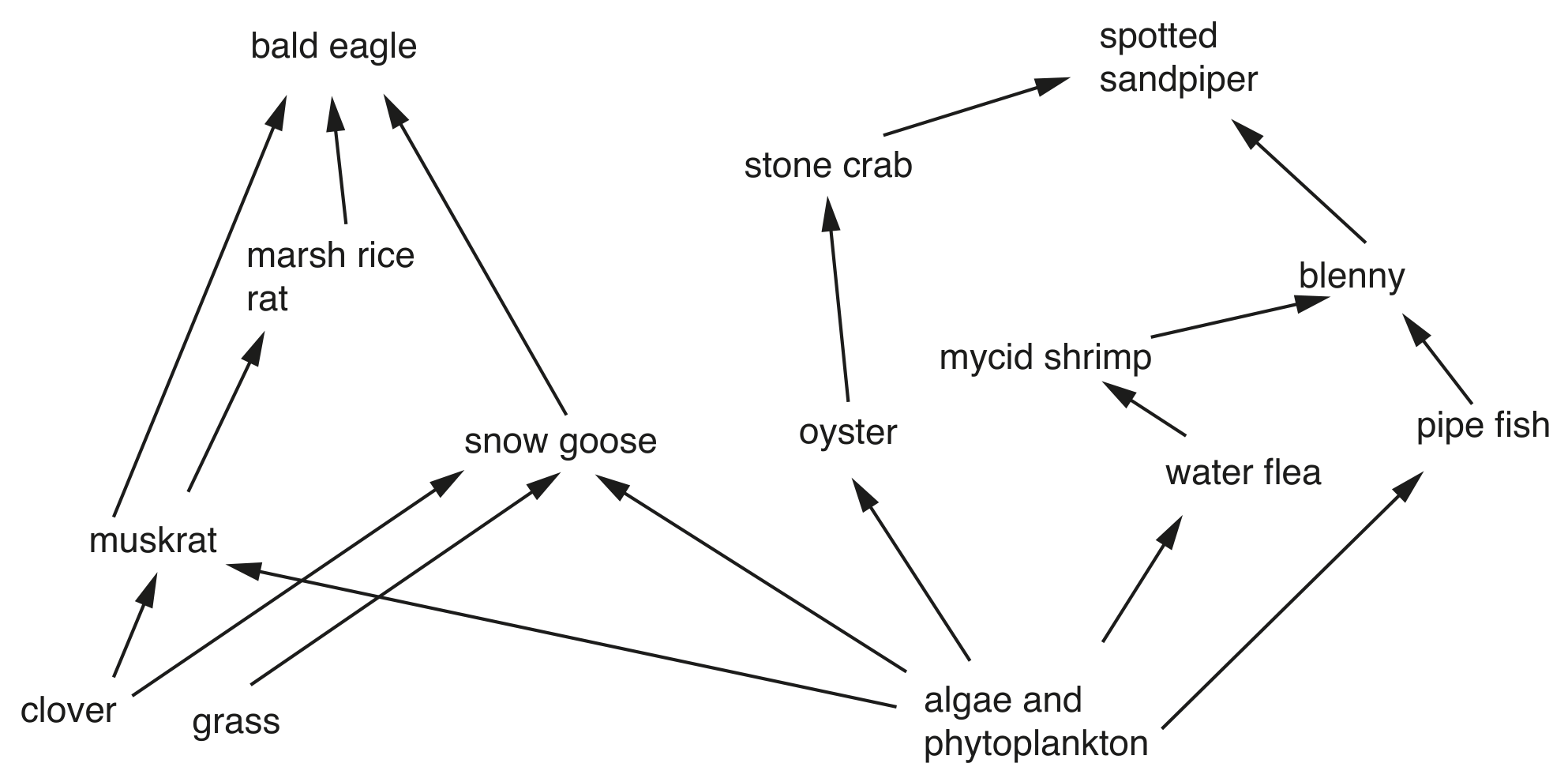
Fig. 1.1
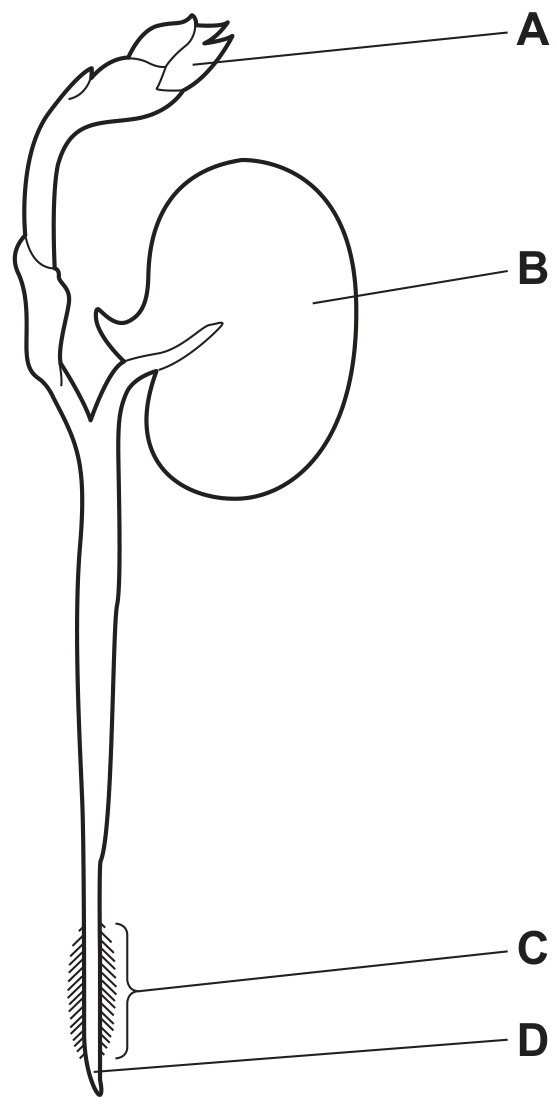
Describe how nitrate ions enter the roots of plants shown by arrow C on Fig. 1.2.
Why do some root cells have root hairs?
for the maintenance of the temperature of the cell sap
to increase the surface area of the cells
to increase the volume of the cell sap
to provide a place for cell nuclei
Fig. 2.1 is a photomicrograph of the end of a plant root.
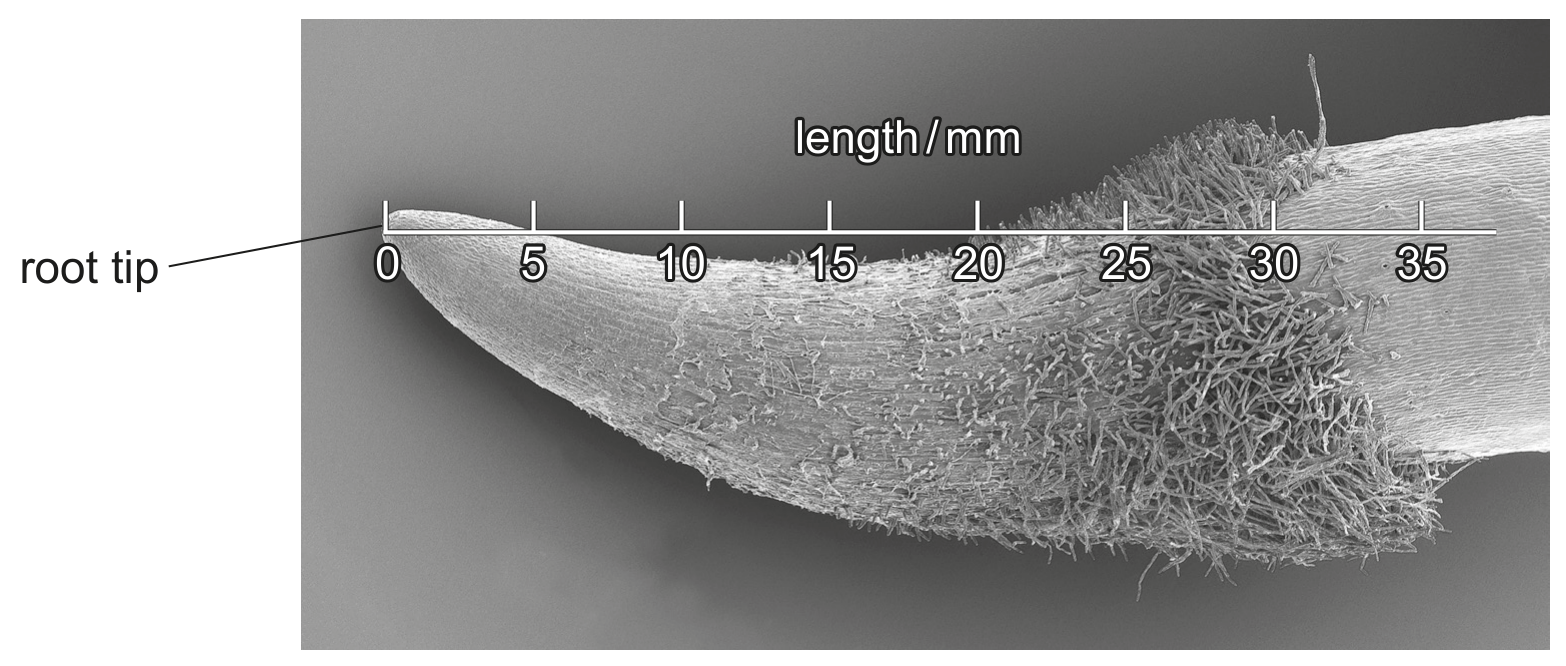
Fig. 2.1
Fig. 2.2 shows the results of a study on the rate of uptake of nitrate ions at different points along the root shown in Fig. 2.1.
rate of nitrate ion uptake / pmol per per s
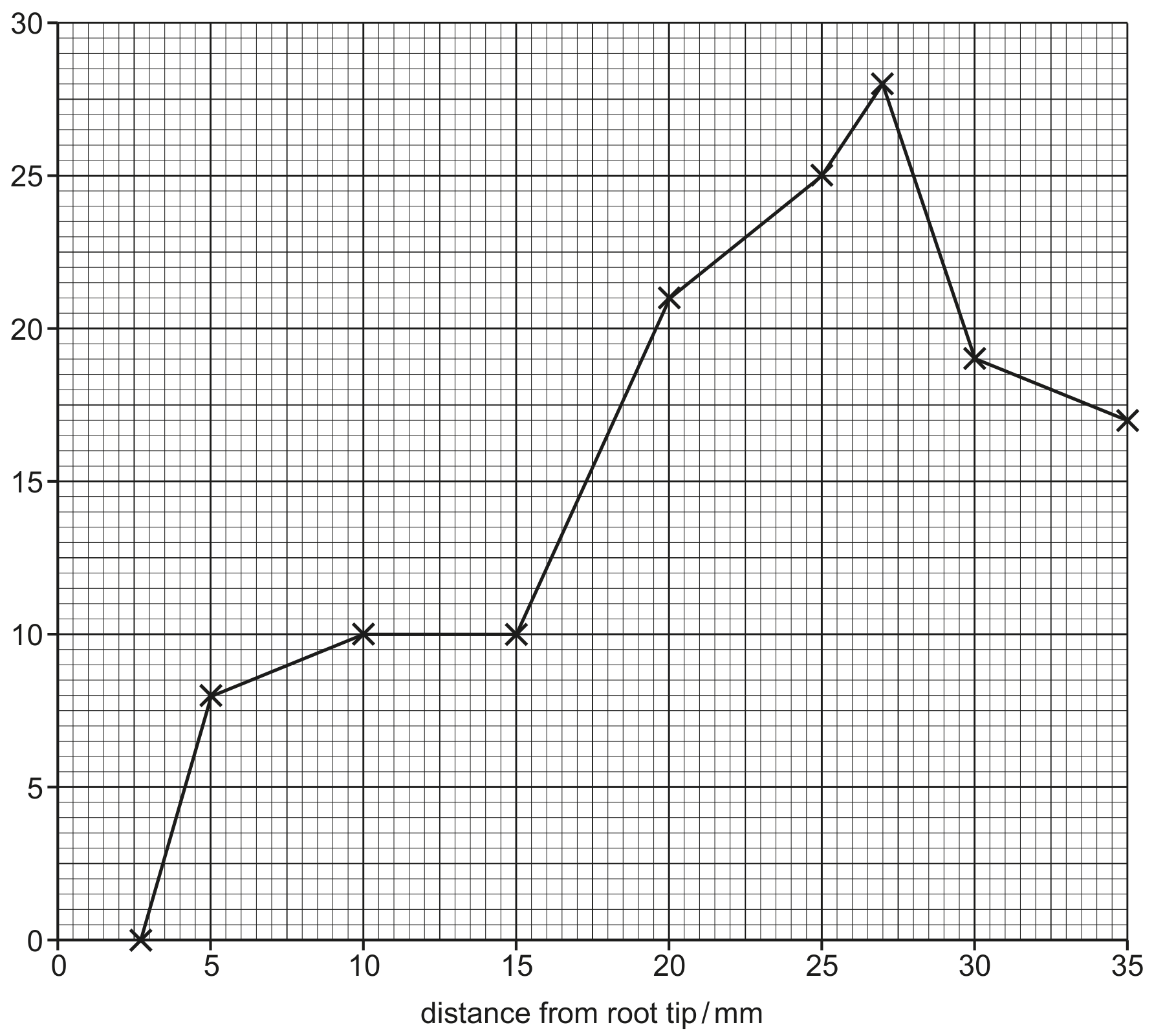
Fig. 2.2
Describe the rate of uptake of nitrate ions along the root.
Use the information in Fig. 2.1 and Fig. 2.2 in your answer.
The diagram shows a bean seedling soon after it has germinated.
Where is most water absorbed?
In which order does water pass through these structures in a plant?
mesophyll → root hair → xylem
mesophyll → xylem → root hair
root hair → mesophyll → xylem
root hair → xylem → mesophyll
The diagram shows the pathway of water from the soil through a plant.
Which cells are represented by X, Y and Z ?
X
Y
Z
root hair cells
root cortex cells
xylem
root hair cells
xylem
root cortex cells
xylem
root cortex cells
root hair cells
xylem
root hair cells
root cortex cells
The diagram shows a cross-section of a root.
Three regions of the root are numbered.
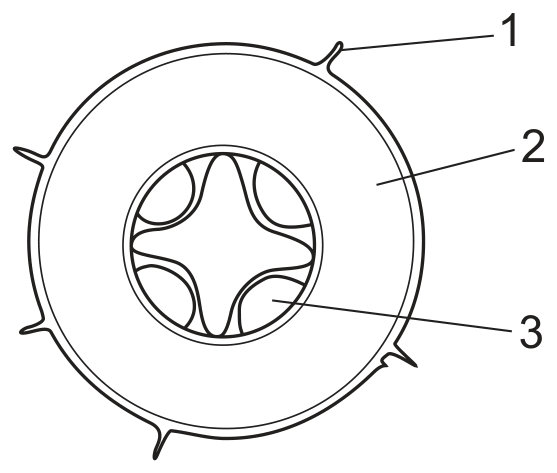
Which regions contain cells through which water must pass to reach the xylem?
1, 2 and 3
1 and 2 only
2 and 3 only
2 only
How is the structure of root hair cells related to their function?
They have chloroplasts for photosynthesis.
Their cell wall is partially permeable to absorb water by osmosis.
They have a large surface area to increase the rate of mineral ion uptake.
Both the cell wall and cell membrane control the active uptake of mineral ions.
Fig. 3.1 shows some apparatus that was used to investigate water loss from a leafy shoot.
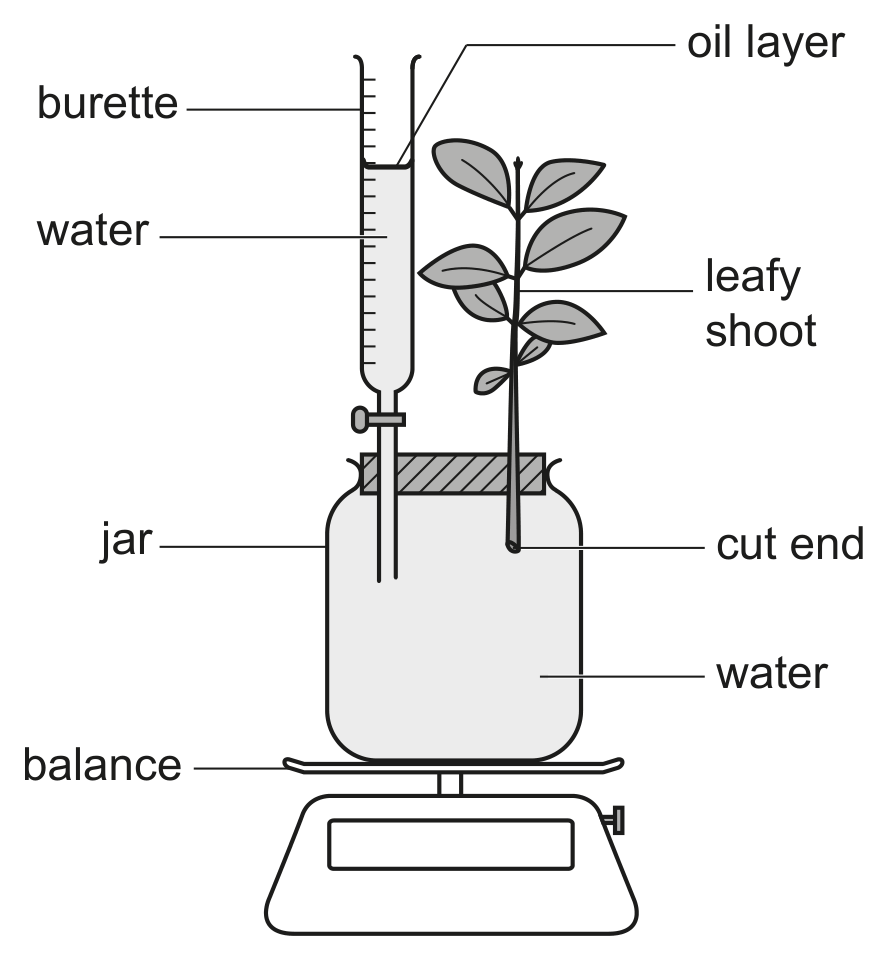
Fig. 3.1
Before the leafy shoot is inserted into the jar shown in Fig. 3.1, it must be recut under water.
Suggest why the end of the leafy shoot was cut under water.