EduNinja
[Maximum number: 9]

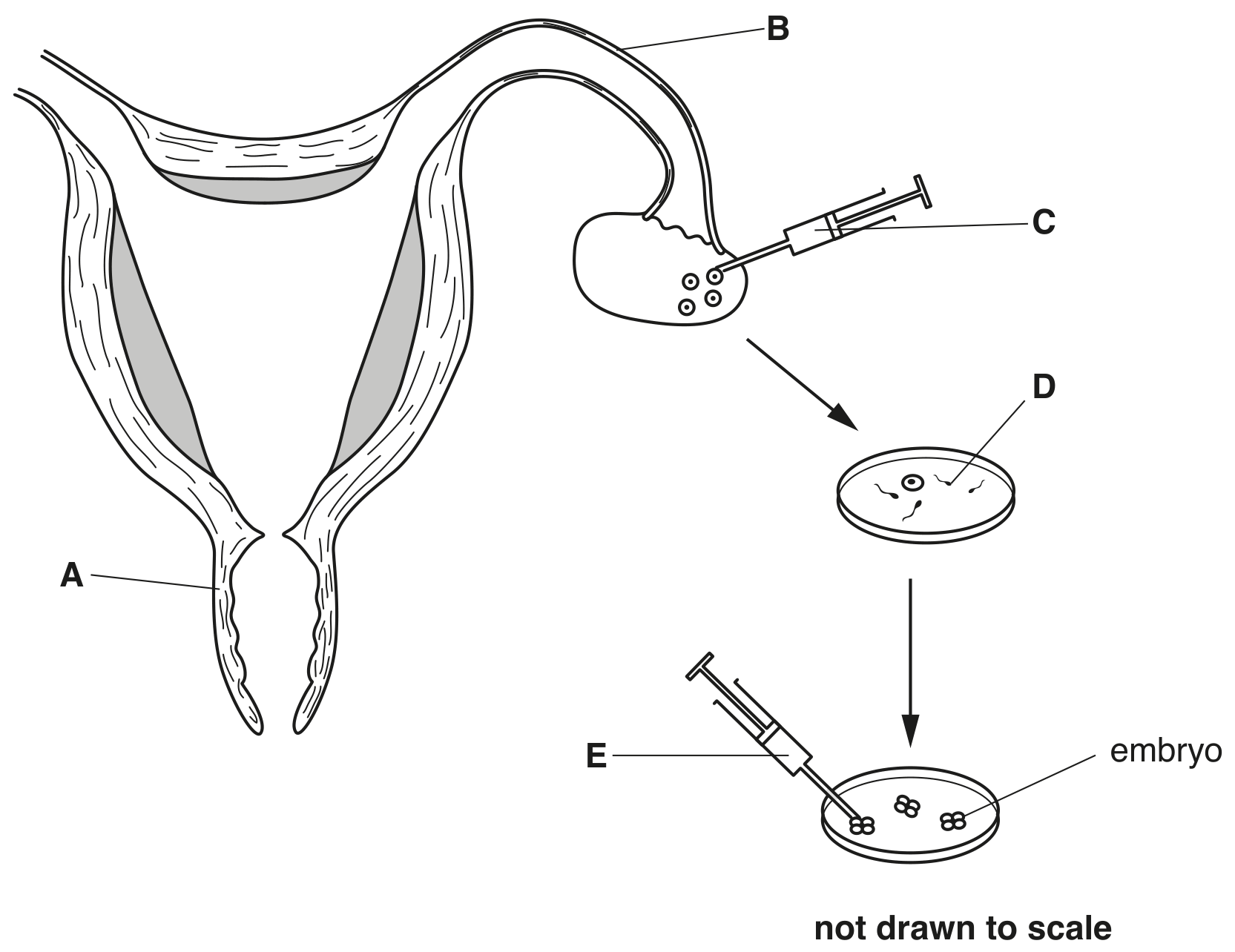
An in vitro fertilisation (IVF) procedure is outlined in Fig. 1.1.

Fig. 1.1

Fig. 1.1

(a)
(i)

Name structures A, B and D.

A

B

D

[ 3 ]
(ii)

State the purpose of syringe C.

[ 1 ]
(b)
(i)

Draw an X on Fig. 1.1 at the position where the embryos should be placed.

[ 1 ]
(c)

Discuss the social implications of IVF.

[ 4 ]
(a)

Pregnant women are advised not to drink alcohol as it may have harmful effects on the fetus.

[ 4 ]
(i)

Outline these harmful effects.

[ 2 ]
(ii)

State two harmful substances other than alcohol that can cross the placenta.

1

2

[ 2 ]
(a)

Egg cells are contained in follicles in the ovary.

At the start of the menstrual cycle, a follicle has an average diameter of 29μ m29 \mu \mathrm{~m}.
Just before an egg is released from the follicle, the follicle has an average diameter of 22 mm .
Calculate the percentage increase in the average diameter of the follicle from the start of the menstrual cycle, until just before an egg is released.

Step 1 Convert the average starting diameter of a follicle to millimetres (mm). mm

Step 2 Calculate the percentage increase. \%
Step 3 Give your answer to three significant figures.
\%

[ 4 ]
(b)

Once an egg cell has been released from a follicle it can be fertilised by a sperm cell.

State three adaptive features of a sperm cell.
1

2

3

[ 3 ]
[Maximum number: 8]

Pregnancy can occur after the fusion of a male gamete and a female gamete.

(a)

State the name of the ball of cells that implants into the uterus after fertilisation.

[ 1 ]
(b)

There are many changes that occur in a fetus during pregnancy.

Compare the development of a fetus in the early stages of pregnancy to its development in the late stages of pregnancy.

[ 2 ]
(c)

Describe the functions of amniotic fluid and the amniotic sac.

[ 4 ]
(d)

One of the functions of the placenta is to provide a barrier to toxins and pathogens.

A study was done on donated afterbirths. The afterbirth is a placenta with part of the umbilical cord attached.

The purpose of the study was to find the maximum size of particles that can pass through the placenta and enter the umbilical cord.

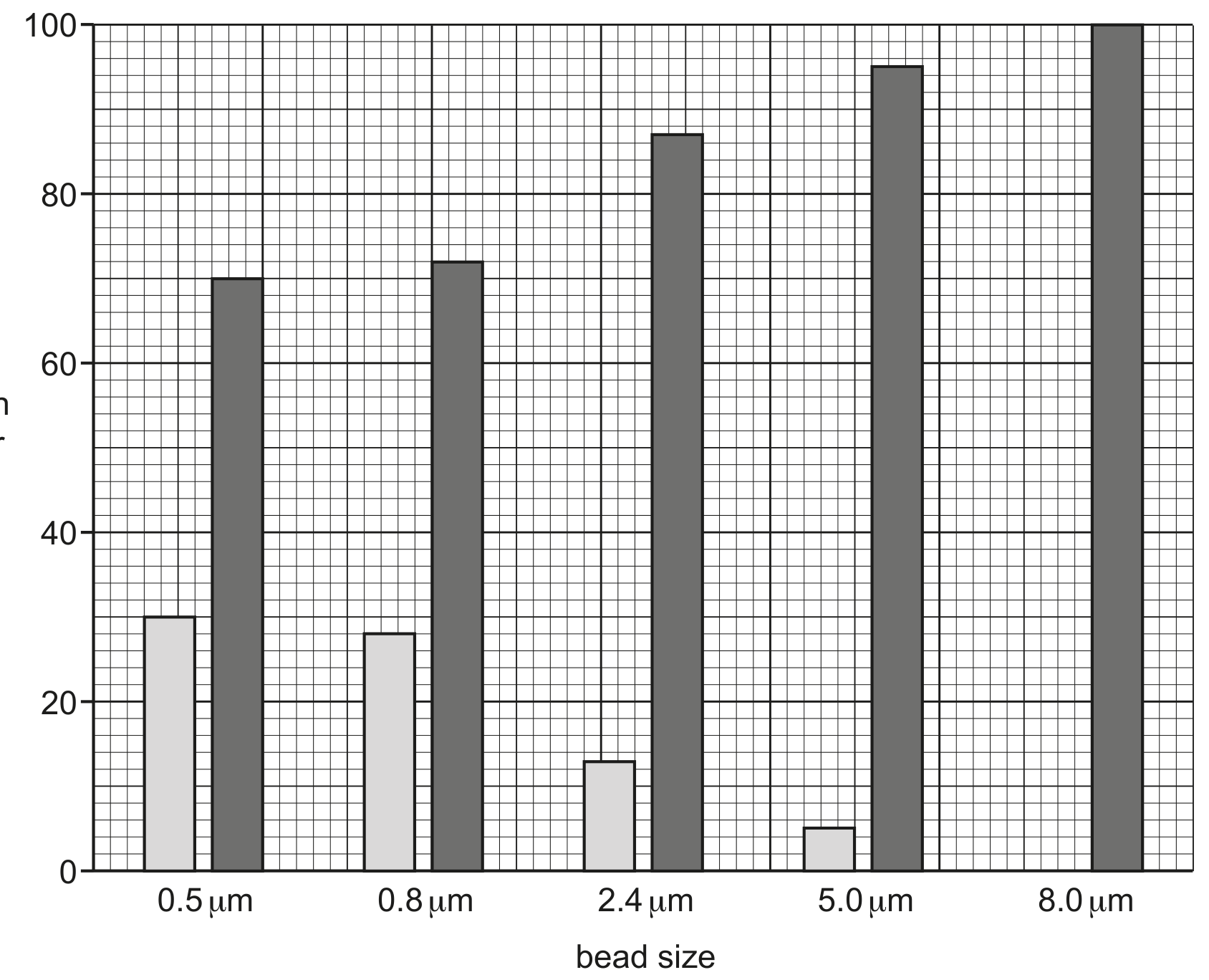
The researchers inserted beads with a diameter of 0.5μ m0.5 \mu \mathrm{~m} into blood vessels in the placenta. Three hours later they recorded the percentage of beads found in the blood in the placenta and in the umbilical cord.

They then repeated the tests using beads with diameters of 0.8μ m,2.4μ m,5.0μ m0.8 \mu \mathrm{~m}, 2.4 \mu \mathrm{~m}, 5.0 \mu \mathrm{~m} and 8.0μ m8.0 \mu \mathrm{~m}.

Their results are shown in Fig. 2.1.
percentage of beads found in the blood after 3 hours

Fig. 2.1

Fig. 2.1

Key:
□ umbilical cord
□ placenta

[ 1 ]
(i)

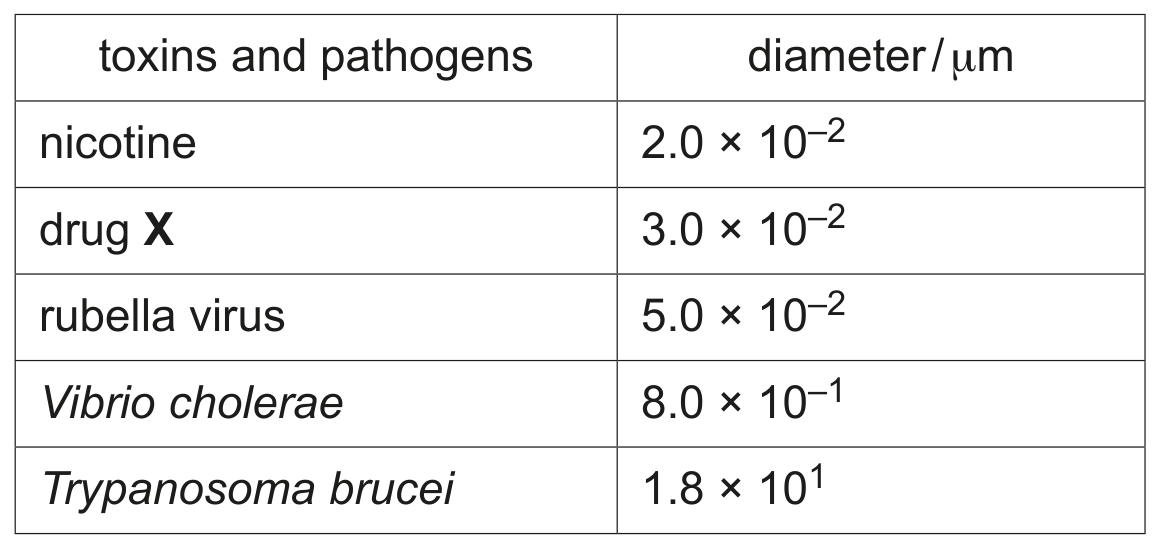
Table 2.1 shows a range of substances and their diameters.

Table 2.1

Table 2.1

State the names of all the toxins and pathogens listed in Table 2.1 that could pass through the placenta and enter the umbilical cord.

Use the data in Fig. 2.1 to make your choice.

[ 1 ]
(a)

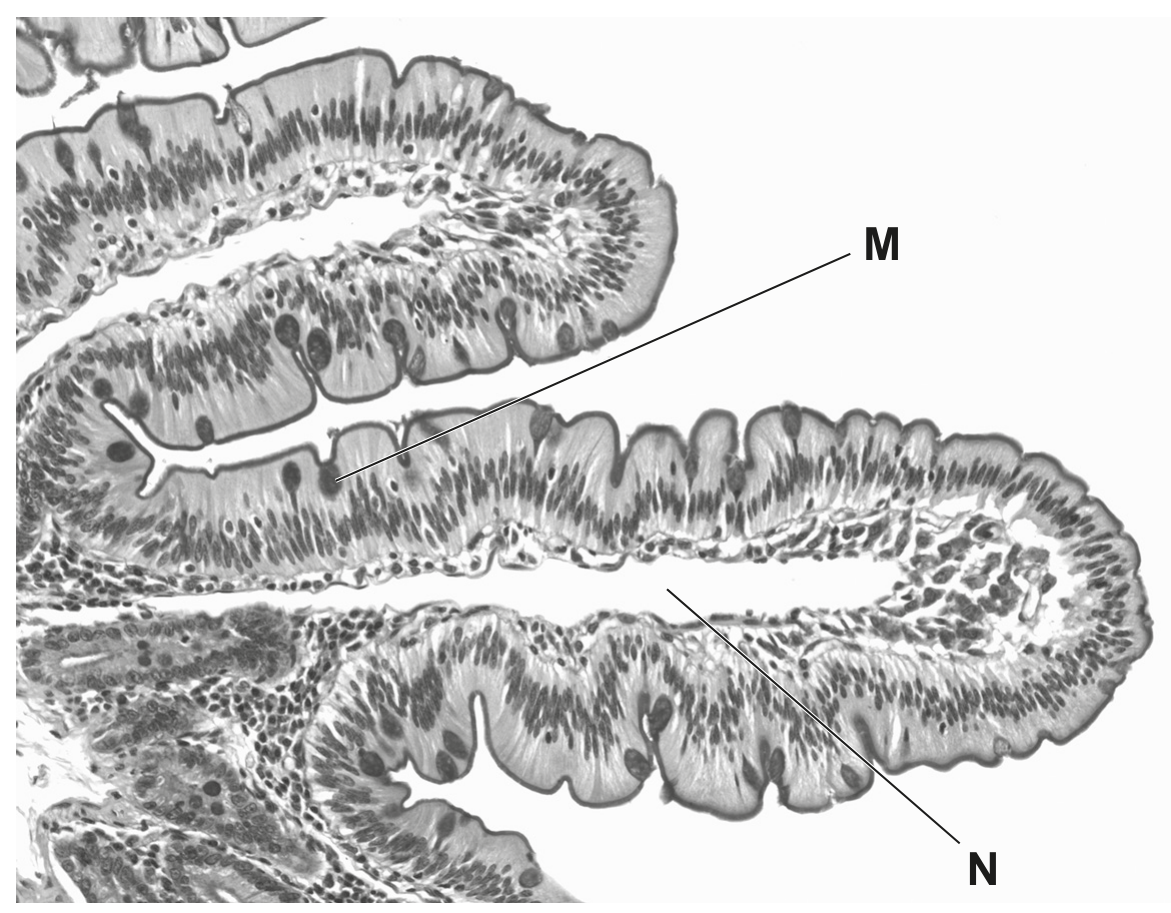
The small intestine is lined with many villi and is adapted to absorb glucose.
Fig. 2.1 shows two villi from the lining of the small intestine.

Fig. 2.1

Fig. 2.1

[ 2 ]
(i)

State the name of structure N in Fig. 2.1.

[ 1 ]
(ii)

Cell M in Fig. 2.1 secretes mucus.

State the name of cell M.

[ 1 ]
(a)

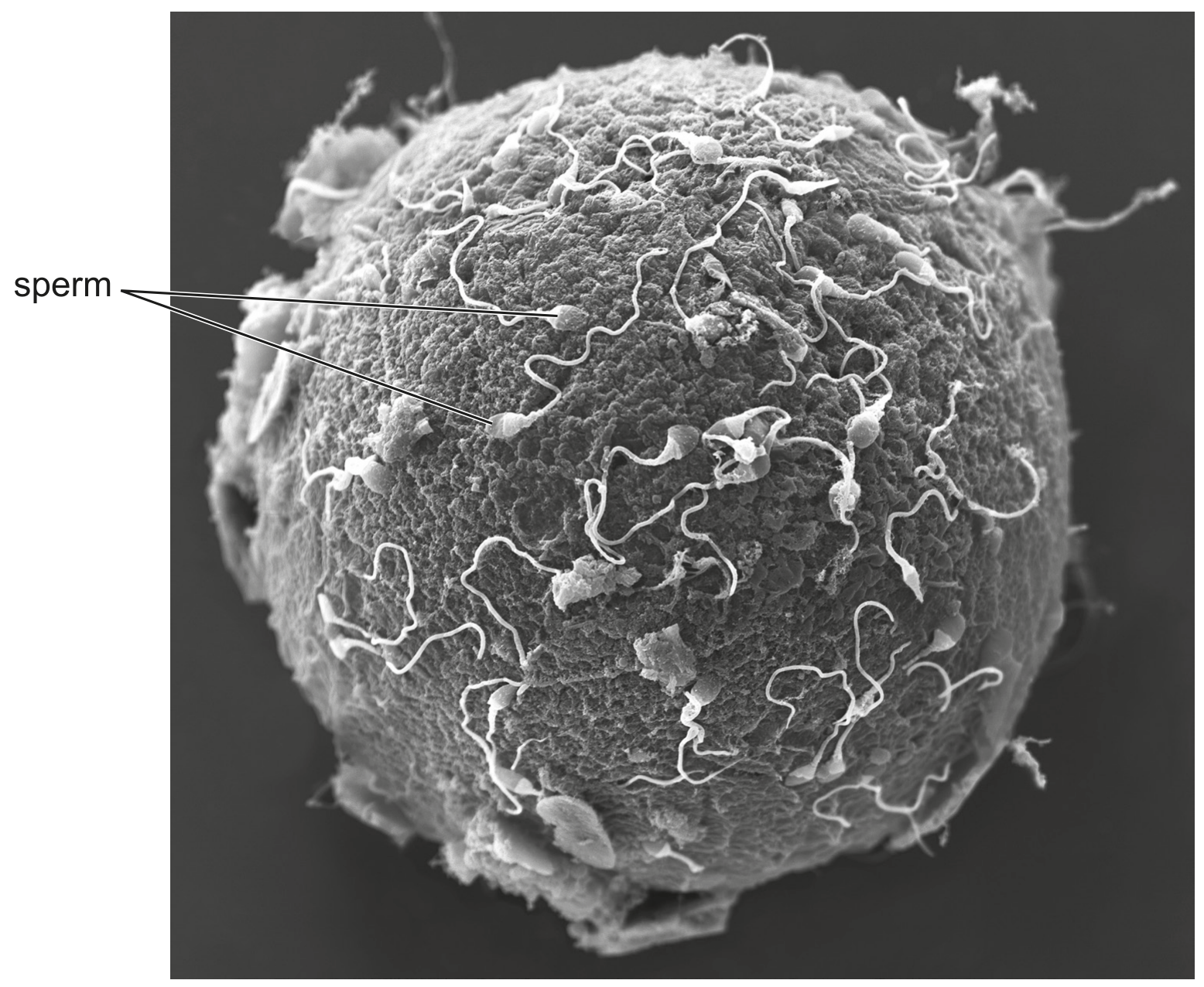
Fig. 2.1 is a photomicrograph showing the fertilisation of one human egg cell.

Fig. 2.1

Fig. 2.1

Describe and explain the adaptations of the cells shown in Fig. 2.1 that enable fertilisation and early development of the embryo to occur.

[ 6 ]
(a)

Fig. 3.1 shows some of the events that occur in the menstrual cycle.

Fig. 3.1

Fig. 3.1

[ 1 ]
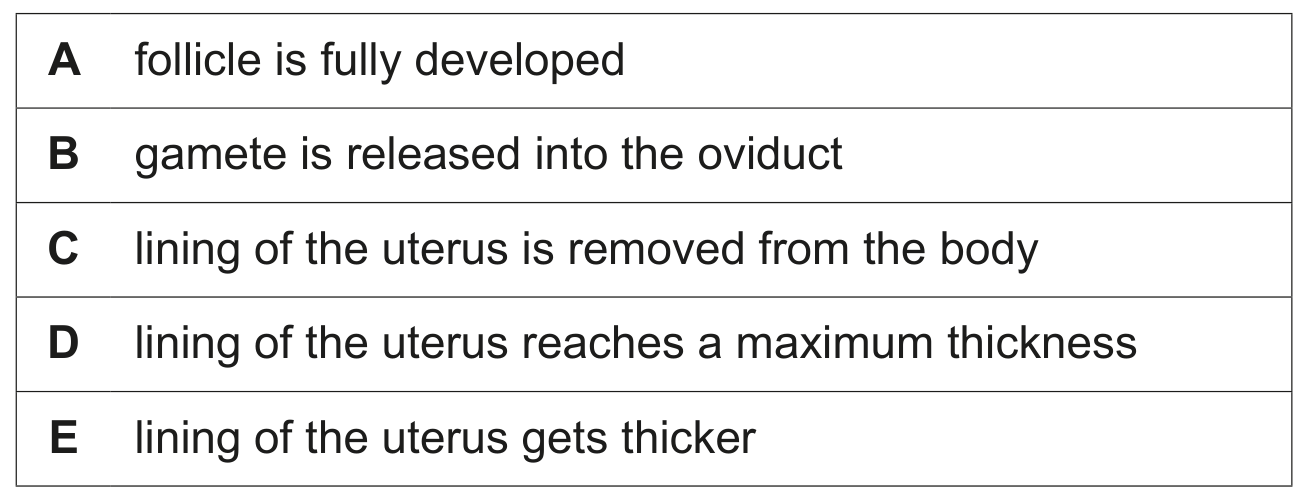
(i)

Put the events shown in Fig. 3.1 into the correct sequence.

One has been done for you.

Table
[ 1 ]
(b)

During pregnancy menstruation does not occur.

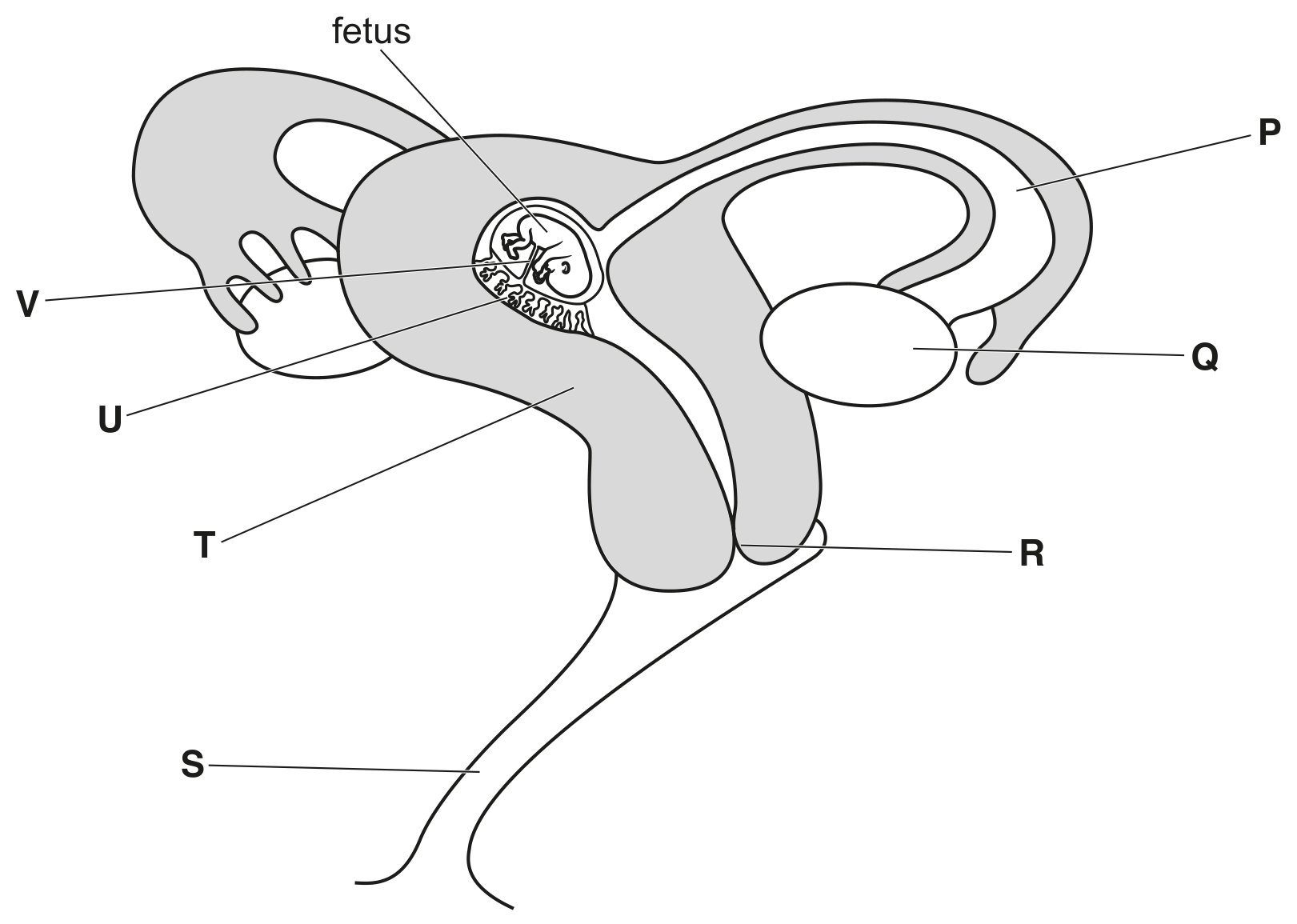
Fig. 3.2 shows some of the organs of a pregnant woman, viewed from the side.

Fig. 3.2

Fig. 3.2

Describe what happens between ovulation and the formation of a fetus.
Use the letters in Fig. 3.2 to support your answer.

[ 6 ]
(a)

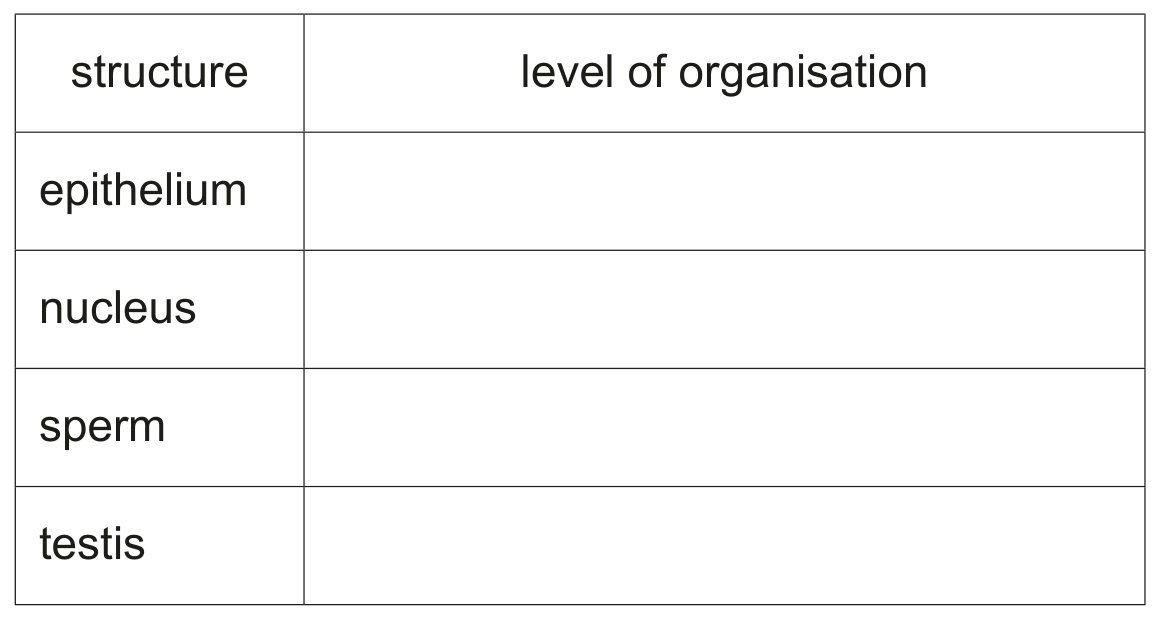
Table 4.1 shows four structures associated with the human male reproductive system.
Complete Table 4.1 by identifying the level of organisation of each structure.
Choose your answers from the list.

Table 4.1

Table 4.1

Table
[ 4 ]
(b)

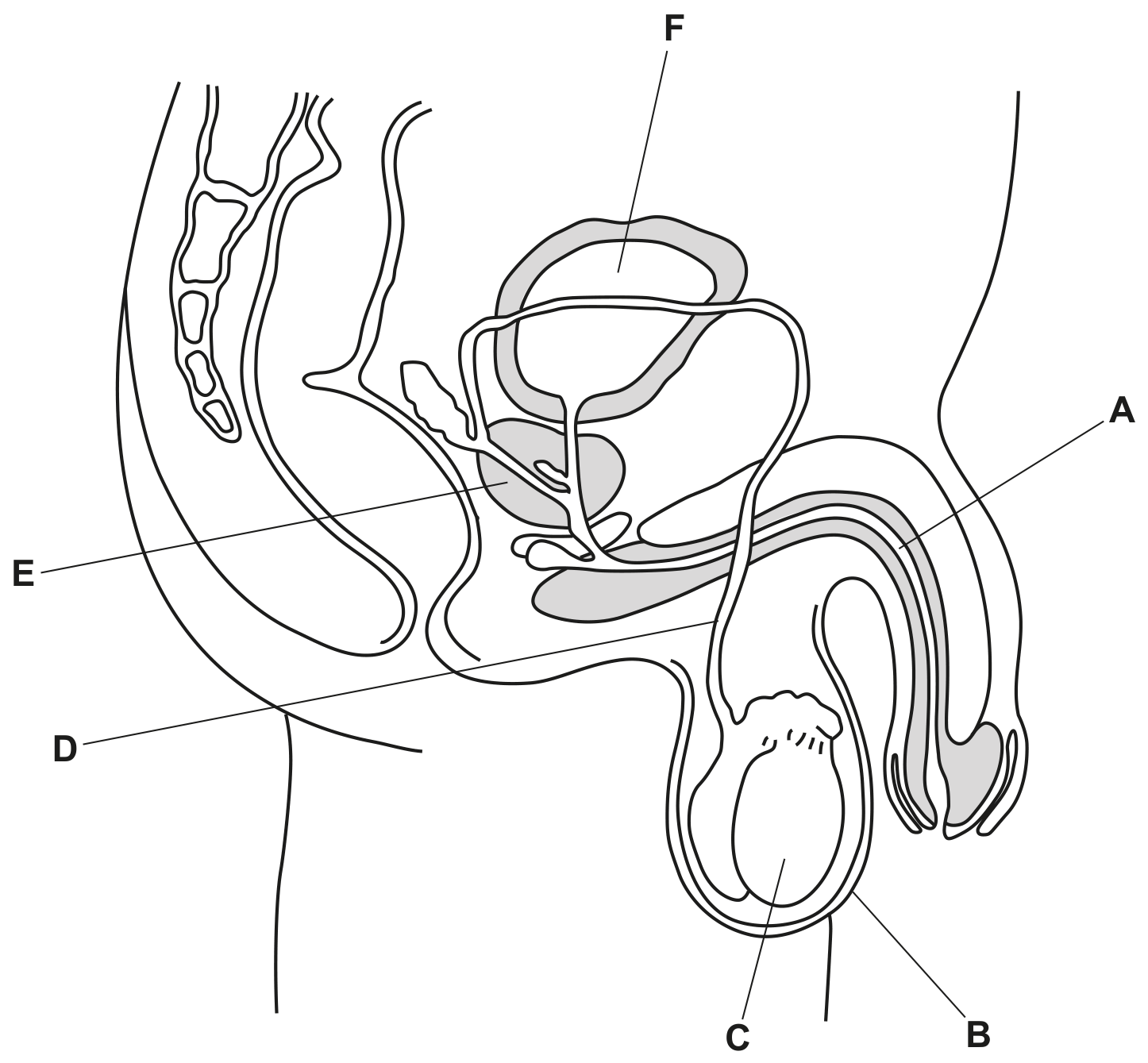
Fig. 4.1 shows the male reproductive system.

Fig. 4.1

Fig. 4.1

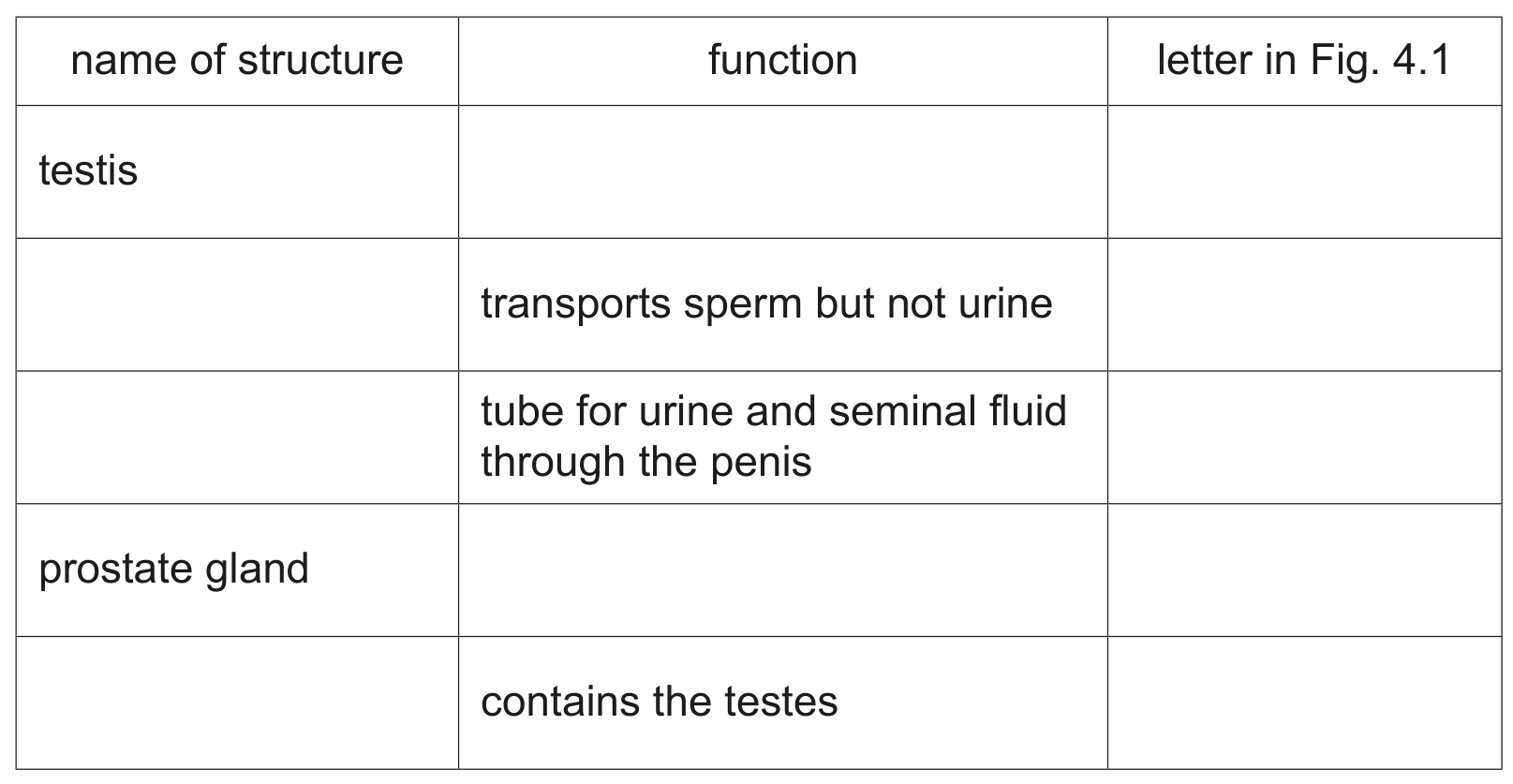
Table 4.2 shows information about the male reproductive system shown in Fig. 4.1.

Complete Table 4.2.

Table 4.2

Table 4.2

[ 5 ]
[Maximum number: 3]

Tobacco smoke is made up of over 7000 chemicals.
Nicotine is a component of tobacco smoke.

(a)

Explain why it is recommended that pregnant women do not smoke.

[ 3 ]
[Maximum number: 3]

One of the roles of the Centers for Disease Control and Prevention (CDC) in Atlanta, US, is to try to reduce the number of people who are infected with pathogens.

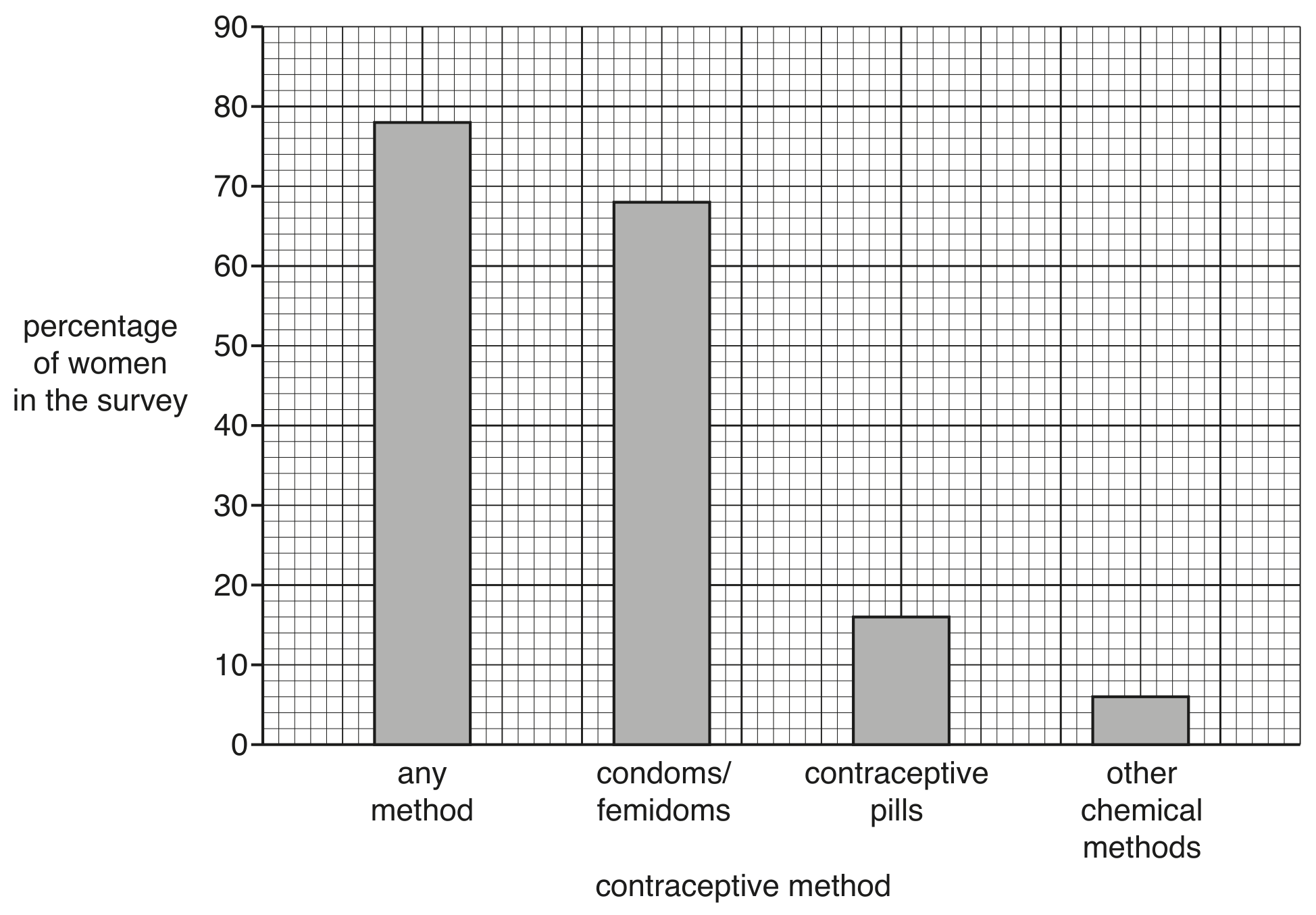
The CDC conducted a survey. They asked women which, if any, contraceptive methods they used.

(a)
Fig. 4.1 shows the results of the survey.

Fig. 4.1 shows the results of the survey.

[ 3 ]
(i)

Give one example of 'other chemical methods' (fourth bar) that could be included in the bar in Fig. 4.1.

[ 1 ]
(ii)

State two methods of birth control that were not listed in the survey.

1

2

[ 2 ]
0