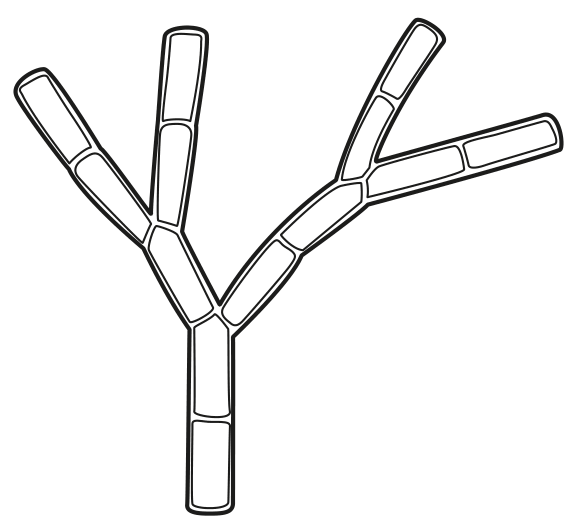
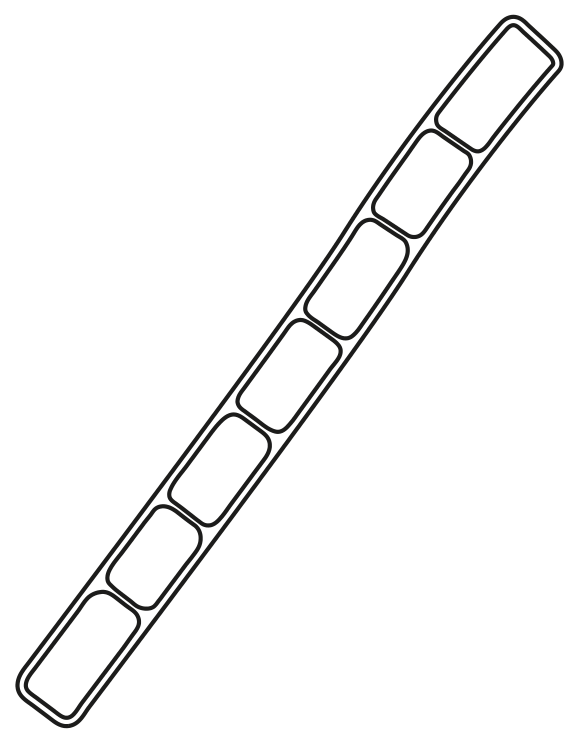
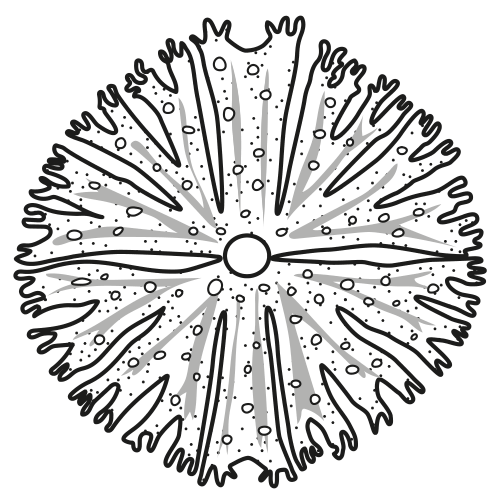
Fig. 1.1 is a branching key used to identify different species of bacteria.
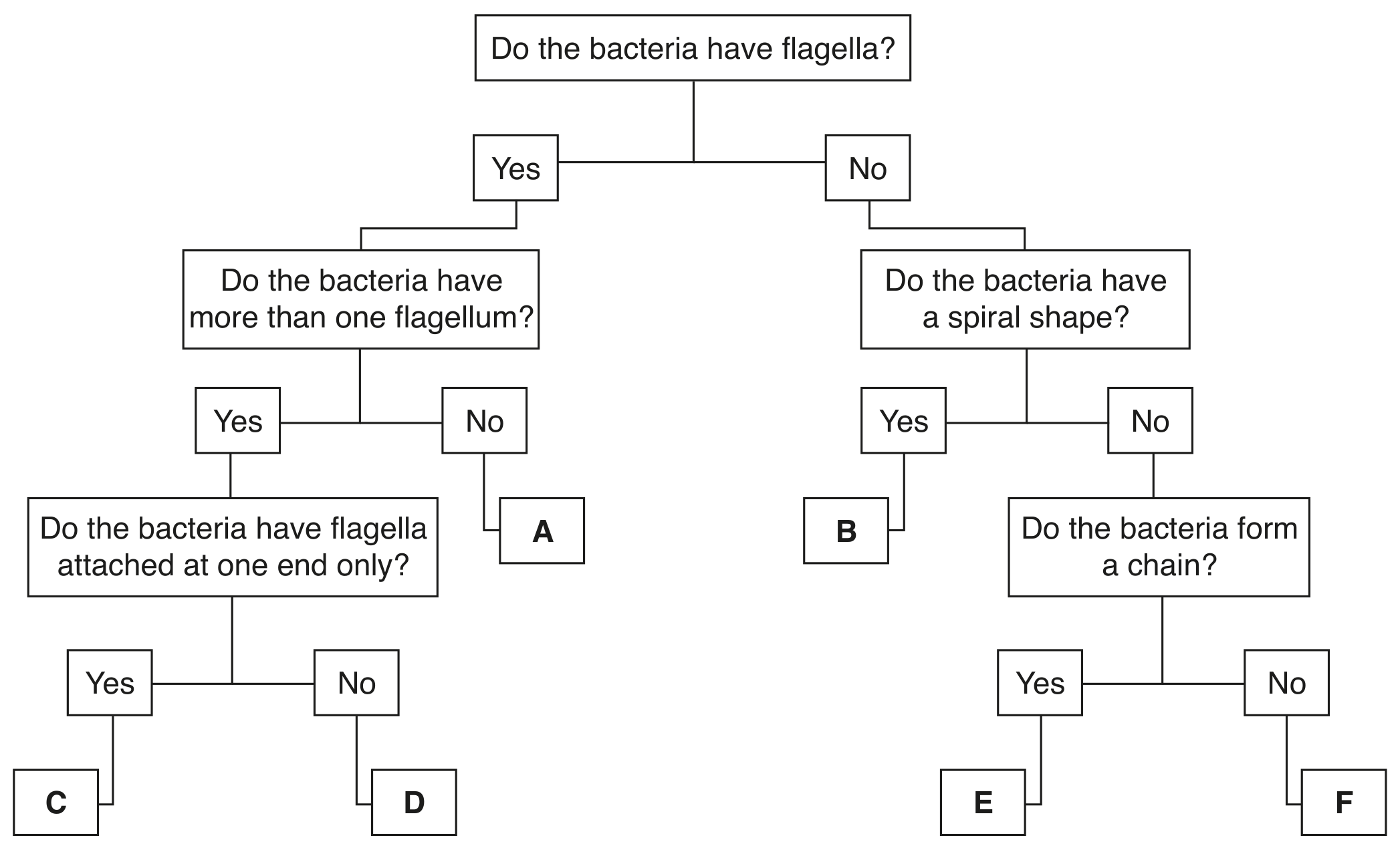
Fig. 1.1
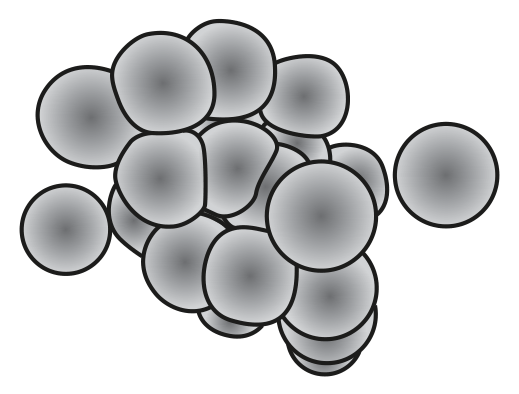
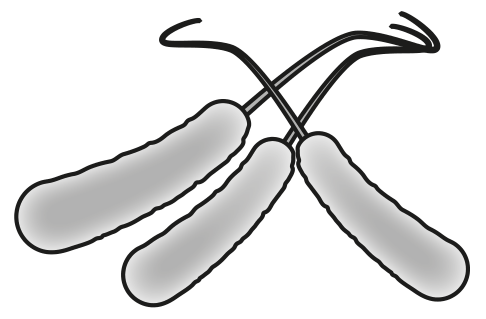
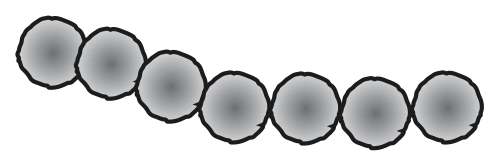
Fig. 1.2 shows six different species of bacteria.
Use the key to identify the six different species of bacteria.
Write the letters on the lines in Fig. 1.2.




EduNinjaFig. 1.1 is a branching key used to identify different species of bacteria.

Fig. 1.1
Fig. 1.2 shows six different species of bacteria.
Use the key to identify the six different species of bacteria.
Write the letters on the lines in Fig. 1.2.


What is a correct way of naming an organism using the binomial system?
Common buttercup
ranunculus acris
Ranunculus acris
Ranunculus sp.
Phytoplankton consist of many species of single-celled and many-celled algae.
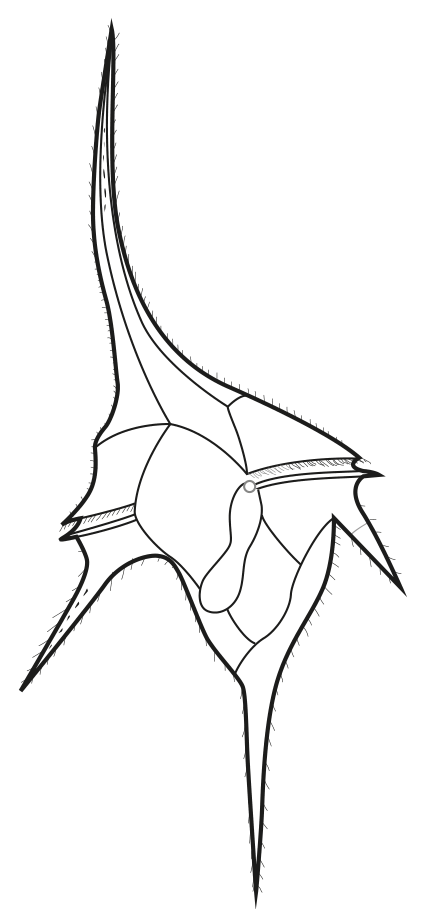
The student made careful drawings of seven types of alga found in the samples of lake water. The drawings are shown in Fig. 1.2.
A
A

C

E

G

Fig. 1.2
B

D

F

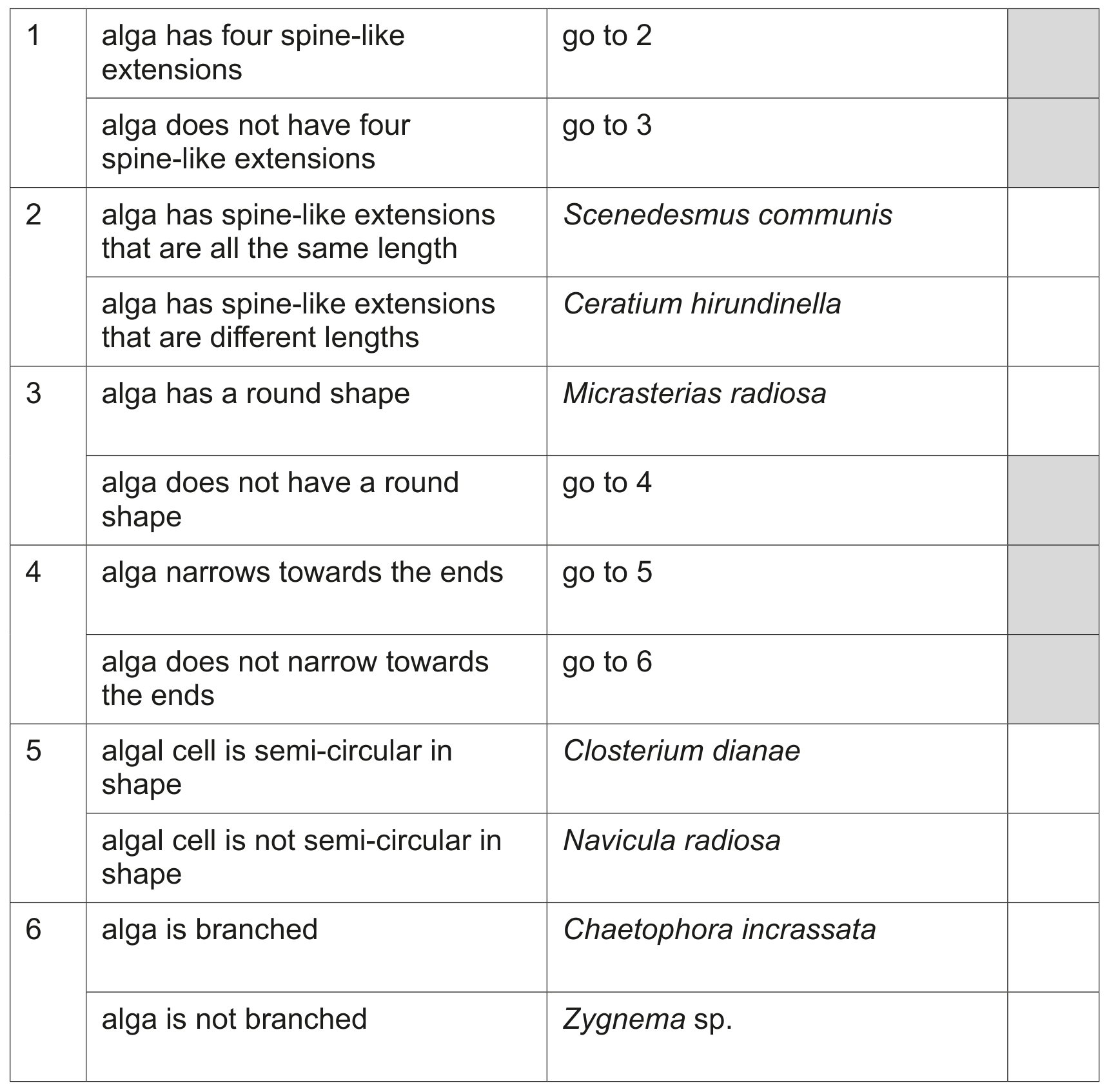
Use the key to identify each of the species A to G. Write the letter of each species in the correct box beside the key.

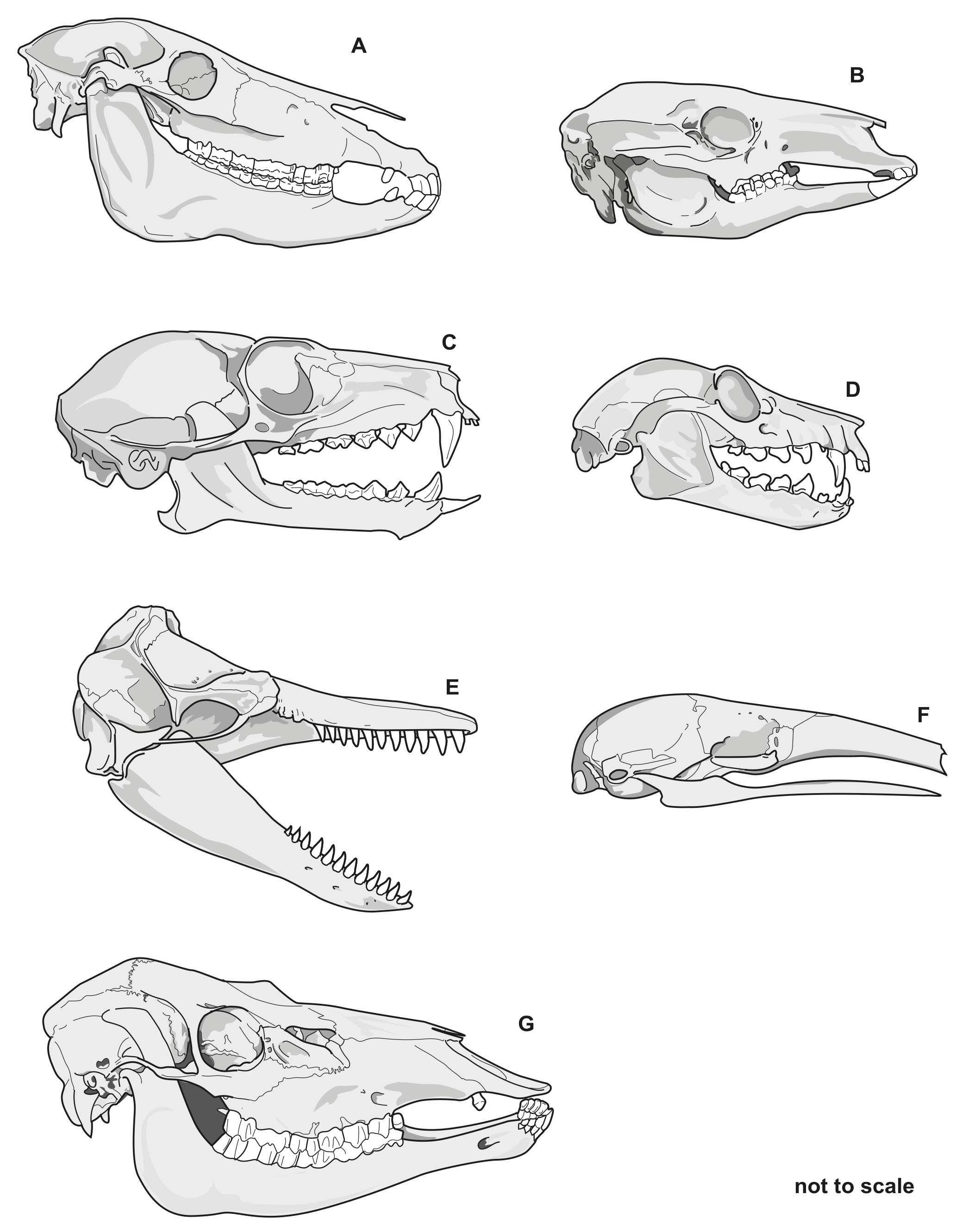
Mammals can be classified according to the position and shape of their teeth.

Fig. 1.2 shows the skulls of seven mammals.
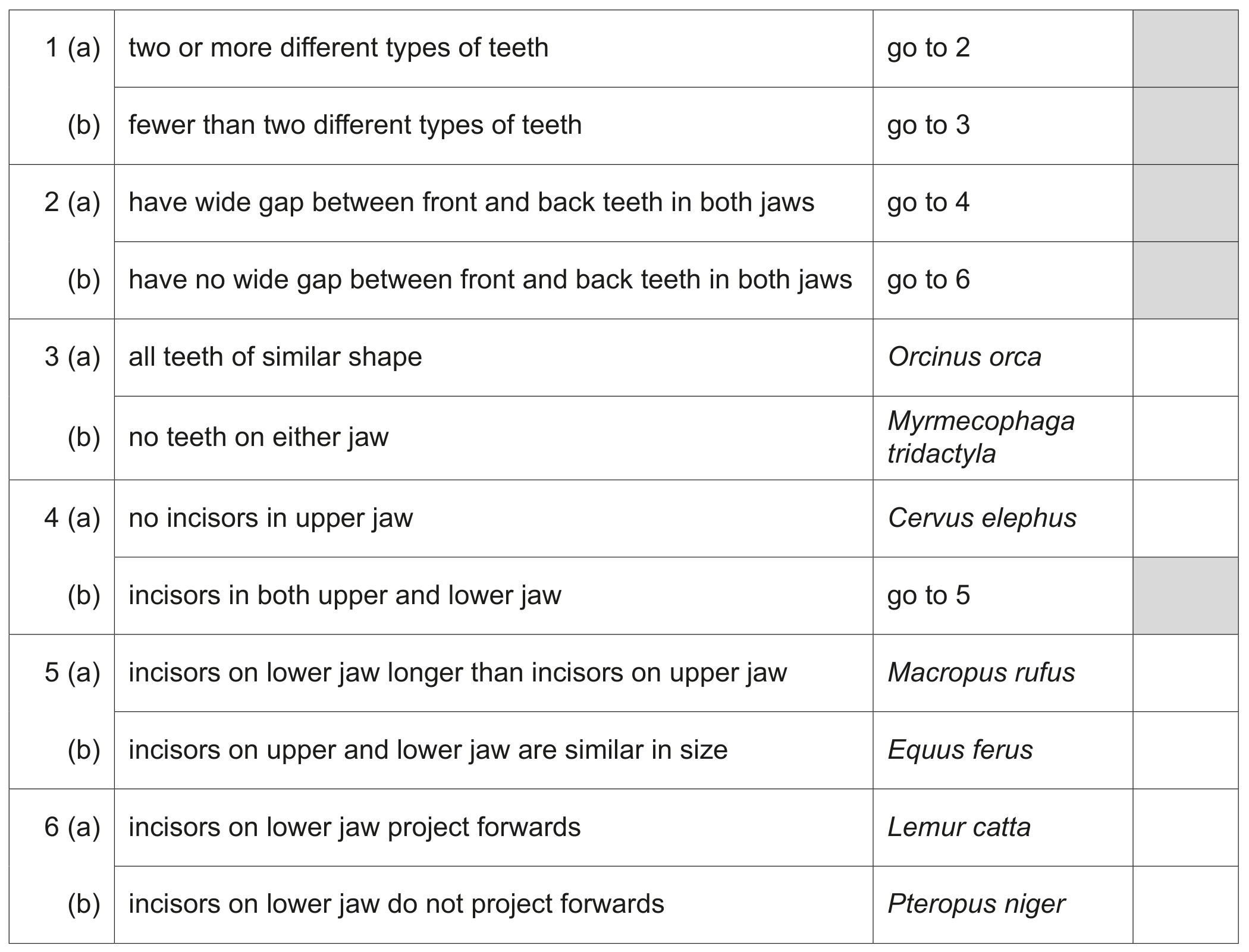
Use the key to identify each species shown in Fig. 1.2.
Write the letter of each species (A to G ) in the correct box in the key.

Key
Penicillin is produced by biotechnology industries.
Fig. 1.1 is a flow diagram of some of the steps in the production of penicillin.

Fig. 1.1
State the genus name of organism A in Fig. 1.1.
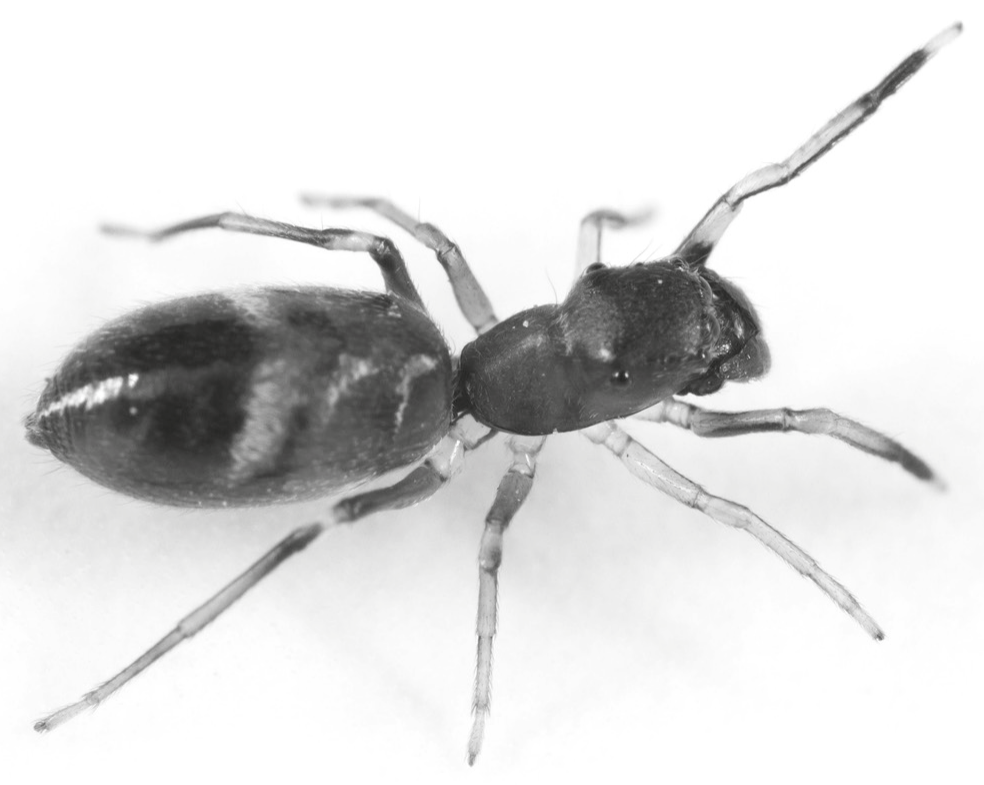
The ant-mimic jumping spider, Myrmarachne formicaria, is shown in Fig. 1.1.
The common name of this species describes its behaviour. It is an arachnid that tricks its prey because it looks like the insects that it eats.

Fig. 1.1
State the genus of the spider shown in Fig. 1.1.
Some keys use paired choices of features to identify species such as the ant-mimic jumping spider.
State the name of this type of key.
The features shown in Fig. 1.2 are morphological features. Many traditional methods of classification used morphology.
State the name of one other type of feature that can also be used in classification.
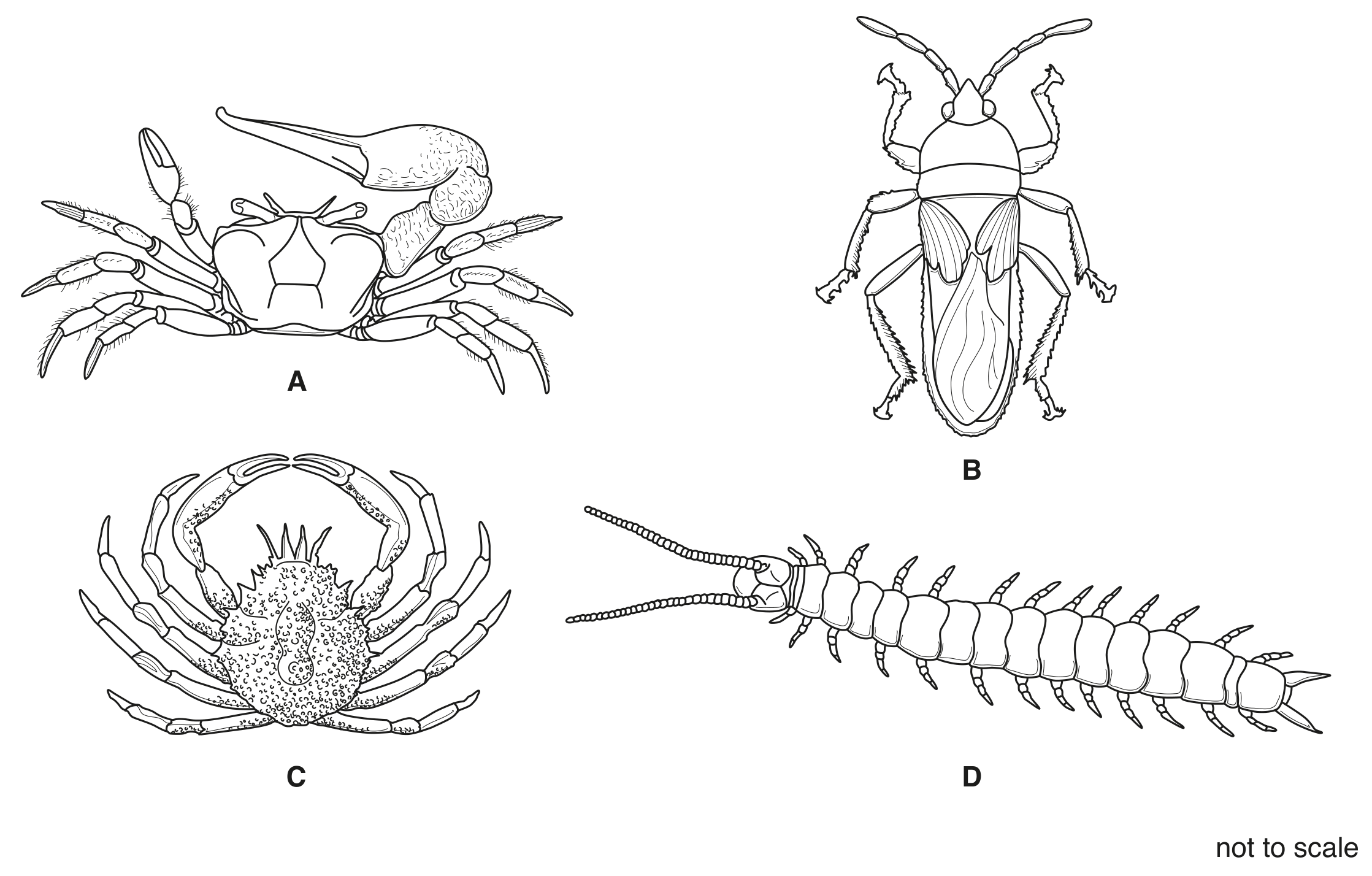
Fig. 1.1 shows four arthropods.

Fig. 1.1
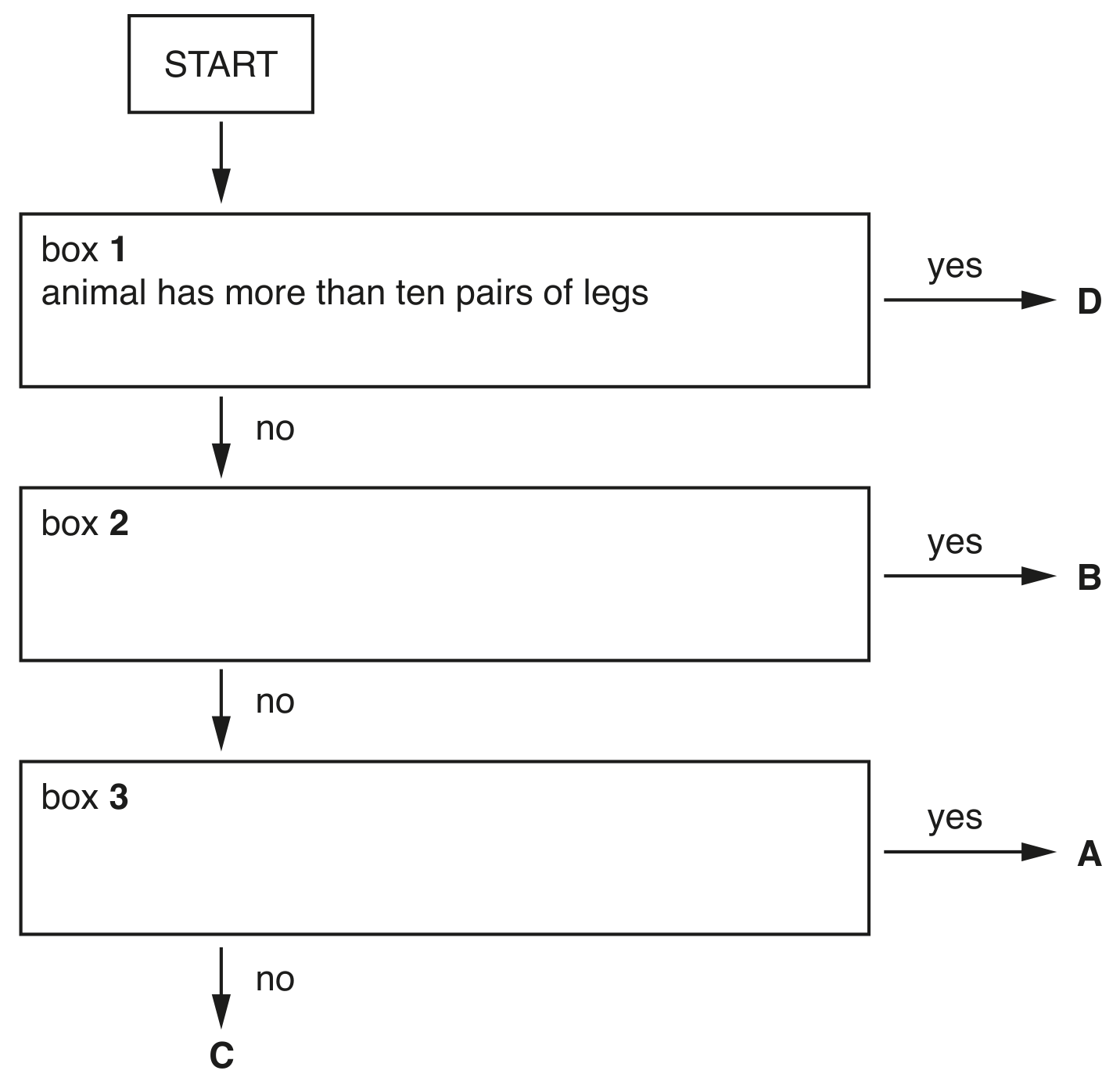
Fig. 1.2 is a dichotomous key for the arthropods shown in Fig. 1.1.
Complete Fig. 1.2 by writing suitable statements in:
- box 2 to identify species B
- box 3 to separate species C and A.

Fig. 1.2
DNA can be extracted from the webs of spiders. This DNA can be used to identify the species of spider that made the web, and the species of prey caught in the web.
Explain how DNA extracted from spider webs can be used to identify different species.
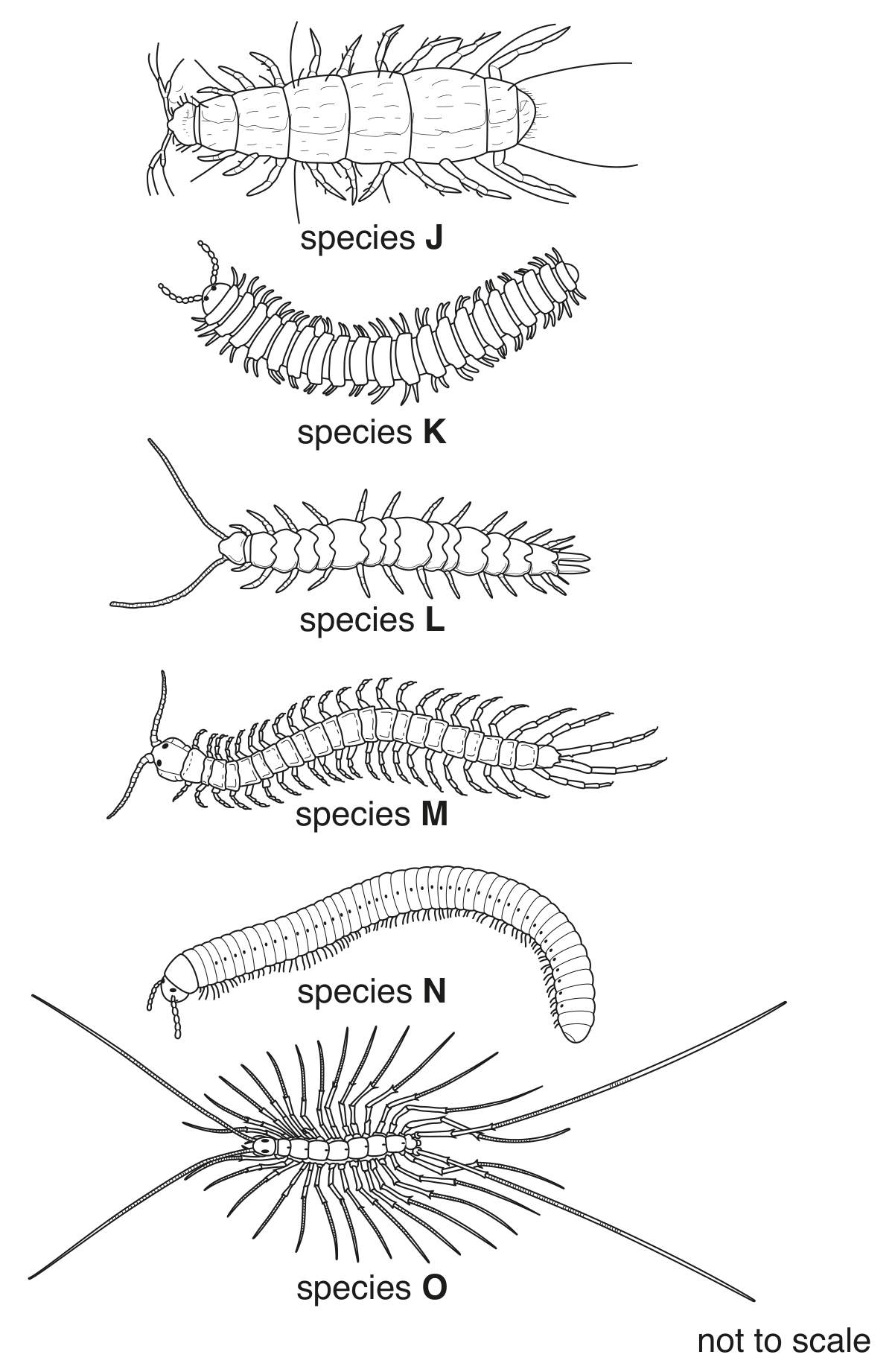
All living organisms are placed into groups according to their features. Myriapods are one of the main groups of arthropods.
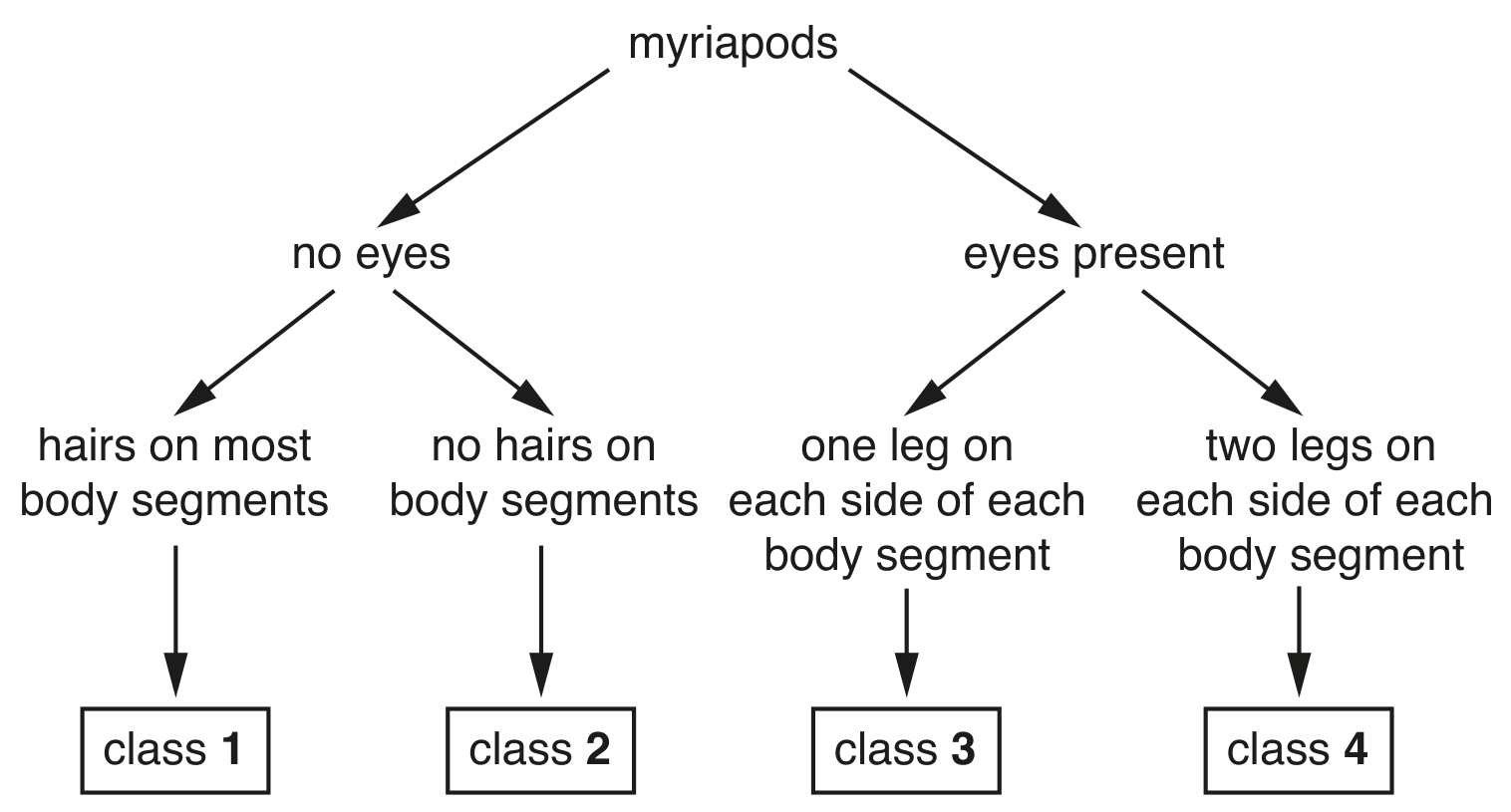
Myriapods can be classified into four classes, 1, 2, 3 and 4.
Fig. 1.2 is a dichotomous key that can be used to distinguish the four classes of myriapods.

Fig. 1.2

Fig. 1.3
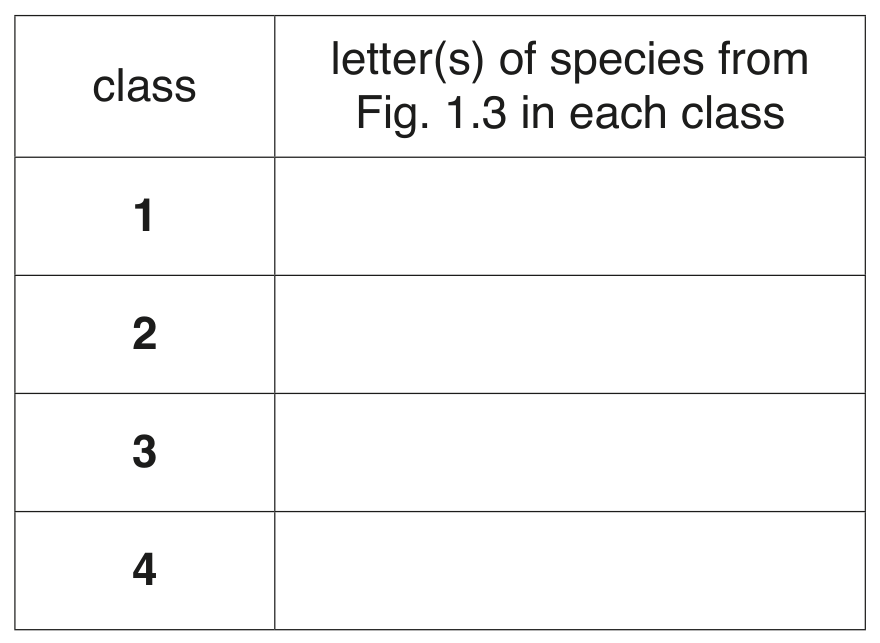
Complete Table 1.1 by using the key in Fig. 1.2 to classify the six myriapods in Fig. 1.3 into the four classes.

Table 1.1
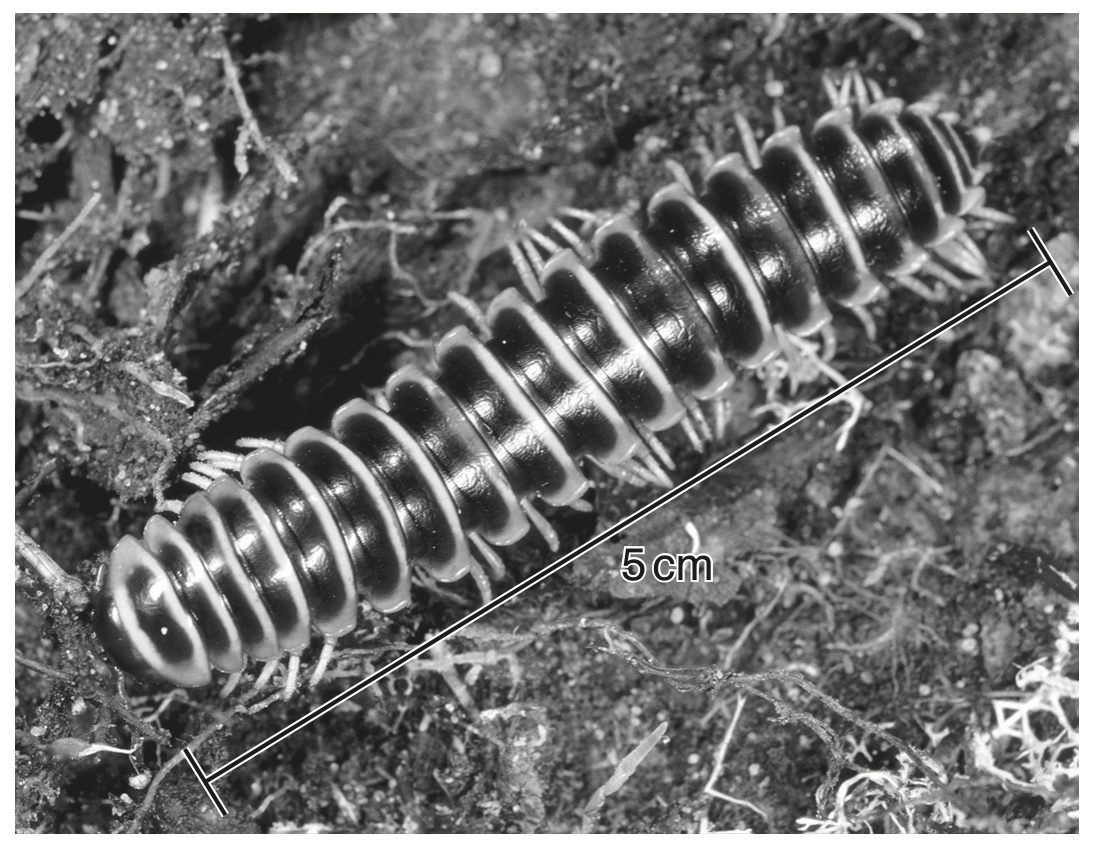
Fig. 1.4 is a photograph of the myriapod, Apheloria virginiensis.

Fig. 1.4
State the genus name and kingdom name for the myriapod shown in Fig. 1.4. genus
kingdom
All commercial breeds of sheep belong to the species Ovis aries.
Define the term species.
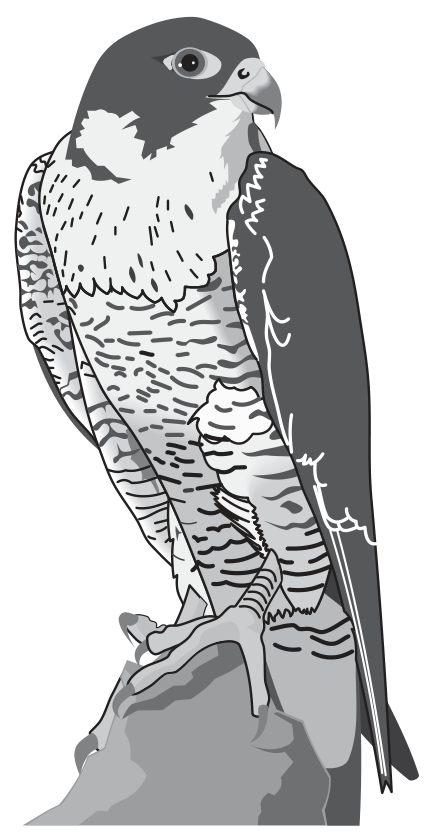
The diagram shows an animal whose scientific name is Falco peregrinus.

To which species does it belong?
bird
F. peregrinus
Falco
vertebrate