[Maximum number: 1]
Wheat is a crop plant grown to produce flour.
(a)
Flour is used to make dough for bread.
[ 1 ]
(i)
State the name of the process that this organism uses to produce the gas that makes dough rise.
[ 1 ]
 EduNinja
Wheat is a crop plant grown to produce flour.
Flour is used to make dough for bread.
State the name of the process that this organism uses to produce the gas that makes dough rise.
Describe the role of the liver in the recovery from oxygen debt after strenuous exercise.
Fig. 2.1 shows a cross-section of a human heart.
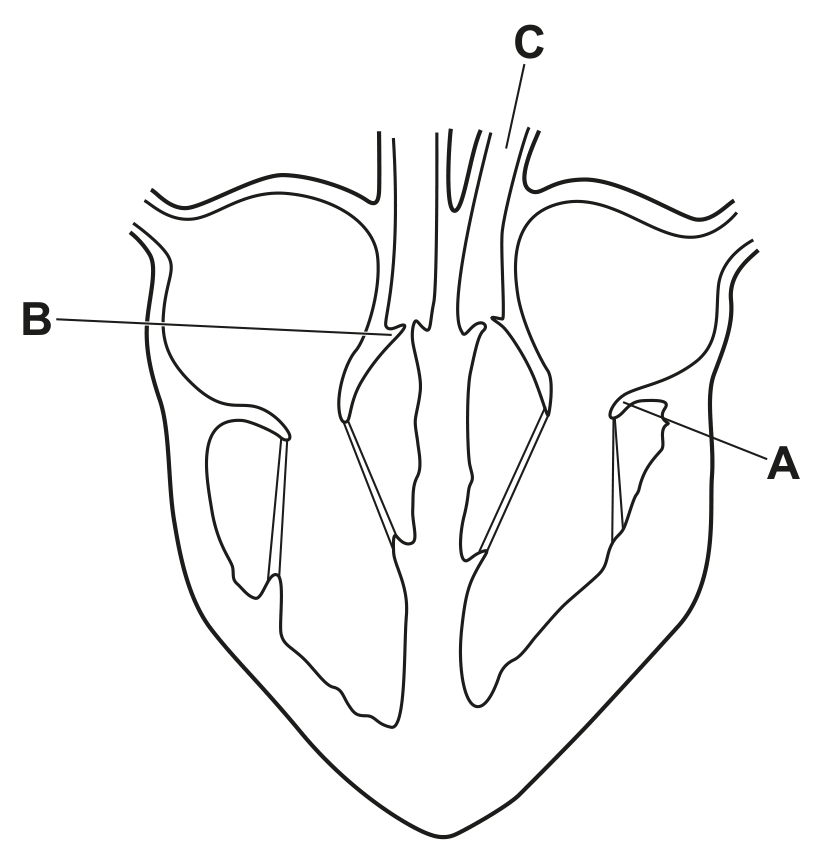
Fig. 2.1
Fig. 2.3 shows how the body uses aerobic and anaerobic respiration during the first 120 seconds of vigorous physical activity. Between 0 and 20 seconds, the body also uses stored energy.
percentage of energy released
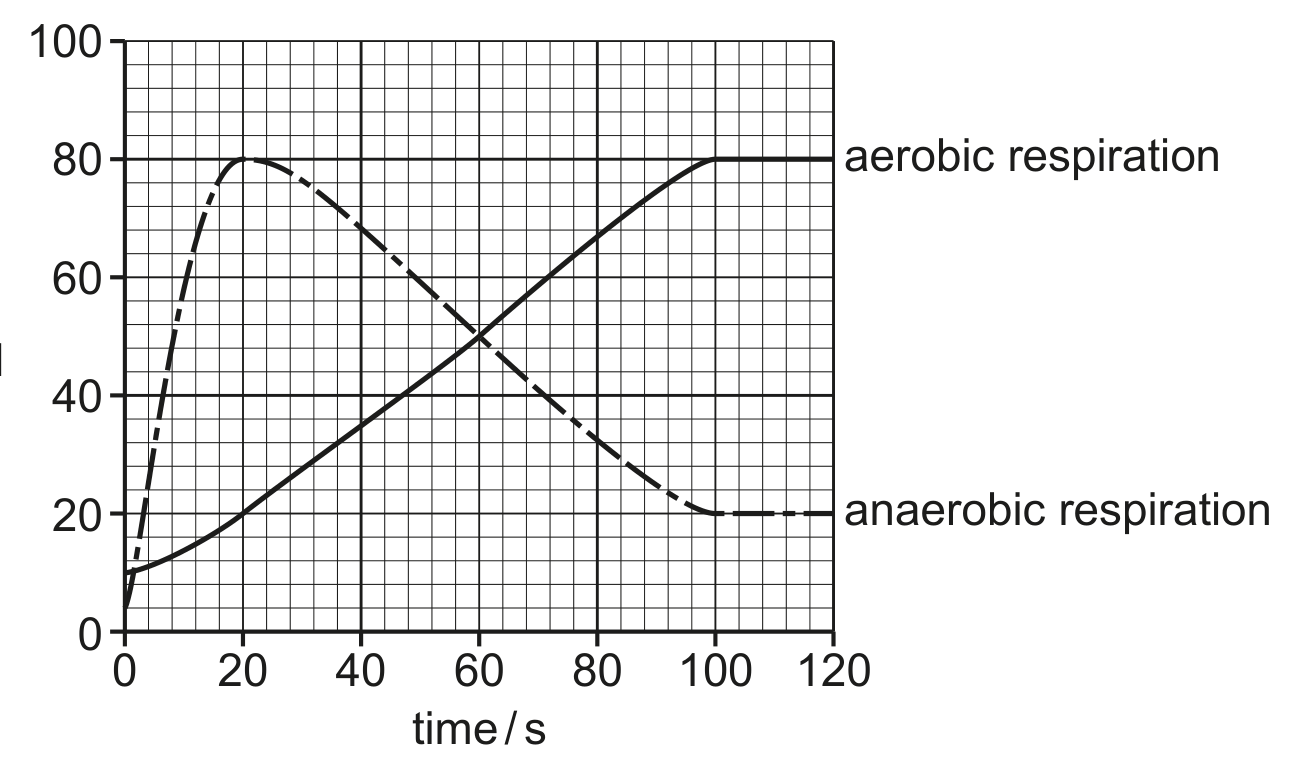
Fig. 2.3
During anaerobic respiration an oxygen debt can build up.
State the name of the chemical that causes this oxygen debt.
A person who wanted to begin a fitness programme did some vigorous exercise.
A fitness trainer took a drop of blood from the person's finger before, during and after vigorous exercise and tested it for lactic acid.
The results of the tests for lactic acid are shown in Fig. 2.1.
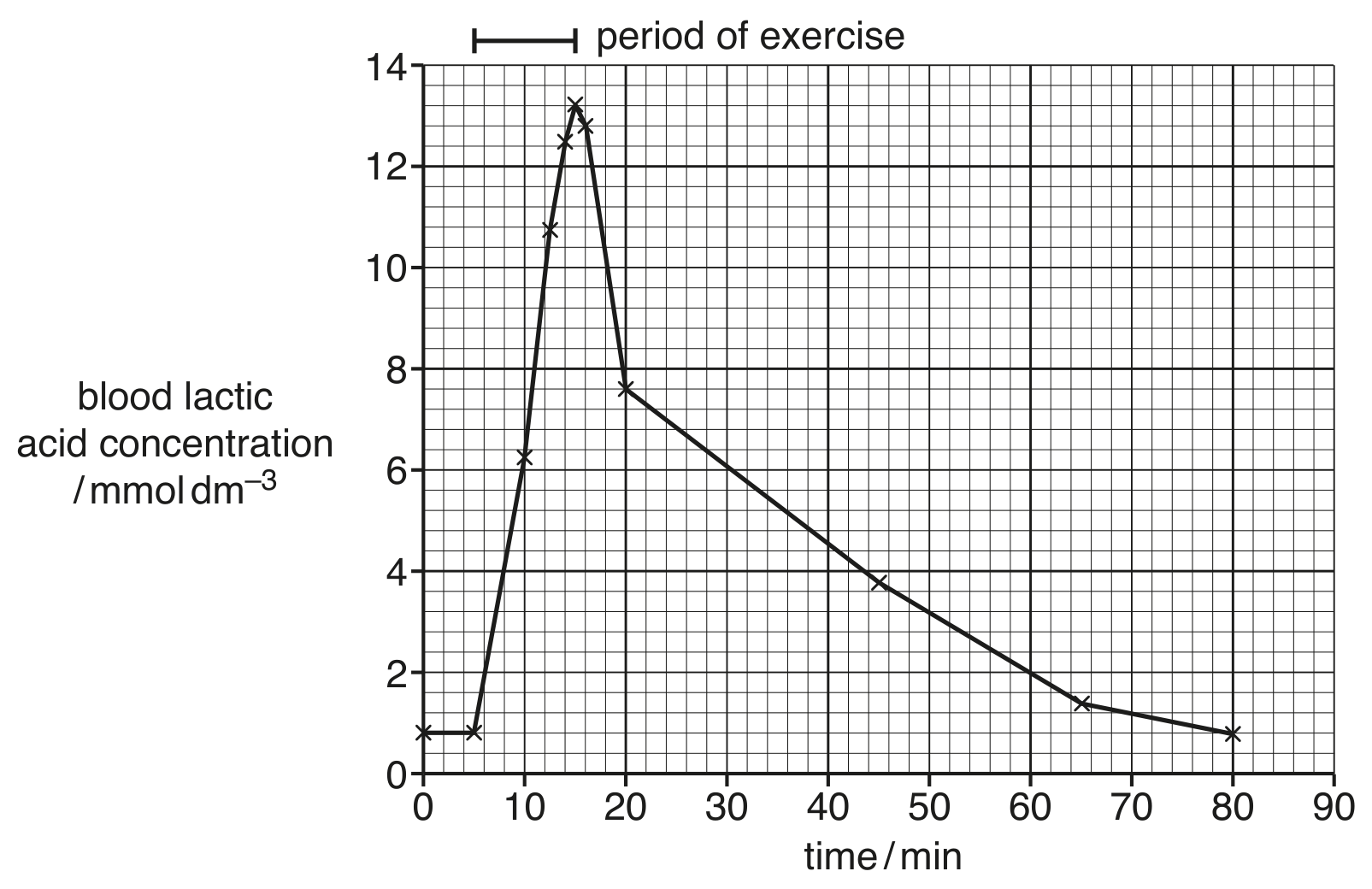
Fig. 2.1
Describe and explain the changes in blood lactic acid concentration shown in Fig. 2.1.
The concentration of lactic acid in the blood of two athletes was investigated. One athlete, P, had been training and the other, Q, was returning to training after an injury.
Blood samples were taken from both athletes during a training session. The results are shown in Fig. 2.2.
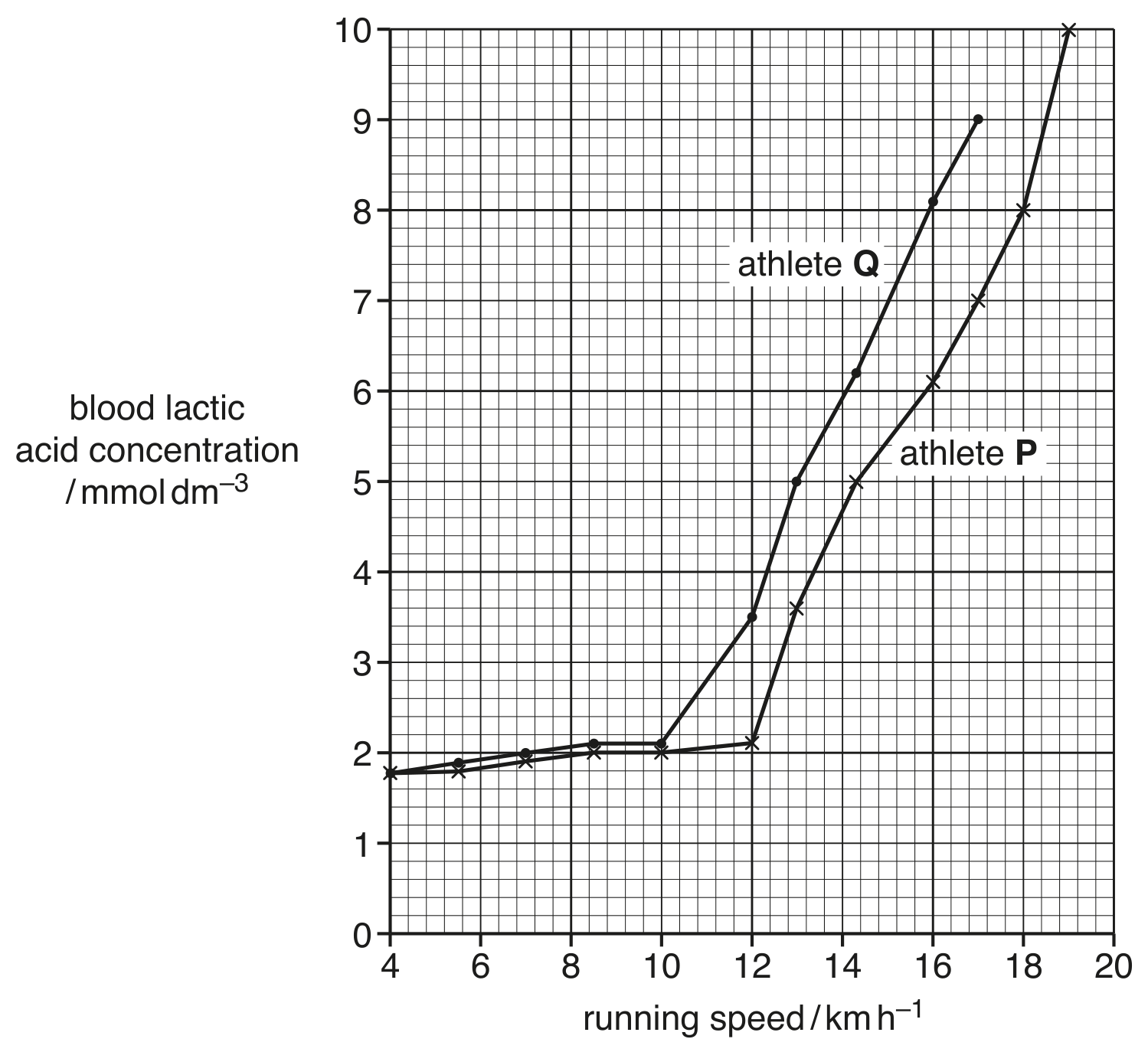
Fig. 2.2
The lactic acid threshold is the level of exercise where the lactic acid concentration begins to increase exponentially.
State the lactic acid threshold for athletes P and Q.
P
Q
Suggest a reason for the difference in lactic acid threshold of athletes P and Q.
The table shows some of the features of respiration.
Which row is correct for anaerobic respiration?
amount of energy
released per
glucose molecule
chemical reaction
releases
carbon dioxide
high
always the same
sometimes
low
different in different organisms
sometimes
high
different in different organisms
always
low
always the same
always
Yeast is used in bread-making. It respires anaerobically, producing carbon dioxide.
Write the balanced chemical equation for anaerobic respiration of yeast in bread-making.
A baker wants to increase the rate of carbon dioxide production in the bread-making process. The baker trialled different concentrations of glucose solution in the bread dough.
Fig. 3.1 shows the results.
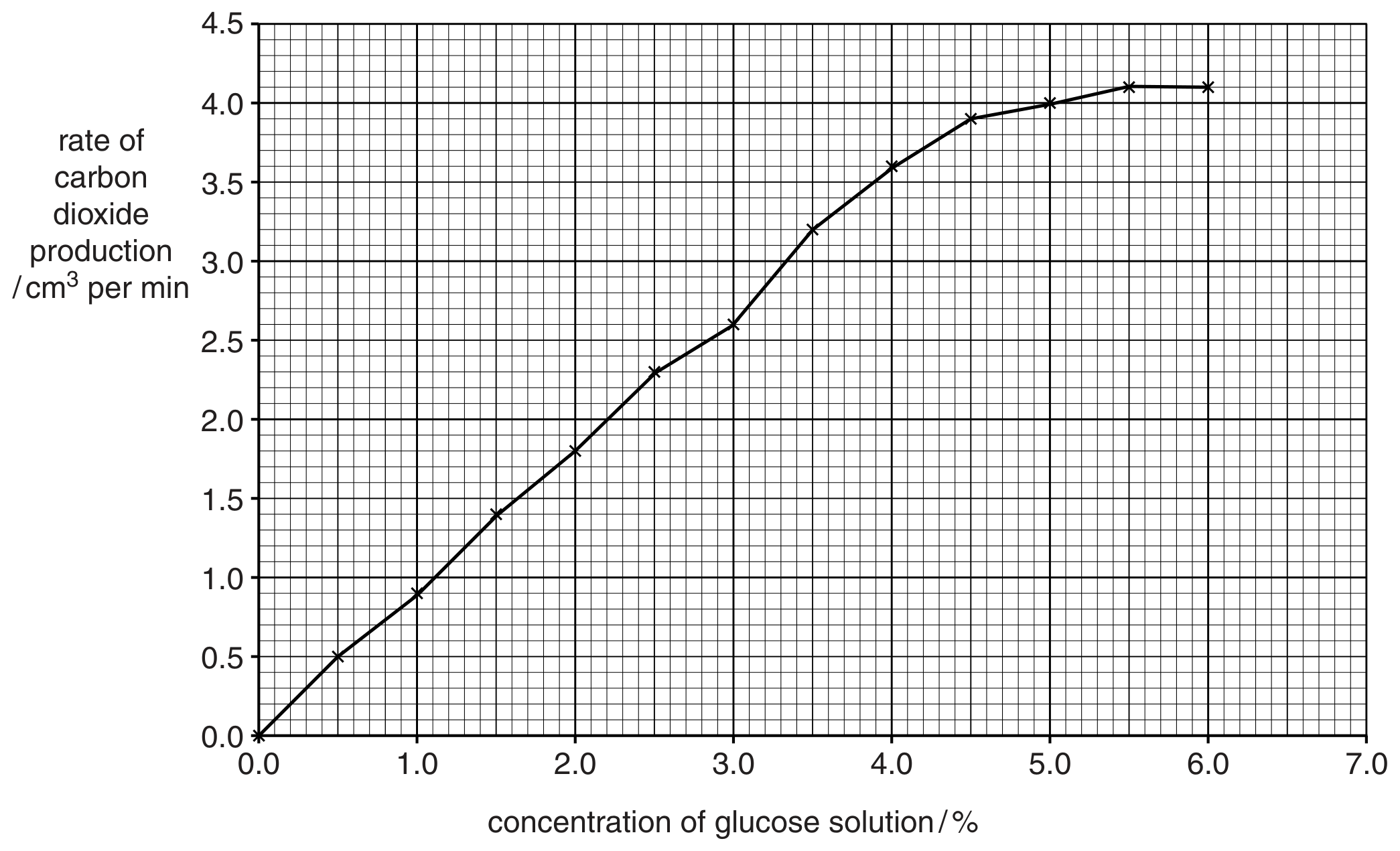
Fig. 3.1
Predict the rate of carbon dioxide production if the concentration of the glucose solution was 7.0 %. per min
The baker carried out the trials at .
The trials were repeated at .
Draw a line on Fig. 3.1 to show the rate of carbon dioxide production at .
The baker carried out another trial at . No carbon dioxide was released.
State why no carbon dioxide was produced.
The diagram shows some apparatus used to investigate respiration. Yeast, warm water and substance Z were put into a test-tube. After a while, the limewater began to go cloudy.
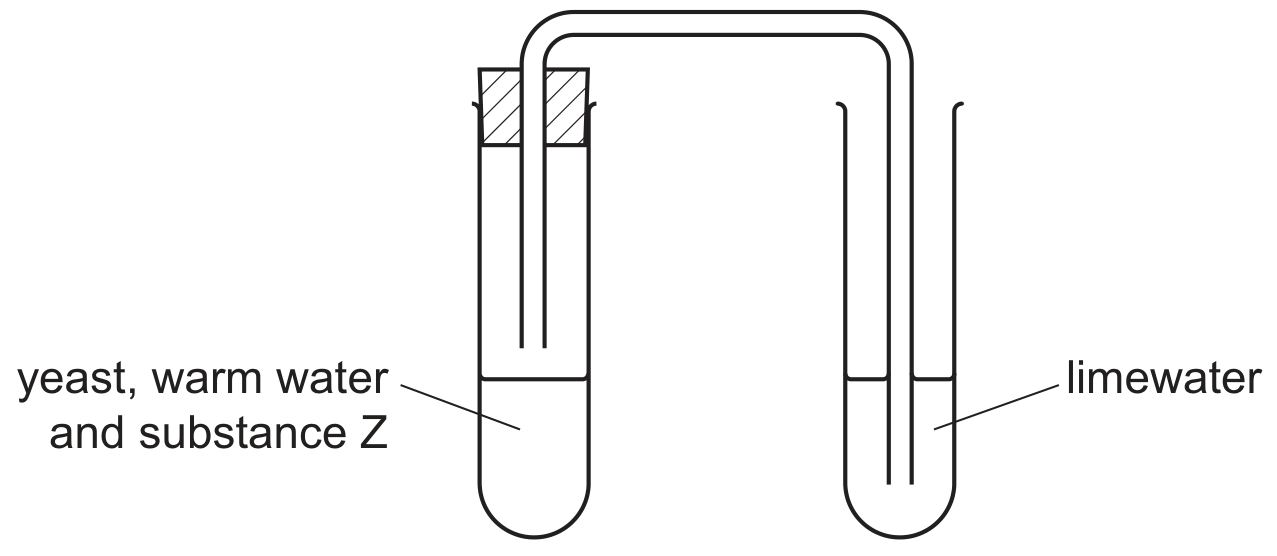
What is substance Z ?
alcohol
glucose
nitrogen
oxygen
What are the products of anaerobic respiration in muscles?
ethanol and carbon dioxide
ethanol only
lactic acid and carbon dioxide
lactic acid only
Which is the equation for anaerobic respiration in yeast?
c
D
In an experiment to investigate anaerobic respiration, two bottles are set up in a warm room, as shown.
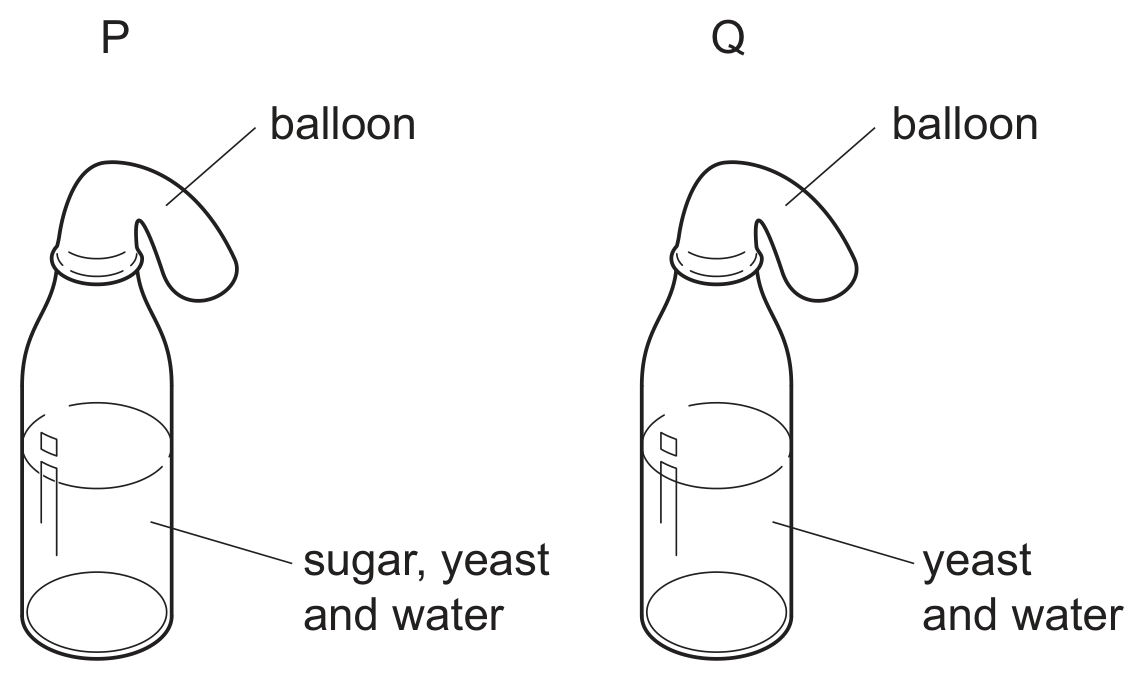
What would happen to each balloon after one day?


A

P

B

C

C

D