[Maximum number: 3]
Fig. 1.1 is a diagram of part of a cross-section of a leaf.
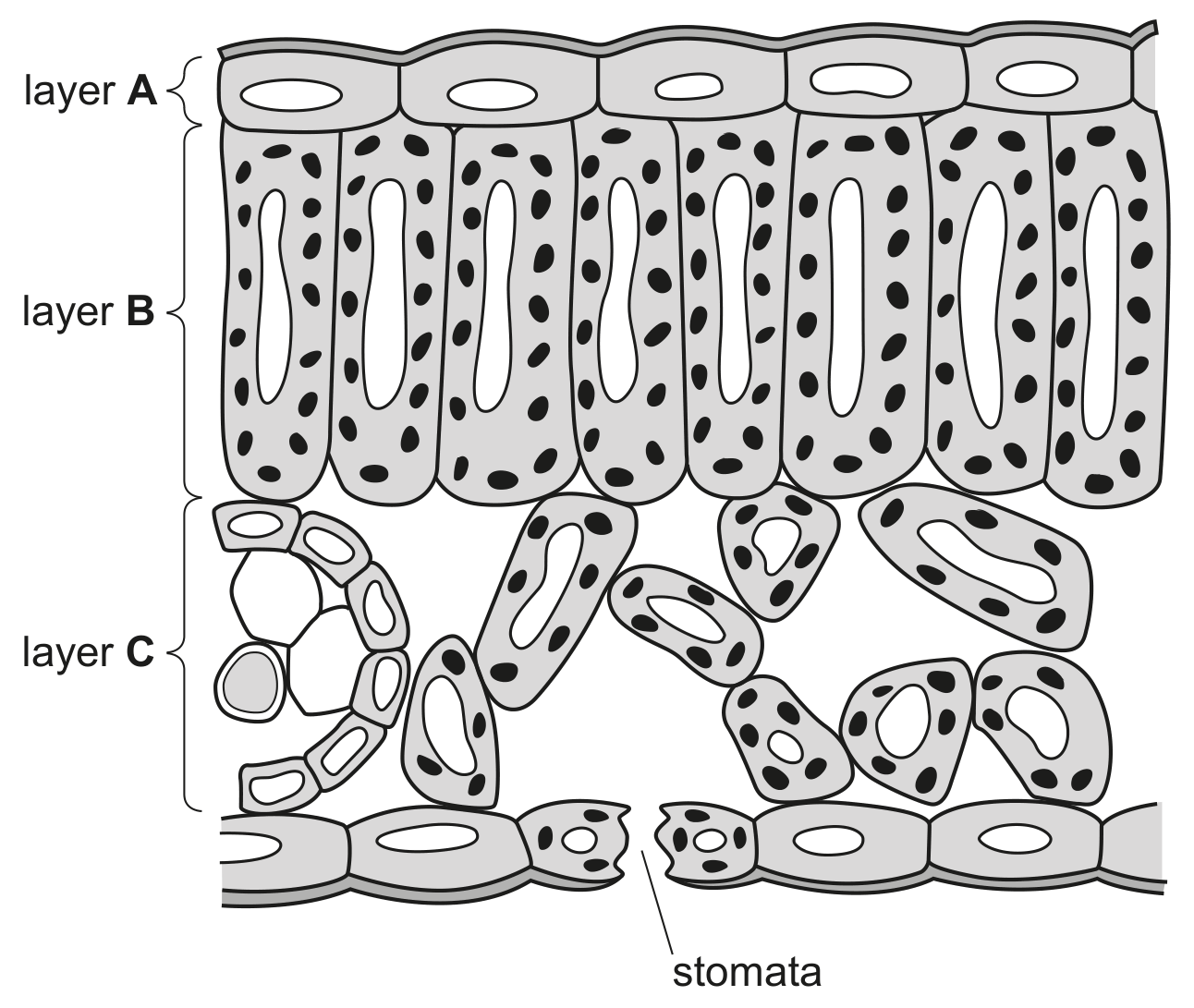
Fig. 1.1
(a)
The student increased the humidity in the room and repeated the investigation.
Predict and explain the effect of high humidity on the stomata.
[ 3 ]
 EduNinja
Fig. 1.1 is a diagram of part of a cross-section of a leaf.
Fig. 1.1
The student increased the humidity in the room and repeated the investigation.
Predict and explain the effect of high humidity on the stomata.
Transpiration is the loss of water vapour from the leaves of a plant.
Complete the sentence describing transpiration.
Water evaporates from the surfaces of the cells into the air spaces and then out of the leaves, through the stomata, as water vapour.
Explain how water moves upwards in the xylem.
A student investigated the effect of wind speed on the rate of transpiration in a small Pachira aquatica tree.
They measured the rate of transpiration when the plant was placed in different wind speeds in both the light and the dark. The tree was given an adequate supply of water.
The results of this investigation are shown in Fig. 2.1.
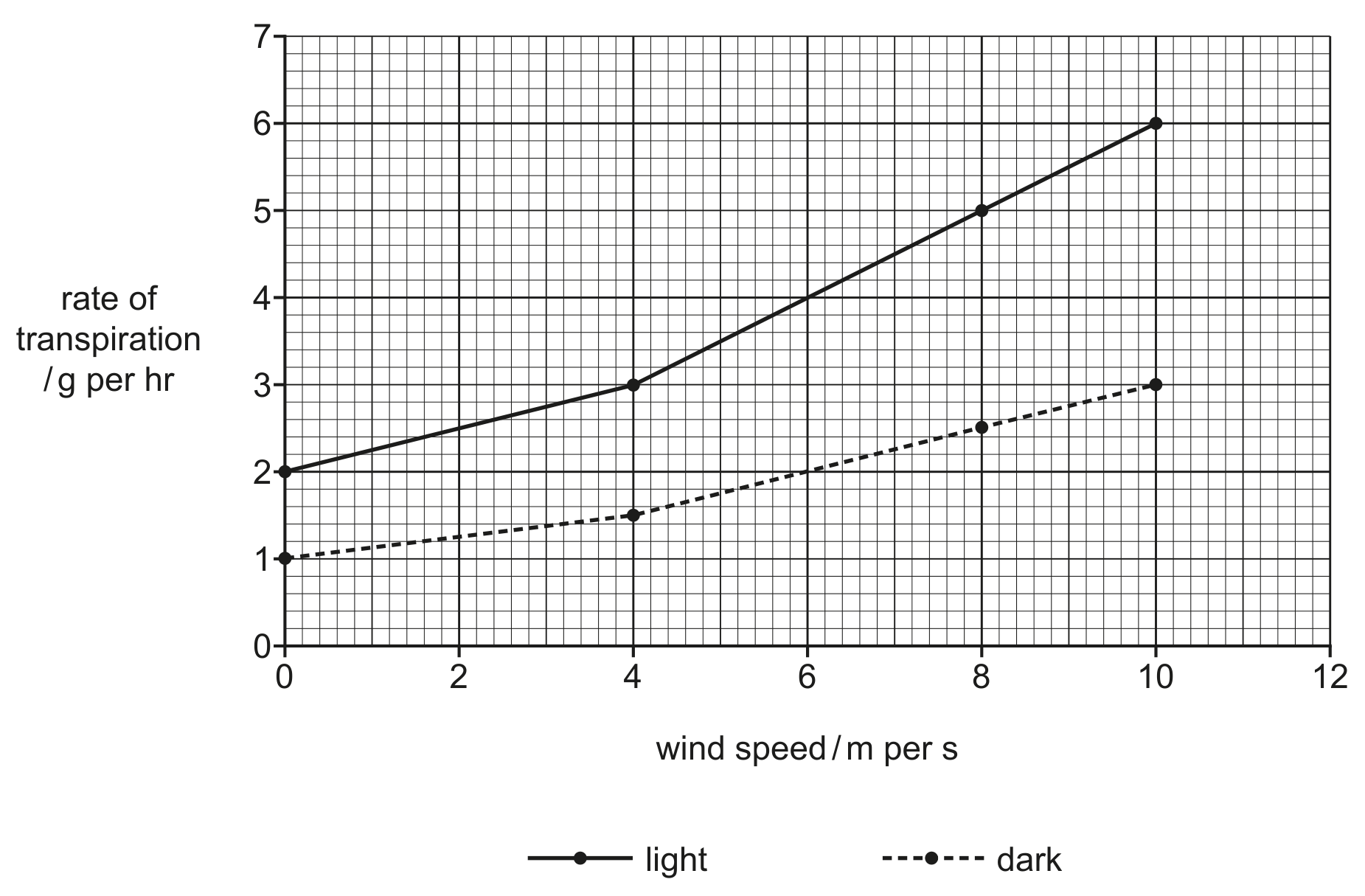
Fig. 2.1
Describe and explain the results shown in Fig. 2.1.
The investigation was repeated in the light with the same species of tree in an environment where the humidity was higher.
Draw a line on Fig. 2.1 to predict the results in the light with increased humidity.
The investigation described in 2(c) was repeated (different wind speeds in both the light and the dark).
However, the tree was not given an adequate supply of water during the investigation.
Predict the result and explain your prediction.
Which graph shows most clearly what will happen to the rate of transpiration as humidity increases?
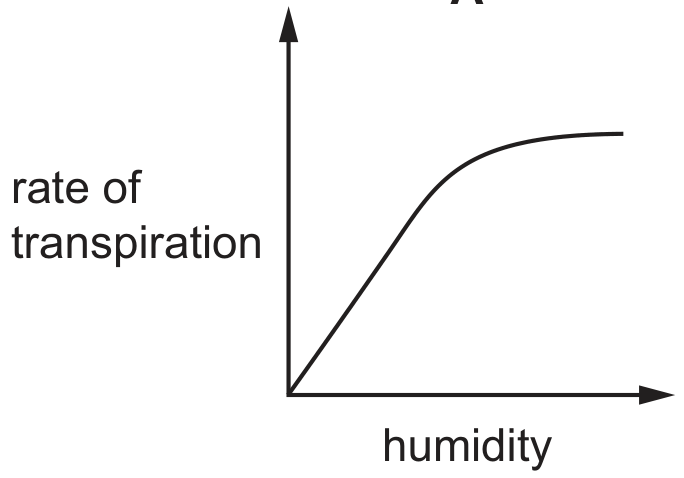
A
transpiration
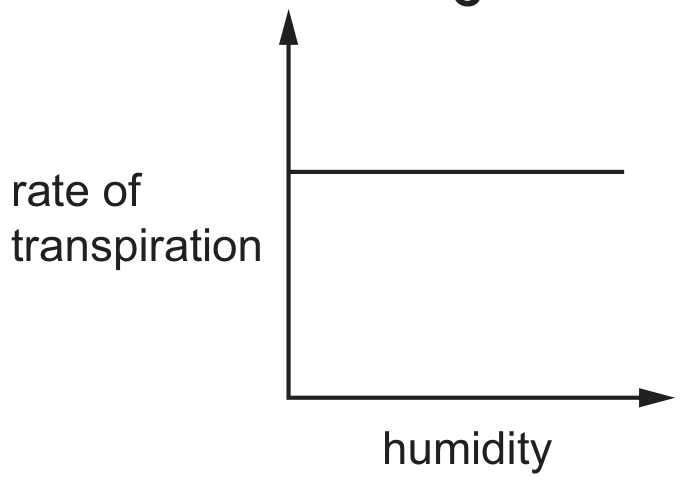
C
transpiration
Fig. 3.1 is a scanning electron micrograph of a vertical section through part of the leaf of a broad bean plant, Vicia faba.
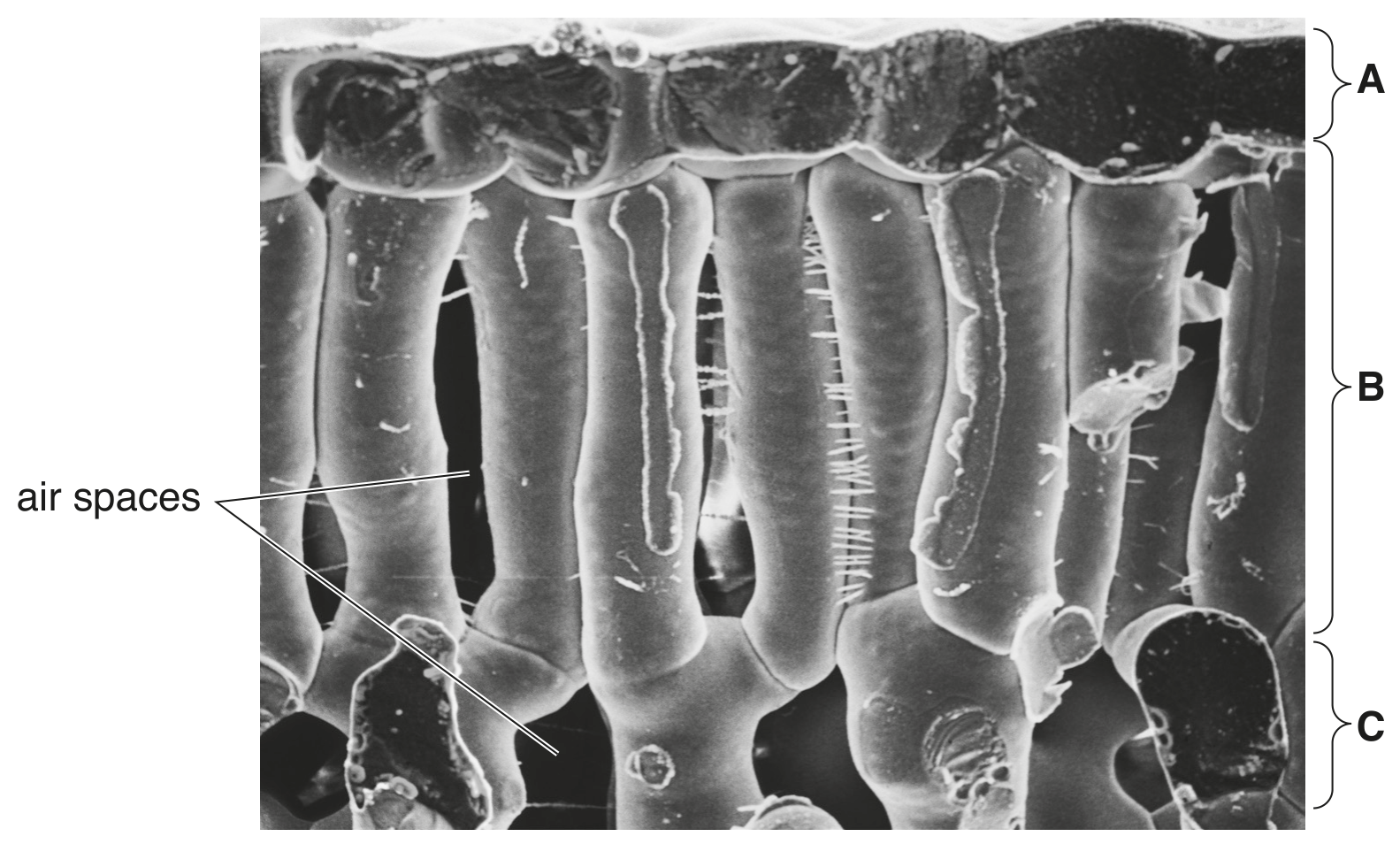
Fig. 3.1
Explain why there are many interconnecting air spaces within the leaf.
When water is in short supply, plants can wilt as shown in Fig. 3.2.
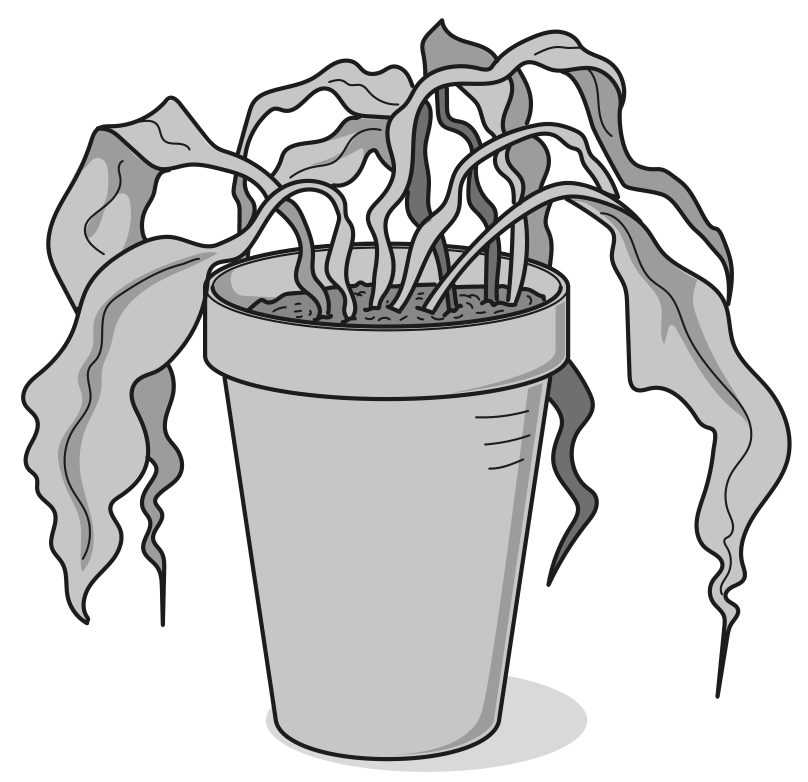
Fig. 3.2
State two conditions that are likely to increase the chances of wilting.
1
2
Explain what happens to the cells of a leaf to cause wilting.
Wilting may look harmful, but it is often a strategy for survival.
Suggest the advantages to a plant of wilting.
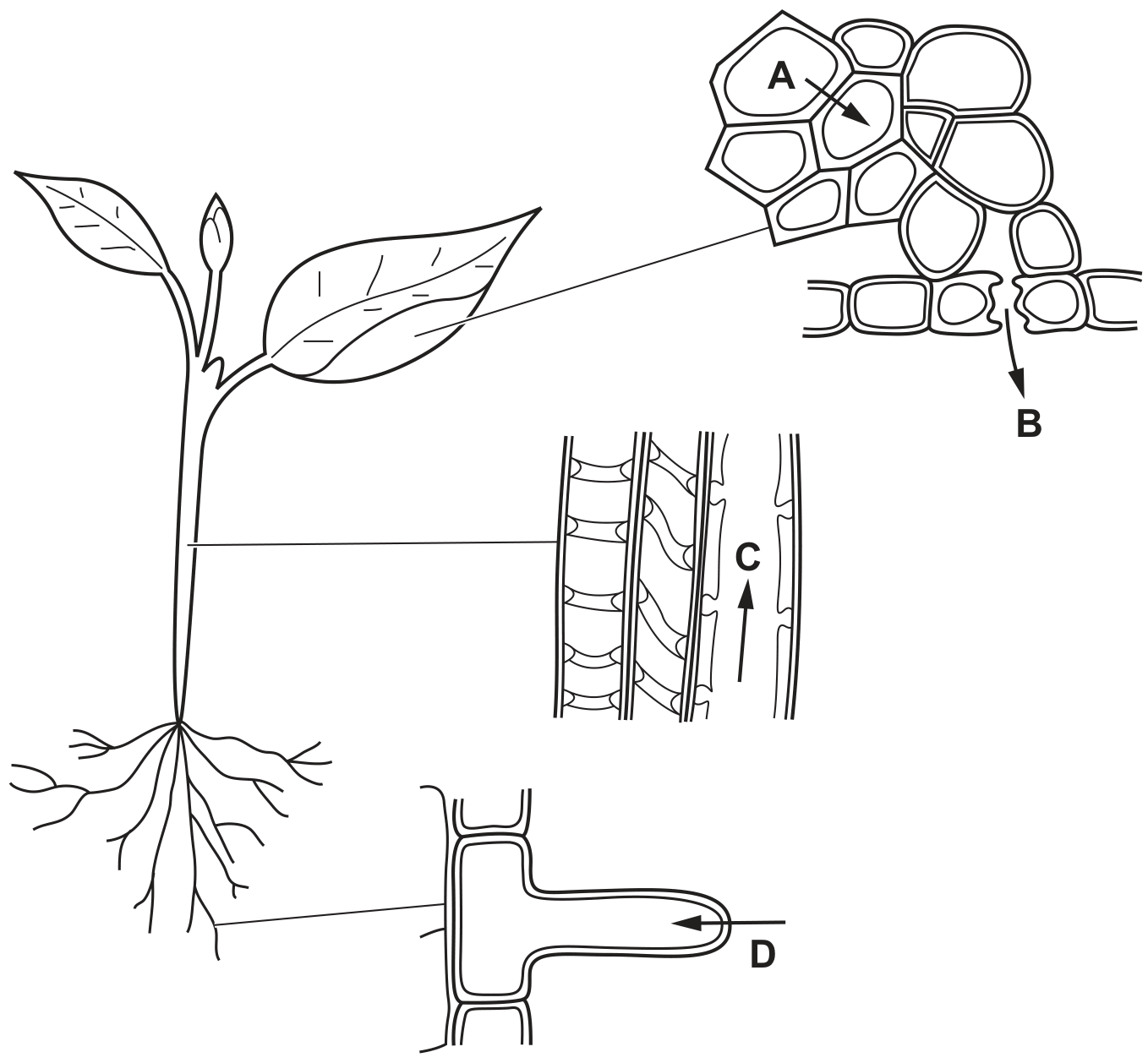
The diagrams show stages in the passage of water through a plant.
Which arrow shows water moving in the form of water vapour?
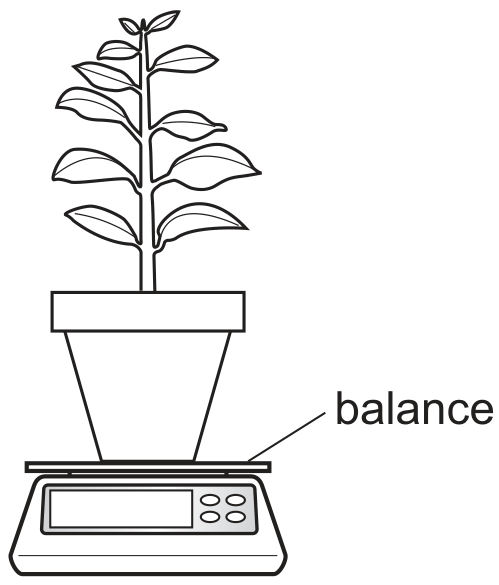
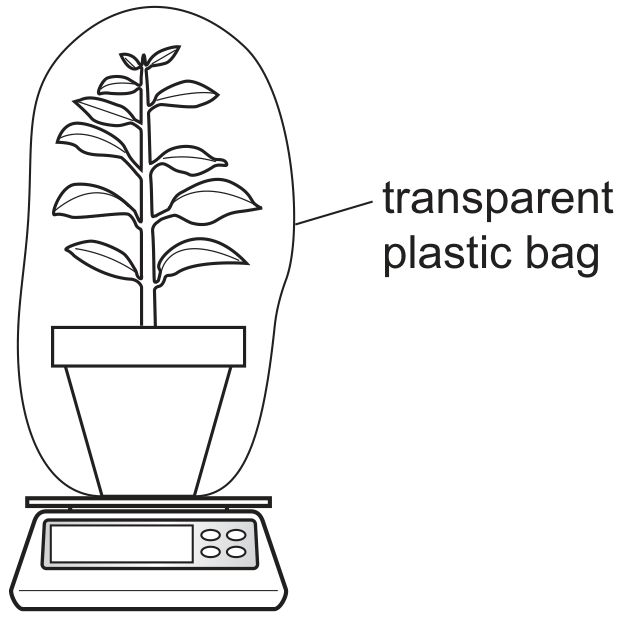
The diagram shows an experiment to investigate transpiration.
plant 1
plant 2
Plant 1 is not covered. Plant 2 and its pot are covered by a transparent plastic bag.
The mass of each plant and its pot is measured. The masses are measured again after two hours.
What is the result?
The mass of both plants decreases by the same percentage.
The mass of both plants stays the same.
The mass of plant 1 decreases more than the mass of plant 2 .
The mass of plant 2 decreases more than the mass of plant 1.
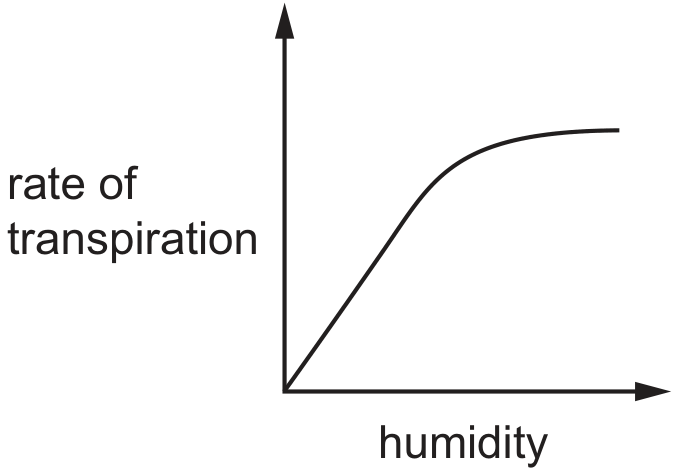
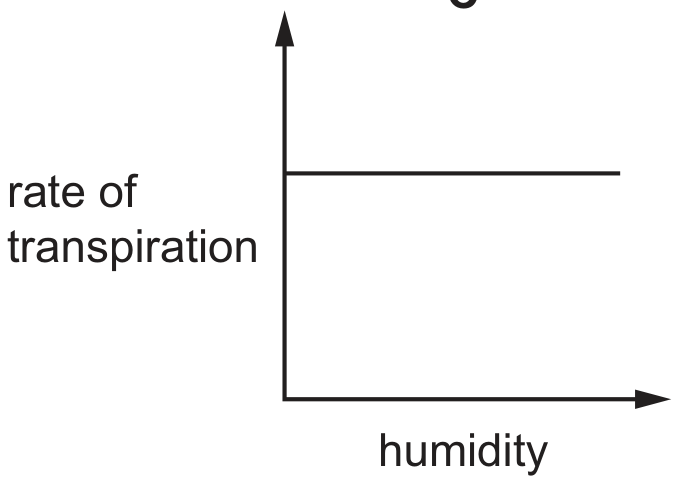
Which graph shows most clearly what will happen to the rate of transpiration as humidity increases?
A
transpiration
C
transpiration humidity
Fig. 3.1 is a photomicrograph of some xylem vessels.
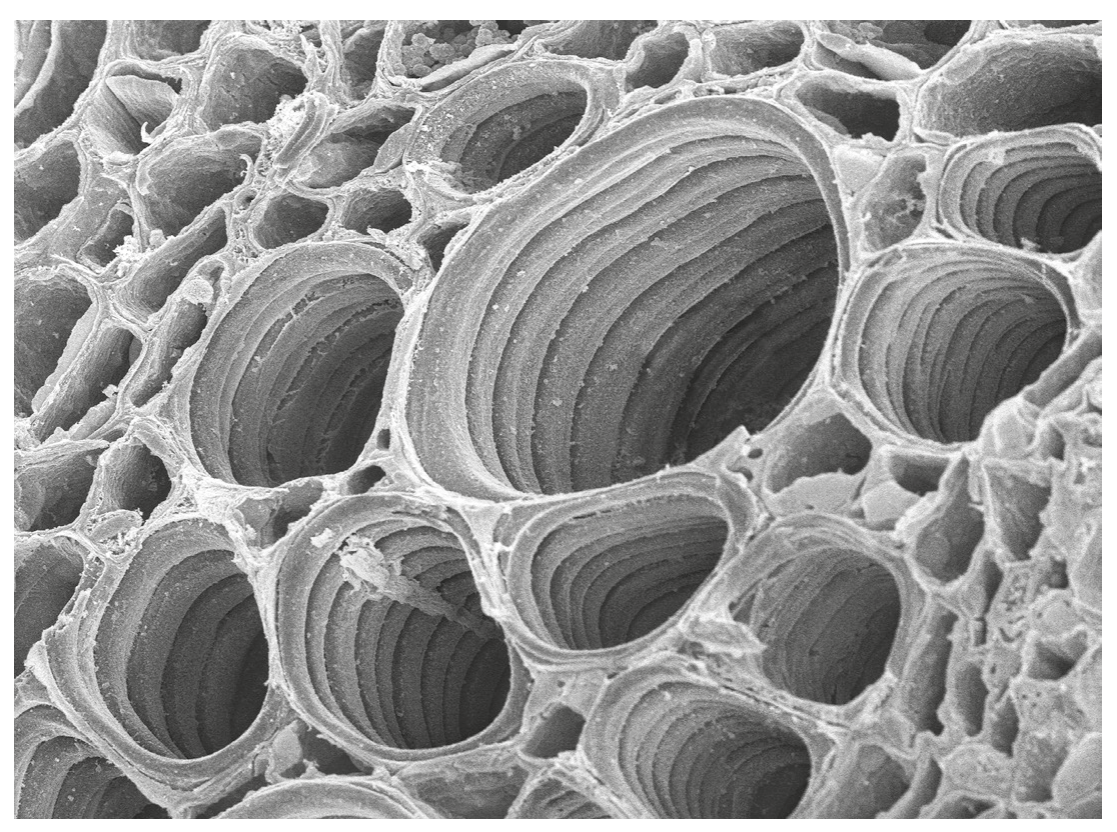
Fig. 3.1
Explain the mechanism that is responsible for the movement of water in xylem vessels.
The rate of transpiration is affected by several factors including the temperature and the humidity of the air.
State and explain the effect of an increase in temperature on the rate of transpiration.
Stomata are found on the lower surface of broad bean leaves.
Describe the function of stomata.
More than 40 years ago, botanists studied the leaves of broad bean plants and discovered that guard cells control the opening and closing of stomata. They found that stomata were open when the guard cells were turgid.
Table 3.1 shows some of their measurements.
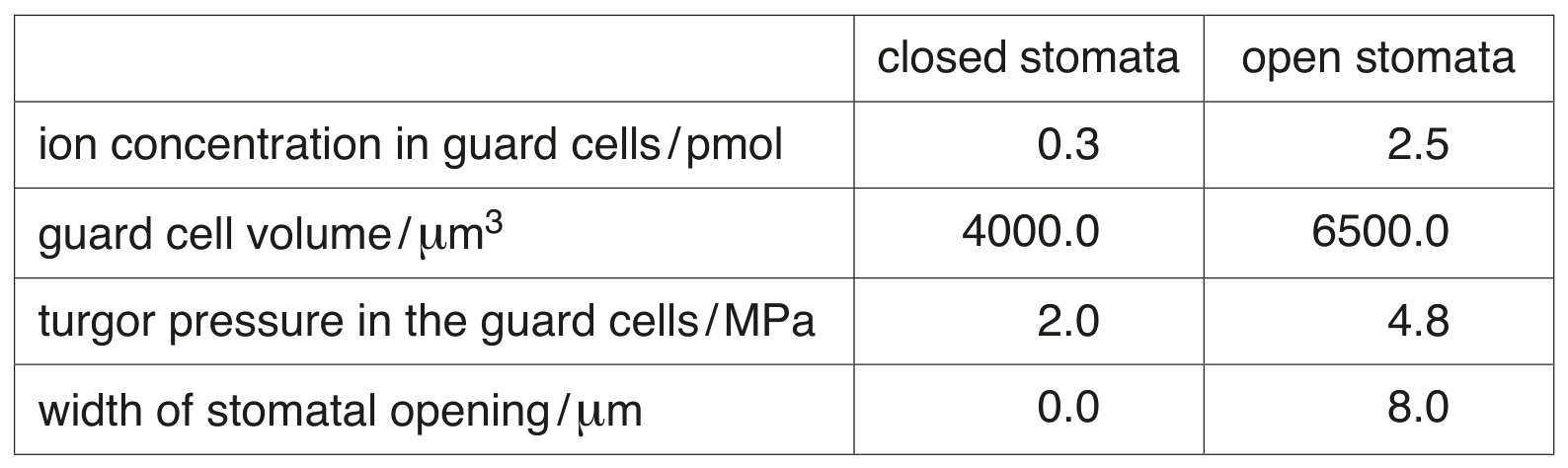
Table 3.1
The botanists left the broad bean plants unattended for three days. During this time the broad bean plants wilted.
Suggest two environmental factors that can cause plants to wilt.
1
2
What is a description of transpiration?
exchange of gases between the leaf and the atmosphere
loss of water vapour from the leaves and stems of a plant
movement of water from the roots to the leaves
movement of water through the cells of the leaf