[Maximum number: 1]
Fig. 1.1 is a diagram of an animal cell.
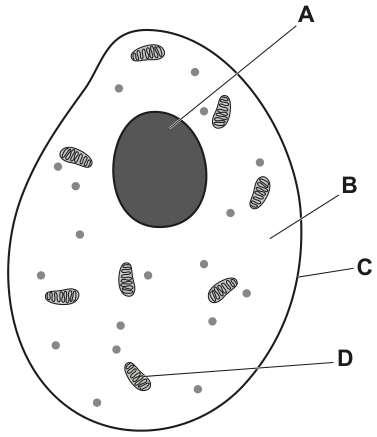
Fig. 1.1
(a)
(i)
State the name of the molecule in red blood cells that combines with oxygen.
[ 1 ]
 EduNinja
Fig. 1.1 is a diagram of an animal cell.
Fig. 1.1
State the name of the molecule in red blood cells that combines with oxygen.
Blood transports nutrients.
State the component of the blood that transports nutrients.
Amino acids are used to make proteins.
State two examples of proteins that are found in the blood.
1
2
Fig. 1.1 shows two photomicrographs of a cross-section of trachea.
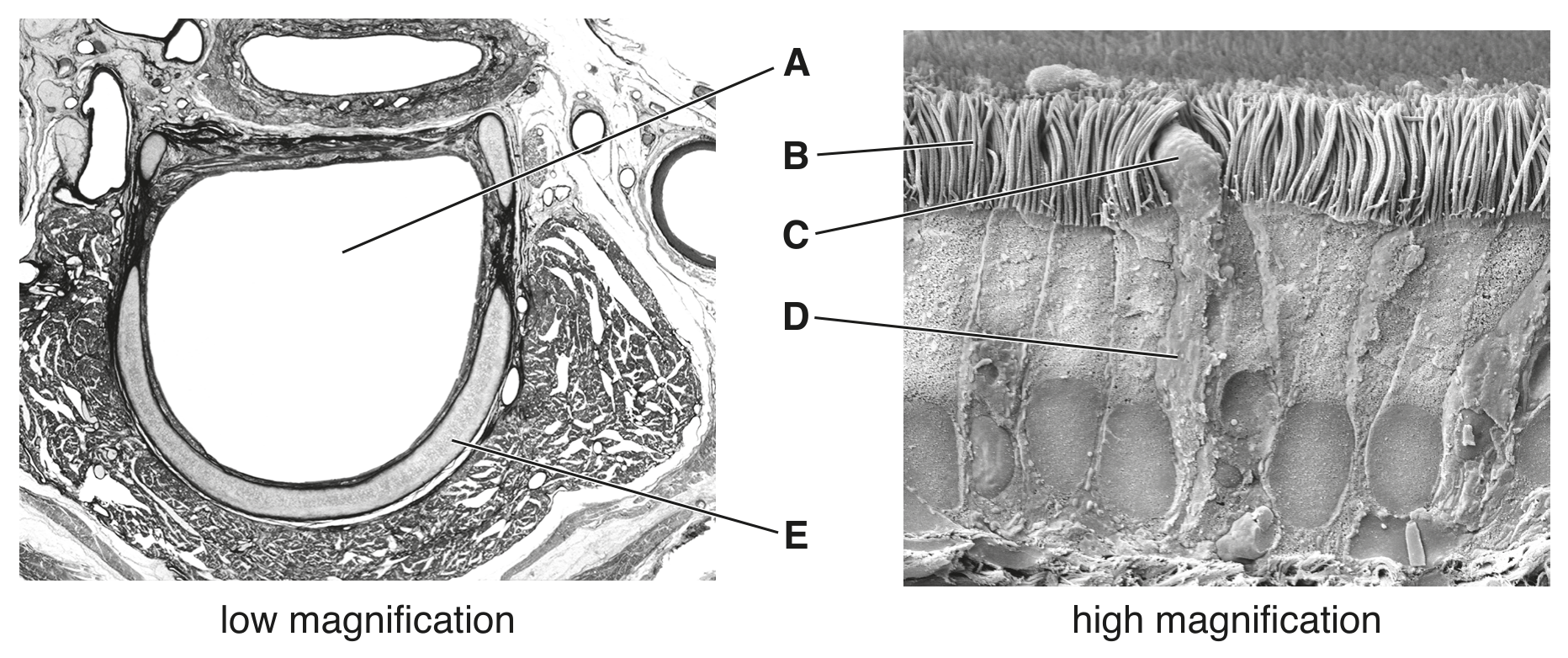
Fig. 1.1
Sickle-cell anaemia is a disease that reduces the delivery of oxygen to tissues.
Explain why.
Mitochondria require oxygen to release energy. Oxygen is transported to cells in the eye by red blood cells.
State the name of the molecule in red blood cells that carries oxygen.
Fig. 2.1 shows the transfer of materials between blood and tissues.
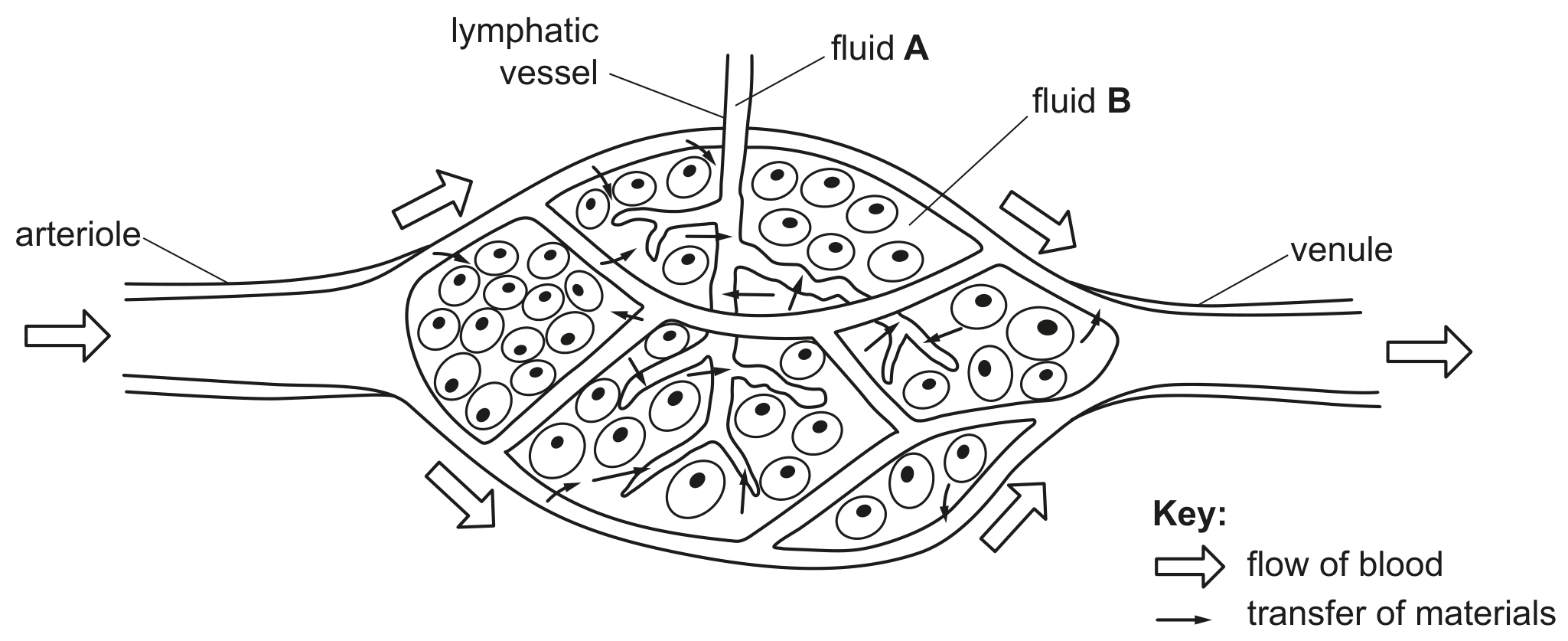
Fig. 2.1
Complete Table 2.1 by:
- stating the names of the fluids
- writing yes if the fluid contains red blood cells or no if the fluid does not contain red blood cells.
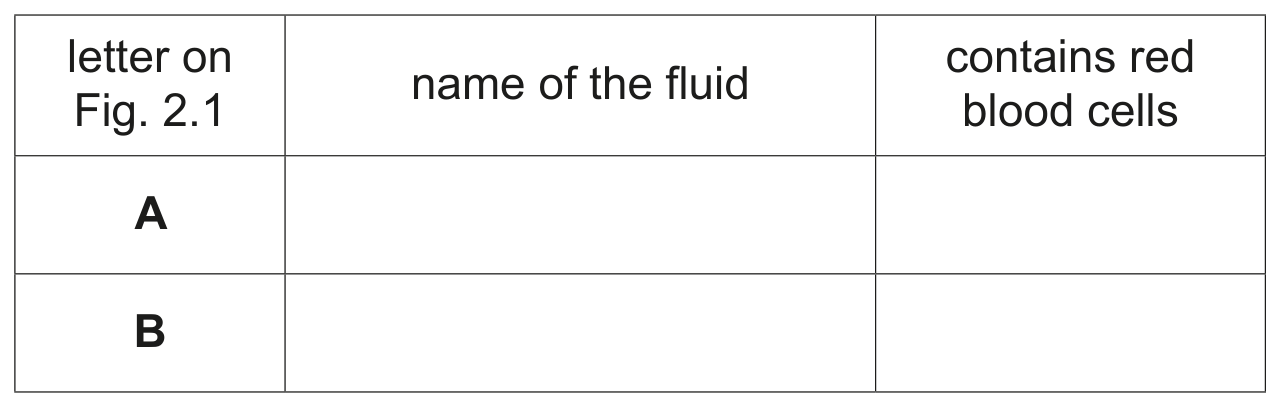
Table 2.1
Many researchers are studying the structure and function of genes.
Proteins are also found in the blood.
State the names of two proteins found in the blood.
1
2
Fig. 3.1 is a diagram of alveoli and associated blood vessels.
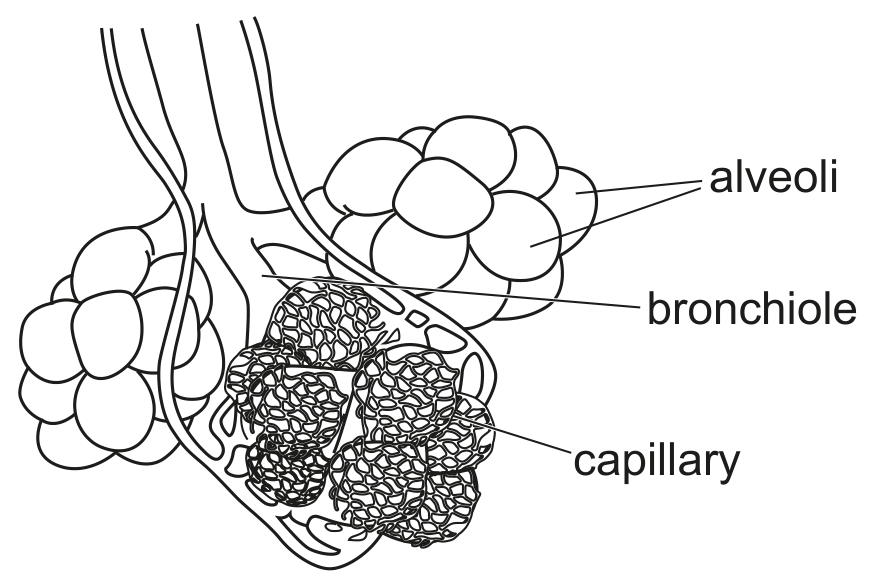
Fig. 3.1
State the name of the component of blood that transports oxygen.
Red blood cells contain the protein haemoglobin.
State the role of haemoglobin.
A hospital patient who is feeling unwell is given a blood test.
The results of the blood test show a very low level of platelets.
What effect will this have?
The blood will be unable to transport nutrients, hormones and carbon dioxide.
The blood will not be able to carry as much oxygen to the tissues as normal.
There will be a greater risk of bleeding because the blood will take longer to clot.
There will be a greater risk of infection because the blood cannot make antibodies.
What is the fluid in the blood called?
lymph
mucus
plasma
tissue fluid