(a)
Some bacteria are involved in the nitrogen cycle.
Fig. 1.3 shows part of the nitrogen cycle.
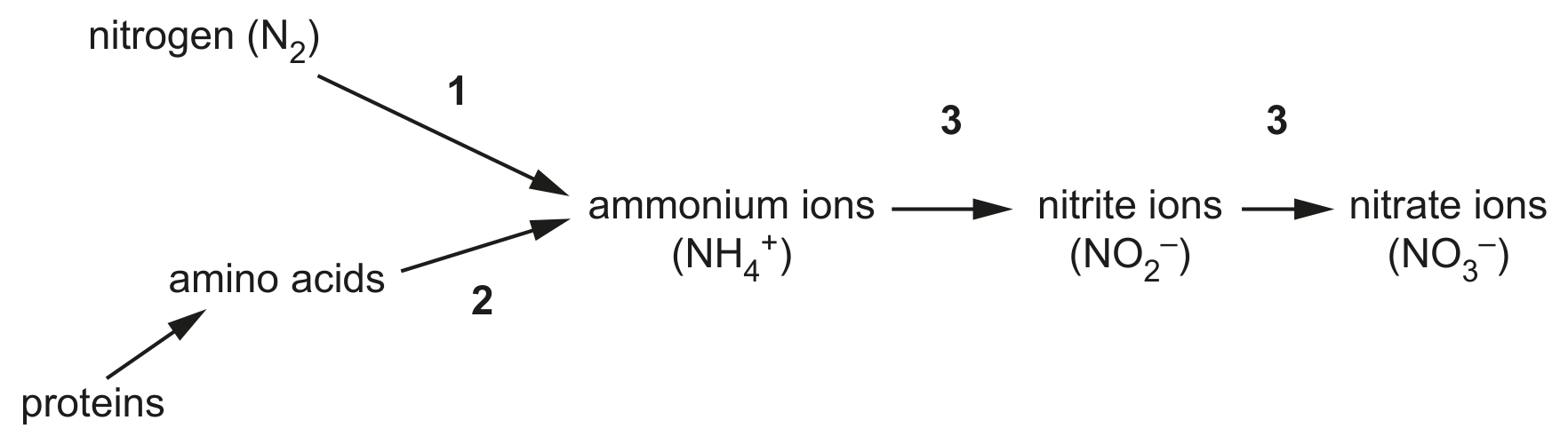
Fig. 1.3
State the processes that are represented by 1,2 and 3 on Fig. 1.3.
1
2
3
[ 3 ]
 EduNinja
Some bacteria are involved in the nitrogen cycle.
Fig. 1.3 shows part of the nitrogen cycle.
Fig. 1.3
State the processes that are represented by 1,2 and 3 on Fig. 1.3.
1
2
3
Water is a very important molecule for all living organisms.
The flow diagram in Fig. 1.1 shows a town and part of the water cycle.
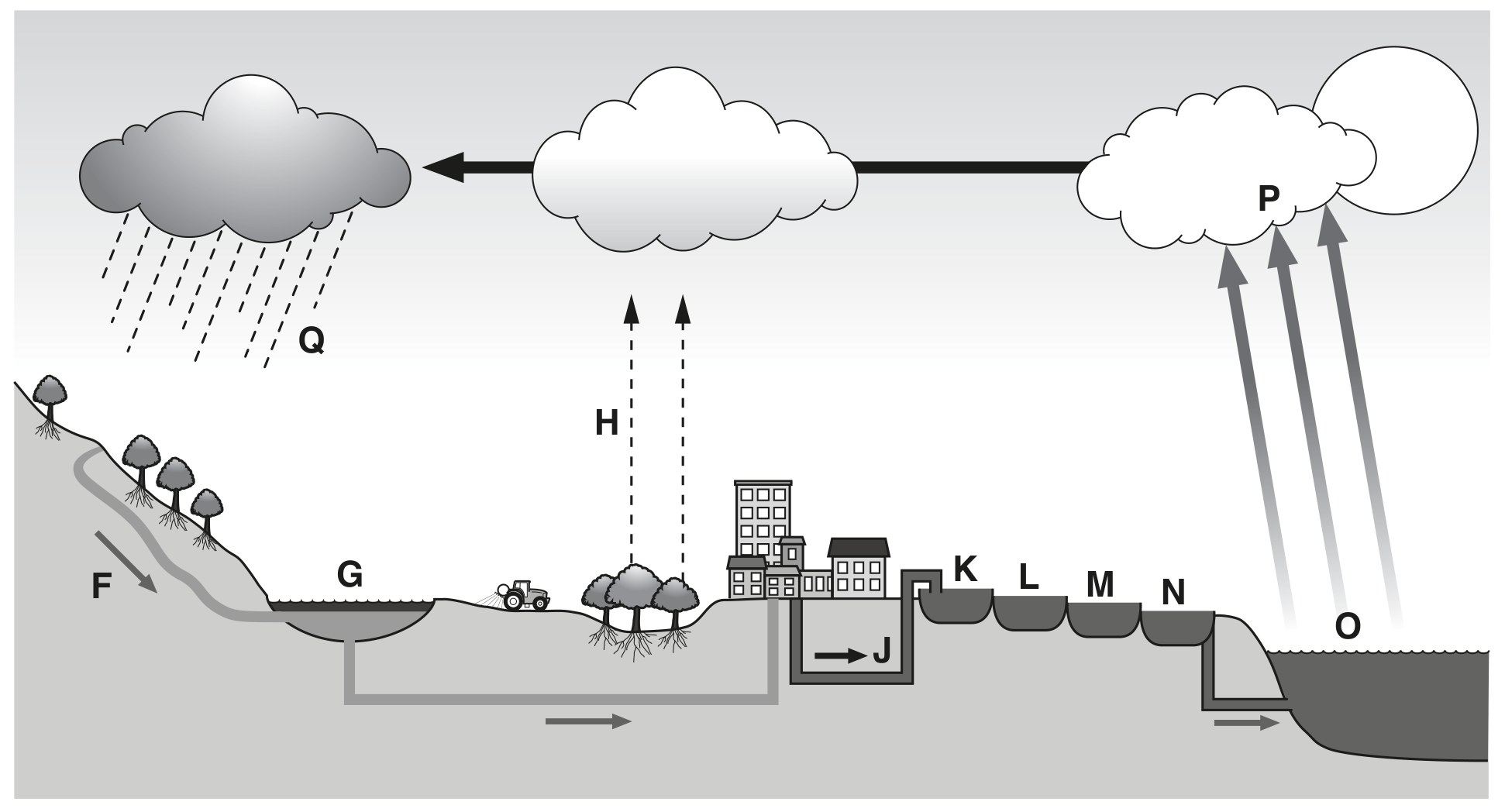
Fig. 1.1
Table 1.1 describes some of the processes in the water cycle.
Complete Table 1.1.
One row has been done for you.
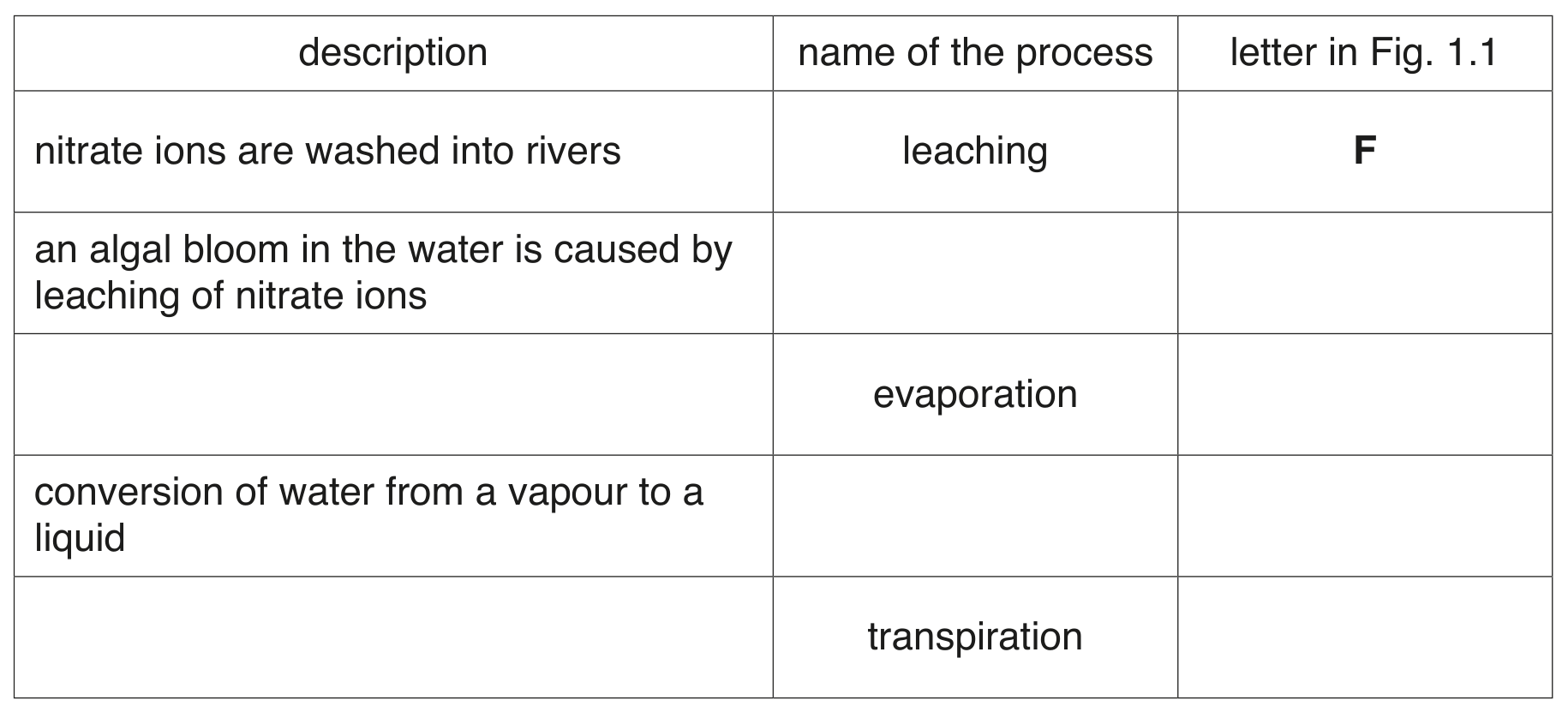
Table 1.1
Wetlands are important ecosystems. Researchers studied the feeding relationships between the organisms in an area of wetland on the coast of Texas.
Fig. 1.1 shows part of the food web that they studied.
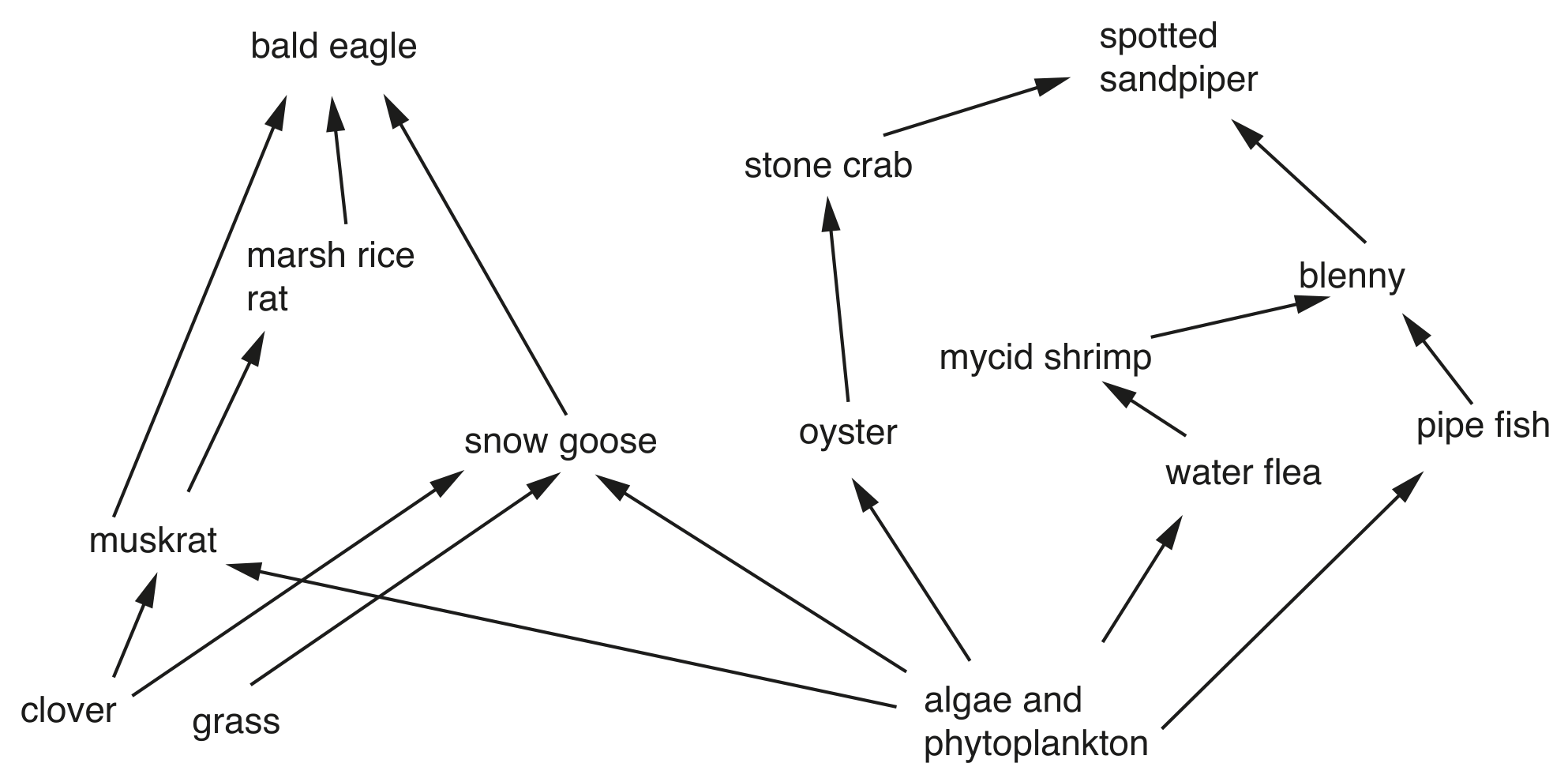
Fig. 1.1
The functioning of ecosystems relies on the cycling of nutrients.
Fig. 1.2 shows part of the nitrogen cycle.
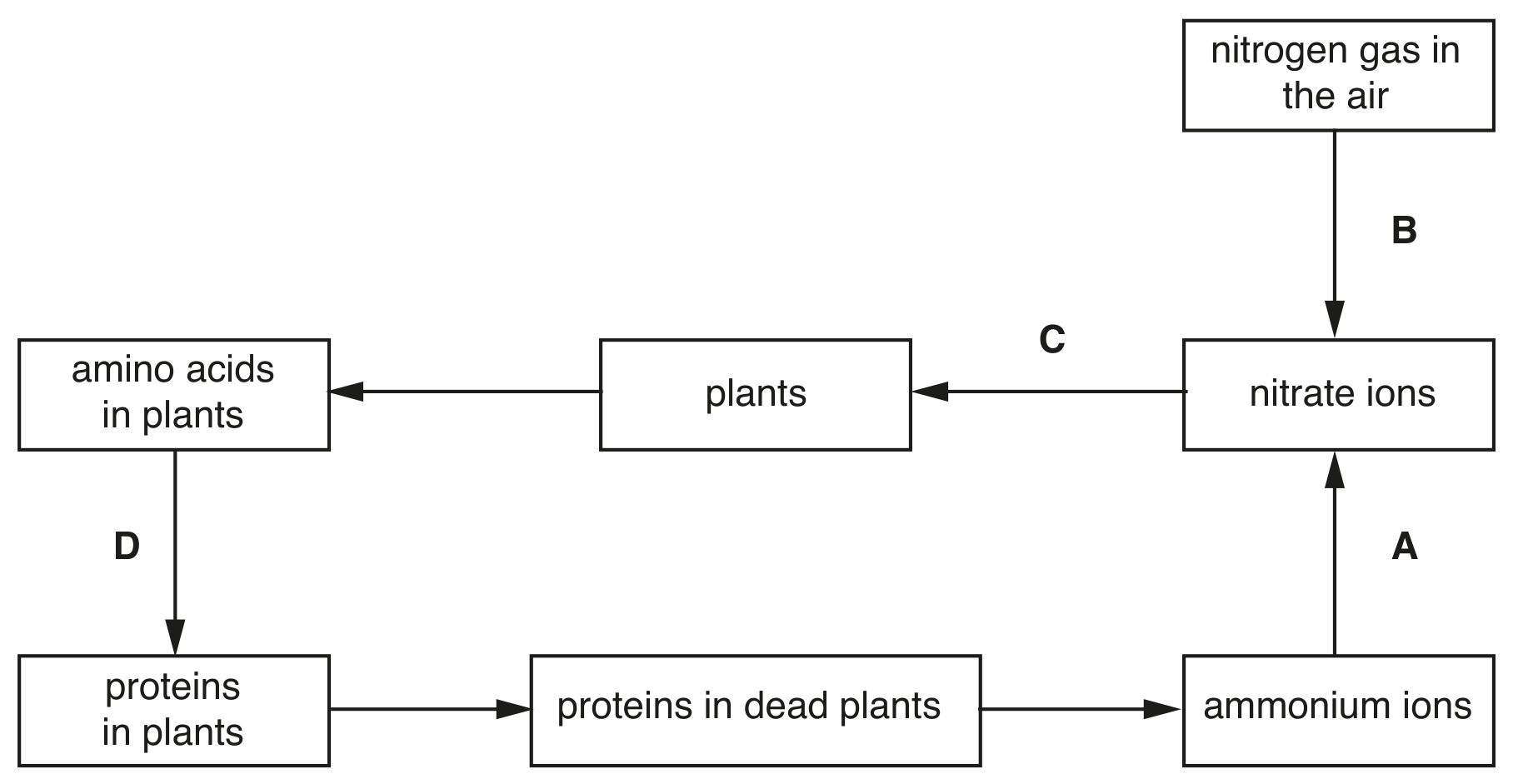
Fig. 1.2
State the name of process A in Fig. 1.2 and give the type of organism that converts ammonium ions to nitrate ions.
A
type of organism
State the process that occurs at B.
Fig. 1.1 shows a pyramid of biomass and part of the carbon cycle.
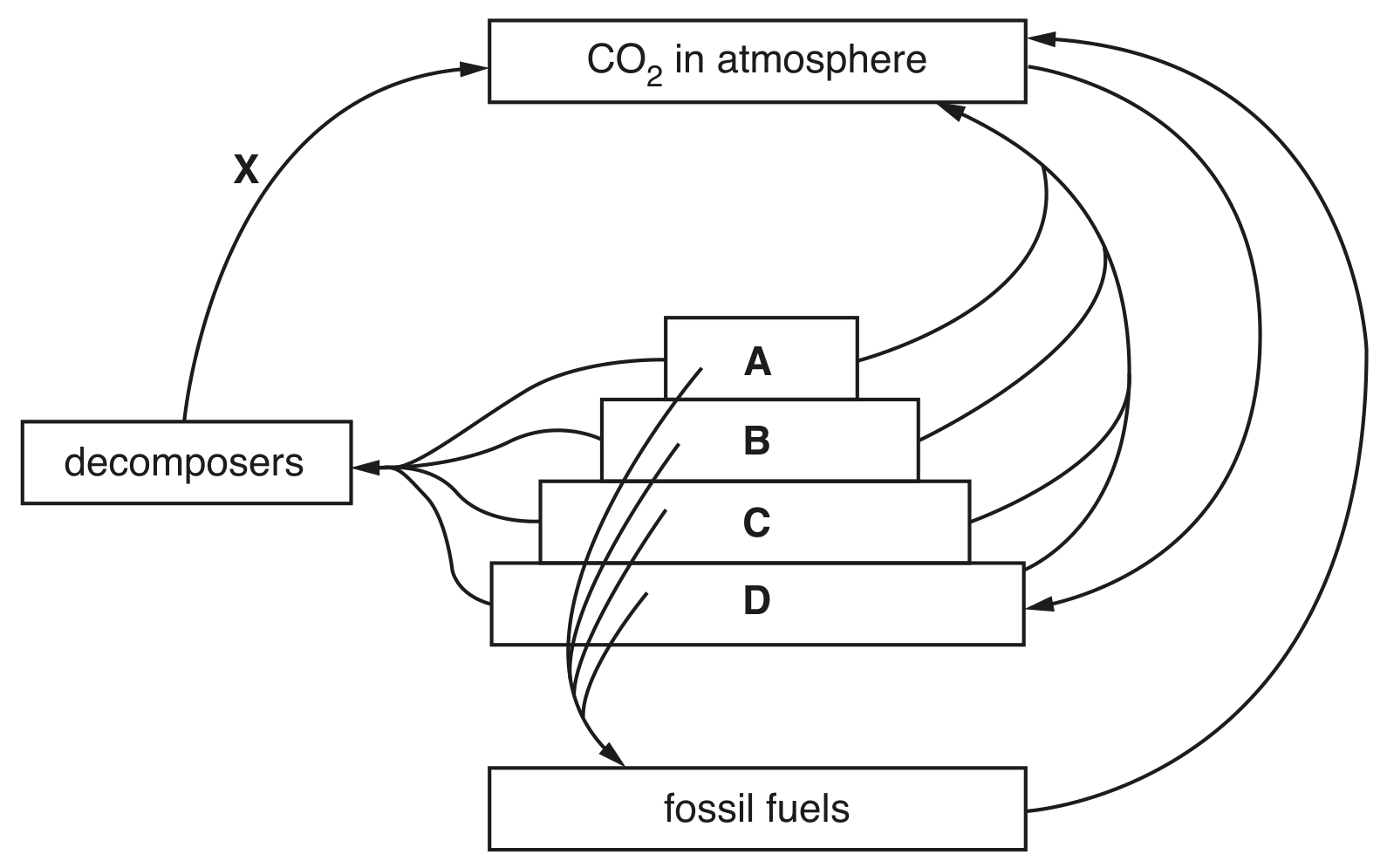
Fig. 1.1
Some fungi and bacteria are decomposers.
Arrow X on Fig. 1.1 indicates the transfer of carbon from decomposers to the atmosphere. State the name of process X.
Describe how human activities are affecting the carbon cycle.
The concentration of atmospheric carbon dioxide has increased considerably in recent years.
Describe the possible causes of increased atmospheric carbon dioxide.
Fig. 2.1 is a photomicrograph of the end of a plant root.
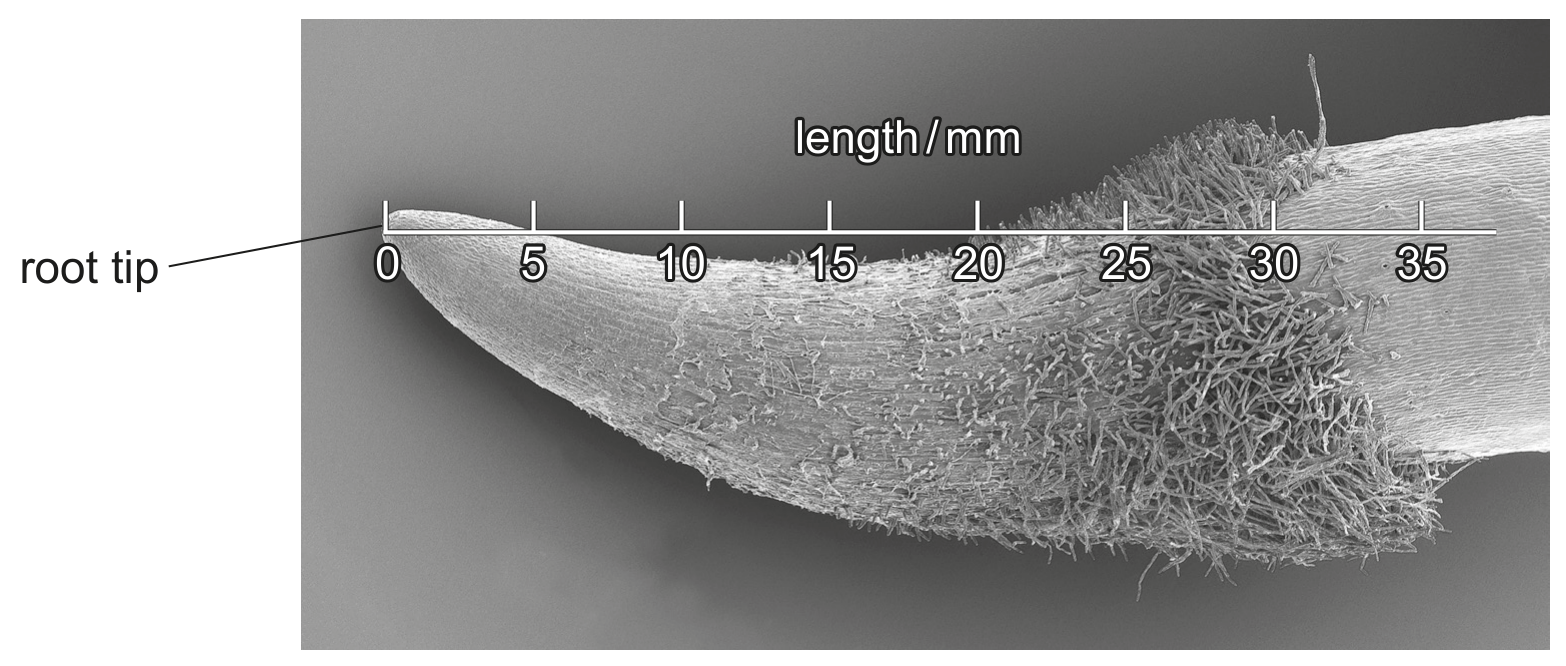
Fig. 2.1
Fig. 2.2 shows the results of a study on the rate of uptake of nitrate ions at different points along the root shown in Fig. 2.1.
rate of nitrate ion uptake / pmol per per s
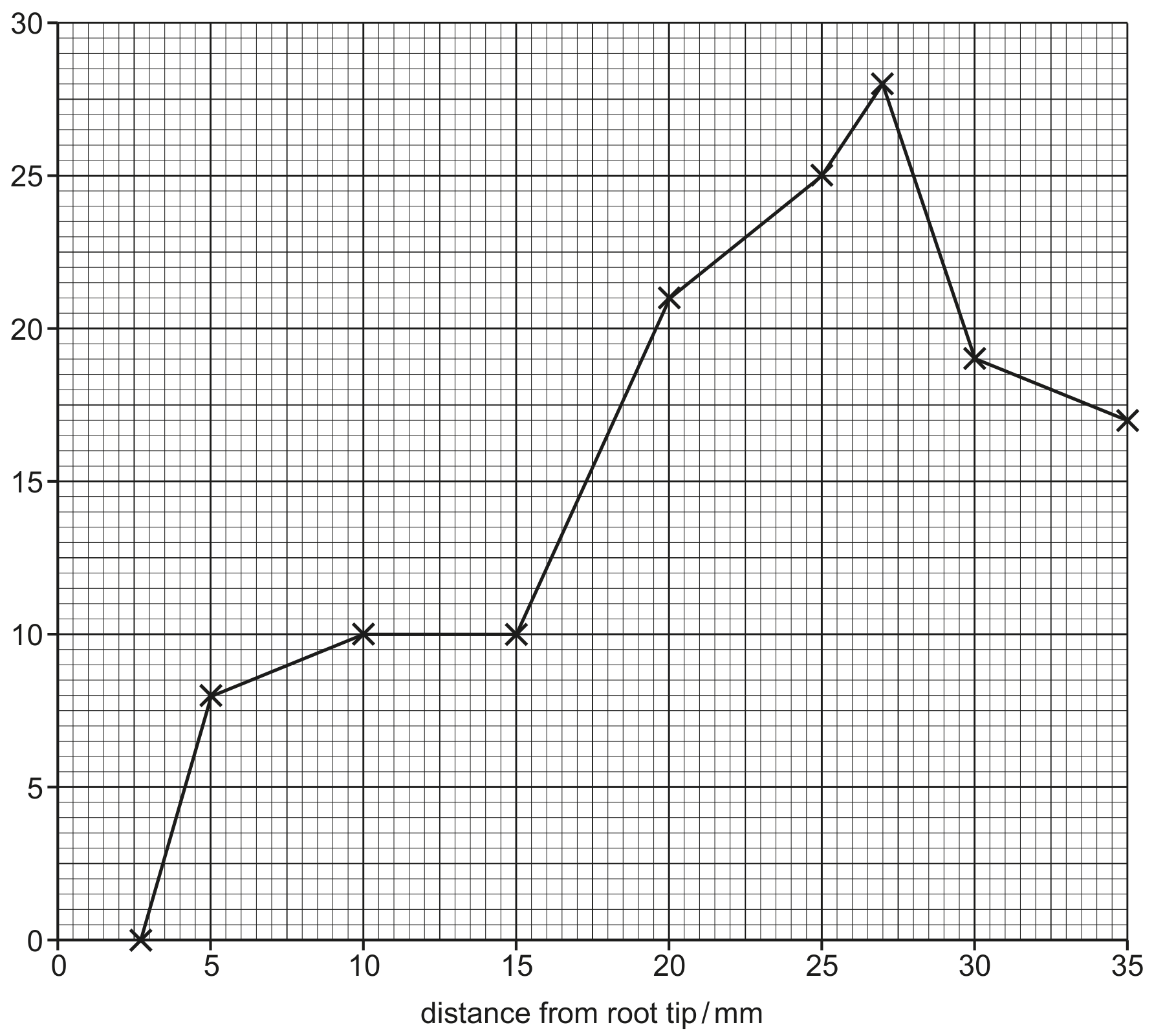
Fig. 2.2
Describe how nitrate ions are formed in the soil.
Very small pieces of plastic, called microplastics, are found in many products such as soaps and toothpaste.
Fig. 3.1 shows toothpaste that contains microplastics.

Fig. 3.1
Ammonium ions are an important part of the nitrogen cycle. They can be converted into nitrate ions, which are used by plants and protoctists such as diatoms.
State the name of the molecules that are converted into ammonium ions in the nitrogen cycle.
State the name of the process of converting ammonium ions into nitrate ions.
Researchers investigated the effect of adding cattle manure (cattle faeces) to fields where snap bean plants, Phaseolus vulgaris, were grown. Cattle manure contains some protein.
Explain how protein in the cattle manure is converted to the type of ions that plants can absorb.
Chromosomes are made of DNA.
Many species of bacteria do not cause disease. Bacteria are very important in many biological processes.
State the names of three natural processes involving bacteria that are important to ecosystems.
1
2
3
Ciliates are classified in the kingdom Protoctist. Bacteria are classified in the kingdom Prokaryote.
Fig. 5.4 is a food web for some of the microorganisms in a sewage treatment works.
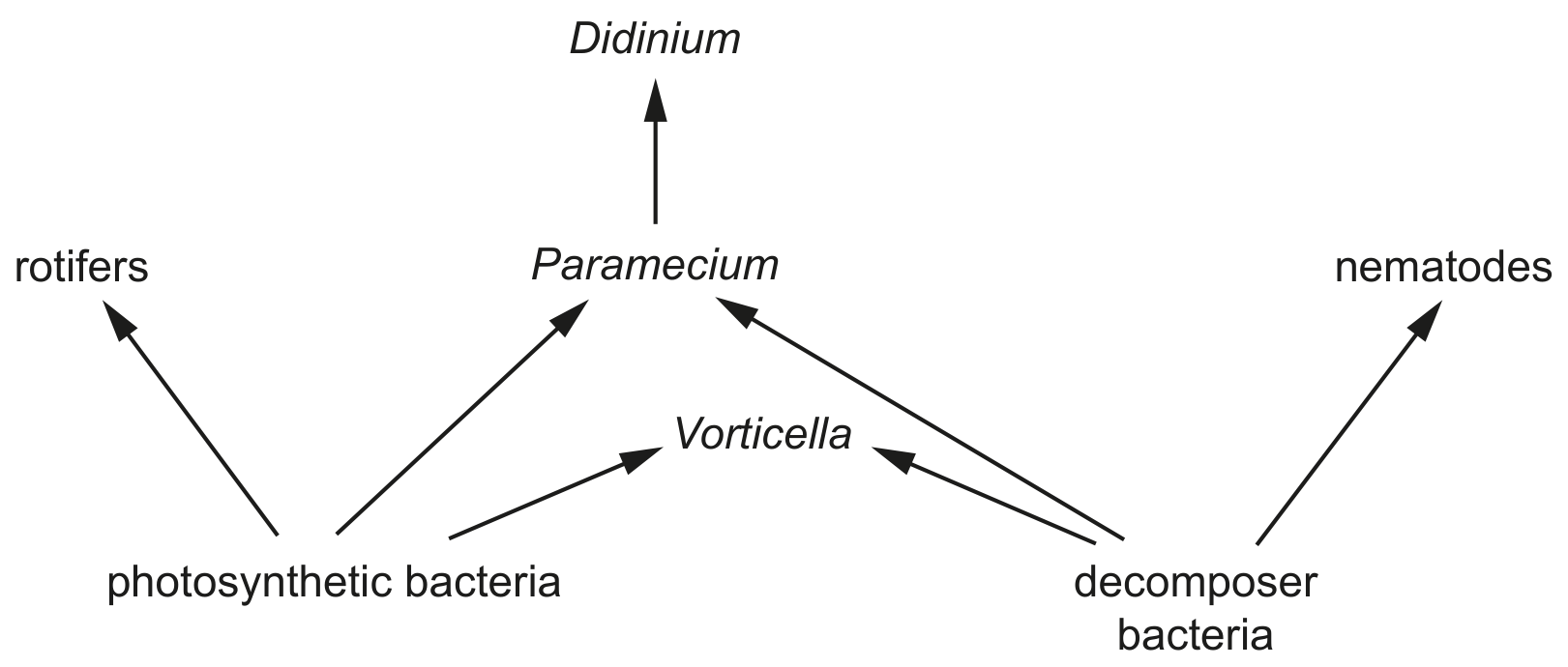
Fig. 5.4
Nitrifying bacteria are found in sewage works.
Explain the importance of nitrifying bacteria in the nitrogen cycle.