[Maximum number: 3]
Insulin is a hormone that regulates the concentration of glucose in the blood.
(a)
Describe what is meant by the term hormone.
[ 3 ]
 EduNinja
Insulin is a hormone that regulates the concentration of glucose in the blood.
Describe what is meant by the term hormone.
Insulin is a protein made by cells in the pancreas.
Fig. 2.1 shows how insulin is made in a pancreatic cell.
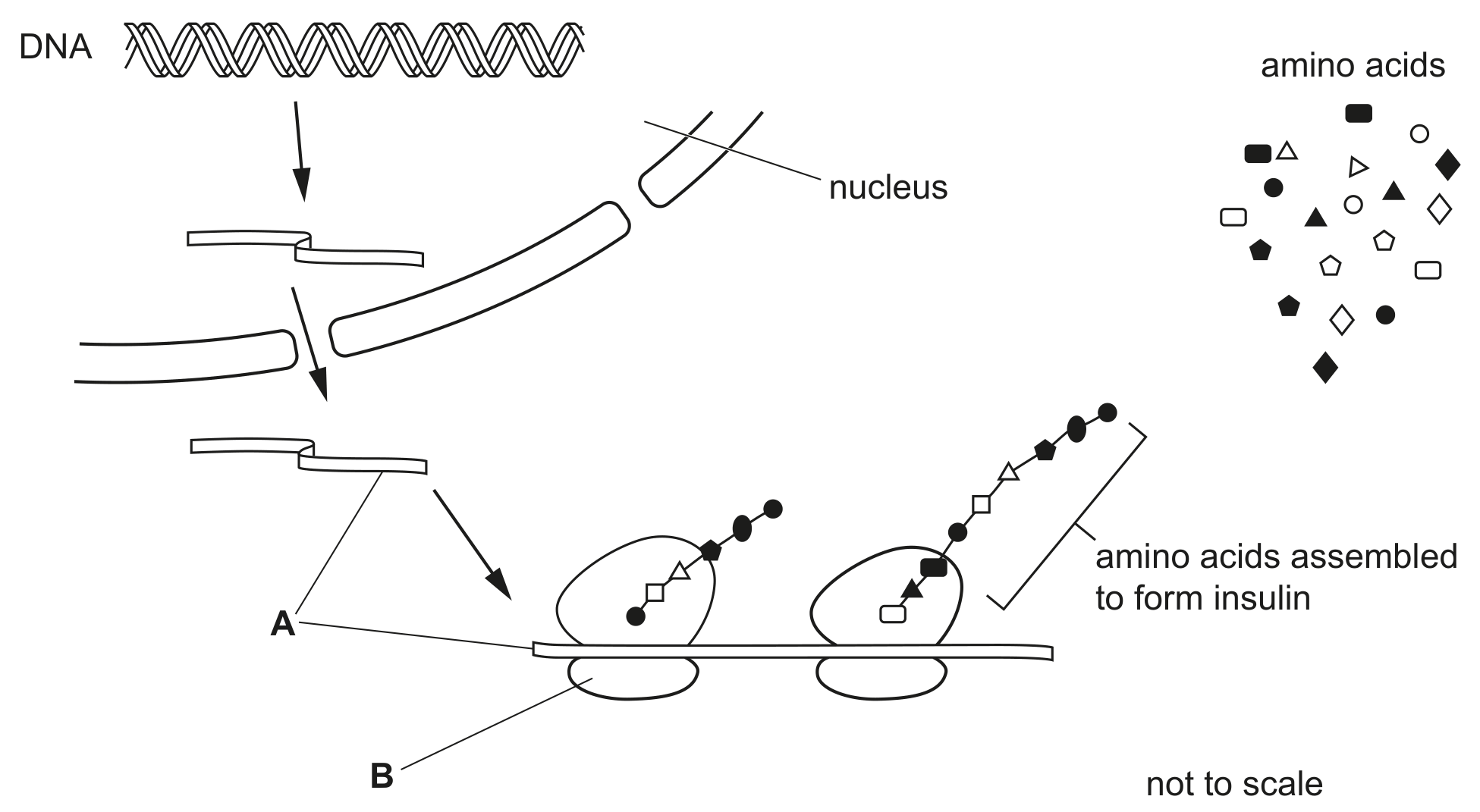
Fig. 2.1
State the names of two substances, other than insulin, that are secreted by the pancreas. 1
2
Bacteria are used in many biotechnological processes.
Insulin is one of many human proteins that are made by genetically engineered bacteria.
Some people cannot produce insulin because their immune system has destroyed the cells that make insulin.
State the organ that contains the cells that have been destroyed.
State the function of insulin in the body.
When a body senses danger, more adrenaline is secreted from the adrenal glands.
Describe two ways in which the hormone adrenaline affects the body in preparation for action.
1
2
State one difference between nervous and hormonal control systems.
When a body senses danger, more adrenaline is secreted from the adrenal glands.
Describe two ways in which the hormone adrenaline affects the body in preparation for action.
1
2
State one difference between nervous and hormonal control systems.
The pancreas is an organ that has roles in the digestive and hormonal systems of humans.
Fig. 3.1 shows part of the alimentary canal and some of the associated organs.
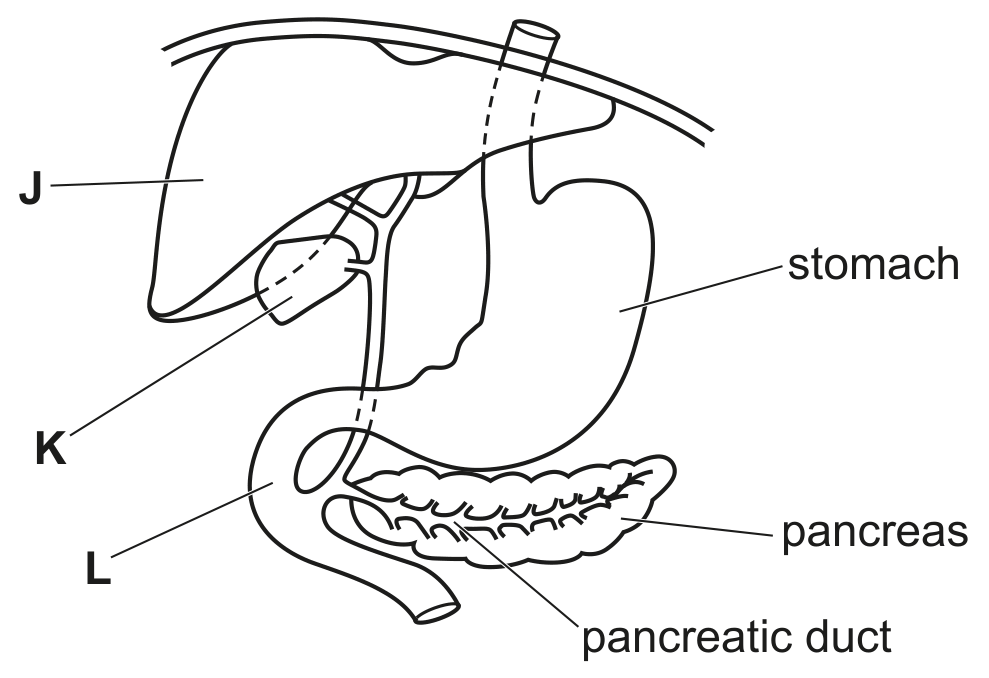
Fig. 3.1
The pancreas secretes hormones into the blood and enzymes into the pancreatic duct. The enzymes are released into the alimentary canal.
Complete Table 3.1 by stating the hormones and enzymes that are secreted by the pancreas.
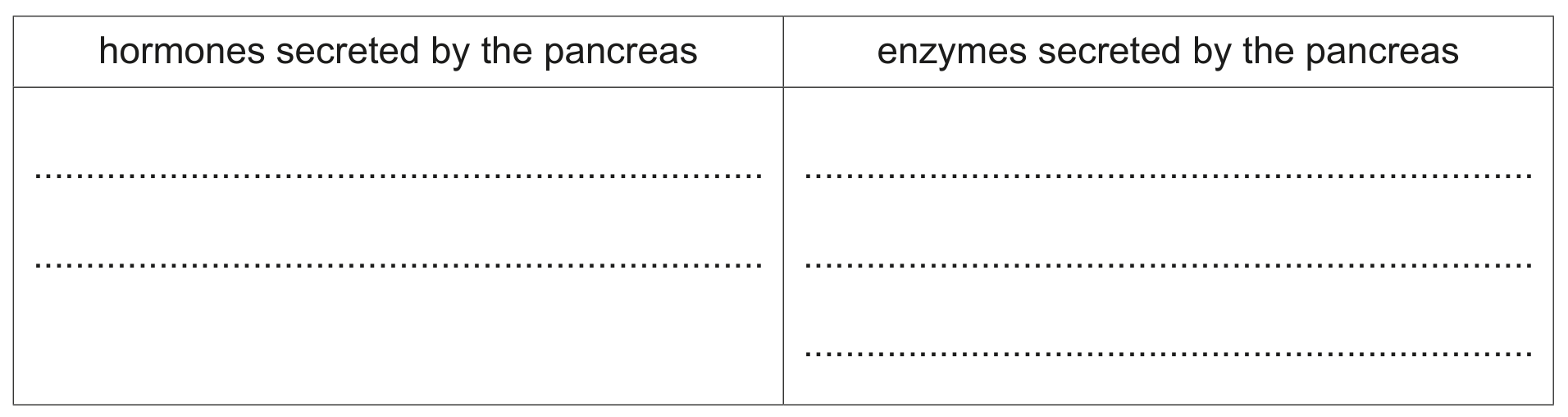
Table 3.1
Fig. 3.1 shows a section through a kidney.
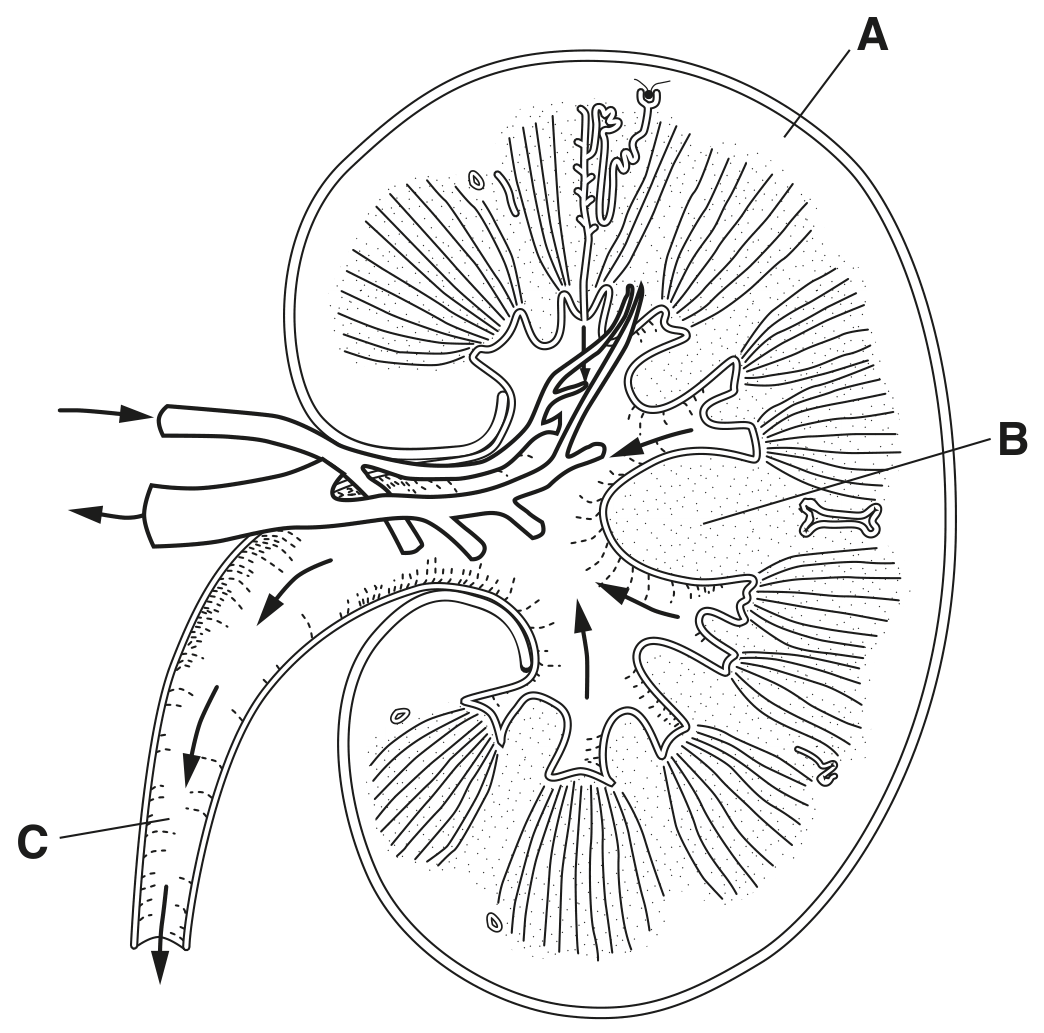
Fig. 3.1
Testosterone is a steroid hormone that is also taken as a drug to improve sporting performance.
Define the term hormone.
State where testosterone is produced in the body.
State why testosterone is taken by some people to improve sporting performance.
Scientists investigated the effect of adrenaline on blood glucose concentration in rats.
The rats were put into two groups:
- group A was given an injection of adrenaline
- group B was given an injection that did not contain adrenaline.
The blood glucose concentrations of the rats in both groups were monitored for three hours after the injections.
The rats did not eat for 12 hours before the investigation or while they were being monitored.
The results are shown in Fig. 3.1.
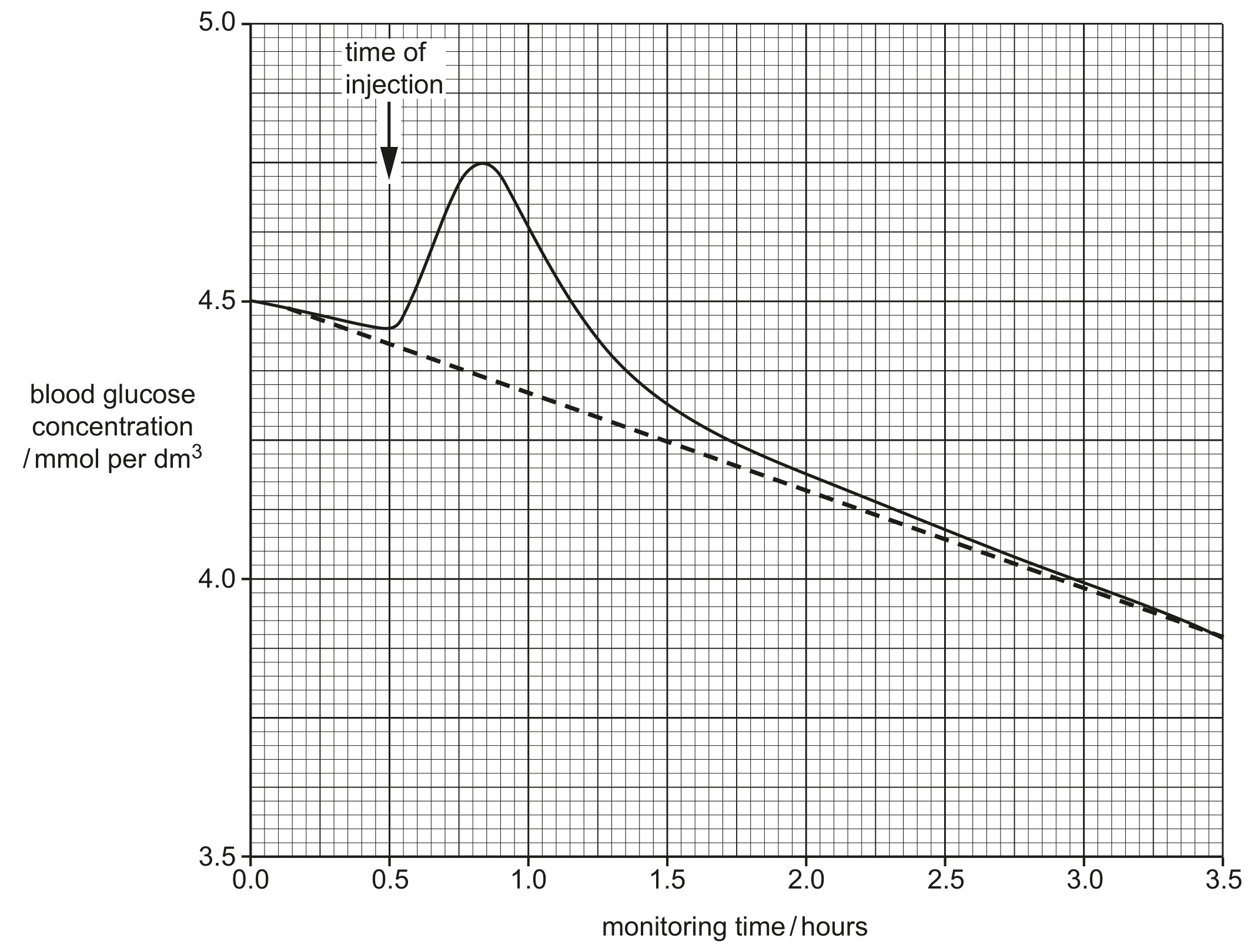
Fig. 3.1
Key:
- group A (adrenaline)
- - - group B (no adrenaline)
Suggest why group B was given an injection that did not contain adrenaline.
Describe and explain the results shown in Fig. 3.1 for group A.
Describe two effects of adrenaline on the body, other than a change in blood glucose concentration.
1
2
The flow of blood through the skin can be investigated by using a flow-meter.
Fig. 4.1 shows a flow-meter above a section through the skin.
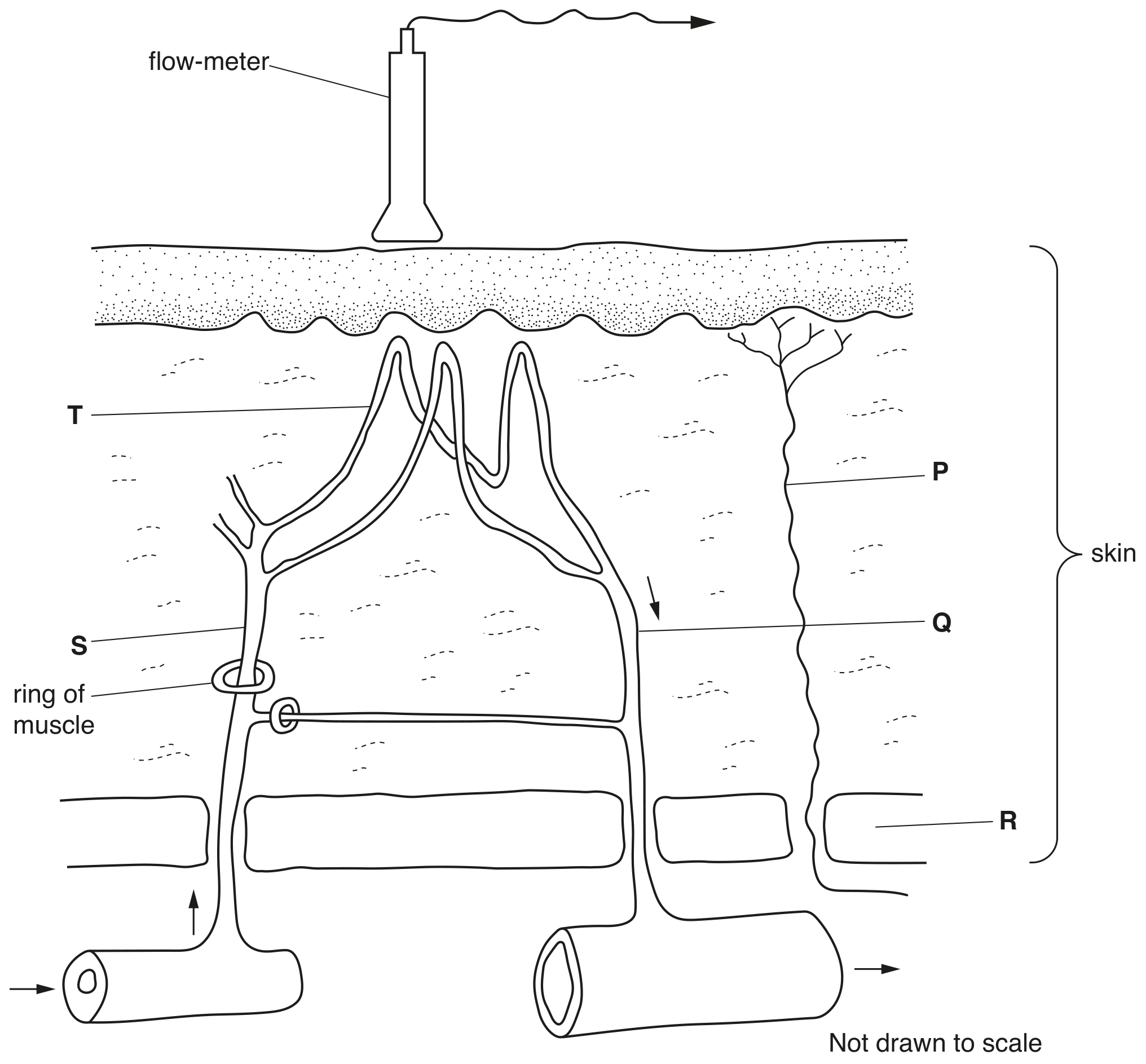
Fig. 4.1
Body temperature is controlled by both hormones and nerves.
Explain how co-ordination by hormones differs from co-ordination by nerves.
The endocrine system in mammals produces hormones.
Define the term hormone.
The responses of the human body to danger are coordinated by the nervous and endocrine systems.
Fig. 4.1 shows the sequence of events that occurs in response to a dangerous situation that is detected by the eyes.
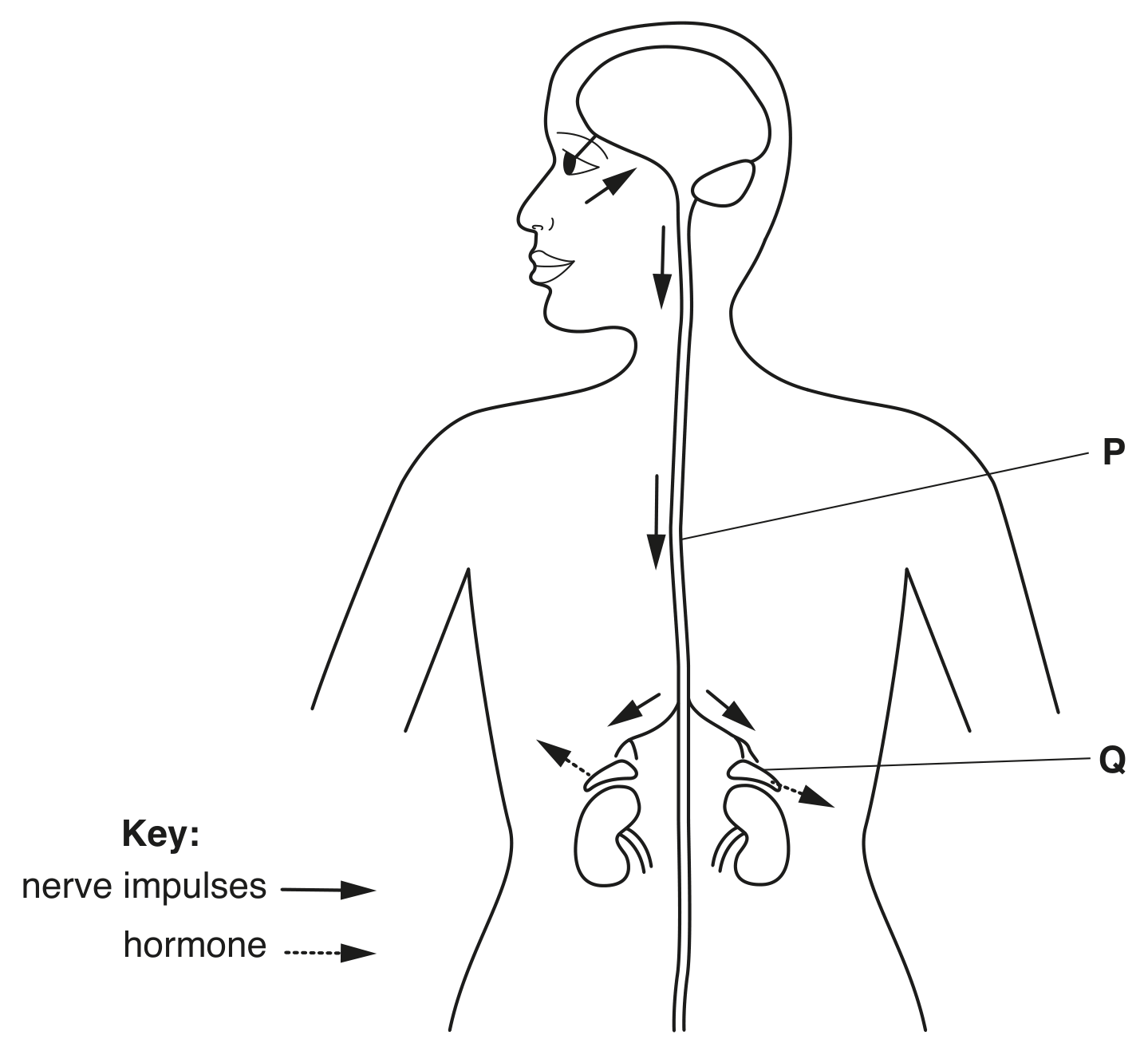
Fig. 4.1
Identify the gland labelled Q.
Complete Table 4.1 to describe the effects of the hormone released when a person is in a dangerous situation.
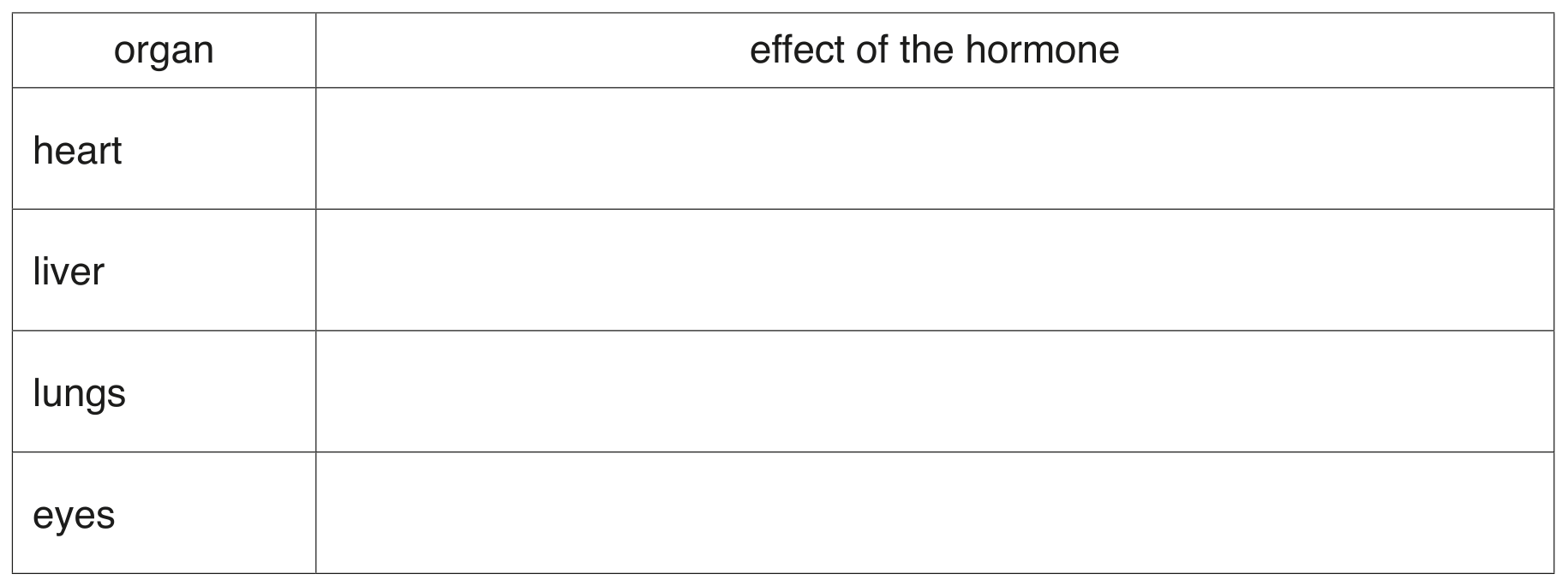
Table 4.1
Explain the advantages of coordinating the response to a dangerous situation using both the nervous system and the endocrine system.