[Maximum number: 1]
Fig. 1.1 is a diagram of an animal cell.
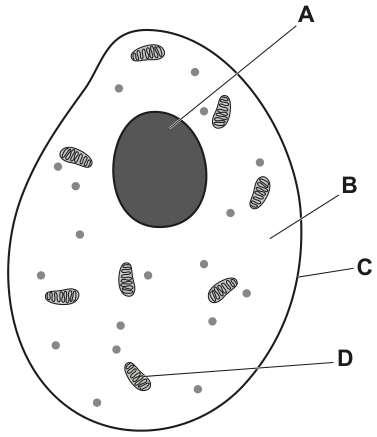
Fig. 1.1
(a)
(i)
Fig. 1.3 shows a drawing of a white blood cell.

Fig. 1.3
Identify the type of white blood cell shown in Fig. 1.3.
[ 1 ]
 EduNinja
Fig. 1.1 is a diagram of an animal cell.
Fig. 1.1
Fig. 1.3 shows a drawing of a white blood cell.
Fig. 1.3
Identify the type of white blood cell shown in Fig. 1.3.
Explain the effect of cholera bacteria on the digestive system.
Penicillin is produced by biotechnology industries.
State the name of the type of pathogen penicillin is used to treat.
Rubella and kwashiorkor are two diseases that affect children.
Rubella is a transmissible disease and kwashiorkor is a non-transmissible disease.
Define the term transmissible disease.
Explain why women should be vaccinated against rubella before they reach reproductive age.
A person who does not smoke can be exposed to tobacco smoke from other people smoking.
Researchers studied the effect of exposure to tobacco smoke on the development of lung cancer in three groups of women who did not smoke:
- group 1 - no exposure to tobacco smoke
- group 2 - low level exposure to tobacco smoke
- group 3 - high level exposure to tobacco smoke.
Their results are shown in Table 1.1.
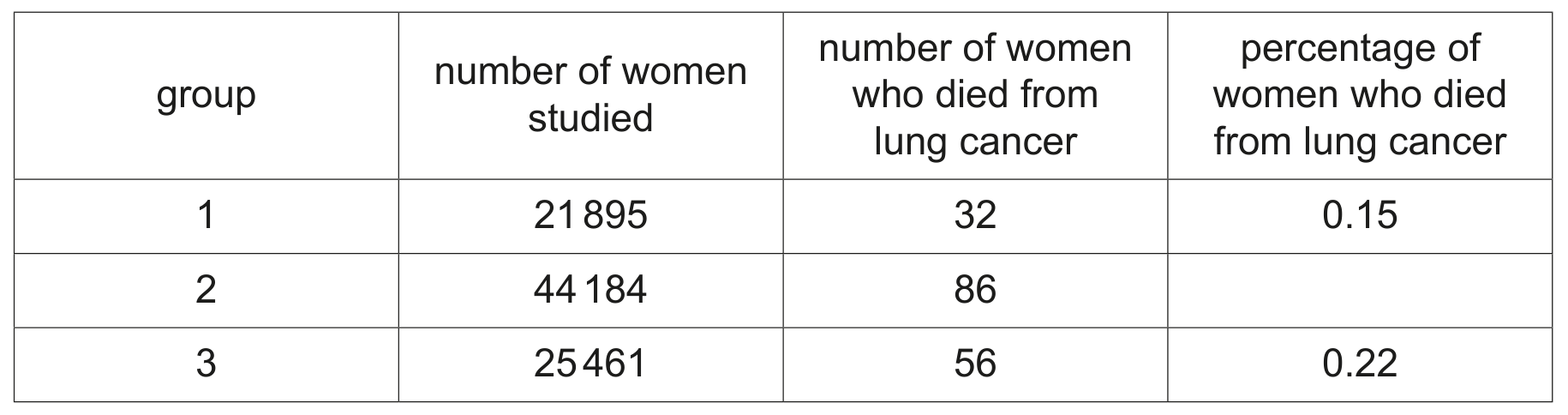
Table 1.1
Many countries have laws that ban smoking in public buildings.
Discuss the evidence from Table 1.1 that supports these laws.
Smoking has been found to increase the risk of developing diseases other than cancer. State two other diseases that can be caused by smoking.
1
2

Water is a very important molecule for all living organisms.
Polluted water can be purified at a sewage treatment works.
State one reason why it is necessary to treat polluted water before it is used as drinking water.
Outline the process of sewage treatment. You may use the letters in Fig. 1.1 in your answer.
Two functions of the alimentary canal are mechanical digestion and chemical digestion.
Substances that are absorbed from the alimentary canal may enter cells and become part of the cells.
State the type of protein used in the immune system that is produced from amino acids by lymphocytes.
Describe and explain the effects of cholera bacteria on the gut.
Suggest one treatment for cholera.
Milk is sometimes referred to as a 'complete food' because it contains all the nutrients that a young mammal requires.
Hydrogen gas is produced by the bacteria that digest lactose in the large intestine. The gas is absorbed into the blood and excreted through the lungs. Lactose intolerance can be monitored by measuring the hydrogen gas content of the air a person breathes out.
People taking part in an investigation into lactose intolerance consumed the following milk products on different days:
A untreated milk
B milk treated with lactase immediately before drinking
C milk treated with lactase three days before drinking
D yoghurt made by bacteria that digested the lactose in the milk The hydrogen gas content of the air breathed out was measured every hour for five hours following the ingestion of each milk product. The mean results are shown in Fig. 1.2. hydrogen gas breathed out / parts per million
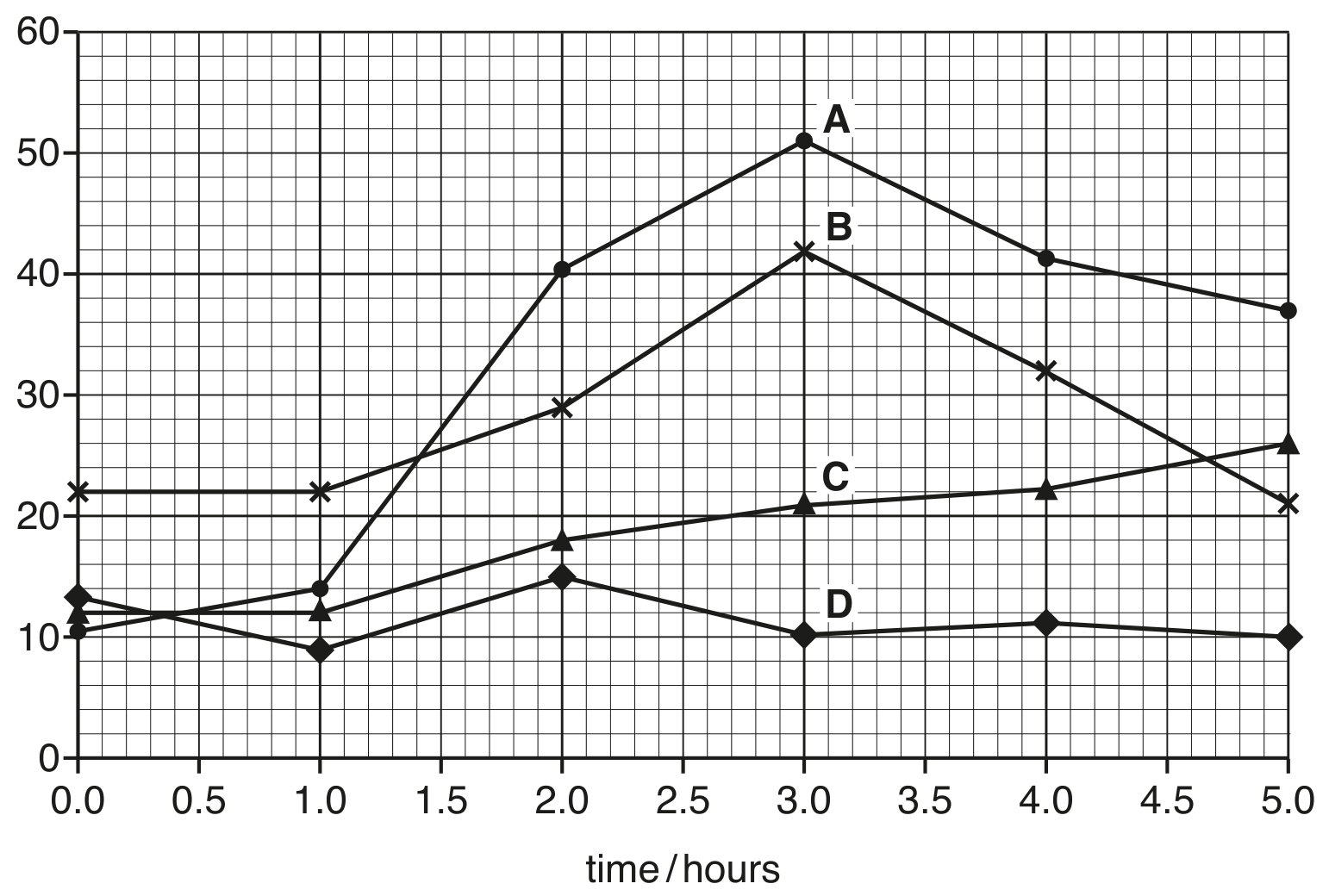
Fig. 1.2
Explain why untreated milk was included in the investigation.
Eyelashes and eyelids are mechanical barriers that help to prevent particles and pathogens entering the eye.
Give two other mechanical barriers that defend the body against pathogens.
1
2
State the name of the white blood cells that digest pathogens.
Conjunctivitis can be caused by pathogens and affects the tissues lining the eyelids and covering the sclera. People with conjunctivitis that is caused by a pathogen can develop active immunity.
Explain why the shape of specific parts of a pathogen is important in the development of active immunity.