EduNinja
[Maximum number: 2]

Bacteria are classified in the Prokaryote kingdom.

(a)

The bacterium Bacillus megaterium was grown in the laboratory fermenter shown in Fig. 1.1.
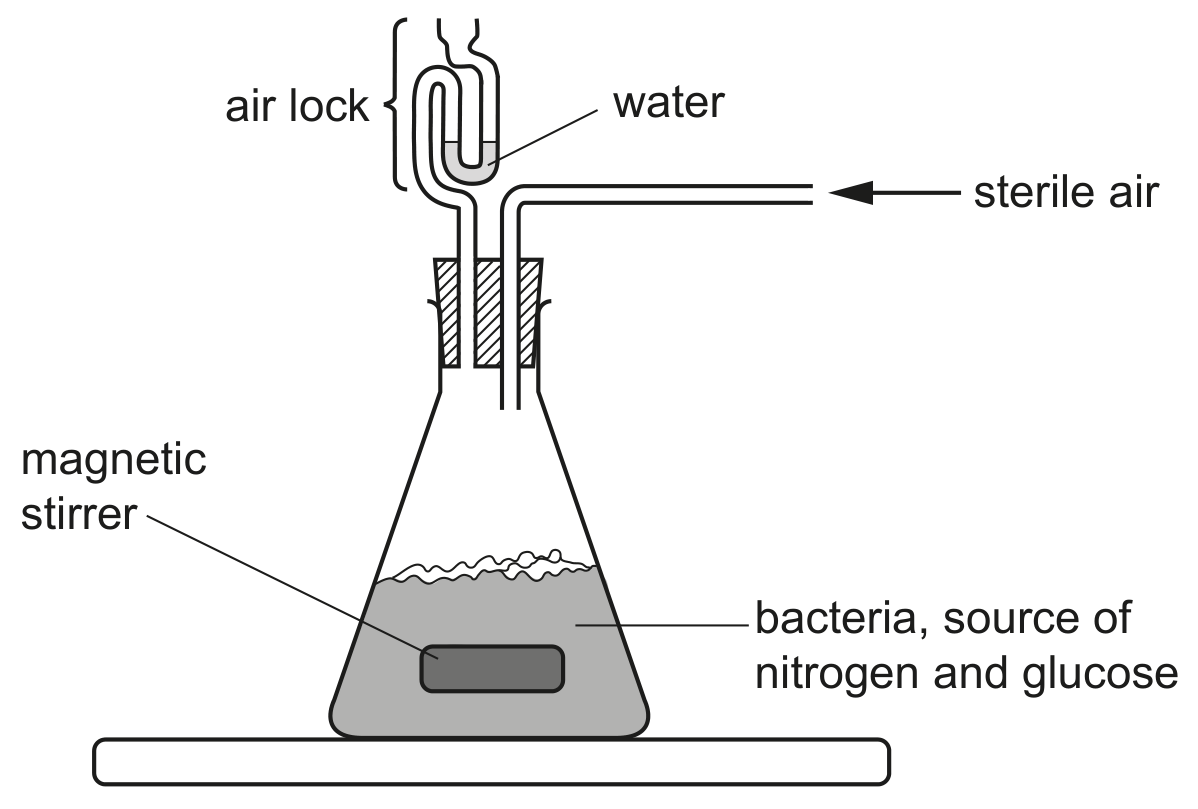
Fig. 1.1

Fig. 1.1

[ 2 ]
(i)

Explain why a source of nitrogen and glucose were added to the fermenter. nitrogen
glucose

[ 2 ]
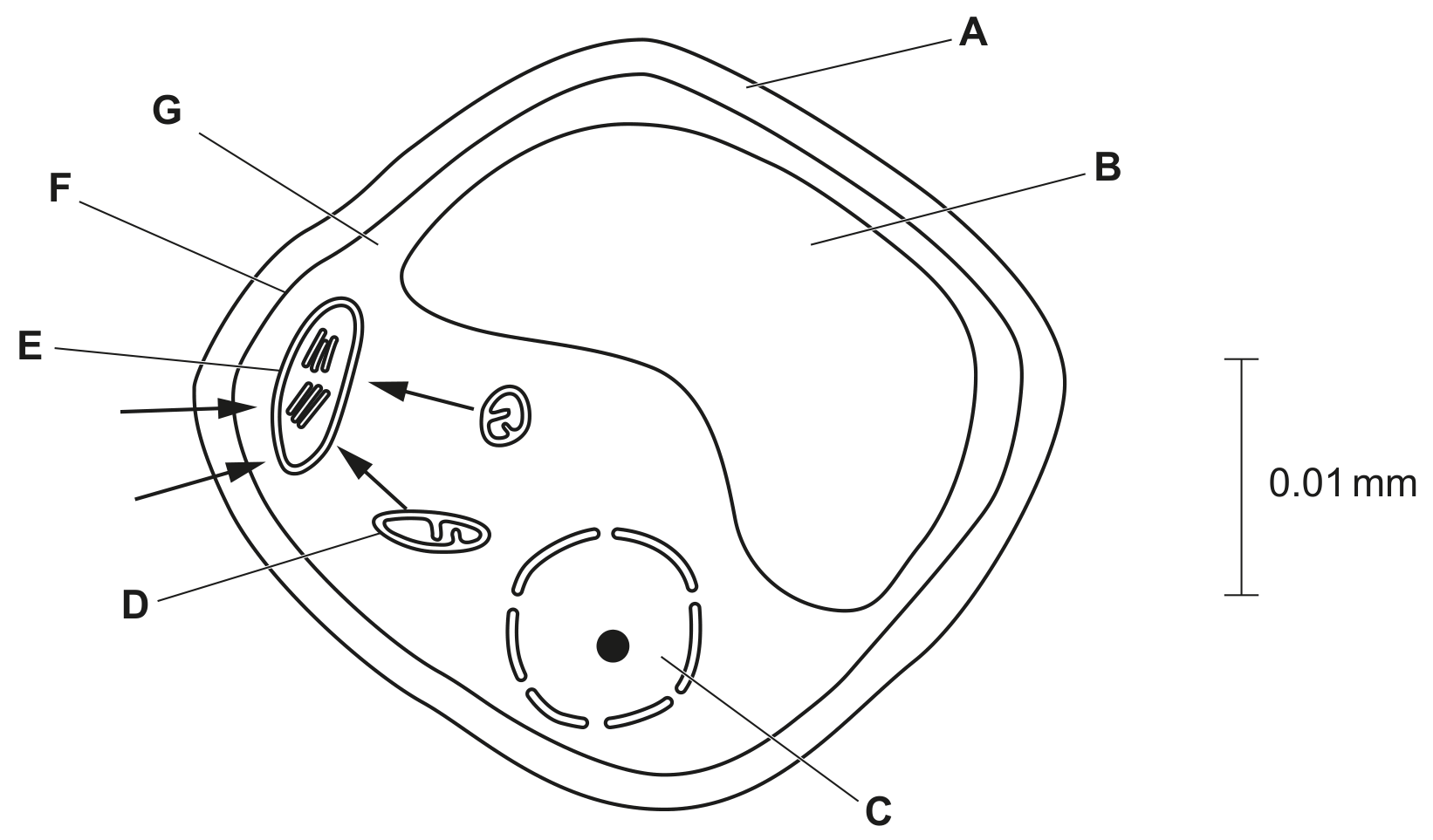
[Maximum number: 7]

Fig. 1.1 shows a spongy mesophyll cell from the leaf of a plant. The arrows show the net direction of movement of carbon dioxide molecules during daylight.

Fig. 1.1

Fig. 1.1

(a)

Carbon dioxide is a raw material for photosynthesis.

[ 3 ]
(i)

State the process by which carbon dioxide travels into the leaf from the air.

[ 1 ]
(ii)

Describe the pathway taken by a molecule of carbon dioxide, from the air outside a leaf to a spongy mesophyll cell.

[ 2 ]
(b)

Low concentrations of carbon dioxide in the air may restrict the rate of photosynthesis in plants.

[ 2 ]
(i)

State the term given to something present in the environment in such short supply that it restricts life processes.

[ 1 ]
(ii)

State one other feature of the environment that may also restrict the rate of photosynthesis.

[ 1 ]
(c)

Researchers have devised a process of artificial photosynthesis. They use gold nanoparticles as a catalyst to utilise green light to convert carbon dioxide to fuels, such as propane.

Suggest the advantages to the environment of using artificial photosynthesis on a large scale.

[ 2 ]
[Maximum number: 1]

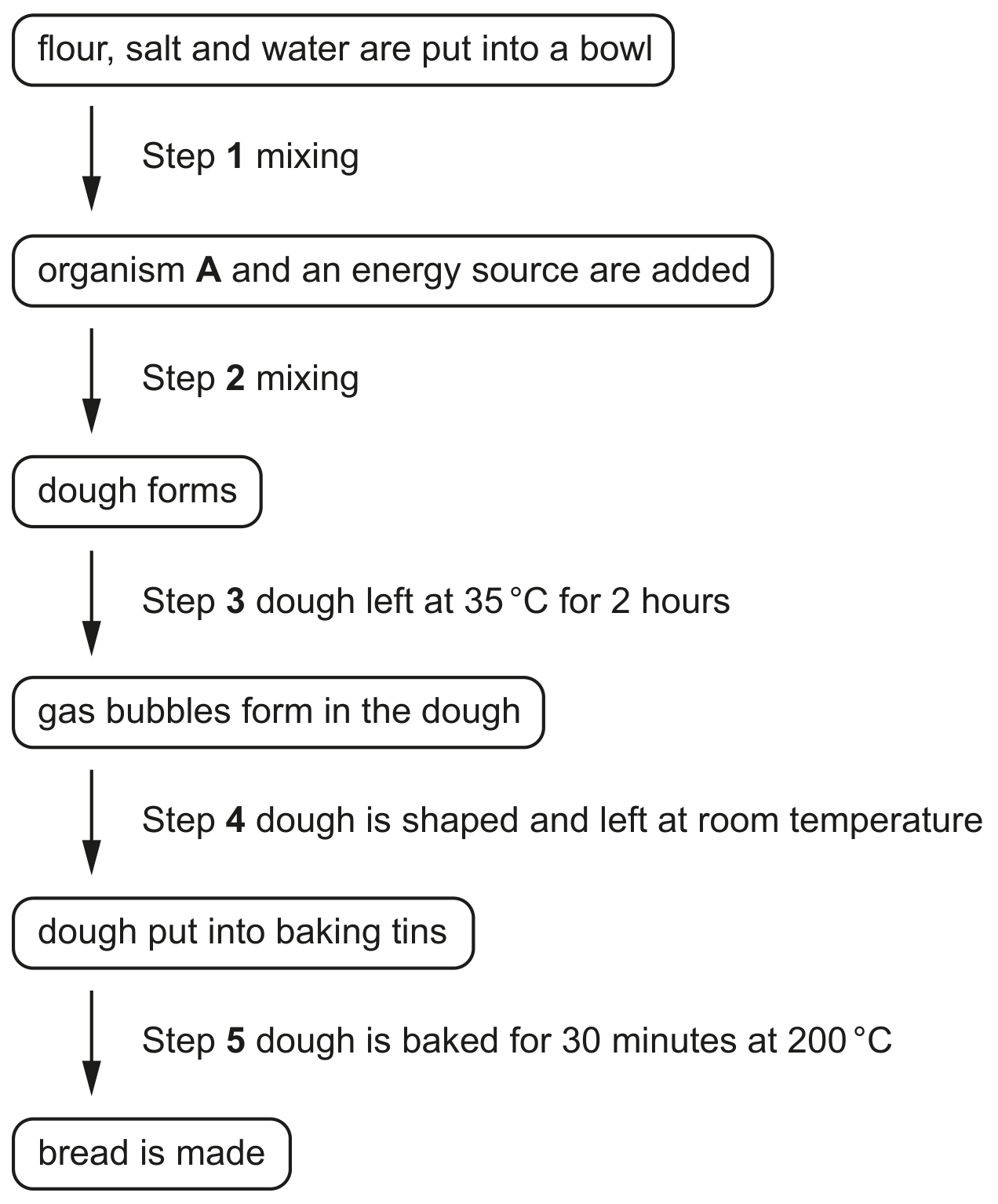
Biotechnology is used in the process of bread-making.
Fig. 1.1 shows some of the steps in making bread.

Fig. 1.1

Fig. 1.1

(a)
(i)

State the name of the source of energy used by organism A.

[ 1 ]
[Maximum number: 1]

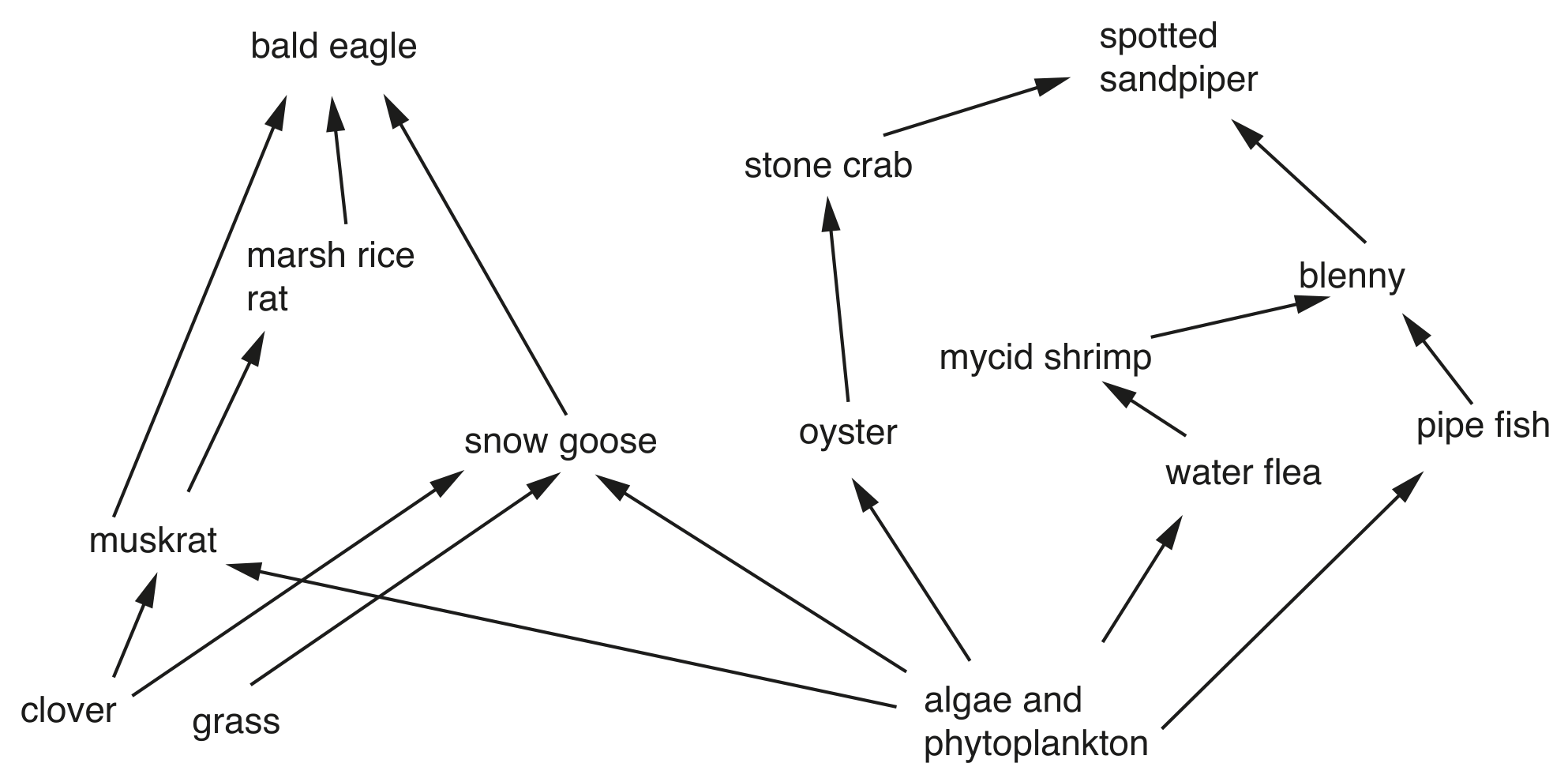
Wetlands are important ecosystems. Researchers studied the feeding relationships between the organisms in an area of wetland on the coast of Texas.

Fig. 1.1 shows part of the food web that they studied.

Fig. 1.1

Fig. 1.1

(a)

State the name of the structure in plant cells where process D occurs.

[ 1 ]
[Maximum number: 16]

The rate of photosynthesis of terrestrial plants can be determined by measuring the uptake of carbon dioxide.

(a)

Explain why plants take up carbon dioxide during photosynthesis.

[ 2 ]
(b)

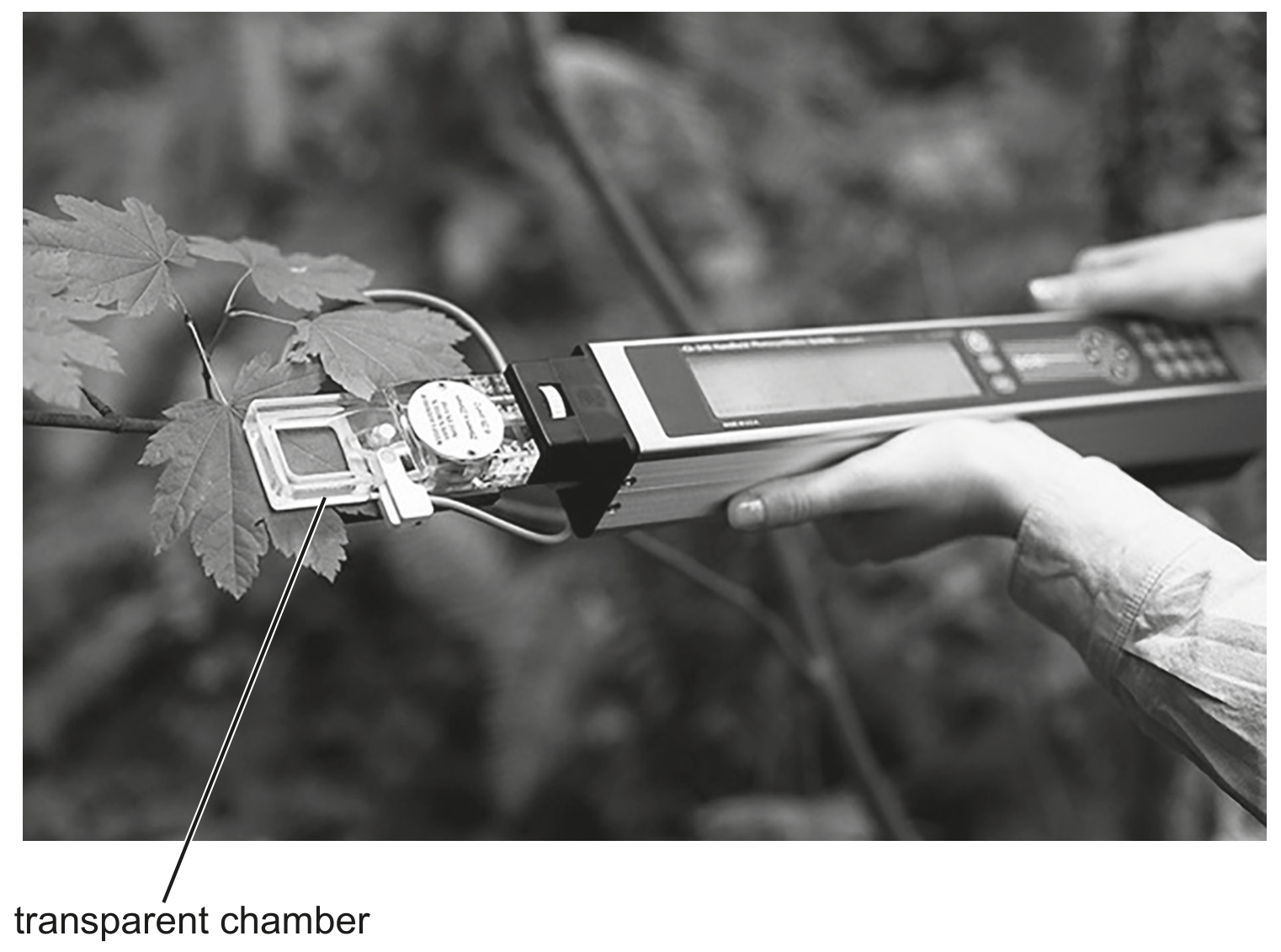
The rate of photosynthesis of parts of individual leaves can be measured using a hand-held device as shown in Fig. 2.1.

Fig. 2.1

Fig. 2.1

This apparatus allows air to flow through the transparent chamber that encloses part of the leaf. The apparatus measures the carbon dioxide concentration of the air entering and leaving the chamber.

Explain how the results from the apparatus can be used to calculate the rate of photosynthesis.

[ 2 ]
(c)

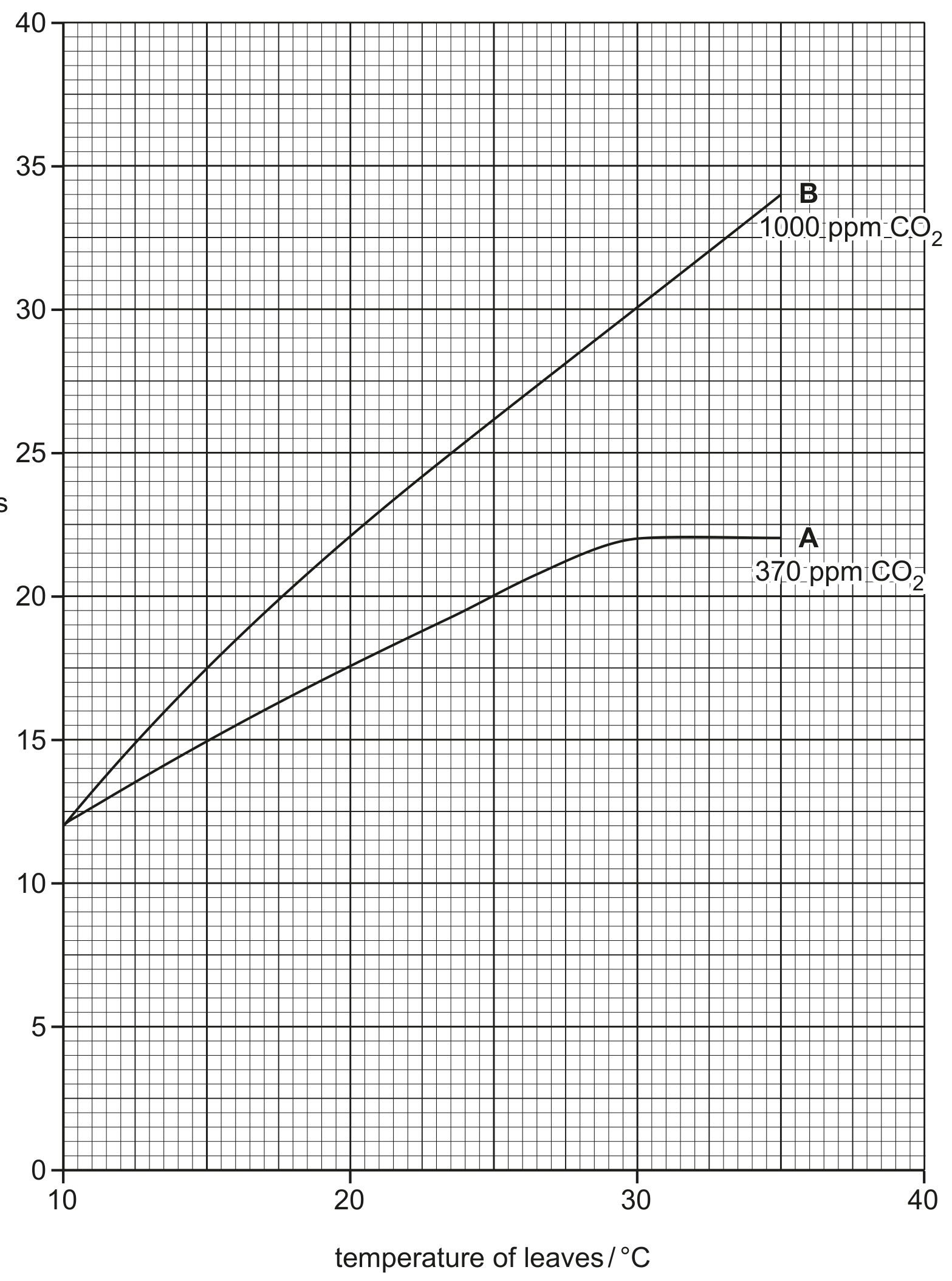
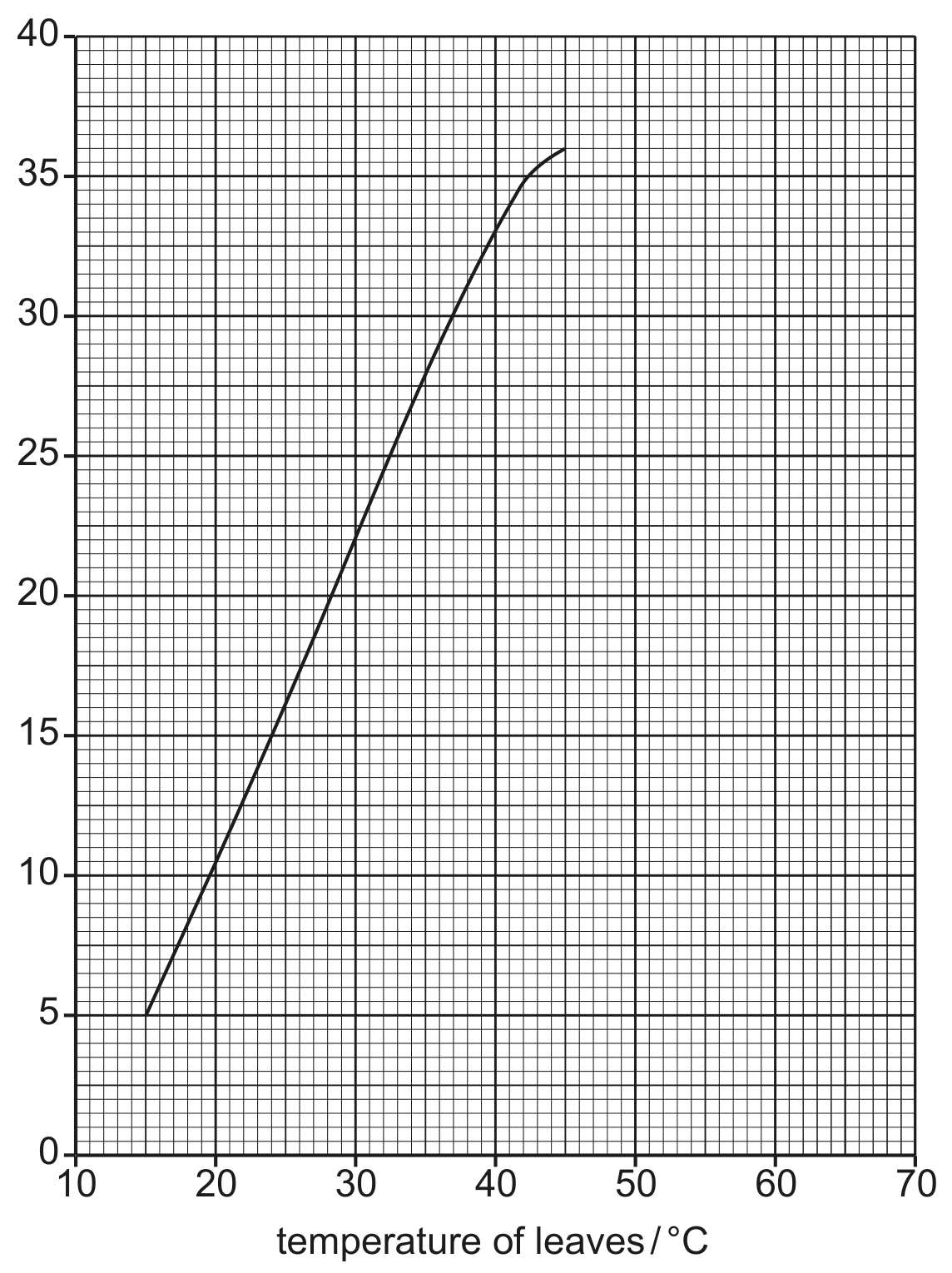
A student used the apparatus shown in Fig. 2.1 to investigate the effect of temperature on the rate of photosynthesis of the leaves of Chinese plantain, Plantago asiatica, at two different concentrations of carbon dioxide, A and B.
rate of photosynthesis /μmol/ \mu \mathrm{mol} per m2\mathrm{m}^{2} per s

Fig. 2.2 shows the results of the investigation.

Fig. 2.2 shows the results of the investigation.

[ 10 ]
(i)

State one environmental factor that should have been kept constant in this investigation.

[ 1 ]
(ii)

Describe the effect of temperature on the rate of photosynthesis when carbon dioxide concentration A was supplied.

Use the data from Fig. 2.2 in your answer.

[ 3 ]
(iii)

Calculate the percentage increase in the rate of photosynthesis at 30C30^{\circ} \mathrm{C} when the carbon dioxide concentration was increased from A to B as shown in Fig. 2.2.

Show your working and give your answer to the nearest whole number.

[ 2 ]
(iv)

Explain the effect of increasing temperature on the rate of photosynthesis for carbon dioxide concentration B.

Use the term limiting factor in your answer.

[ 3 ]
(v)

The student concluded that carbon dioxide concentration is the factor limiting the rate of photosynthesis between 30C30^{\circ} \mathrm{C} and 35C35^{\circ} \mathrm{C} for the results shown for A in Fig. 2.2.

State the evidence for this conclusion.

[ 1 ]
(d)

A similar investigation was carried out on Arizona honeysweet, Tidestromia oblongifolia, that grows in Death Valley in California where the highest temperatures may be greater than 45C45^{\circ} \mathrm{C}.

The results are shown in Fig. 2.3.
rate of photosynthesis /μmol/ \mu \mathrm{mol} per m2\mathrm{m}^{2} per s

Fig. 2.3

Fig. 2.3

Predict and explain what would happen to the rate of photosynthesis if the investigation is continued at temperatures higher than 45C45^{\circ} \mathrm{C}.

[ 2 ]
[Maximum number: 1]

Plant cells are placed in a solution with a higher water potential than the plant cell contents.
What will happen?

direction of

water movement

volume of

vacuole

enters cells

decreases

enters cells

increases

leaves cells

decreases

leaves cells

increases

(a)

State the word equation for photosynthesis.

[ 2 ]
(b)

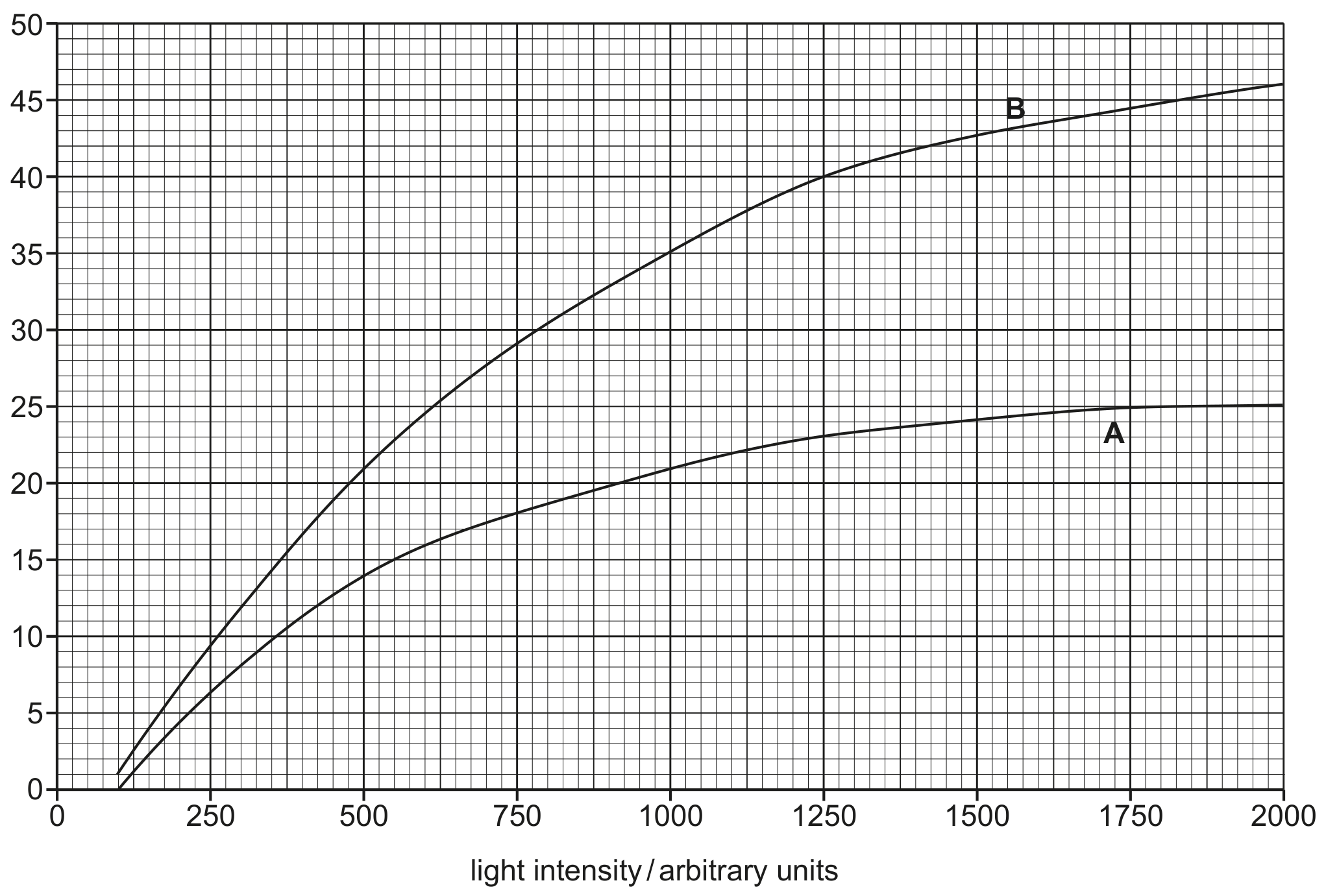
Scientists investigated the effect of light intensity on the rate of photosynthesis in the leaves of eucalyptus trees at two different concentrations of carbon dioxide, A and B.

The results are shown in Fig. 2.1.
rate of photosynthesis
/μmol/ \mu \mathrm{mol} per m2\mathrm{m}^{2} pers

Fig. 2.1

Fig. 2.1

Key:

A carbon dioxide concentration 140 ppm

B carbon dioxide concentration 1000 ppm

[ 12 ]
(i)

Suggest and explain why the scientists kept the temperature of the leaves at 20C20^{\circ} \mathrm{C} while they recorded results.

[ 2 ]
(ii)

Calculate the percentage increase in the rate of photosynthesis at a light intensity of 1250 arbitrary units when the carbon dioxide concentration was increased from 140 ppm to 1000 ppm .

Show your working and give your answer to the nearest whole number.

[ 3 ]
(iii)

Describe the effect of increasing light intensity on the rate of photosynthesis when the concentration of carbon dioxide was 140 ppm .

[ 3 ]
(iv)

Explain the effect of increasing light intensity on the rate of photosynthesis when the concentration of carbon dioxide was 1000 ppm .

Use the term limiting factor in your answer.

[ 4 ]
[Maximum number: 3]

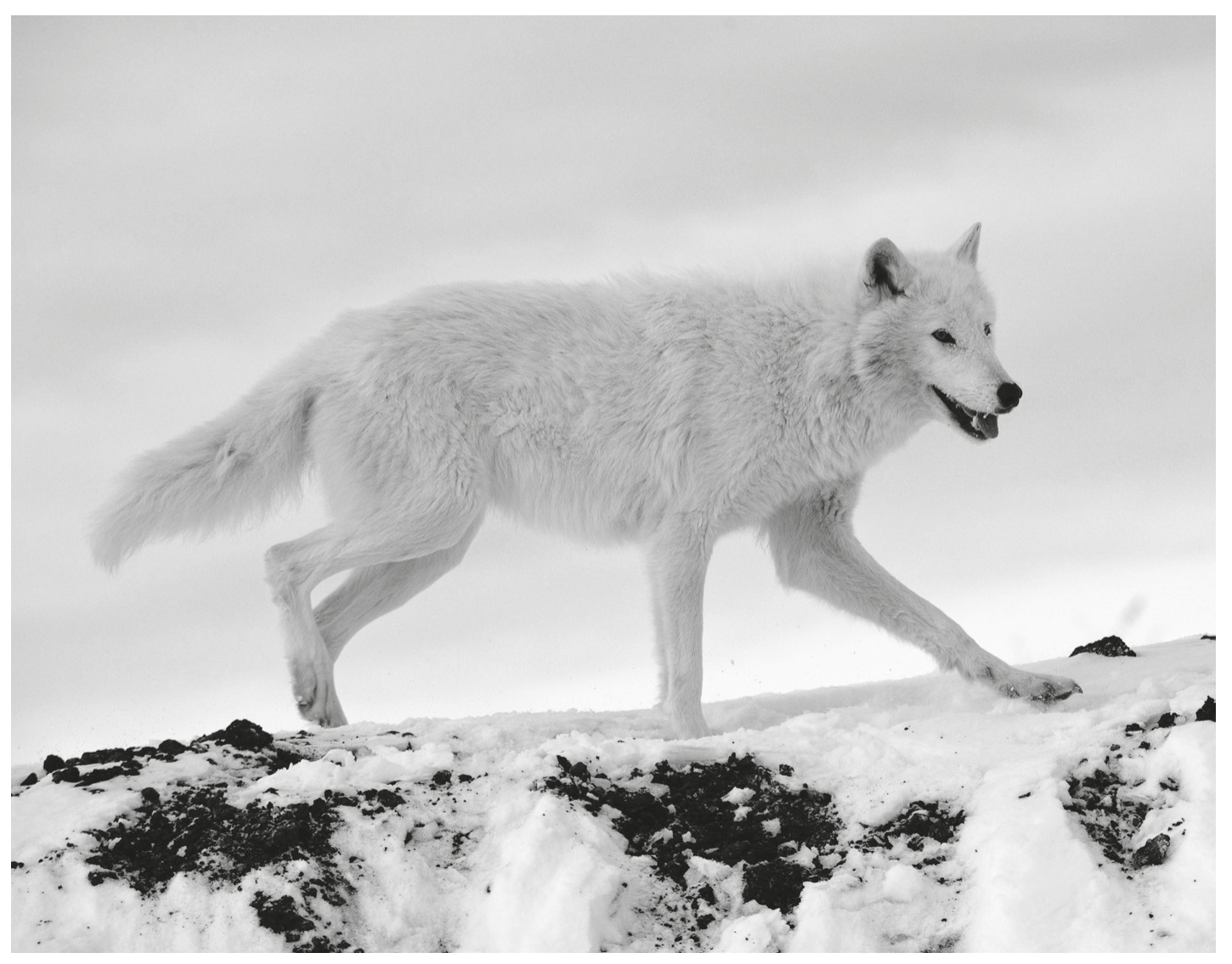
Fig. 2.1 shows an Arctic wolf, Canis lupus. These wolves are one of the few mammals adapted to the extreme cold of the tundra in the Canadian Arctic and in Alaska.

Fig. 2.1

Fig. 2.1

(a)

The food available to animals in the Arctic tundra is limited. There is a short growing season for plants and the environmental conditions do not favour high rates of photosynthesis and growth compared with temperate and tropical ecosystems.

State three conditions that limit plant growth rates.
1
2
3

[ 3 ]
[Maximum number: 4]

Phloem is used to transport sucrose and amino acids in plants. Sucrose is a carbohydrate.

(a)

Describe the uses of carbohydrates and amino acids in plants.

[ 4 ]
(a)

Explain the effect of a lack of magnesium ions on the colour of plant leaves.

[ 2 ]
0