EduNinja
(a)

A student investigated the effect of bile on the digestion of fat in milk.

They set up three different test-tubes:
- test-tube A contained milk and bile
- test-tube B contained milk and lipase
- test-tube C contained milk, lipase and bile.

They used an indicator that is pink in alkaline solutions and colourless in acidic solutions. They added the same volume of indicator to each test-tube.

The student observed and recorded the colour of the contents of each test-tube at 0 minutes, 20 minutes and 40 minutes.

Table 1.1 shows the results of the investigation.
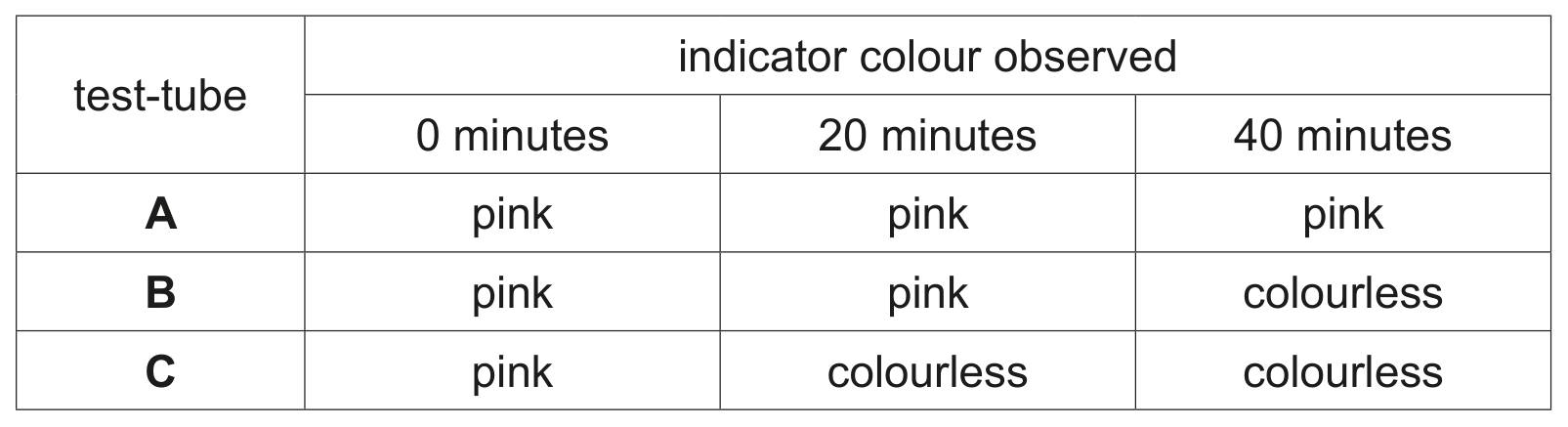
Table 1.1

Table 1.1

[ 6 ]
(i)

Explain the results for test-tubes B and C in Table 1.1.

[ 4 ]
(ii)

Explain the purpose of test-tube A in Table 1.1.

[ 2 ]
(b)

The action of lipase is affected by temperature.

Fig. 1.2 shows the axes for a graph of the effect of temperature on the activity of lipase.
Complete the graph by:
- drawing a line to show the expected effect of temperature on the activity of lipase
- adding a label line and a label to show the point at which all the lipase has been denatured.
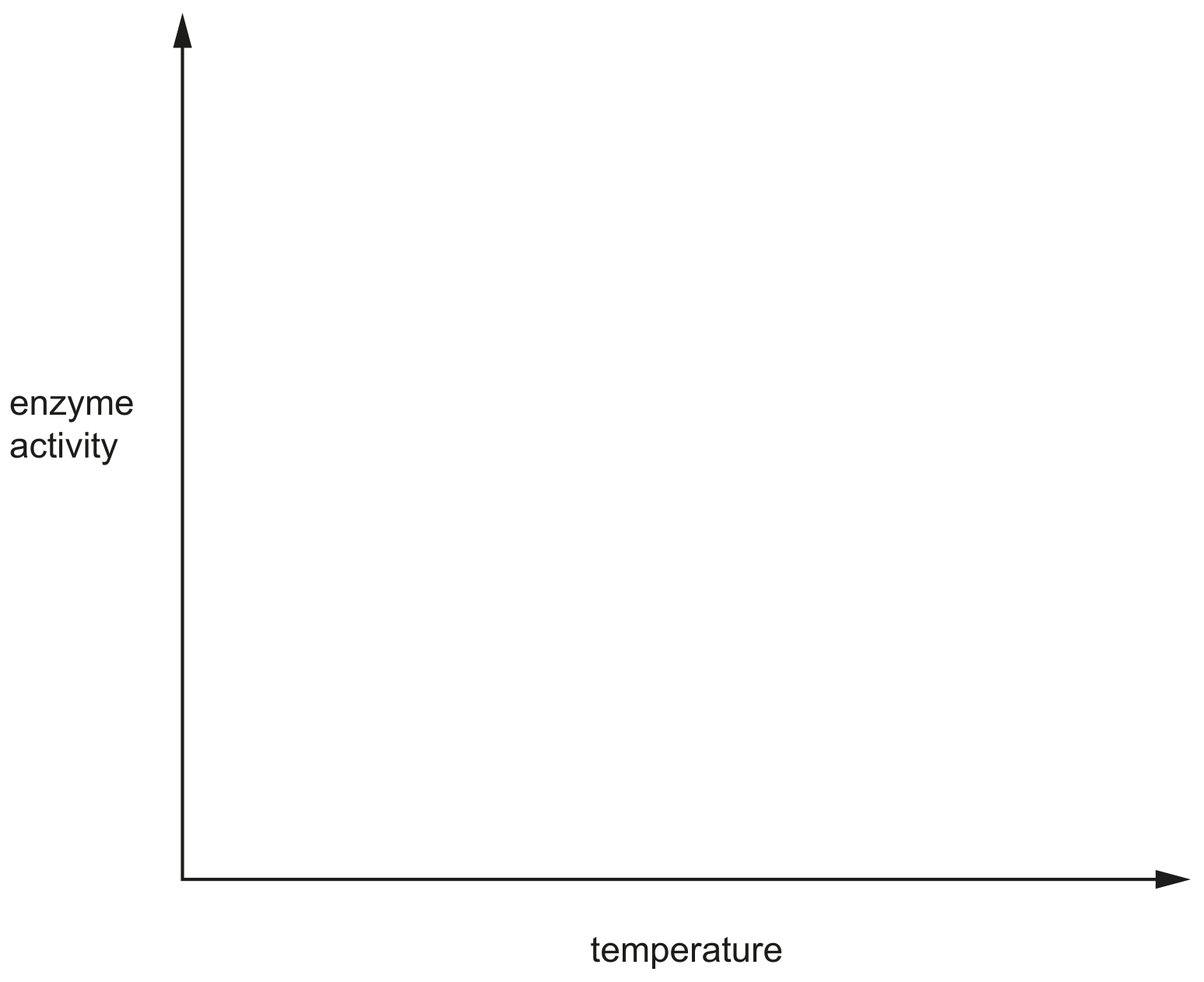
Fig. 1.2
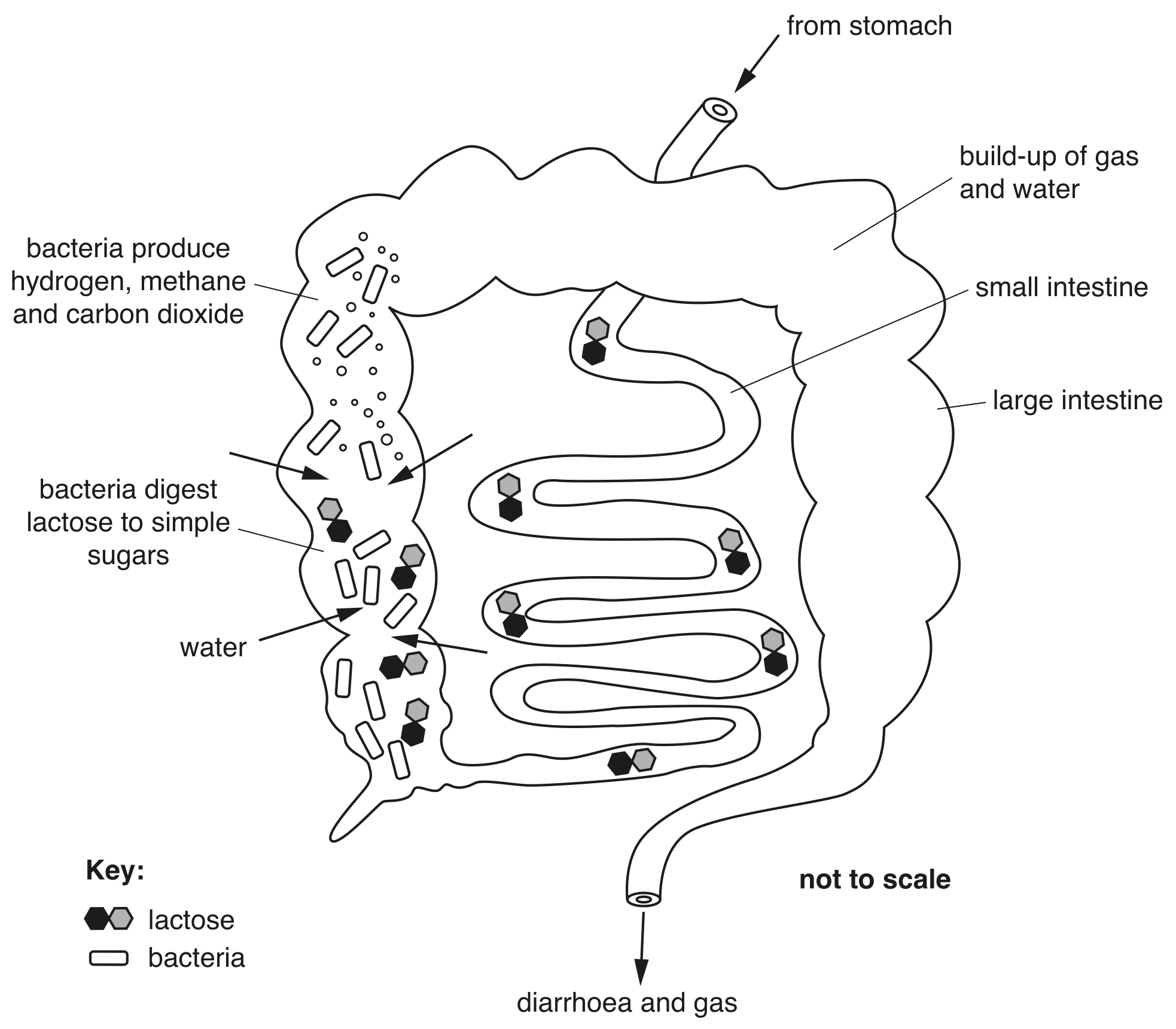
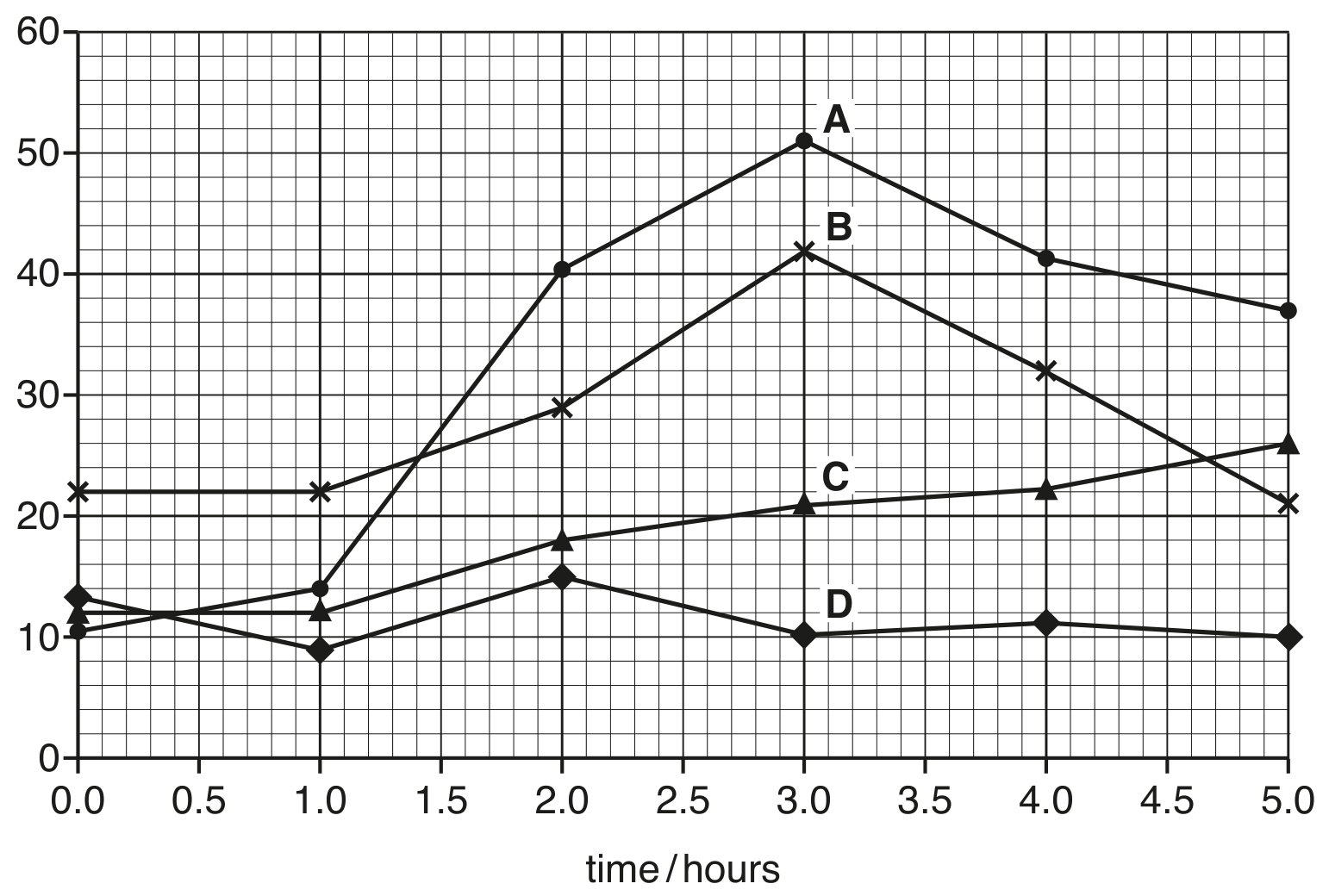
Fig. 1.2

[ 2 ]
[Maximum number: 13]

Milk is sometimes referred to as a 'complete food' because it contains all the nutrients that a young mammal requires.

(a)

Protein digestion begins in the stomach of the human alimentary canal and is completed in the small intestine.

Describe in detail how enzymes function to digest protein in the alimentary canal.

[ 6 ]
(b)

Some people are unable to digest lactose (milk sugar) and have a condition known as lactose intolerance.

Fig. 1.1 shows what happens in the intestine of a person who is lactose intolerant if they eat food containing a lot of lactose.

Fig. 1.1

Fig. 1.1

[ 2 ]
(i)

Explain why lactose is not absorbed by the small intestine.

[ 2 ]
(c)

Hydrogen gas is produced by the bacteria that digest lactose in the large intestine. The gas is absorbed into the blood and excreted through the lungs. Lactose intolerance can be monitored by measuring the hydrogen gas content of the air a person breathes out.

People taking part in an investigation into lactose intolerance consumed the following milk products on different days:

A untreated milk

B milk treated with lactase immediately before drinking

C milk treated with lactase three days before drinking

D yoghurt made by bacteria that digested the lactose in the milk The hydrogen gas content of the air breathed out was measured every hour for five hours following the ingestion of each milk product. The mean results are shown in Fig. 1.2. hydrogen gas breathed out / parts per million

Fig. 1.2

Fig. 1.2

[ 5 ]
(i)

Suggest why lactase might be added to milk.

[ 2 ]
(ii)

Use the results in Fig. 1.2 to explain why yoghurt is the best milk product for people with lactose intolerance.

[ 3 ]
[Maximum number: 2]

Fat is a necessary component of the human diet.

(a)

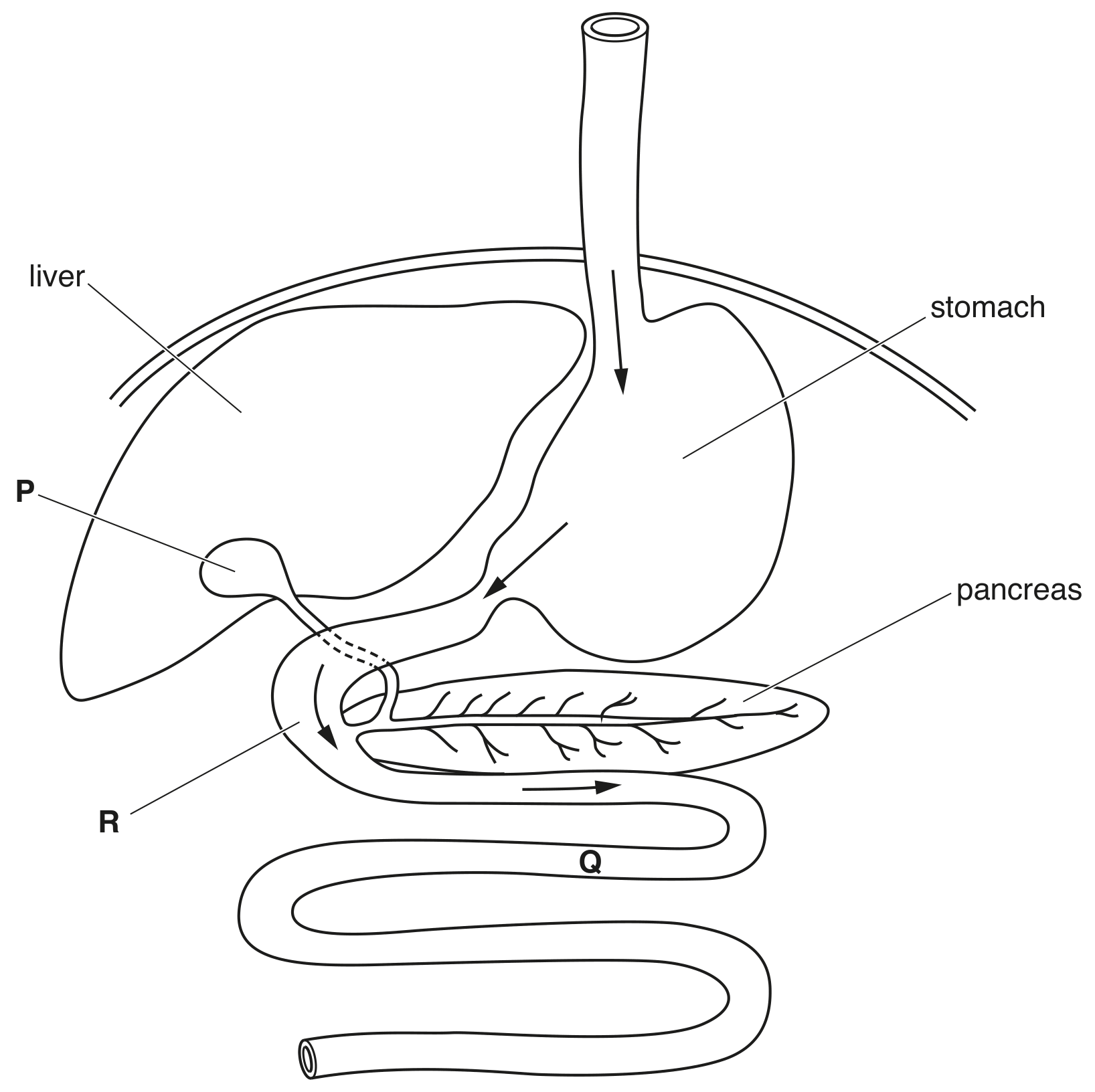
The arrows in Fig. 1.1 show the pathway of fat in part of the alimentary canal.

Fig. 1.1

Fig. 1.1

State the name of

[ 2 ]
(i)

the enzyme secreted by the pancreas that digests fat

[ 1 ]
(ii)

the products of chemical digestion of fat

[ 1 ]
[Maximum number: 1]

Wheat is a crop plant grown to produce flour.

(a)

Flour is used to make dough for bread.

[ 1 ]
(i)

State the name of the organism used to make dough rise.

[ 1 ]
[Maximum number: 5]

Enzymes are catalysts.

(a)
(i)

Complete the word equation to show the substrate and products for lipase.

+…………………………..+→ lipase ……………………………..……………………………....\begin{aligned} & +\ldots \ldots \ldots \ldots \ldots \ldots \ldots \ldots \ldots \ldots . . \quad+ \\ & \xrightarrow{\text { lipase }} \quad \begin{array}{r} \ldots \ldots \ldots \ldots \ldots \ldots \ldots \ldots \ldots \ldots \ldots . . \\ \ldots \ldots \ldots \ldots \ldots \ldots \ldots \ldots \ldots \ldots \ldots . . . . \end{array} \end{aligned}
[ 2 ]
(ii)

Lipase acts in the duodenum.

Explain how the body provides a suitable pH for lipase activity.

[ 3 ]
(a)

Food that sticks to the teeth can be used by bacteria for anaerobic respiration.

This type of respiration releases a substance that can cause tooth decay.

[ 1 ]
(i)

State the type of substance released by the bacteria, during respiration, that causes tooth decay.

[ 1 ]
[Maximum number: 3]

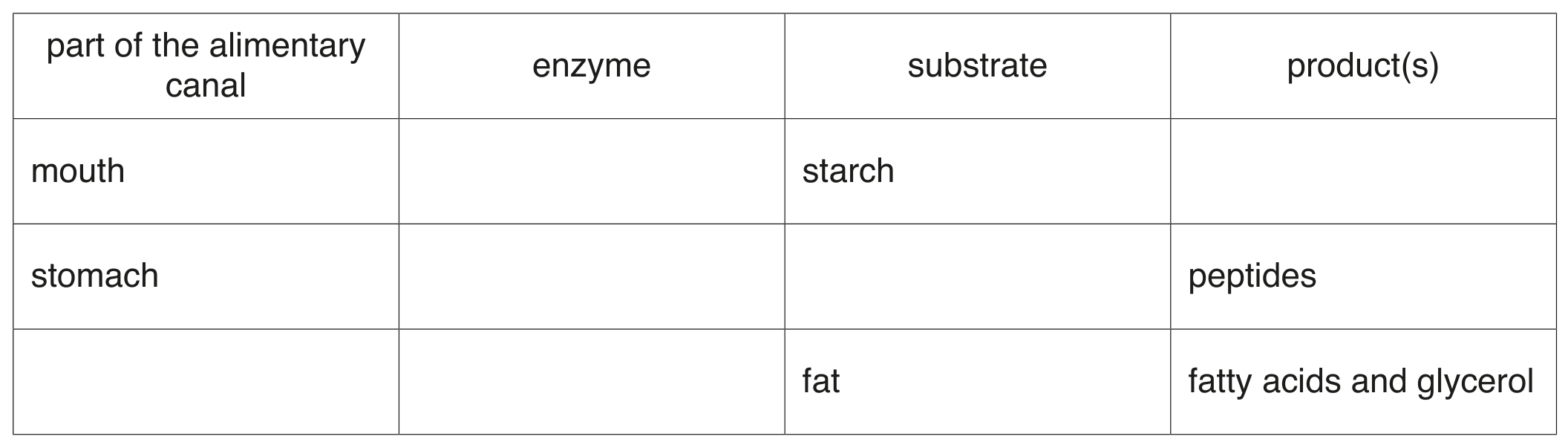
Two functions of the alimentary canal are mechanical digestion and chemical digestion.

(a)

Enzymes catalyse the reactions of chemical digestion. Table 1.1 gives information about chemical digestion in three parts of the alimentary canal.

Complete Table 1.1.

Table 1.1

Table 1.1

[ 3 ]
(a)
(i)

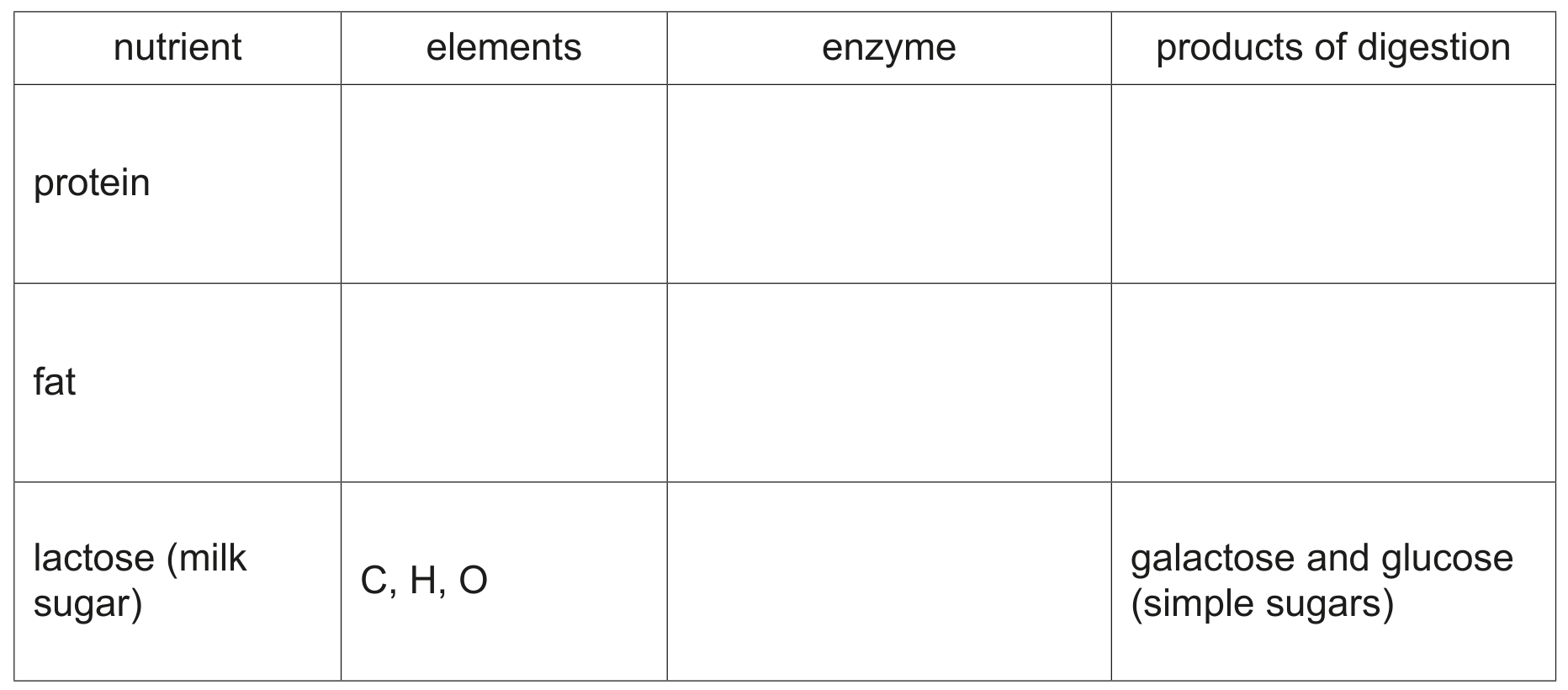
Table 1.1 shows some of the nutrients found in human milk, the elements that make up the nutrients, the enzymes that digest them and the products of digestion.

Complete Table 1.1.

Table 1.1

Table 1.1

[ 4 ]
[Maximum number: 7]

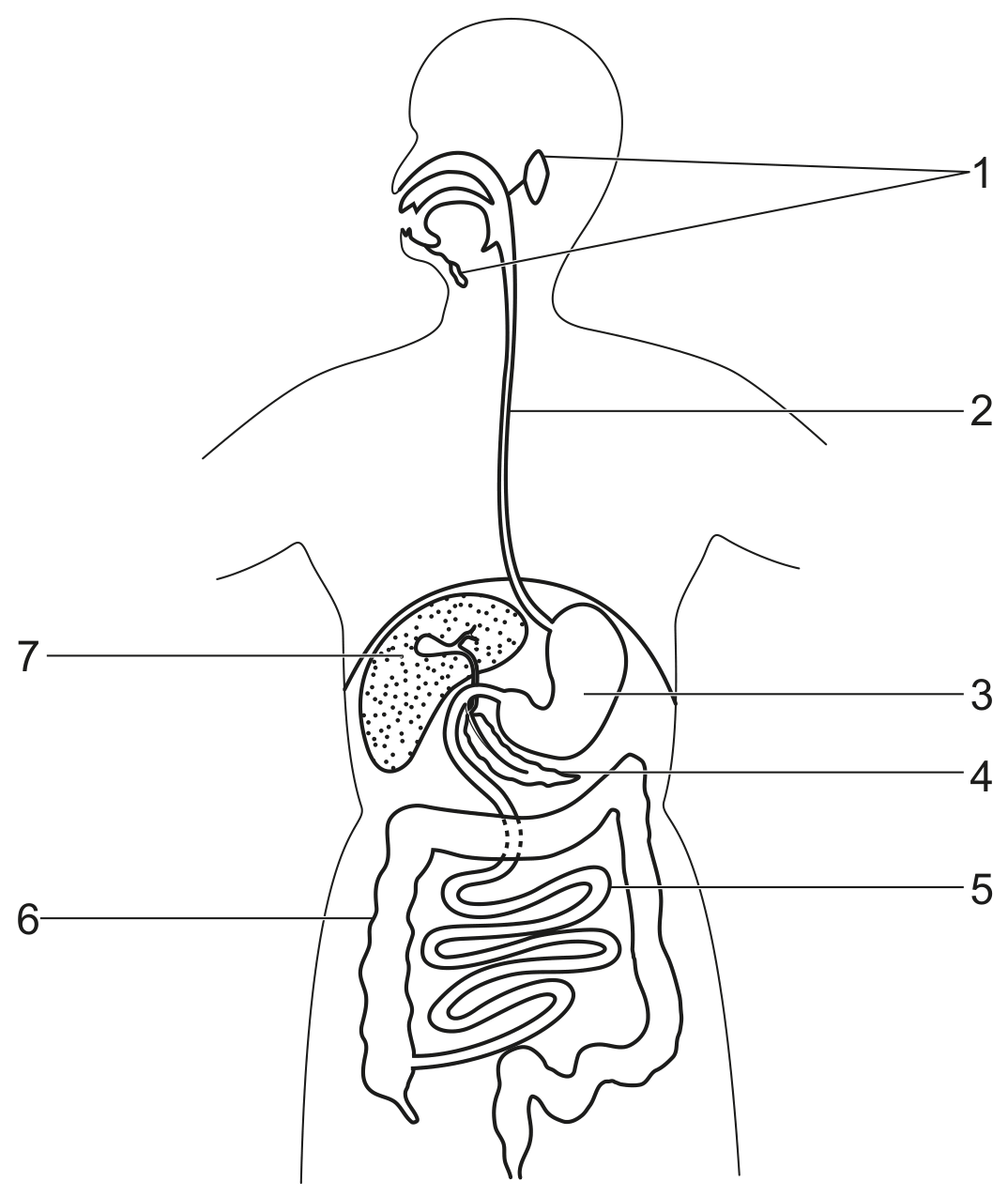
Fig. 2.1 is a diagram of the human alimentary canal and associated organs.

Fig. 2.1

Fig. 2.1

(a)

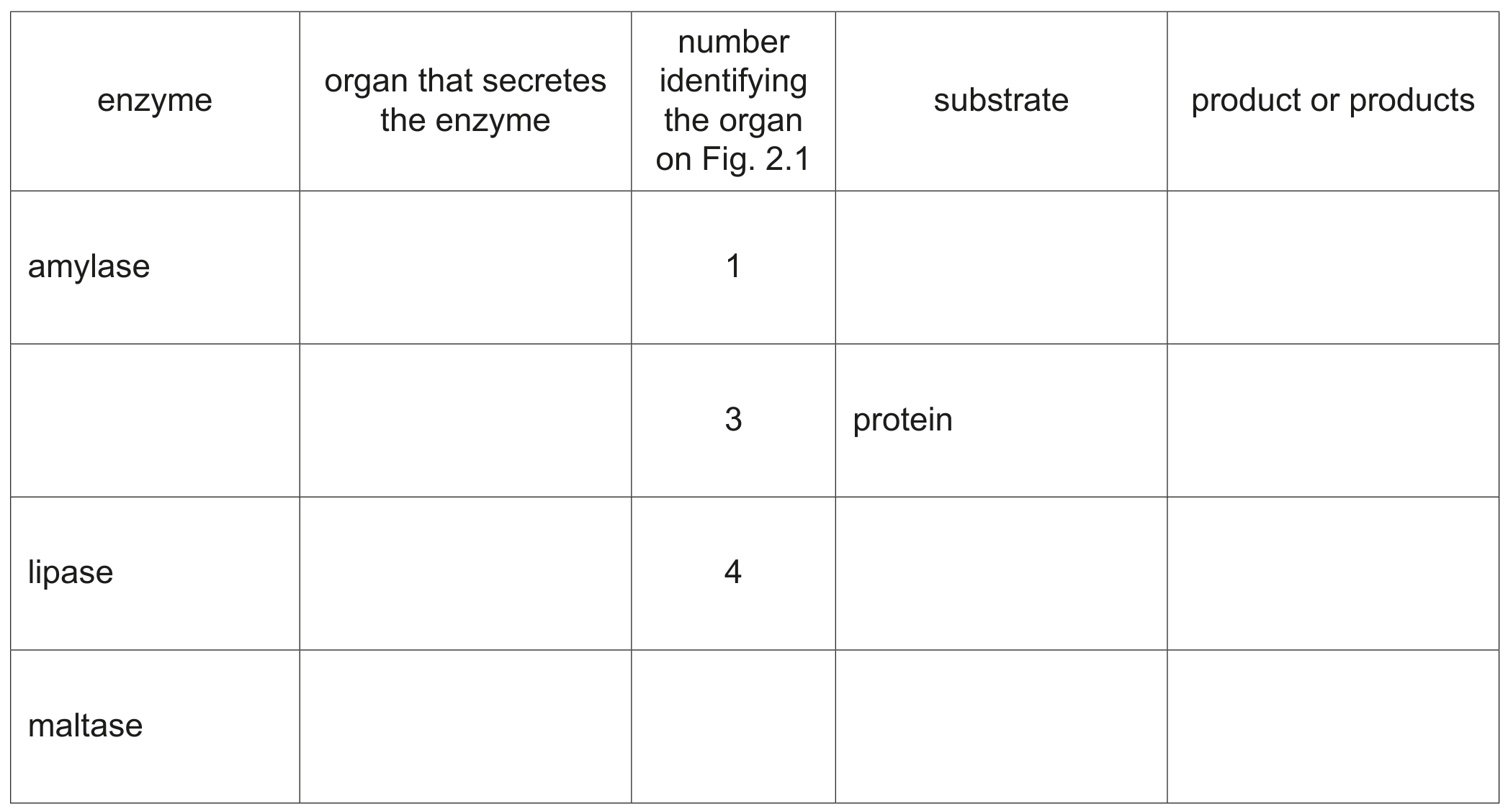
Table 2.1 shows enzymes, the organs that secrete these enzymes, their substrates and products.

Complete Table 2.1.

Table 2.1

Table 2.1

[ 4 ]
(b)

Explain the role of hydrochloric acid in the alimentary canal.

[ 3 ]
[Maximum number: 3]

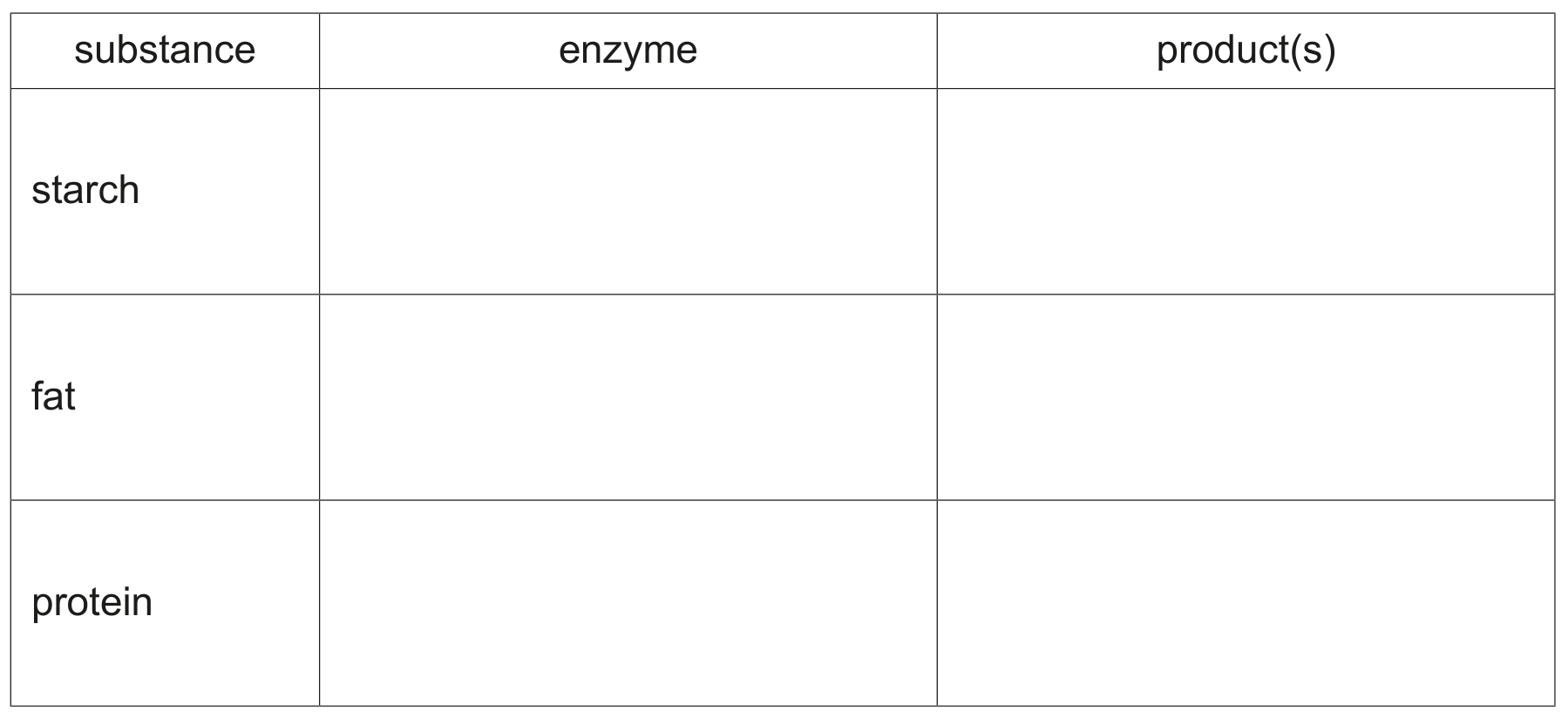
Biological washing powders contain enzymes that break down food stains.

(a)

Complete Table 2.1 by naming the enzymes that break down three substances in food stains and by stating the product or products.

Table 2.1

Table 2.1

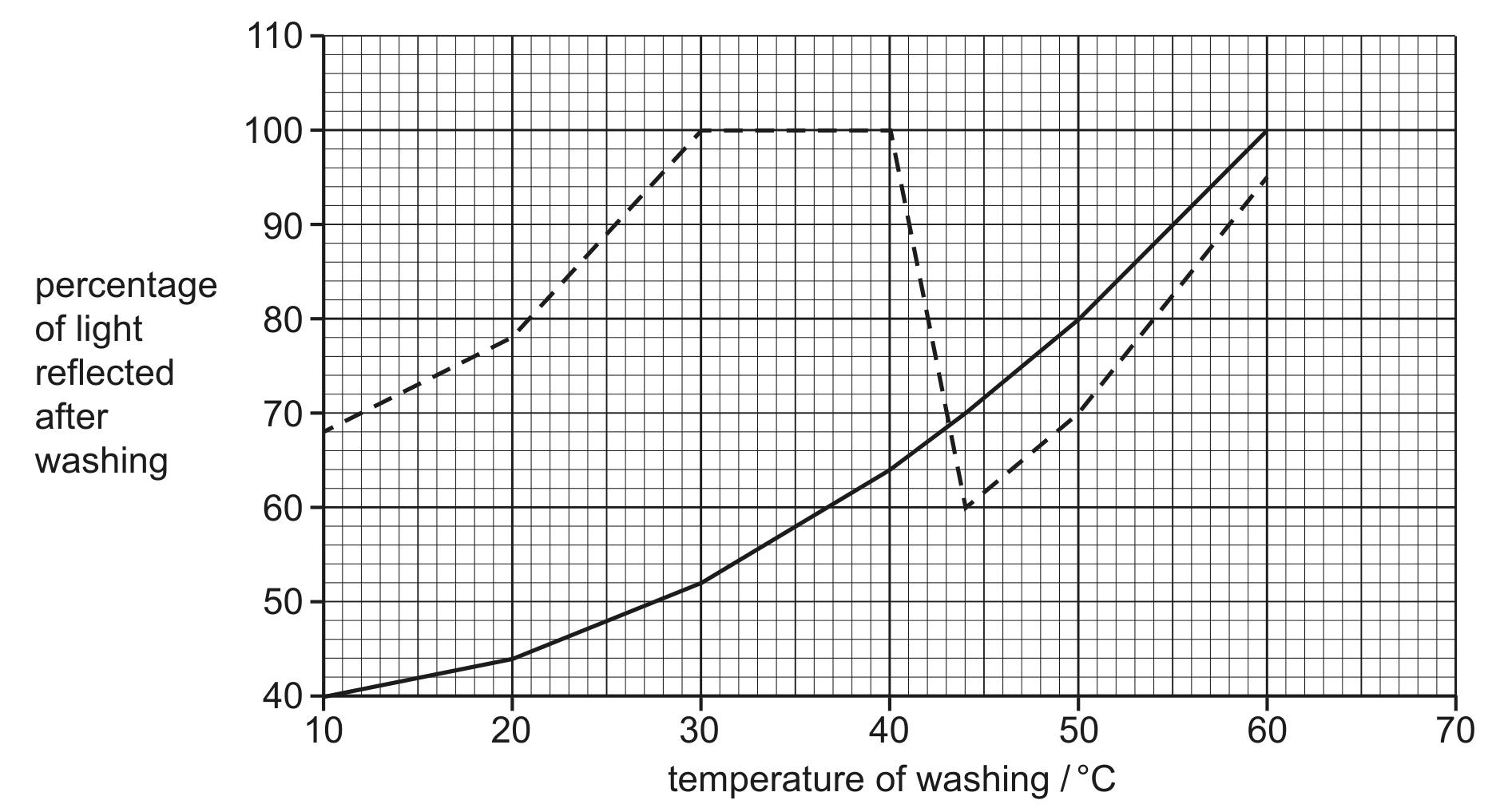
Some students compared how effective biological and non-biological washing powders are at removing stains at temperatures between 10∘C10^{\circ} \mathrm{C} and 60∘C60^{\circ} \mathrm{C}.
- Pieces of stained cloth were washed using two different washing powders.
- The degree of stain removal was measured by using a light meter to record the percentage of light reflected from the cloth.
- A light meter gave a value of 100 % when the cloth was completely clean.
- Any stain left on the cloth reduced the percentage of light reflected.

The results of the students' investigation are shown in Fig. 2.1.

Fig. 2.1

Fig. 2.1

Key:
___ non-biological washing powder
- - - - biological washing powder

[ 3 ]
0