EduNinja
(a)

A scientist investigated sexual reproduction in flowering plants.
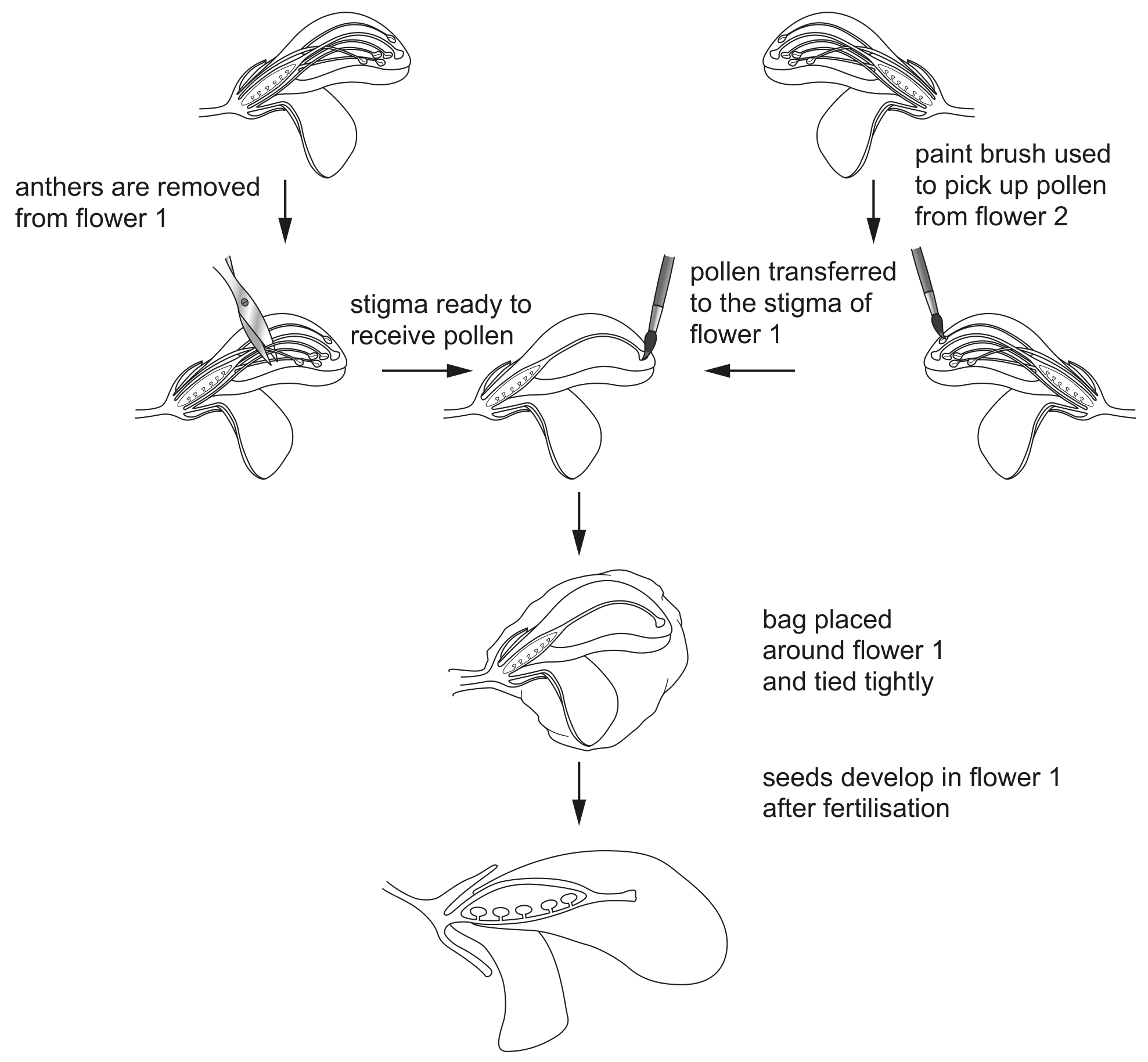
Fig. 2.1 shows the procedure for crossing two plants of the same species.

Fig. 2.1 shows the procedure for crossing two plants of the same species.

The scientist collected the seeds and germinated them. The leaves and flowers of the offspring plants showed phenotypic variation as they were not all identical to the parent plants.

The scientist then investigated the chromosomes of all the offspring plants and found that they had exactly the same number of chromosomes as the parent plants.

[ 2 ]
(i)

Explain how sexual reproduction results in the variation that the scientist discovered in the offspring plants.

[ 2 ]
[Maximum number: 5]

Johnson grass, Sorghum halepense, is wind-pollinated.

(a)

Discuss the advantages of sexual reproduction to a wild population of flowering plants such as Johnson grass.

[ 5 ]
[Maximum number: 1]

Which feature of sexual reproduction helps a species to evolve?

A

Fewer offspring are produced than in asexual reproduction.

B

Offspring are the result of the fusion of the nuclei of dissimilar gametes.

C

Offspring always inherit advantageous characteristics.

D

Offspring produced will always be in a suitable environment.

[Maximum number: 1]

Which row describes sexual reproduction?

gamete
nucleus

zygote
nucleus

genetically different
offspring produced

diploid

diploid

χ\boldsymbol{\chi}

diploid

haploid

χ\boldsymbol{\chi}

haploid

diploid

haploid

haploid

[Maximum number: 1]

What are advantages of using sexual reproduction to produce crop plants?
1 It produces genetic variation to help breed new varieties of crop plant.
2 It ensures that crops have the identical characteristics.
3 It quickly produces many identical copies of a plant.

A

1, 2 and 3

B

1 and 2 only

C

1 only

D

2 and 3 only

[Maximum number: 1]

Which statement about human sexual reproduction is correct?

A

All gametes are haploid.

B

Fertilisation occurs when two diploid nuclei fuse.

C

The sperm is the male zygote.

D

Sexual reproduction results in haploid offspring.

[Maximum number: 1]

What describes the nuclei in human reproduction?

egg

sperm

zygote

diploid

diploid

diploid

diploid

diploid

haploid

haploid

haploid

diploid

haploid

haploid

haploid

[Maximum number: 1]

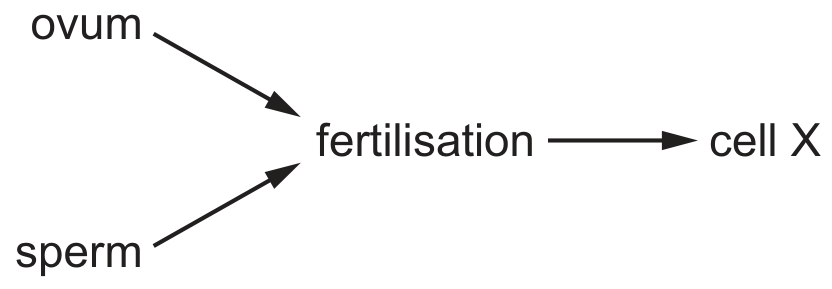
The diagram represents the fusion of sperm and ovum at fertilisation.

Question image

Which description of cell X is correct?

A

diploid gamete

B

diploid zygote

C

haploid gamete

D

haploid zygote

[Maximum number: 2]

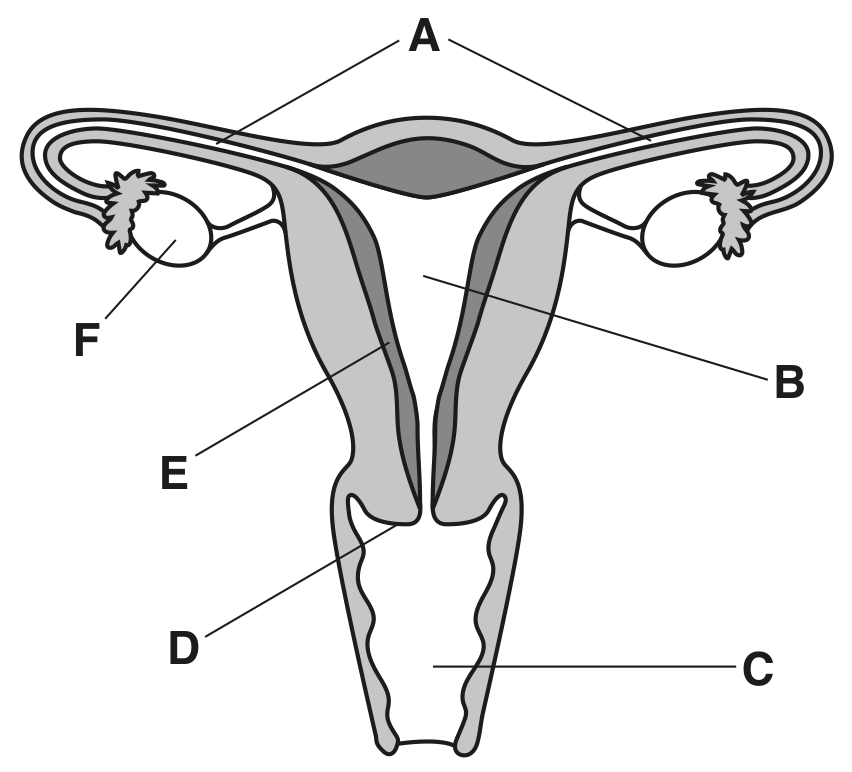
Fig. 4.1 is a diagram of the human female reproductive system.

Fig. 4.1

Fig. 4.1

(a)

Fertilisation is the fusion of the nuclei of a male gamete and a female gamete resulting in a zygote.

State the number of chromosomes present in a human:
female gamete
zygote

[ 2 ]
[Maximum number: 1]

Some descriptions of reproduction are listed.
1 formation of a zygote with a diploid nucleus
2 formation of a zygote with a haploid nucleus
3 fusion of diploid nuclei of two gametes
4 fusion of haploid nuclei of two gametes
Which are correct descriptions of sexual reproduction in humans?

A

1 and 3

B

1 and 4

C

2 and 3

D

2 and 4

0