EduNinja
[Maximum number: 3]

Phloem is used to transport sucrose and amino acids in plants. Sucrose is a carbohydrate.

(a)

Aphids are used by investigators to discover how plants transport sucrose.

Fig. 2.2 shows an aphid with its mouthparts inserted into a plant stem to feed on the liquid in the phloem.
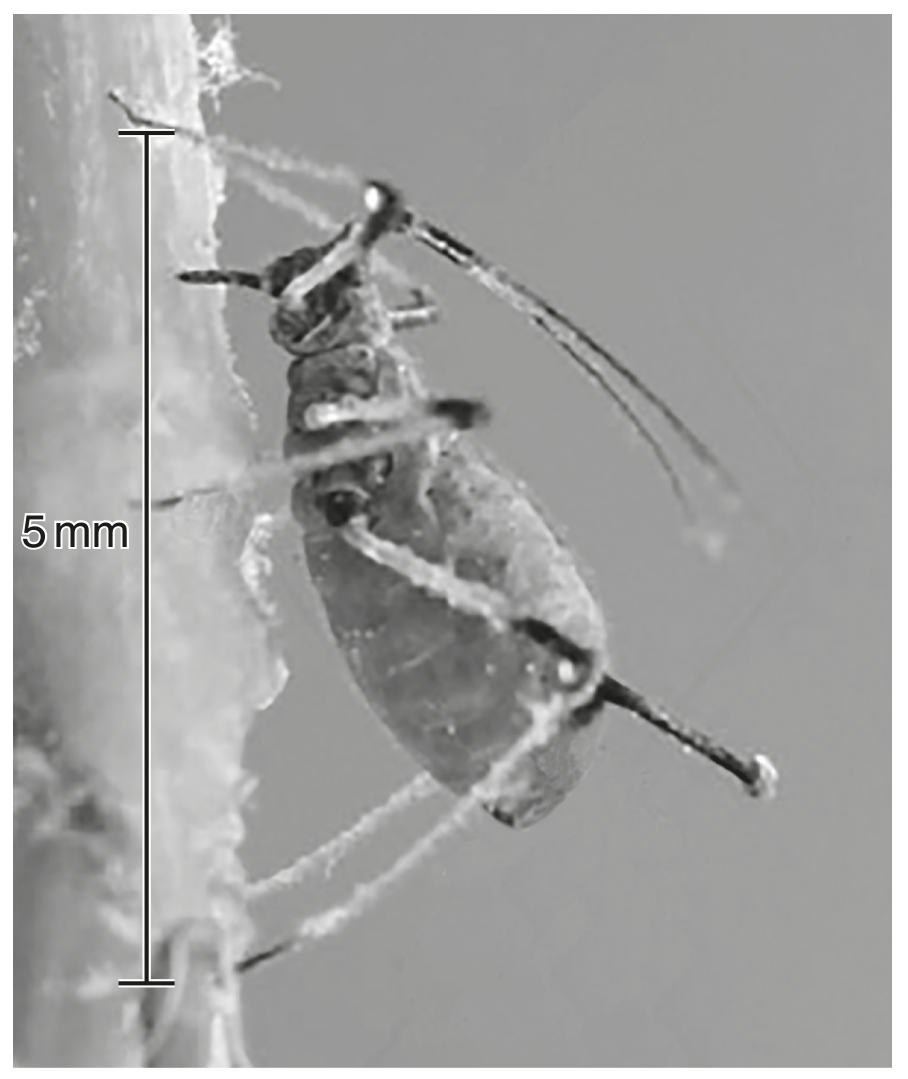
Fig. 2.2

Fig. 2.2

A plant was put in a dark cupboard for several days.
Four aphids, A, B, C and D, were then placed on the plant in the dark cupboard as shown in Fig. 2.3.
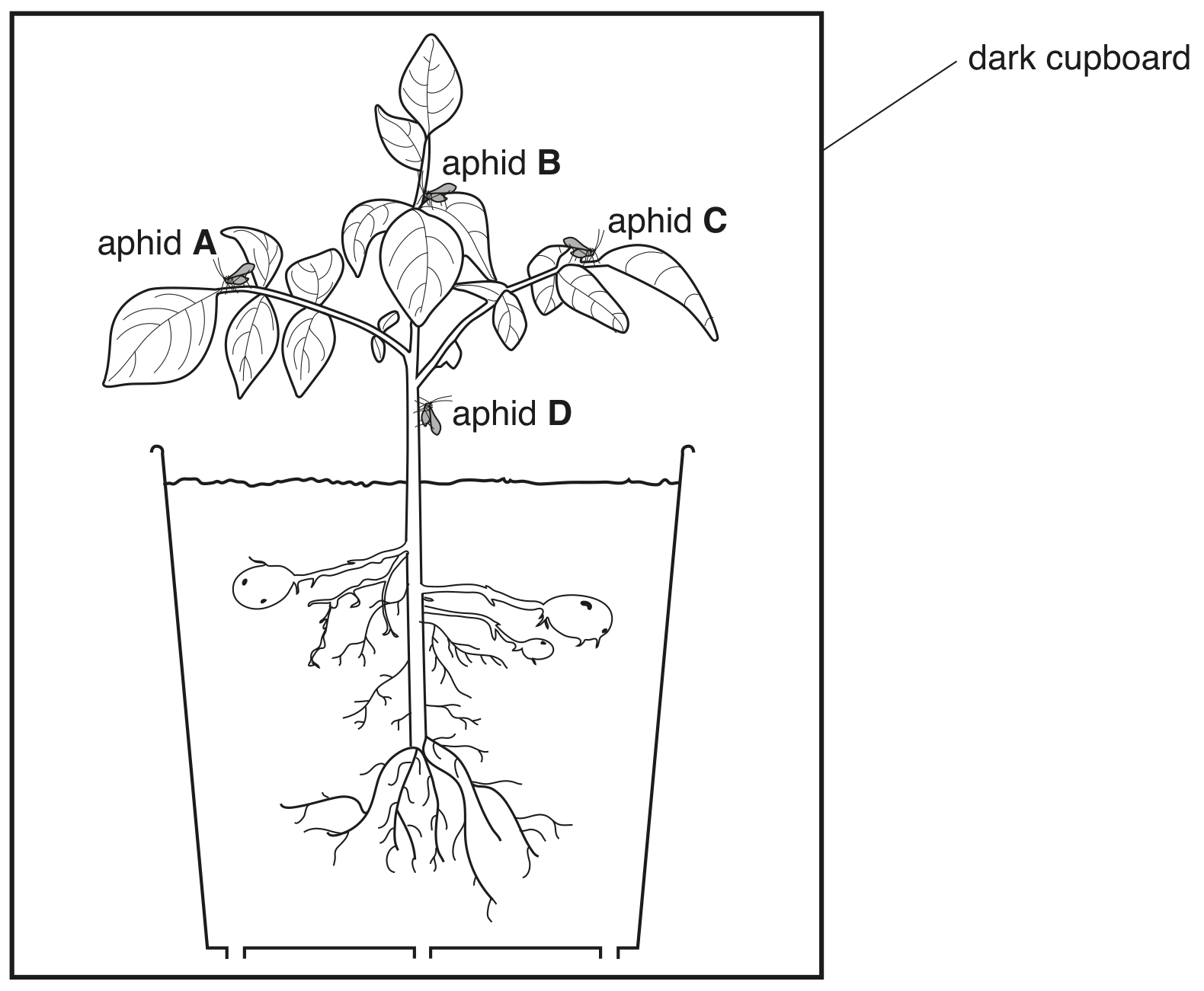
Fig. 2.3

Fig. 2.3

[ 3 ]
(i)

Immediately after the aphids were placed on the plant it was observed that:
- all the aphids ingested the same volume of liquid from the phloem
- aphid D ingested the highest concentration of sucrose.

Explain why aphid D ingested the highest concentration of sucrose.

[ 3 ]
[Maximum number: 5]

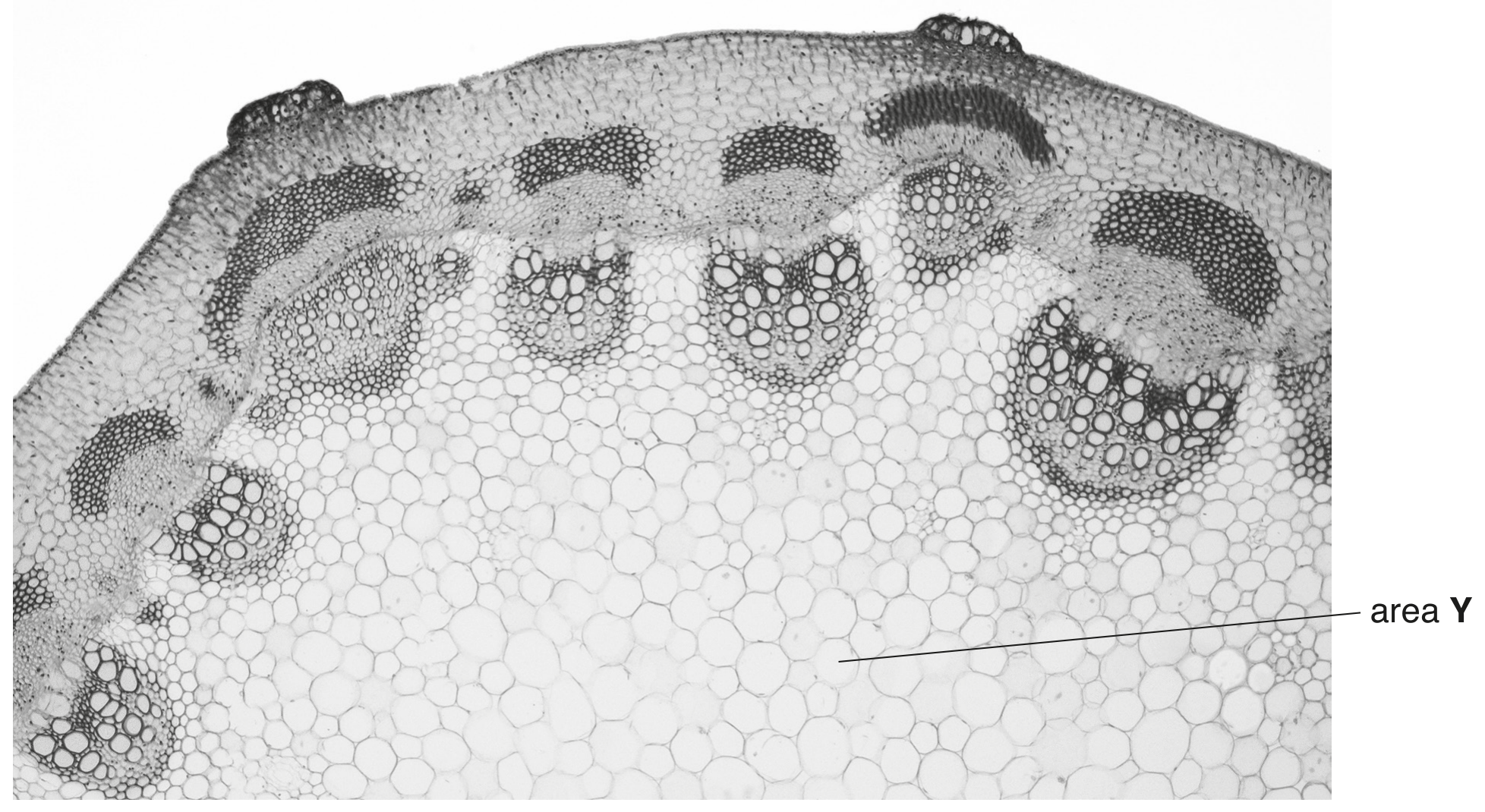
Fig. 2.1 shows part of a cross-section of the stem of a young sunflower plant.

Fig. 2.1

Fig. 2.1

(a)

Researchers used carbon dioxide that contained a traceable source of carbon (13C)\left({ }^{13} \mathrm{C}\right) to investigate translocation of sucrose from the leaves of bean plants, Phaseolus vulgaris.

Fig. 2.2 shows that glucose produced in photosynthesis is converted to sucrose for translocation.

Fig. 2.2

Fig. 2.2

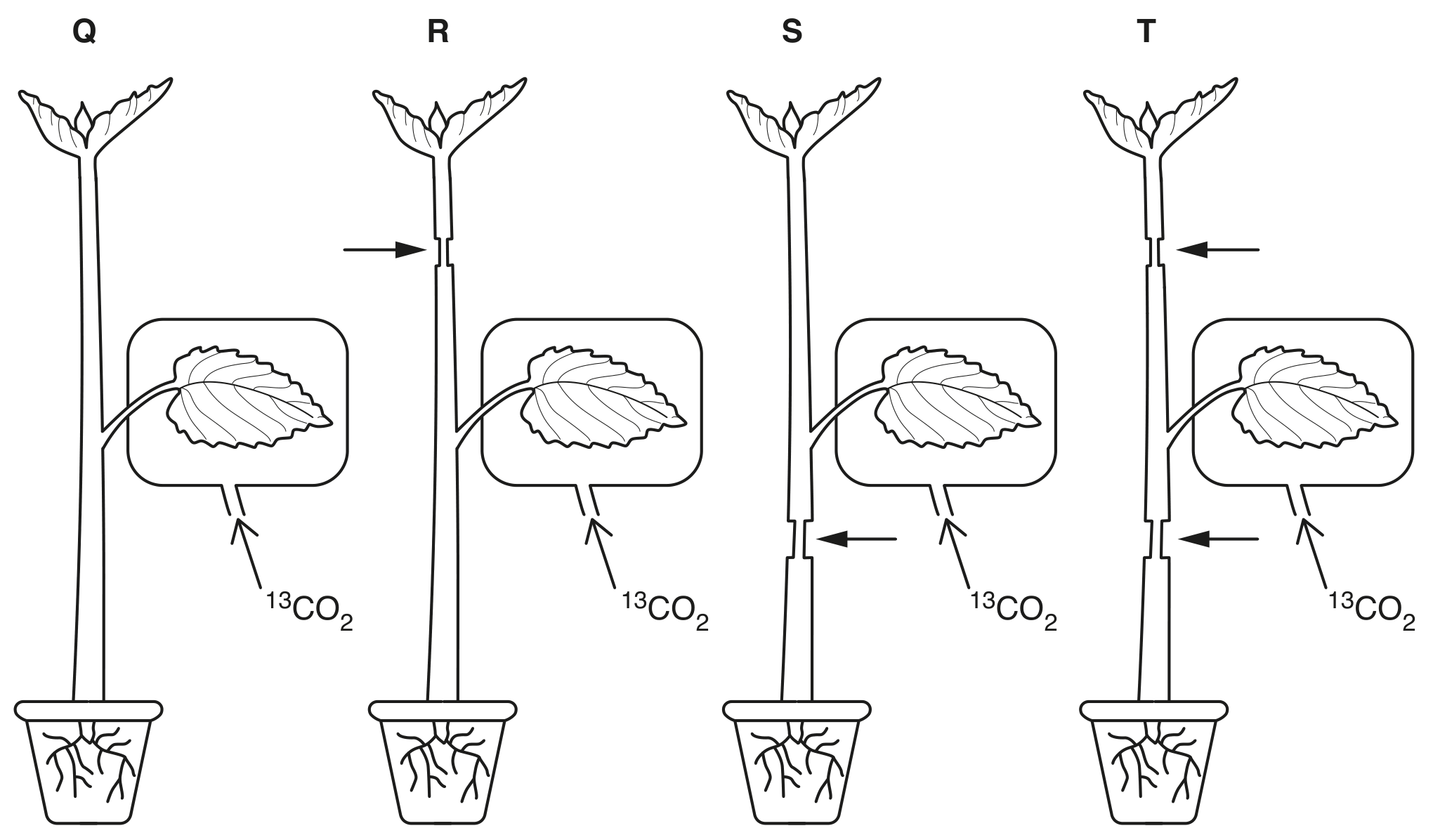
Researchers selected four plants, Q, R, S and T, which had leaves that were of similar sizes. The leaves on the four plants were supplied with 13CO2{ }^{13} \mathrm{CO}_{2}.

After the leaves had started to make sucrose, the researchers cut away a ring of tissue in different places as shown in Fig. 2.3. The rings of tissue that were removed from plants R, S and T contained the phloem.

Fig. 2.3

Fig. 2.3

Key: ⟶ the positions on the stems where rings of tissue containing phloem were removed.

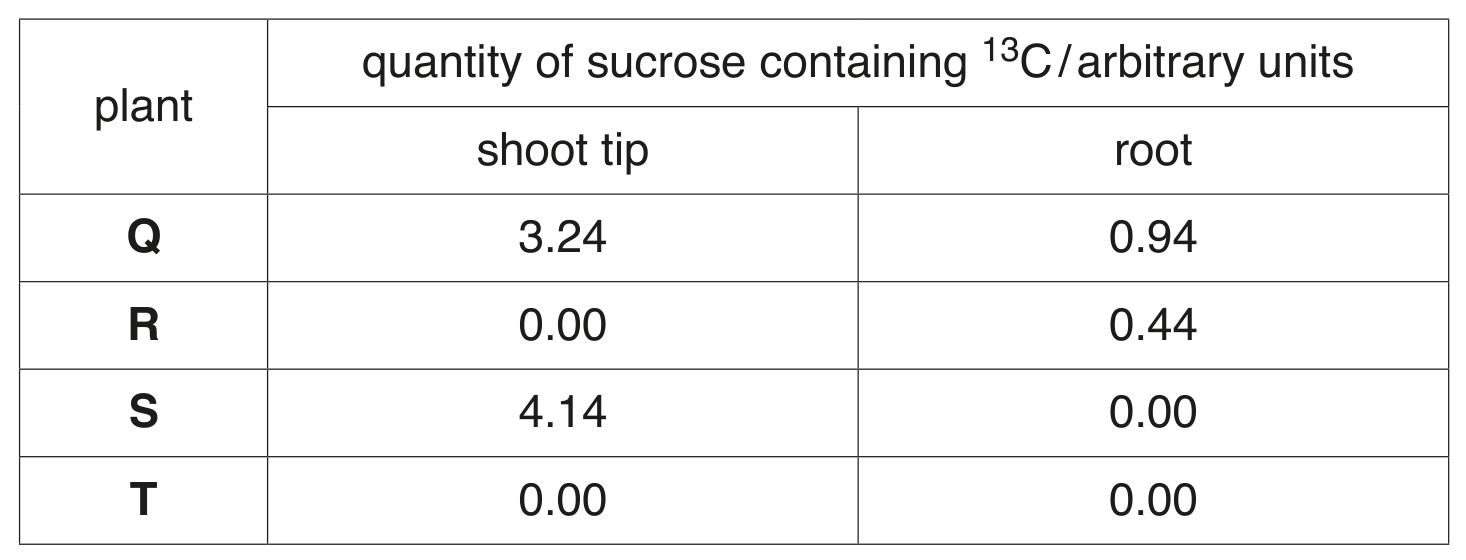
The quantities of sucrose containing 13C{ }^{13} \mathrm{C} in the shoot tips and in the roots were determined. The results are shown in Table 2.1.

Table 2.1

Table 2.1

Describe and explain the effect of removing the phloem on the translocation of sucrose in plants Q, R, S and T.

[ 5 ]
[Maximum number: 1]

During growth, potato plants produce flowers and underground storage organs called tubers.
During this time, which parts of the plant act as sources and sinks for translocation?

flowers

leaves

potato tubers

sink

sink

source

sink

source

sink

source

sink

source

source

source

sink

[Maximum number: 8]

Plants produce glucose in leaves and convert some of it to sucrose.

(a)
(i)

State the name of the process that plants use to move sucrose from a source to a sink.

[ 1 ]
(ii)

Roots can be an example of a sink.

Explain why sometimes roots act as a source rather than a sink.

[ 2 ]
(b)

The movement of sucrose in plants can be modelled using laboratory apparatus.

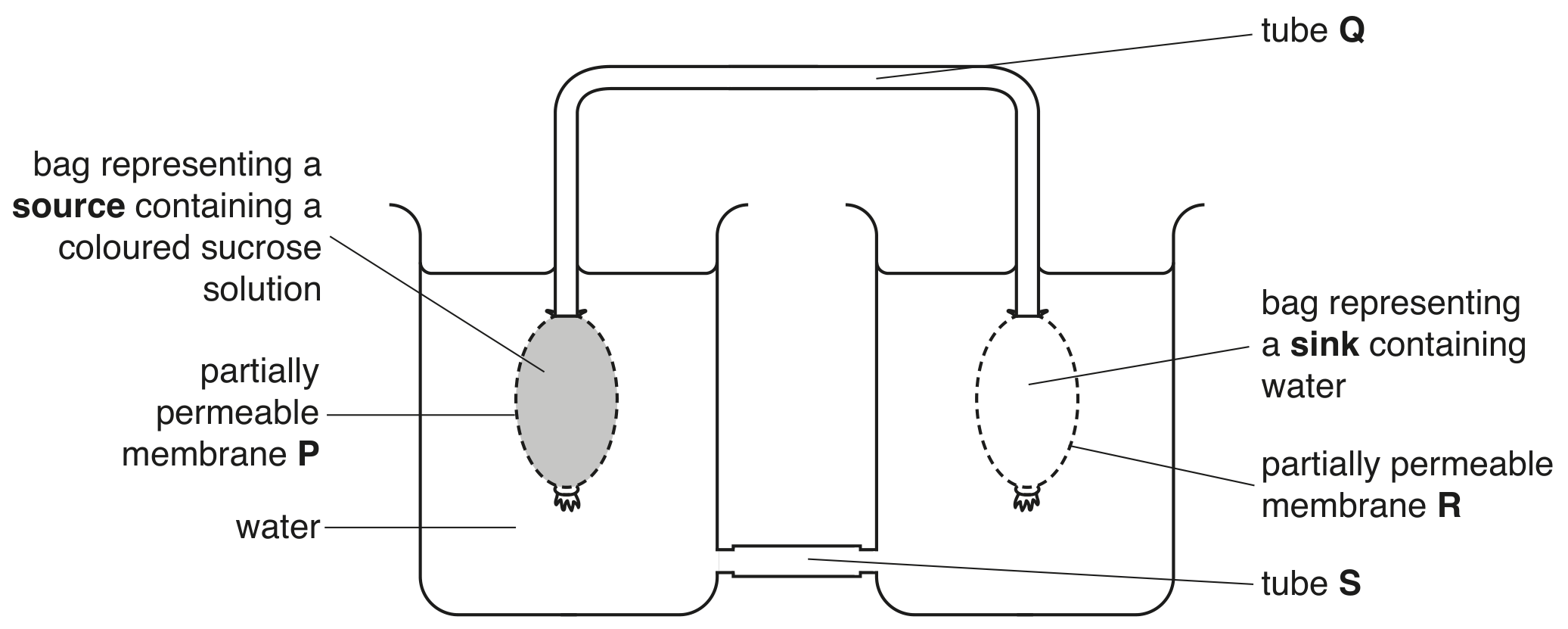
Fig. 2.1 shows the apparatus used to model the movement of sucrose in a plant:
- Partially permeable bags were attached tightly to the ends of tube Q.
- The bag representing a source was filled with a coloured sucrose solution.
- The bag representing a sink was filled with water.
- The containers and tube Q and tube S were filled with water.

Fig. 2.1

Fig. 2.1

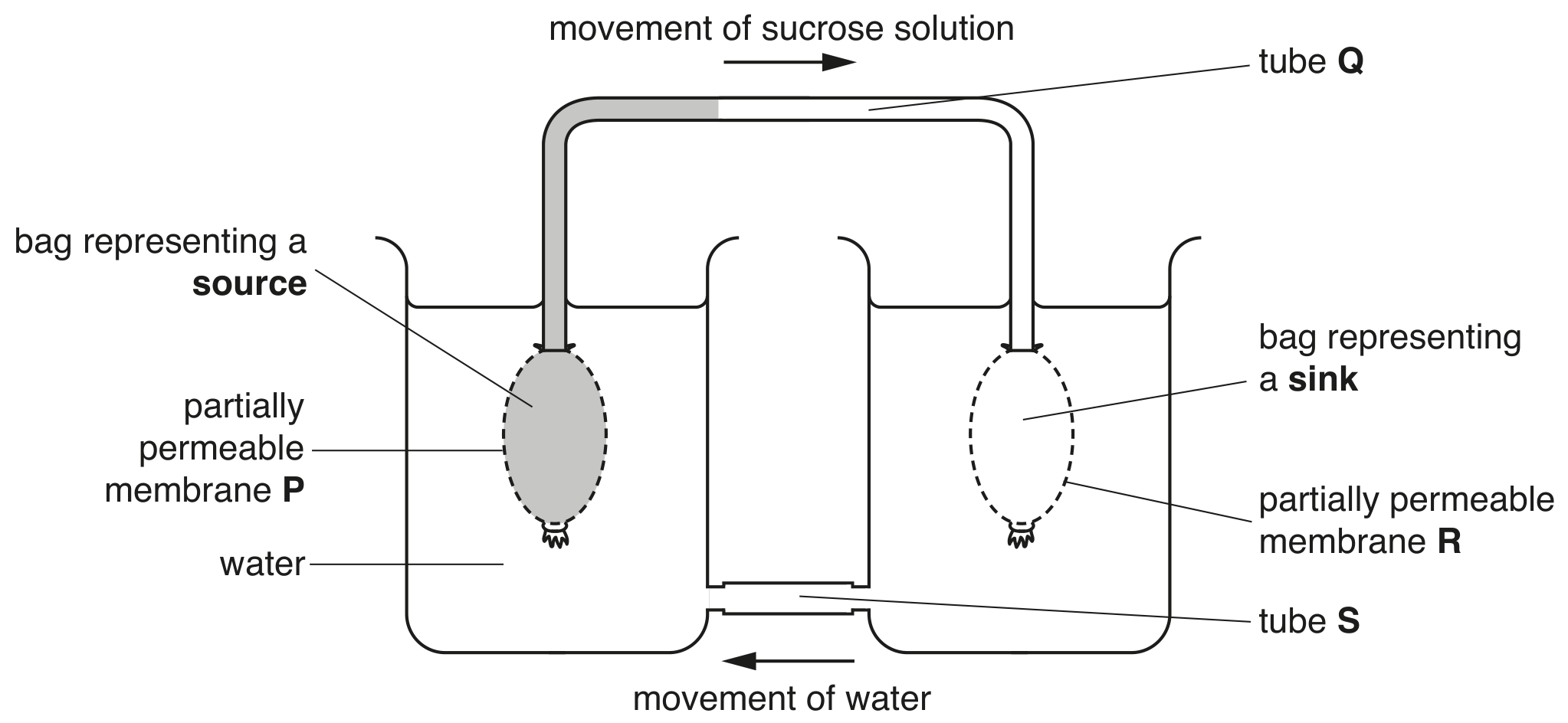
Fig. 2.2 shows the position of the coloured sucrose solution 30 minutes after the apparatus was set up.

The arrows show the direction of the movement of the liquids.

Fig. 2.2

Fig. 2.2

[ 4 ]
(i)

Explain why the sucrose solution moves along tube Q in the model in Fig. 2.2.

[ 4 ]
(c)

In plants the movement of sucrose is usually continuous. However, after 2 hours the movement of sucrose in tube Q in Fig. 2.2 stopped.

Suggest why the movement of sucrose in tube Q stopped.

[ 1 ]
[Maximum number: 3]

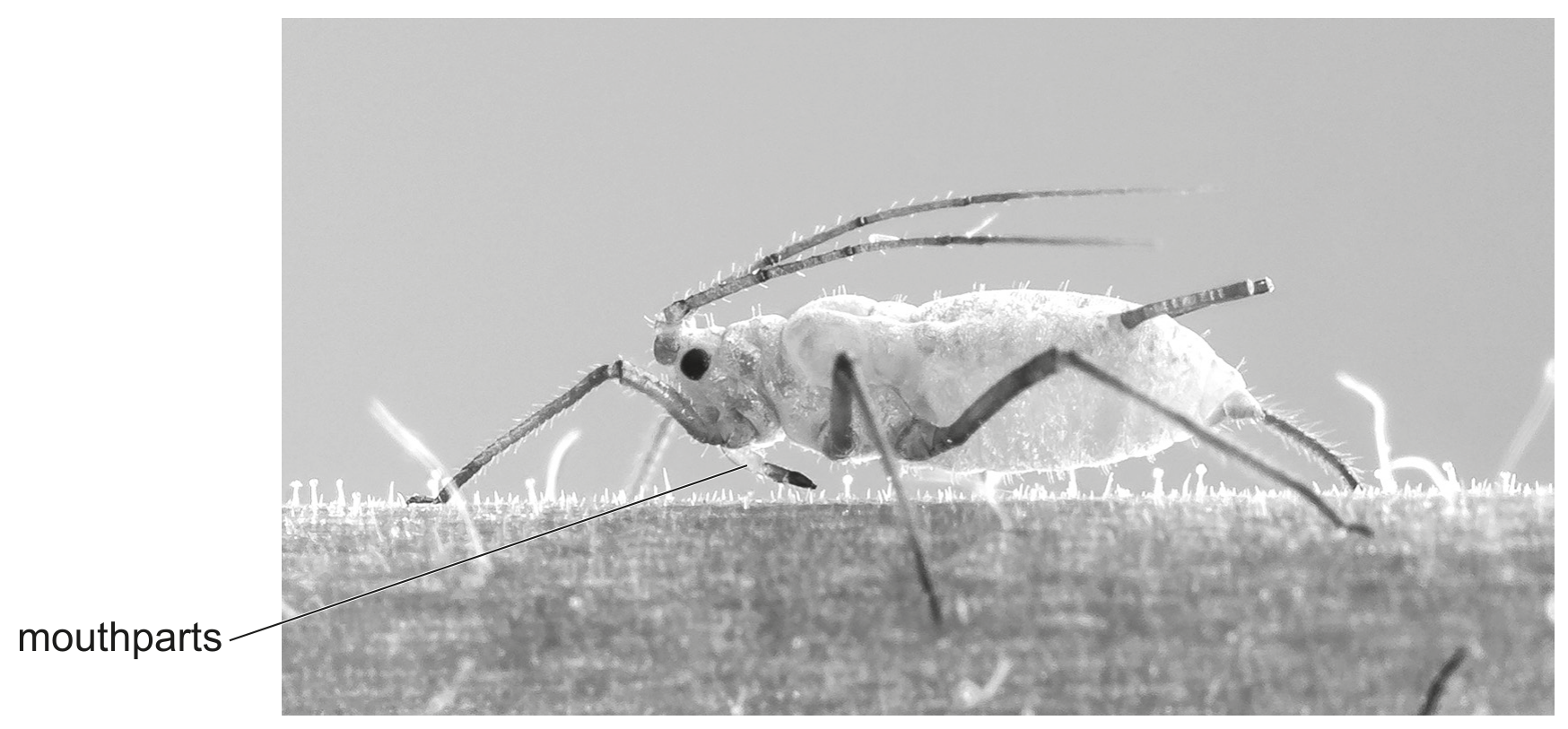
Aphids are insects that feed on phloem sap by inserting their mouthparts into phloem tissue.
Fig. 3.1 shows an aphid feeding on phloem tissue in a leaf.

Fig. 3.1

Fig. 3.1

(a)

Aphids have been used to investigate the translocation of sucrose in phloem tissue. While they are feeding on phloem sap aphids excrete a sucrose-rich fluid known as honeydew.

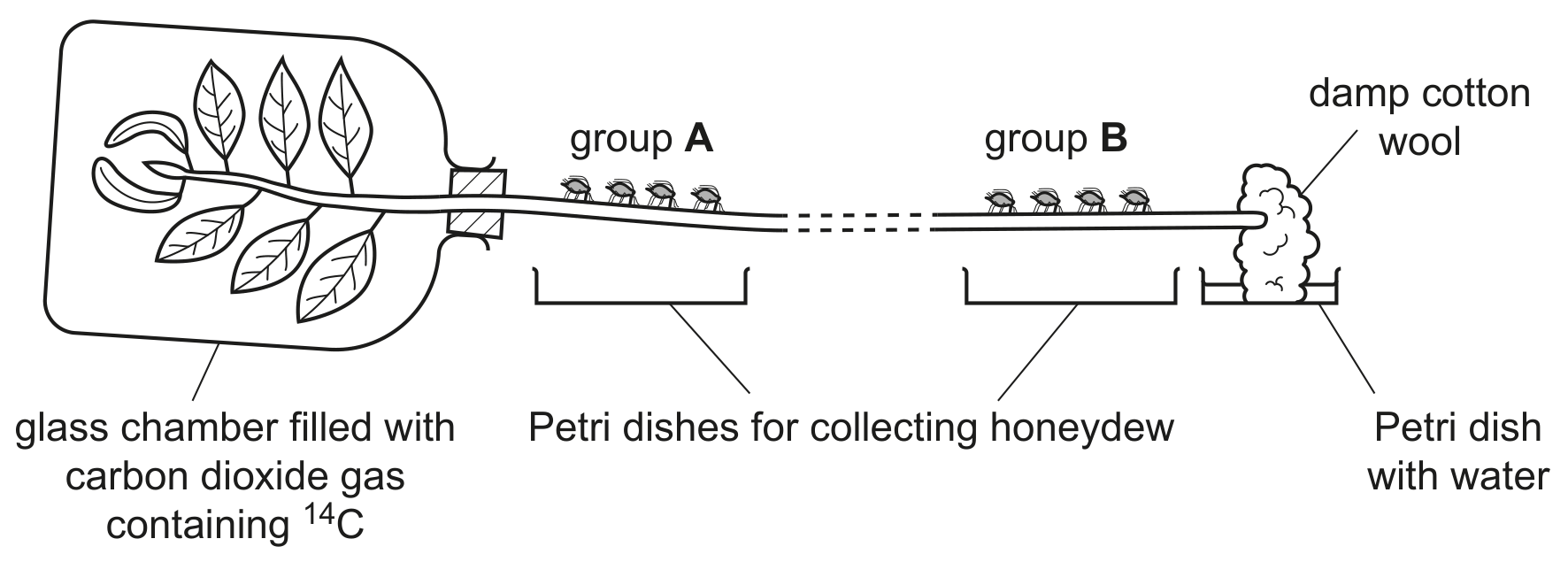
In an investigation, two groups of four aphids were placed at intervals along the stem of a young willow plant, as shown in Fig. 3.2.

Fig. 3.2

Fig. 3.2

The leaves were enclosed in an airtight glass chamber. A special form of carbon dioxide gas that contained radioactive carbon-14 ( 14C{ }^{14} \mathrm{C} ) was supplied to the leaves for a short period of time.

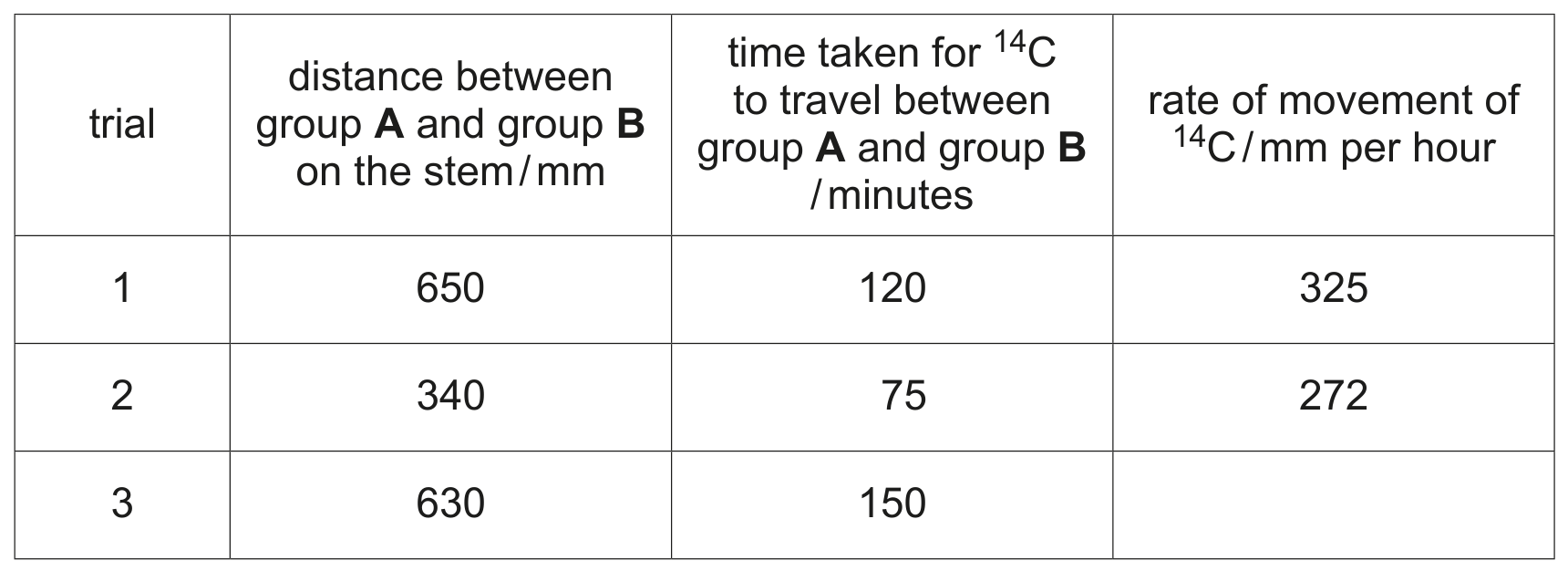
Samples of honeydew were collected at intervals from the groups of aphids. The time taken for sucrose containing 14C{ }^{14} \mathrm{C} to travel the distance between group A and group B was recorded.

The investigation was repeated twice using a fresh stem and different groups of aphids for each trial. The results are shown in Table 3.1.

[ 1 ]
(i)

Complete Table 3.1 by calculating the rate of movement of 14C{ }^{14} \mathrm{C} in trial 3 .

Table 3.1

Table 3.1

[ 1 ]
(b)

Sucrose travels from the stem to other parts of the plant known as sinks, where it is used.

[ 2 ]
(i)

State two parts of a plant that are sinks for sucrose.

1

2

[ 2 ]
[Maximum number: 1]

Which process is an example of translocation?

A

absorption of water by the roots and its movement through the xylem to the leaves

B

loss of water from the leaves as it evaporates into the air

C

movement of sucrose from the leaves through phloem to other parts of the plant

D

the process by which plants use the food produced by photosynthesis to obtain energy

[Maximum number: 1]

Which is a description of translocation?

A

movement of amino acids and sucrose from sink to source

B

movement of amino acids and sucrose from source to sink

C

movement of water down a water potential gradient

D

movement of water up a water potential gradient

[Maximum number: 1]

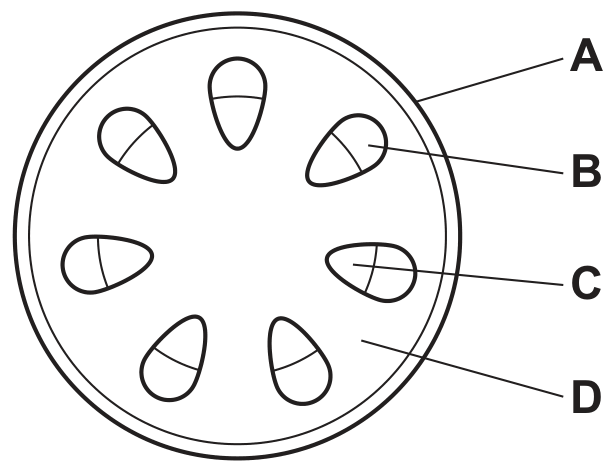
The diagram shows a section through the stem of a dicotyledonous plant.
Which part transports water and mineral ions?

Question image
[Maximum number: 1]

What is the function of translocation?

A

to move leaves towards the light for photosynthesis

B

to move water into leaves for photosynthesis

C

to transport amino acids for the growth of new leaves

D

to transport starch to all parts of a plant

[Maximum number: 1]

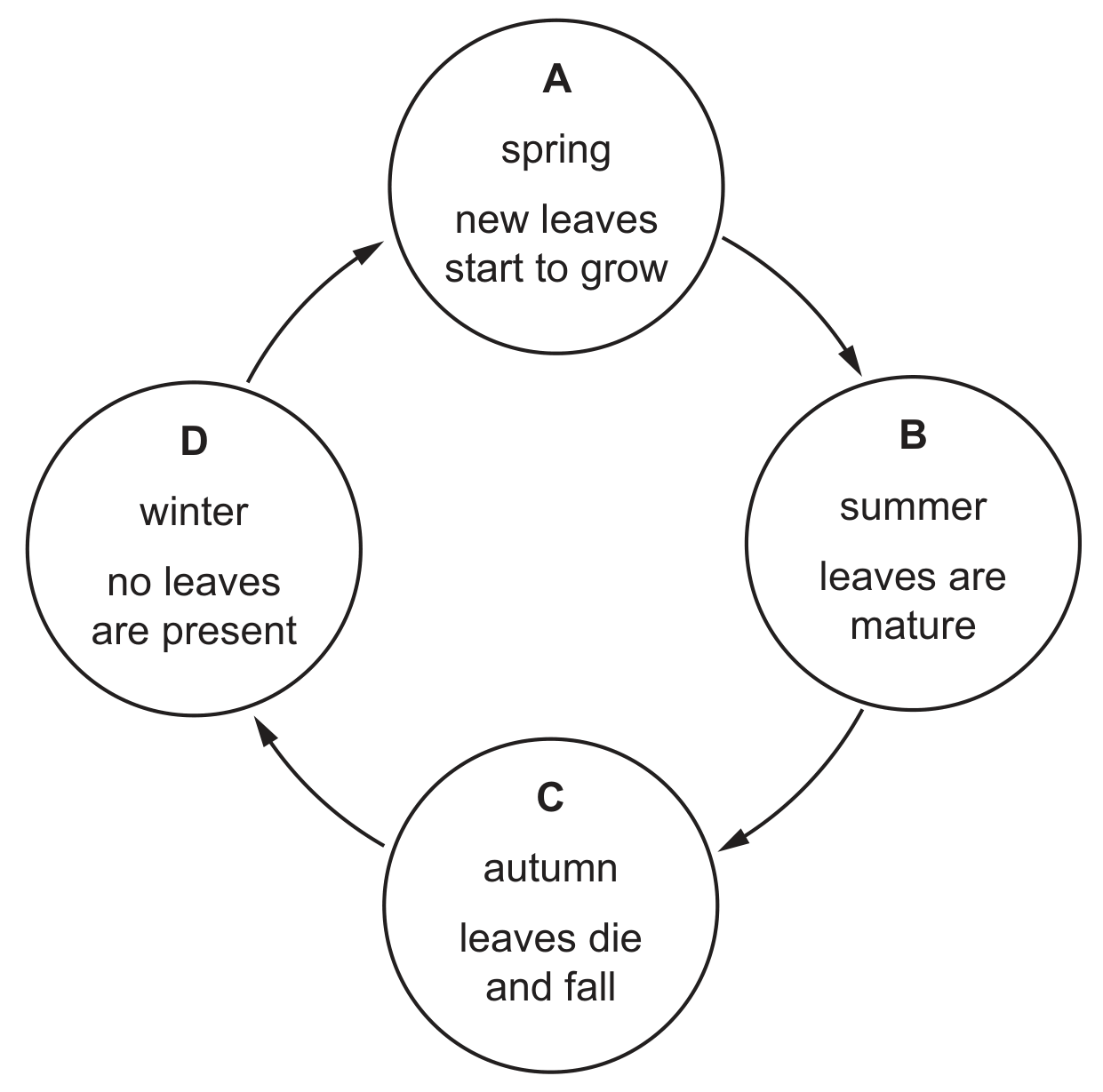
Roots and leaves both act as a source and a sink for sucrose and amino acids at different times during the year.

At which point in the year are the roots most active as a source?

Question image
0