EduNinja
[Maximum number: 6]

A long strip of springy steel is clamped at one end so that the strip is vertical. A mass of 65 g is attached to the free end of the strip, as shown in Fig. 2.1.
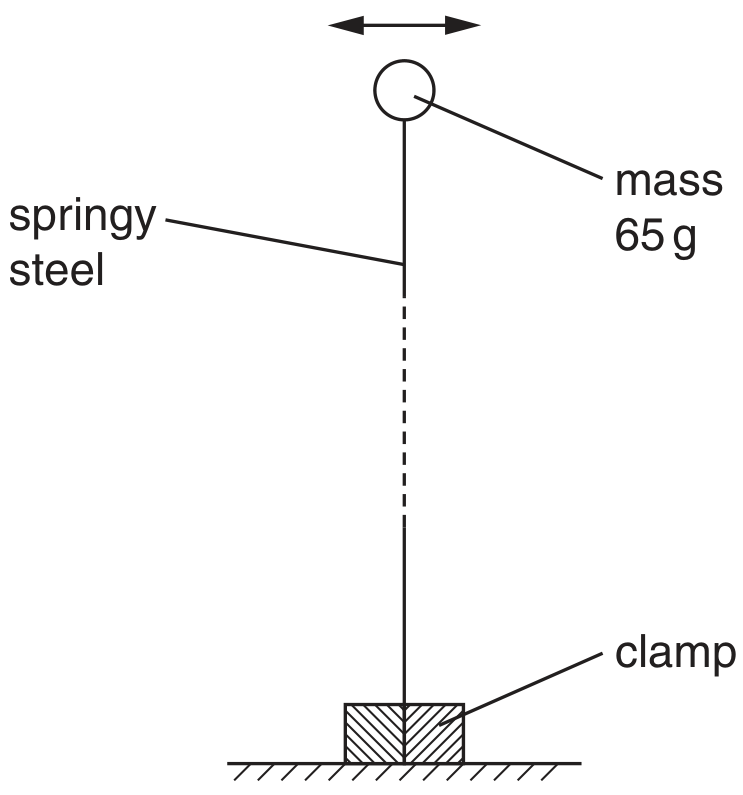
Fig. 2.1

Fig. 2.1

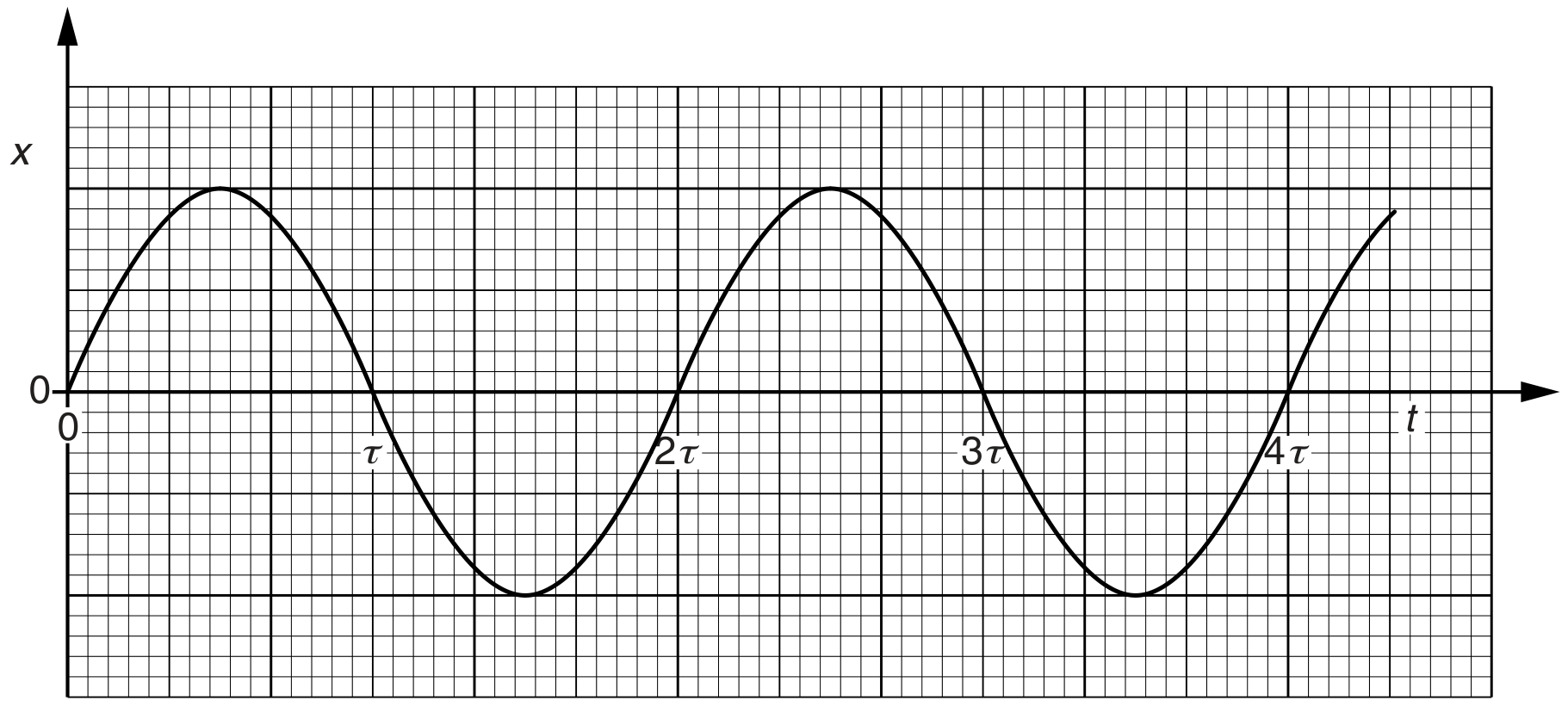
The mass is pulled to one side and then released. The variation with time t of the horizontal displacement of the mass is shown in Fig. 2.2.
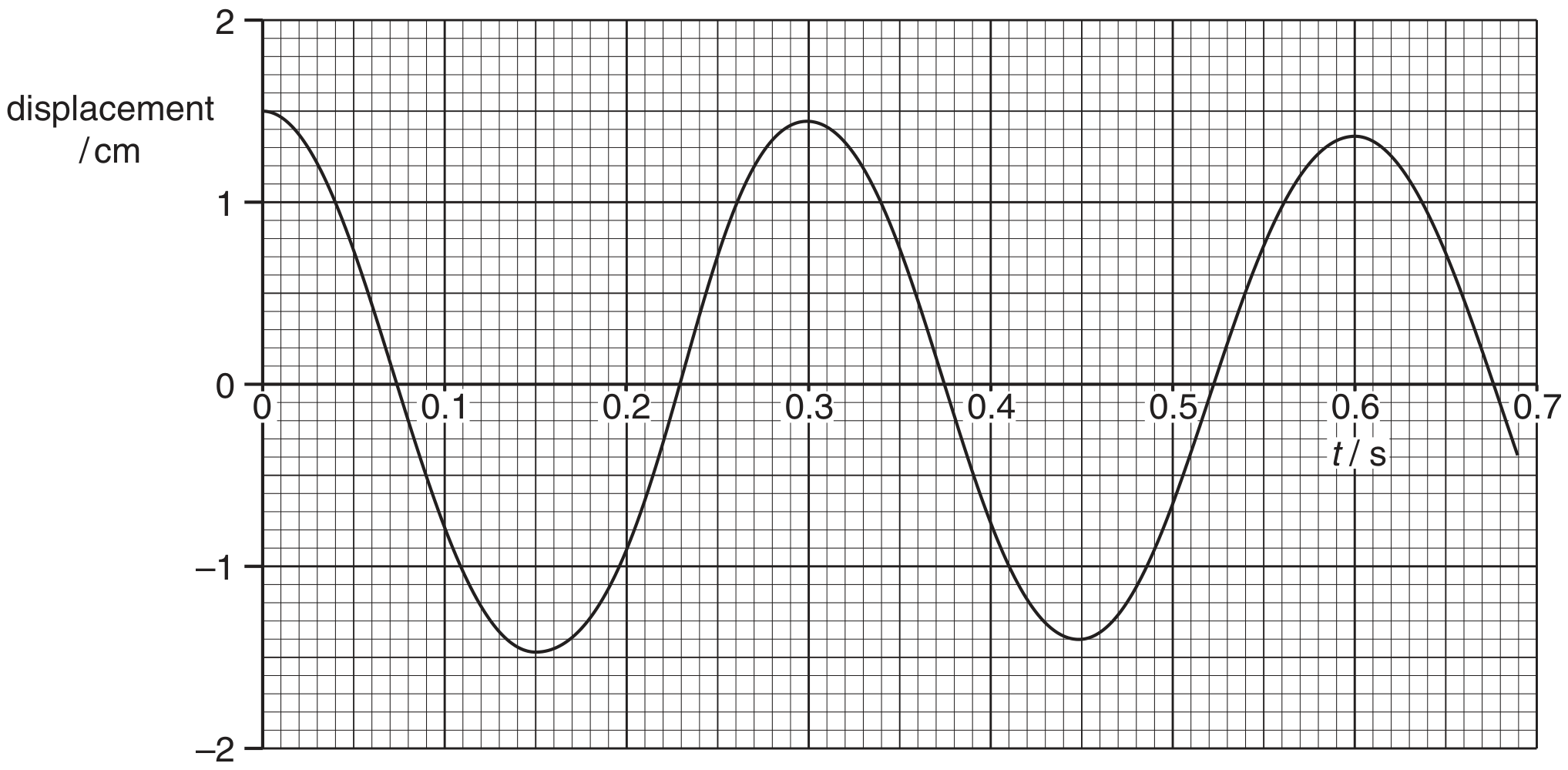
Fig. 2.2

Fig. 2.2

The mass undergoes damped simple harmonic motion.

(a)
(i)

Explain what is meant by damping.

[ 2 ]
(ii)

Suggest, with a reason, whether the damping is light, critical or heavy.

[ 2 ]
(b)

After eight complete oscillations of the mass, the amplitude of vibration is reduced from 1.5 cm to 1.1 cm . State and explain whether, after a further eight complete oscillations, the amplitude will be 0.7 cm .

[ 2 ]
[Maximum number: 2]

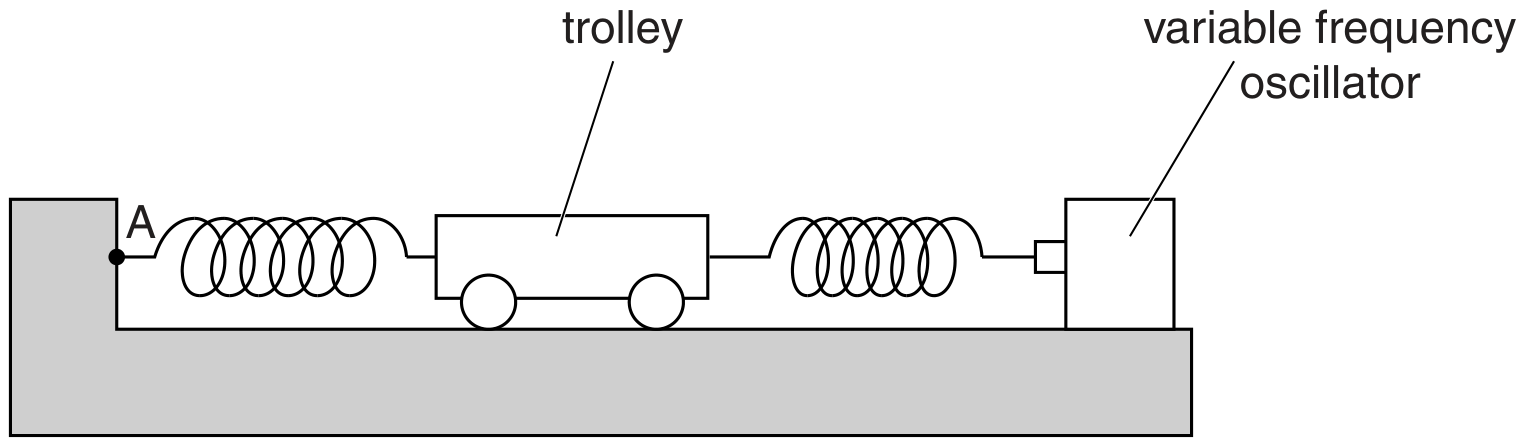
A small frictionless trolley is attached to a fixed point A by means of a spring. A second spring is used to attach the trolley to a variable frequency oscillator, as shown in Fig. 2.1.

Fig. 2.1

Fig. 2.1

Both springs remain extended within the limit of proportionality.
Initially, the oscillator is switched off. The trolley is displaced horizontally along the line joining the two springs and is then released.
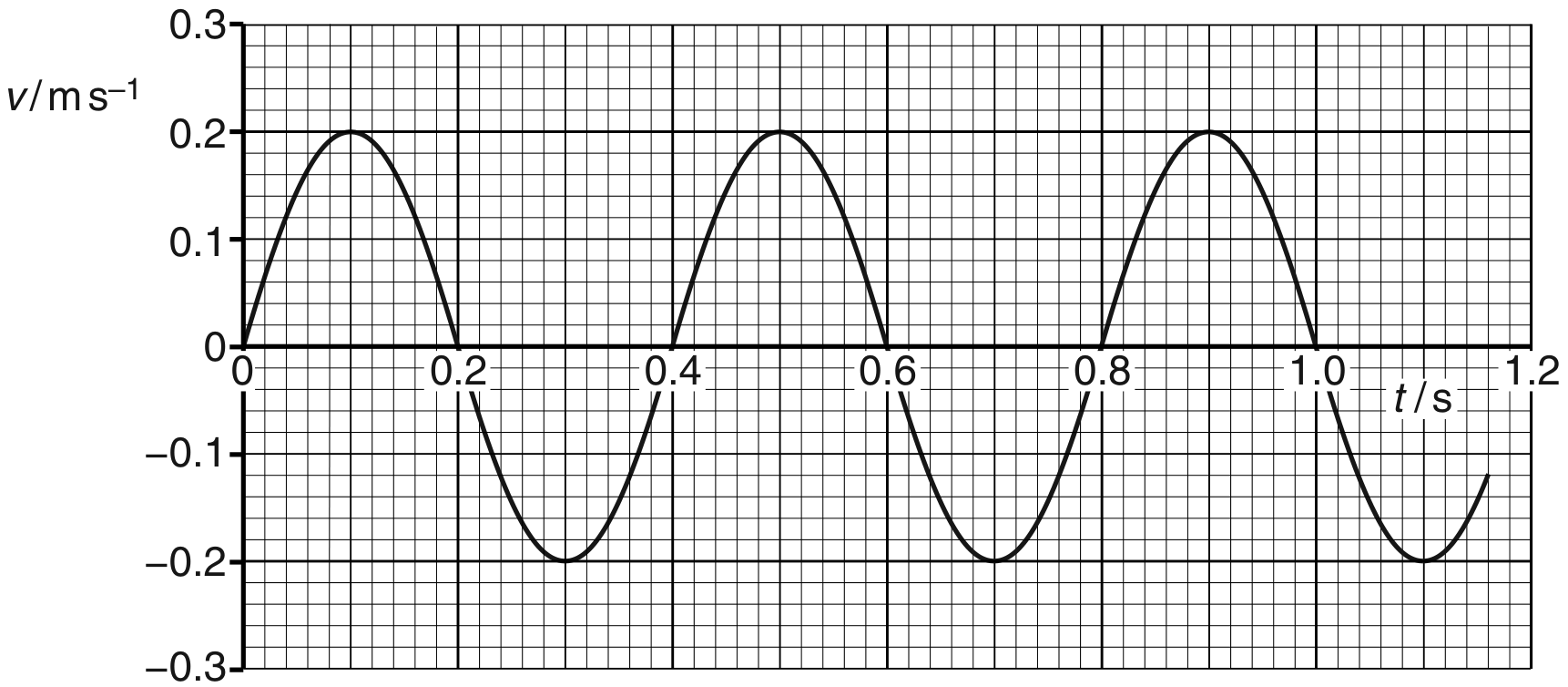
The variation with time t of the velocity v of the trolley is shown in Fig. 2.2.

Fig. 2.2

Fig. 2.2

(a)

The oscillator is now switched on. The amplitude of vibration of the oscillator is constant. The frequency f of vibration of the oscillator is varied.
The trolley is forced to oscillate by means of vibrations of the oscillator.
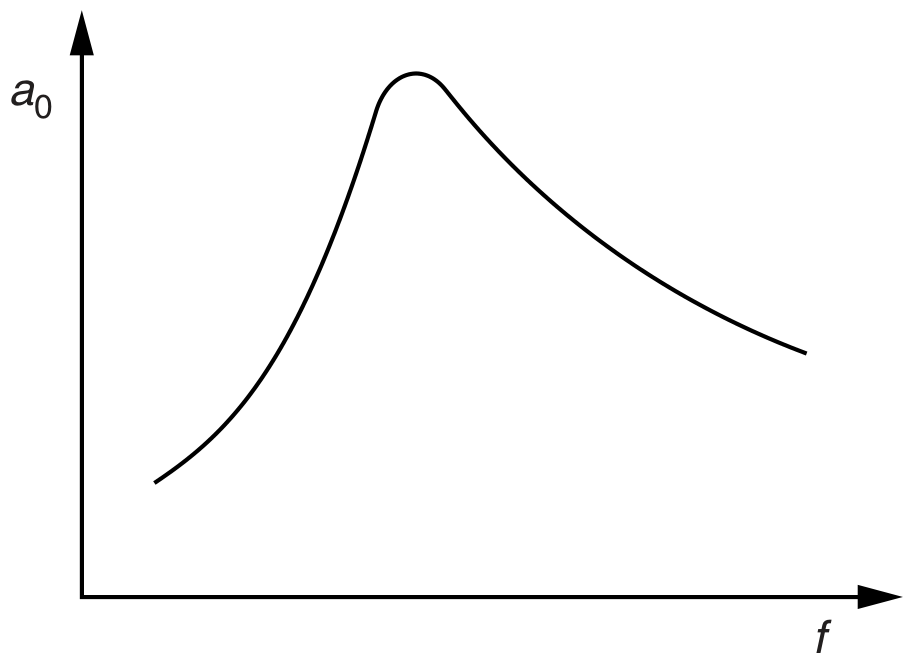
The variation with f of the amplitude a0a_{0} of the oscillations of the trolley is shown in Fig. 2.3.

Fig. 2.3

Fig. 2.3

By reference to your answer in (a), state the approximate frequency at which the amplitude is maximum.

frequency =Hz
(b)

The amplitude of the oscillations in (b) may be reduced without changing significantly the frequency at which the amplitude is a maximum. State how this may be done and give a reason for your answer.
You may draw on Fig. 2.1 if you wish.

[ 2 ]
[Maximum number: 1]

A microwave cooker uses electromagnetic waves of frequency 2450 MHz .
The microwaves warm the food in the cooker by causing water molecules in the food to oscillate with a large amplitude at the frequency of the microwaves.

(a)

State the name given to this phenomenon.

[ 1 ]
[Maximum number: 1]

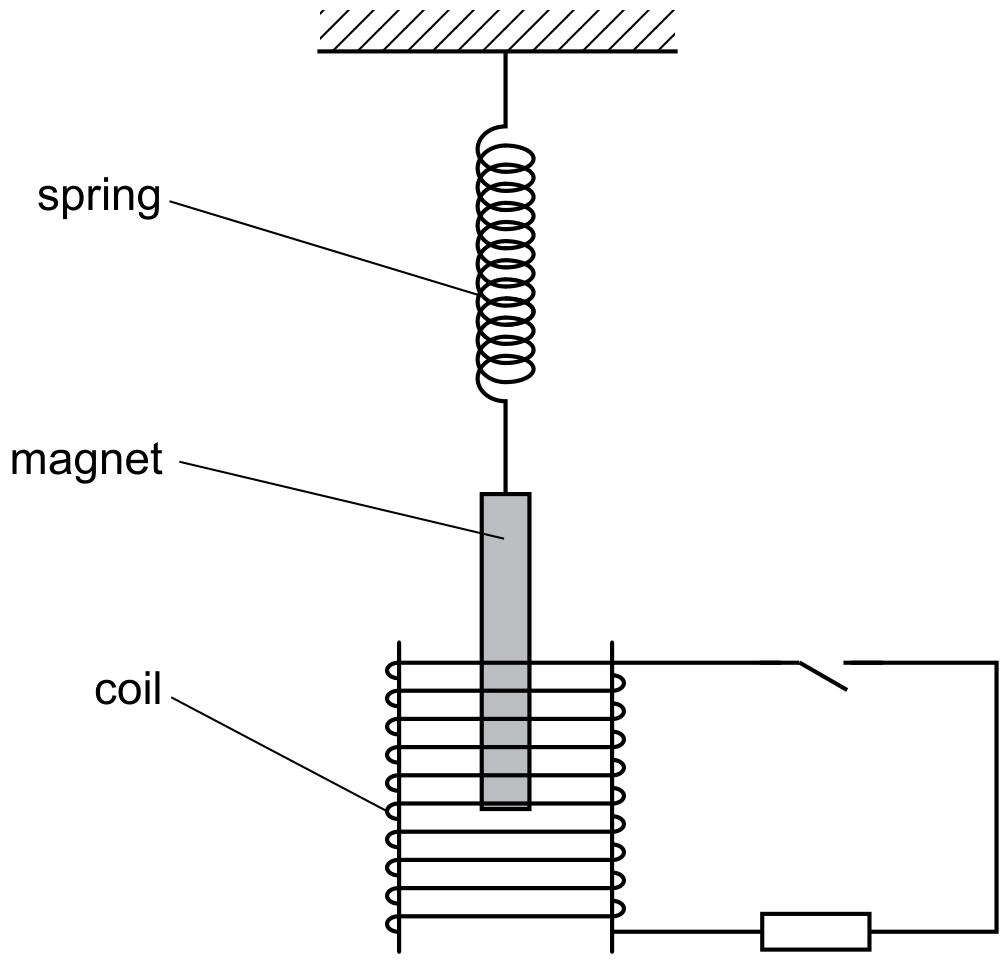
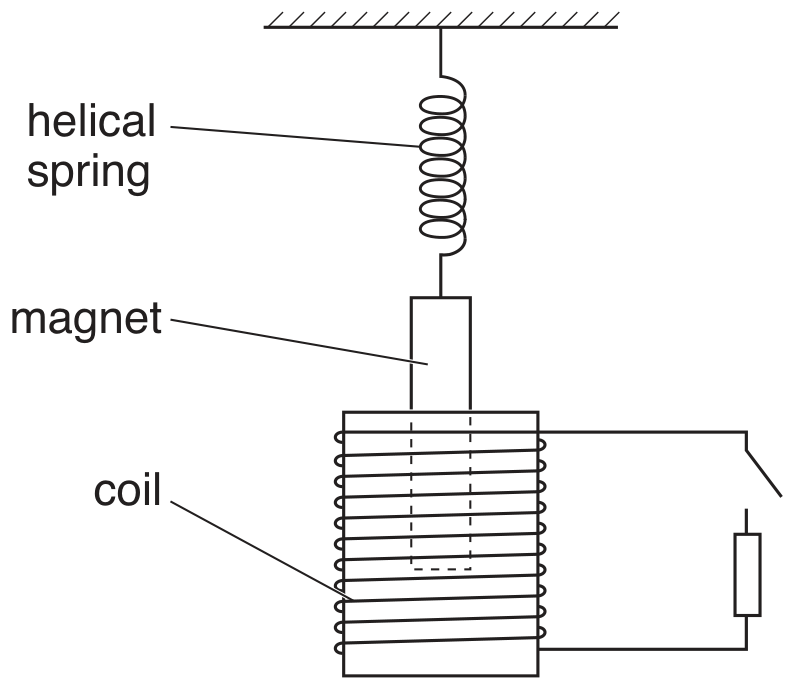
A bar magnet of mass 250 g is suspended from the free end of a spring, as illustrated in Fig. 3.1.

Fig. 3.1

Fig. 3.1

The magnet hangs so that one pole is near the centre of a coil of wire.
The coil is connected in series with a resistor and a switch. The switch is open.
The magnet is displaced vertically and then allowed to oscillate.
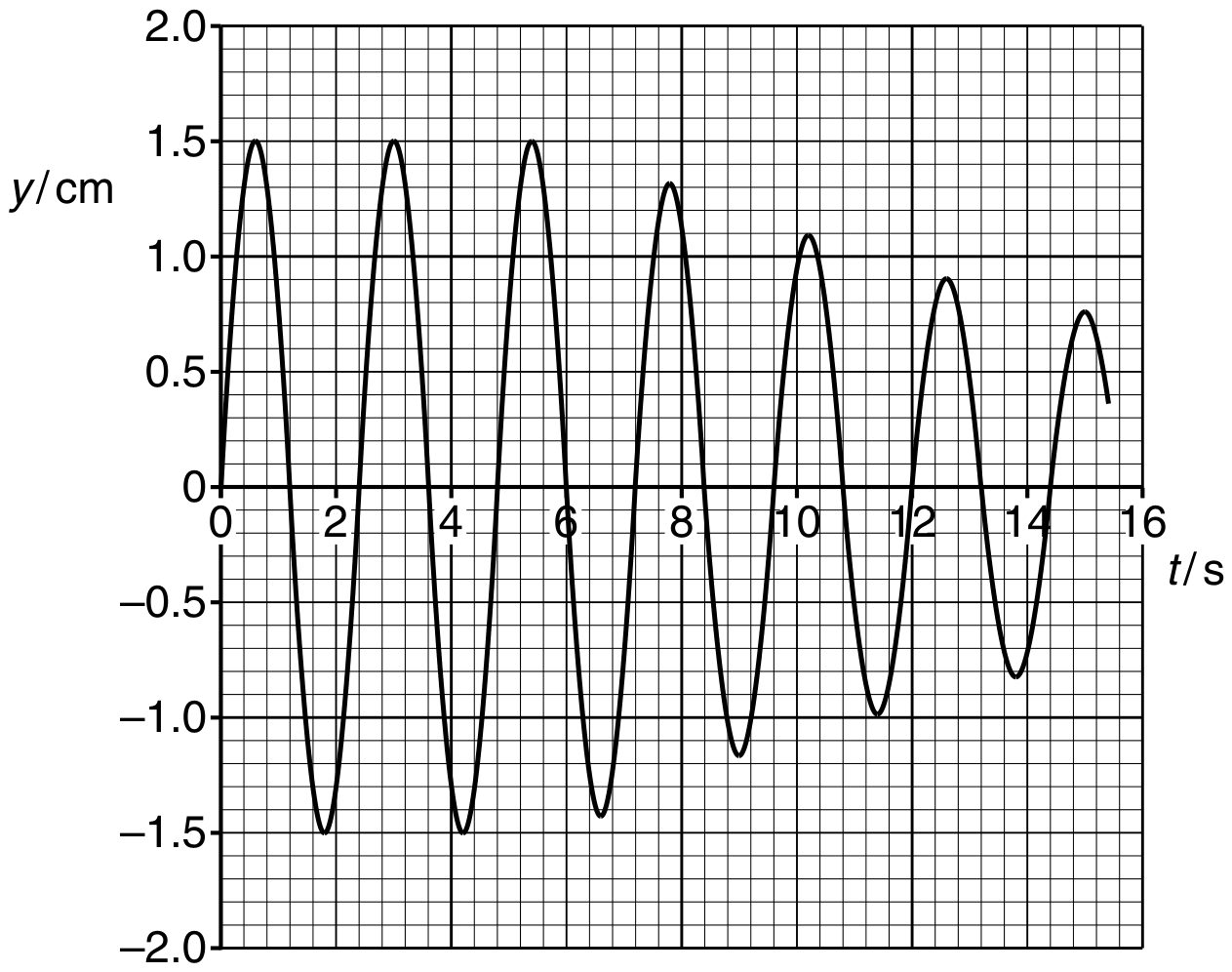
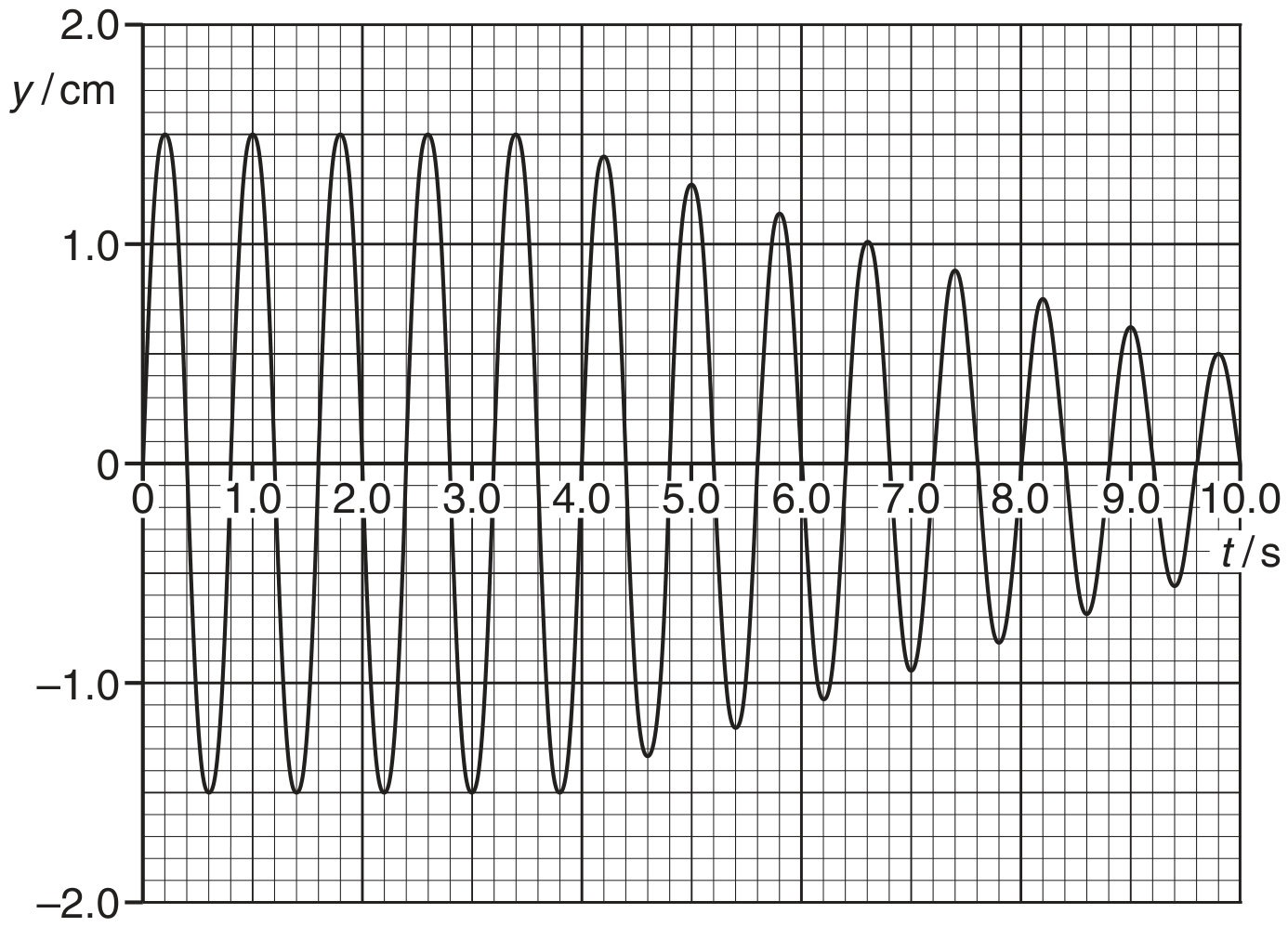
At time t=0, the magnet is oscillating freely. At time t=6.0 st=6.0 \mathrm{~s}, the switch in the circuit is closed.
The variation with time t of the vertical displacement y of the magnet is shown in Fig. 3.2.

Fig. 3.2

Fig. 3.2

(a)

When the switch is closed, the oscillations are damped.

Explain, with reference to Fig. 3.2, whether this damping is light, critical or heavy.

[ 1 ]
[Maximum number: 2]

A bar magnet is suspended from the free end of a helical spring, as illustrated in Fig. 3.1.

Fig. 3.1

Fig. 3.1

One pole of the magnet is situated in a coil of wire. The coil is connected in series with a switch and a resistor. The switch is open.

The magnet is displaced vertically and then released. As the magnet passes through its rest position, a timer is started. The variation with time t of the vertical displacement y of the magnet from its rest position is shown in Fig. 3.2.

Fig. 3.2

Fig. 3.2

At time t=4.0 st=4.0 \mathrm{~s}, the switch is closed.

(a)

Use Fig. 3.2 to

[ 2 ]
(i)

state, with a reason, whether the damping after time t=4.0 st=4.0 \mathrm{~s} is light, critical or heavy,

[ 2 ]
[Maximum number: 2]

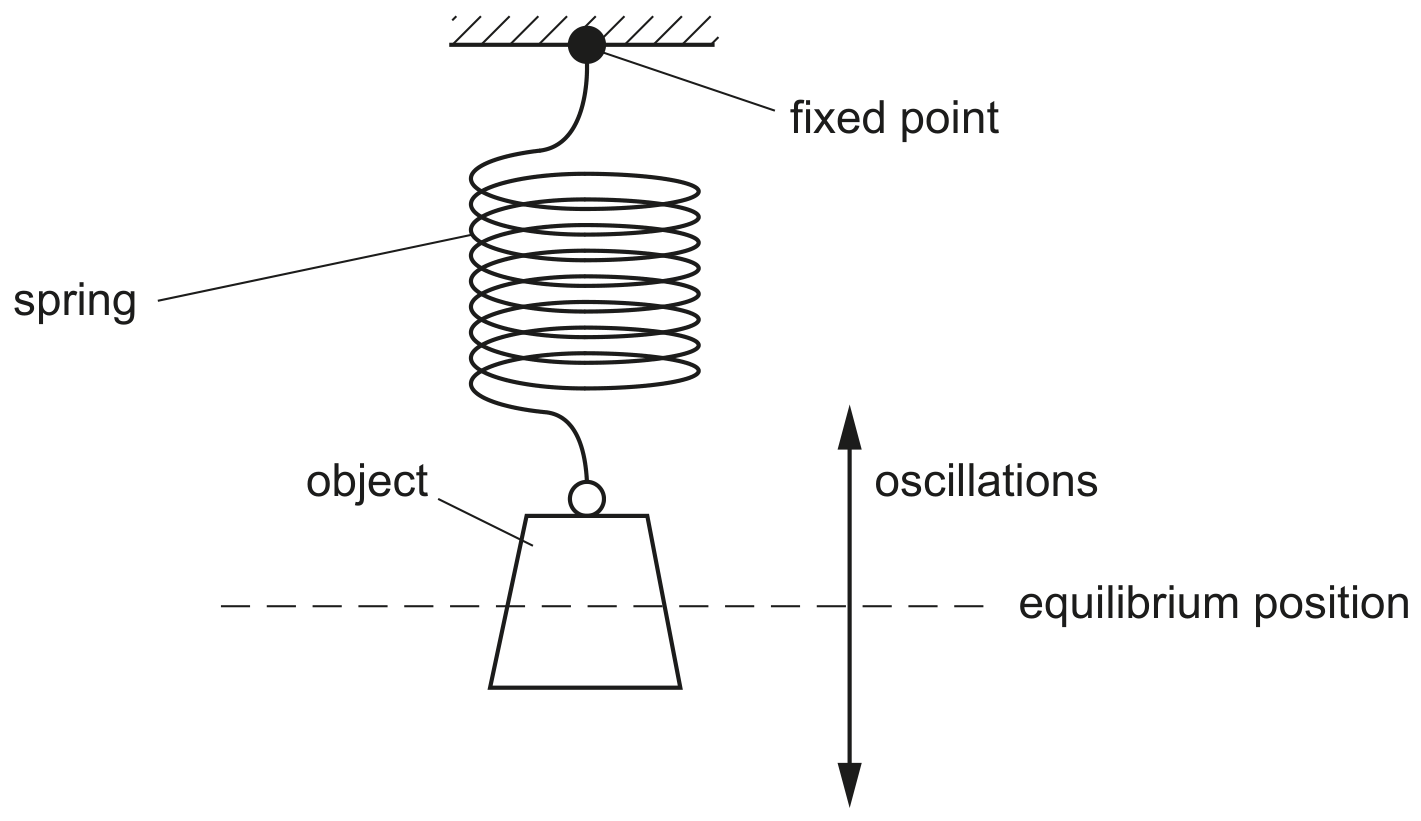
An object is suspended from a spring that is attached to a fixed point as shown in Fig. 3.1.

Fig. 3.1

Fig. 3.1

The object oscillates vertically with simple harmonic motion about its equilibrium position.

(a)

The oscillations of the object are now lightly damped.

[ 2 ]
(i)

State what is meant by damping.

[ 2 ]
[Maximum number: 1]

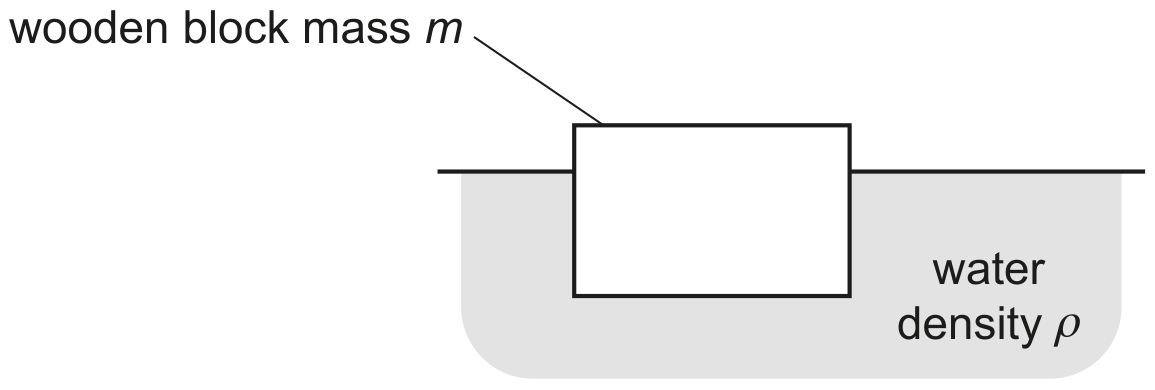
A small wooden block (cuboid) of mass m floats in water, as shown in Fig. 3.1.

Fig. 3.1

Fig. 3.1

The top face of the block is horizontal and has area A. The density of the water is ρ\rho.

(a)

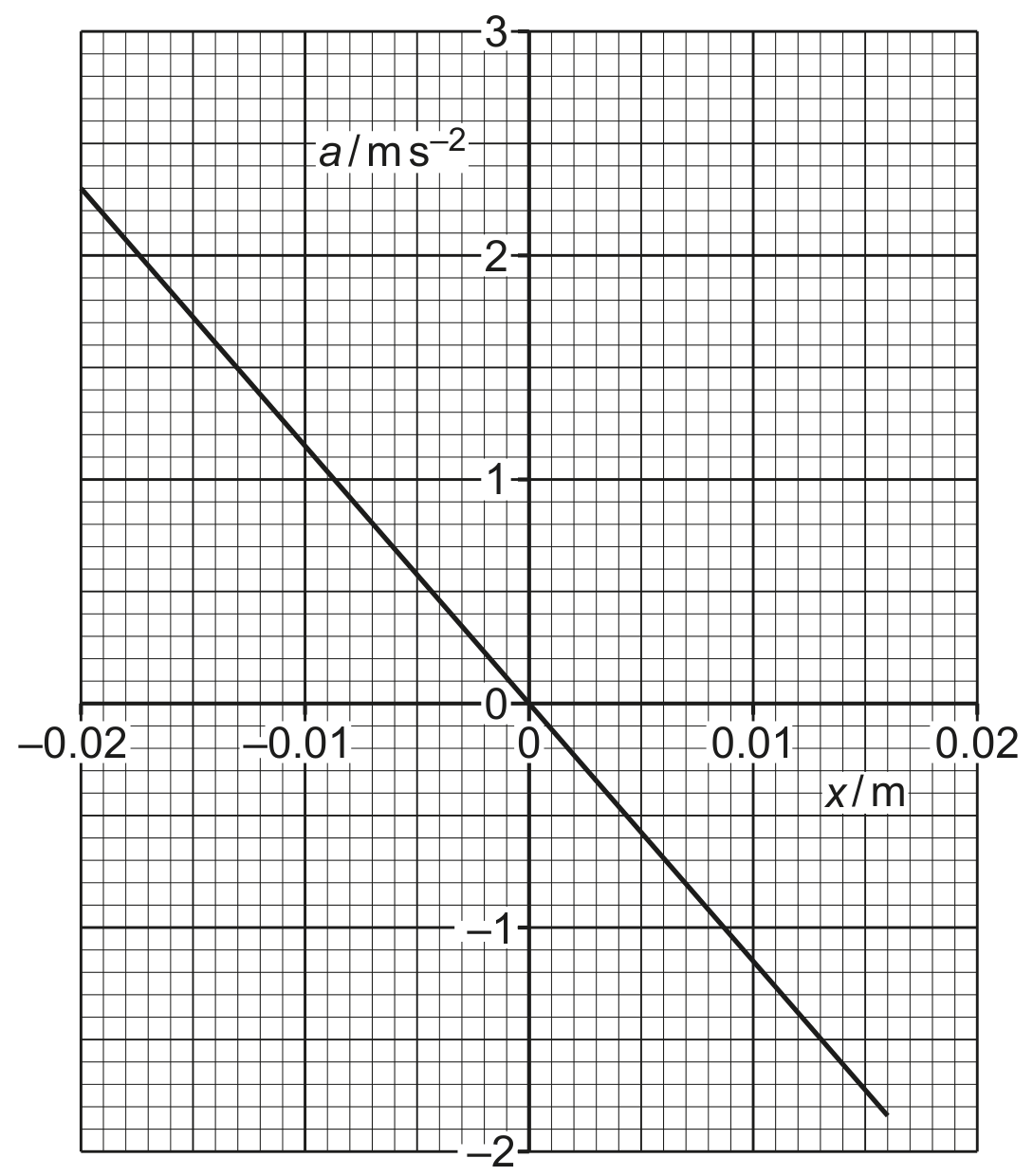
The block is now placed in a liquid with a greater density. The block is displaced and released so that it oscillates vertically. The variation with displacement x of the acceleration a of the block is measured for the first half oscillation, as shown in Fig. 3.3.

Fig. 3.3

Fig. 3.3

[ 1 ]
(i)

Explain why the maximum negative displacement of the block is not equal to its maximum positive displacement.

[ 1 ]
(a)

The variation with time t of the displacement x of the ball in (b) is shown in Fig. 4.2.

Fig. 4.2

Fig. 4.2

Some moisture now forms on the track, causing the ball to come to rest after approximately 15 oscillations.

On the axes of Fig. 4.2, sketch the variation with time t of the displacement x of the ball for the first two periods after the moisture has formed. Assume the moisture forms at time t=0.

[ 3 ]
[Maximum number: 2]

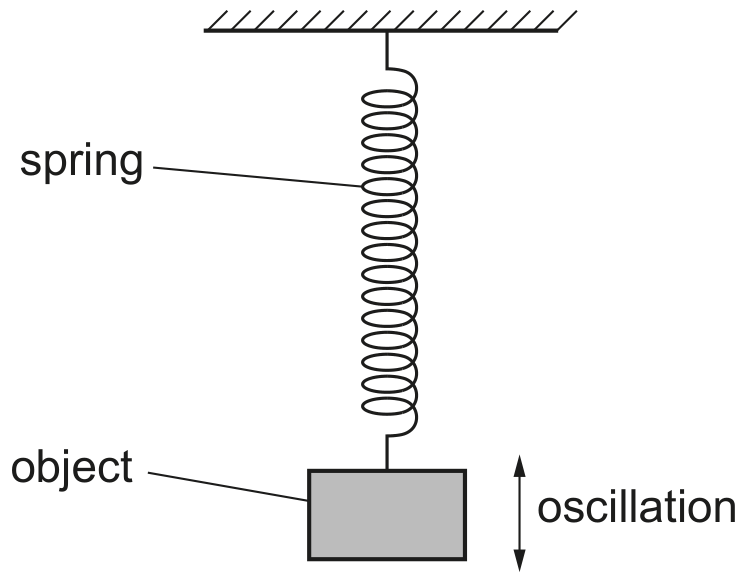
An object is suspended from a vertical spring as shown in Fig. 3.1.

Fig. 3.1

Fig. 3.1

The object is displaced vertically and then released so that it oscillates, undergoing simple harmonic motion.

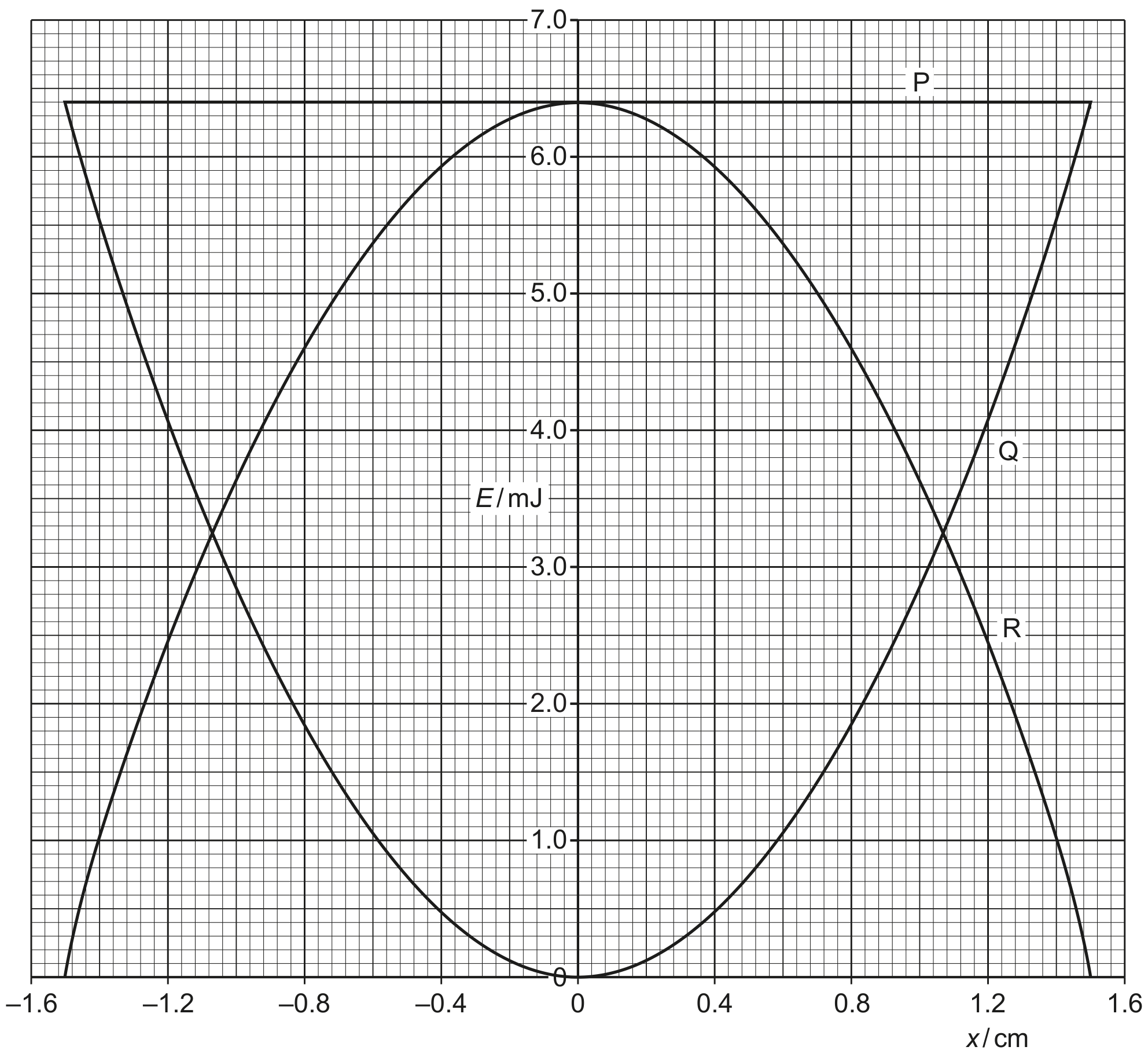
Fig. 3.2 shows the variation with displacement x of the energy E of the oscillations.

Fig. 3.2 shows the variation with displacement x of the energy E of the oscillations.

Fig. 3.2

The kinetic energy, the potential energy and the total energy of the oscillations are each represented by one of the lines P, Q and R .

(a)
(i)

State the cause of damping.

[ 1 ]
(ii)

A light card is attached to the object. The object is displaced with the same initial amplitude and then released. During each complete oscillation the total energy of the system decreases by 8.0 % of the total energy at the start of that oscillation.

Determine the decrease in total energy, in mJ , of the system by the end of the first 6 complete oscillations.
energy lost = mJ

(iii)

State, with a reason, the type of damping that the card introduces into the system.

[ 1 ]
(a)

For an oscillating body, state what is meant by

[ 2 ]
(i)

resonance.

[ 2 ]
(b)

State and explain one situation where resonance is useful.

[ 2 ]
(c)

In some situations, resonance should be avoided.

State one such situation and suggest how the effects of resonance are reduced.

[ 2 ]
0