(a)
(i)
Describe the trend in the solubility of the hydroxides of magnesium, calcium and strontium.
Explain your answer. > >
most soluble
least soluble
[ 4 ]
 EduNinja
Describe the trend in the solubility of the hydroxides of magnesium, calcium and strontium.
Explain your answer. > >
most soluble
least soluble
Sodium and magnesium are the first two elements in the third period.
Group 2 elements, including magnesium, react with oxygen and with dilute acids. There are trends in both the physical and chemical properties of the elements and their compounds down the group. Reactivity generally increases from Mg to Ba .
Suggest why there is a general decrease in the melting points of the elements down Group 2.
Group 2 metals form alkaline solutions in water.
The table shows the melting points of some Group 2 metal oxides.
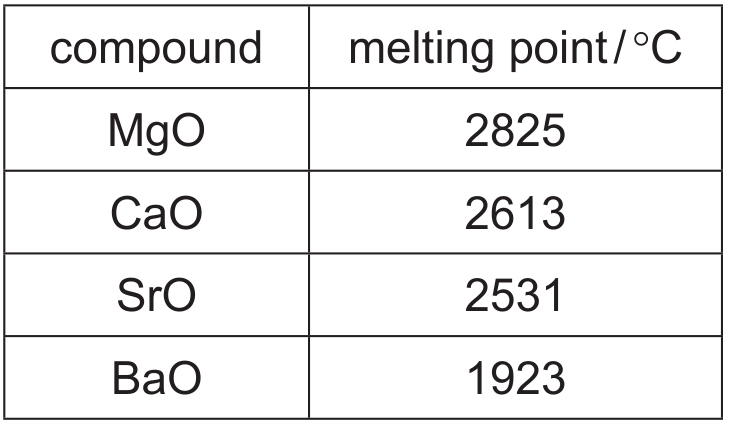
Explain the trend in the melting points of the oxides down Group 2.
The elements silicon, phosphorus and sulfur are in Period 3 of the Periodic Table.
Describe the variation in atomic radius from silicon to sulfur.
The melting point of silicon is . The melting point of sulfur is .
Explain this difference.
Which element has the second smallest atomic radius in its group and the second highest electrical conductivity in its period?
boron
calcium
magnesium
sodium
X and Y are different elements in Period 3.
Atoms of X and Y each have only one completely filled orbital in their highest occupied energy sub-shell.
Y has a greater first ionisation energy than X.
Which row shows the structure and bonding in X and Y ?
X
Y
giant metallic
giant metallic
giant metallic
simple molecular
giant covalent
simple molecular
simple molecular
simple molecular
Crude oil contains a mixture of hydrocarbons together with other organic compounds which may contain nitrogen, oxygen or sulfur in their molecules.
At an oil refinery, after the fractional distillation of crude oil, a number of other processes may be used including 'cracking', 'isomerisation', and 'reforming'.
State the main operating details of the formation of in the Contact process.
Period 3 elements and their compounds show trends in their physical properties.
On Fig. 2.1 sketch a graph to show the melting points of the first five elements in Period 3.
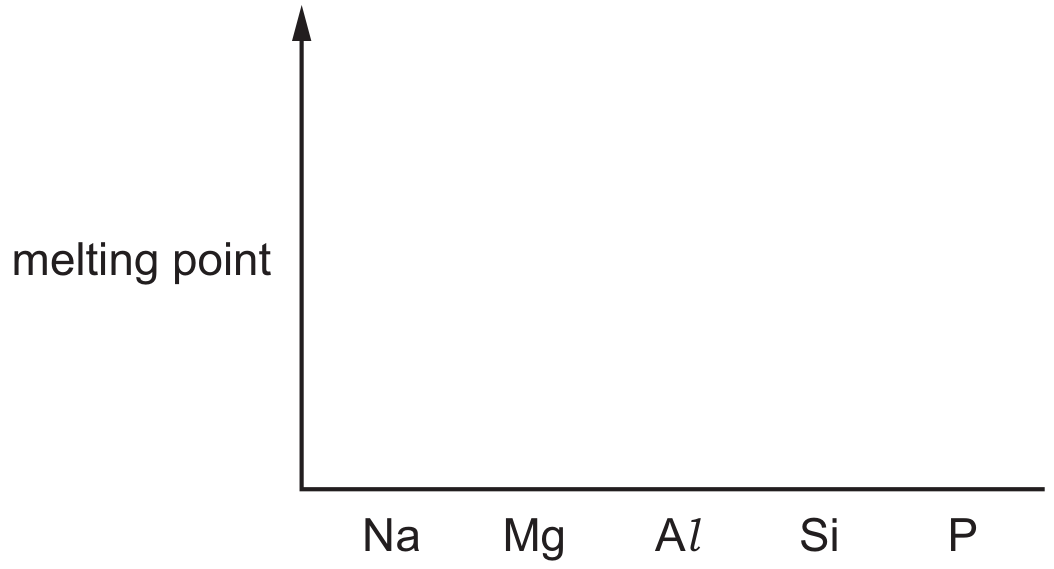
Fig. 2.1
The table gives some data for elements in the third period and some of their compounds.
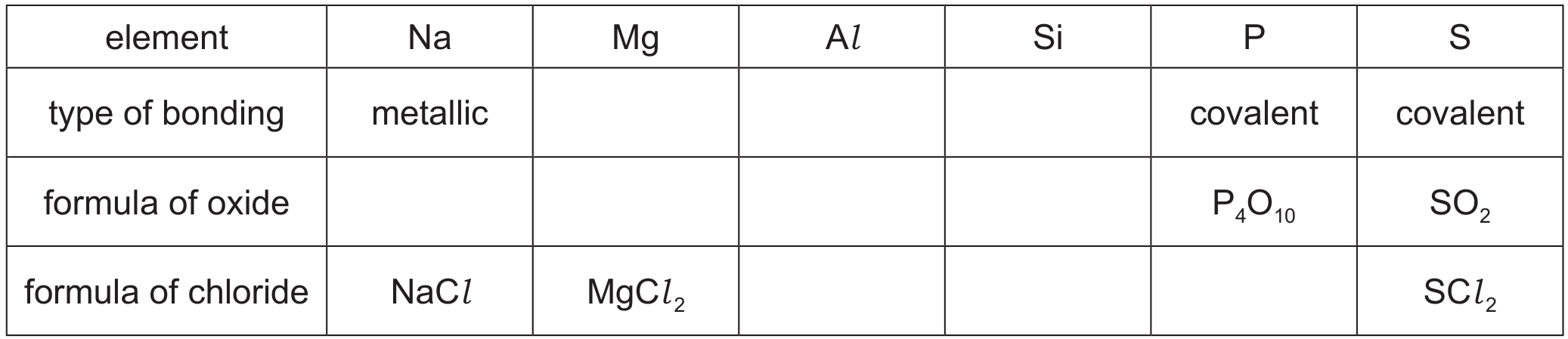
On the axes, sketch the trend in melting point of the elements Na to S .
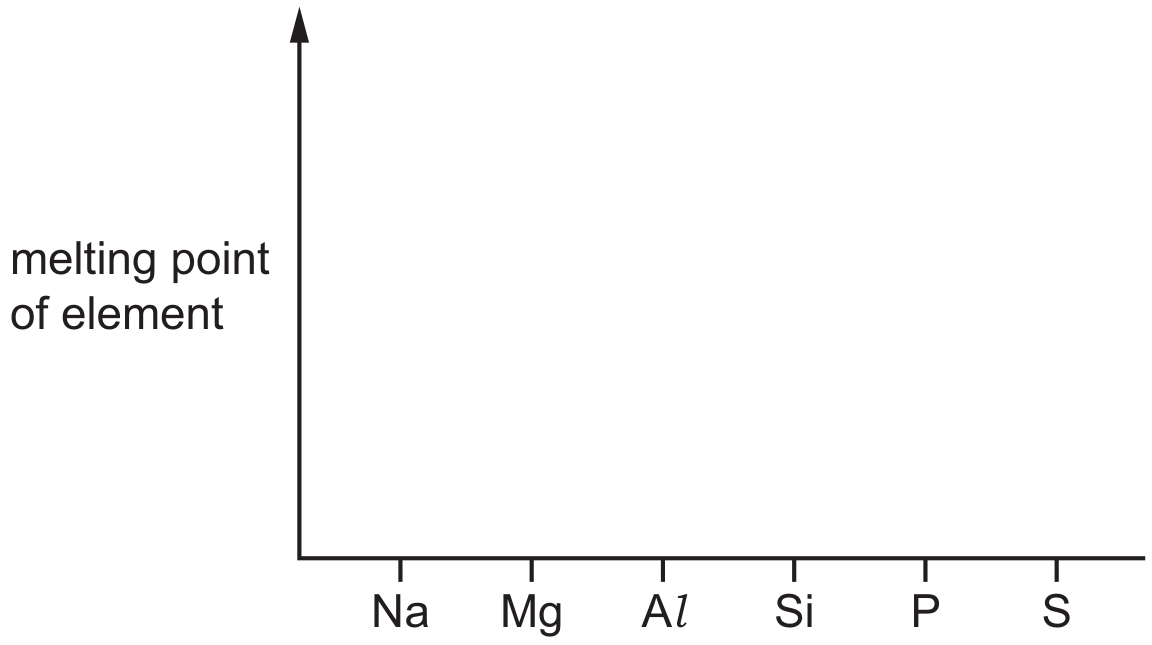
Give three statements to explain your sketch.
1
2
3
When copper is added to a solution of silver ions, the following equilibrium is established.
What is the concentration of silver ions at equilibrium when ?