

EduNinja

CAIE IGCSE Chemistry Drawing and Labelling Reaction Pathways

CAIE IGCSE Chemistry Drawing and Labelling Reaction Pathways
Cambridge IGCSE Chemistry 0620 syllabus for exams in 2026, 2027 and 20282026–2028

Practise drawing complete exothermic or endothermic pathway diagrams with reactants, products, activation energy and correctly directed enthalpy arrows.

How this is tested

  • place the product level below reactants for exothermic or above them for endothermic change
  • draw activation energy from the reactant level to the top of the pathway peak
  • draw the enthalpy arrow between reactant and product levels and label all species and axes

Question 5(b)(iii)

[Maximum number: 3]

Chemical reactions can involve transfer of thermal energy.

Tetrachloromethane gas, CCl4( g)\mathrm{CCl}_{4}(\mathrm{~g}), reacts with steam as shown.

CCl4( g)+2H2O( g)CO2( g)+4HCl( g)\mathrm{CCl}_{4}(\mathrm{~g})+2 \mathrm{H}_{2} \mathrm{O}(\mathrm{~g}) \rightleftharpoons \mathrm{CO}_{2}(\mathrm{~g})+4 \mathrm{HCl}(\mathrm{~g})

The reaction is reversible. The forward reaction is exothermic.

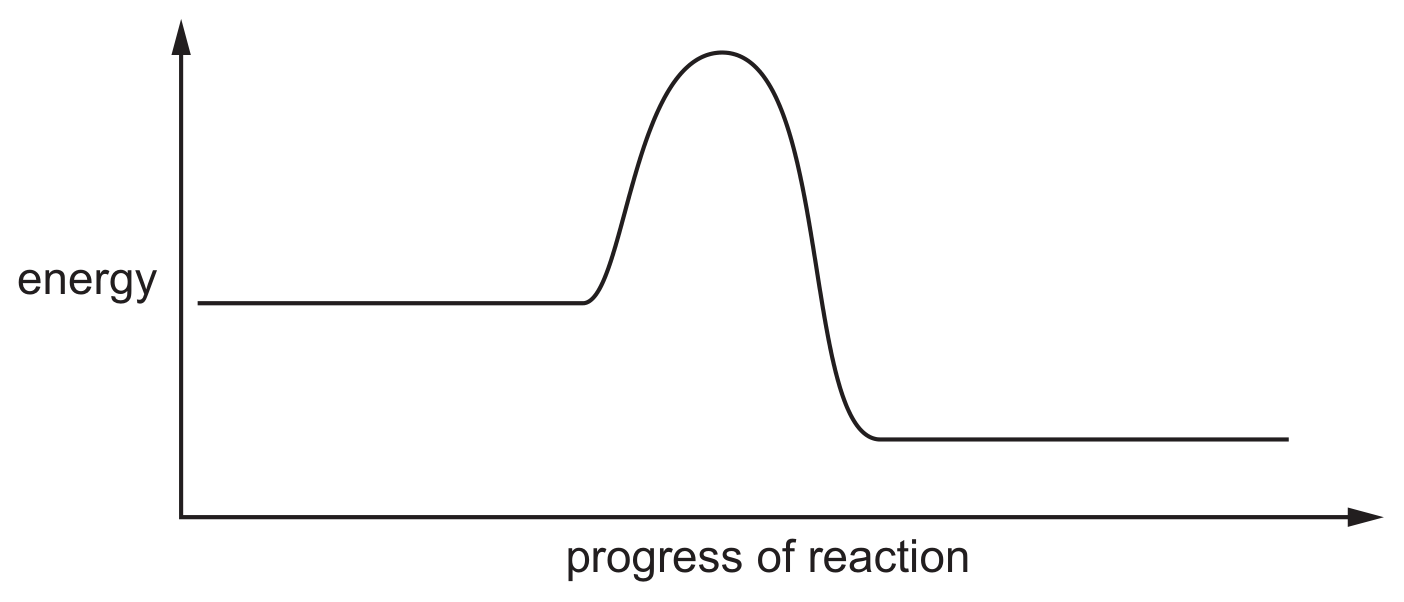
Fig. 5.1 shows an incomplete reaction pathway diagram for the forward reaction.
CCl4( g)+2H2O( g)CO2( g)+4HCl( g)\mathrm{CCl}_{4}(\mathrm{~g})+2 \mathrm{H}_{2} \mathrm{O}(\mathrm{~g}) \rightleftharpoons \mathrm{CO}_{2}(\mathrm{~g})+4 \mathrm{HCl}(\mathrm{~g})
Fig. 5.1

Fig. 5.1

On Fig. 5.1:
- insert the formulae of the reactants and products
- draw an arrow, labelled EaE_{\mathrm{a}}, to show the activation energy
- draw an arrow, labelled ΔH\Delta H, to show the transfer of energy in the reaction.