EduNinja

IGCSE Chemistry2.3 IsotopesQuestion Bank

Question 1

[Maximum number: 9]

This question is about the structures of atoms and ions.

Question 1(b)

Question 1(b)(i)

(a)
(i)

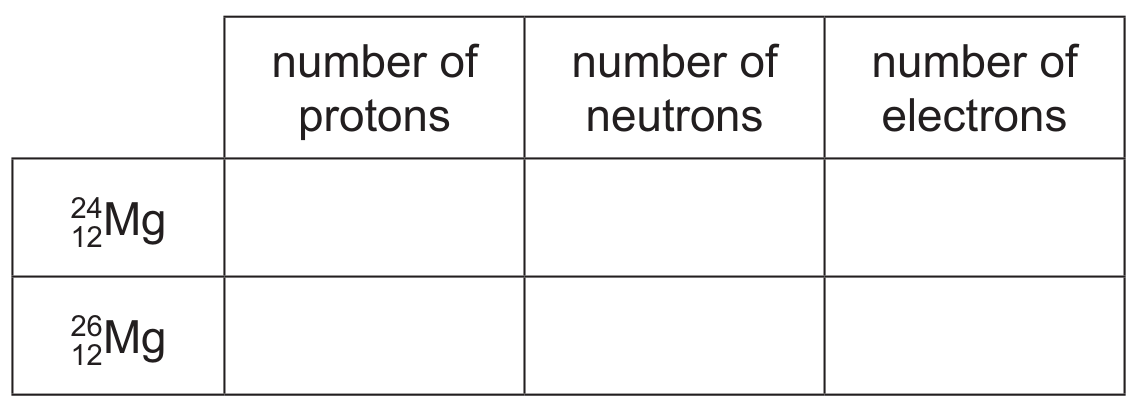
Complete the table to show the number of protons, neutrons and electrons present in atoms of 1224Mg{ }_{12}^{24} \mathrm{Mg} and 1226Mg{ }_{12}^{26} \mathrm{Mg}.

Table
[ 2 ]

Question 1(b)(ii)

(ii)

What term is used to describe atoms of the same element, such as 1224Mg{ }_{12}^{24} \mathrm{Mg} and 1226Mg{ }_{12}^{26} \mathrm{Mg} ?

[ 1 ]

Question 1(b)(iii)

(iii)

Explain why the chemical properties of 1224Mg{ }_{12}^{24} \mathrm{Mg} and 1226Mg{ }_{12}^{26} \mathrm{Mg} are the same.

[ 2 ]

Question 1(c)

(b)

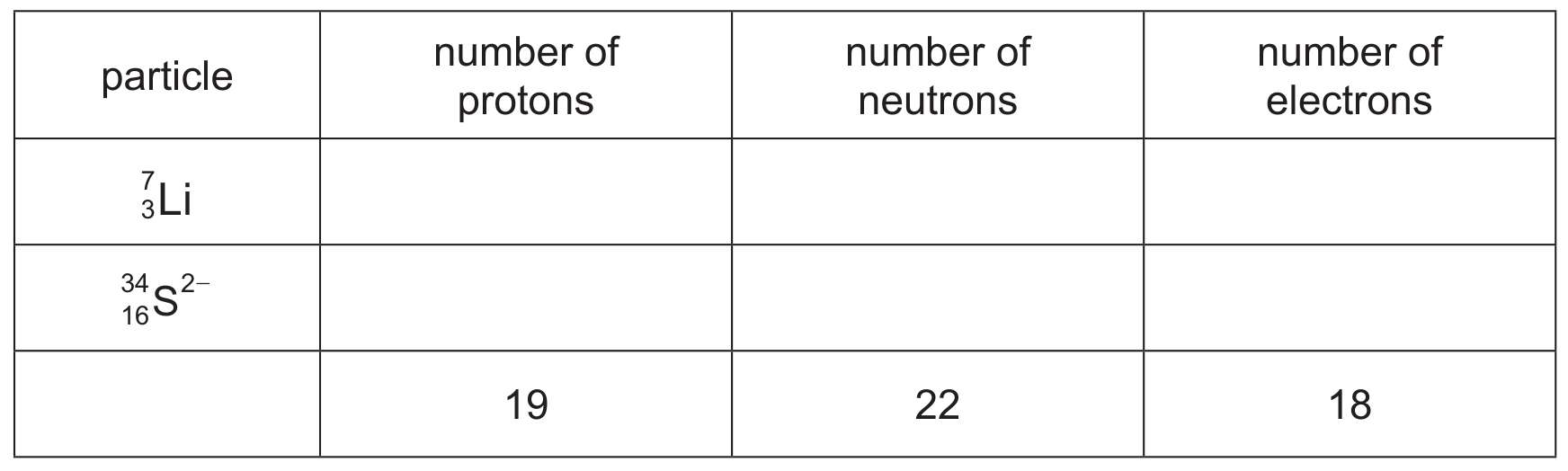
Complete the table to identify the atoms and ions which have the following numbers of protons, neutrons and electrons.
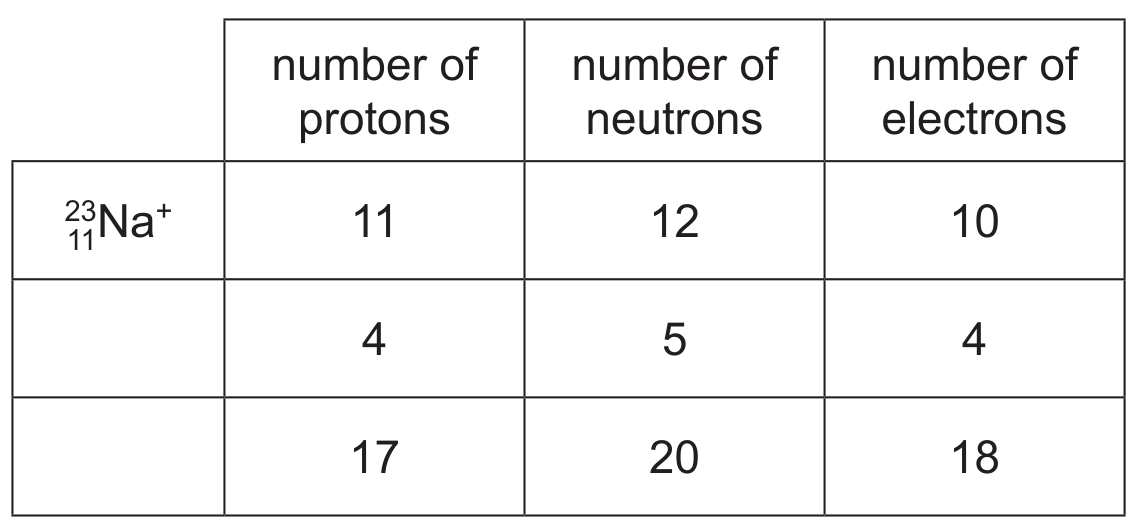
Table
[ 4 ]

Question 1

Question 1(b)

(a)

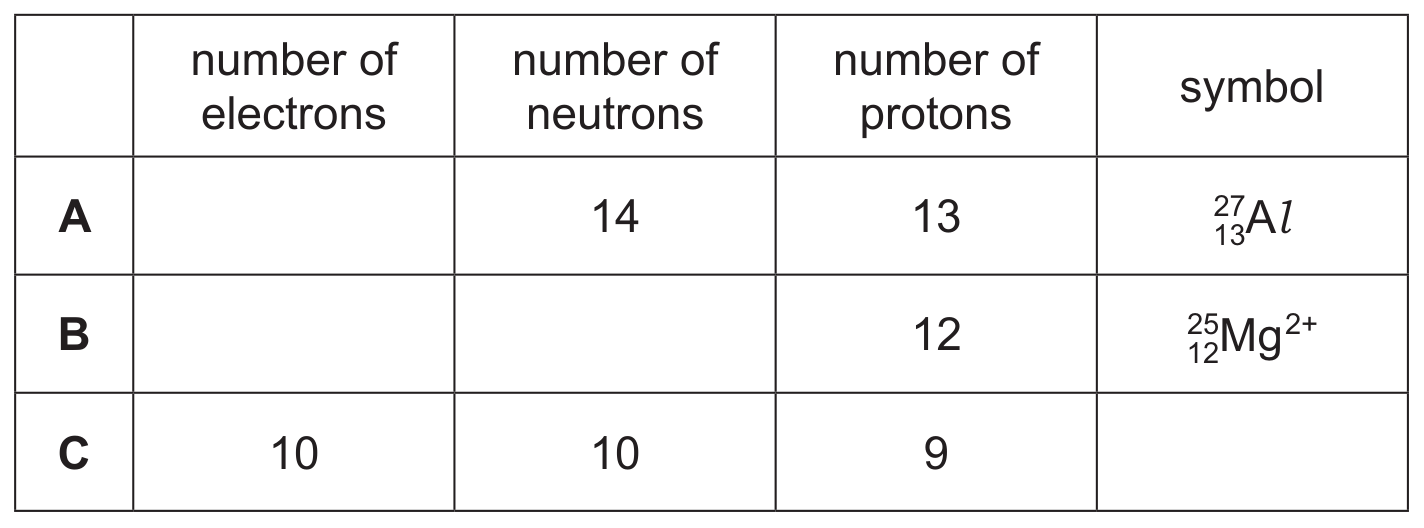
The table gives information about atoms and ions A, B and C.

Complete the table.

Table
[ 6 ]

Question 1

[Maximum number: 5]

This question is about elements X, Y and Z.

Question 1(a)

(a)

An atom of element X is represented as 1634X{ }_{16}^{34} \mathbf{X}.

[ 1 ]

Question 1(a)(iii)

(i)

What is the total number of particles in the nucleus of an atom of 1634X{ }_{16}^{34} \mathbf{X} ?

[ 1 ]

Question 1(b)

Question 1(b)(i)

(b)
(i)

What term is used to describe atoms of the same element with different numbers of particles in the nucleus?

[ 1 ]

Question 1(c)

(c)

Part of the definition of relative atomic mass is 'the average mass of naturally occurring atoms of an element'.

Some relative atomic masses are not whole numbers.
Element Y has only two different types of atom, 69Y{ }^{69} \mathbf{Y} and 71Y{ }^{71} \mathbf{Y}.
The ratio of atoms present in element Y is shown.

69Y:71Y=3:2{ }^{69} \mathbf{Y}:{ }^{71} \mathbf{Y}=3: 2

- Calculate the relative atomic mass of element Y to one decimal place.
relative atomic mass =
- Identify element Y.

[ 3 ]

Question 1

[Maximum number: 1]

The Periodic Table is very useful to chemists.
Refer only to elements with atomic numbers 1 to 36 in the Periodic Table provided when answering Question 1.

Question 1(a)

(a)

Use information from the Periodic Table provided to identify one element which:

[ 1 ]

Question 1(a)(vii)

(i)

has a relative atomic mass that shows it has at least two isotopes.

[ 1 ]

Question 1

[Maximum number: 1]

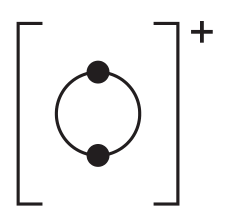
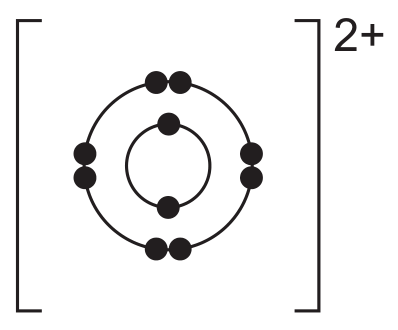
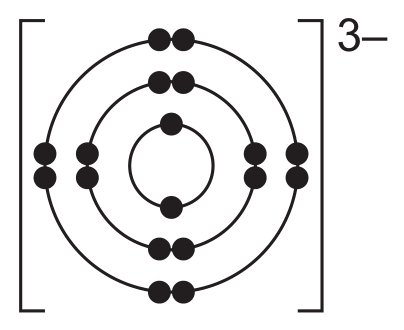
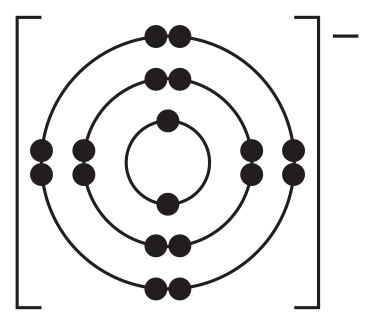
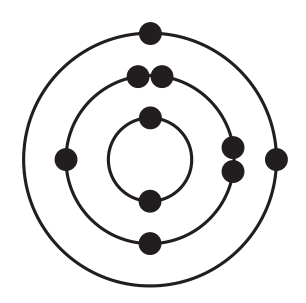
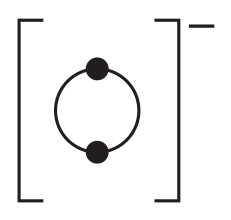
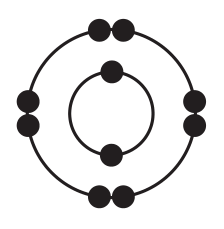
The electronic structures of some atoms and ions are shown.

A

A

B

B

C

C

D

D

E

E

F

F

G

G

H

H

Question 1(d)

(a)

Use the Periodic Table to deduce:

[ 1 ]

Question 1(d)(i)

(i)

the chemical symbol for ion G

[ 1 ]

Question 1

[Maximum number: 3]

Atoms contain particles called electrons, neutrons and protons.

Question 1(b)

(a)

How many electrons, neutrons and protons are there in the ion shown?
2044Ca2+{ }_{20}^{44} \mathrm{Ca}^{2+}
number of electrons
number of neutrons
number of protons

[ 3 ]

Question 1

[Maximum number: 2]

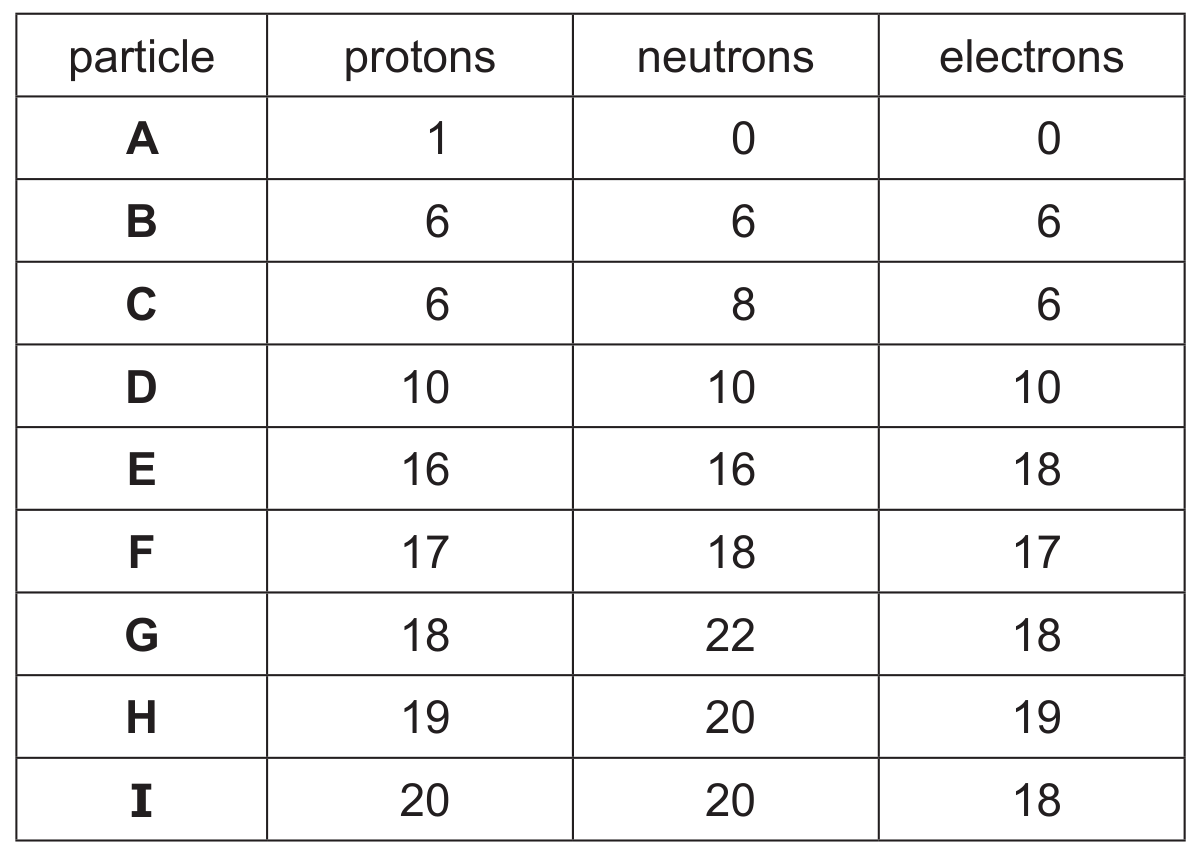
The table shows the numbers of protons, neutrons and electrons in particles A to I.

Table

Answer the following questions about particles A to I. Each letter may be used once, more than once or not at all.

Question 1(b)

(a)

Explain why B and C are isotopes of the same element.

[ 2 ]

Question 1

[Maximum number: 9]

Protons, neutrons and electrons are subatomic particles.

Question 1(b)

(a)

Bromine has two isotopes.

[ 4 ]

Question 1(b)(i)

(i)

Define the term isotope.

[ 2 ]

Question 1(b)(ii)

(ii)

Explain why the two isotopes of bromine have the same chemical properties.

[ 2 ]

Question 1(c)

(b)

The table shows the number of protons, neutrons and electrons in some atoms and ions. Complete the table.

Table
[ 5 ]

Question 1

Question 1(b)

(a)

The following are isotopes of carbon.
612C{ }_{6}^{12} \mathrm{C}613C{ }_{6}^{13} \mathrm{C}614C{ }_{6}^{14} \mathrm{C}

[ 4 ]

Question 1(b)(i)

(i)

In terms of numbers of protons, neutrons and electrons, how are these three isotopes the same and how are they different?

They are the same because

They are different because

[ 3 ]

Question 1(b)(ii)

(ii)

Why do all isotopes of carbon have the same chemical properties?

[ 1 ]

Question 1

[Maximum number: 6]

This question is about subatomic particles.

Question 1(c)

(a)

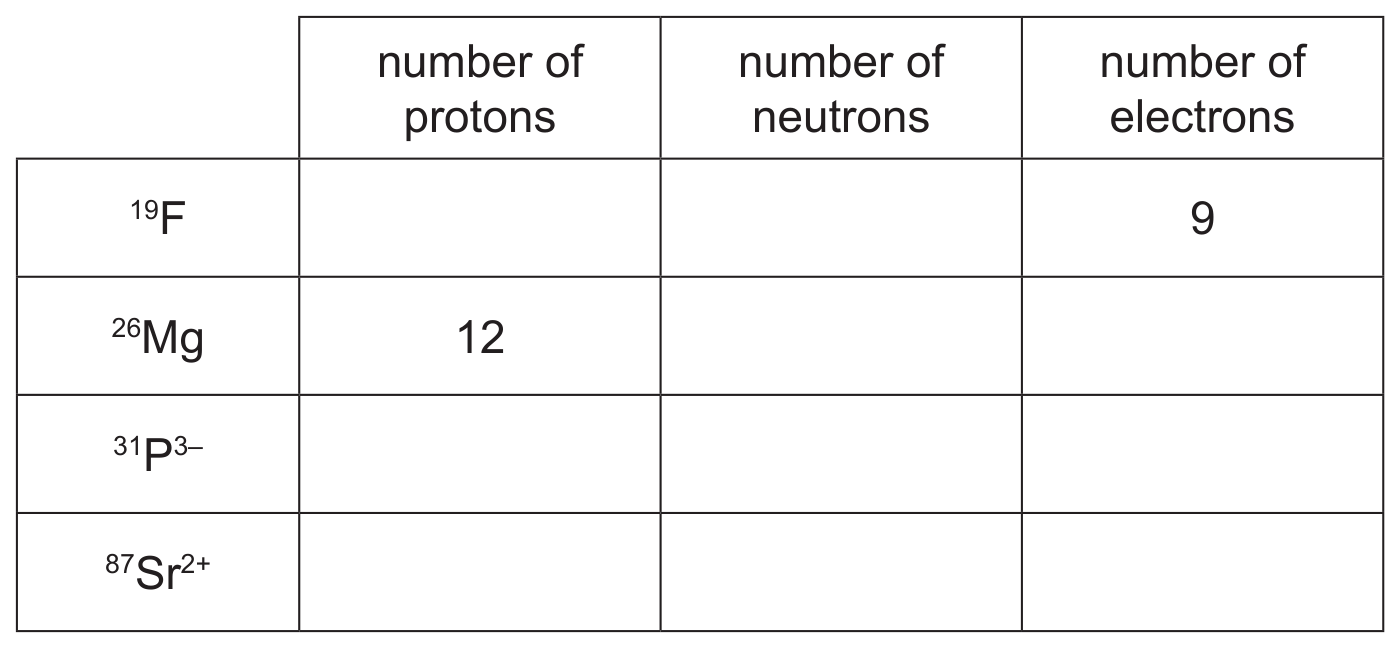
Complete the table to show the number of protons, neutrons and electrons in the atoms and ions given.

Table
[ 6 ]
0 selected