Question 1
Period 3 of the Periodic Table is shown.

Answer the following questions using only these elements.
Each element may be used once, more than once or not at all.
State which element:
Question 1(a)
is a gas at room temperature and pressure
EduNinjaPeriod 3 of the Periodic Table is shown.

Answer the following questions using only these elements.
Each element may be used once, more than once or not at all.
State which element:
is a gas at room temperature and pressure
This question is about elements X, Y and Z.
Element Z is in Period 3 and Group V.
Identify element Z.
Explain in terms of electron transfer why Z behaves chemically as a non-metal.
The symbols of the elements of Period 3 of the Periodic Table are shown.

Answer the following questions about these elements.
Each element may be used once, more than once or not at all.
Write the symbol of an element which:
forms an ion with a 2-charge
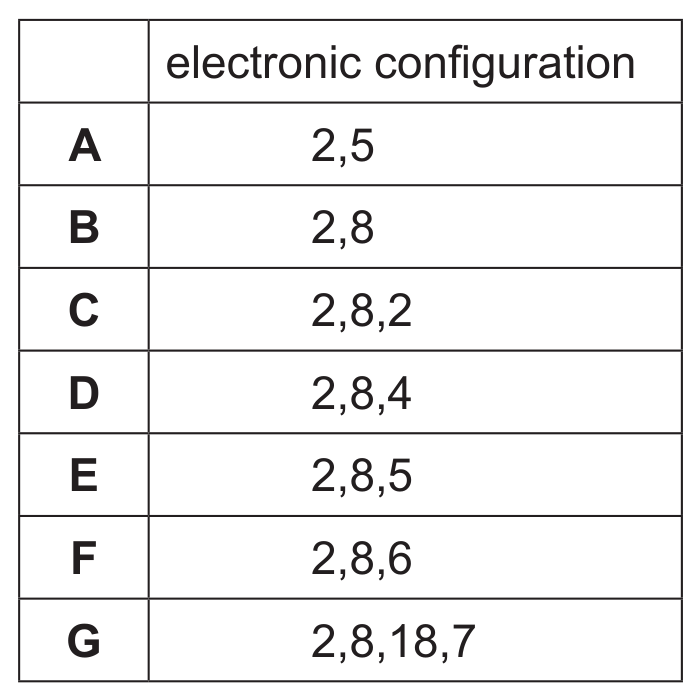
Table 1.1 gives the electronic configurations of some atoms and ions, A to G.

Table 1.1
Answer the following questions about A to G.
Each letter may be used once, more than once or not at all.
State which of the atoms or ions, A to G, could be:
an atom that forms an ion with a 2-charge.
The symbols of the elements of Period 3 of the Periodic Table are shown.

Answer the following questions about these elements.
Each symbol may be used once, more than once or not at all.
Write the symbol of the element which:
forms a stable ion with a 2+ charge [1
Which statements about the position of the elements in the Periodic Table are correct?
1 Elements in the same group have similar chemical properties.
2 Elements in the same period have similar chemical properties.
3 Elements in the same group have the same number of electron shells.
4 Elements in the same group have the same number of outer shell electrons.
1 and 3
1 and 4
2 and 3
2 and 4
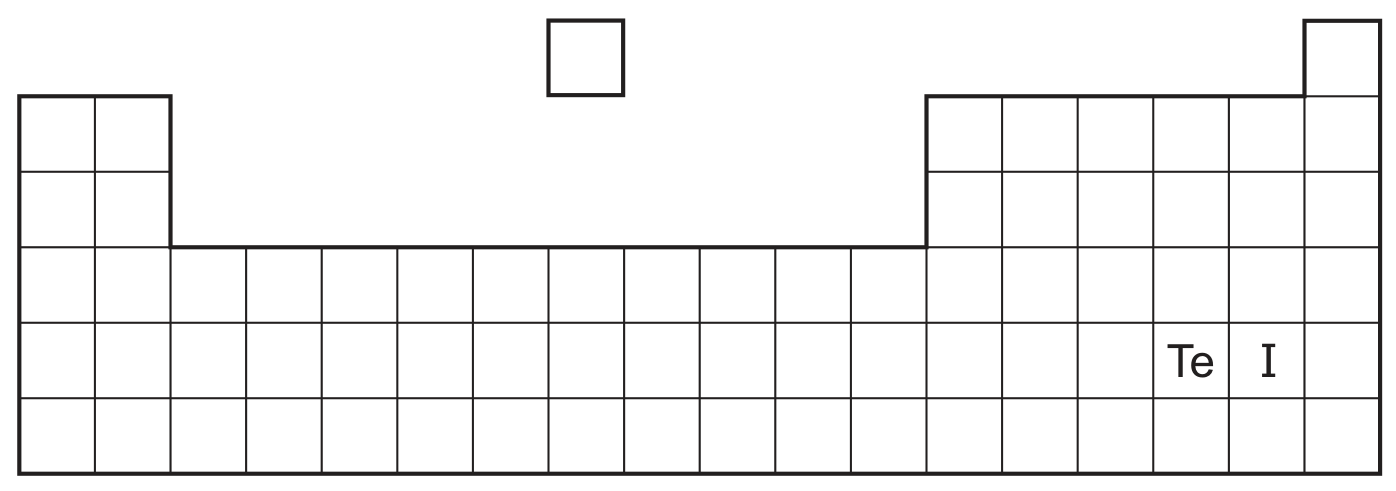
lodine, I, has a lower relative atomic mass than tellurium, Te, but is placed after it in the Periodic Table.

Which statement explains why iodine is placed after tellurium in the Periodic Table?
Iodine has fewer neutrons than tellurium.
Iodine has fewer protons than tellurium.
Iodine has more neutrons than tellurium.
Iodine has more protons than tellurium.
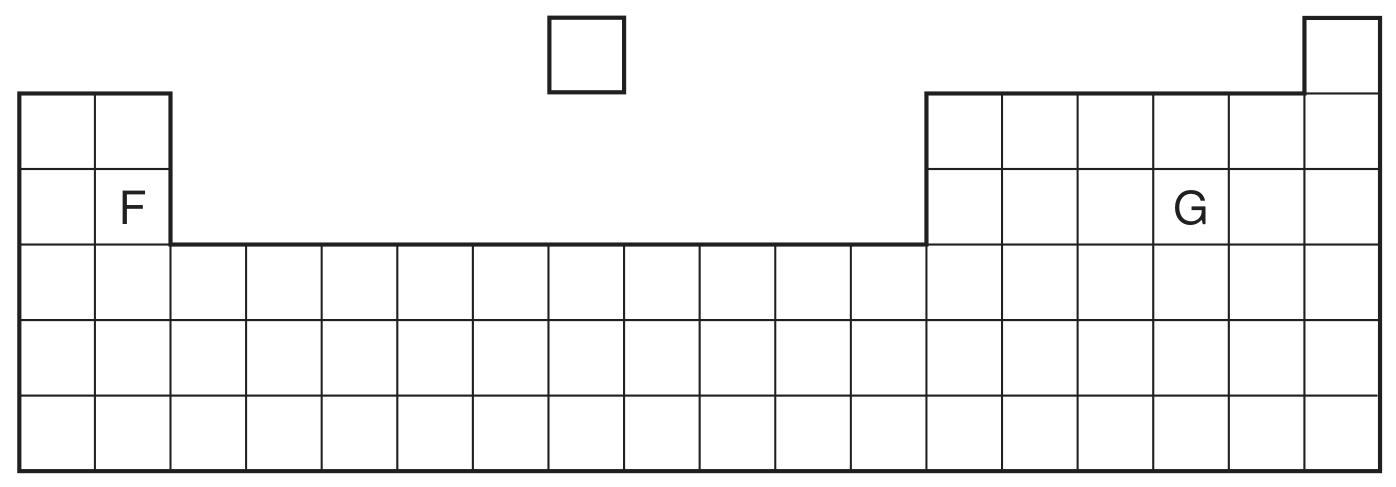
Part of the Periodic Table is shown.

Which type of chemical bonding is present in the oxide of F and in the oxide of G ?
oxide of F
oxide of G
covalent
covalent
covalent
ionic
ionic
covalent
ionic
ionic
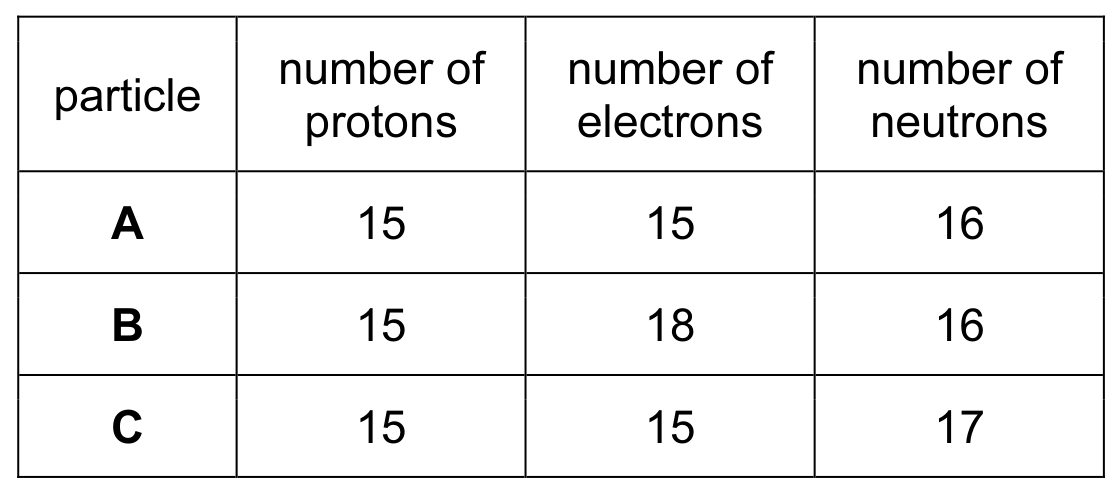
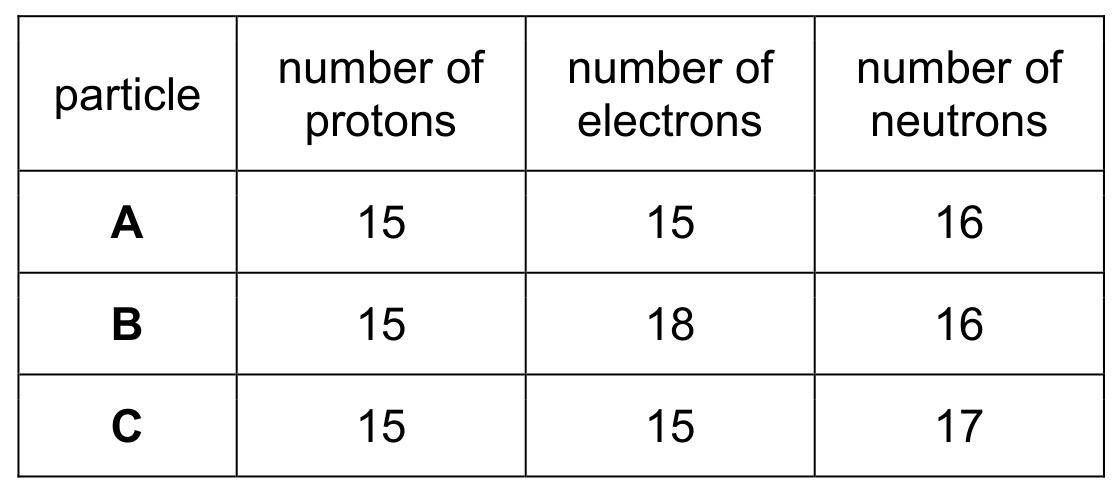
The table gives the composition of three particles.

Is element A, a metal or a non-metal? Give a reason for your choice.
The table gives the composition of three particles.

Is element A, a metal or a non-metal? Give a reason for your choice.