EduNinja

IGCSE Chemistry2.2 Atomic structure and the Periodic TableQuestion Bank

Question 1

[Maximum number: 6]

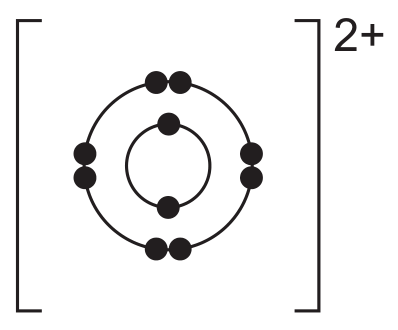
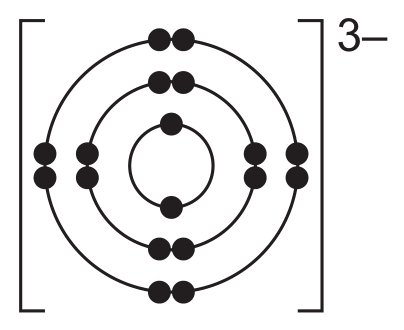
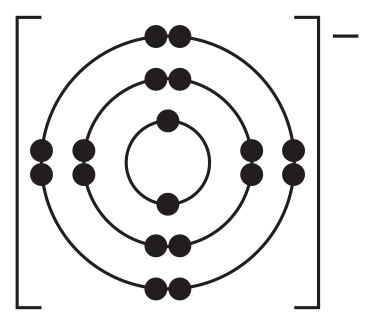
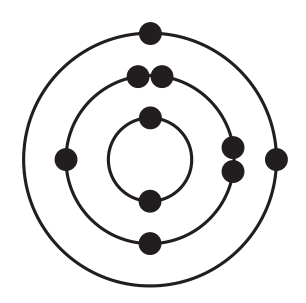
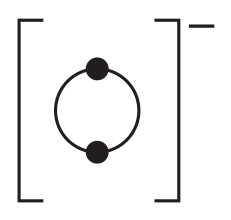
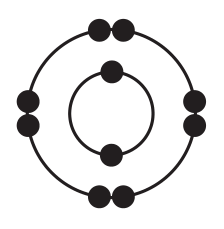
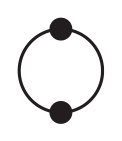
The electronic structures of some atoms and ions are shown.
A
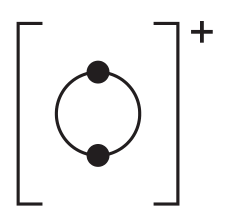
A

B

B

C

C

D

D

E

E

F

F

G

G

H

H

Question 1(a)

(a)

Write the letters, A, B, C, D, E, F, G or H, of the electronic structures which show:

[ 2 ]

Question 1(a)(i)

(i)

atoms of two different noble gases and

[ 2 ]

Question 1(b)

(b)

State which electronic structure, A, B, C, D, E, F, G or H, is incorrect.

Explain why.
incorrect electronic structure
explanation

[ 2 ]

Question 1(c)

(c)

State how many protons are found in the nucleus of ion C.

[ 1 ]

Question 1(d)

(d)

Use the Periodic Table to deduce:

[ 1 ]

Question 1(d)(ii)

(i)

the element which forms an ion with a 3+ charge and the same electronic structure as H.

[ 1 ]

Question 1

[Maximum number: 1]

Period 3 of the Periodic Table is shown.

Table

Answer the following questions using only these elements.
Each element may be used once, more than once or not at all.
State which element:

Question 1(c)

(a)

is made of atoms which have a full outer shell of electrons

[ 1 ]

Question 1

[Maximum number: 4]

This question is about the structures of atoms and ions.

Question 1(a)

(a)

Define the term proton number.

[ 2 ]

Question 1(d)

(b)

State the electronic structure of the following atom and ion.

Al
S2\mathrm{S}^{2-}

[ 2 ]

Question 1

[Maximum number: 6]

The Periodic Table is very useful to chemists.
Refer only to elements with atomic numbers 1 to 36 in the Periodic Table provided when answering Question 1.

Question 1(a)

(a)

Use information from the Periodic Table provided to identify one element which:

[ 6 ]

Question 1(a)(i)

(i)

has atoms with exactly 9 protons

[ 1 ]

Question 1(a)(ii)

(ii)

has atoms with 0 neutrons

[ 1 ]

Question 1(a)(iii)

(iii)

has atoms with exactly 23 electrons

[ 1 ]

Question 1(a)(iv)

(iv)

has atoms with an electronic structure of 2,8,6

[ 1 ]

Question 1(a)(v)

(v)

forms ions with a charge of 3- containing 18 electrons

[ 1 ]

Question 1(a)(vi)

(vi)

forms ions with a charge of 2+ containing 10 electrons

[ 1 ]

Question 1

Question 1(a)

(a)

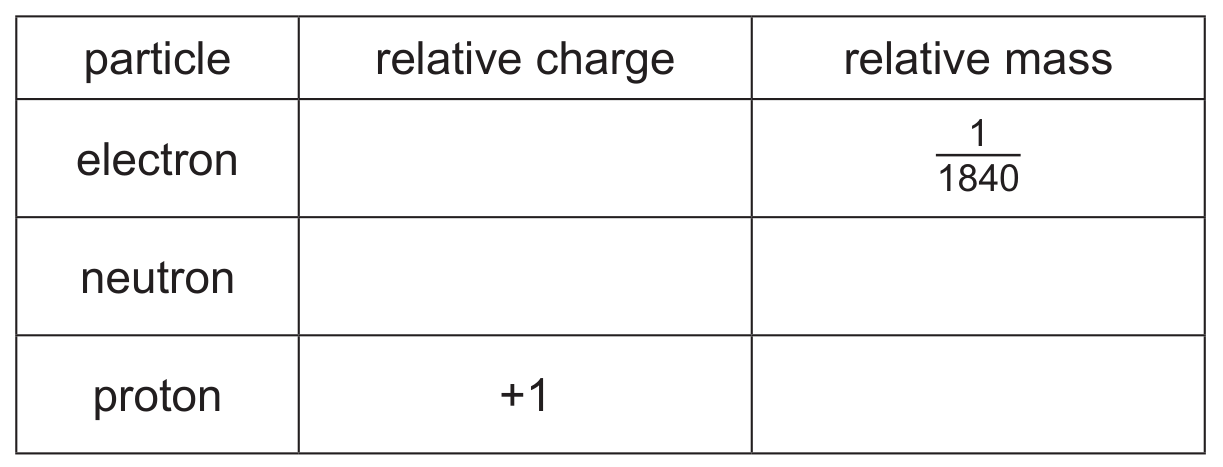
Atoms are made of smaller particles called electrons, neutrons and protons.
Complete the table.

Table
[ 2 ]

Question 1

[Maximum number: 4]

This question is about elements X, Y and Z.

Question 1(a)

(a)

An atom of element X is represented as 1634X{ }_{16}^{34} \mathbf{X}.

[ 4 ]

Question 1(a)(i)

(i)

Name the different types of particles found in the nucleus of this atom of X.

[ 2 ]

Question 1(a)(ii)

(ii)

What is the term for the total number of particles in the nucleus of an atom?

[ 1 ]

Question 1(a)(iv)

(iii)

What is the electronic structure of the ion X2\mathbf{X}^{2-} ?

[ 1 ]

Question 1

Question 1(b)

(a)

The symbols of the elements in Period 2 of the Periodic Table are shown.

Li Be B C N O F Ne

For each of the following, give the symbol of an element from Period 2 which matches the description.

Each element may be used once, more than once or not at all.
Which element:

[ 2 ]

Question 1(b)(iii)

(i)

has atoms with only two electrons in the outer shell

[ 1 ]

Question 1(b)(iv)

(ii)

has atoms with only seven protons

[ 1 ]

Question 1

[Maximum number: 1]

Iron ore contains iron(III) oxide, Fe2O3\mathrm{Fe}_{2} \mathrm{O}_{3}. A blast furnace is used to extract iron from Fe2O3\mathrm{Fe}_{2} \mathrm{O}_{3}.
Equations for some of the reactions in the blast furnace are shown.

equation 1C+O2CO21 \mathrm{C}+\mathrm{O}_{2} \rightarrow \mathrm{CO}_{2}

equation 2CaCO3CaO+CO22 \mathrm{CaCO}_{3} \rightarrow \mathrm{CaO}+\mathrm{CO}_{2}

equation 3CaO+SiO2CaSiO33 \quad \mathrm{CaO}+\mathrm{SiO}_{2} \rightarrow \mathrm{CaSiO}_{3}

Question 1(f)

(a)

Both iron(III) oxide and aluminium oxide contain metal ions with a 3+ charge.

[ 1 ]

Question 1(f)(i)

(i)

Write the electronic configuration of an All3+\mathrm{Al} l^{3+} ion.

[ 1 ]

Question 1

Question 1(a)

(a)

This question is about elements.
> aluminium
> carbon iron hydrogen oxygen silicon sodium sulfur

Answer the following questions about these elements.
Each element may be used once, more than once or not at all.

[ 1 ]

Question 1(a)(vi)

(i)

Name the element that has atoms with the electronic structure 2,6 .

[ 1 ]

Question 1

[Maximum number: 1]

Some elements are shown in the order they appear in the reactivity series. The most reactive element is at the top.
> sodium calcium magnesium aluminium zinc iron hydrogen copper

Question 1(a)

(a)

Answer the questions using the list of elements. Each element may be used once, more than once or not at all.

Identify:

[ 1 ]

Question 1(a)(iv)

(i)

a metal with three electrons in the outer shell of its atoms

[ 1 ]
0 selected