EduNinja

IGCSE Chemistry11.5 AlkenesQuestion Bank

Question 1

[Maximum number: 1]

A list of substances is shown.
> barium nitrate carbon monoxide hydrated cobalt(II) chloride copper(II) oxide anhydrous copper(II) sulfate ethane potassium iodide propene sodium bromide sulfur dioxide zinc oxide

Answer the following questions using only the substances from the list. Each substance may be used once, more than once or not at all.

Give the name of the substance that:

Question 1(d)

(a)

is an unsaturated hydrocarbon

[ 1 ]
Question 1

Question 1(a)

(a)

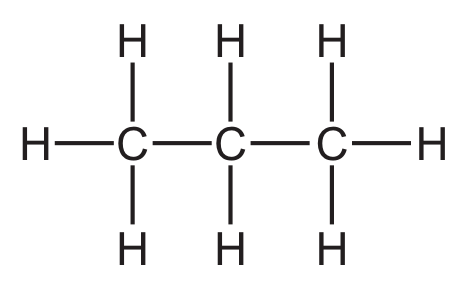
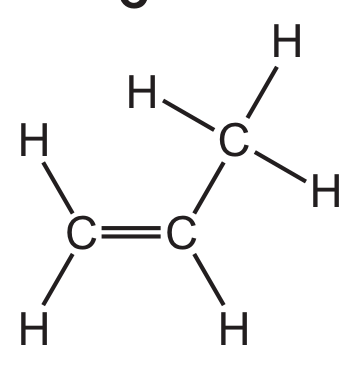
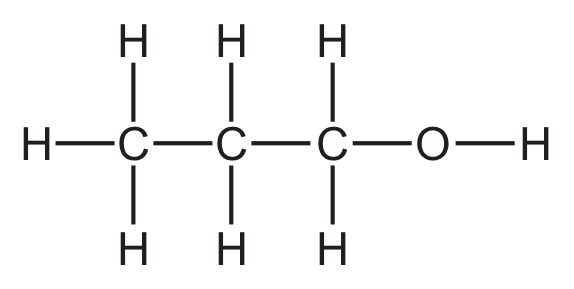
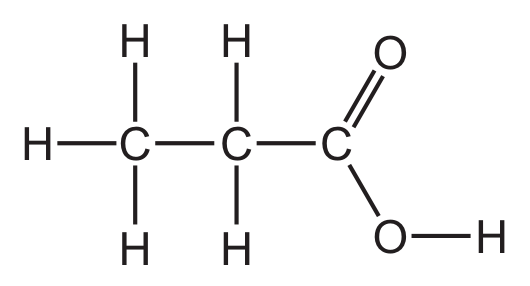
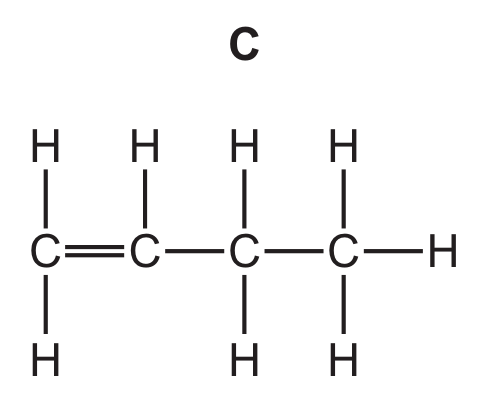
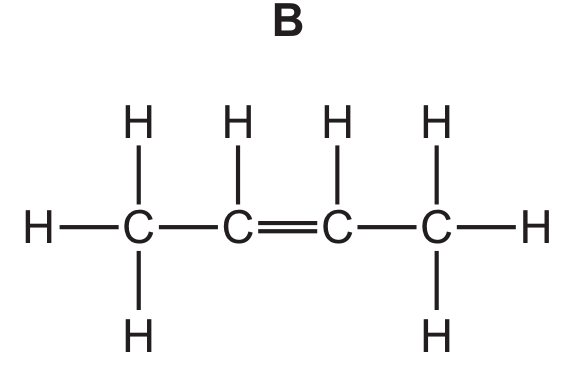
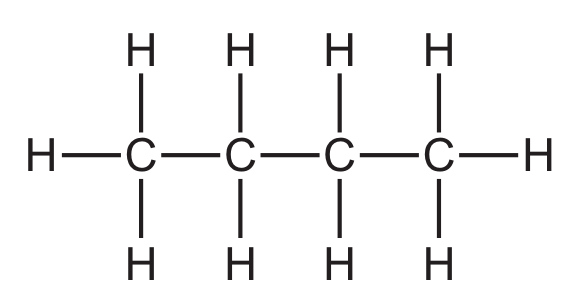
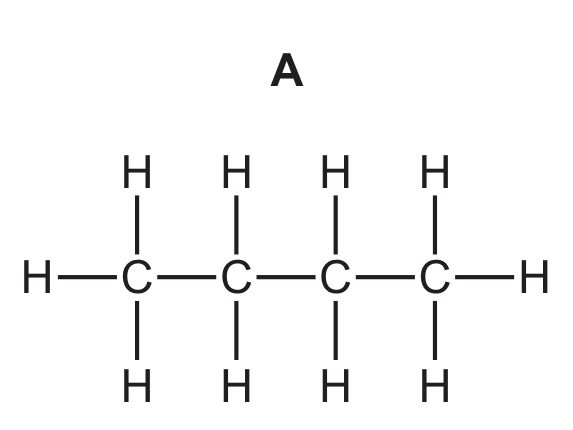
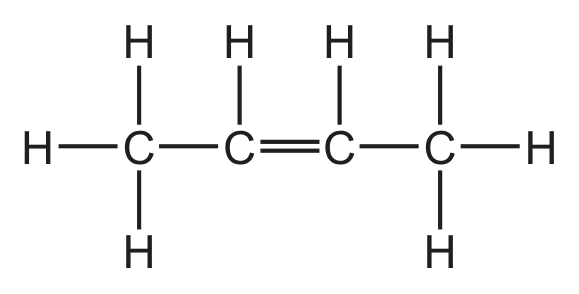
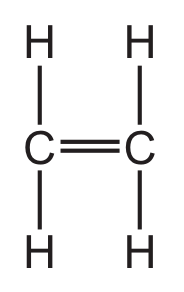
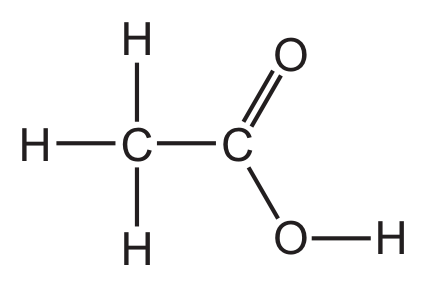
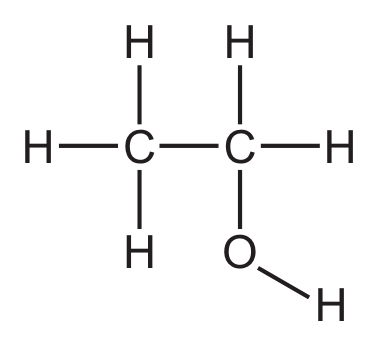
The structures of five organic compounds, A, B, C, D and E, are shown.
Answer the questions that follow.
Each letter may be used once, more than once or not at all.
A

Question image

B

Question image

c

Question image

D

Question image

E
E

Question image
[ 1 ]

Question 1(a)(iii)

(i)

Give the letter of one compound that reacts with bromine in an addition reaction.

[ 1 ]

Question 1

Question 1(a)

(a)

Five organic compounds have the following structures.
A
C
C
A
,

Question image

B
B

Question image
Question image
Question image

D

Question image

E

Question image
[ 1 ]

Question 1(a)(iii)

(i)

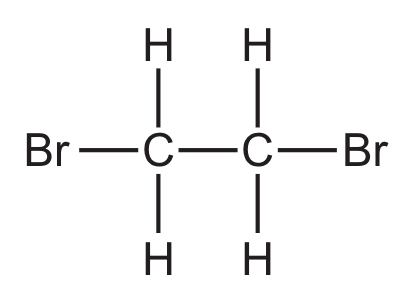
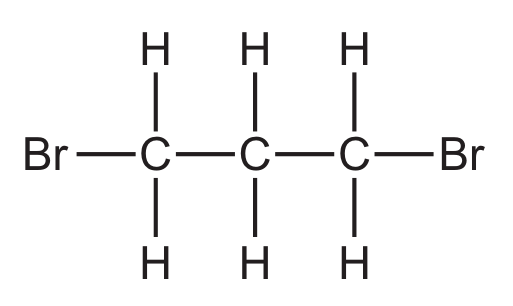
Which compound can be made by reacting an alkene with bromine?

[ 1 ]

Question 1

[Maximum number: 1]

Some symbol equations and word equations, A to J, are shown.

A Fe3++3OHFe(OH)3\mathrm{Fe}^{3+}+3 \mathrm{OH}^{-} \rightarrow \mathrm{Fe}(\mathrm{OH})_{3}

B H++OHH2O\mathrm{H}^{+}+\mathrm{OH}^{-} \rightarrow \mathrm{H}_{2} \mathrm{O}

C ethane + chlorine → chloroethane + hydrogen chloride

D C12H26C8H18+C4H8\mathrm{C}_{12} \mathrm{H}_{26} \rightarrow \mathrm{C}_{8} \mathrm{H}_{18}+\mathrm{C}_{4} \mathrm{H}_{8}

E ethene + steam → ethanol
F chlorine + aqueous potassium iodide → iodine + aqueous potassium chloride

G C6H12O62C2H5OH+2CO2\mathrm{C}_{6} \mathrm{H}_{12} \mathrm{O}_{6} \rightarrow 2 \mathrm{C}_{2} \mathrm{H}_{5} \mathrm{OH}+2 \mathrm{CO}_{2}

H ethanoic acid + ethanol → ethyl ethanoate + water
I calcium carbonate → calcium oxide + carbon dioxide

J 6CO2+6H2OC6H12O6+6O26 \mathrm{CO}_{2}+6 \mathrm{H}_{2} \mathrm{O} \rightarrow \mathrm{C}_{6} \mathrm{H}_{12} \mathrm{O}_{6}+6 \mathrm{O}_{2}

Use the equations to answer the questions that follow.
Each equation may be used once, more than once, or not at all.
Give the letter, A to J, for the equation that represents:

Question 1(f)

(a)

cracking. [1]
[Total: 6]

[ 1 ]

Question 1

[Maximum number: 1]

Some symbol equations and word equations, A to J, are shown.

A H++OHH2O\mathrm{H}^{+}+\mathrm{OH}^{-} \rightarrow \mathrm{H}_{2} \mathrm{O}

B Cr3++3OHCr(OH)3\mathrm{Cr}^{3+}+3 \mathrm{OH}^{-} \rightarrow \mathrm{Cr}(\mathrm{OH})_{3}

C methane + chlorine → chloromethane + hydrogen chloride
D propene + bromine → 1,2-dibromopropane

E C10H22C8H18+C2H4\quad \mathrm{C}_{10} \mathrm{H}_{22} \rightarrow \mathrm{C}_{8} \mathrm{H}_{18}+\mathrm{C}_{2} \mathrm{H}_{4}

F chlorine + aqueous potassium bromide → bromine + aqueous potassium chloride
G methane + oxygen → carbon monoxide + water

H C2H5COOH+CH3OHC2H5COOCH3+H2O\mathrm{C}_{2} \mathrm{H}_{5} \mathrm{COOH}+\mathrm{CH}_{3} \mathrm{OH} \rightarrow \mathrm{C}_{2} \mathrm{H}_{5} \mathrm{COOCH}_{3}+\mathrm{H}_{2} \mathrm{O}

I hydrogen + oxygen → water

J 6CO2+6H2OC6H12O6+6O26 \mathrm{CO}_{2}+6 \mathrm{H}_{2} \mathrm{O} \rightarrow \mathrm{C}_{6} \mathrm{H}_{12} \mathrm{O}_{6}+6 \mathrm{O}_{2}

Use the equations to answer the questions that follow.
Each equation may be used once, more than once, or not at all.
Give the letter, A to J, for the equation which represents:

Question 1(b)

(a)

an addition reaction [1]

[ 1 ]

Question 1

Question 1(a)

(a)

State one gas which:

[ 1 ]

Question 1(a)(iii)

(i)

is unsaturated

[ 1 ]

Question 7

[Maximum number: 1]

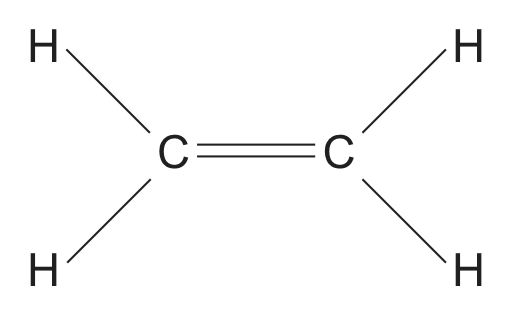
Ethene is an unsaturated hydrocarbon.

Question image

Which description of the bonding in ethene is correct?

A

All atoms in the molecule have a share of eight electrons.

B

Each carbon atom shares two of its electrons with hydrogen atoms and two of its electrons with a carbon atom.

C

Each carbon atom shares two of its electrons with hydrogen atoms and one of its electrons with a carbon atom.

D

The two carbon atoms share a total of six electrons with other atoms.

Question 2

[Maximum number: 2]

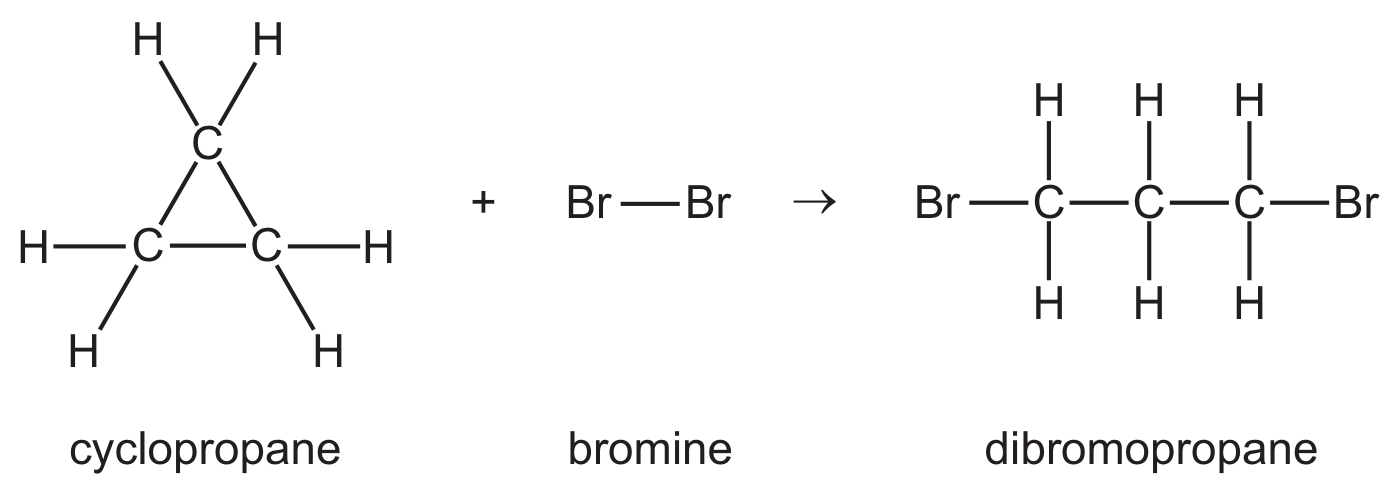
Cyclopropane is a colourless gas.
Cyclopropane reacts with bromine at room temperature. The chemical equation for the reaction is shown.

Question image

Question 2(a)

Question 2(a)(ii)

(a)
(i)

What colour change, if any, would you see when cyclopropane is bubbled into aqueous bromine?
initial colour
final colour

[ 2 ]

Question 3

[Maximum number: 2]

Fluorine is a Group VII element. Fluorine forms compounds with metals and non-metals.

Question 3(f)

(a)

Tetrafluoroethene is an unsaturated compound with the formula C2 F4\mathrm{C}_{2} \mathrm{~F}_{4}. Tetrafluoroethene is the monomer used to make the polymer poly(tetrafluoroethene).

[ 2 ]

Question 3(f)(ii)

(i)

Describe a test to show that tetrafluoroethene is unsaturated.
test
observations

[ 2 ]

Question 2

[Maximum number: 2]

The structures of six organic compounds are shown.
A

Question image

B

Question image

C

Question image

D

Question image

E

Question image

F

Question image

Question 2(d)

(a)

Explain why B is an unsaturated hydrocarbon.

[ 2 ]
0 selected