Question 1
Question 1(a)
(a)
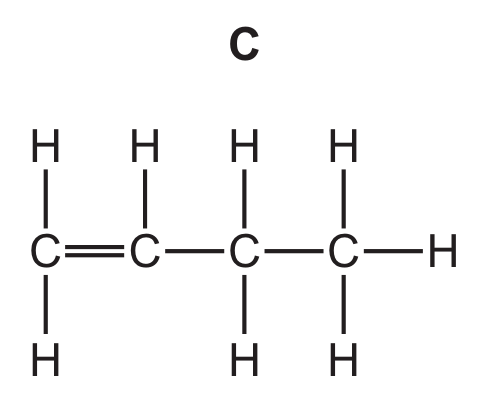
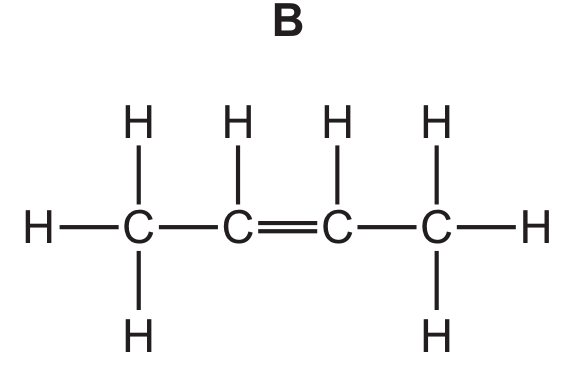
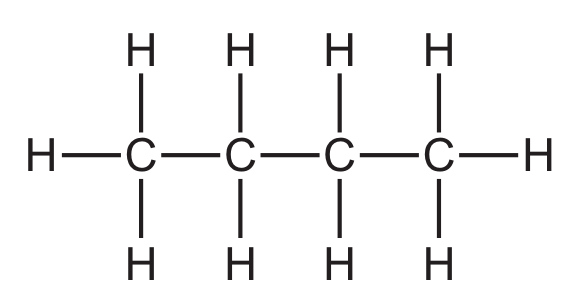
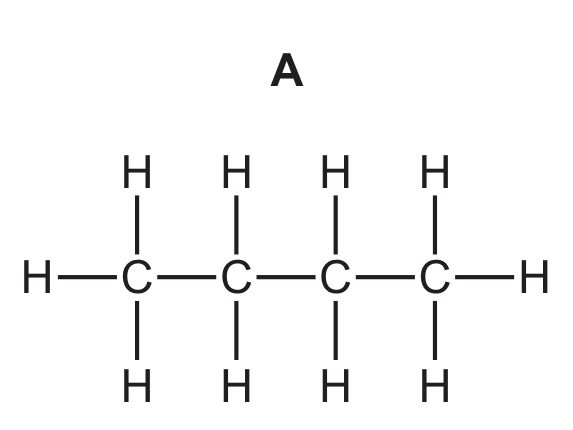
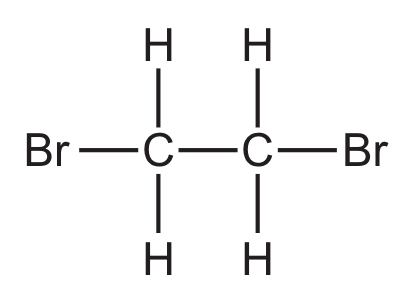
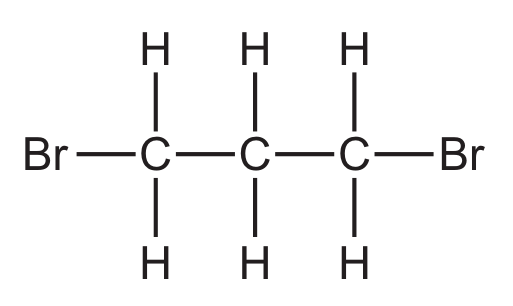
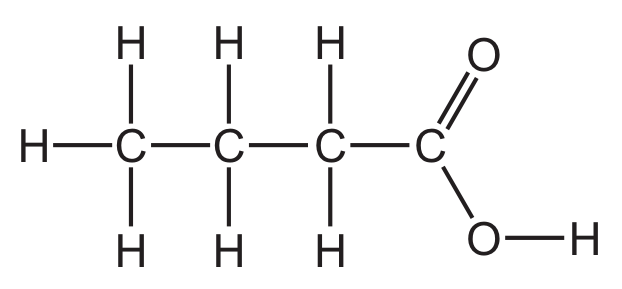
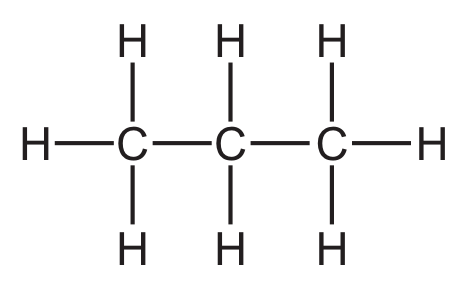
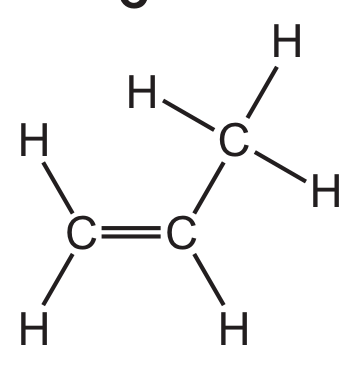
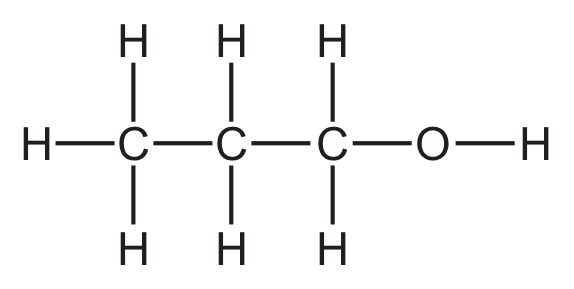
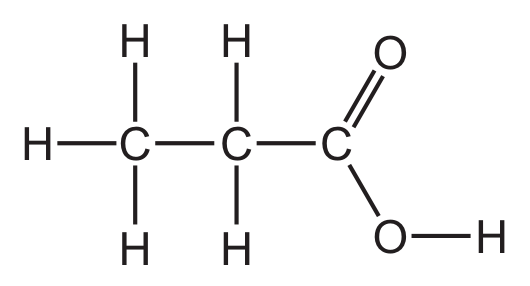
Five organic compounds have the following structures.
A
C
C
A
,
B
B
D
E
[ 1 ]
Question 1(a)(ii)
(i)
Which two compounds are structural isomers of each other?
[ 1 ]
 EduNinja
Five organic compounds have the following structures.
A
C
C
A
,
B
B
D
E
Which two compounds are structural isomers of each other?
The structures of five organic compounds, A, B, C, D and E, are shown.
Answer the questions that follow.
Each letter may be used once, more than once or not at all.
A
B
c
D
E
E
Give the letter of the compound that is in the same homologous series as hex-1-ene.
Draw a structural isomer of compound D.
Show all of the atoms and all of the bonds.
The structure of glycine is shown.
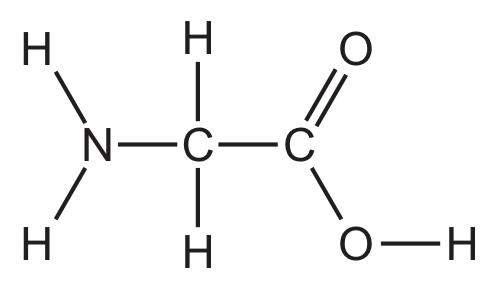
Which row is correct?
formula of glycine
number of different
elements in glycine
10
4
10
4
Silver has an atomic number of 47.
Members of one homologous series only react with chlorine in the presence of sunlight.
Name a member of this homologous series.
Fluorine is a Group VII element. Fluorine forms compounds with metals and non-metals.
Tetrafluoroethene is an unsaturated compound with the formula . Tetrafluoroethene is the monomer used to make the polymer poly(tetrafluoroethene).
What is meant by the term unsaturated?
Draw the structure of a molecule of tetrafluoroethene. Show all of the atoms and all of the bonds.
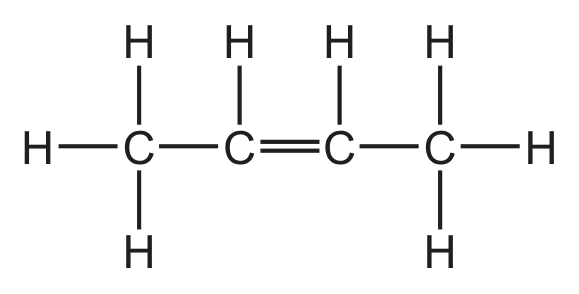
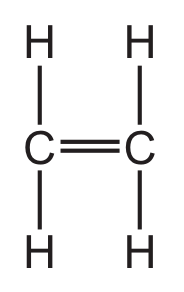
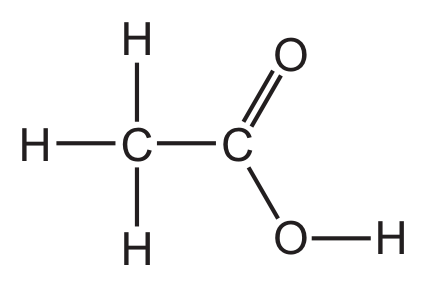
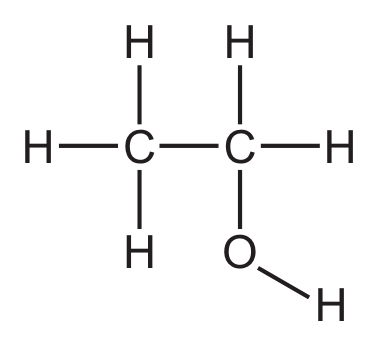
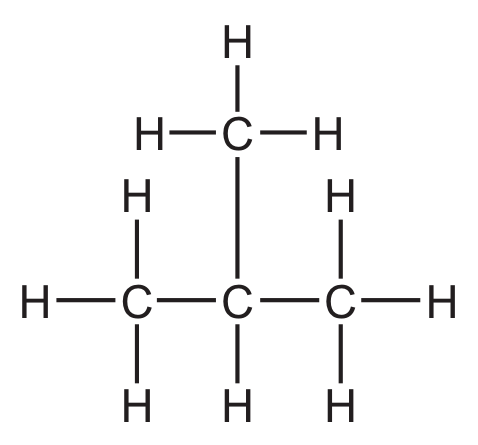
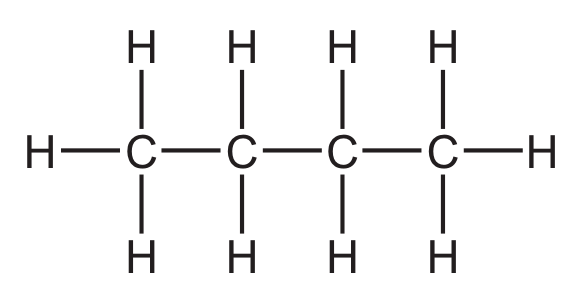
The structures of six organic compounds are shown.
A
B
C
D
E
F
Identify two of the compounds that are members of the same homologous series.
Give the general formula of this homologous series.
compounds
general formula
Which two compounds are isomers of each other?
Explain why they are isomers.
compounds
explanation
Chlorine, bromine and iodine are halogens.
When one mole of chlorine, , reacts with one mole of propane, a mixture of two structural isomers is formed.
Explain what is meant by the term structural isomers.
Sulfur dioxide, , is used in the manufacture of sulfuric acid.
When propan-1-ol is heated with concentrated sulfuric acid as a catalyst an unsaturated hydrocarbon of relative molecular mass 42 is formed and one other product.
What is meant by the term unsaturated?
Gasoline is used as a fuel for cars. It is a mixture of hydrocarbons.
One of the compounds in gasoline is heptane, . Heptane is a saturated hydrocarbon.
Give two characteristics of an homologous series.
1
2
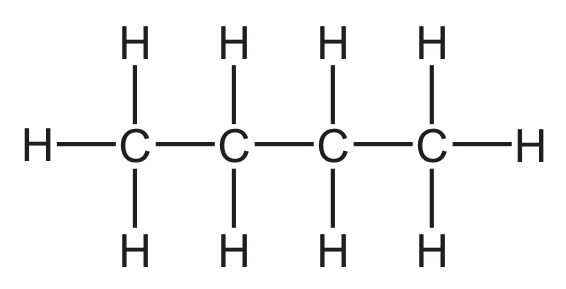
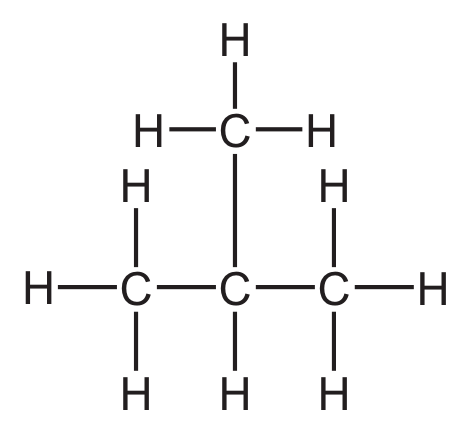
The formula represents two structural isomers, A and B.
A
B
What is meant by the term structural isomers?
Ethanol is made industrially by the reaction of ethene with steam. The reaction occurs at a temperature of and a pressure of 60 atmospheres.
A catalyst is used in this reaction.
The forward reaction is exothermic.
Ethanol is a member of the alcohol homologous series.
Members of the same homologous series have the same general formula.
State the general formula of alcohols.
State two general characteristics, other than the same general formula, of all homologous series.
1
2