EduNinja
[Maximum number: 2]

Serotonin can be synthesised from the amino acid tryptophan in two steps.
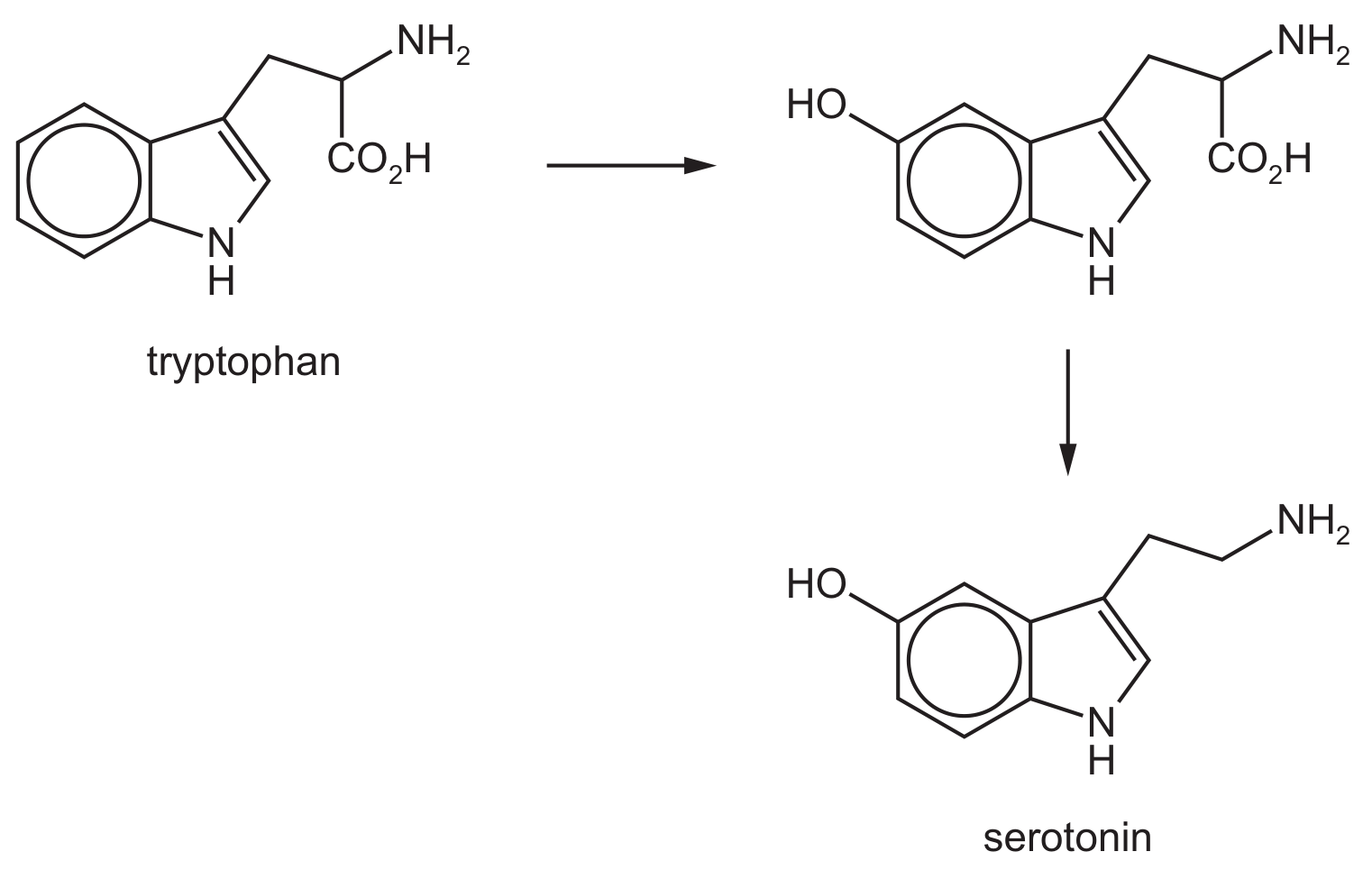
Question image
(a)

Serotonin is converted by enzymes in the liver to compound M.
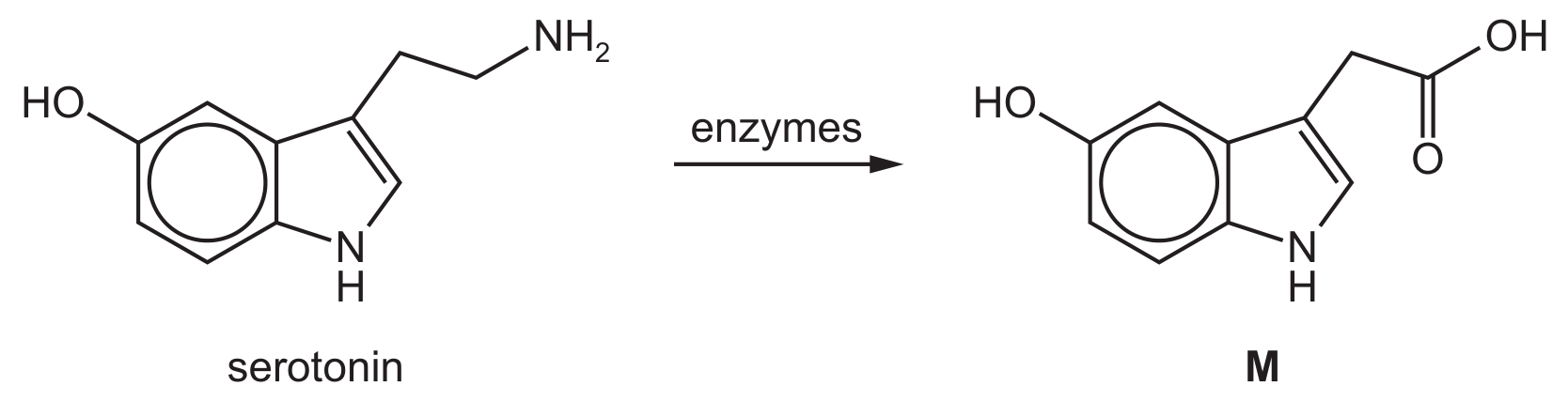
Question image
[ 2 ]
(i)

The proton NMR spectrum of M dissolved in CDCl3\mathrm{CDCl}_{3} shows eight peaks due to the eight different types of proton present in the molecule.

The proton NMR spectrum of M dissolved in D2O\mathrm{D}_{2} \mathrm{O} was recorded.
Predict the number of peaks that would be seen in the proton NMR spectrum of M in D2O\mathrm{D}_{2} \mathrm{O}. Explain your answer.
number of peaks explanation

[ 2 ]
(a)

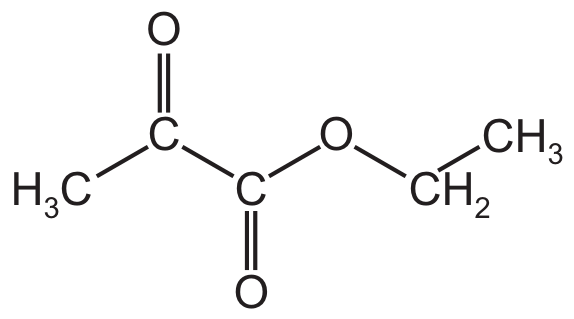
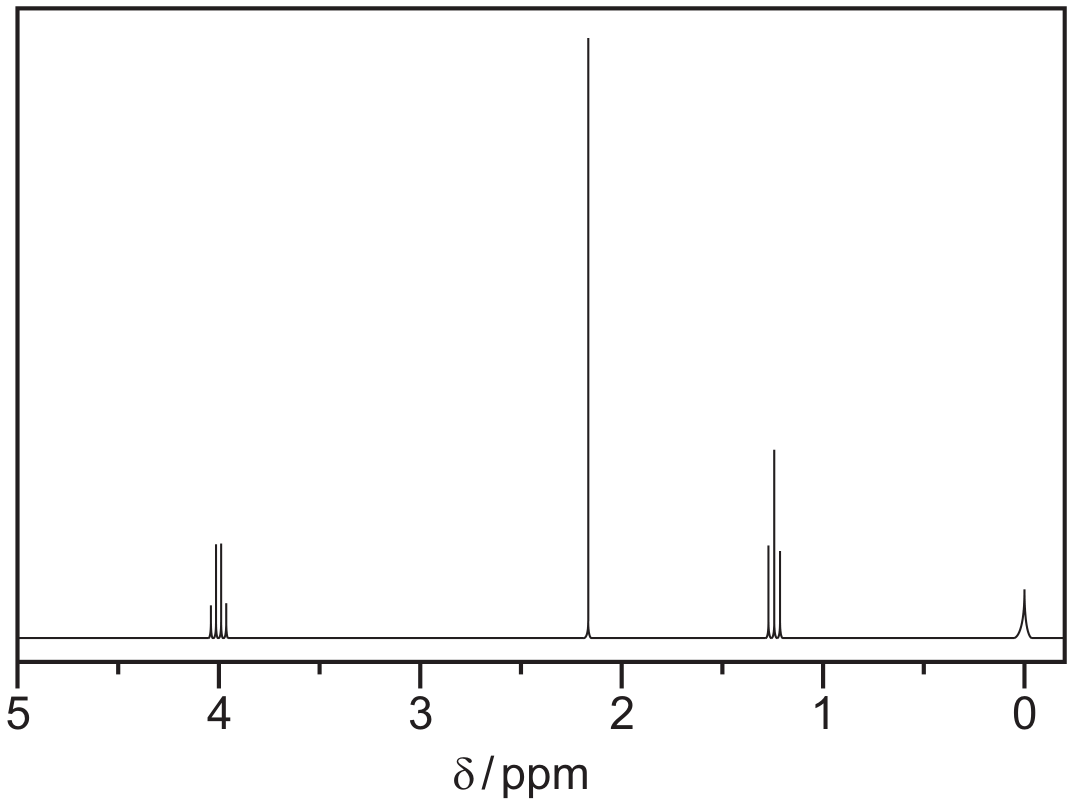
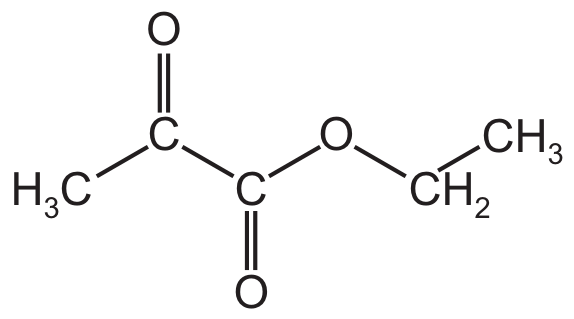
An ester of pyruvic acid, F, is dissolved in CDCl3\mathrm{CDCl}_{3} and analysed by proton NMR spectroscopy.

F

Question image

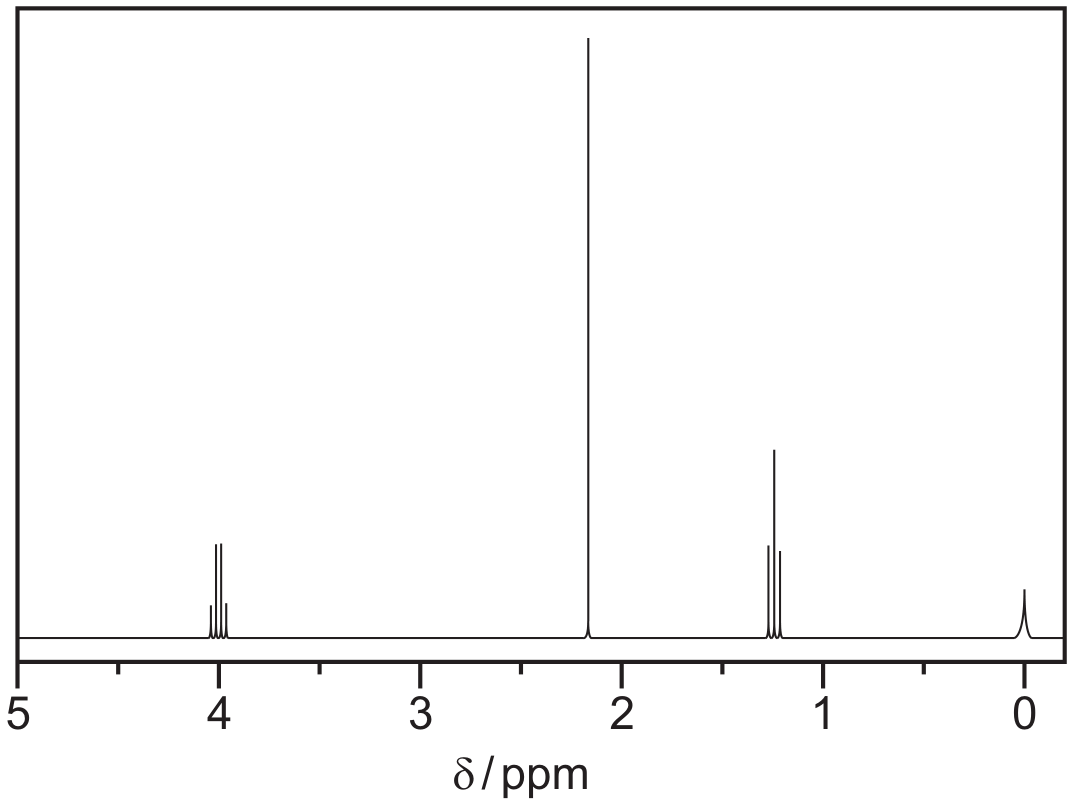
The proton NMR spectrum of F is shown.

Question image

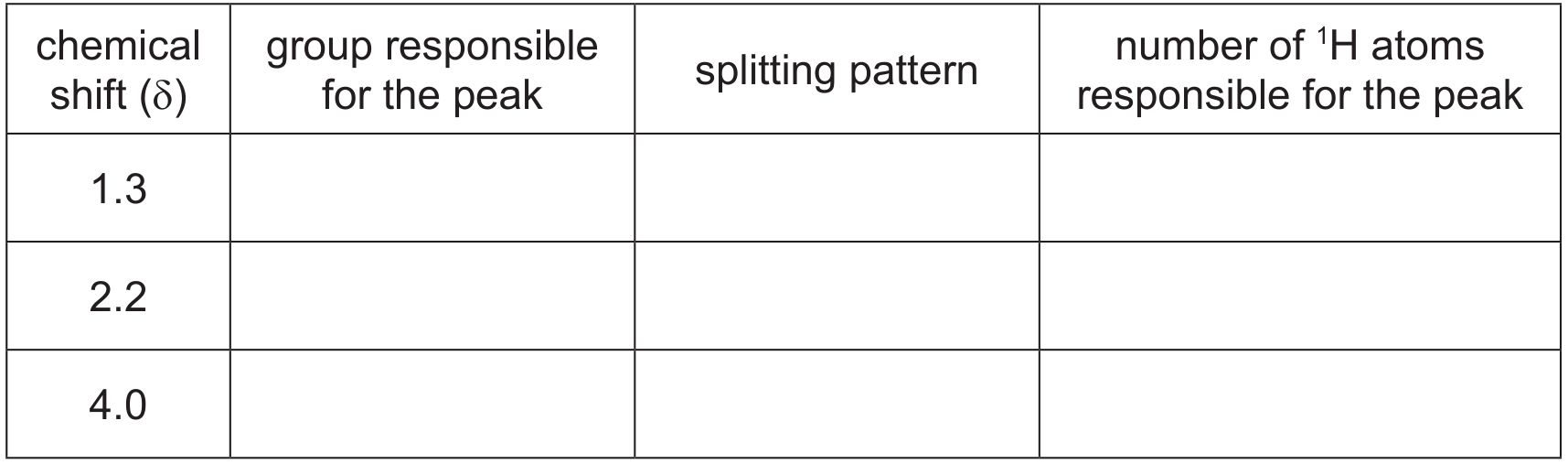
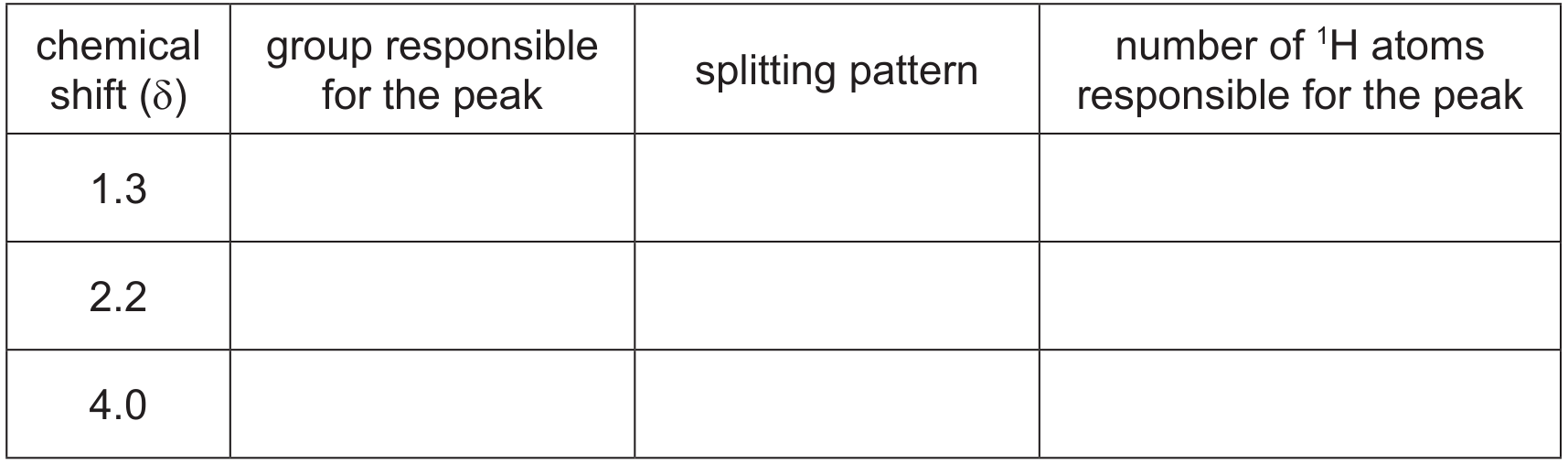
Use the proton NMR spectrum of F to complete the table.

Table
[ 3 ]
(b)

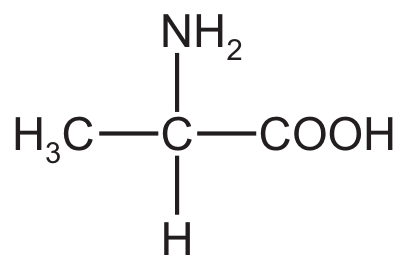
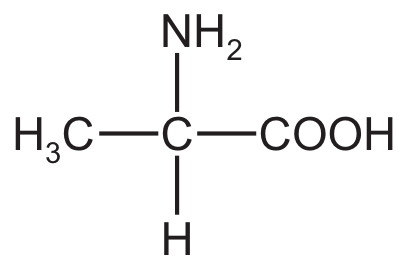
Deuterium oxide, D2O\mathrm{D}_{2} \mathrm{O}, where D is 2H{ }^{2} \mathrm{H}, can be used as a solvent in proton NMR spectroscopy. The proton NMR spectrum of alanine in CDCl3\mathrm{CDCl}_{3} has 4 peaks.
The proton NMR spectrum of alanine in D2O\mathrm{D}_{2} \mathrm{O} has 2 peaks.

alanine

alanine

On the diagram of alanine, circle the protons that show peaks in both NMR spectra. Explain your answer.

[ 2 ]
(a)

An ester of pyruvic acid, F, is dissolved in CDCl3\mathrm{CDCl}_{3} and analysed by proton NMR spectroscopy.

F

Question image

The proton NMR spectrum of F is shown.

Question image

Use the proton NMR spectrum of F to complete the table.

Table
[ 3 ]
(b)

Deuterium oxide, D2O\mathrm{D}_{2} \mathrm{O}, where D is 2H{ }^{2} \mathrm{H}, can be used as a solvent in proton NMR spectroscopy. The proton NMR spectrum of alanine in CDCl3\mathrm{CDCl}_{3} has 4 peaks.
The proton NMR spectrum of alanine in D2O\mathrm{D}_{2} \mathrm{O} has 2 peaks.

alanine

alanine

On the diagram of alanine, circle the protons that show peaks in both NMR spectra. Explain your answer.

[ 2 ]
(a)

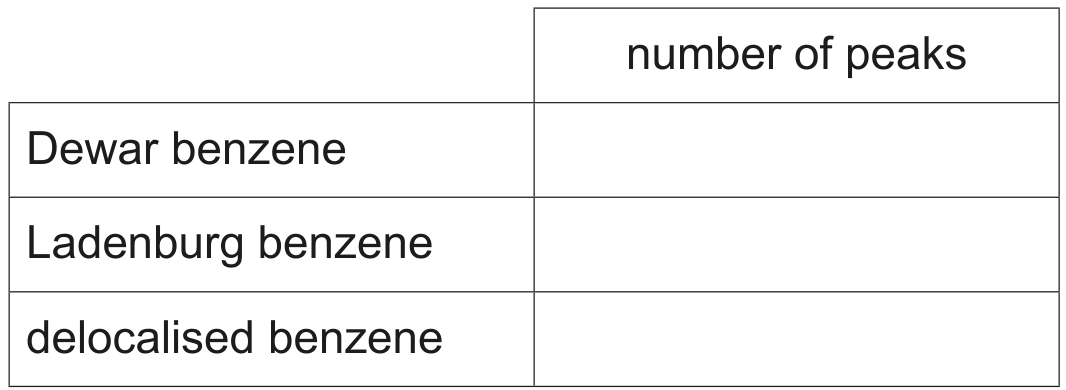
Complete Table 6.2 to predict the number of peaks in the proton (1H)\left({ }^{1} \mathrm{H}\right) NMR spectrum for Dewar benzene, Ladenburg benzene and delocalised benzene.

Table 6.2

Table 6.2

[ 1 ]
(a)

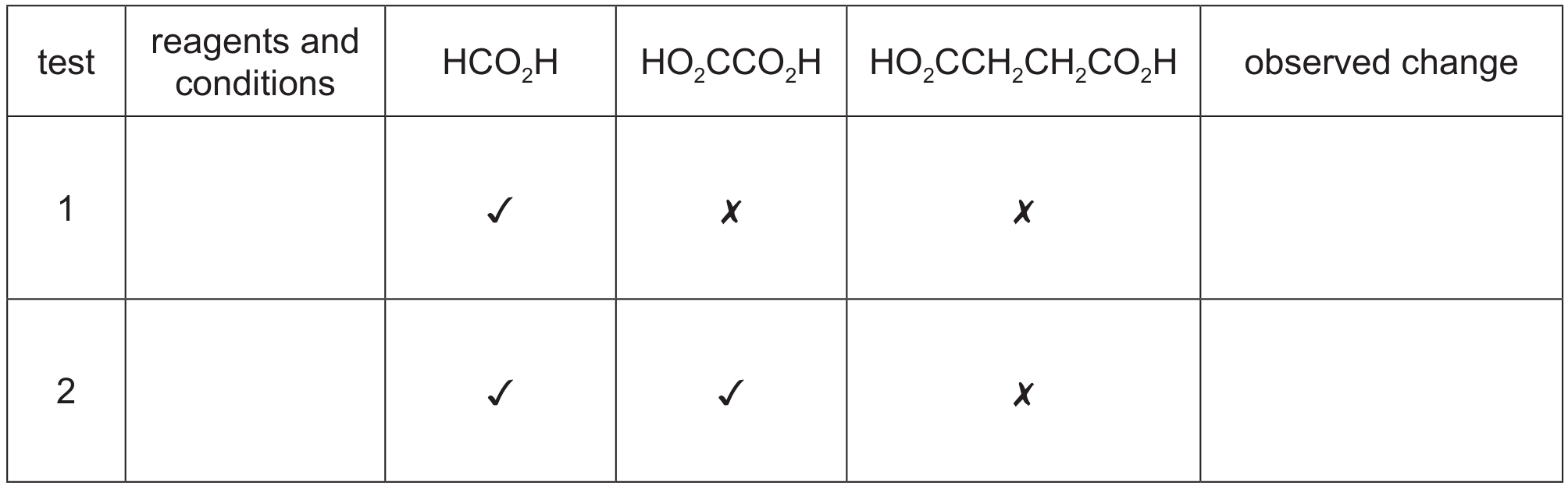
Three carboxylic acids, methanoic acid, HCO2H\mathrm{HCO}_{2} \mathrm{H}, ethanedioic acid, HO2CCO2H\mathrm{HO}_{2} \mathrm{CCO}_{2} \mathrm{H}, and butanedioic acid, HO2CCH2CH2CO2H\mathrm{HO}_{2} \mathrm{CCH}_{2} \mathrm{CH}_{2} \mathrm{CO}_{2} \mathrm{H}, are compared. Two tests were carried out on separate samples of each organic acid, as shown.

The following results were obtained. ✓ = observed change x= no observed reaction

Table
[ 1 ]
(i)

The proton NMR spectrum of HCO2H\mathrm{HCO}_{2} \mathrm{H} in D2O\mathrm{D}_{2} \mathrm{O} is obtained.

Describe and explain the difference observed between this spectrum and the proton NMR spectrum of HCO2H\mathrm{HCO}_{2} \mathrm{H} in (b)(ii).

[ 1 ]
[Maximum number: 3]

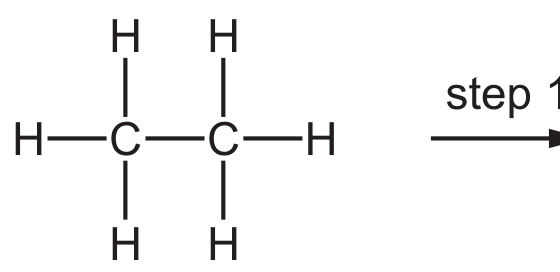
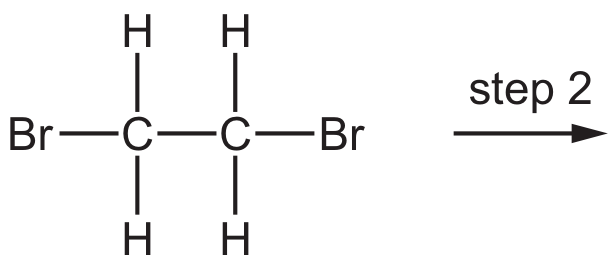
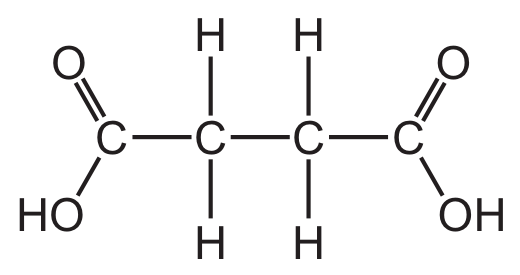
Butanedioic acid can be made in a three-step synthesis using ethane as the starting material.

ethane

ethane

A

A

B step 3

butanedioic acid

butanedioic acid

(a)

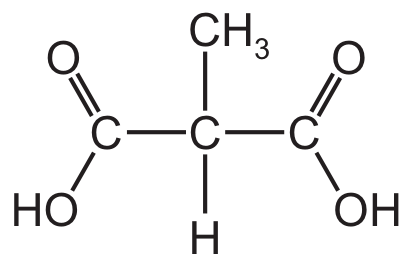
Methylpropanedioic acid is an isomer of butanedioic acid.

methylpropanedioic acid

methylpropanedioic acid

The proton NMR spectrum of methylpropanedioic acid in CCl4\mathrm{CCl}_{4} is shown. \begin{tabular}{|c|cccccc|c||c|}
\hline
\end{tabular}

[ 3 ]
(i)

Identify the protons in the methylpropanedioic acid molecule that are responsible for each area of the proton NMR spectrum.
δ12.7\delta 12.7δ3.3\delta 3.3δ1.1\delta 1.1

[ 2 ]
(ii)

Name the splitting pattern shown at δ3.3\delta 3.3 and explain how it arises.

The carbon-13 NMR spectra of butanedioic acid, HO2CCH2CH2CO2H\mathrm{HO}_{2} \mathrm{CCH}_{2} \mathrm{CH}_{2} \mathrm{CO}_{2} \mathrm{H}, and methylpropanedioic acid, HO2CCH(CH3)CO2H\mathrm{HO}_{2} \mathrm{CCH}\left(\mathrm{CH}_{3}\right) \mathrm{CO}_{2} \mathrm{H} are different.

[ 1 ]
[Maximum number: 2]

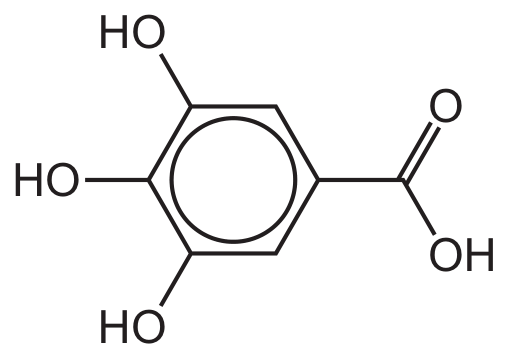
Gallic acid, C7H6O5\mathrm{C}_{7} \mathrm{H}_{6} \mathrm{O}_{5}, is a naturally occurring aromatic molecule.

gallic acid

gallic acid

(a)
(i)

The proton NMR spectrum of gallic acid dissolved in D2O\mathrm{D}_{2} \mathrm{O} is recorded.
- Predict the number of peaks observed and any expected splitting pattern.
- State the expected chemical shift range (δ)(\delta) of each peak predicted.

[ 2 ]
(a)

State the uses of TMS and D2O\mathrm{D}_{2} \mathrm{O} in NMR spectroscopy.
TMS
D2O\mathrm{D}_{2} \mathrm{O}

[ 1 ]
(b)

The three isomeric ketones with molecular formula C5H10O\mathrm{C}_{5} \mathrm{H}_{10} \mathrm{O} are:
- pentan-2-one
- pentan-3-one
- 3-methylbutanone.

[ 2 ]
(i)

State all the ketones with molecular formula C5H10O\mathrm{C}_{5} \mathrm{H}_{10} \mathrm{O} that have:
a doublet in their proton (1H)\left({ }^{1} \mathrm{H}\right) NMR spectrum
a singlet in their proton (1H)\left({ }^{1} \mathrm{H}\right) NMR spectrum.

[ 2 ]
(a)

There are four structural isomers with the molecular formula C5H10O\mathrm{C}_{5} \mathrm{H}_{10} \mathrm{O} that are aldehydes.

[ 6 ]
(i)

Draw the structures of these aldehydes.
P
R
Q

(ii)

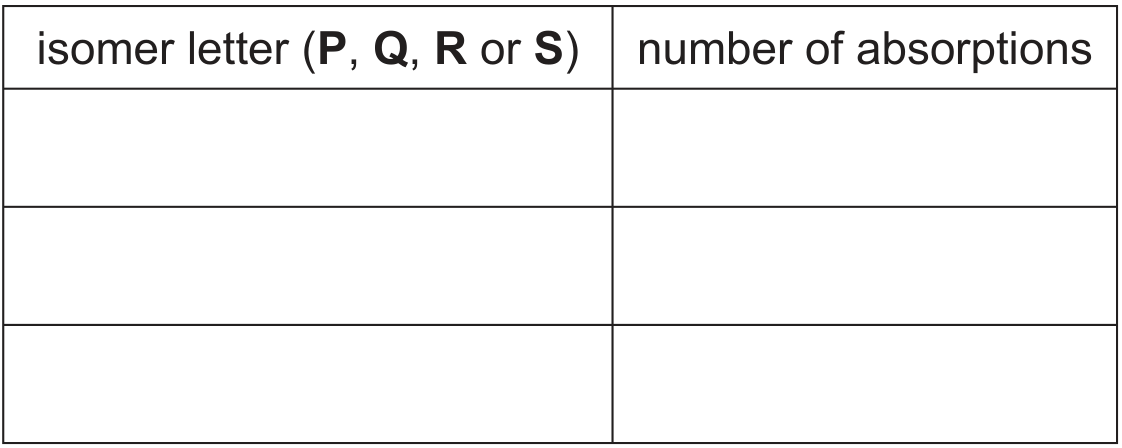
The NMR spectrum of one of these isomers contains four absorptions. Which isomer P, Q, R or S gives this spectrum?
isomer

(iii)

Predict the number of absorptions that would be given by each of the other three isomers.

Table
[ 6 ]
(a)

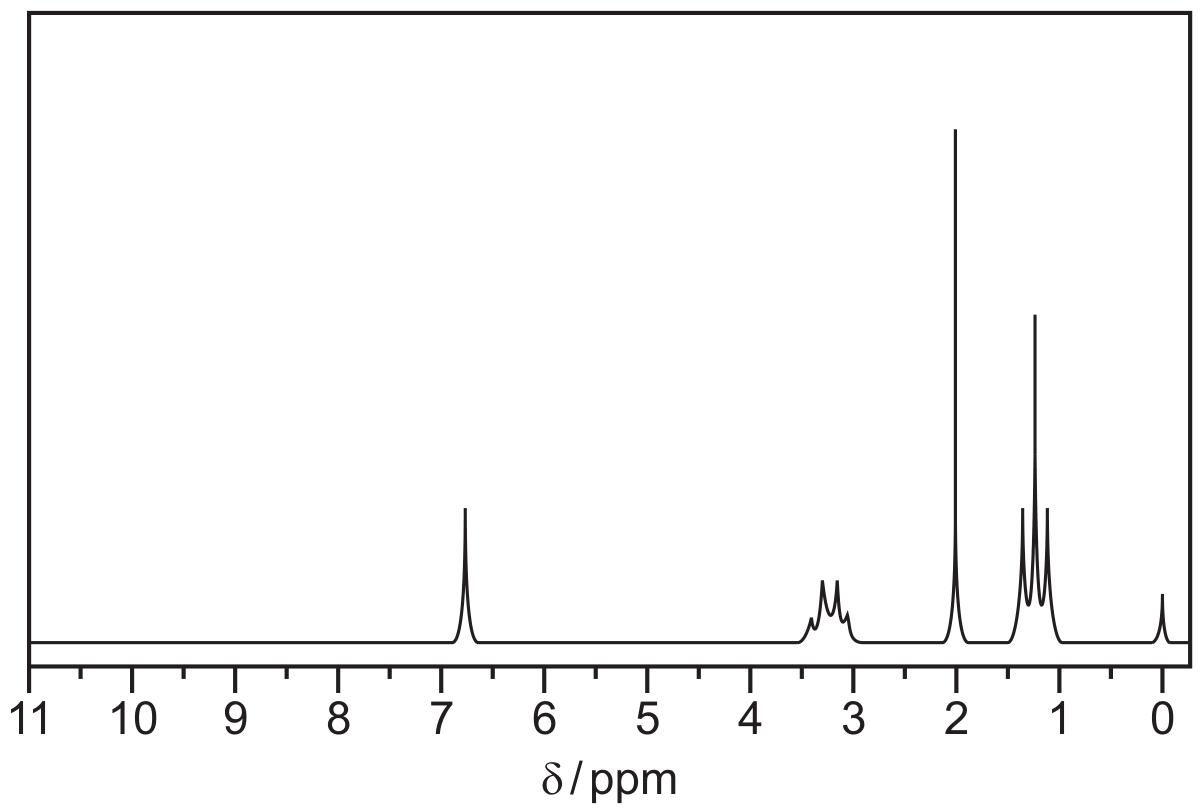
Compound A can also be used to make the amide CH3CONHC2H5\mathrm{CH}_{3} \mathrm{CONHC}_{2} \mathrm{H}_{5}.

The proton NMR spectrum of the amide CH3CONHC2H5\mathrm{CH}_{3} \mathrm{CONHC}_{2} \mathrm{H}_{5} in the solvent CDCl3\mathrm{CDCl}_{3} is shown.

Question image
[ 5 ]
(i)

Explain why CDCl3\mathrm{CDCl}_{3} is used as a solvent instead of CHCl3\mathrm{CHCl}_{3}.

[ 1 ]
(ii)

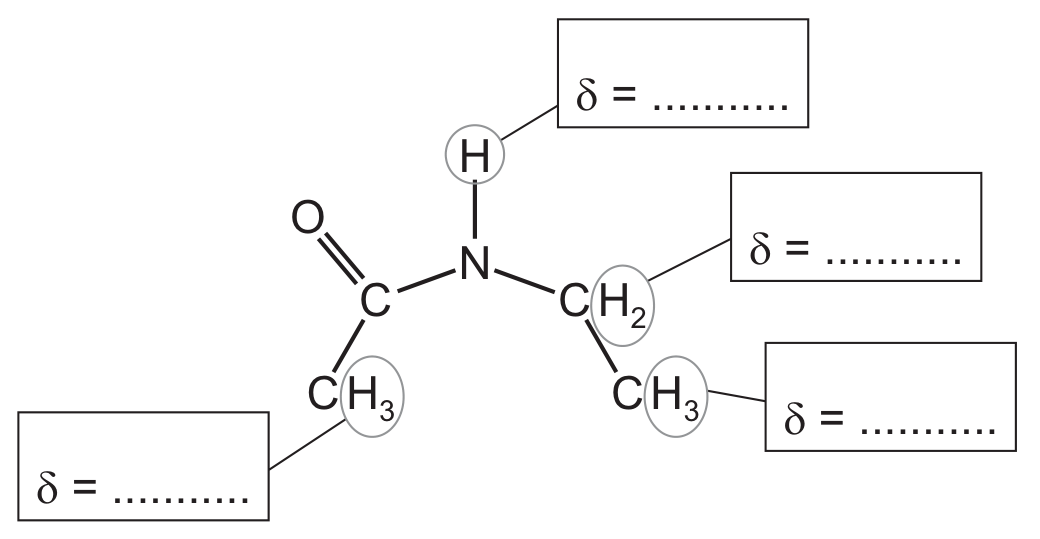
Complete the diagram with the chemical shifts, δ\delta, of the protons labelled in the CH3CONHC2H5\mathrm{CH}_{3} \mathrm{CONHC}_{2} \mathrm{H}_{5} molecule.

Question image
[ 2 ]
(iii)

State and explain how the proton NMR spectrum of the amide CH3CONHC2H5\mathrm{CH}_{3} \mathrm{CONHC}_{2} \mathrm{H}_{5} differs when dissolved in D2O\mathrm{D}_{2} \mathrm{O} rather than CDCl3\mathrm{CDCl}_{3}.

[ 2 ]
0