(a)
(i)
Tartaric acid reacts with the amine 1-phenylethylamine, , to form an ionic salt.
Draw the structure of the salt formed in this reaction. Include the charges on the ions.
[ 1 ]
 EduNinja
Tartaric acid reacts with the amine 1-phenylethylamine, , to form an ionic salt.
Draw the structure of the salt formed in this reaction. Include the charges on the ions.
The cyclic compound M is heated with dilute hydrochloric acid.
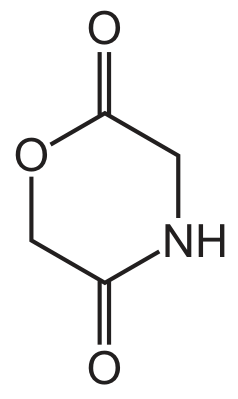
compound M
What are the products of the reaction?
and
and
and
and
Serotonin can be synthesised from the amino acid tryptophan in two steps.
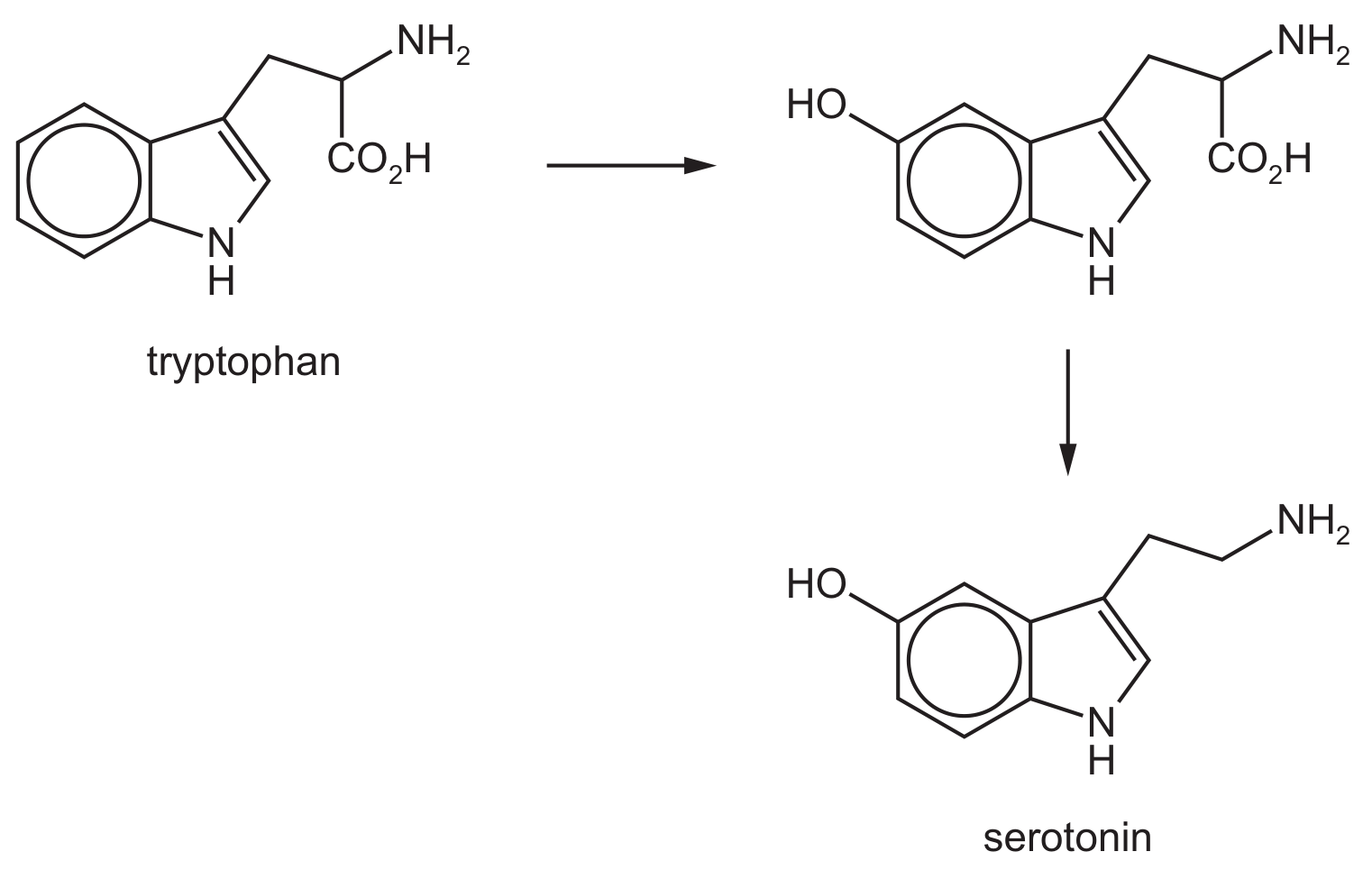
In a buffer solution at pH 5.9, a sample of tryptophan does not move during electrophoresis.
Draw the structures of the ions formed by tryptophan at pH 1.0 and pH 5.9 .
Tryptophan can combine with valine to form a dipeptide.
Use the Data Booklet to draw the structure of this dipeptide.
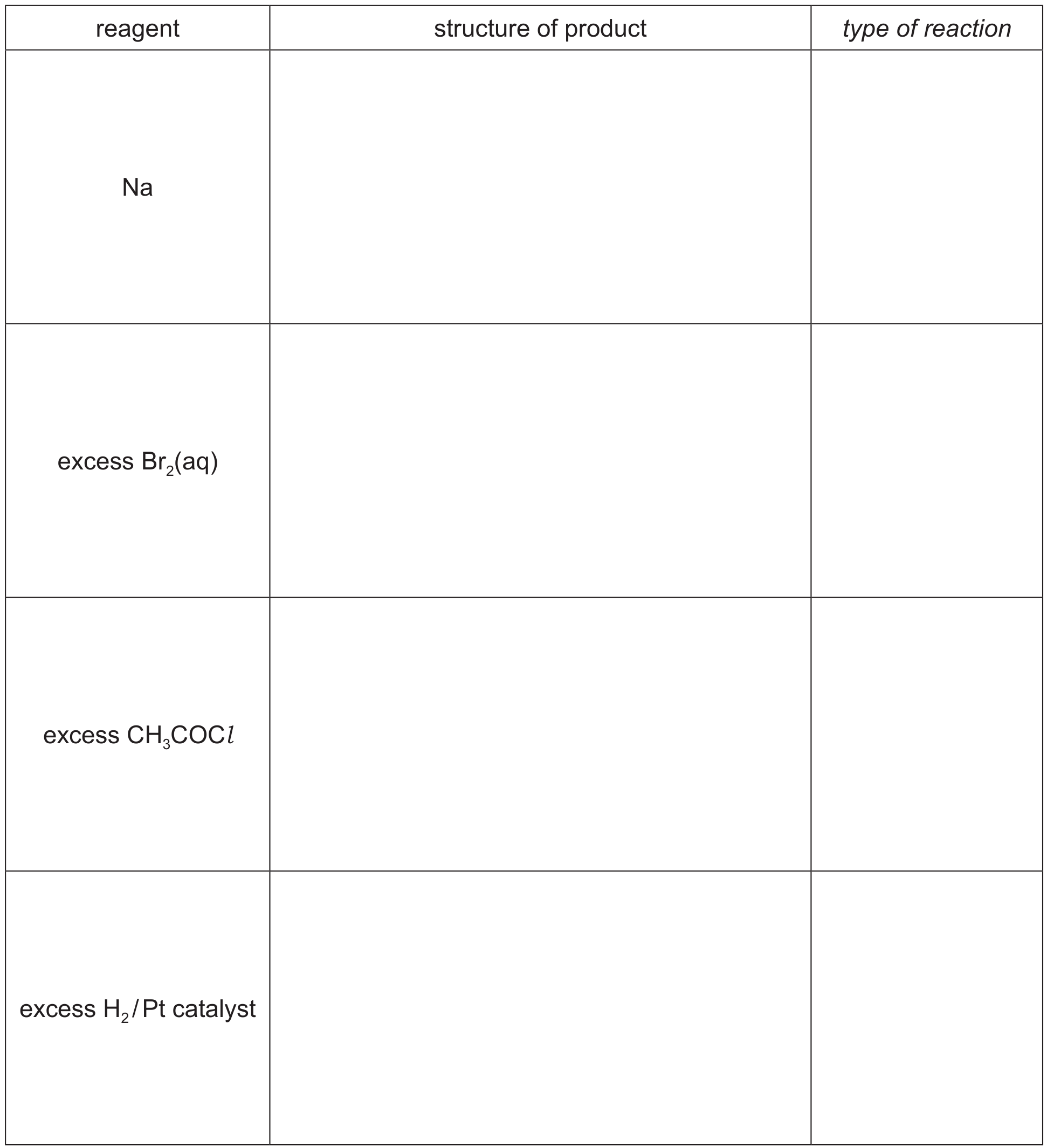
Complete the following table to show the structures of the products formed and the type of reaction occurring when serotonin reacts with the four reagents in separate reactions.
Naturally-occurring -amino acids, , can be classified as amphiprotic substances. An amphiprotic substance is one which can act as both a Brønsted-Lowry acid and base.
All -amino acids are soluble in water since they can form hydrogen bonds with water molecules and can also exist as zwitterions.
Draw diagrams to show how the carboxylic acid and amino groups of alanine can form hydrogen bonds with water molecules.
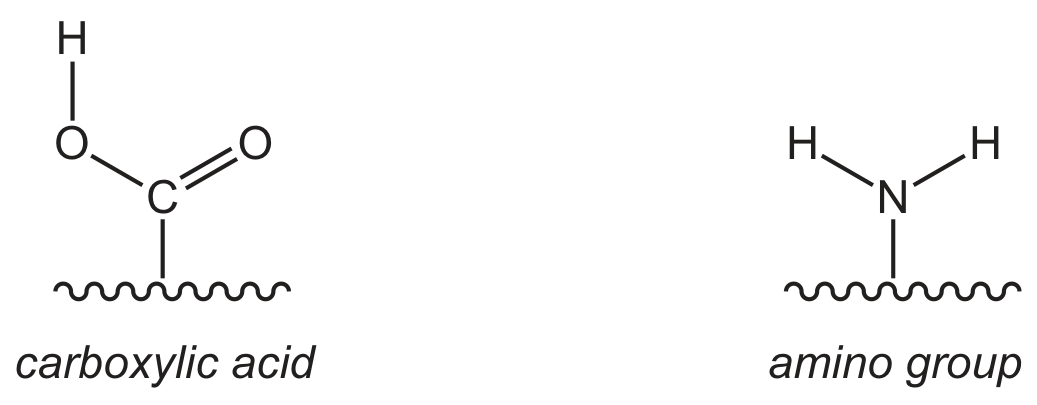
Draw the structure of the zwitterionic form of glycine.
The amino acid alanine can be formed by the reaction of with an excess of ammonia.
Outline a mechanism for this reaction using curly arrows.
Amino acids can form different ions at different pH values.
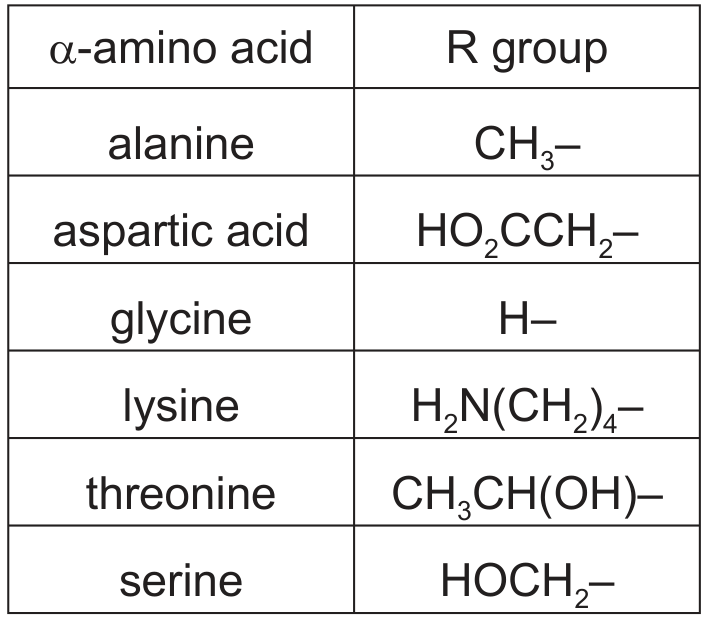
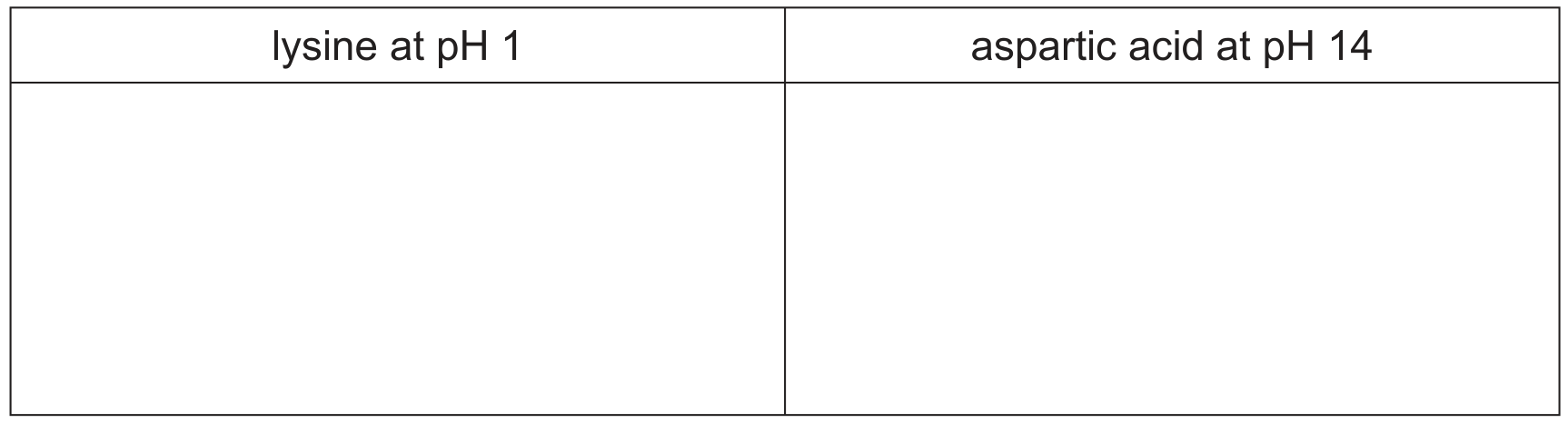
Suggest the structures of the ions formed from the -amino acids below at the respective pH value.
How many different dipeptides is it possible to synthesise, each containing two of the three amino acids alanine, serine and lysine?
Write the structural formula of one of these dipeptides incorporating serine and alanine.
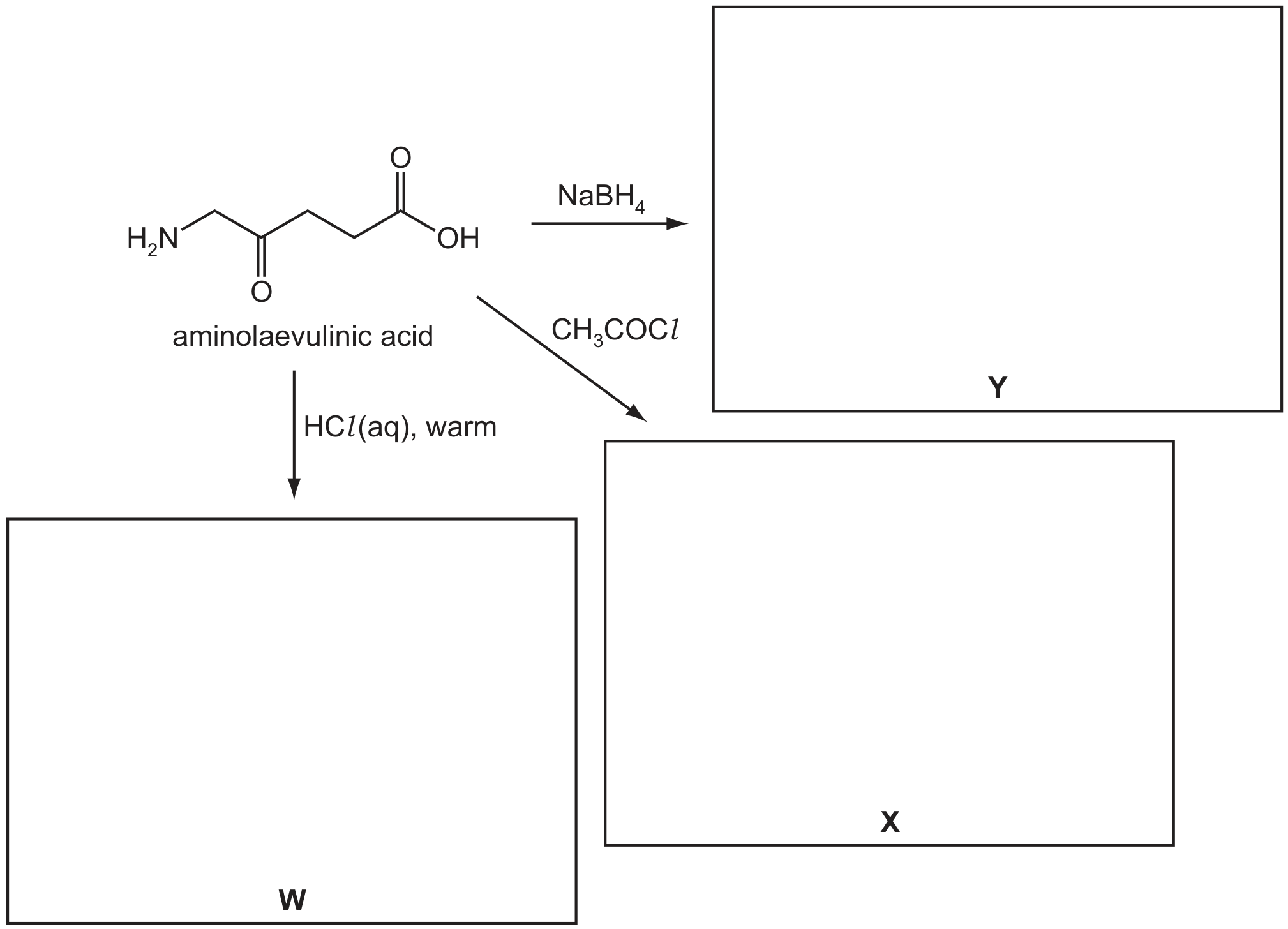
Three reactions of aminolaevulinic acid are shown. Draw the structures of the products W, X and Y in the boxes below.
Proteins are natural polymers. A protein is said to have a primary, secondary and tertiary structure.
Describe what is meant by each of these terms.
primary structure
secondary structure
tertiary structure
Name the forces or bonds responsible for holding together the primary structure of a protein molecule.
Name the forces or bonds responsible for the stabilisation of the secondary structure of a protein molecule, and identify the groups of atoms within the protein molecule that are held together by these forces or bonds.
Proteins are complex molecules made up from long chains that are folded to give a three-dimensional structure.
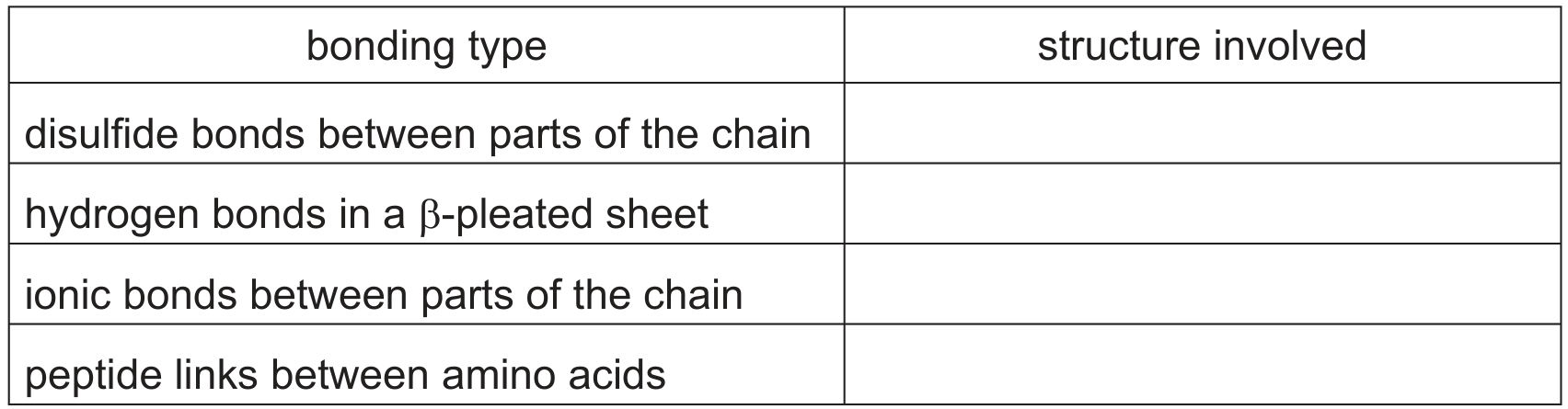
Study the table which describes aspects of bonding in proteins. For each description of a bonding type, indicate whether it contributes to the primary, secondary or tertiary structure of a protein.
Explain, with the use of diagrams as appropriate, the difference between competitive and non-competitive inhibition of enzymes.
The diagram shows one strand of DNA. Draw a matching strand showing clearly, with labels, the bonds holding the two strands together. Name the bases in your strand, indicating clearly which base bonds to each base in the strand shown.
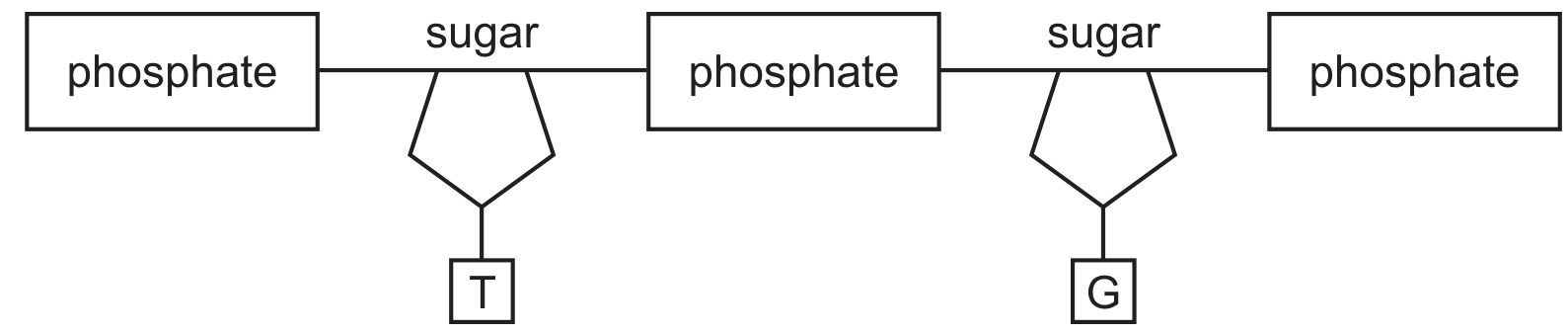
names of bases
1,4-dibromobutane, , is used in the synthesis of the dicarboxylic acid J and diamine K as shown.
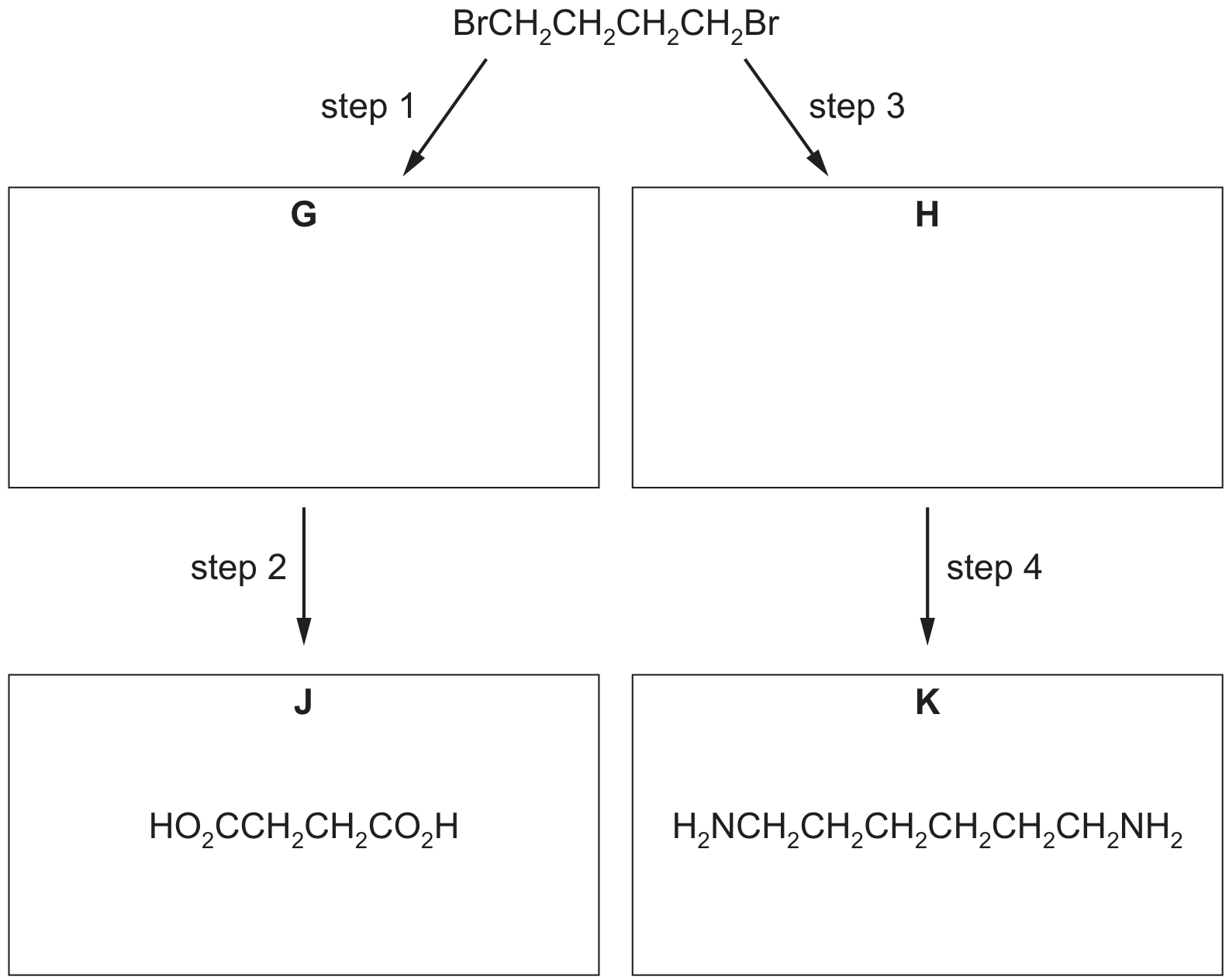
Draw the structures of G and H in the boxes.
Suggest reagents and conditions for each of steps 1 to 4 .
step 1
step 2
step 3
step 4
Use the Data Booklet to draw the structure of the tripeptide Ala-Ser-Gly showing its peptide bonds in full.
Ala-Ser-Gly
Electrophoresis can be used to separate mixtures of amino acids and peptides.
A mixture of the tripeptide Ala-Ser-Gly and its three constituent amino acids was subjected to electrophoresis in a buffer at pH 11.
Draw the structure of serine at pH 11 .
At the end of the experiment the following results were seen.
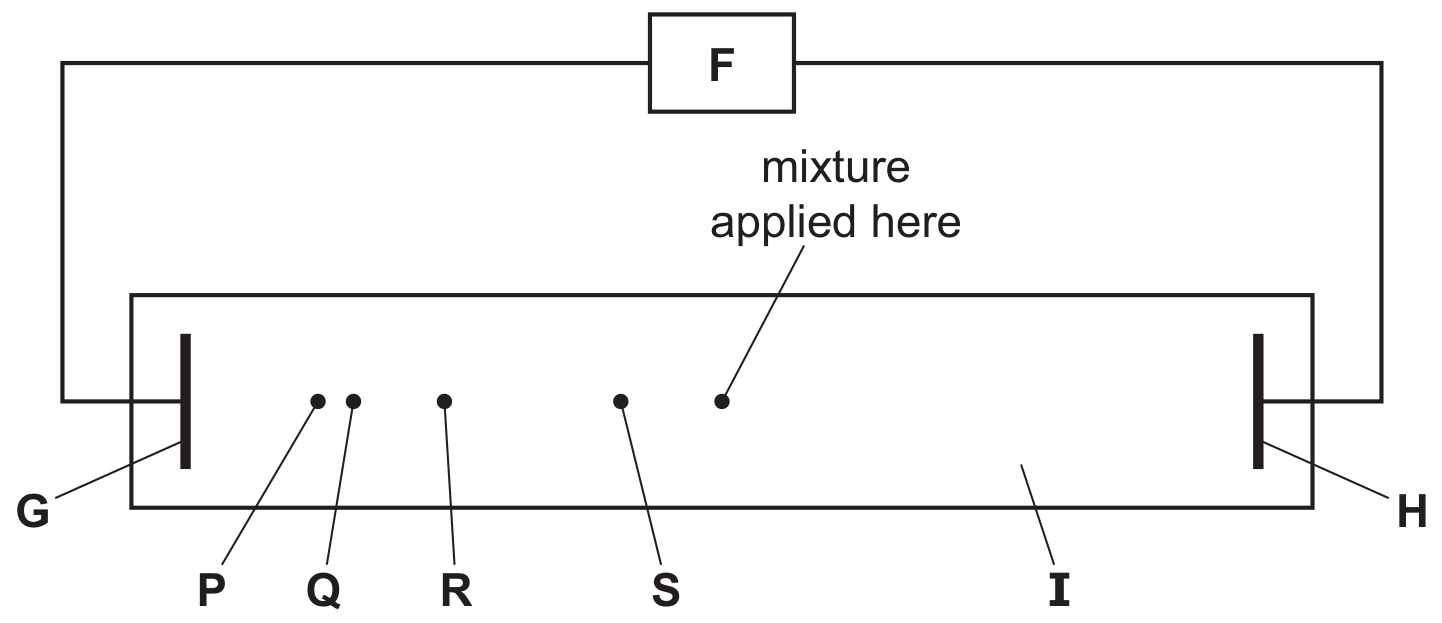
State the reagents and conditions needed for converting the tripeptide into its three constituent amino acids.
Name the type of reaction in (i).
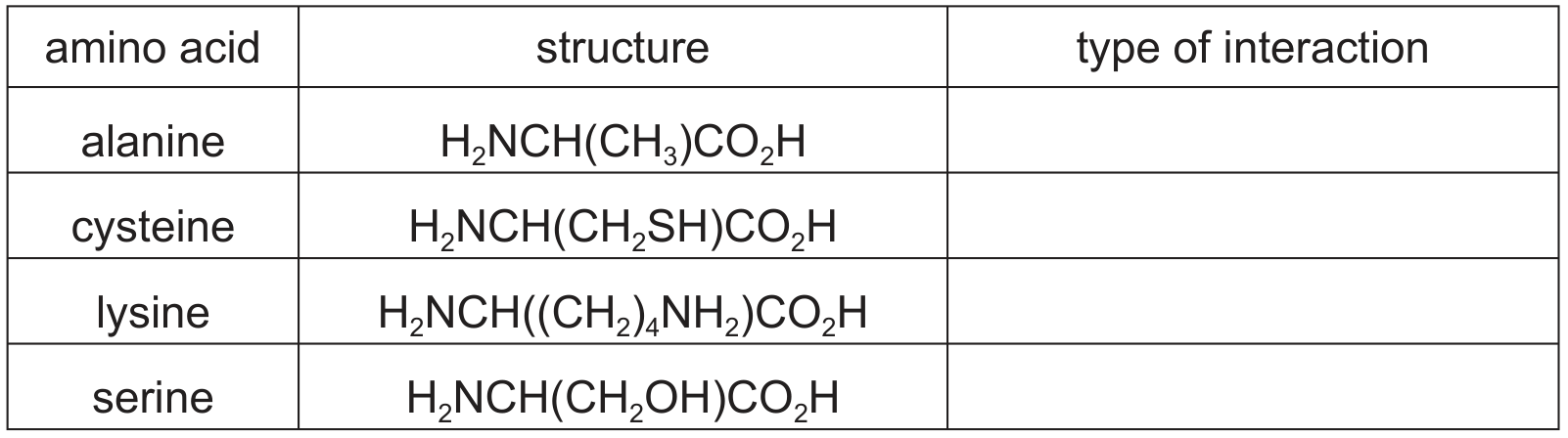
The table shows the structures of four amino acids found in proteins in the human body. Complete the table by indicating the type of tertiary interaction each side-chain is most likely to have when its amino acid is present in a protein chain.
Many chemical reactions at a cellular level require energy in order to take place. This energy is largely provided by the breakdown of one particular compound.
Write an equation showing the breakdown of this compound.
What type of chemical reaction is this?
Cystic fibrosis is a genetic disease caused by a mutation in the DNA sequence resulting in the production of a faulty version of an important protein which acts as an ion pump in the cell membrane. This pump controls the flow of ions into and out of cells.
People with the faulty protein show two major symptoms.
- water is retained in cells in the lungs resulting in the formation of a thick, sticky mucous outside the cells;
- their sweat is very salty.
Based on the information given for people with cystic fibrosis,
suggest which ions are involved in the ion flow,
suggest and explain what type of bonding might result in thick or sticky mucous.