EduNinja
(a)

Paper chromatography and gas/liquid chromatography both rely on the partition of compounds between mobile and stationary phases.

[ 4 ]
(i)

Identify the mobile phase in paper chromatography.

(ii)

Both these techniques can be used to separate mixtures.

State what you would measure in order to distinguish between the components in the mixture in

[ 4 ]
(b)

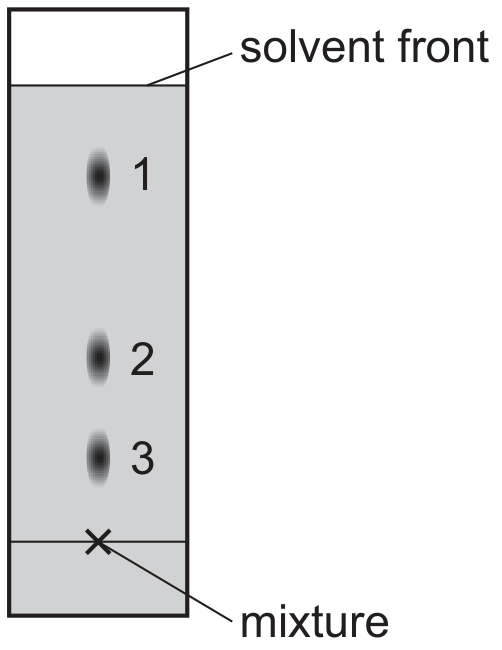
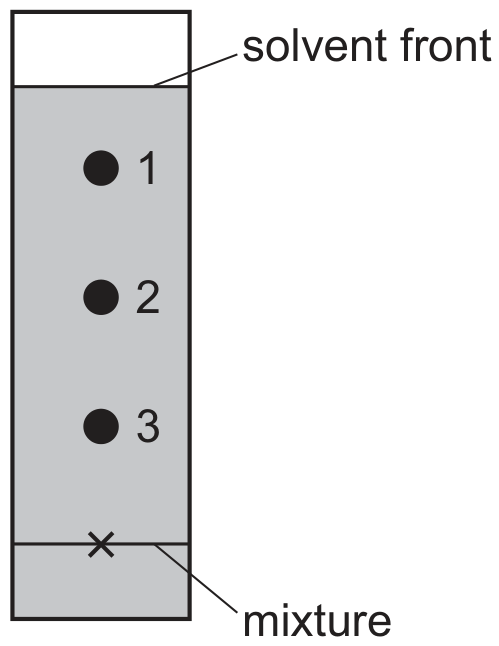
A mixture of three compounds was analysed by paper chromatography using a non-polar solvent. The resulting chromatogram is shown.
Question image

Identify which compound is responsible for each spot.
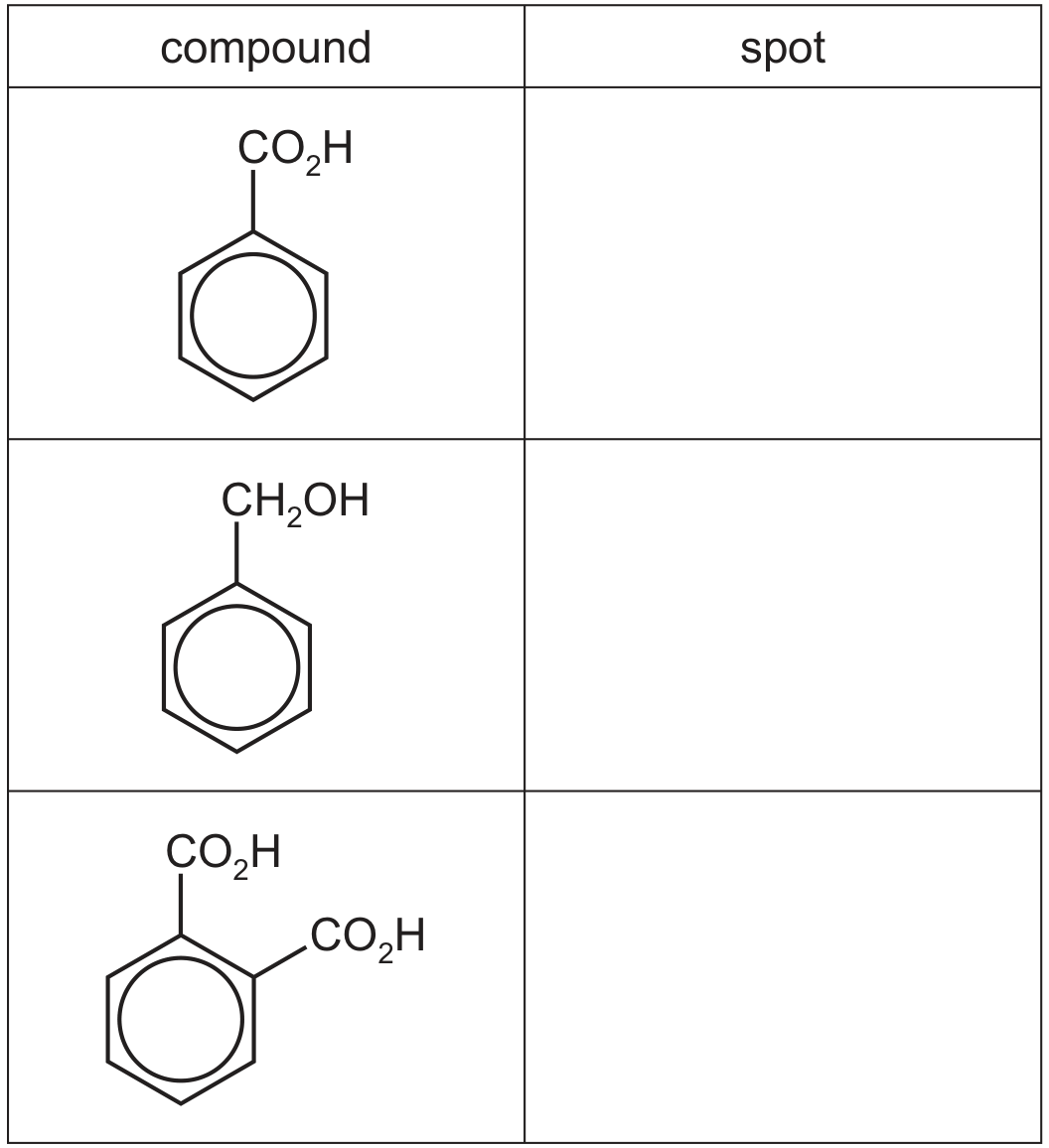
Table
[ 1 ]
(a)

Electrophoresis can be used to separate mixtures of amino acids and peptides.

A mixture of the tripeptide Ala-Ser-Gly and its three constituent amino acids was subjected to electrophoresis in a buffer at pH 11.

[ 7 ]
(i)

Identify the components labelled F-I in the above diagram.

F
G
H
I

[ 4 ]
(ii)

Suggest the identities of the species responsible for
spot P,
spot S.
Explain your answers.

[ 3 ]
(a)
(i)

A mixture of amino acids can also be separated by thin-layer chromatography. Identify the mobile and the stationary phases in this type of chromatography.
mobile phase
stationary phase

(ii)

What is the process by which thin-layer chromatography can separate a mixture?

[ 3 ]
(a)

Thin-layer and gas-liquid chromatography can be used to analyse mixtures of substances.

Each type of chromatography makes use of a stationary phase and a mobile phase.

[ 1 ]
(i)

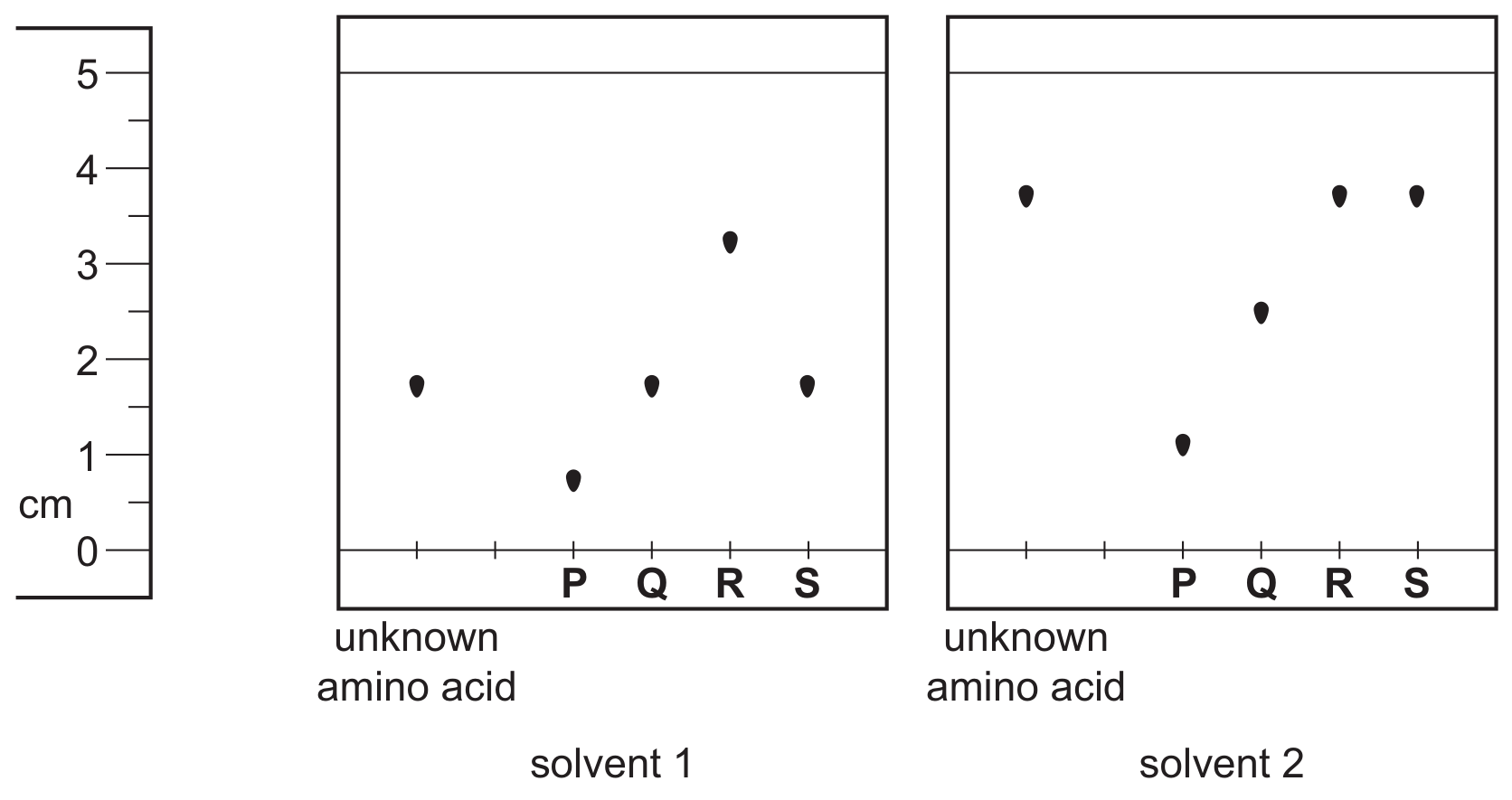
An unknown amino acid is analysed using thin-layer chromatography. Two chromatographs of the unknown amino acid and four reference amino acids, P, Q, R and S, are obtained using two different solvents.

Fig. 6.4

Fig. 6.4

Identify the unknown amino acid. Justify your answer.

[ 1 ]
[Maximum number: 1]

The class of polymers called polycarbonates are made by the reaction of carbonyl dichloride, COCl2\mathrm{COCl}_{2}, with a diol.

a polycarbonate

a polycarbonate

(a)

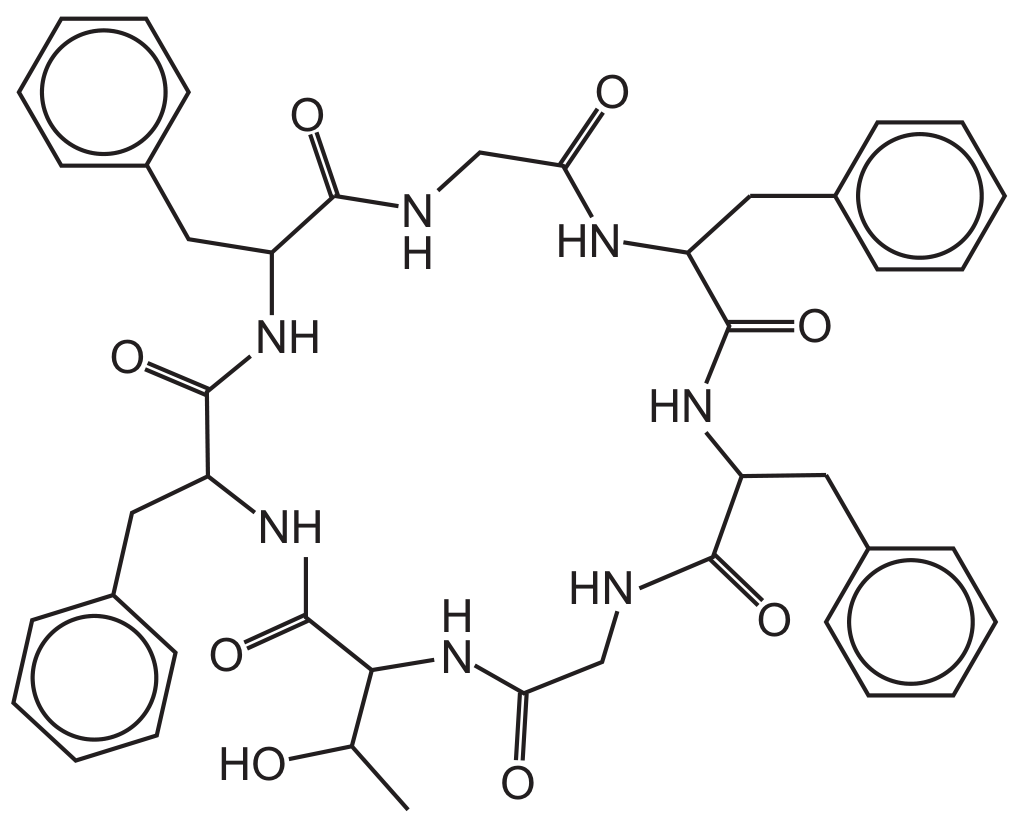
The cyclic peptide B is shown.

B

B

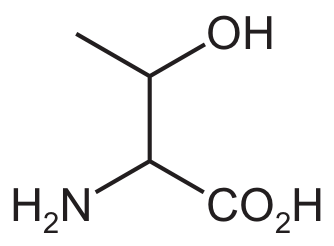
Cyclic peptide B is broken into its monomers by heating under reflux with dilute hydrochloric acid. The amino acid threonine, Thr, and two other organic products are formed.

threonine

threonine

[ 1 ]
(i)

Name two analytical techniques that could be used to separate these amino acids. and

[ 1 ]
(a)

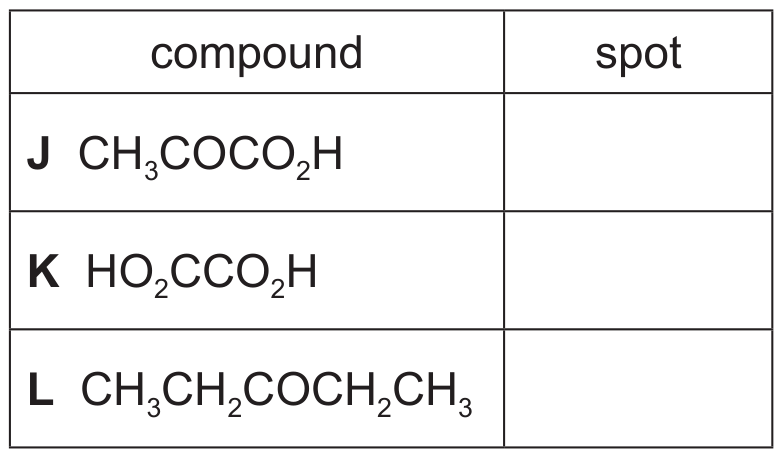
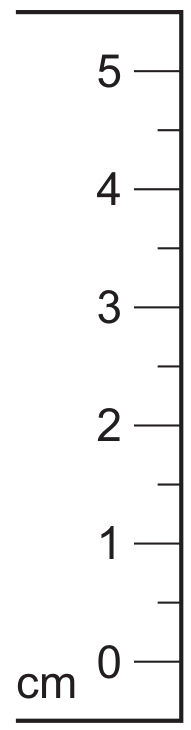
A mixture of three different compounds, J, K and L, was analysed by thin layer chromatography using a polar stationary phase and a non-polar mobile phase. The three compounds all have similar molecular masses. The resulting chromatogram is shown.

Question image
[ 3 ]
(i)

Identify which spot corresponds to each compound.

Table
[ 1 ]
(ii)

Explain your answers to (b)(i).

[ 1 ]
(iii)

What is meant by the term RfR_{f} value?

[ 1 ]
(a)

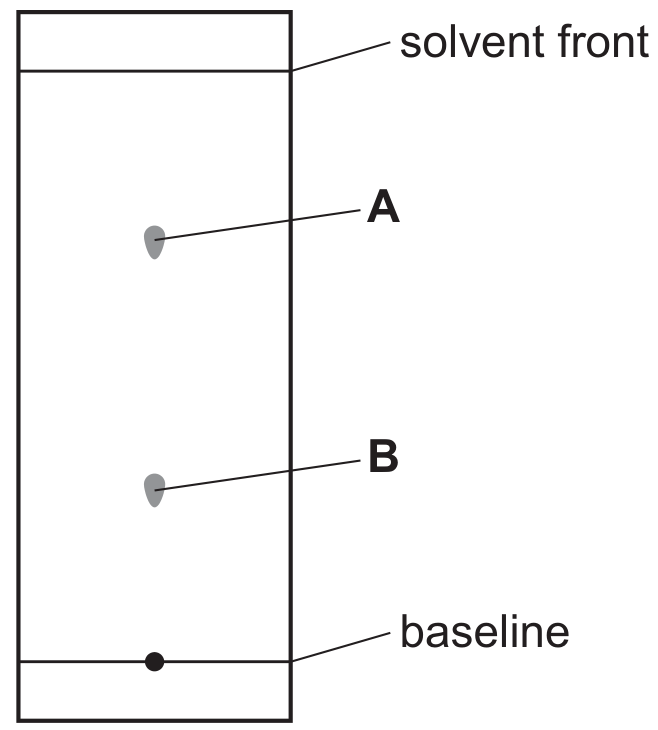
Amino acids can be separated by thin-layer chromatography. A mixture of amino acids is analysed using this technique.

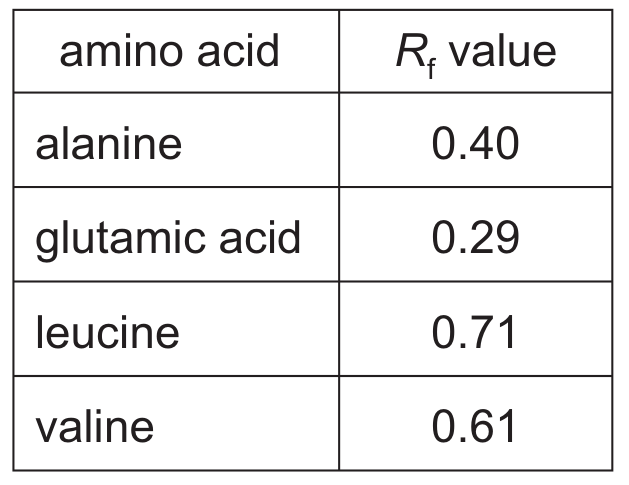
The chromatogram obtained is shown, drawn to scale. The table shows some RfR_{\mathrm{f}} values for different amino acids in the solvent used.

Question image
Question image
Table
[ 2 ]
(i)

Use the chromatogram and the RfR_{\mathrm{f}} values to deduce the amino acid responsible for spot A and spot B.
amino acid responsible for spot A
amino acid responsible for spot B

[ 1 ]
(ii)

A second chromatogram of the same mixture is taken using a more polar solvent. Predict the effect on the RfR_{\mathrm{f}} values of the amino acids. Explain your reasoning.

[ 1 ]
[Maximum number: 2]

Different analytical techniques are used to build up a picture of complex molecules. Each technique on its own provides different information about complex molecules but together the techniques can give valuable structural information.

(a)

One general method of separating organic molecules is chromatography. Briefly explain the chemical principles involved in each of the following techniques.

[ 2 ]
(i)

paper chromatography

(ii)

thin-layer chromatography

[ 2 ]
[Maximum number: 4]

Chromatography is an important analytical technique in chemistry. There is a number of techniques under the general heading of chromatography.

(a)

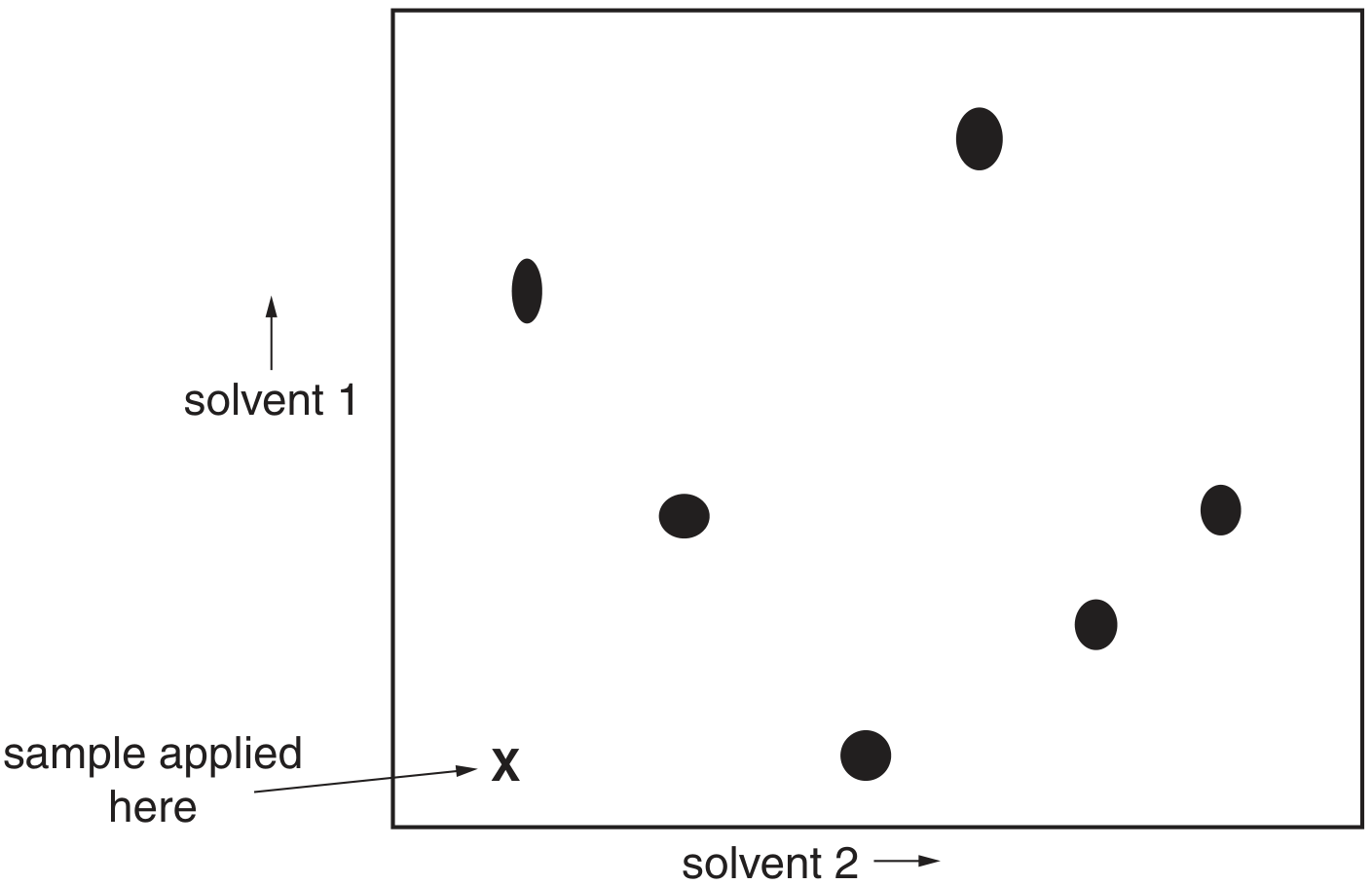
In paper or thin-layer chromatography, better separation may be achieved by running the chromatogram in one solvent, then turning the paper at right angles and running it in a second solvent. The chromatogram below was produced in this way.

Question image
[ 4 ]
(i)

Ring the spot which was insoluble in solvent 1.

[ 2 ]
(ii)

Label as A and B the spots which were not resolved using solvent 1 .

[ 2 ]
[Maximum number: 5]

Although the chemical reactions of compounds remain important pointers to their functional groups, instrumental techniques such as mass spectrometry and NMR spectroscopy are increasingly used to determine molecular structures.

(a)

Chromatography is another important analytical technique used in chemistry.

[ 5 ]
(i)

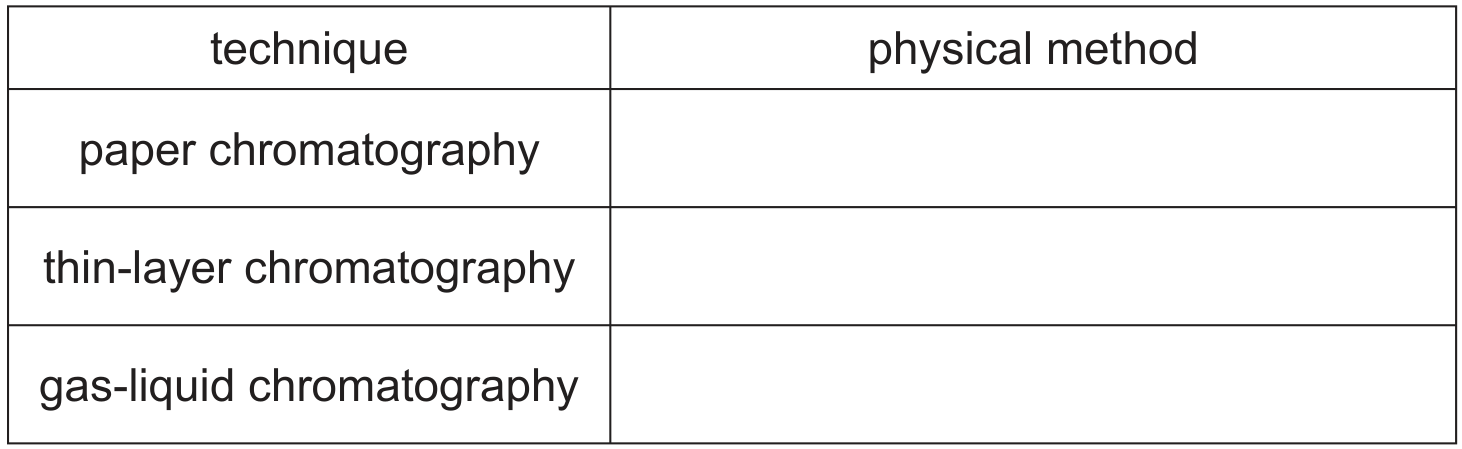
Paper, thin-layer and gas-liquid chromatography rely on different physical methods to separate the components in a mixture. Complete the table indicating the appropriate method on which the technique is based.

Table

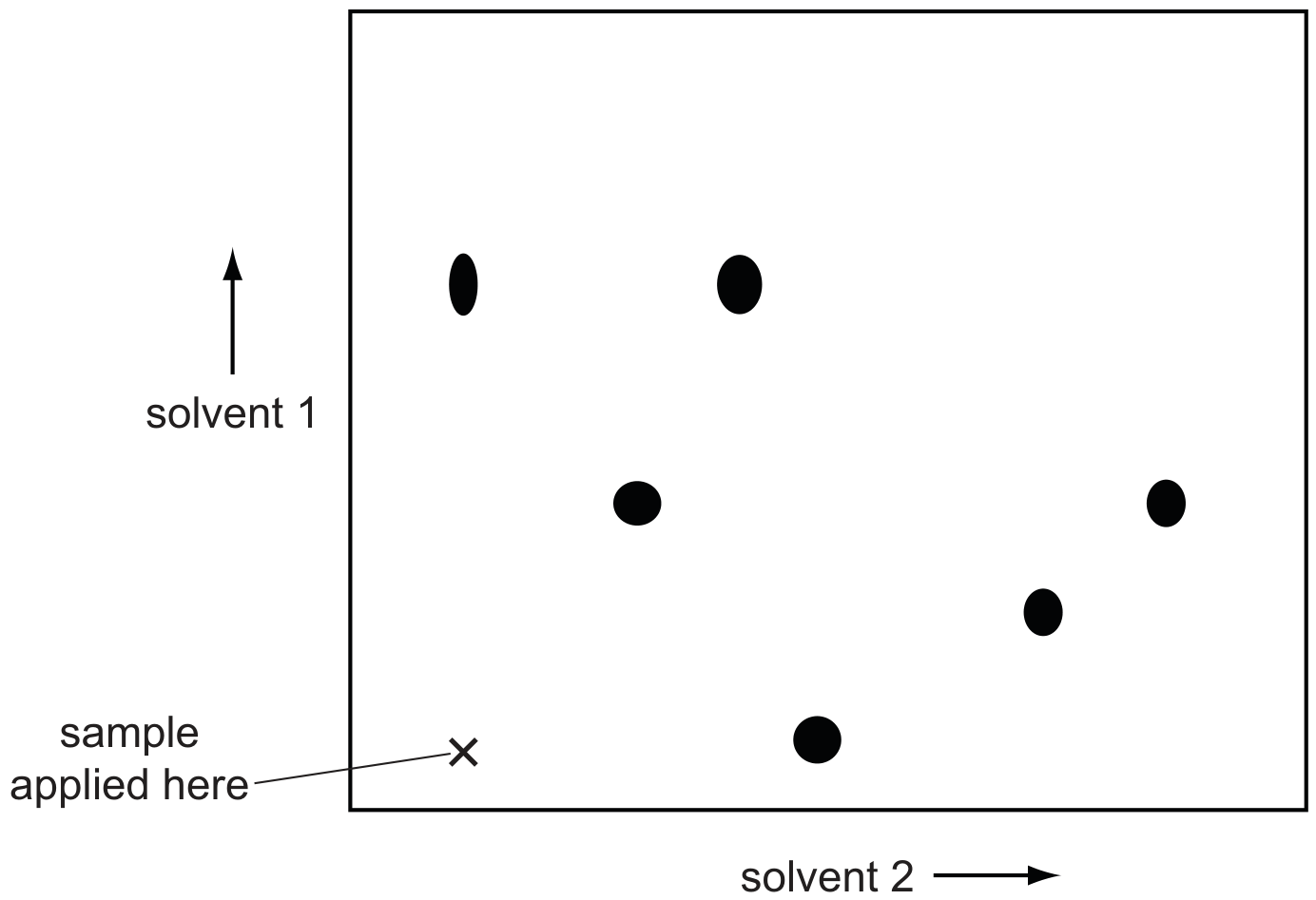
In paper chromatography, better separation may be achieved by running the chroma

togram in one solvent, then turning the paper at right angles and running it in a second solvent. The chromatogram below was produced in this way.

Question image
(ii)

How many spots were visible before solvent 2 was used?

(iii)

Ring the spot that did not move in solvent 2 .

(iv)

How many spots travelled further in solvent 2 than they did in solvent 1?

[ 5 ]
0