[Maximum number: 1]
Copper is a transition element and has atomic number 29.
(a)
(i)
Polymer Z is an example of a biodegradable polymer.
Name a polymer that is non-biodegradable.
[ 1 ]
 EduNinja
Copper is a transition element and has atomic number 29.
Polymer Z is an example of a biodegradable polymer.
Name a polymer that is non-biodegradable.
Serotonin can be synthesised from the amino acid tryptophan in two steps.
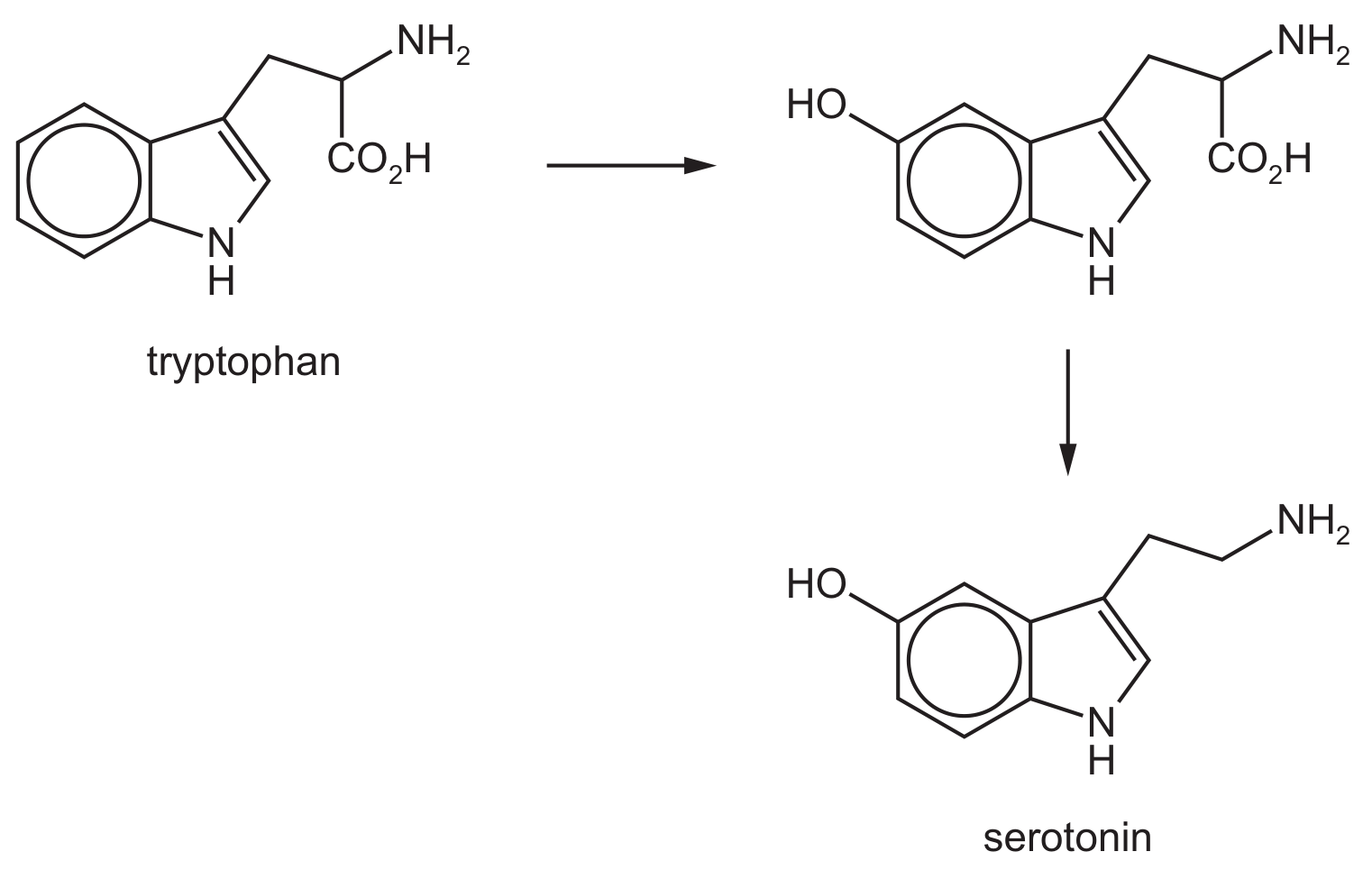
Compound M can be polymerised under certain conditions to form polymer N, shown.
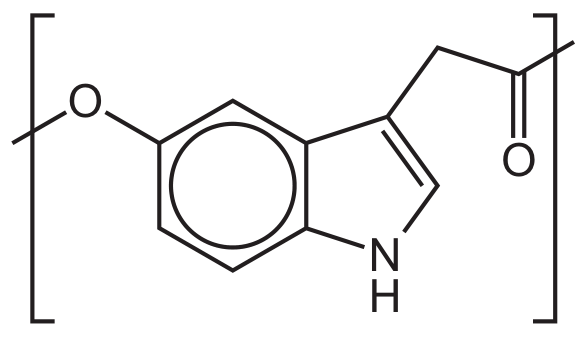
N
Polymer N is biodegradable, unlike polyethene which is not.
Explain why N is biodegradable.
Acyl chlorides react with sodium carboxylates to form acid anhydrides as shown in Fig. 5.1.

Fig. 5.1
The condensation polymers, polyanhydride and polyester, are formed by similar methods.
The repeat unit for a polyanhydride is shown in Fig. 5.2.
polyanhydride

Fig. 5.2
Polyanhydrides are biodegradable polymers.
Suggest how this polyanhydride can be degraded.
A polymer, P, can be made from the monomers benzene-1,4-dioyl chloride and benzene-1,3-diamine.
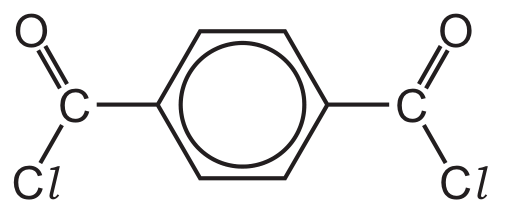
benzene-1,4-dioyl chloride
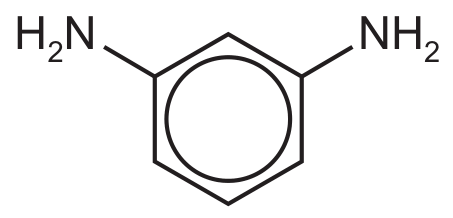
benzene-1,3-diamine
State whether or not polymer P is biodegradable. Give a reason for your answer.
Polyalkenes biodegrade very slowly.
Explain why by referring to the structures of the polymers.
Some polymers will degrade in the environment.
Describe two processes by which this occurs.
1
2
Super-absorbent polymers have the ability to absorb 200-300 times their own mass of water. They are classified as hydrogels and they are widely used in personal disposable hygiene products such as babies' nappies (diapers).
These polymers are commonly made by the polymerisation of compound K mixed with sodium hydroxide in the presence of an initiator.
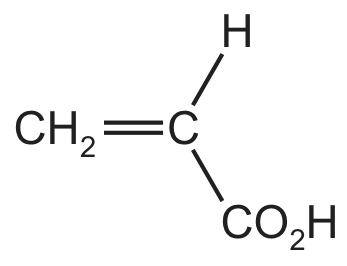
K
Draw a detailed diagram of a portion of the polymer you have drawn in (c)(i) to explain how it can absorb a large volume of water.
Polymers consist of monomers joined together by undergoing either addition or condensation polymerisation.
Compound H can react to form an addition polymer, K, or a condensation polymer, L, depending on the conditions.
Explain why condensation polymers can normally biodegrade more readily than addition polymers.
2-Chloropropanoic acid, , is used in many chemical syntheses.
When reacts with aqueous , alanine forms.
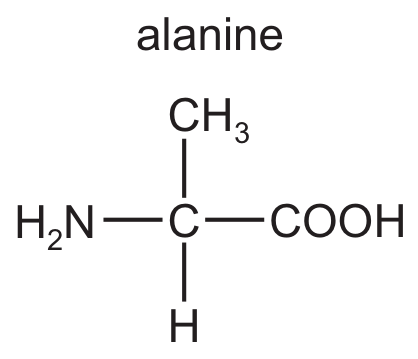
Fig. 5.1
Alanine is an amino acid. Its isoelectric point is 6.1.
Scientists are investigating C as a replacement for poly(propene) in packaging. Suggest an advantage of using C instead of poly(propene).
Fumaric acid is a naturally occurring dicarboxylic acid.
fumaric acid
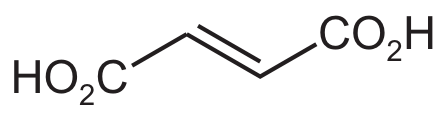
Fumaric acid can form addition and condensation polymers.
Explain why polyesters normally biodegrade more readily than polyalkenes.
The class of polymers called polycarbonates are made by the reaction of carbonyl dichloride, , with a diol.

a polycarbonate
Many polymers are degradable.
State two different processes by which some polymers can be degraded.