EduNinja
[Maximum number: 3]

Copper is a transition element and has atomic number 29.

(a)
(i)

Under certain conditions, ethane-1,2-diamine reacts with ethanedioic acid, HO2CCO2H\mathrm{HO}_{2} \mathrm{CCO}_{2} \mathrm{H}, to form the polymer Z.

Draw the structure of this polymer, Z, showing two repeat units.

[ 2 ]
(ii)

Name the type of reaction occurring during this polymerisation.

[ 1 ]
[Maximum number: 1]

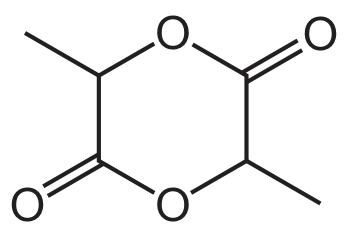
Lactide is an intermediate in the manufacture of a synthetic fibre.

lactide

lactide

Which compound, on heating with an acid catalyst, can produce lactide?

A

hydroxyethanoic acid

B

2-hydroxybutanoic acid

C

2-hydroxypropanoic acid

D

3-hydroxypropanoic acid

[Maximum number: 5]

Acyl chlorides are useful intermediates in organic syntheses.

(a)
(i)

What type of polymer is compound F ?

[ 5 ]
(a)

Aminolaevulinic acid can undergo polymerisation.

Draw the structure of the polymer showing two repeat units. The linkages between the monomer units should be shown fully displayed.

Answer all the questions in the spaces provided.

[ 2 ]
(a)

Acyl chlorides react with sodium carboxylates to form acid anhydrides as shown in Fig. 5.1.

Fig. 5.1

Fig. 5.1

The condensation polymers, polyanhydride and polyester, are formed by similar methods.

The repeat unit for a polyanhydride is shown in Fig. 5.2.
polyanhydride

Fig. 5.2

Fig. 5.2

[ 2 ]
(i)

Use Fig. 5.1 and Fig. 5.2 to suggest the structures of the two monomers used to make this polyanhydride.

[ 2 ]
(a)

The following diagram shows a section (not a repeat unit) of a polymer, G, that can be made from the two monomers E and F.

Question image
[ 6 ]
(i)

What type of polymerisation made this polymer?

(ii)

Draw the structures of the two monomers E and F.
E

Question image
(iii)

Suggest the conditions needed to make polymer G from E and F in the laboratory.

(iv)

One of the monomers, E or F, could be changed to make a more rigid polymer of a similar chemical type to G.
Suggest which of your two monomers could be changed, and suggest a structure for the new monomer.

Monomer to be changed (E or F)
Structural formula of the new monomer

Answer all the questions in the spaces provided.

[ 6 ]
(a)

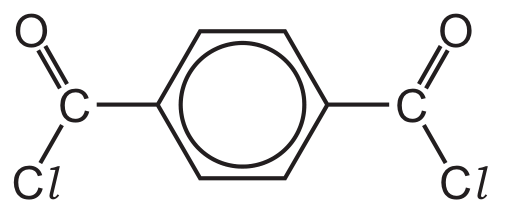
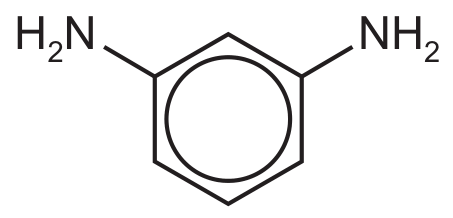
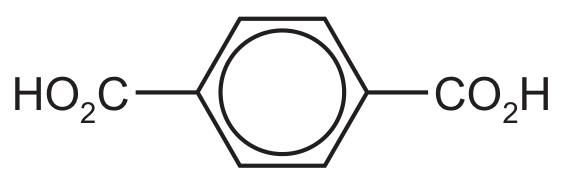
A polymer, P, can be made from the monomers benzene-1,4-dioyl chloride and benzene-1,3-diamine.

benzene-1,4-dioyl chloride

benzene-1,4-dioyl chloride

benzene-1,3-diamine

benzene-1,3-diamine

[ 2 ]
(i)

Draw a section of the polymer chain of P. Your structure should include two repeat units.

P

[ 2 ]
[Maximum number: 5]

1,3-dimethylbenzene is a useful starting material for several commercially important compounds.

(a)

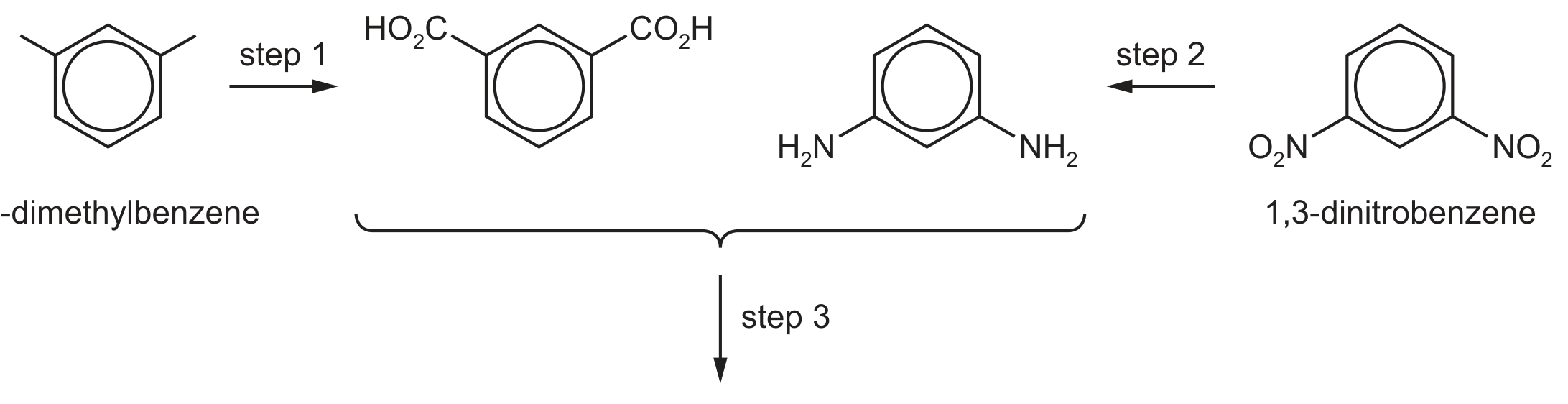
1,3-dimethylbenzene is also a starting material for the synthesis of the polymer Nomex, used in fireproof protective clothing worn by firefighters, military pilots and racing car drivers. The polymer is made from 1,3-dimethylbenzene and 1,3-dinitrobenzene by the following route.

1,3-dinitrobenzene

1,3-dinitrobenzene

1,3-dimethylbenzene
Nomex

[ 5 ]
(i)

Draw the structure of one repeat unit of Nomex in the box above.

[ 1 ]
(ii)

What type of polymer is Nomex?

[ 1 ]
(iii)

Suggest the by-product formed during step 3.

[ 1 ]
(iv)

Suggest reagents and conditions for step 2.

[ 1 ]
(v)

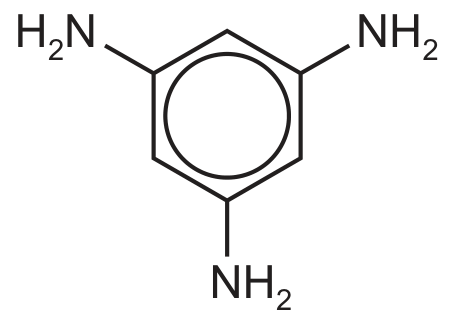
Suggest how and why the properties of the polymer might change if some of the diamine monomer were replaced with 1,3,5-triaminobenzene.

1,3,5-triaminobenzene

1,3,5-triaminobenzene

[ 1 ]
(a)

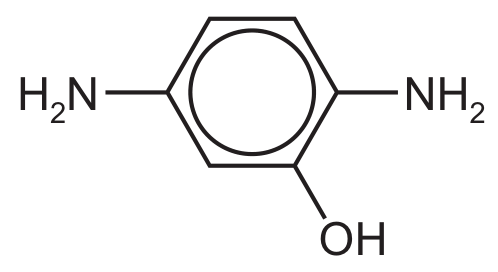
Polyhydroxyamide is a fire-resistant polyamide which is formed from the two monomers, F and G.

F

F

G

G

[ 2 ]
(i)

Draw the repeat unit of polyhydroxyamide. The amide bond should be shown displayed.

[ 2 ]
(a)

Polyamide L can be synthesised from dicarboxylic acid J,HO2C(CH2)2CO2H\mathbf{J}, \mathrm{HO}_{2} \mathrm{C}\left(\mathrm{CH}_{2}\right)_{2} \mathrm{CO}_{2} \mathrm{H}, and diamine K, H2 N(CH2)6NH2\mathrm{H}_{2} \mathrm{~N}\left(\mathrm{CH}_{2}\right)_{6} \mathrm{NH}_{2}.

Draw the repeat unit of the polymer formed in the box. Any functional groups should be shown displayed.

Table
[ 2 ]
0