EduNinja
(a)

The complex [Cr(OCH2CH2NH2)3]\left[\mathrm{Cr}\left(\mathrm{OCH}_{2} \mathrm{CH}_{2} \mathrm{NH}_{2}\right)_{3}\right]^{-}is formed by reacting Cr2+(aq)\mathrm{Cr}^{2+}(\mathrm{aq}) with the conjugate base of 2-aminoethanol.

A synthesis of 2-aminoethanol is shown in Fig. 2.2.
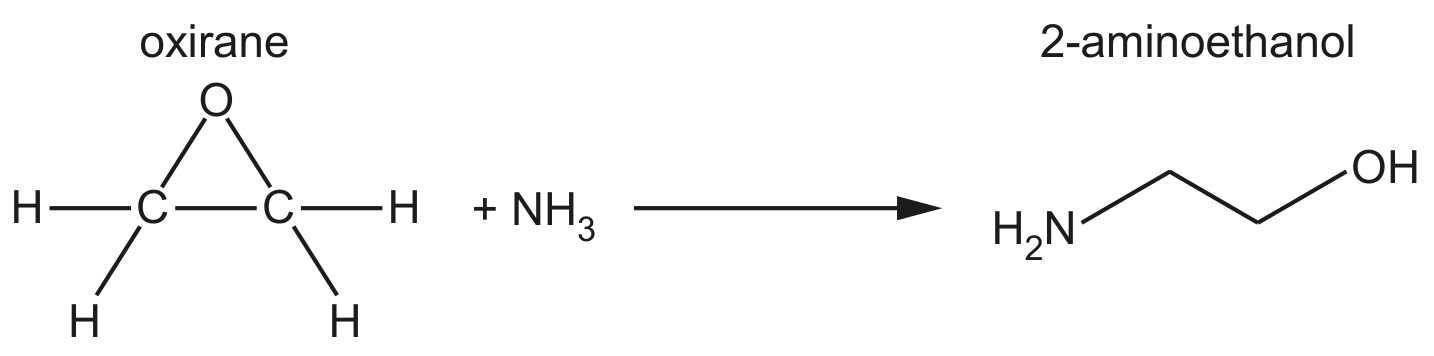
Fig. 2.2

Fig. 2.2

[ 6 ]
(i)

Suggest the mechanism for step 1 of the reaction of oxirane with ammonia in Fig. 2.3. Include all relevant curly arrows, lone pairs of electrons, charges and partial charges. Draw the structure of the organic intermediate.
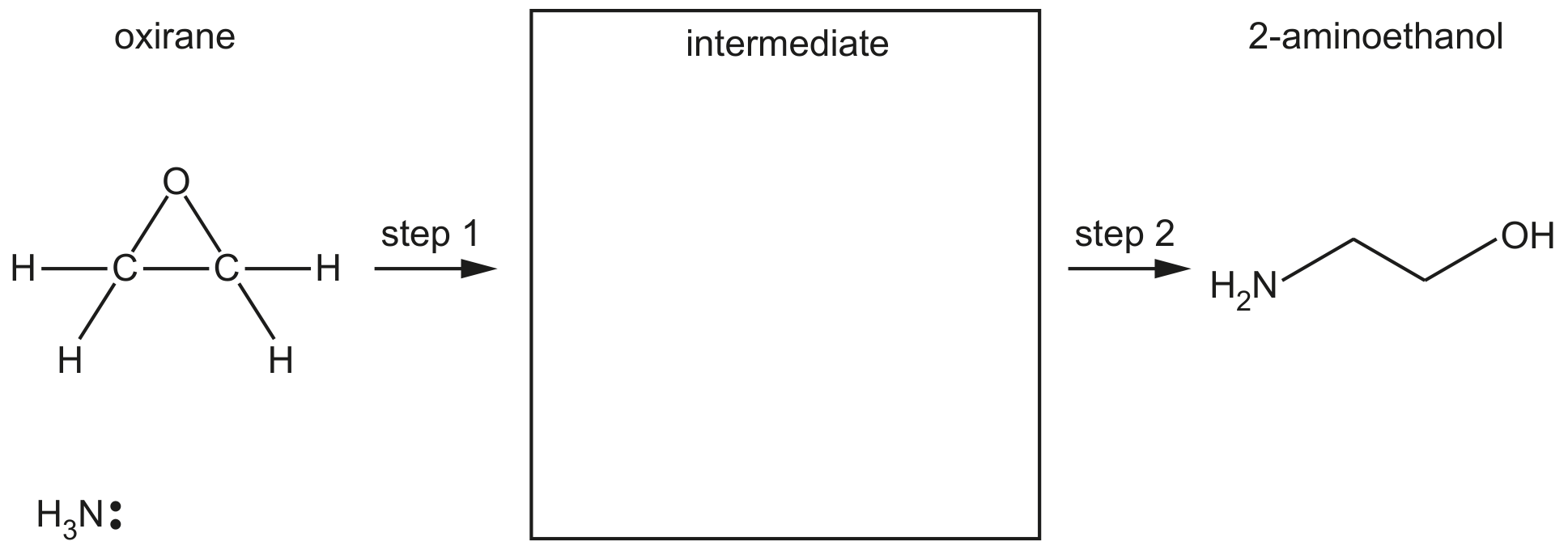
Fig. 2.3

Fig. 2.3

[ 3 ]
(ii)

A small amount of by-product E, shown in Fig. 2.4, is produced during the reaction shown in Fig. 2.2.
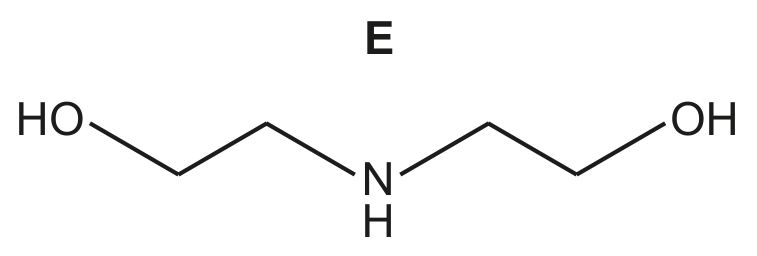
Fig. 2.4

Fig. 2.4

Suggest how the formation of by-product E can be minimised.

[ 1 ]
(iii)

Compound F,C4H9NO\mathbf{F}, \mathrm{C}_{4} \mathrm{H}_{9} \mathrm{NO}, can be formed from the reaction of by-product E,C4H11NO2\mathbf{E}, \mathrm{C}_{4} \mathrm{H}_{11} \mathrm{NO}_{2}, with concentrated H2SO4\mathrm{H}_{2} \mathrm{SO}_{4}.
Compound F is a saturated and basic organic compound.
Suggest a structure for compound F. State the type of reaction undergone by E to form F.
F
type of reaction
[ 2 ]
[Maximum number: 3]

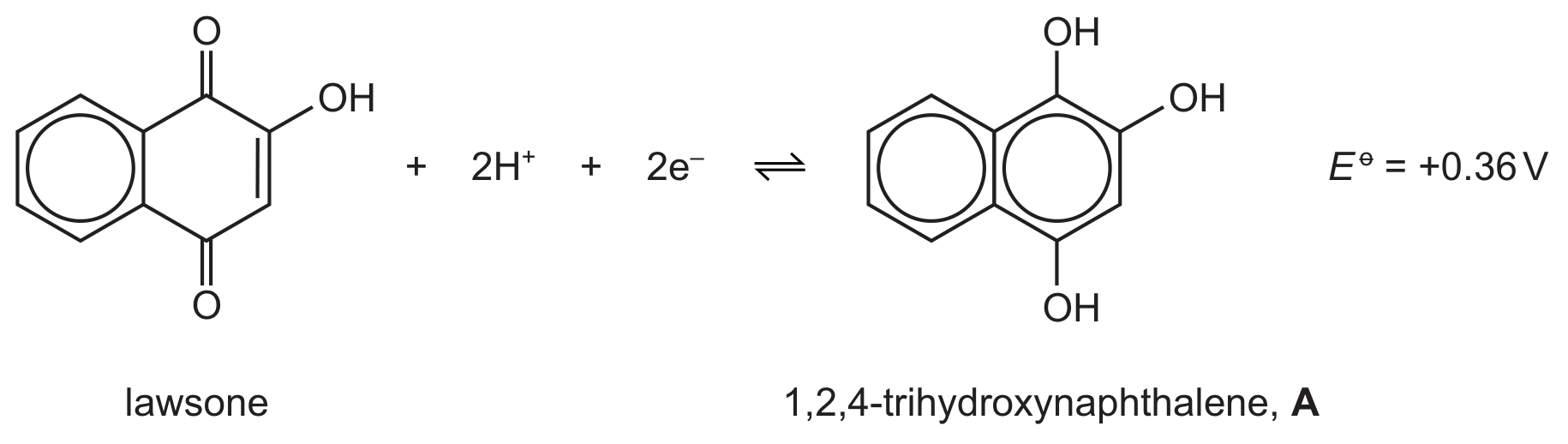
Lawsone is the dye that is extracted from the henna plant, Lawsonia inermis. Although its natural colour is yellow, lawsone reacts with the proteins in hair and skin to produce the characteristic brown henna colour.

Lawsone can readily be reduced to 1,2,4-trihydroxynaphthalene, compound A.

Question image
(a)

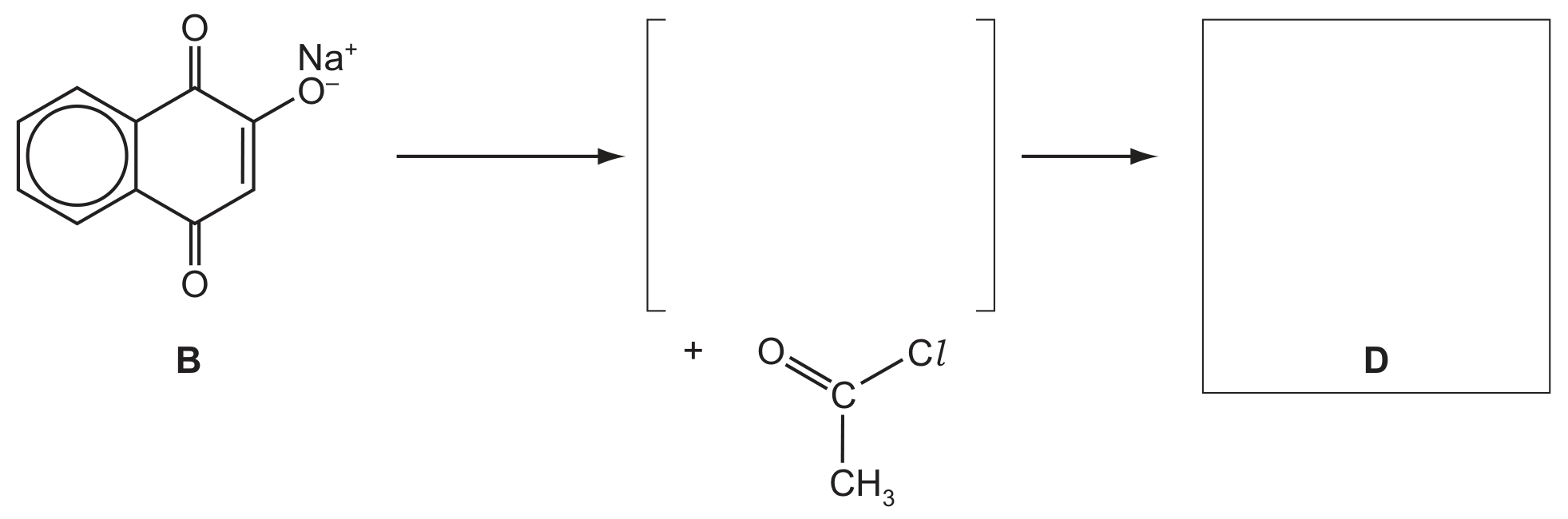
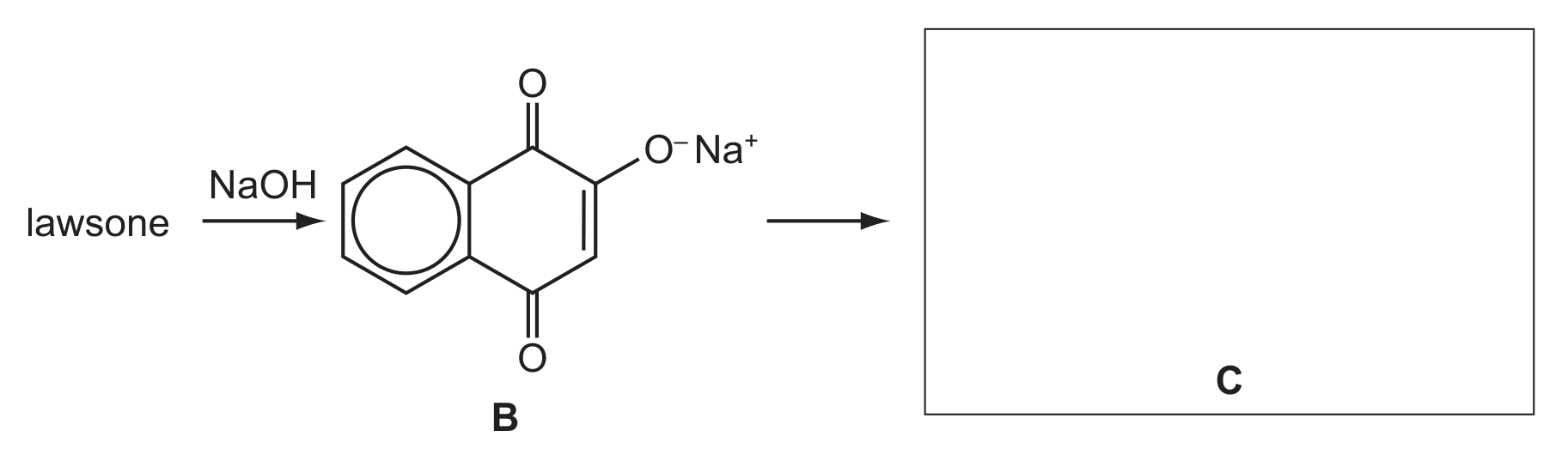
When lawsone is reacted with NaOH(aq), compound B is produced.

Question image

Reacting B with ethanoyl chloride, CH3COCl\mathrm{CH}_{3} \mathrm{COCl}, produces compound C, with the molecular formula C12H8O4\mathrm{C}_{12} \mathrm{H}_{8} \mathrm{O}_{4}.

[ 3 ]
(i)

Suggest the identity of compound C, and draw its structure in the box above.

Another compound, D, in addition to C, is produced in the above reaction. D is an isomer of C which contains the same functional groups as C, but in different positions.

(ii)

Suggest a mechanism for the formation of D from B and ethanoyl chloride by drawing relevant structures and curly arrows in the following scheme.

Question image
[ 3 ]
(a)

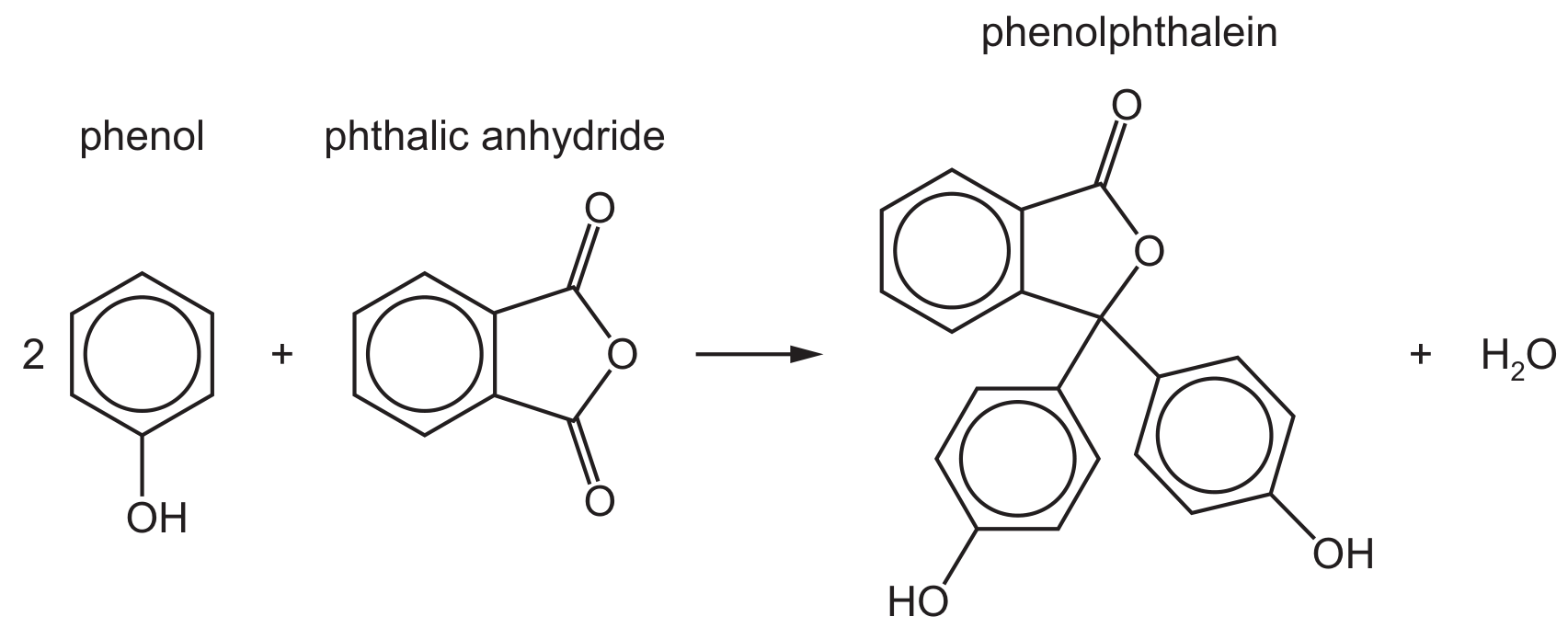
The indicator, phenolphthalein, can be synthesised from phthalic anhydride and phenol under certain conditions.

Question image

Deduce the type of reaction shown by this equation.

[ 1 ]
[Maximum number: 8]

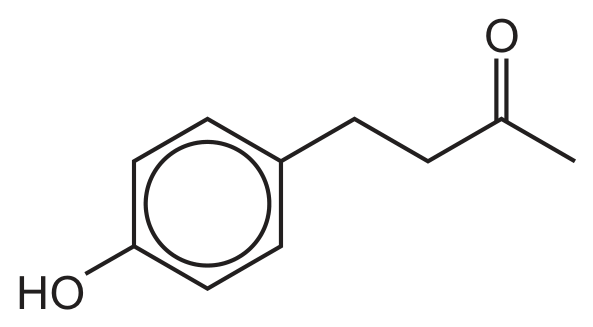
Compound G is a naturally occurring aromatic compound that is present in raspberries.

compound G

compound G

(a)

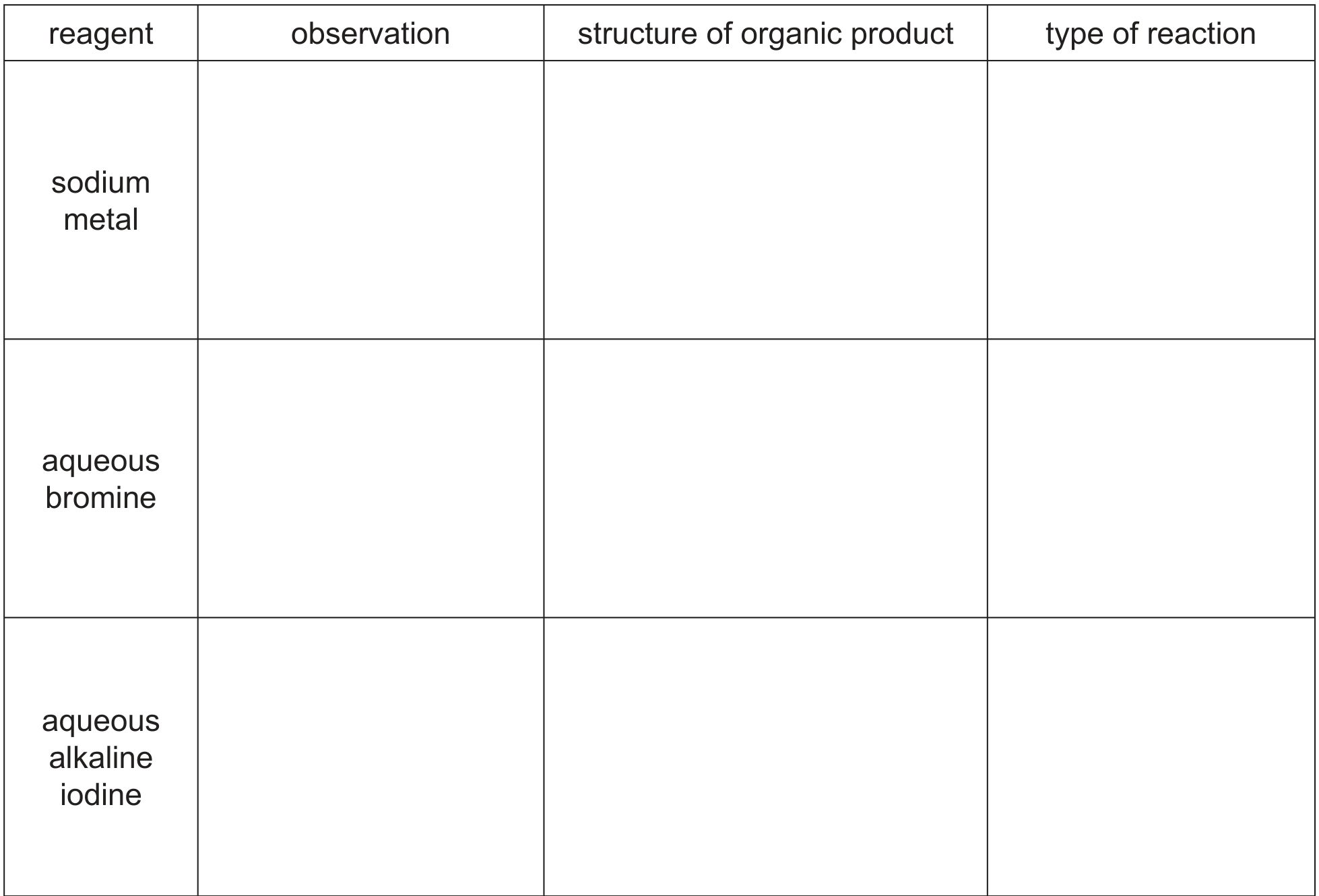
Complete the following table with information about the reactions of the three stated reagents with compound G.

Table
[ 8 ]
[Maximum number: 1]

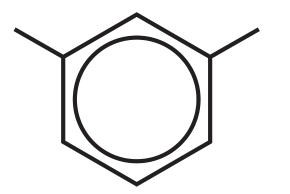
1,3-dimethylbenzene is a useful starting material for several commercially important compounds.

(a)

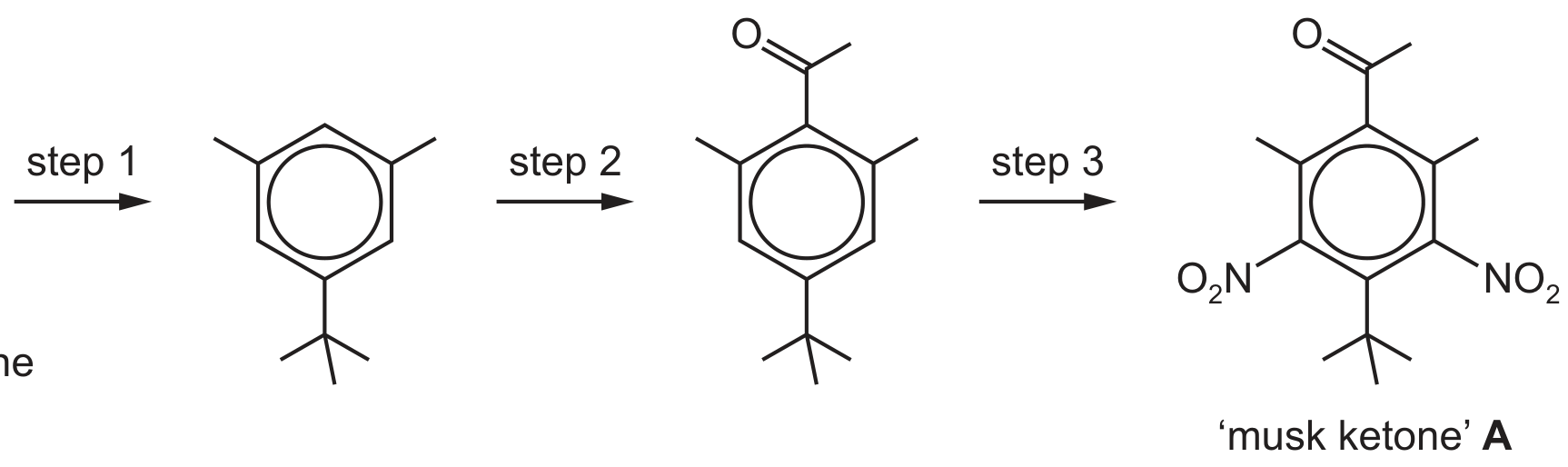
The artificial 'musk ketone', A, is a perfume agent added to many cosmetics and detergents. It is made from 1,3-dimethylbenzene by the following route.

Question image

1,3-dimethylbenzene

Question image
[ 1 ]
(i)

Suggest the type of reaction that is occurring during both step 2 and step 3.

[ 1 ]
(a)

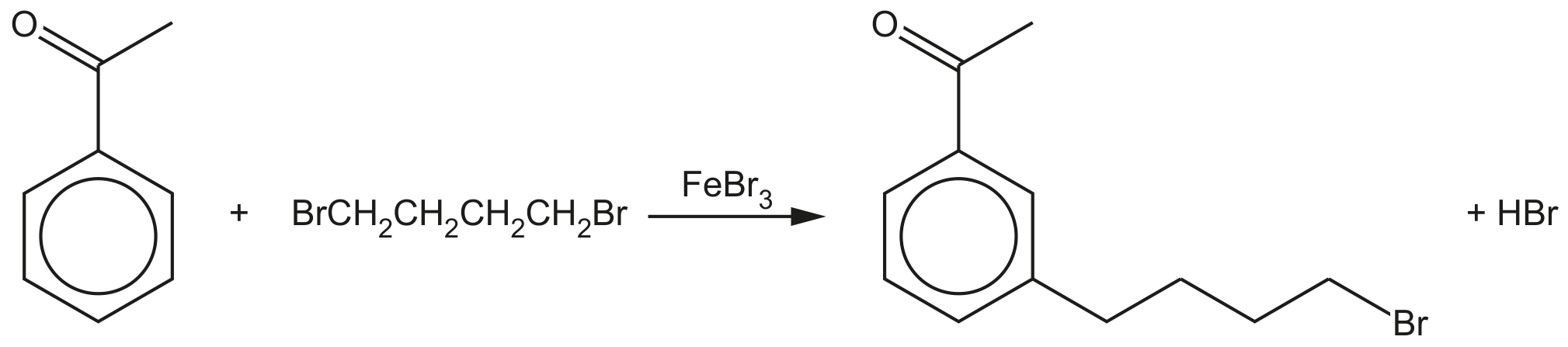
The reaction of phenylethanone with 1,4-dibromobutane, BrCH2CH2CH2CH2Br\mathrm{BrCH}_{2} \mathrm{CH}_{2} \mathrm{CH}_{2} \mathrm{CH}_{2} \mathrm{Br}, in the presence of FeBr3\mathrm{FeBr}_{3} is shown in Fig. 6.2.
phenylethanone

Fig. 6.2

Fig. 6.2

The mechanism of this reaction is similar to that of the alkylation of benzene.

[ 4 ]
(i)

Construct an equation for the formation of the electrophile, BrCH2CH2CH2CH2+\mathrm{BrCH}_{2} \mathrm{CH}_{2} \mathrm{CH}_{2} \mathrm{CH}_{2}{ }^{+}.

[ 1 ]
(ii)

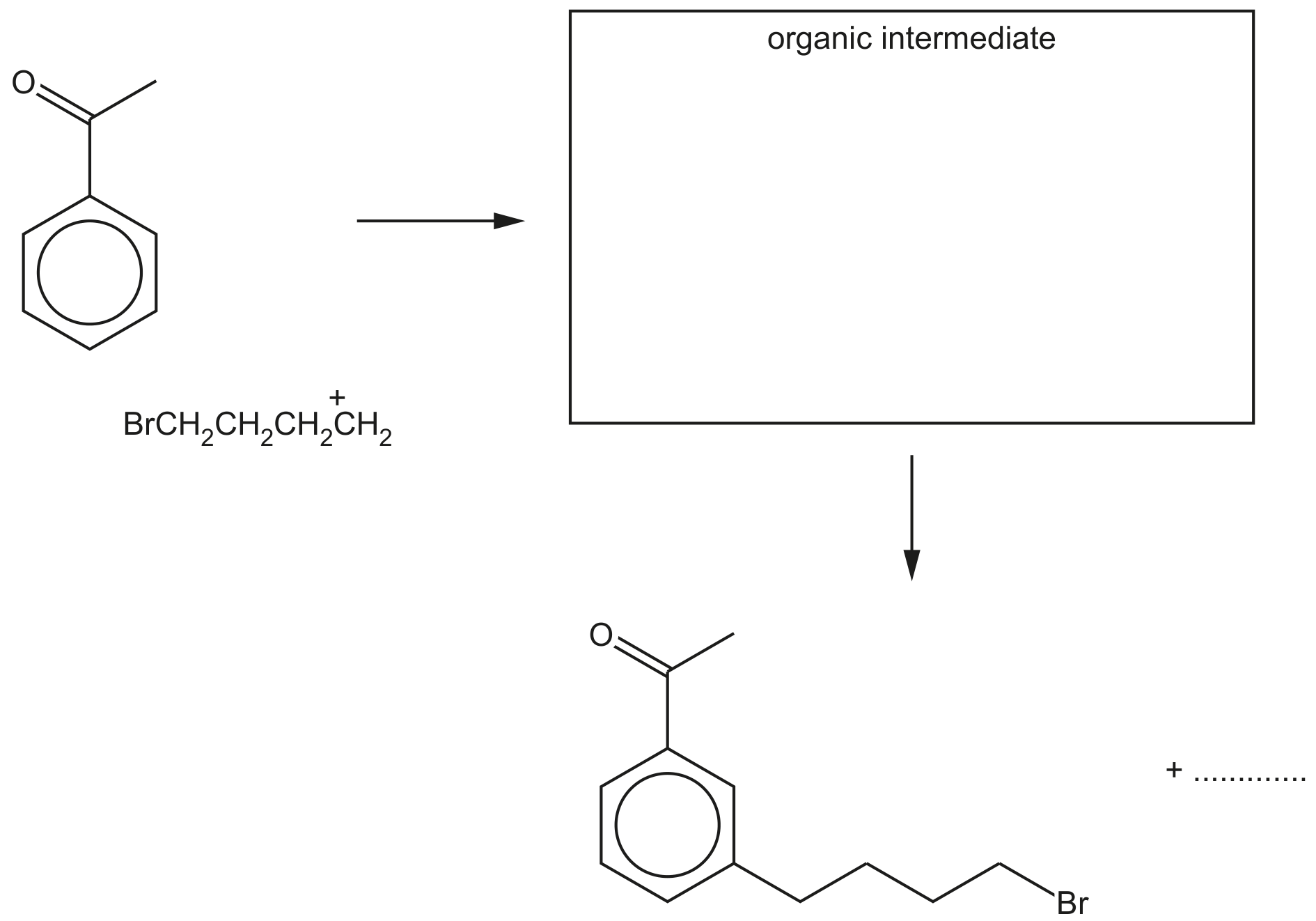
Complete the mechanism in Fig. 6.3 for the reaction of phenylethanone with BrCH2CH2CH2CH2+\mathrm{BrCH}_{2} \mathrm{CH}_{2} \mathrm{CH}_{2} \mathrm{CH}_{2}^{+}ions.

Include all relevant curly arrows and charges.
Draw the structure of the organic intermediate.

Fig. 6.3

Fig. 6.3

[ 3 ]
(a)

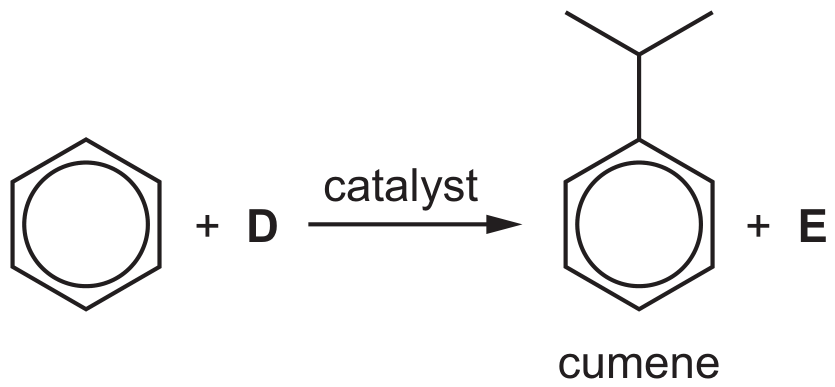
Benzene reacts with D in the presence of a suitable catalyst to give cumene and non-organic product E. This is an electrophilic substitution reaction.

Question image
[ 1 ]
(i)

Give the name of the type of aromatic electrophilic substitution reaction taking place.

[ 1 ]
[Maximum number: 4]

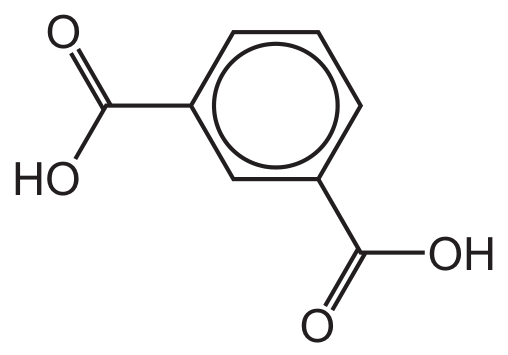
The structure of benzene-1,3-dicarboxylic acid is shown.

benzene-1,3-dicarboxylic acid

benzene-1,3-dicarboxylic acid

(a)

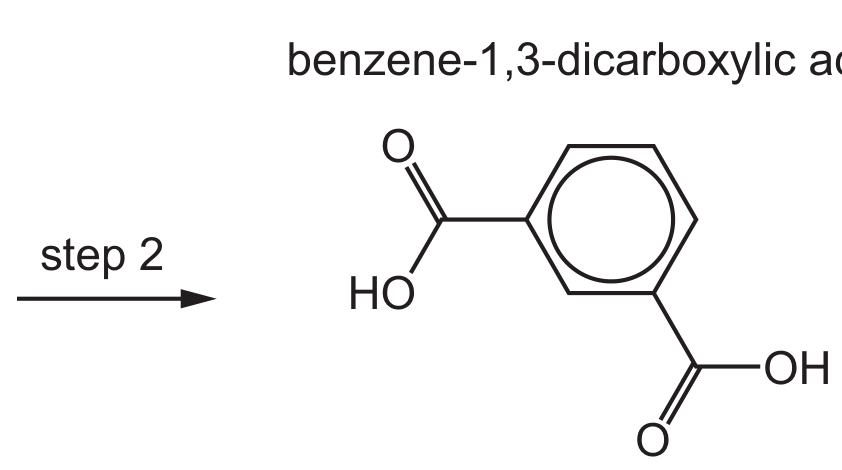
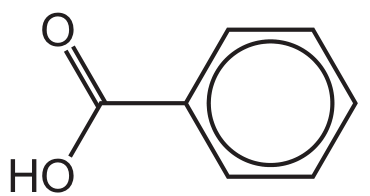
Benzene-1,3-dicarboxylic acid can be made by the two-step synthesis shown below.
benzene-1,3-dicarboxylic acid
compound P

Question image
compound Q

compound Q

[ 4 ]
(i)

The reagents used for step 1 are CH3COCl\mathrm{CH}_{3} \mathrm{COCl} and AlCl3\mathrm{AlCl}_{3}. These reagents give rise to CH3C+=O\mathrm{CH}_{3} \stackrel{+}{\mathrm{C}}=\mathrm{O} ions which react with compound P.

Name the mechanism of this reaction.

[ 1 ]
(ii)

Draw the mechanism of the reaction of CH3C+=O\mathrm{CH}_{3} \stackrel{+}{\mathrm{C}}=\mathrm{O} ions with compound P. Include all relevant curly arrows and charges, the structure of the intermediate and the structure of compound Q.
intermediate

CH3C+=O\mathrm{CH}_{3} \stackrel{+}{\mathrm{C}}=\mathrm{O}

compound Q

Question image
0
Question image
[ 3 ]
(a)
(i)

Name the mechanism of the reaction forming compound E.

[ 1 ]
(a)

Explain why phenol is brominated much more easily than benzene is brominated.

[ 3 ]
0