[Maximum number: 1]
Iron is a transition element in the fourth period. Iron forms compounds containing the ions and .
(a)
(i)
Define the term transition element.
[ 1 ]
 EduNinja
Iron is a transition element in the fourth period. Iron forms compounds containing the ions and .
Define the term transition element.
Transition elements are important metals because of their characteristic properties.
Define what is meant by a transition element.
Many commercial copper and brass polishes contain ammonia. The tarnish that forms on the surface of copper is often copper sulfide, CuS . In the presence of from the air, can combine with this copper sulfide to produce the soluble cuprammonium sulfate, .
State the colour of cuprammonium sulfate solution.
When aqueous solutions of KI and are mixed almost no reaction occurs, but when a few drops of or are added, iodine, , is produced at a steady rate.
State the precise role of the iron ions during this reaction.
By means of equations or otherwise, explain why the presence of either or is able to speed up the reaction.
Iodine is found naturally in compounds in many different oxidation states.
The concentration of in a solution can be determined by the reaction of ions with ions.
reaction
The produced in reaction 1 is titrated against a solution containing thiosulfate ions, , using a suitable indicator.
Copper(I) and copper(II) both contain electrons in all five 3d orbitals.
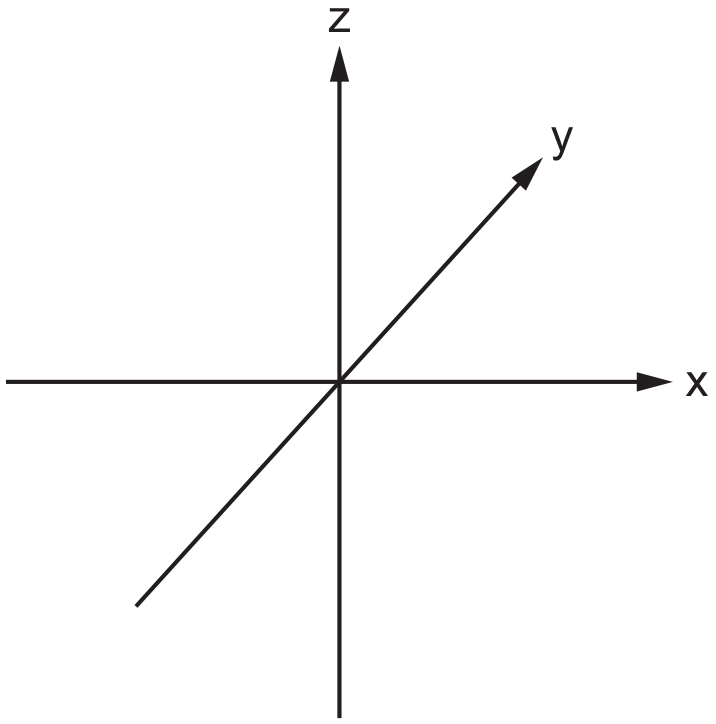
Sketch the shape of a orbital on the axes provided.
State how the melting point and density of iron compare to those of calcium.
melting point of iron:
density of iron:
Explain why these differences occur.
melting point:
density:
Explain why transition elements can form complex ions.
Describe three characteristic chemical properties of transition elements that are not shown by Group II elements.
Cobalt is a transition element and forms compounds with oxidation numbers +2 and +3 .
Complete the electronic structures for
a cobalt atom,
cobalt in the +3 oxidation state.
State two chemical properties of cobalt, other than the formation of complexes, that are not shown by a typical s-block element.
In the Haber process, the reaction between the two gaseous reactants requires the use of a catalyst that contains a transition element.
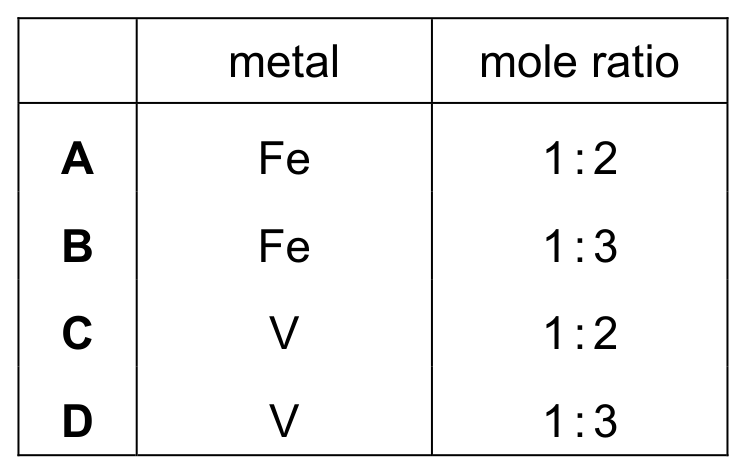
What is the metal and in which mole ratio do the gases react?