EduNinja
[Maximum number: 1]

Phenylketonuria (PKU) is a genetic disease which results in a raised concentration of the amino acid phenylalanine in the blood. If left untreated in a newborn baby, it can lead to brain damage. For this reason, babies may be tested for PKU soon after birth.

(a)
(i)

Suggest the consequence to the structure of PAH as a result of a single base substitution in its gene.

[ 1 ]
[Maximum number: 1]

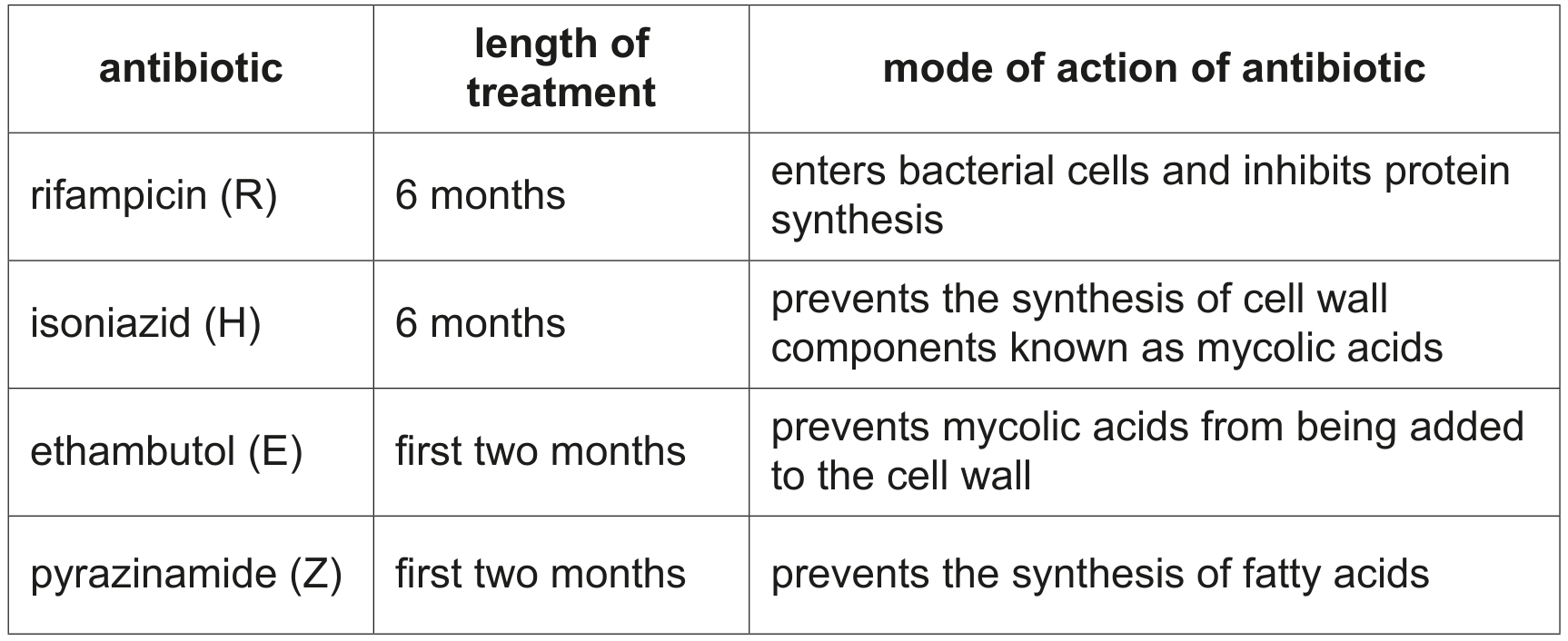
The treatment for people with active tuberculosis (TB) lasts six months and involves a combination of antibiotics. This is usually very effective if the person has a susceptible (non-resistant) strain of Mycobacterium tuberculosis, the causative organism of TB.

Table 2.1 summarises one recommended treatment strategy that involves a combination of antibiotics.

Table 2.1

Table 2.1

(a)

RNA polymerase is composed of five different polypeptides. Gene rpoB codes for one of these polypeptides known as the β\beta-subunit.
One or more mutations in a specific region of rpoB result in strains of M. tuberculosis that are resistant to rifampicin. In these strains, mutations often occur in two DNA triplets in this region, in positions 526 and 531.
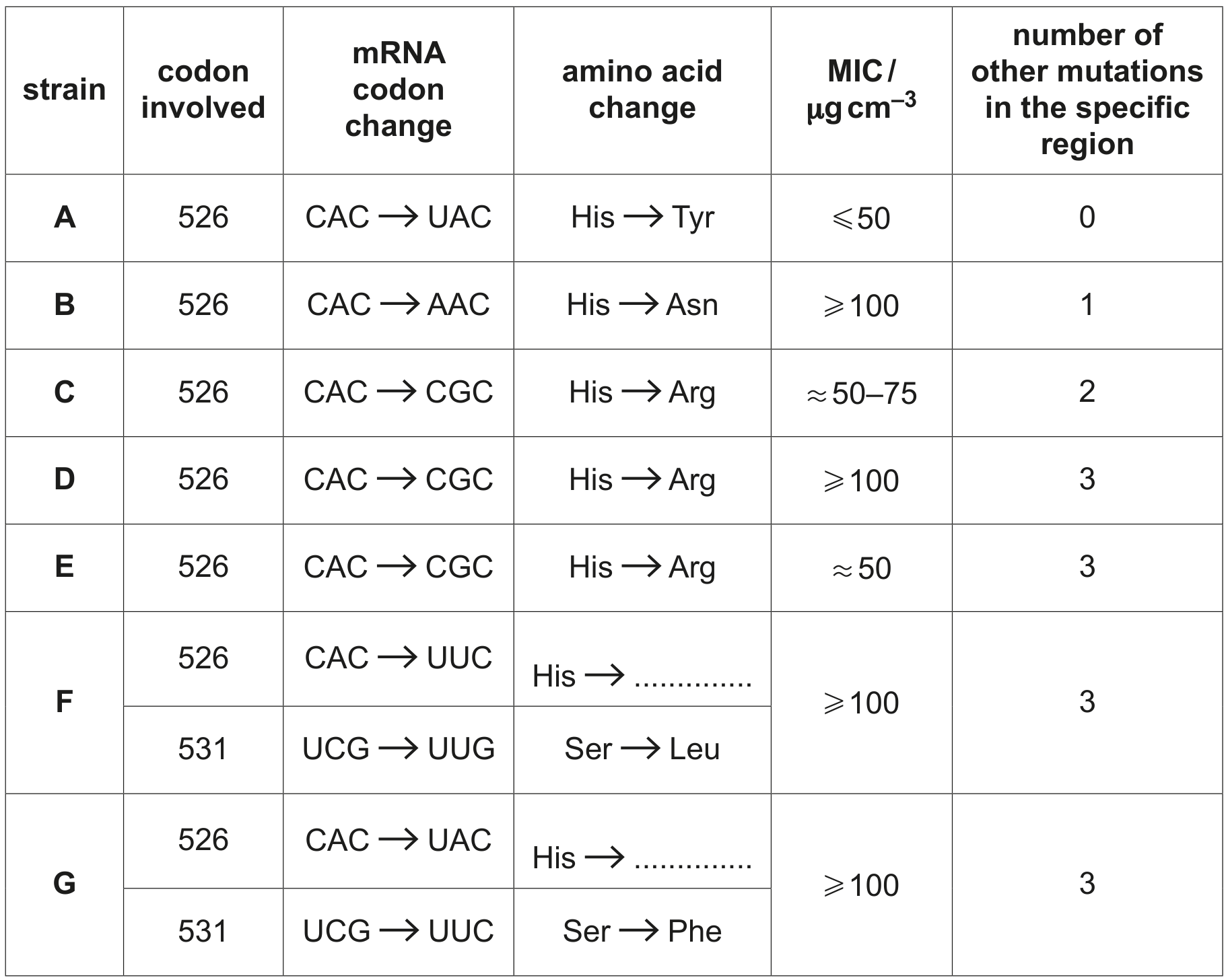
Table 2.2 summarises the results of an investigation into seven rifampicin-resistant strains, A to G, that have amino acid changes for positions 526 and 531.
Table 2.2 includes:
- the change in the mRNA codon for position 526 or position 531
- the amino acid change that has occurred as a result of the mutation
- the minimum concentration of rifampicin required to inhibit growth of the bacterial strain (MIC)
- the number of other mutations occurring within the specific region of rpoB.
Key
z approximately \geqslant greater than or equal to \leqslant less than or equal to

Table 2.2

Table 2.2

[ 1 ]
(i)

With reference to Table 2.2, list the strains of M. tuberculosis that show the greatest resistance to rifampicin.

[ 1 ]
[Maximum number: 2]

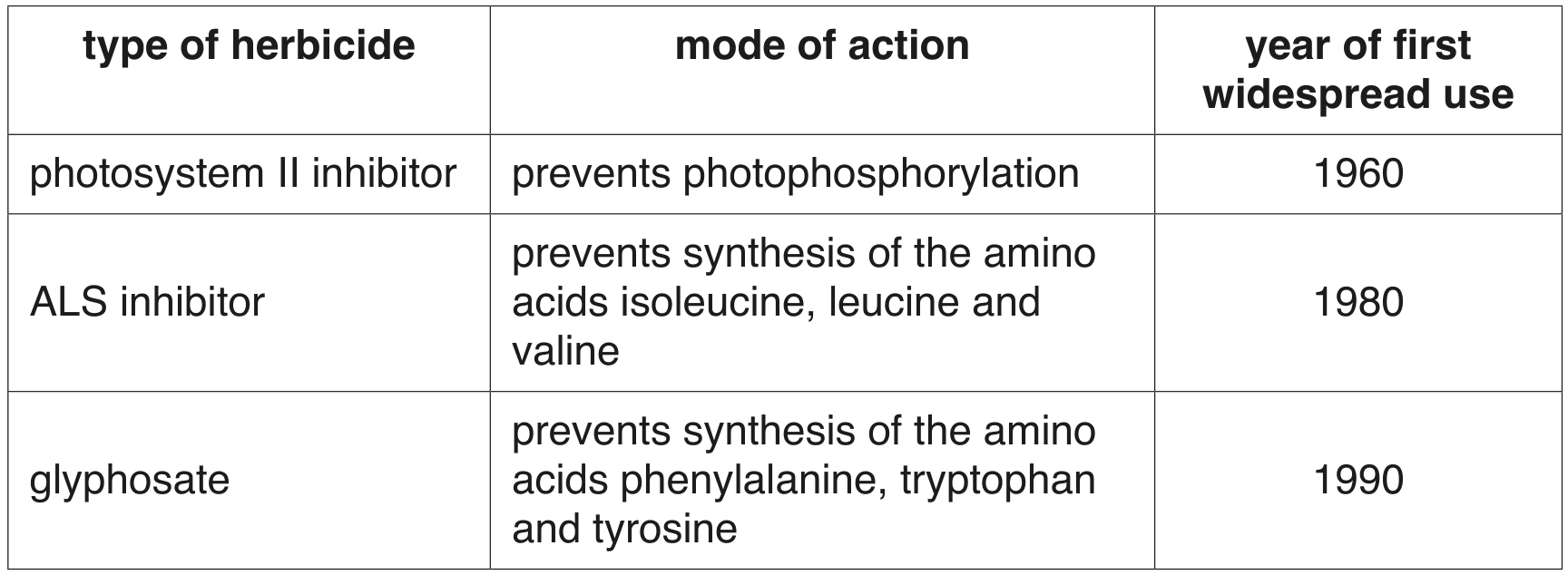
Weeds reduce crop yields by competing with crop plants for space, light, water and minerals. The modes of action of three different types of herbicide are summarised in Table 4.1.

Table 4.1

Table 4.1

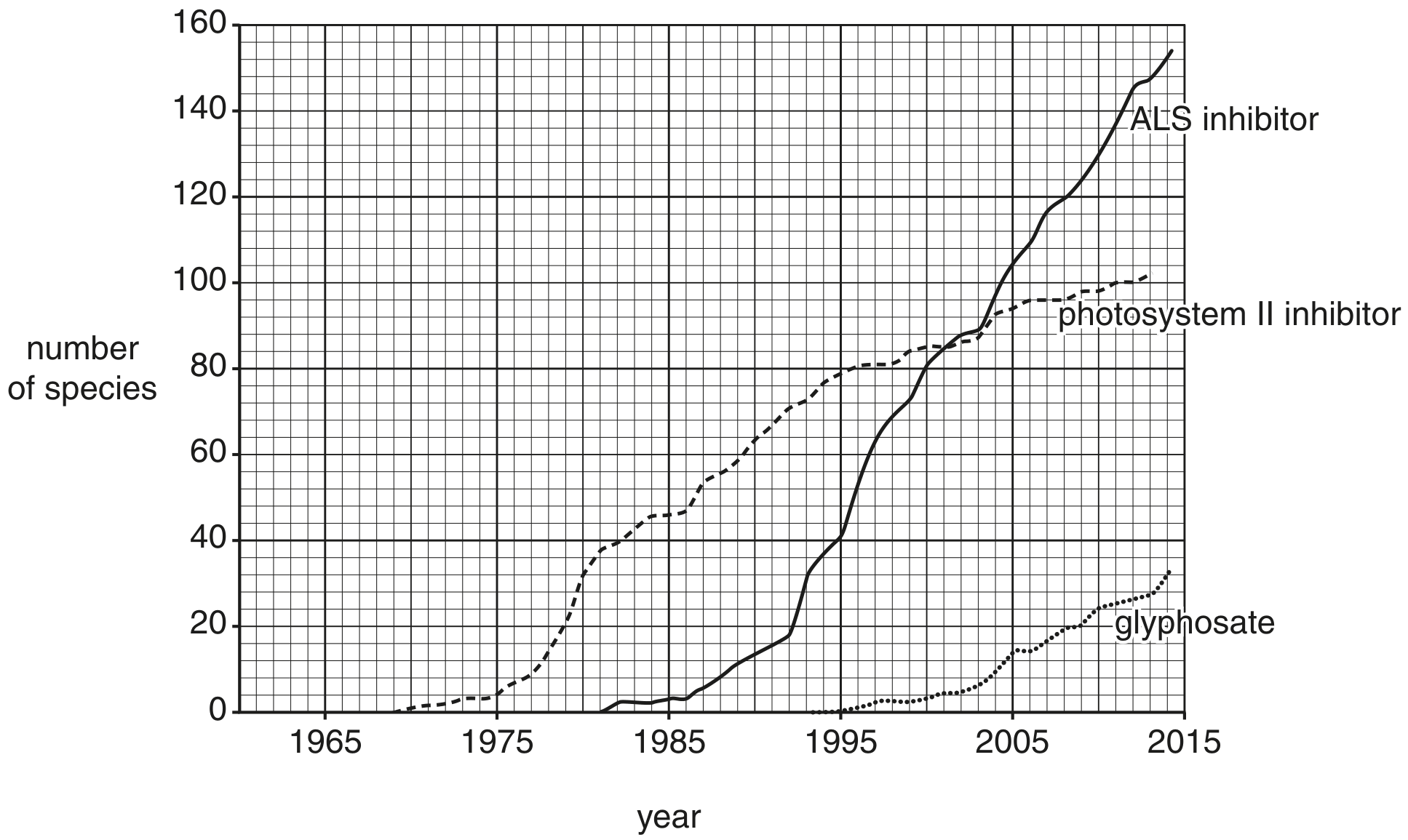
Fig. 4.1 shows the cumulative number of species of weeds that have become resistant to these three types of herbicide since 1960.

Fig. 4.1

Fig. 4.1

(a)

ALS inhibitor herbicides work by binding to an enzyme present in chloroplasts called acetolactate synthetase (ALS). ALS is a globular protein consisting of four identical polypeptides each composed of 668 amino acids.

The primary structure of the ALS polypeptide of each weed species resistant to ALS inhibitor herbicides has been sequenced. Amino acid substitutions at positions as far apart as position 122 and position 574 can result in resistance.

[ 2 ]
(i)

Explain why resistance to ALS inhibitor herbicide can result from substitutions of amino acids that are far apart in the primary sequence.

[ 2 ]
[Maximum number: 1]

The sequence of bases in mRNA for the first eight amino acids in the β\beta-polypeptide of adult haemoglobin is:

GUG-CAC-CUG-ACU-CCU-GAG-GAG-AAG.

In haemoglobin C, which is a cause of haemolytic anaemia, the sequence is:

GUG-CAC-CUG-ACU-CCU-AAG-GAG-AAG.

The coding for seven of the amino acids is listed.

Table

Which change occurs to the amino acid sequence of adult haemoglobin to make haemoglobin C ?

A

Histidine is changed to leucine.

B

Proline is changed to threonine.

C

Glutamic acid is changed to lysine.

D

Leucine is changed to phenylalanine.

[Maximum number: 2]

There are a number of mutations affecting the production of fetal haemoglobin, HbF , and normal adult haemoglobin, HbA .
- The HbA\mathrm{Hb}^{\mathrm{A}} allele codes for the normal β\beta-globin polypeptide of haemoglobin.
- The HbS\mathrm{Hb}^{\mathrm{S}} allele, caused by a base substitution mutation, codes for an abnormal β\beta-globin polypeptide.
- The base substitution results in the amino acid glutamine, which has a polar R group, to be replaced by valine, which has a non-polar R group, in the polypeptide.

The abnormal haemoglobin molecules ( HbS ) form fibres in low partial pressures of oxygen ( pO2p \mathrm{O}_{2} ). The fibres cause red blood cells to become sickle shaped and the cells can block blood capillaries.

Individuals with adult haemoglobin molecules that are all abnormal ( HbS ) have sickle cell anaemia. This is a painful chronic condition that can be life-threatening.

(a)

Explain why this mutation causes the HbS to form fibres.

[ 2 ]
[Maximum number: 1]

An antibiotic enters bacterial cells through a membrane channel protein, P.
Some bacterial cells have shown resistance to this antibiotic by acquiring a mutation which alters P . This mutation prevents the entry of the antibiotic into the cell.

Which conclusions can be drawn about how resistance to this antibiotic developed in these bacteria?

1 The mutation changed the order of the amino acids in the gene coding for P.
2 The mutation resulted in the production of P with an altered tertiary structure.
3 The antibiotic is a hydrophobic molecule and so cannot cross the phospholipid bilayer to enter the cell.

A

1, 2 and 3

B

1 and 3 only

C

2 and 3 only

D

2 only

[Maximum number: 1]

Sickle cell anaemia is caused by a mutation in an allele of the gene that codes for the β\beta-globin polypeptide of haemoglobin.

The diagram shows the sequence of bases in a small section of the coding strand of DNA for both the HbAH b^{A} (normal) and HbSH b^{S} (sickle cell) β\beta-globin alleles.

Table

How will the mutation in the allele result in the production of an altered version of the β\beta-globin polypeptide?

A

A tRNA molecule with the anticodon GUG will hydrogen bond to the altered codon on mRNA.

B

All the amino acids coded for after the mutation will differ from those in the HbAH b^{A} protein.

C

mRNA transcribed from the HbSH b^{S} allele will contain the codon CAC instead of the codon CTC.

D

The ribosome will be unable to continue translation of the HbSmRNAH b^{S} \mathrm{mRNA} after the altered codon.

[Maximum number: 1]

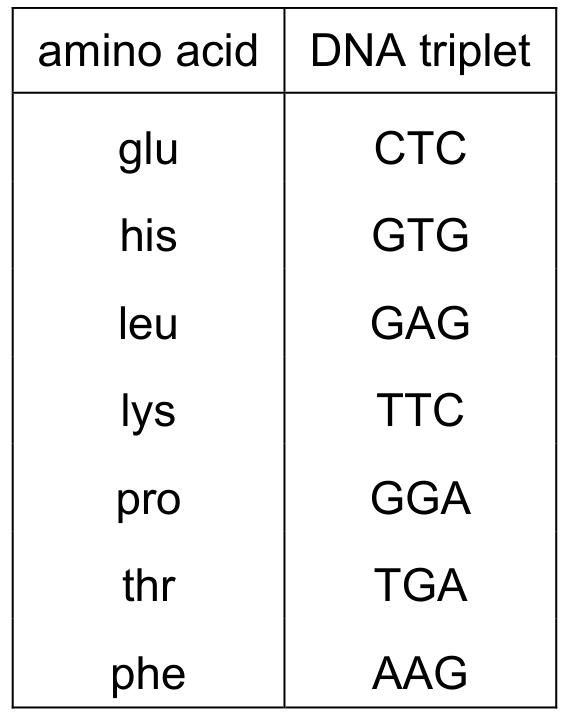
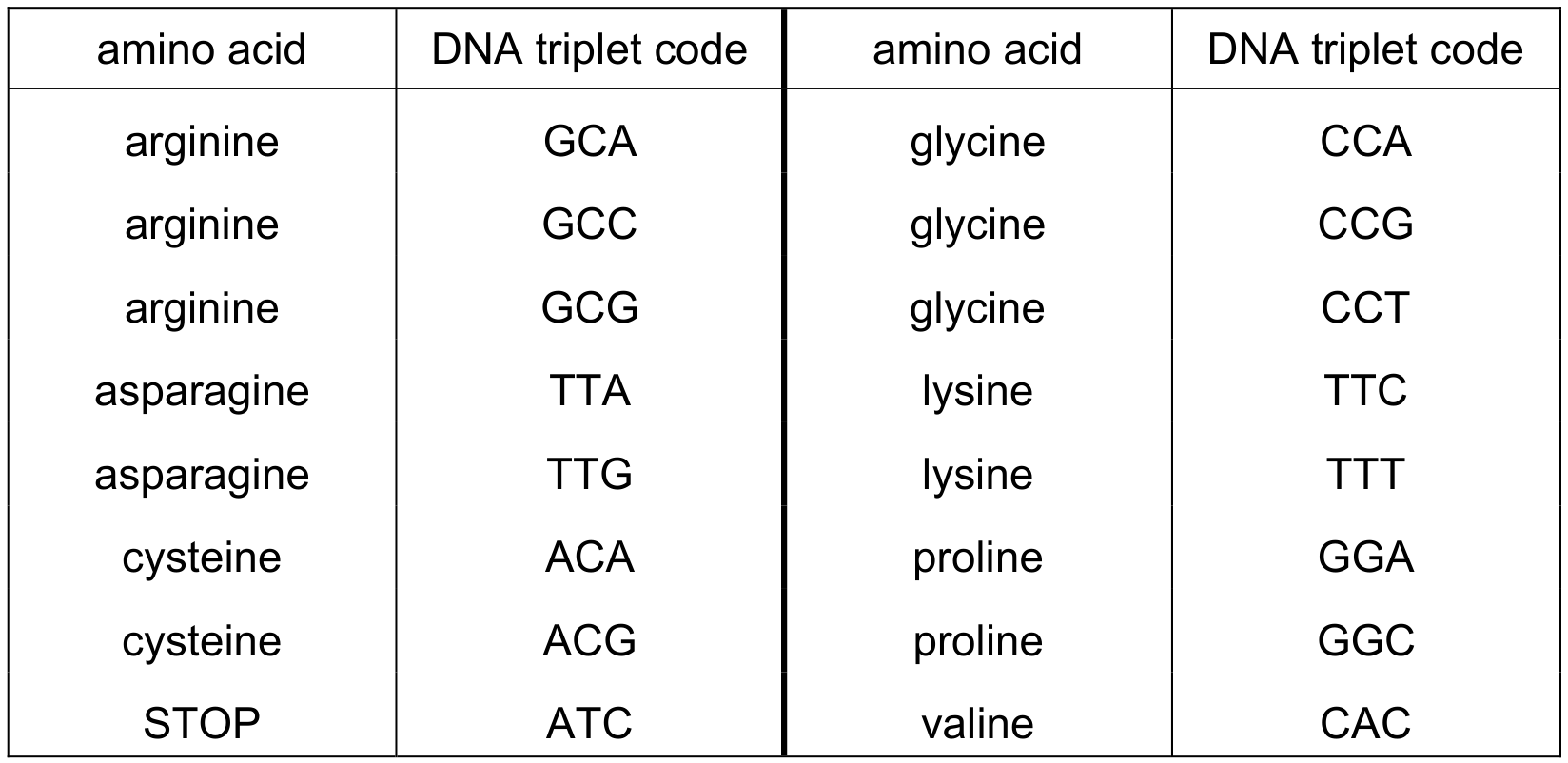
The table shows the DNA triplet codes for some amino acids.

Table

The base sequence on the template DNA strand coding for part of a polypeptide is shown.
CCA ACG GCG TTA TTC GCA
Two mutations occur in this sequence during DNA replication.
Which mutated template DNA strand would result in a shorter polypeptide?

A

CCA ACA GCA TTA TTC GCA

B

CCA ACG CCG TTA TTC GCC

C

CCA ACG GCG TTG ATC GCA

D

CCT ACG GCG TTA TTC GGA

(a)

The bacteria that cause cholera can become resistant to antibiotics by a substitution mutation.

A substitution mutation occurs when one nucleotide in the DNA sequence is replaced by a different nucleotide.

[ 2 ]
(i)

The antibiotic nalidixic acid acts as an inhibitor of an enzyme involved in DNA replication in the bacteria that cause cholera.

The gene gyrA codes for this enzyme. A substitution mutation in this gene results in resistance to the antibiotic nalidixic acid.

Suggest how a change in the amino acid sequence of the enzyme results in antibiotic resistance.

[ 2 ]
[Maximum number: 1]

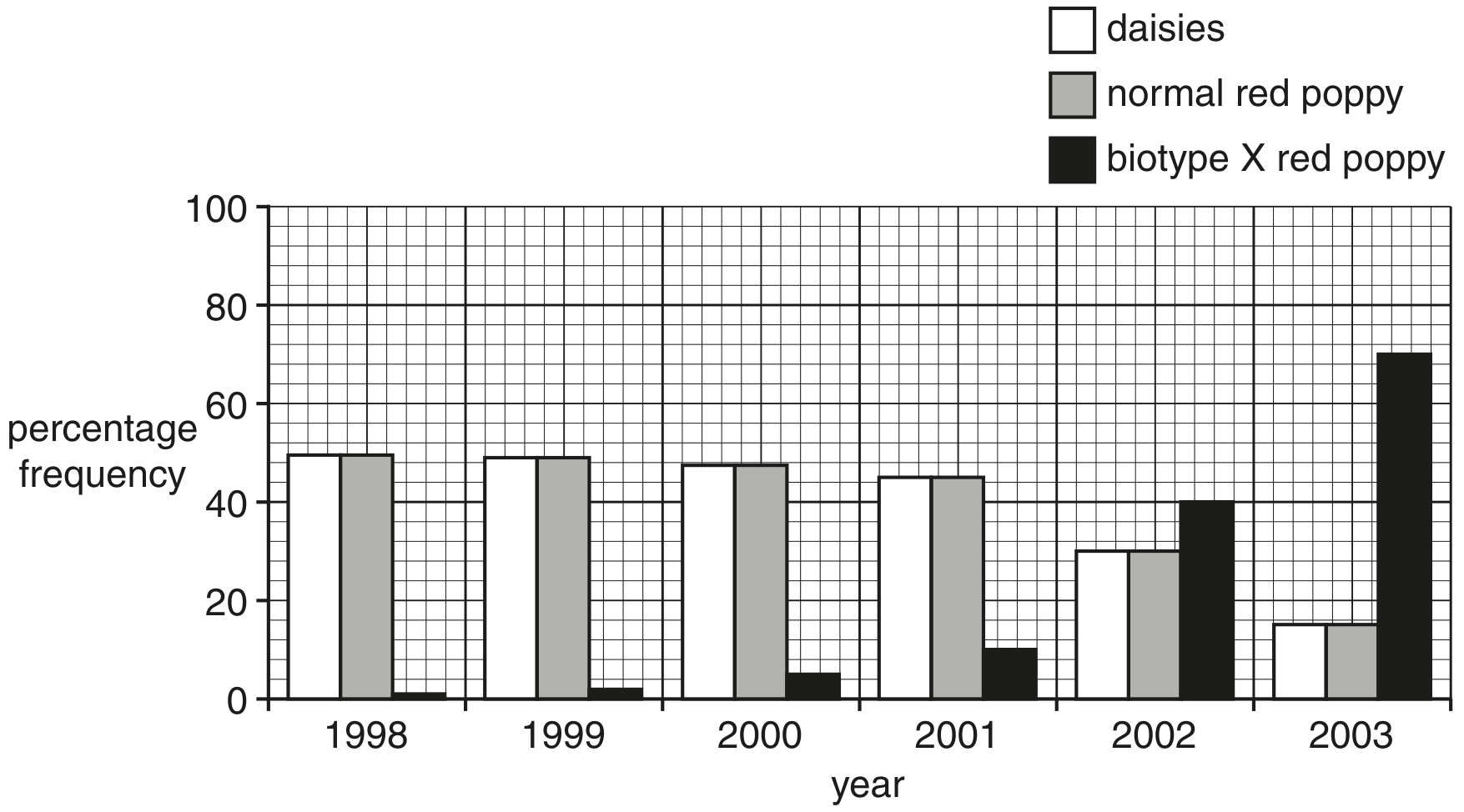
The red poppy, Papaver rhoeas, and several species of daisy of the family Compositae often co-exist as weeds of wheat fields.

Fig. 5.1 shows changes in the percentage frequency of red poppies and daisies in an area of wheat fields over a six year period from 1998 to 2003. From 1985, the herbicide metsulfuron-methyl was used to control weeds in this area of wheat fields. This practice continued throughout the six year period.

1998 showed the first occurrence of a red poppy known as biotype X. This red poppy had a specific mutation not present in normal red poppies.

Fig. 5.1

Fig. 5.1

(a)

Metsulfuron-methyl acts by inhibiting an enzyme called acetolactate synthetase, which is needed for the daisies and red poppies to synthesise three amino acids essential for growth. The specific mutation carried by the red poppies of biotype X occurred within the gene coding for this enzyme. The mutation changed amino acid 197 of acetolactate synthetase from proline to leucine.

[ 1 ]
(i)

Suggest the effect of this mutation on the biotype X red poppies in the presence of metsulfuron-methyl.

[ 1 ]
0