EduNinja
[Maximum number: 6]

The Zika virus is a pathogen that can infect human cells.

(a)

Zika virus vaccines have been developed by scientists.

One of the vaccines contains small proteins from the Zika virus.

[ 6 ]
(i)

Explain how giving this vaccine to a person can lead to the development of long-term immunity against Zika virus disease.

[ 4 ]
(ii)

Explain how a vaccination programme may limit the spread of Zika virus disease through a population.

[ 2 ]
[Maximum number: 8]

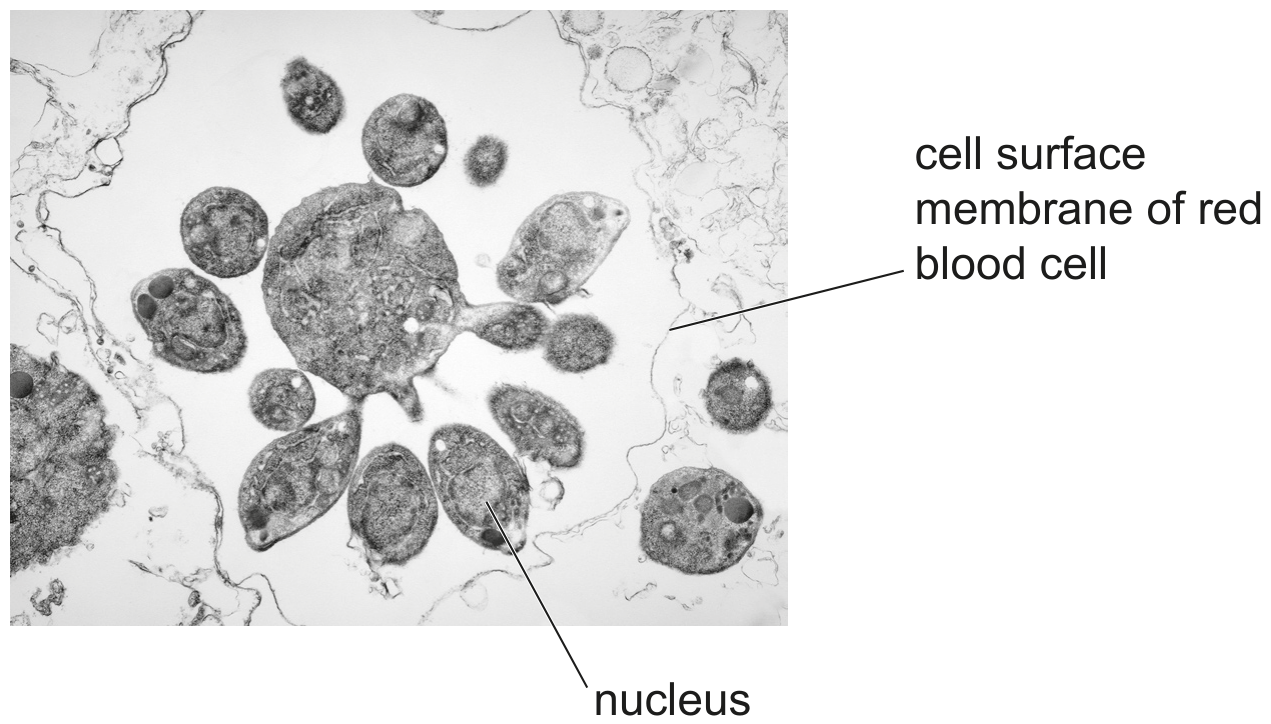
The malarial pathogen, Plasmodium falciparum, enters red blood cells after a person becomes infected. After some time, each cell of P. falciparum divides to form daughter cells.

Fig. 1.1 shows a cell of P. falciparum that is forming many daughter cells.

Fig. 1.1

Fig. 1.1

(a)

Explain how antibodies will reduce the spread of the malarial pathogen through the bloodstream.

[ 3 ]
(b)

Some vaccination programmes have been more successful than others.

Discuss the factors that contribute to the success of a vaccination programme.

[ 5 ]
(a)

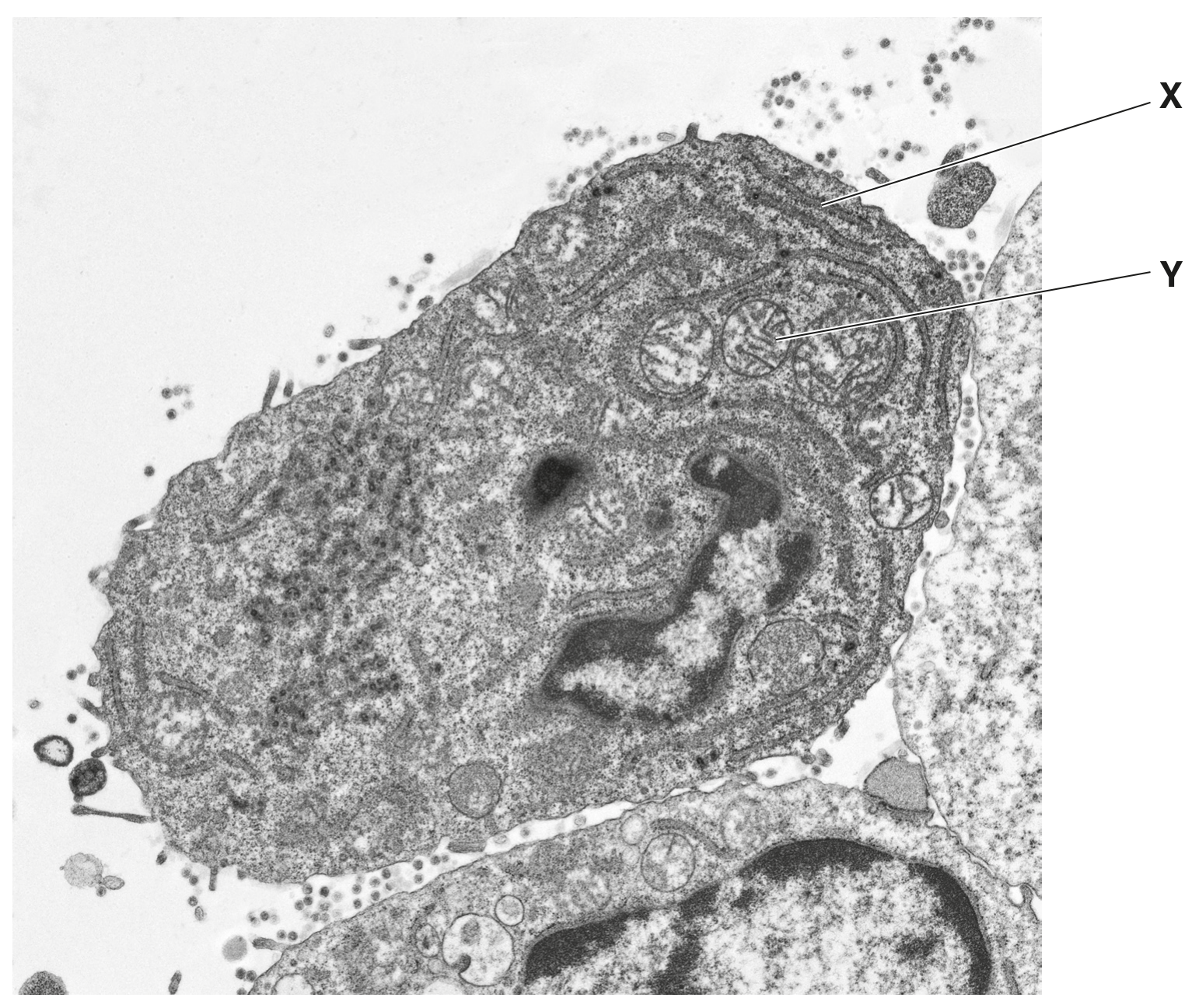
Fig. 1.2 is a transmission electron micrograph of a hybridoma cell.

Fig. 1.2

Fig. 1.2

[ 8 ]
(i)

The hybridoma cell in Fig. 1.2 synthesises and secretes molecules of a monoclonal antibody.

State the roles of the structures labelled X and Y in the production of antibody molecules in the hybridoma cell.

X
Y

[ 2 ]
(ii)

The hybridoma method for the production of monoclonal antibodies involves a number of stages. One of these stages is the formation of hybridoma cells.

Outline the stage in which hybridoma cells are formed.

[ 3 ]
(iii)

Outline the use of monoclonal antibodies in the treatment of disease.

[ 3 ]
[Maximum number: 2]

Fig. 1.1 is a diagram of an antibody molecule.

Fig. 1.1

Fig. 1.1

(a)

Vaccination was used in the eradication of smallpox.

Explain, in terms of antigens, why it has not been possible to do the same for malaria.

[ 2 ]
[Maximum number: 1]

Name as precisely as you can the structure described in each of the following statements.

(a)

The cell that secretes antibodies.

[ 1 ]
(a)

The glycoproteins CD28 and CD40 are found on the surface of T-lymphocytes (T-cells). They are binding sites for cell-signalling molecules and are essential for triggering the cloning of T-cells in an immune response.

A monoclonal antibody (mAb), which could block the CD40 signalling pathway, was produced from hamsters using the hybridoma method.

Outline the procedure, starting with a hamster, for producing mAbs suitable for use in another mammal, such as a mouse.

[ 4 ]
(b)

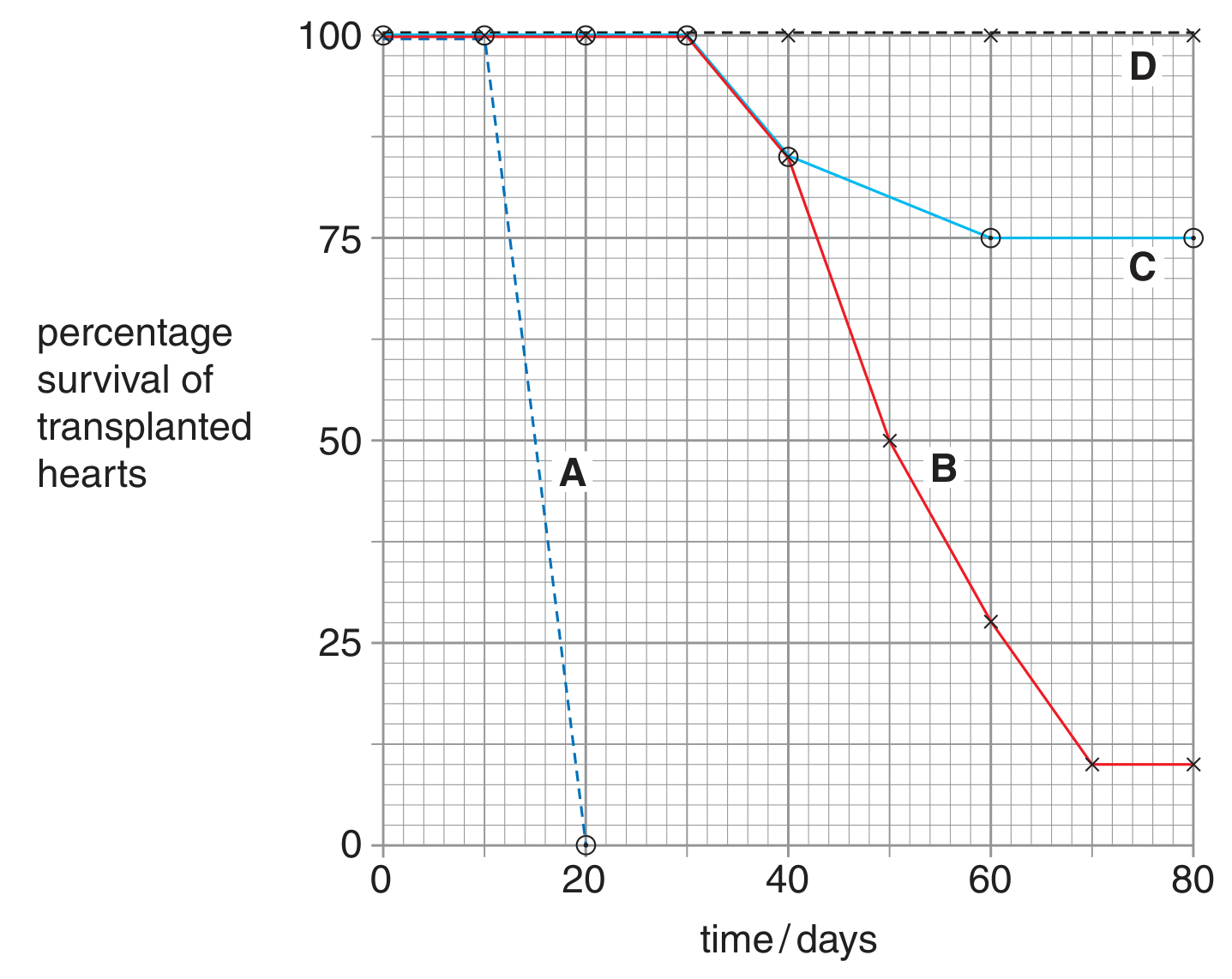
The ability of the mAb produced in (a) to prevent rejection of transplanted hearts in mice was compared with that of a protein, P, which blocks the CD28 signalling pathway.

Four groups of mice were treated as follows:
- group A - no treatment
- group B - treated with protein P only
- group C - treated with mAb only
- group D - treated with both mAb and protein P.

Fig. 2.1 shows the percentage survival of the transplanted hearts in the four groups of mice over a period of 80 days.

Fig. 2.1

Fig. 2.1

With reference to Fig. 2.1

[ 6 ]
(i)

describe the effectiveness of the four different treatments

[ 4 ]
(ii)

suggest an explanation for the differences in survival of the transplanted hearts in groups B and D.

[ 2 ]
(c)

State two uses of mAbs in humans, other than preventing rejection of transplanted tissue.
1.

[ 2 ]
[Maximum number: 10]

Some of the steps in the production of monoclonal antibodies are shown in Fig. 2.1.
step 1
A mouse is injected with an antigen, A.
step 2
The mouse is left for a few weeks to allow an immune response to occur.
step 3
Plasma cells (effector B lymphocytes) are extracted from the mouse's spleen.
step 4
Hybridoma cells are formed.
step 5
Each hybridoma cell is isolated and allowed to grow and divide.
step 6
The hybridoma cells producing anti-A antibodies are identified and cultured on a large scale.
Fig. 2.1

(a)

With reference to Fig. 2.1, explain:

[ 4 ]
(i)

what is meant by a hybridoma cell (step 4)

[ 1 ]
(ii)

why hybridoma cells need to be formed (step 4)

[ 2 ]
(iii)

how hybridoma cells producing anti-A antibody can be identified.

[ 1 ]
(b)

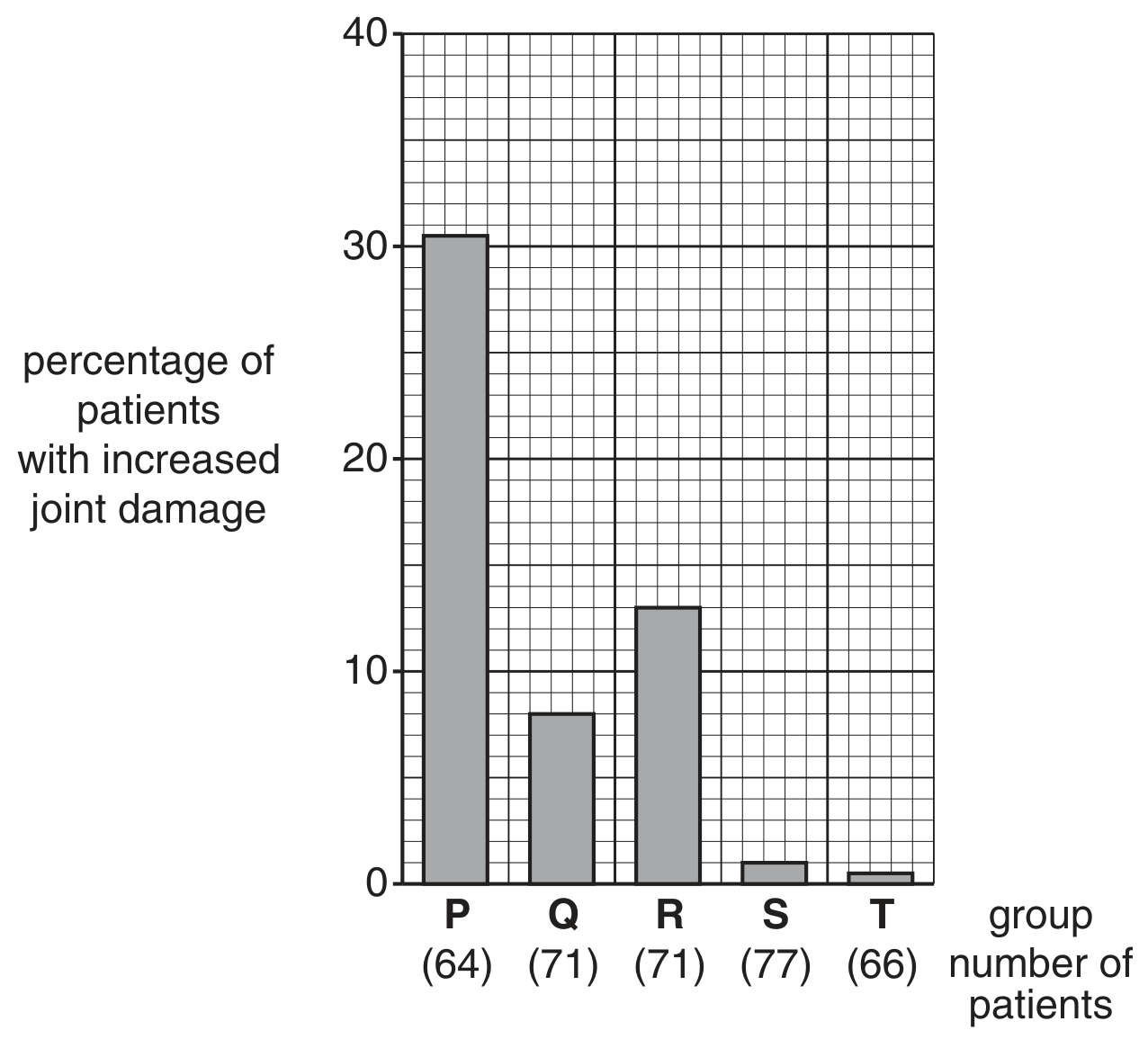
Rheumatoid arthritis (RA) is an autoimmune disease in which T lymphocytes attack the cartilage of joints by secreting a protein, TNF α\alpha. When RA is untreated, joint damage increases considerably.

The monoclonal antibody, infliximab, is used to treat RA. Infliximab specifically binds to TNF α\alpha.

A trial was set up to compare the effectiveness of infliximab and a standard treatment for RA, the anti-inflammatory drug, MTX.

Five groups of people with RA received the following treatments for one year:
- group P - MTX only
- group Q - MTX plus low dosage of infliximab at intervals of eight weeks
- group R - MTX plus low dosage of infliximab at intervals of four weeks
- group S - MTX plus high dosage of infliximab at intervals of eight weeks
- group T - MTX plus high dosage of infliximab at intervals of four weeks.

At the end of the year's treatment, the proportion of people in each group with increased joint damage was determined.

The results are shown in Fig. 2.2.
The number of people in each group is shown in brackets.

Fig. 2.2

Fig. 2.2

With reference to Fig. 2.2:

[ 3 ]
(i)

describe the effect of infliximab treatment on these people

[ 3 ]
(c)

Explain the advantages of the use of monoclonal antibodies, compared with conventional methods, in the diagnosis of disease.

[ 3 ]
[Maximum number: 5]

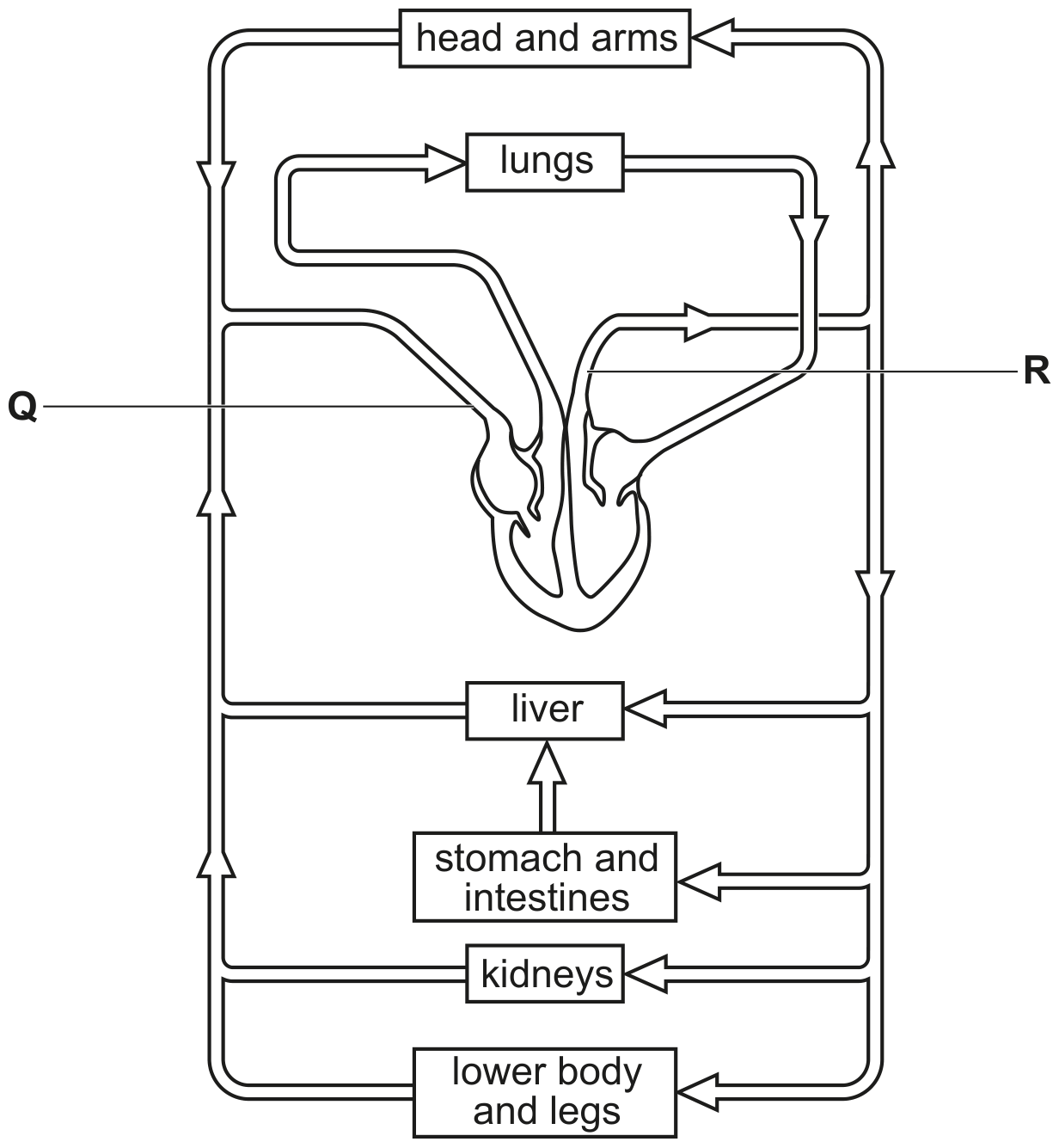
Fig. 2.1 is a simplified diagram of the human circulatory system.

Fig. 2.1

Fig. 2.1

(a)

Blood plasma plays an important role in the transport of molecules such as antibodies.

Scientists discovered that some of the antibodies in the blood plasma of sharks have a different structure to the antibodies found in human blood plasma.

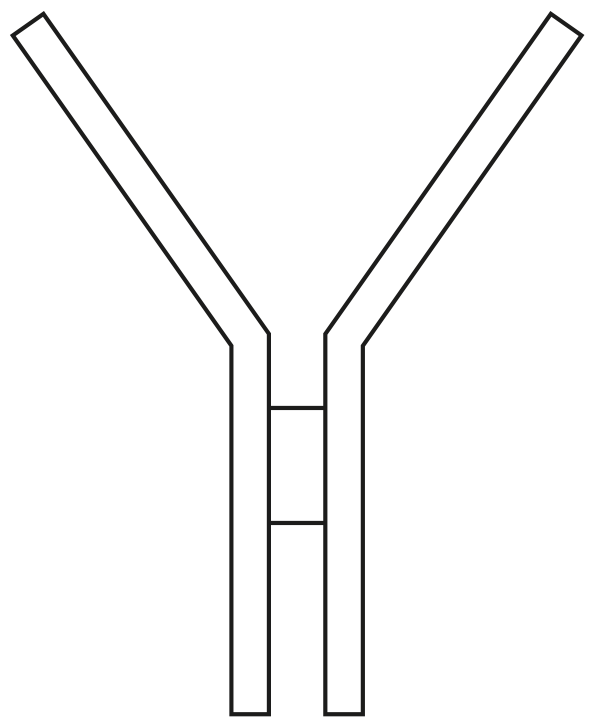
Fig. 2.2 shows the structure of an antibody molecule found in the blood plasma of a shark.

Fig. 2.2

Fig. 2.2

[ 5 ]
(i)

Human antibodies are used in the treatment of some forms of cancer. However, the antibodies injected into the bloodstream can only reach a small percentage of the cancer cells that form the cancerous tumour.

Shark antibodies are smaller than human antibodies. Scientists are researching the possibility of injecting shark antibodies into the bloodstream to treat cancerous tumours in humans.

Suggest how using the smaller shark antibodies may be more effective in reaching a greater percentage of cancer cells than human antibodies and lead to greater success at treating cancer.

[ 2 ]
(ii)

Antibodies can also be used in the prevention of infectious diseases.

Explain how injection of antibodies into the bloodstream can protect a person from disease after infection by a pathogen.

[ 3 ]
[Maximum number: 1]

The infectious disease cholera is caused by a bacterium.

(a)

Using genetic engineering, it is possible to produce a form of choleragen consisting of only subunit B . This can be combined with inactivated bacterial cells to produce a vaccine against cholera.

[ 1 ]
(i)

Suggest why subunit B , rather than subunit A , is used in the vaccine.

[ 1 ]
[Maximum number: 5]

A vaccine, NicVAX, is being developed to help people stop smoking tobacco. Injection of NicVAX into the body causes production of antibody molecules that bind to nicotine.

(a)

Mice injected with NicVAX produce B-lymphocytes that mature into cells responsible for the production of antibody (plasma cells).

Outline how these B-lymphocytes can be used to produce monoclonal antibody.

[ 4 ]
(b)

State one medical use of monoclonal antibodies, other than their use in producing vaccines.

[ 1 ]
0