EduNinja
[Maximum number: 5]

Smooth muscle is a tissue composed of smooth muscle cells. The cells contain cytoplasm packed with proteins that are involved in contraction and relaxation.

(a)

Fig. 1.2 is a photomicrograph of smooth muscle tissue in the wall of the intestines. A capillary is visible in addition to smooth muscle cells.
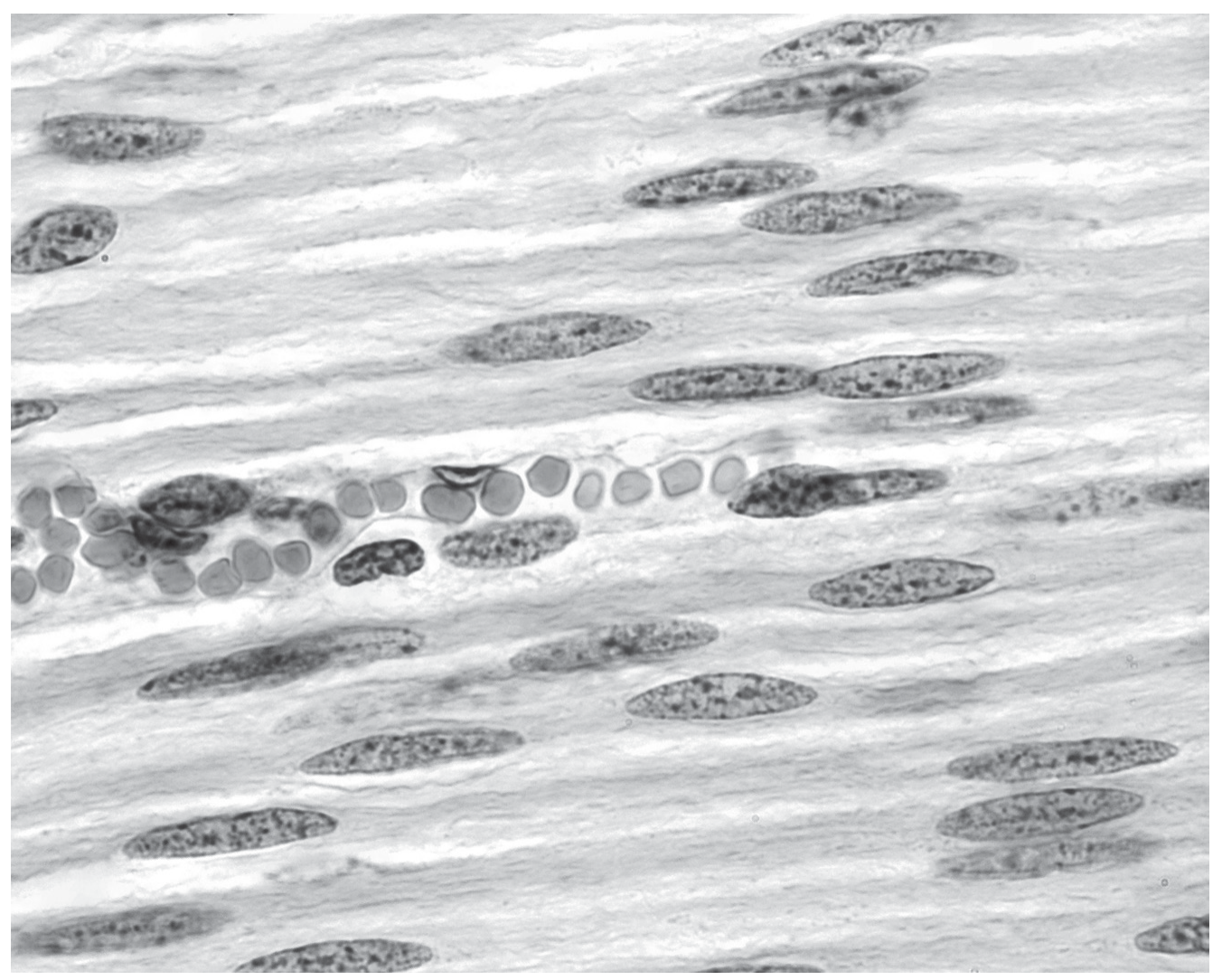
Fig. 1.2

Fig. 1.2

[ 5 ]
(i)

Outline the features that help to identify the blood vessel in Fig. 1.2 as a capillary.

[ 2 ]
(ii)

Explain how the structure of a capillary is related to its function in smooth muscle.

[ 3 ]
[Maximum number: 4]

The mammalian circulatory system is adapted for the long-distance transport of the respiratory gases, oxygen and carbon dioxide.

The system is described as a closed double circulation.

(a)

Name:
- the two different circulations of the double circulatory system of mammals
- the main vein returning deoxygenated blood to the heart.

[ 3 ]
(b)

In a closed circulation, blood is kept within vessels at all times.

Name the type of blood vessel that connects capillaries and veins.

[ 1 ]
[Maximum number: 2]

The trachea of the gas exchange system branches into two airways, each of which enters a lung.

(a)

The lower part of the trachea receives blood from arteries that branch from the aorta. Different arteries carry blood from the heart to the alveoli of the lungs.

State the differences between the arteries supplying the lower part of the trachea and the arteries that supply blood to the alveoli of the lungs.

[ 2 ]
[Maximum number: 6]

Mammals have a closed double circulation system.

(a)

Explain what is meant by a closed double circulation.

[ 2 ]
(b)

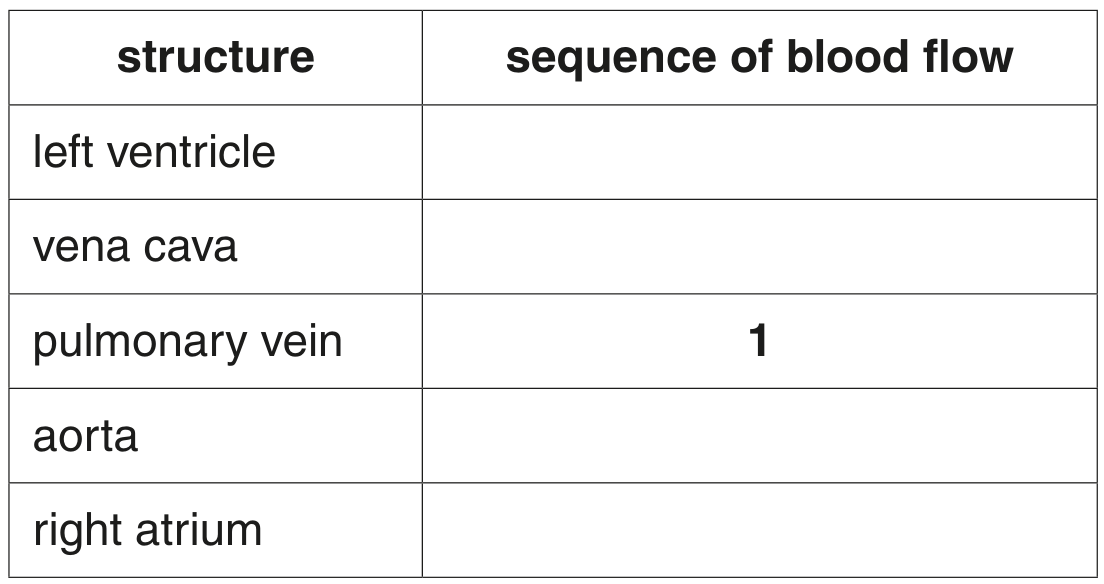
Table 1.1 shows some structures in the mammalian circulatory system.

Complete Table 1.1 to show the sequence of structures through which blood flows, starting with the pulmonary vein.

Use the numbers 2 to 5 to indicate the correct sequence.

Table 1.1

Table 1.1

[ 2 ]
(c)
(i)

Explain why arteries have thicker walls than veins.

[ 2 ]
[Maximum number: 3]

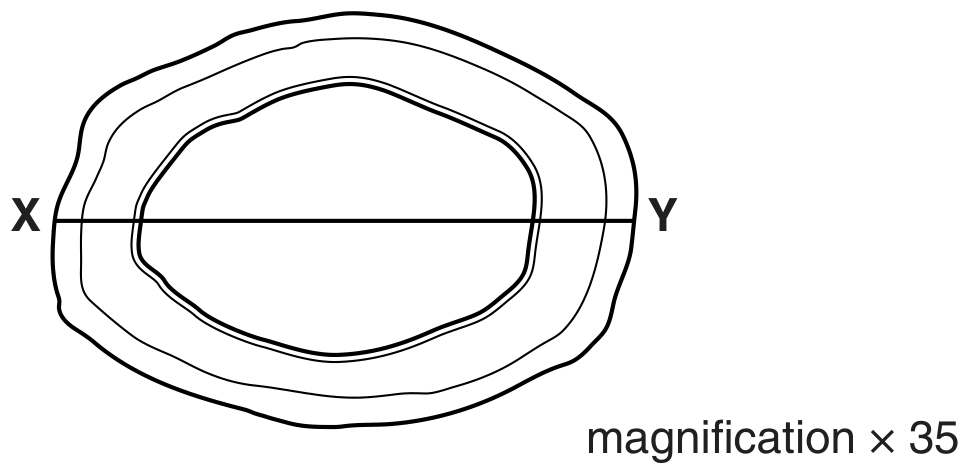
Fig. 1.1 is a diagram of a transverse section through a vein.

Fig. 1.1

Fig. 1.1

(a)

The presence of a valve would help to confirm that the blood vessel in Fig. 1.1 is a vein and not an artery.

Describe three structural features of the blood vessel shown in Fig. 1.1 that would help to identify it as a vein and not as an artery.
1.
2.
3.

[ 3 ]
[Maximum number: 5]

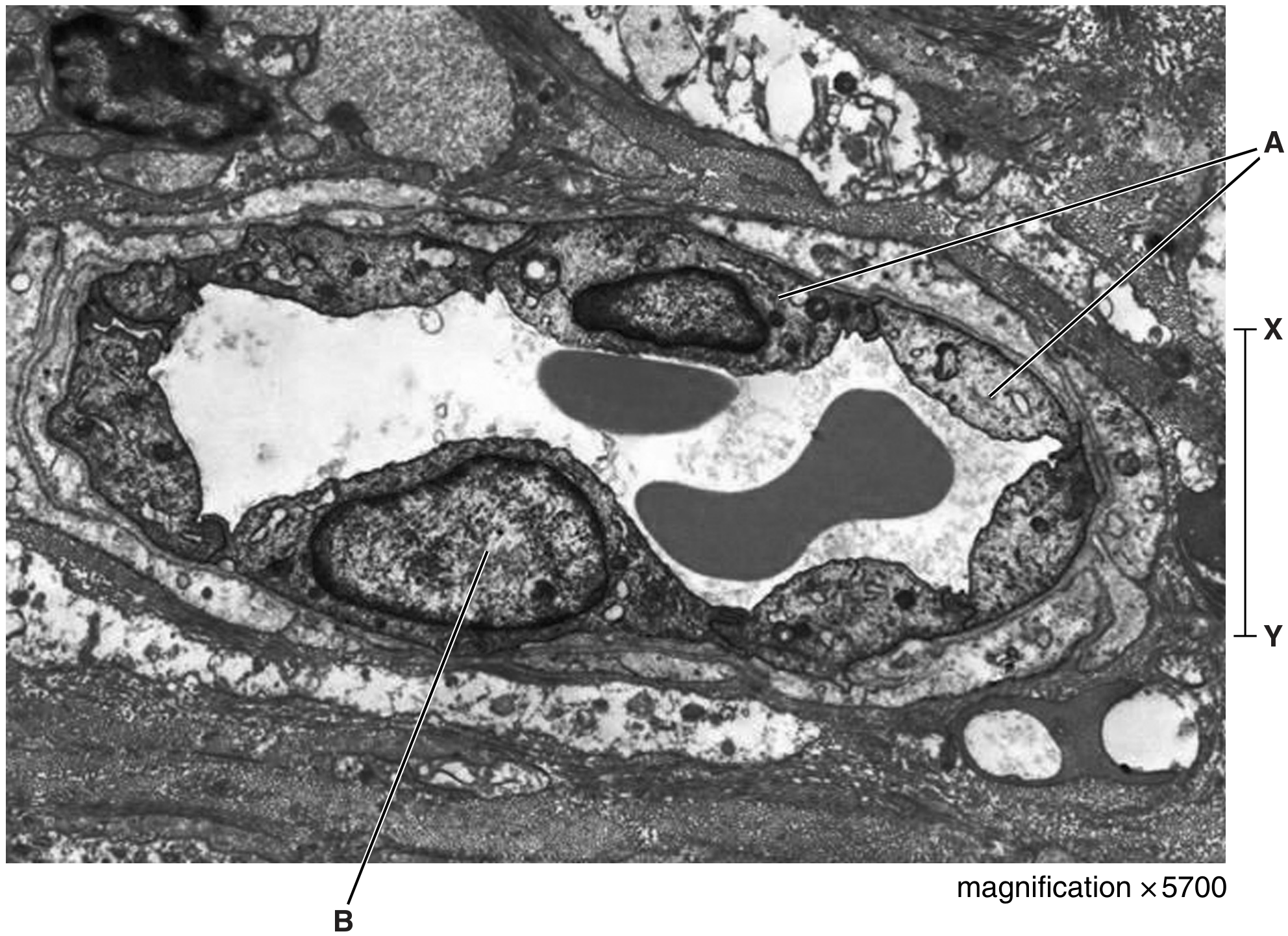
Capillaries are known as exchange vessels. Substances are exchanged between blood and tissue fluid as the blood flows through the capillaries.

Fig. 1.1 is an electron micrograph of a section through a capillary with two red blood cells.

Fig. 1.1

Fig. 1.1

(a)

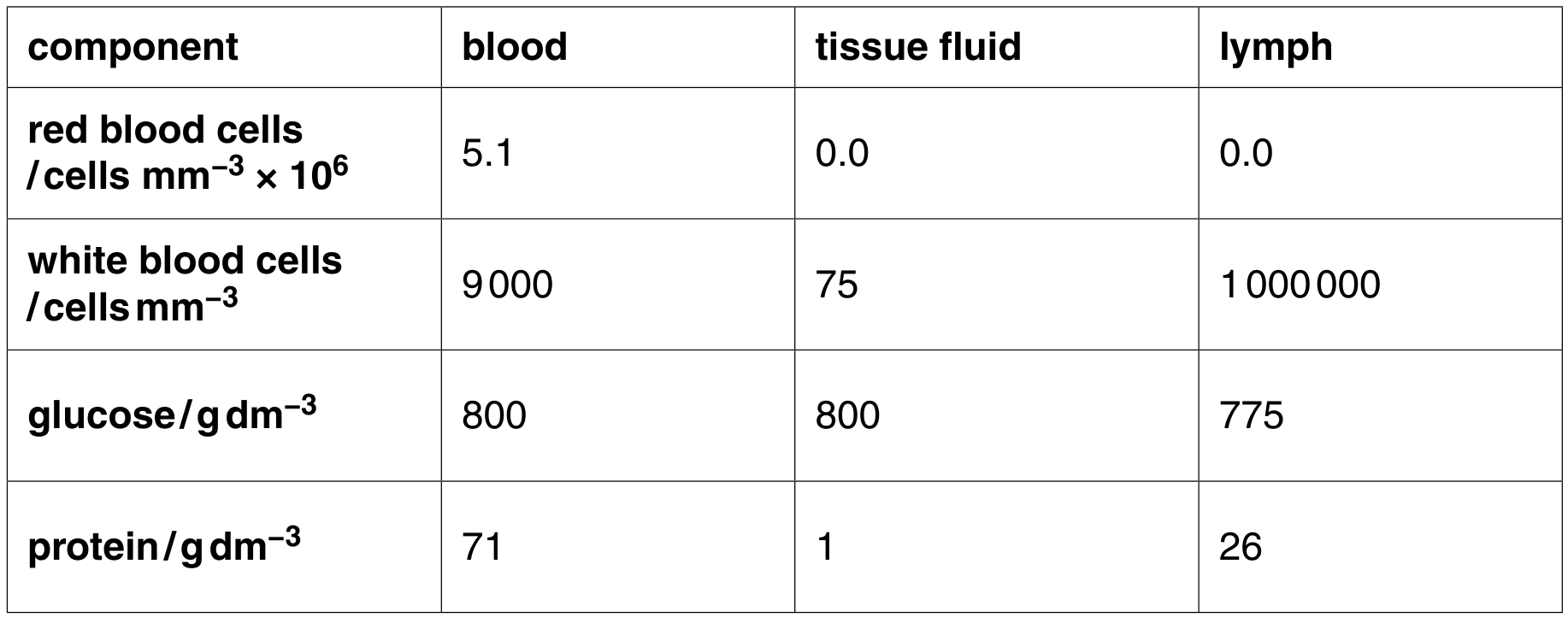
Table 1.1 shows the composition of blood, tissue fluid and lymph.

Table 1.1

Table 1.1

Explain the differences between the composition of blood, tissue fluid and lymph as shown in Table 1.1, for white blood cells, glucose and protein.
white blood cells
glucose
protein

[ 5 ]
[Maximum number: 1]

Name as precisely as you can the structure described in each of the following statements.

(a)

The blood vessel that transports deoxygenated blood from the heart.

[ 1 ]
[Maximum number: 4]

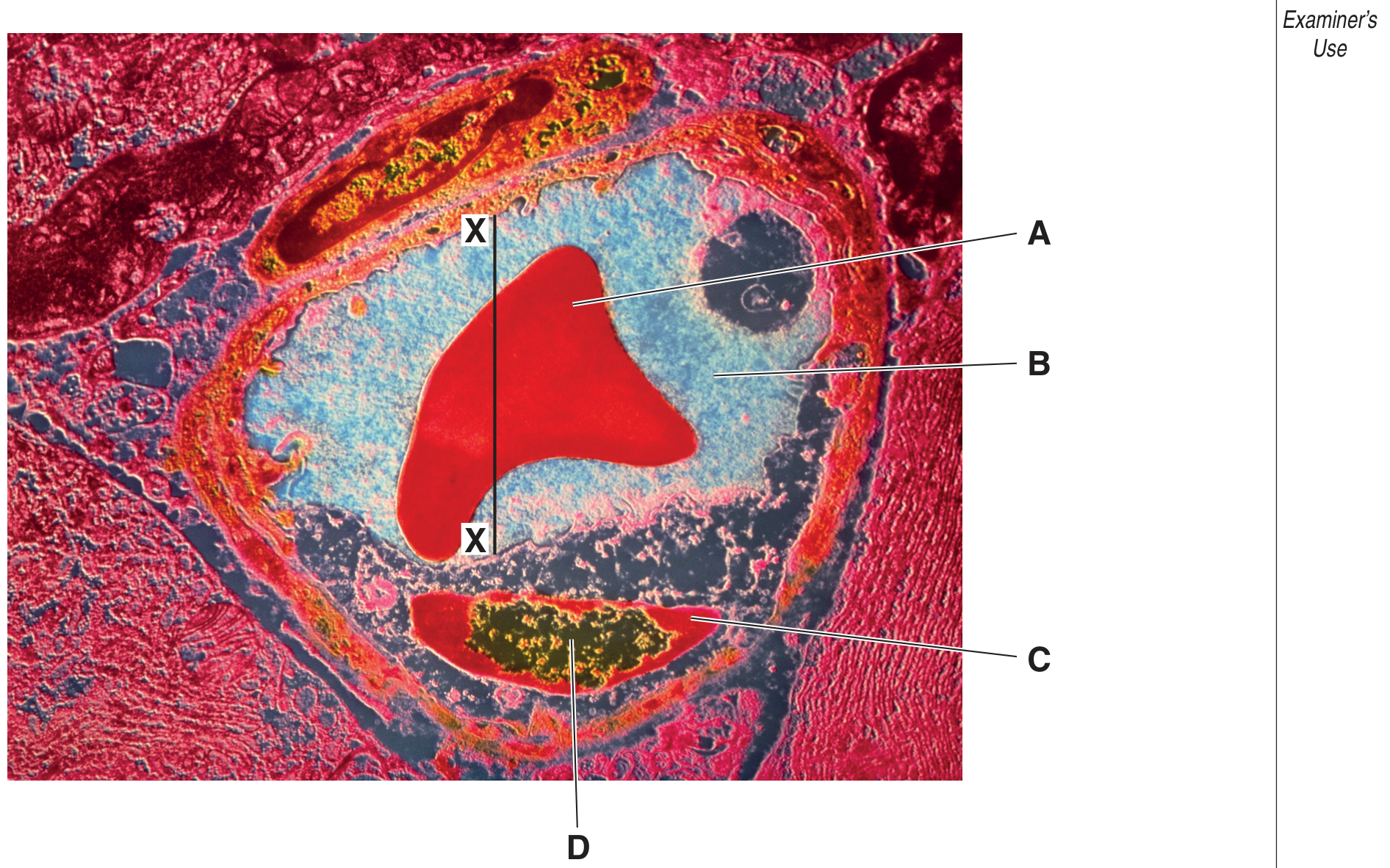
Fig. 1.1 is an electron micrograph of a cross section through a blood vessel.

Fig. 1.1

Fig. 1.1

(a)

Name the type of blood vessel shown in Fig. 1.1 and describe one visible feature which is characteristic of this type of vessel.
type of vessel
characteristic feature

[ 2 ]
(b)

Name:

[ 2 ]
(i)

structure A

(ii)

the main component of substance B.

[ 2 ]
[Maximum number: 1]

Which row correctly identifies the structure of an artery compared with a vein seen in transverse section under a light microscope?

outer wall of artery

layer of muscles and elastic fibres

diameter of the lumen (hollow space)

thicker

thicker

narrower

thicker

thinner

wider

thinner

thicker

narrower

thinner

thinner

wider

0