EduNinja
[Maximum number: 7]

Antibiotics are drugs which are very important in the treatment and cure of some diseases.

(a)

When patients are prescribed a course of antibiotics, they must not stop taking the antibiotics as soon as they start to feel better, or when they feel that the disease symptoms have gone.

Explain the importance of taking a complete course of antibiotics.

[ 3 ]
(b)

Some antibiotics act as competitive inhibitors of enzymes in pathogens.

[ 4 ]
(i)

State why penicillin, which is an enzyme inhibitor, can be taken by humans.

[ 1 ]
(ii)

Suggest the effect which penicillin will have on bacterial cells.

[ 3 ]
[Maximum number: 11]

The disease-causing bacterium, Pseudomonas aeruginosa, may occur in the form of a 'biofilm'. A biofilm consists of a layer of bacteria, growing on a surface and attached to one another. Such biofilms are difficult to control by antibiotics.

A mutant strain of P. aeruginosa has been found which produces biofilms that are indistinguishable from those of the wild-type bacteria. However, the mutant strain differs from the wild-type in its resistance to an antibiotic, A.

(a)

Antibiotic A belongs to a group of antibiotics known as anti-pseudomonal penicillins.

[ 5 ]
(i)

Describe the mode of action of penicillin on bacteria.

[ 3 ]
(ii)

Explain why penicillin does not affect viruses.

[ 2 ]
(b)

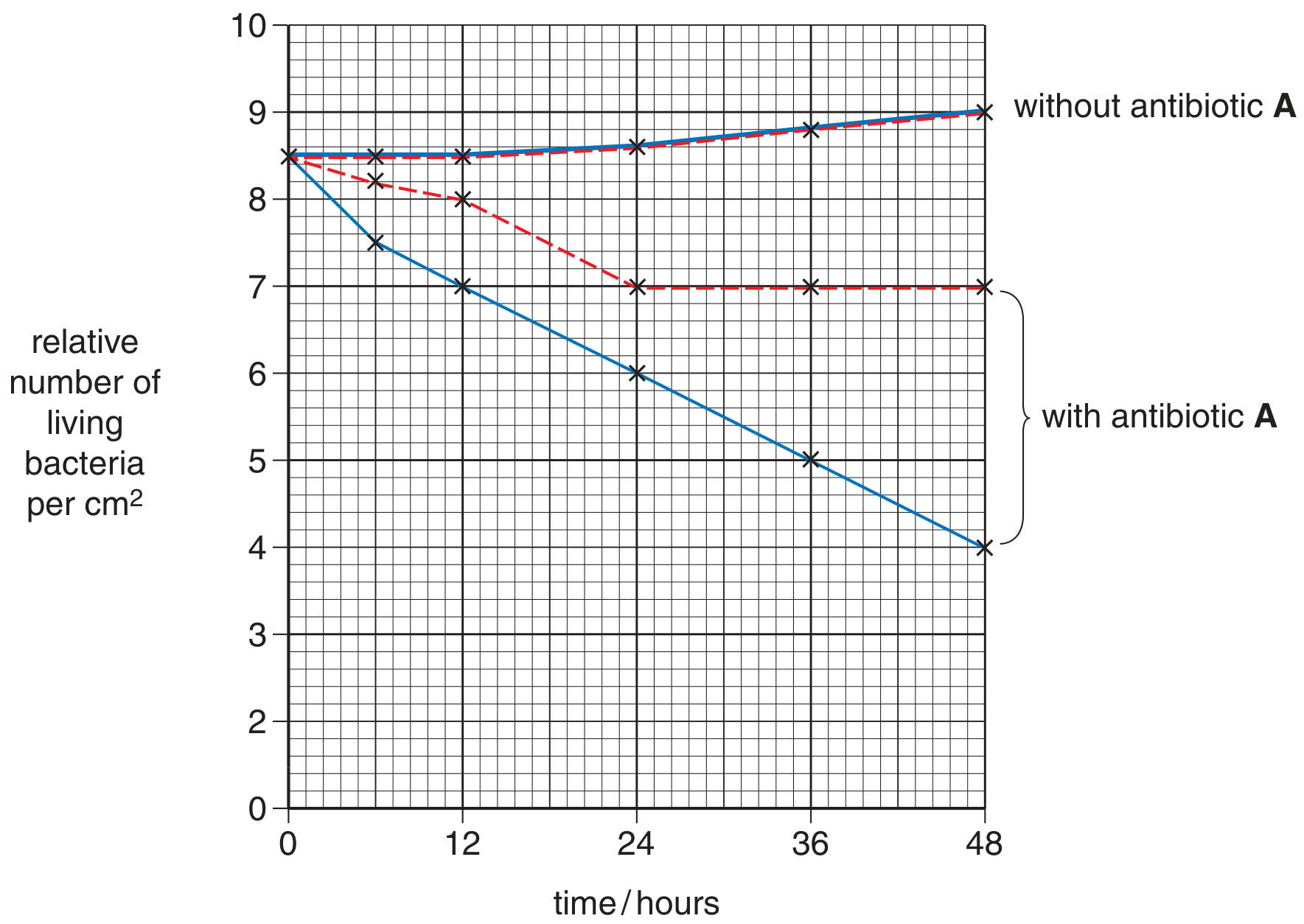
Wild-type and mutant bacteria were grown on solid culture media both with antibiotic A and without antibiotic A.

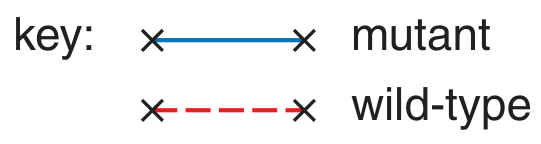
The subsequent change in numbers of living bacteria is shown in Fig. 2.1.

Fig. 2.1

Fig. 2.1

Fig. 2.1

Fig. 2.1

With reference to Fig. 2.1, describe the changes in numbers of the wild-type and mutant bacteria on culture media with antibiotic A and without antibiotic A.

[ 4 ]
(c)

The wild-type and mutant strains of this bacterium have different DNA sequences in part of a gene coding for an enzyme which is needed to produce polymers of glucose, called glucans. Glucans are secreted by bacteria and can bind to various molecules, including those of antibiotic A.
Explain

[ 2 ]
(i)

the different effects of antibiotic A, shown in Fig. 2.1, on the wild-type and mutant strains of bacteria.

[ 2 ]
(a)

Folic acid is a molecule used by all cells for growth. Bacteria cannot absorb folic acid from their surroundings. Bacteria use an enzyme to make a molecule called PABA. PABA is used to make folic acid.

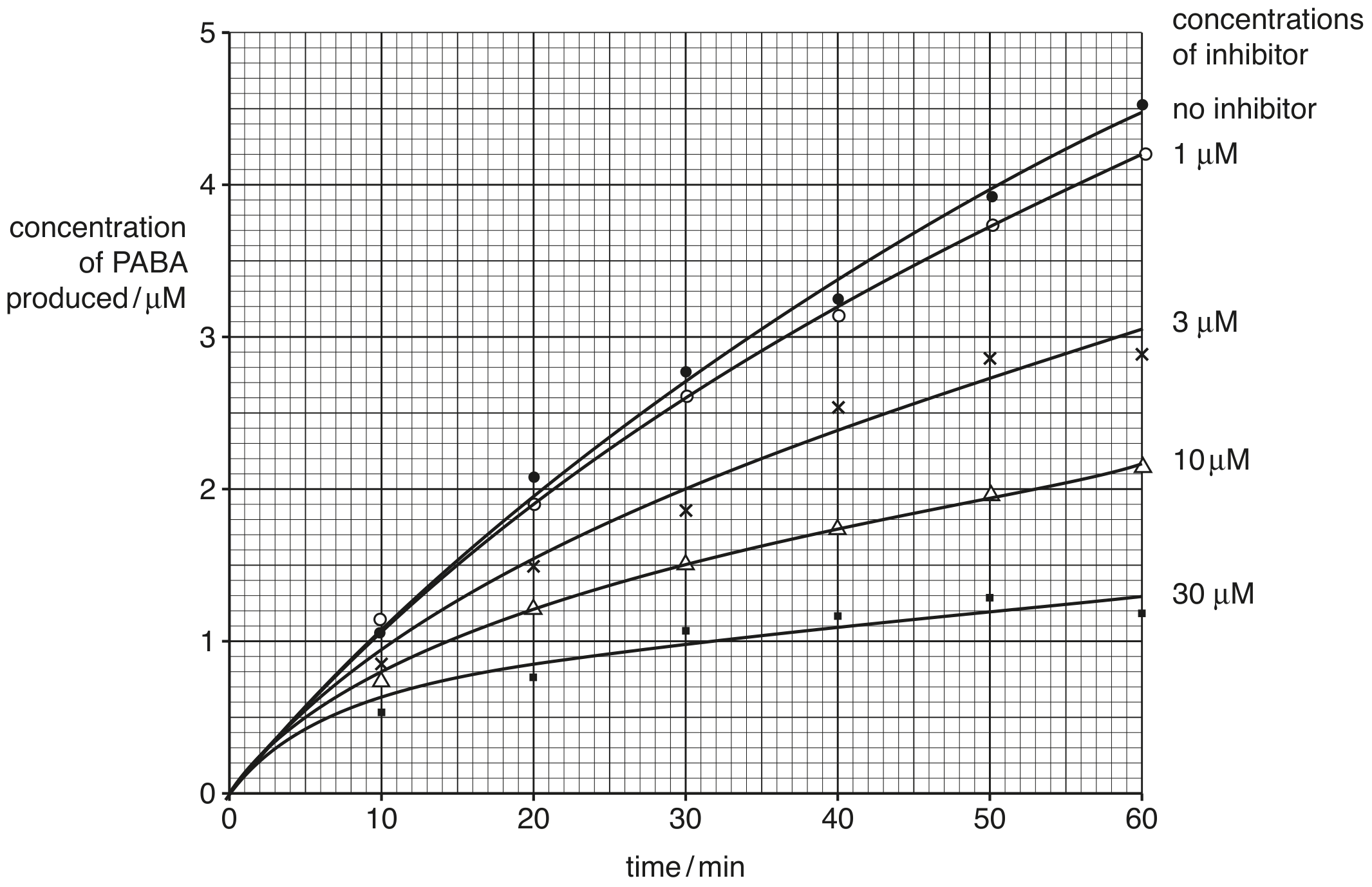
An investigation was carried out to determine the effect on the production of PABA when the concentration of an enzyme inhibitor is increased. Four different concentrations ( 1μM1 \mu \mathrm{M} to 30μM)30 \mu \mathrm{M}) of the inhibitor were used, together with a control with no inhibitor.

The concentration of PABA produced in each reaction mixture was determined at 10 minute intervals.

The results are shown in Fig. 2.1.

Fig. 2.1

Fig. 2.1

[ 3 ]
(i)

Folic acid from the diet is able to enter human cells, but is not able to cross bacterial cell walls. Human cells do not have an enzyme to make PABA.

Suggest why the inhibitor of this enzyme could be used as a drug to treat bacterial infections in humans.

[ 1 ]
(ii)

Suggest why there are few drugs that have any effect on viruses.

[ 2 ]
(b)

The search for new antibiotics is important because there are many strains of bacteria that are resistant to antibiotics.

Suggest two ways to reduce the spread of antibiotic resistance.
1
2

[ 2 ]
[Maximum number: 7]

Humans use antibiotics to treat bacterial infections. The increased use of antibiotics has led to an increase in the number of strains of bacteria that are resistant to antibiotics.

The evolution of antibiotic resistance in bacteria has resulted from natural selection.
Outline how bacteria become resistant to antibiotics.

(a)

Penicillin belongs to a group of antibiotics known as β\beta lactams, which all act in the same way on bacteria.

Describe how penicillin kills non-resistant bacteria.

[ 4 ]
(b)

A strain of the bacterium Pseudomonas aeruginosa, strain R, has a gene coding for an efflux pump and is resistant to a β\beta lactam antibiotic.

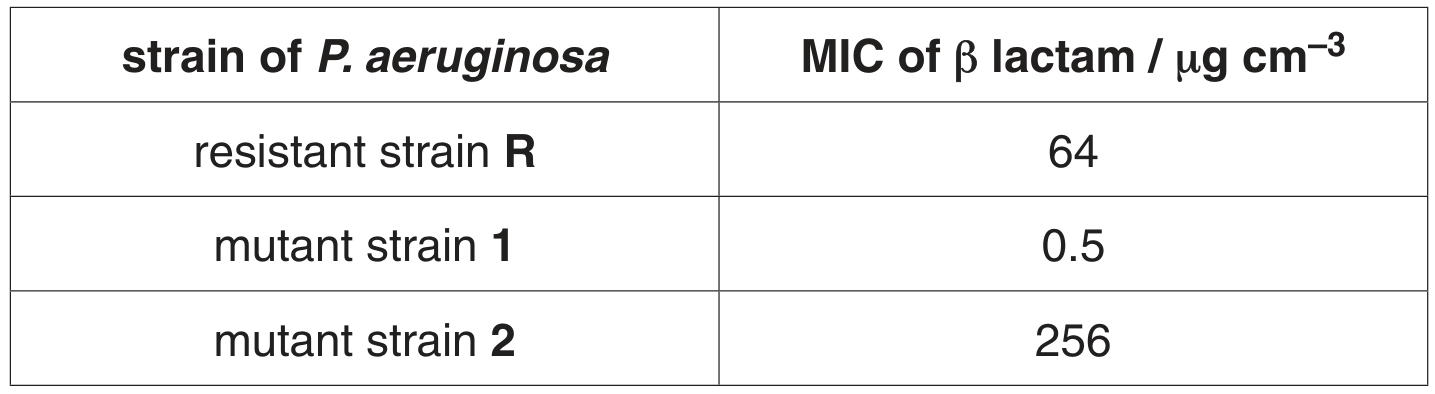
The minimum inhibitory concentration (MIC) of the β\beta lactam for strain R was determined. The MIC is the lowest concentration of antibiotic that prevents a colony of the bacterium from growing.

The MICs were also determined for two mutant strains derived from strain R, mutant strain 1 and mutant strain 2. Each of these strains differs from strain R in the expression of the gene coding for the efflux pump.

The MICs for the three strains of P. aeruginosa are shown in Table 2.1.

Table 2.1

Table 2.1

With reference to Table 2.1, suggest:

[ 8 ]
(i)

why the MICs for mutant strains 1 and 2 differ from that for strain R mutant strain 1
mutant strain 2

[ 4 ]
(ii)

how a population of strain R of P. aeruginosa could be replaced by mutant strain 2.

[ 4 ]
[Maximum number: 2]

Fig. 2.1 shows a world map shaded by country according to the incidence of tuberculosis (TB).

TB incidence.
New cases per 100000 people per year
<10
10<25
25<50
50 < 100
100 < 300
>300

(a)

People suffering from TB are treated using antibiotics. Recently, multi-drug resistant TB (MDR-TB) has developed, making the disease more difficult to treat. Suggest how this drug resistance may have arisen.

[ 2 ]
[Maximum number: 2]

The main cause of tuberculosis (TB) in humans is the bacterium Mycobacterium tuberculosis. Most cases of the disease involve the lungs. The bacterium can enter cells and remain inactive in a latent (dormant) state. However, the bacterium can become active to produce symptoms of the disease.

In a person with active TB, the pathogen can be present in airborne droplets that are exhaled. Generally, a healthy person who inhales these droplets has effective defence mechanisms in the gas exchange system to prevent infection.

(a)

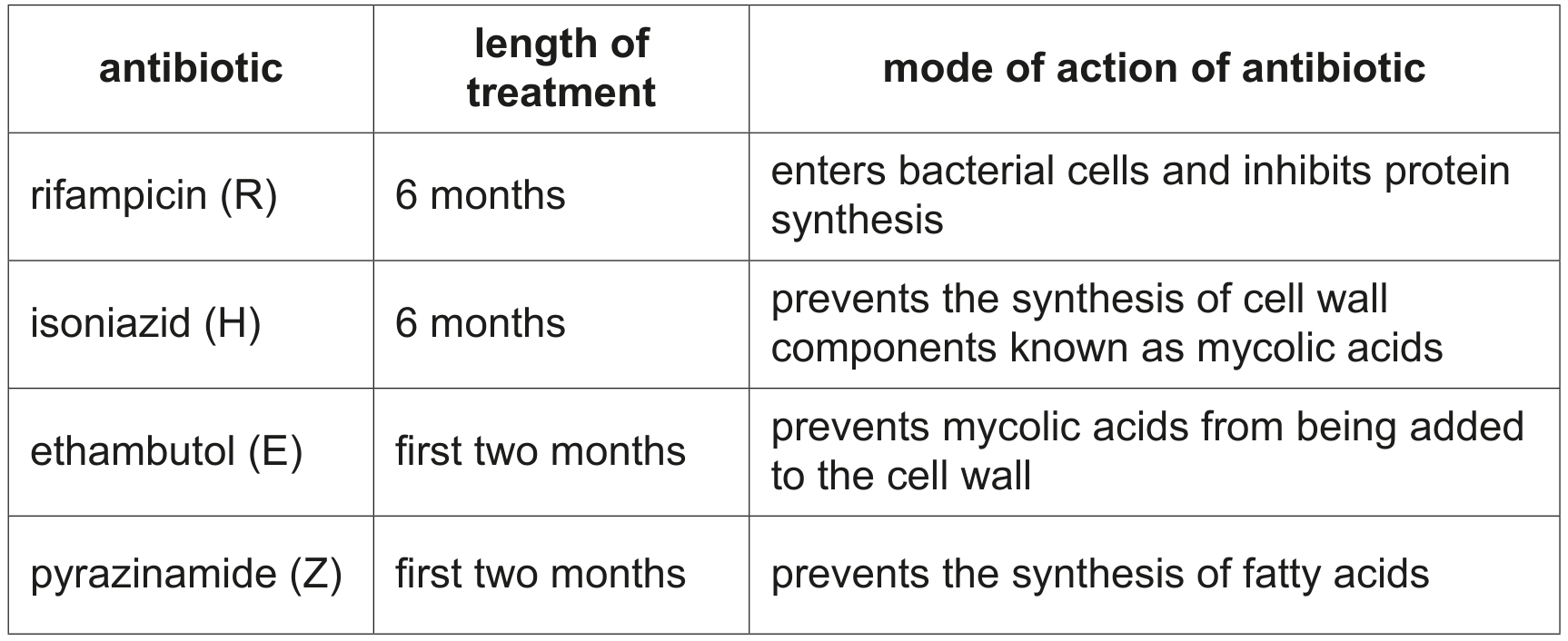
The standard treatment for TB continues for six months and initially involves the use of four different antibiotics.

If no antibiotic resistance is detected, the treatment is reduced to two of the four antibiotics. The two antibiotics used are rifampicin and isoniazid.

Suggest the benefits of beginning the treatment with four different antibiotics.

Multidrug-resistant TB (MDR-TB) occurs if resistance develops to rifampicin and isoniazid.
The treatment for MDR-TB can last up to 30 months and involves different antibiotics to the standard treatment.

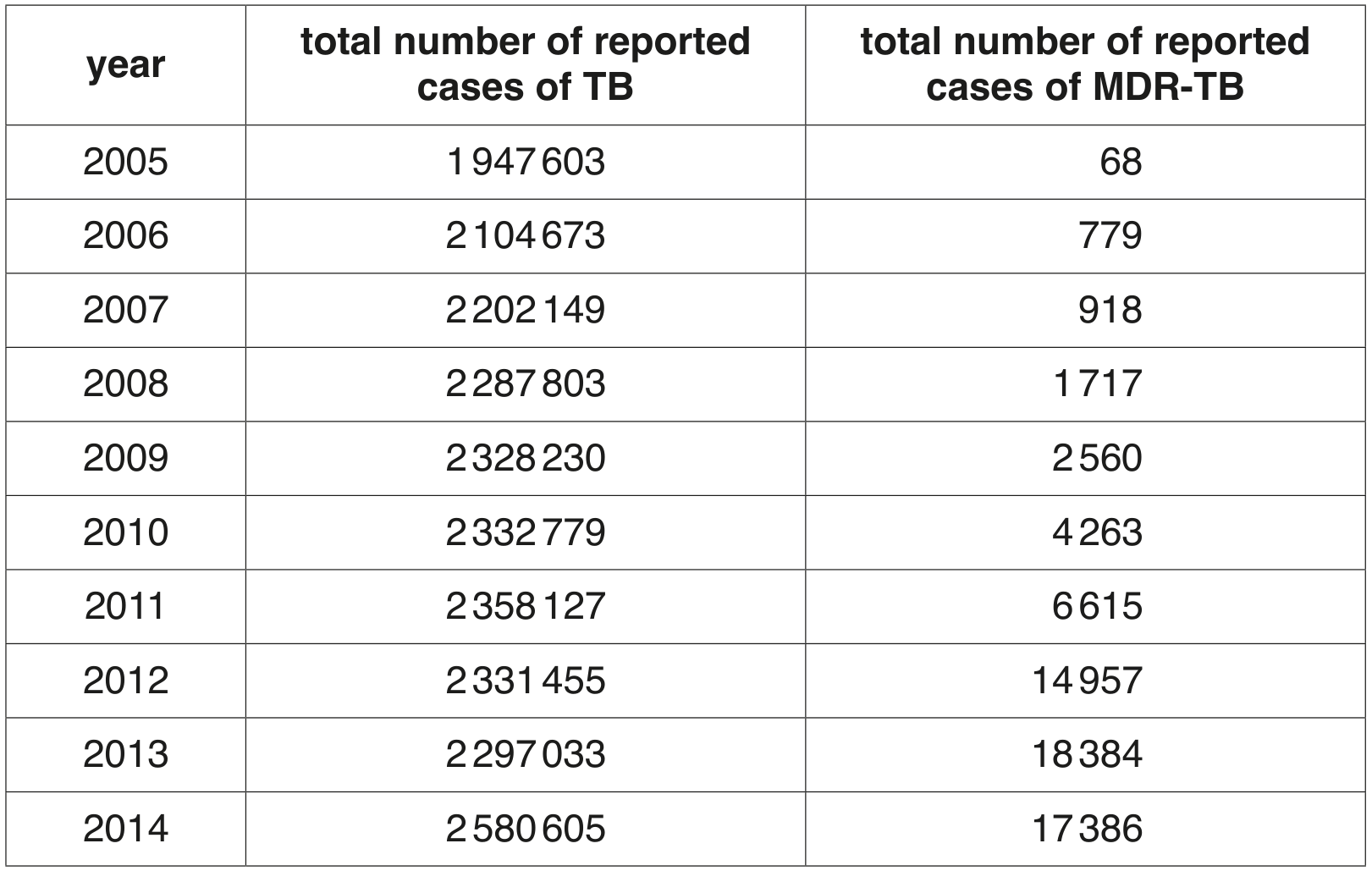
Table 2.1 shows the number of reported cases of TB and MDR-TB in the South-East Asia region between 2005 and 2014, as published by the World Health Organization (WHO).

Table 2.1

Table 2.1

[ 2 ]
[Maximum number: 4]

The treatment for people with active tuberculosis (TB) lasts six months and involves a combination of antibiotics. This is usually very effective if the person has a susceptible (non-resistant) strain of Mycobacterium tuberculosis, the causative organism of TB.

Table 2.1 summarises one recommended treatment strategy that involves a combination of antibiotics.

Table 2.1

Table 2.1

(a)

Susceptible strains of M. tuberculosis will be killed using any one of the antibiotics listed in Table 2.1. However, combination treatment is preferred as it is one method that can be used to reduce the impact to society of antibiotic resistance.

With reference to Table 2.1, explain how combination treatment for TB can help to reduce the impact of antibiotic resistance compared to single antibiotic treatment.

Rifampicin binds tightly to an RNA polymerase molecule close to its active site. This affects the activity of the enzyme.

[ 4 ]
[Maximum number: 2]

Smallpox, measles and HIV/AIDS are infectious diseases caused by different viruses. These different viruses share some structural features.

(a)

Explain why antibiotics, such as penicillin, cannot be used to treat measles.

[ 2 ]
[Maximum number: 2]

The number of cases of tuberculosis (TB) is affected by many biological, social and economic factors.

(a)

Mycobacterium tuberculosis is a species of bacterium that causes TB. Strains of M. tuberculosis have evolved resistance to some of the antibiotics used to treat the disease.

State two ways that the impact of antibiotic resistance can be reduced.
1

2

[ 2 ]
0