EduNinja
(a)
(i)

Explain why sodium ions cannot cross phospholipid bilayers by simple diffusion.

[ 1 ]
(ii)

Ions and some molecules move across cell surface membranes by facilitated diffusion and active transport.

Compare facilitated diffusion and active transport by stating one way in which they are similar and two ways in which facilitated diffusion is different from active transport.
similarity
difference 1
difference 2

[ 3 ]
[Maximum number: 6]

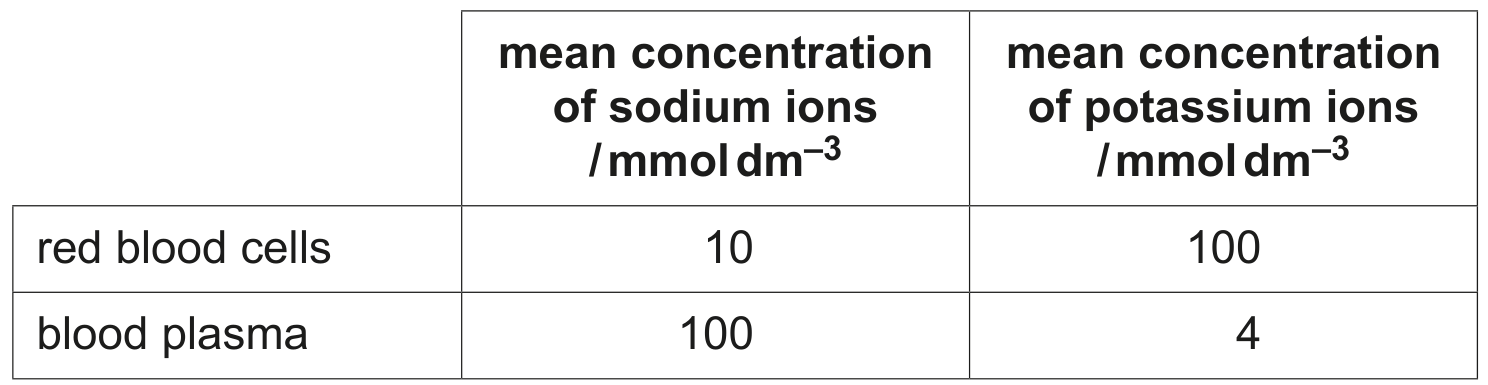
Scientists measured the concentration of sodium ions and potassium ions in the red blood cells and in the blood plasma of a group of people. The results are shown in Table 1.1.

Table 1.1

Table 1.1

(a)
(i)

Use the information in Table 1.1 to identify and describe the process by which potassium ions enter red blood cells from the blood plasma.

[ 3 ]
(ii)

Sodium ions and oxygen molecules enter red blood cells.

State one similarity and one difference between the processes used by sodium ions and oxygen molecules to enter red blood cells.
similarity
difference

[ 2 ]
(b)

Scientists studied the uptake of a substance, F, by human red blood cells.

The red blood cells were immersed in a solution of substance F for 30 minutes. After this time the scientists recorded two observations:
- the cell surface membrane of the red blood cells showed infoldings (invaginations)
- an increase in the number of vesicles in the cytoplasm.

Identify the process by which substance F entered the red blood cells.

[ 1 ]
[Maximum number: 6]

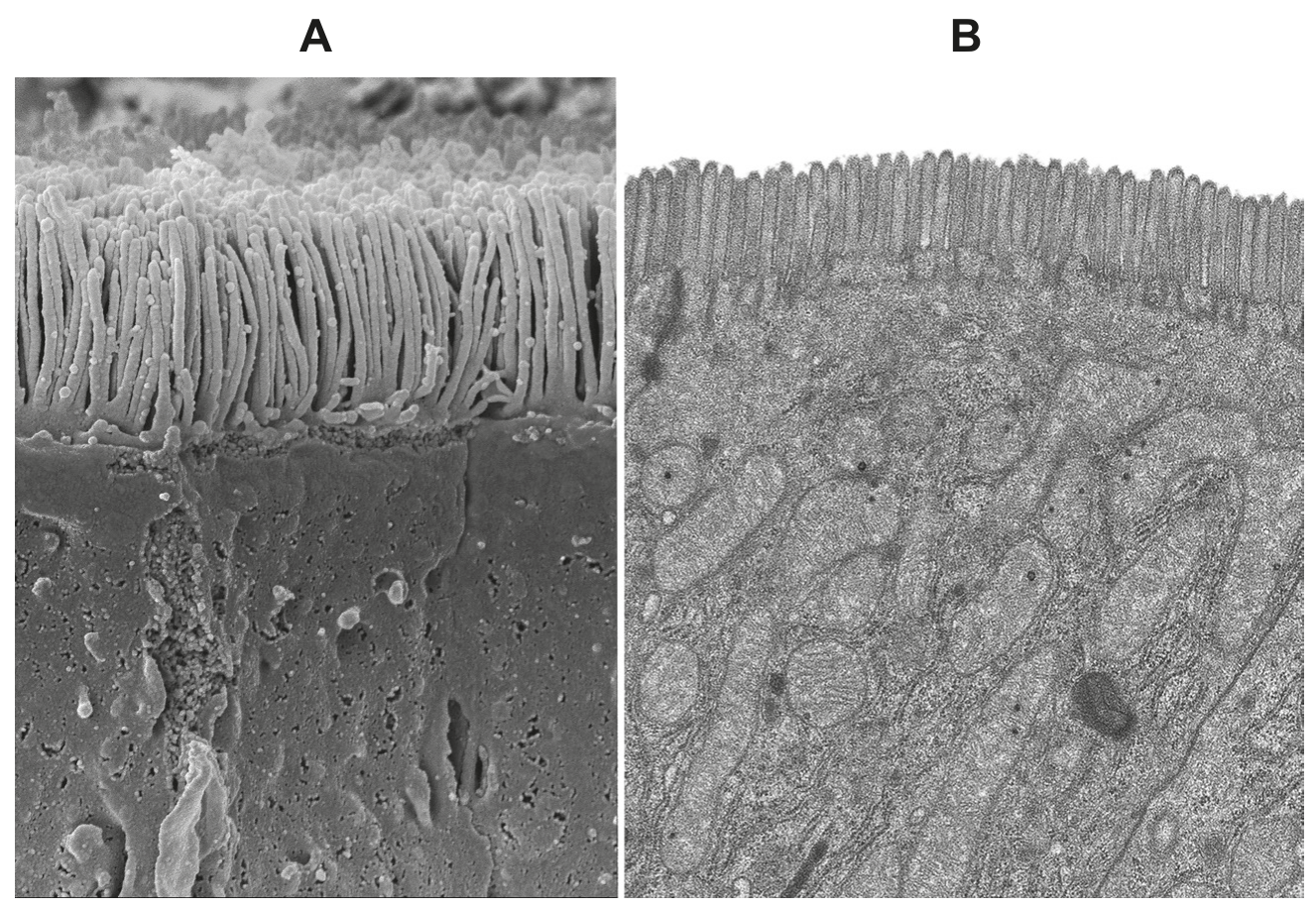
Epithelial cells in the small intestine have cell structures known as microvilli. The microvilli of these cells are found only on the surface that borders the gut lumen.

Fig. 1.1 shows images of microvilli of intestinal epithelial cells. These images have been obtained using a scanning electron microscope and a transmission electron microscope.

Fig. 1.1 A is at a different magnification to Fig. 1.1B.

Fig. 1.1

Fig. 1.1

(a)

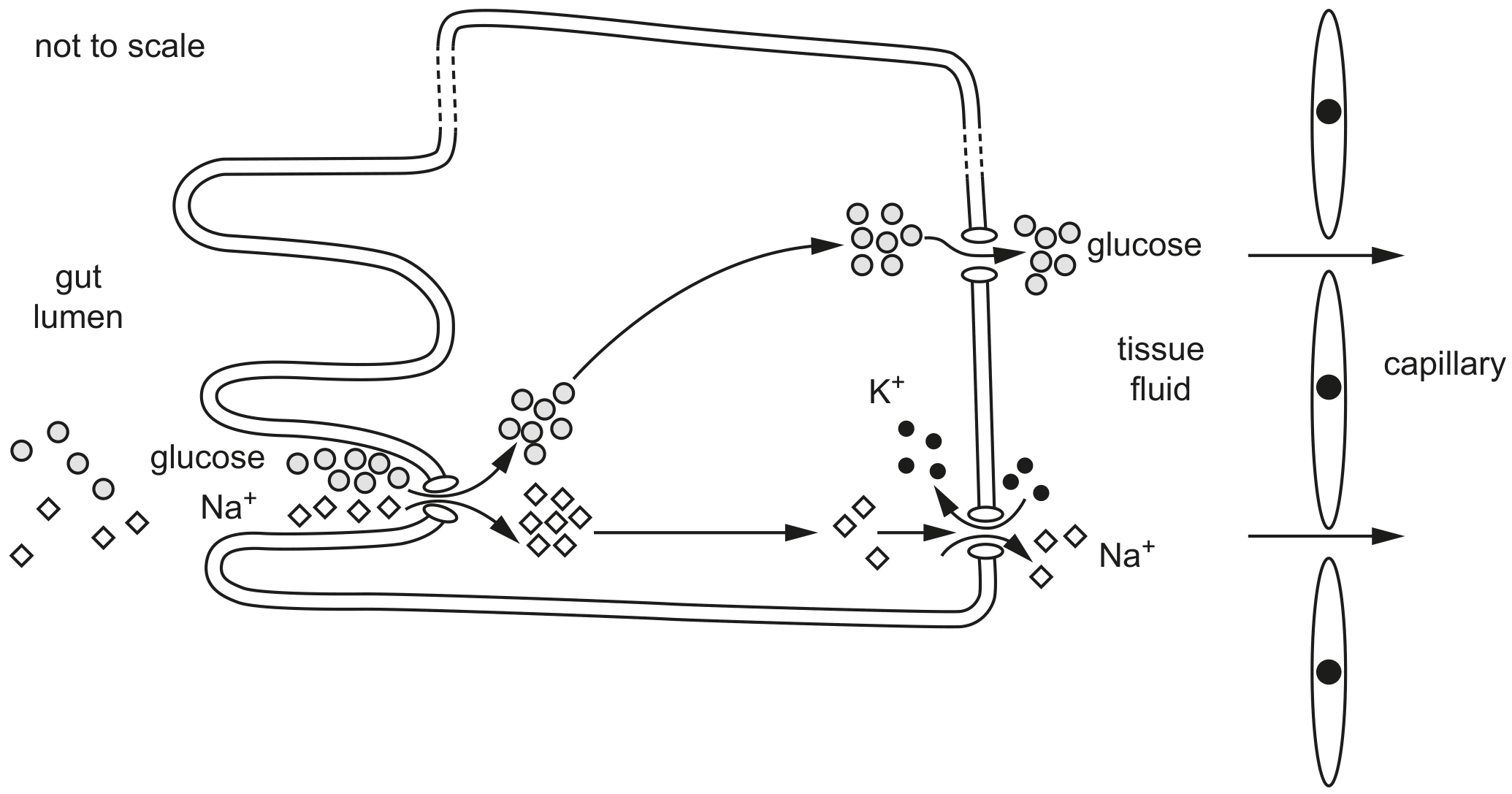
One role of an intestinal epithelial cell is the absorption of glucose from the gut lumen into the circulatory system. This involves different membrane transport proteins.

The events occurring in an intestinal epithelial cell during the absorption of glucose are summarised in Fig. 1.2.

Fig. 1.2

Fig. 1.2

- Sodium ions ( Na+\mathrm{Na}^{+}) are removed from the cell by active transport through a transport protein known as a sodium-potassium ( Na+/K+\mathrm{Na}^{+} / \mathrm{K}^{+}) pump.
- This decreases the concentration of Na+\mathrm{Na}^{+}in the cell compared to the gut lumen.
- Glucose molecules are cotransported with Na+\mathrm{Na}^{+}into the cell from the gut lumen.
- Glucose molecules are transported out of the cell into the tissue fluid down a concentration gradient.

[ 6 ]
(i)

Active transport involves water-soluble substances, such as Na+\mathrm{Na}^{+}and K+\mathrm{K}^{+}, and the use of ATP to provide the energy needed for their transport through carrier proteins.

Outline other features of active transport.

[ 2 ]
(ii)

Glucose molecules enter the cell through a membrane protein.

Suggest why glucose molecules need to be cotransported with Na+\mathrm{Na}^{+}when it enters the cell through the membrane protein.

[ 2 ]
(iii)

Explain how microvilli increase the uptake of glucose into an intestinal epithelial cell.

[ 2 ]
(a)

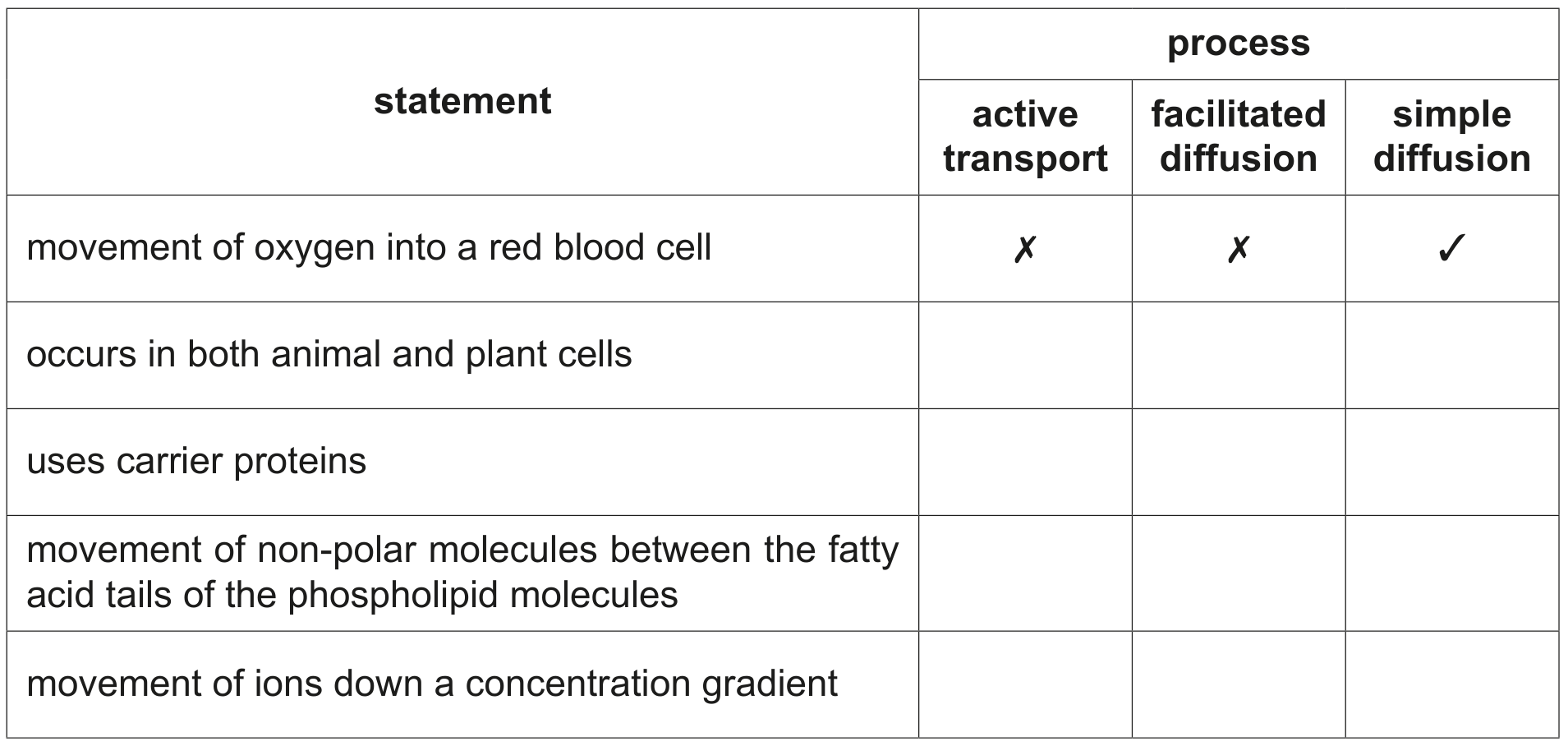
Table 1.1 shows three of the processes by which substances in solution can move across cell membranes. It also lists five statements that may apply to each of these three processes.

Complete Table 1.1 to show which of the statements apply to each of the three processes shown.

Use a tick ()(\checkmark) to show that the statement applies or a cross (X) to show that the statement does not apply.

Each box must contain a tick or a cross.

The first row has been completed for you.

Table 1.1

Table 1.1

[ 4 ]
[Maximum number: 3]

There are two types of cell, prokaryotic and eukaryotic. Bacterial cells are prokaryotic and plant cells are eukaryotic.

(a)

One role of the cell surface membrane of bacterial cells and plant cells is the transport of substances into and out of cells.

Explain how membrane carrier proteins and membrane channel proteins are involved in the transport of substances into and out of cells.

[ 3 ]
(a)

Nicotine is one of the components of tobacco smoke. Nicotine can cross cell surface membranes and enter the bloodstream.

[Maximum number: 3]

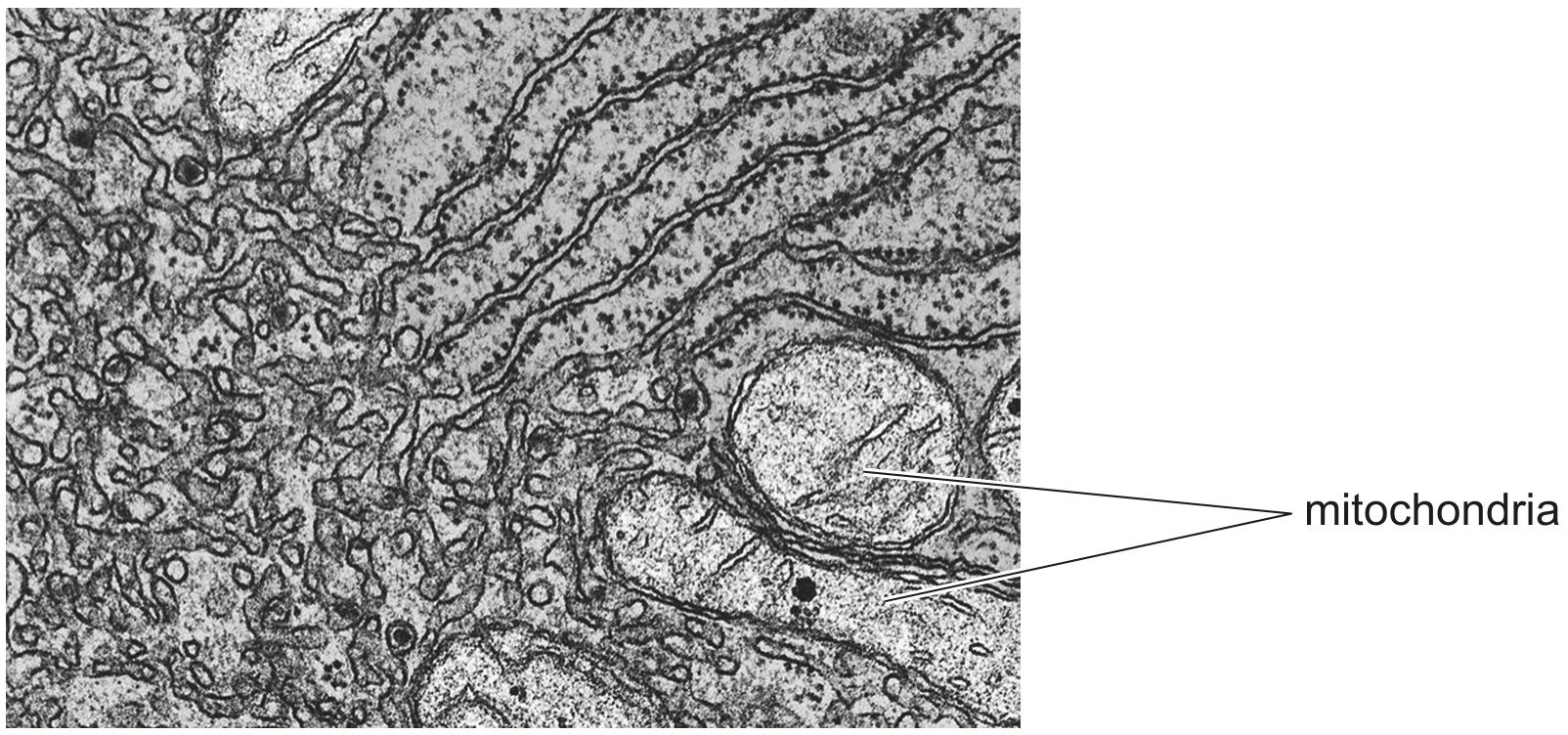
The Golgi body, rough endoplasmic reticulum (RER) and smooth endoplasmic reticulum (SER) form part of the internal membrane system of a cell. The membranes have a fluid mosaic structure.

Fig. 1.1 is a transmission electron micrograph of one area of a liver cell showing a region with RER and a region with SER. Mitochondria are also visible in the image.

Fig. 1.1

Fig. 1.1

(a)

One function of a Golgi body is to package molecules into Golgi vesicles.

[ 3 ]
(i)

Some Golgi vesicles contain secretory proteins for release from the cell.

Describe the sequence of events that occurs following the packaging of a secretory protein into a Golgi vesicle to its release from the cell.

[ 3 ]
[Maximum number: 3]

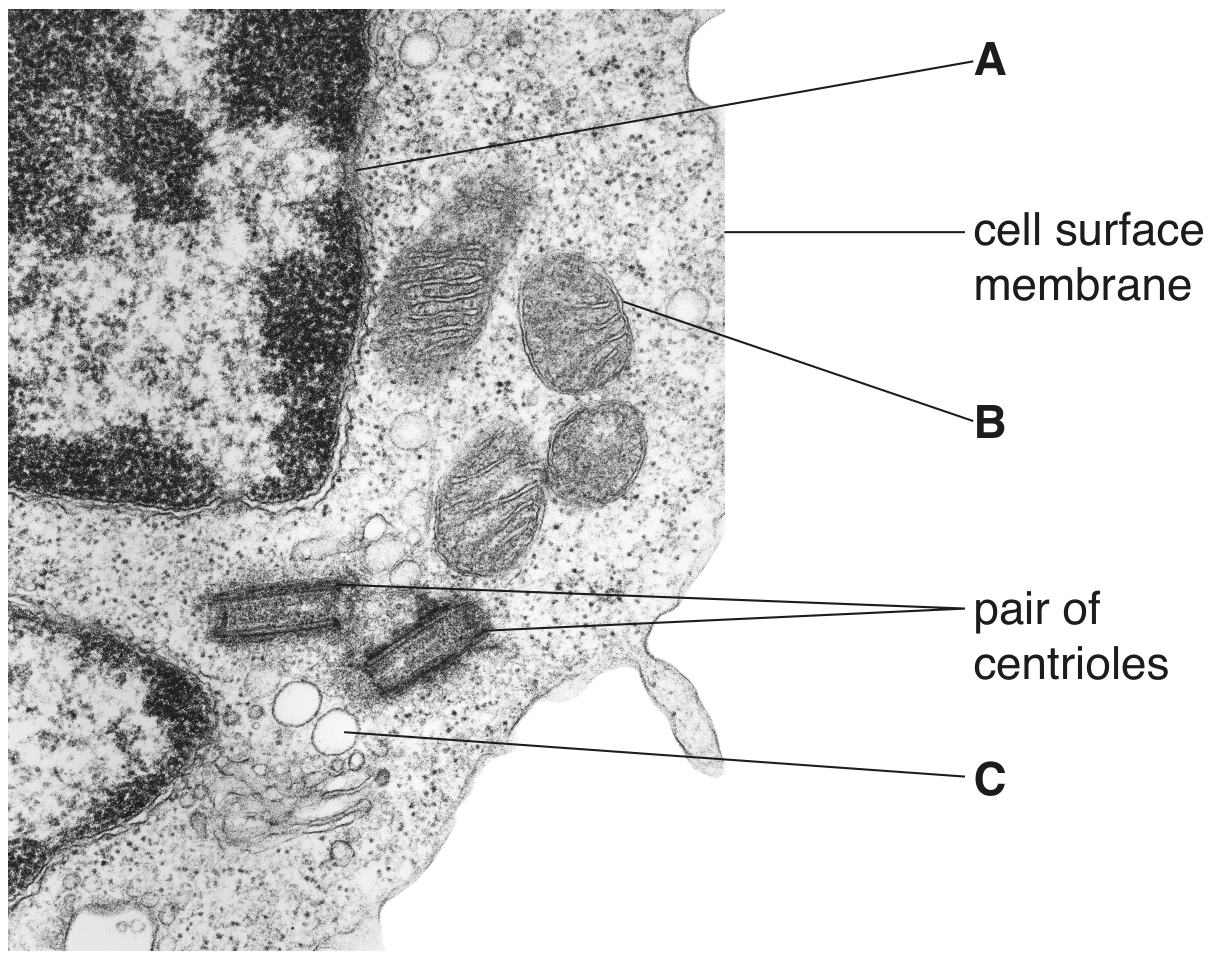
Fig. 1.1 is a transmission electron micrograph of part of an animal cell.

Fig. 1.1

Fig. 1.1

(a)

Sodium ions cross cell surface membranes using facilitated diffusion or active transport.

Explain why sodium ions cross cell surface membranes by these mechanisms and not by simple diffusion.

[ 3 ]
[Maximum number: 3]

The cell surface membrane has a fluid mosaic structure.

(a)

One way in which substances can cross cell membranes is by active transport.

Describe the mechanism of active transport.

[ 3 ]
[Maximum number: 3]

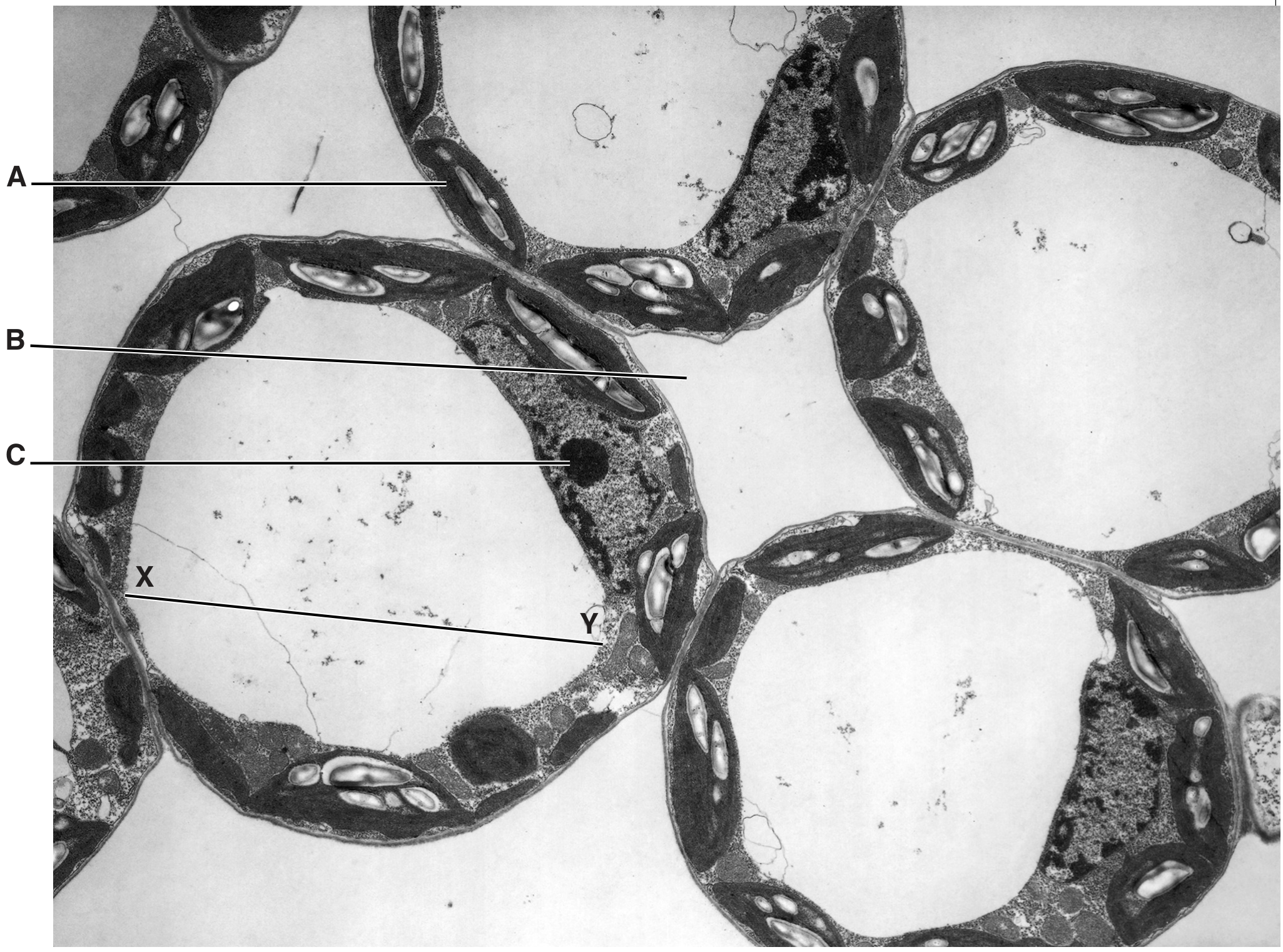
Fig. 1.1 is an electron micrograph of a transverse section of palisade mesophyll tissue in the leaf of the flowering plant, Zinnia elegans.

Fig. 1.1

Fig. 1.1

magnification ×7000\times 7000

(a)

Palisade mesophyll cells have very large vacuoles.

Explain how water moves from the xylem in the leaf into these vacuoles.

[ 3 ]
0