(a)
Fig. 1.1 shows part of a guard cell.
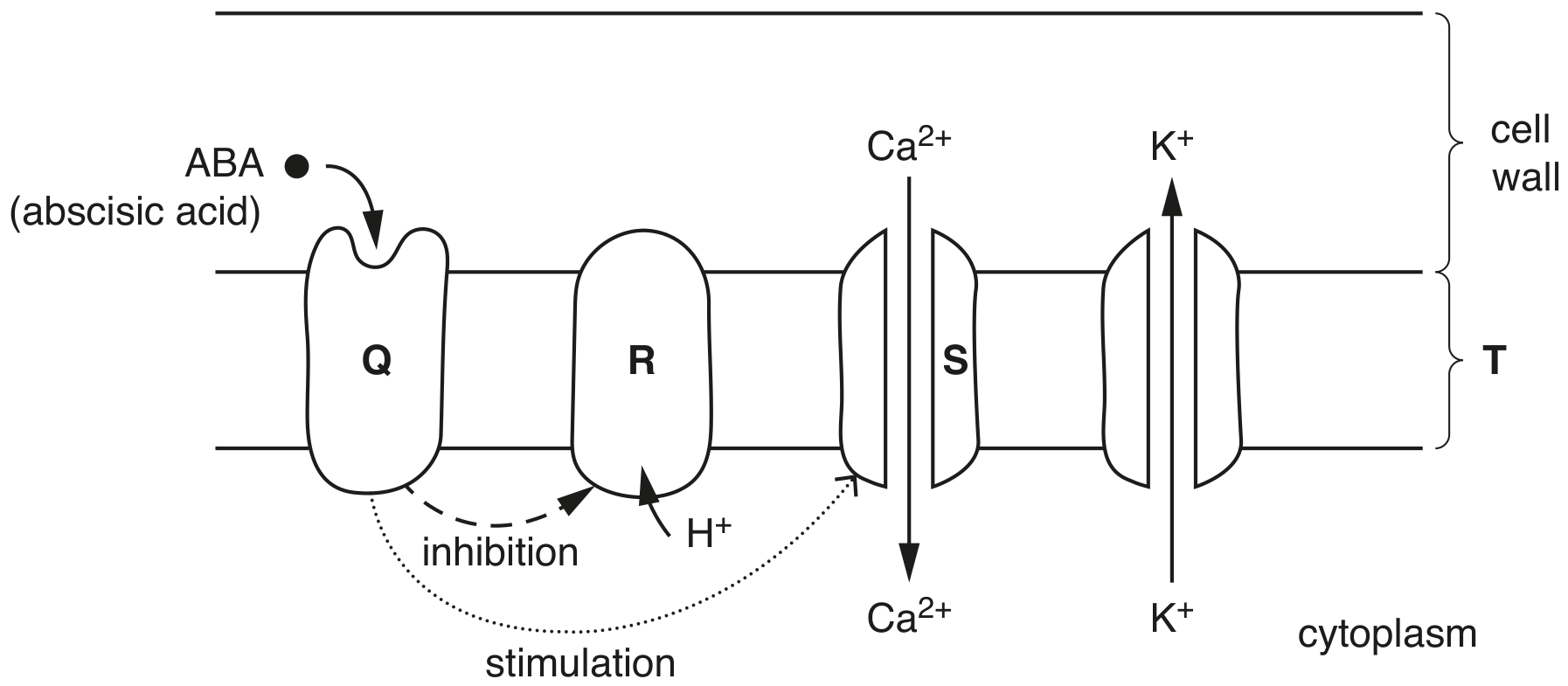
Fig. 1.1
[ 1 ]
(i)
State the type of protein represented by Q.
[ 1 ]
 EduNinja
Fig. 1.1 shows part of a guard cell.
Fig. 1.1
State the type of protein represented by Q.
Fig. 1.1 shows a diagram of part of a cell surface membrane.
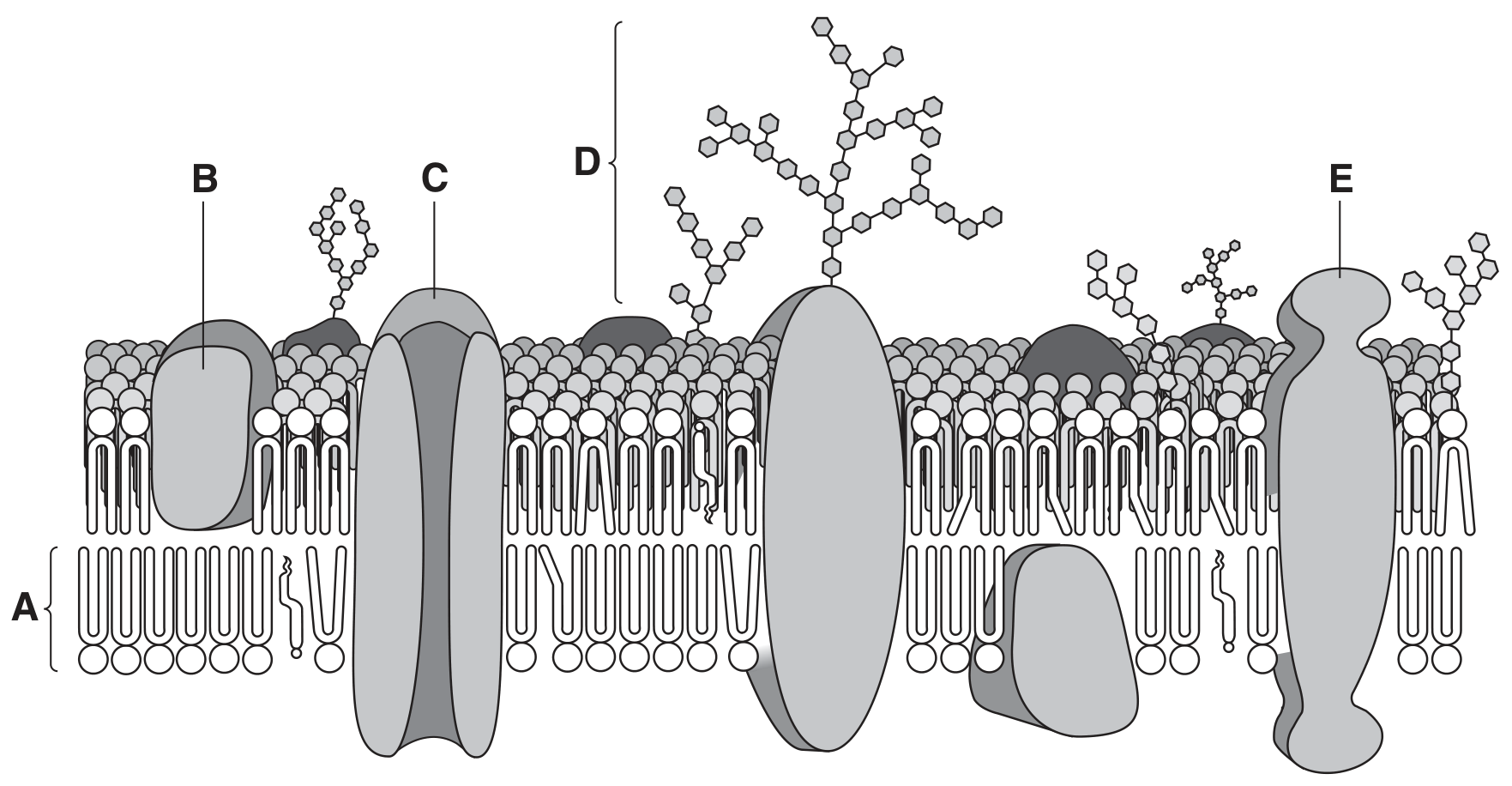
Fig. 1.1
Structure E is a protein composed of 588 amino acids.
Calculate the minimum number of nucleotide base pairs required in the gene coding for this protein. Show your working.
Answer =
Antibodies are secreted by activated B-lymphocytes known as plasma cells.
Fig. 1.1 is a diagram showing the cellular processes involved in the production of a polypeptide of an antibody molecule (not drawn to scale).
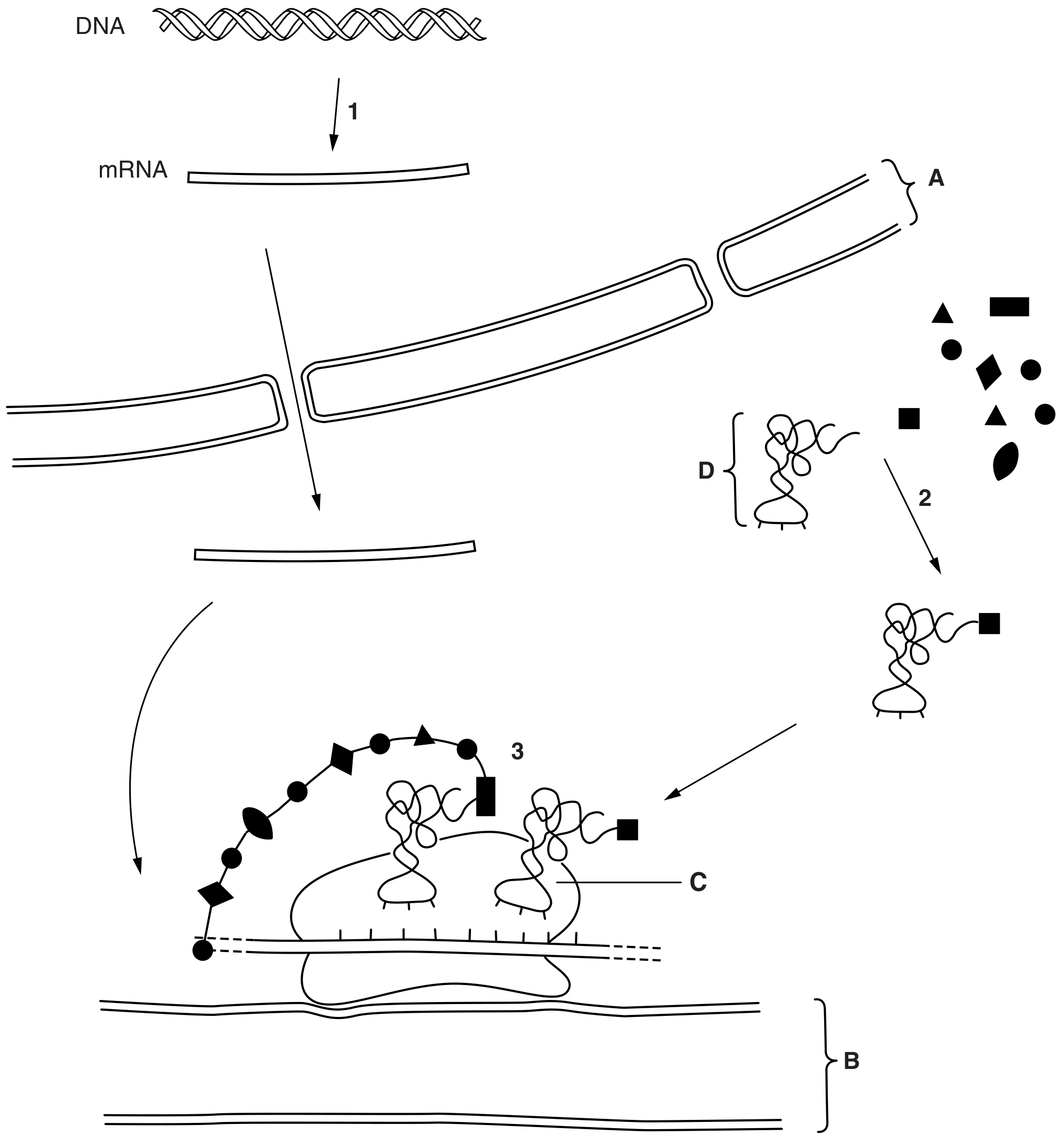
Fig. 1.1
Name molecule D.
D
The genes responsible for antibody production are found on different chromosomes, such as chromosomes 2 and 14 in humans.
Explain how one antibody molecule is the product of more than one gene.
Starch molecules are the main storage molecules in many types of cereal grain, such as the grain of the barley plant.
When the seed inside a barley grain germinates, genes coding for digestive enzymes are switched on. The enzymes that are synthesised catalyse the hydrolysis of storage molecules such as proteins and starch.
Explain what is meant by a gene.
Calculate the minimum number of DNA nucleotides necessary to code for a polypeptide with 238 amino acids.
Show your working. nucleotides
Fig. 2.1 is a transmission electron micrograph of a cell from a leaf.
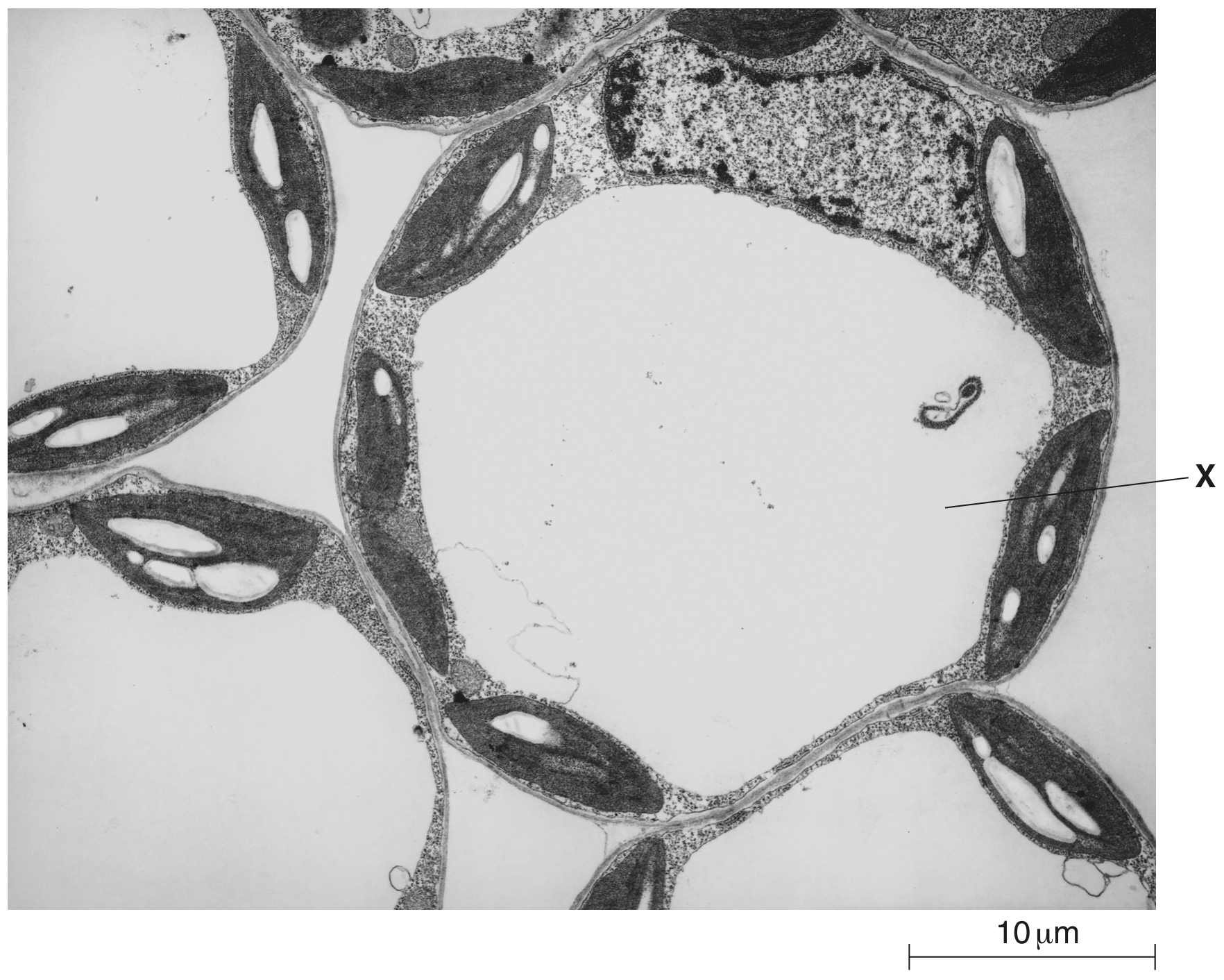
Fig. 2.1
Some plant cells produce a polypeptide called systemin.
Describe the role of DNA in the production of systemin.
Azotobacter vinelandii is a bacterium found in the soil that is able to fix atmospheric nitrogen. One feature of nitrogen-fixing bacteria is the ability to synthesise the enzyme nitrogenase, a molybdenum- and iron-containing, protein complex.
Part of the equation for the reaction that is catalysed by nitrogenase in A. vinelandii is shown below.
Complete the equation by naming the product of the reaction.


Which term best describes the length of DNA that codes for the synthesis of a polypeptide?
anticodon
codon
gene
nucleotide
Enzymes are proteins, made up of polypeptides.
A gene is a sequence of , which are parts of a molecule coding for a polypeptide.
Which words correctly complete gaps 1,2 and 3 in the sentences?
1
2
3
fibrous
amino acids
tRNA
fibrous
bases
DNA
globular
nucleotides
DNA
globular
triplets
mRNA
There are many different forms of Vibrio cholerae, a bacterium that is found naturally in aquatic environments. The bacterium is motile (can move) and uses a cell structure known as a flagellum to allow it to move through water.
Fig. 4.1 is a drawing of four cells of one form of V. cholerae.
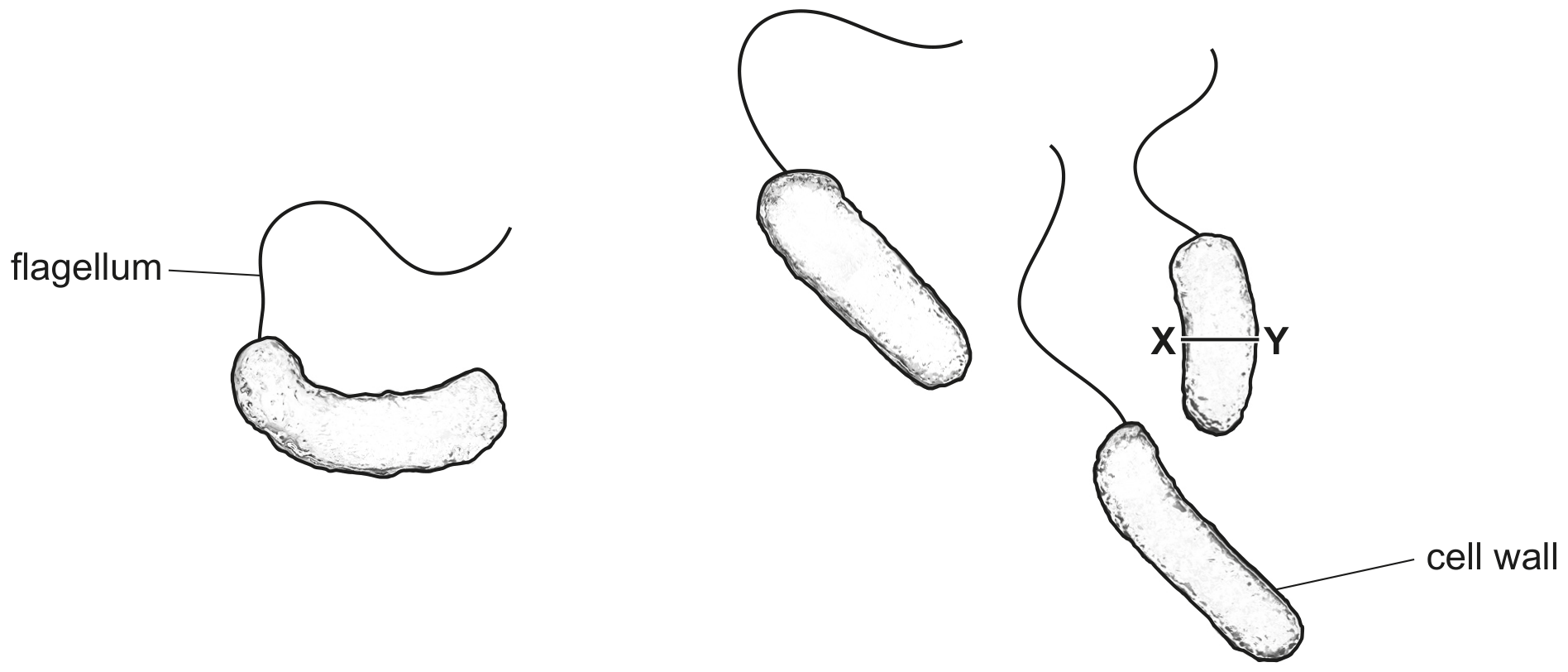
Fig. 4.1
Two main forms of V. cholerae, O1 and O139, are able to colonise the small intestine and cause cholera. These two forms are able to produce a toxin, choleragen, which causes the symptoms of diarrhoeal disease. Mutant V. cholerae that lack flagella are less able to cause disease.
Choleragen is produced after V. cholerae has penetrated (passed through) the mucus lining and attached to intestinal epithelial cells.
Choleragen is composed of two subunits:
- subunit A consists of one polypeptide
- subunit B consists of five identical polypeptides
- the polypeptide in subunit A is different from the polypeptides in subunit B.
Two genes, and , are needed to produce choleragen. Only one strand of the DNA forming gene ctxA is involved in the production of subunit A. Only one strand of the DNA forming gene c t x B is involved in the production of subunit B.
Explain why only one strand of the DNA of each gene is involved in the production of the subunits.
Monoclonal antibodies (mAbs) can be designed to act against components of the cell wall of V. cholerae. The cell wall has an outer membrane with lipopolysaccharide (LPS) molecules, shown in Fig. 4.3.
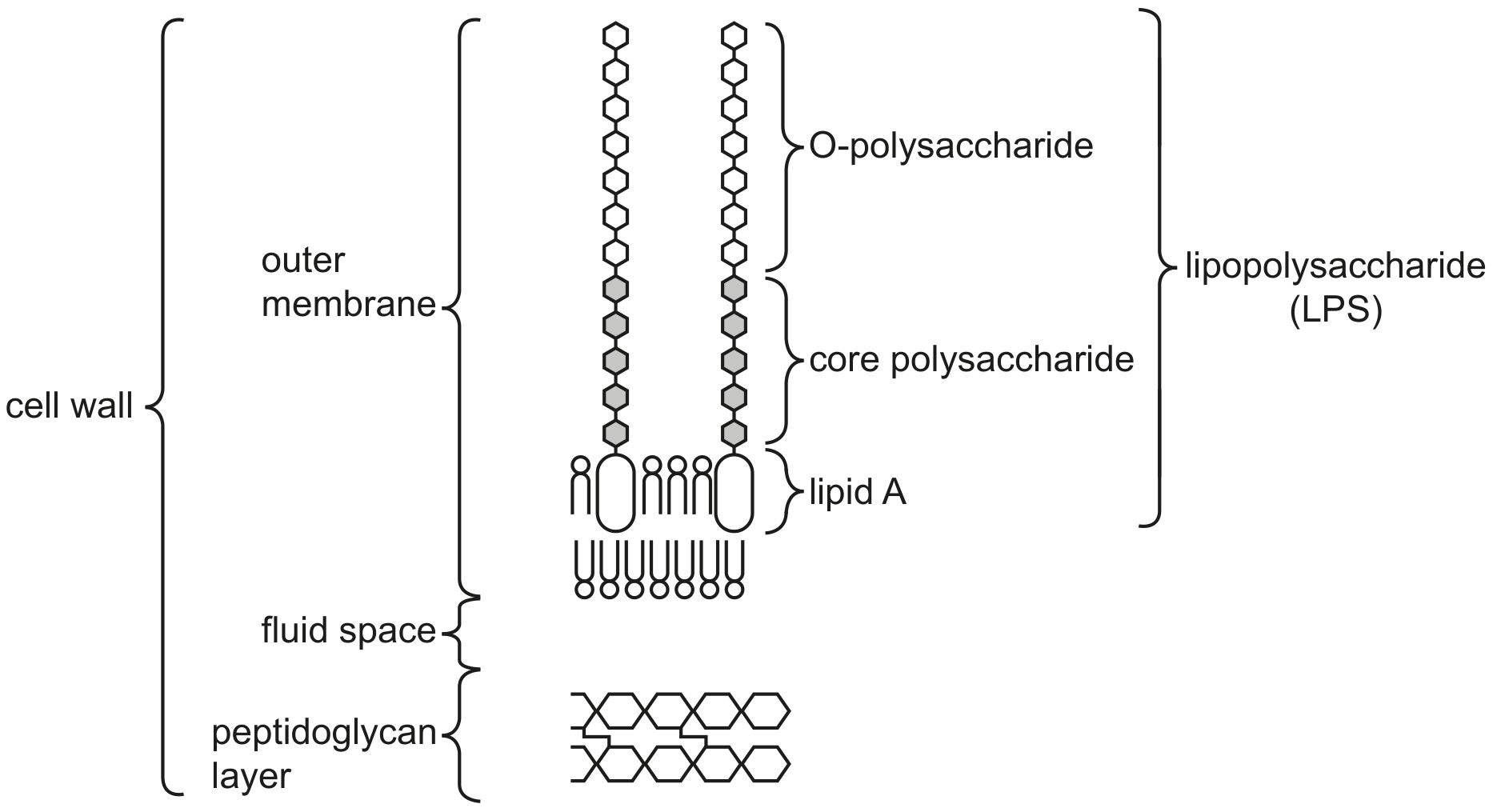
Fig. 4.3
The core polysaccharide and the lipid A components of the LPS molecules are the same in V. cholerae O1 and V. cholerae O139. However they have different O-polysaccharides.
There are also different types of V. cholerae O1 and these have different O-polysaccharides.