EduNinja
[Maximum number: 1]

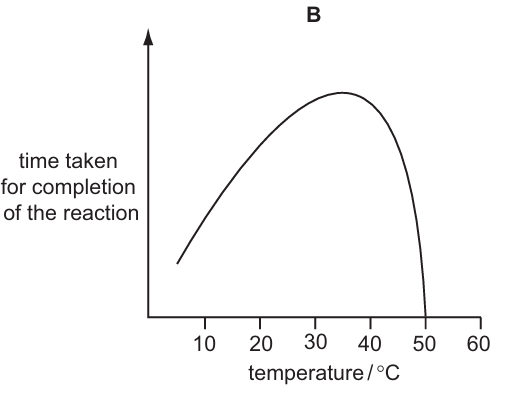
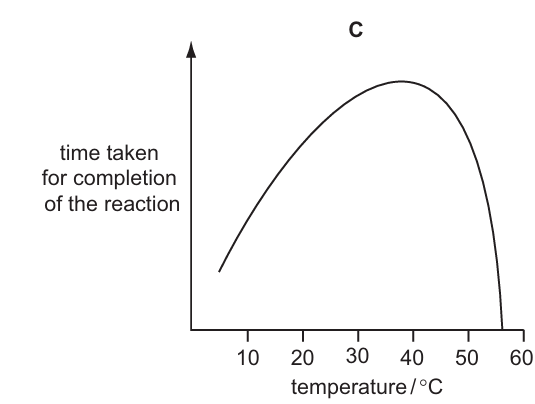
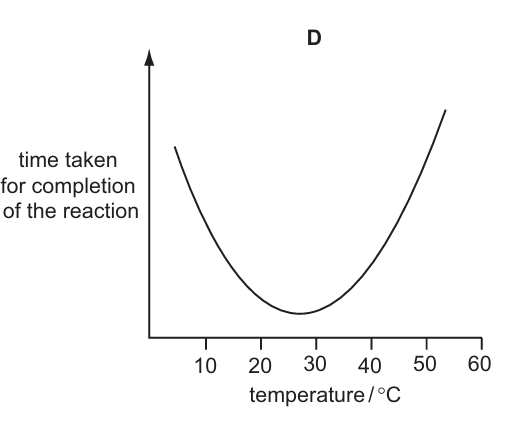
An enzyme is completely denatured at 50C50^{\circ} \mathrm{C}. A fixed concentration of this enzyme is added to a fixed concentration of its substrate. The time taken for completion of the reaction is measured at different temperatures.

Which graph shows the results?

A
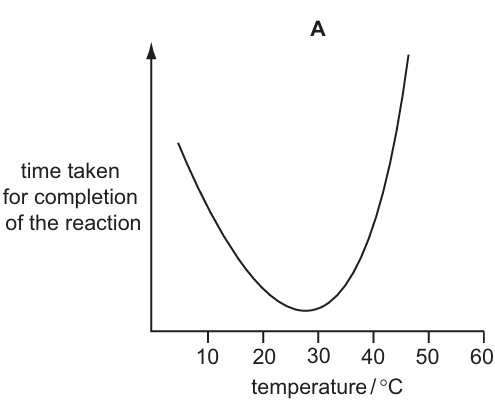
Question image
B
time taken

time taken

C
Question image
D
Question image
[Maximum number: 3]

Antibiotics are drugs which are very important in the treatment and cure of some diseases.

(a)

Some antibiotics act as competitive inhibitors of enzymes in pathogens.

[ 3 ]
(i)

Describe what is meant by the term competitive inhibitor.

Penicillin acts as a competitive inhibitor of one of the enzymes involved in bacterial cell wall synthesis.

[ 3 ]
[Maximum number: 6]

Phosphatidate phosphatase (PAP) enzymes have an important role in lipid metabolism.
The reaction catalysed by PAP is shown in Fig. 2.1.

 phosphatidate +H2O diglyceride + inorganic phosphate (Pi) \text { phosphatidate }+\mathrm{H}_{2} \mathrm{O} \longrightarrow \text { diglyceride }+ \text { inorganic phosphate (Pi) }

Experiments were carried out to investigate the activity of PAP extracted from the cotyledons (seed leaves) of bitter gourd, Momordica charantia.

(a)

There are two types of PAP enzymes:
- PAP1 enzymes need magnesium ions (Mg2+)\left(\mathrm{Mg}^{2+}\right) in the active site to function
- PAP2 enzymes do not need Mg2+\mathrm{Mg}^{2+}.

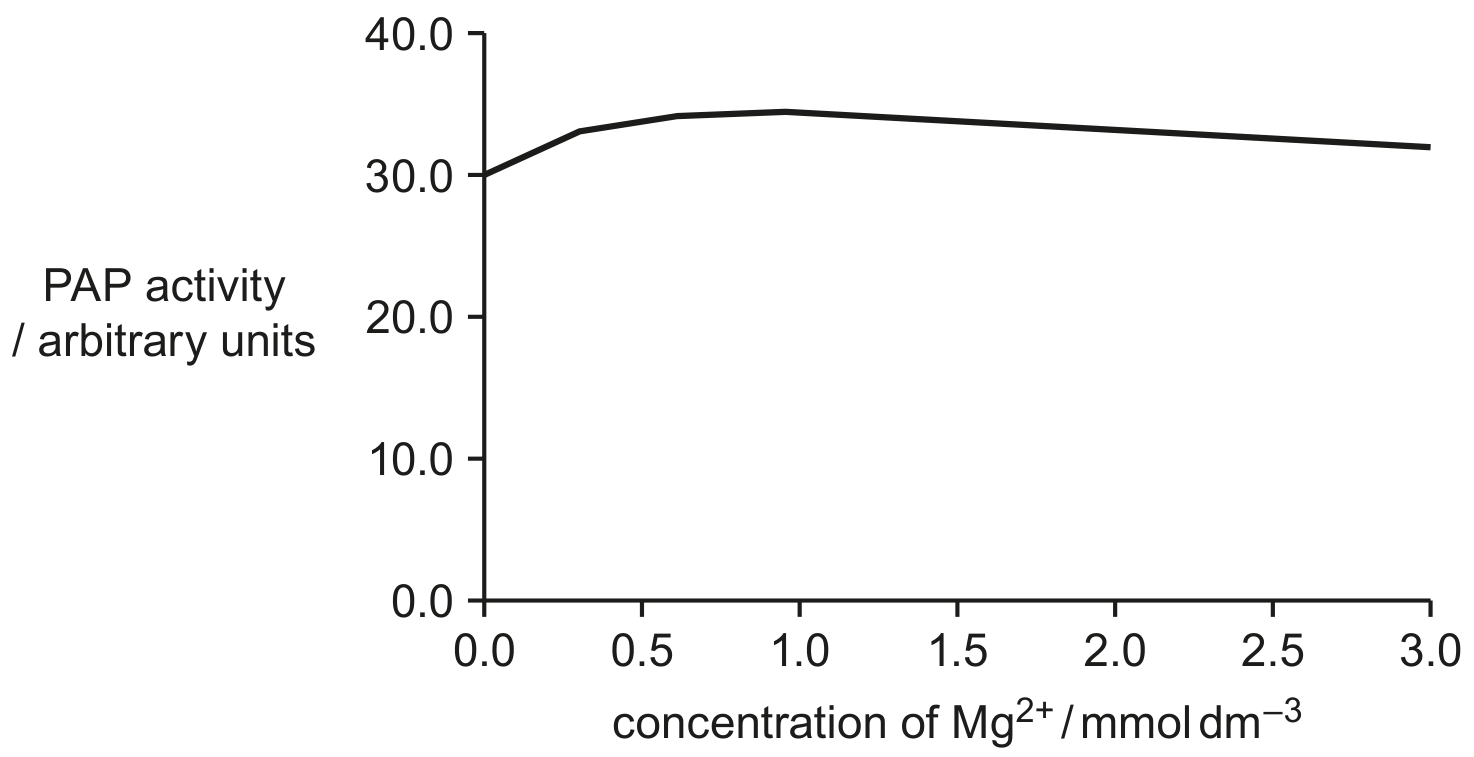
The effect of different concentrations of Mg2+\mathrm{Mg}^{2+} on the activity of PAP extracted from M. charantia was investigated.

The results are shown in Fig. 2.2.

Fig. 2.2

Fig. 2.2

Explain, with reference to Fig. 2.2, whether the PAP extracted from M. charantia is a PAP1 enzyme or a PAP2 enzyme.

[ 2 ]
(b)

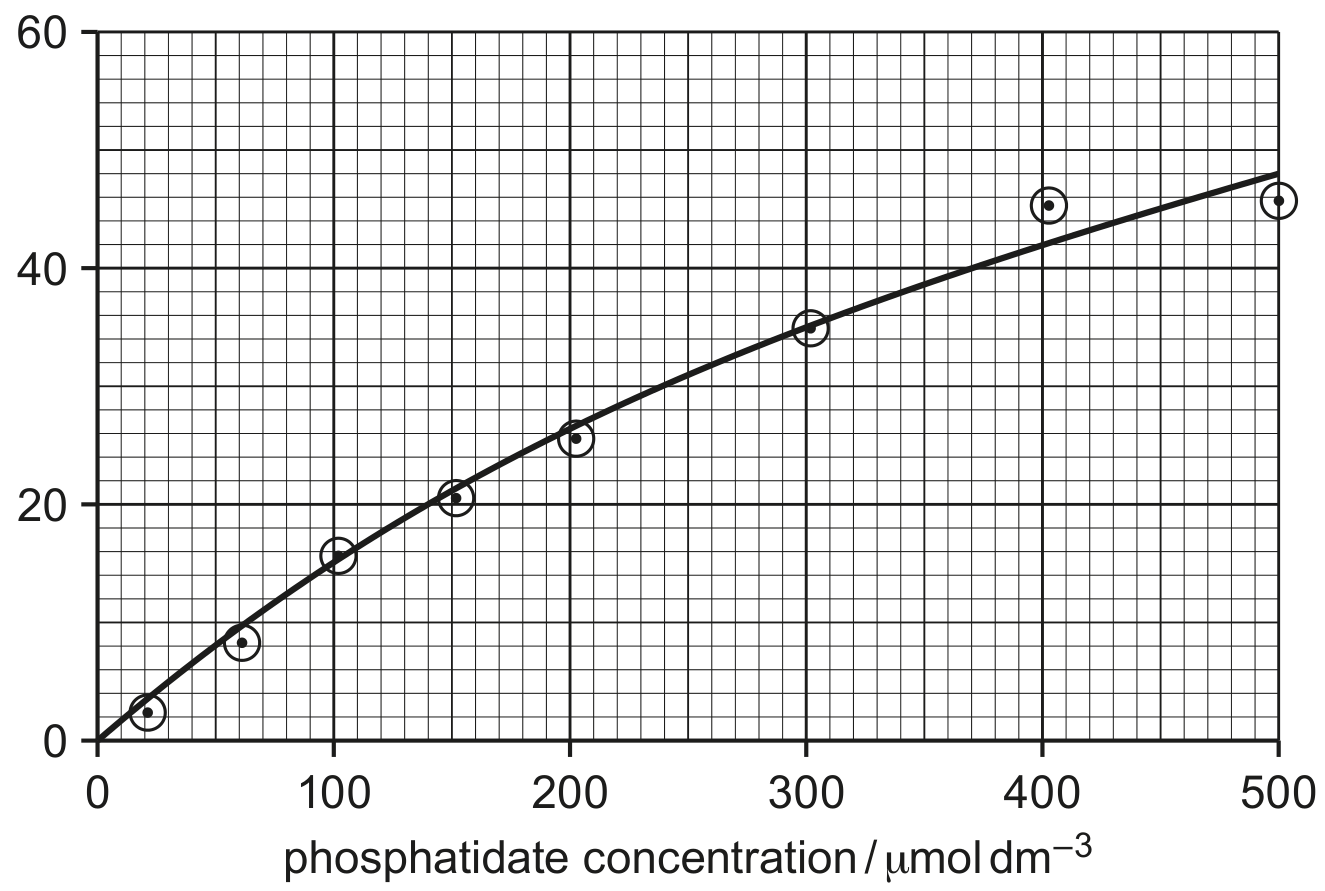
Fig. 2.3 shows the effect of increasing phosphatidate concentration on the activity of PAP extracted from M. charantia.

PAP activity / arbitrary units

Fig. 2.3

Fig. 2.3

With reference to Fig. 2.3, describe and explain the effect of increasing phosphatidate concentration on the activity of PAP.

[ 4 ]
[Maximum number: 6]

Lipase is an enzyme with many commercial uses. Some species of bacteria are of great interest as they produce large quantities of lipase.

(a)

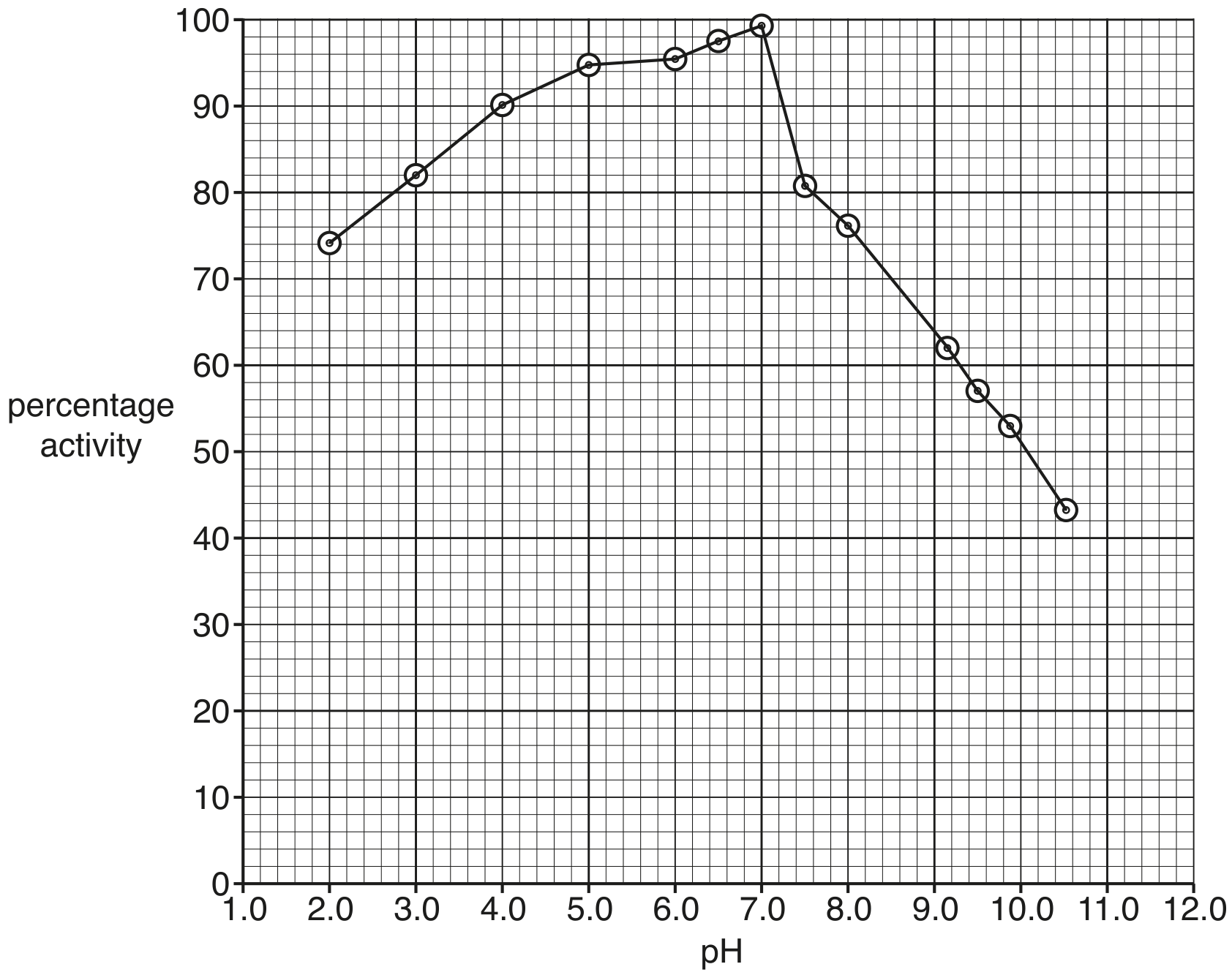
The researchers investigated the effect of pH values between pH 2.0 and pH 10.5 on the activity of bacterial lipase in hydrolysing triglyceride at a temperature of 37C37^{\circ} \mathrm{C}.

The results are shown in Fig. 2.2.

Fig. 2.2

Fig. 2.2

With reference to Fig. 2.2, describe the effect of pH on the activity of bacterial lipase.

[ 4 ]
(b)

A separate investigation into the effect of pH on the same bacterial lipase compared the enzyme free in solution with the enzyme immobilised by physical attachment to a stable polymer.

At a temperature of 37C37^{\circ} \mathrm{C}, the optimum pH of the enzyme free in solution was the same as that shown in Fig. 2.2. The optimum pH of the immobilised enzyme was measured as pH 4 .

[ 2 ]
(i)

Suggest one reason to explain why the enzyme free in solution has a different optimum pH compared to the immobilised enzyme.

[ 1 ]
(ii)

Suggest one advantage of immobilising the extracted lipase for commercial use.

[ 1 ]
[Maximum number: 8]

Phosphatases are enzymes that catalyse the removal of phosphate groups from organic compounds.

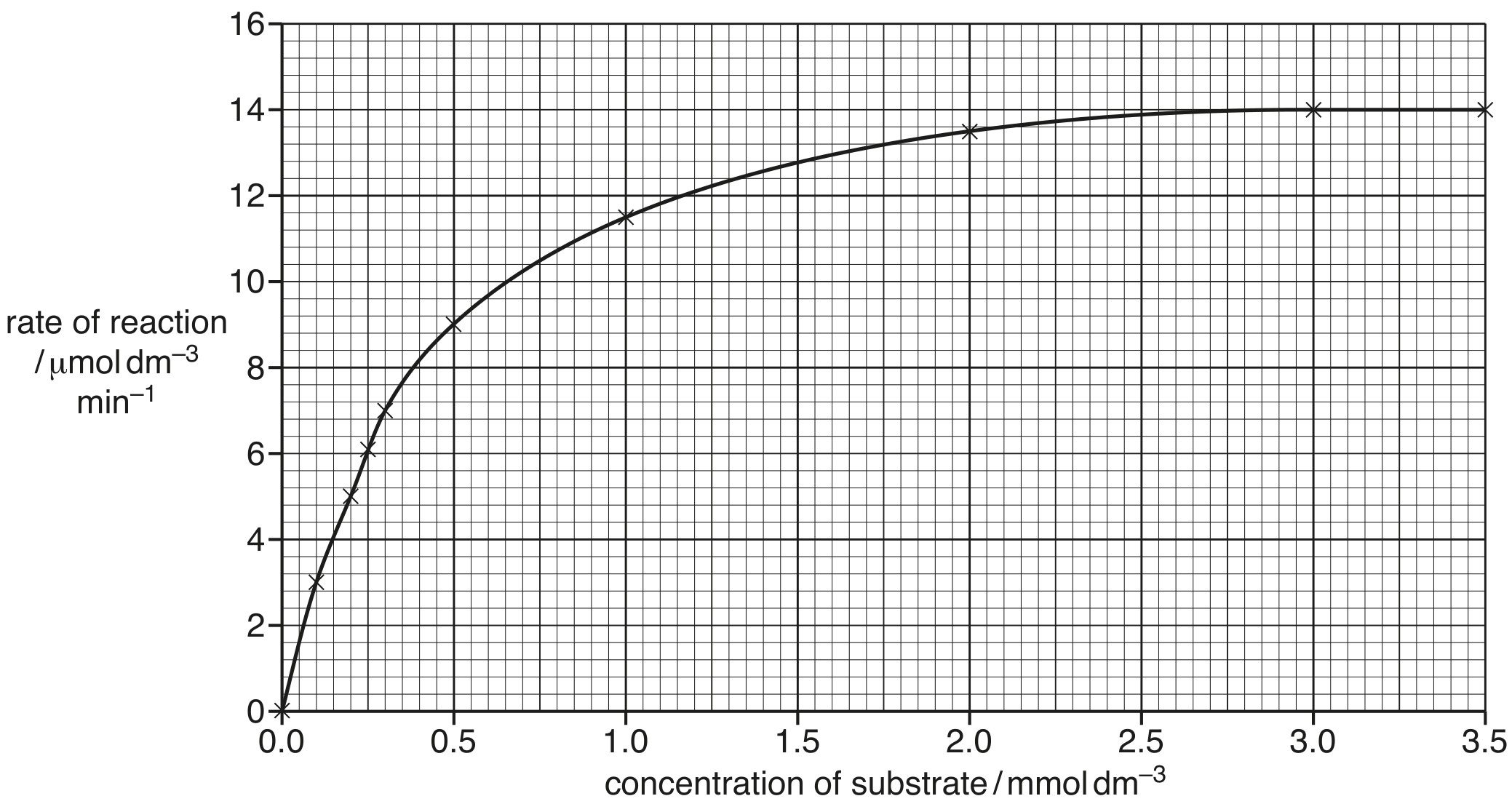
Some students investigated the effect of substrate concentration on the rate of the reaction catalysed by an acid phosphatase (enzyme A). The results are shown in Fig. 2.1.

Fig. 2.1

Fig. 2.1

(a)

The students used Fig. 2.1 to derive the Michaelis-Menten constant (Km)\left(\mathrm{K}_{\mathrm{m}}\right) for enzyme A as 0.3mmoldm30.3 \mathrm{mmol} \mathrm{dm}^{-3}.

Explain how they derived Km\mathrm{K}_{\mathrm{m}}.

[ 2 ]
(b)

The students investigated a different phosphatase enzyme (enzyme B) and found the value of Km\mathrm{K}_{\mathrm{m}} to be higher than 0.3mmoldm30.3 \mathrm{mmol} \mathrm{dm}^{-3}.

Explain the difference between the values of Km\mathrm{K}_{\mathrm{m}} for these two phosphatase enzymes.

[ 2 ]
(c)

The students repeated their investigation on enzyme A with a competitive inhibitor.

They used the same concentrations of substrate as before, but added a competitive inhibitor to each reaction mixture.

They used the same concentration of the inhibitor in each reaction mixture.
The students found that Vmax \mathrm{V}_{\text {max }} was the same as before, but Km\mathrm{K}_{\mathrm{m}} was higher than 0.3mmoldm30.3 \mathrm{mmol} \mathrm{dm}^{-3}.

Explain how the addition of the competitive inhibitor results in the same value for Vmax \mathrm{V}_{\text {max }} but a higher value for Km\mathrm{K}_{\mathrm{m}}.

[ 4 ]
[Maximum number: 9]

A student investigated the initial rate of reaction of catalase in breaking down hydrogen peroxide into oxygen and water:

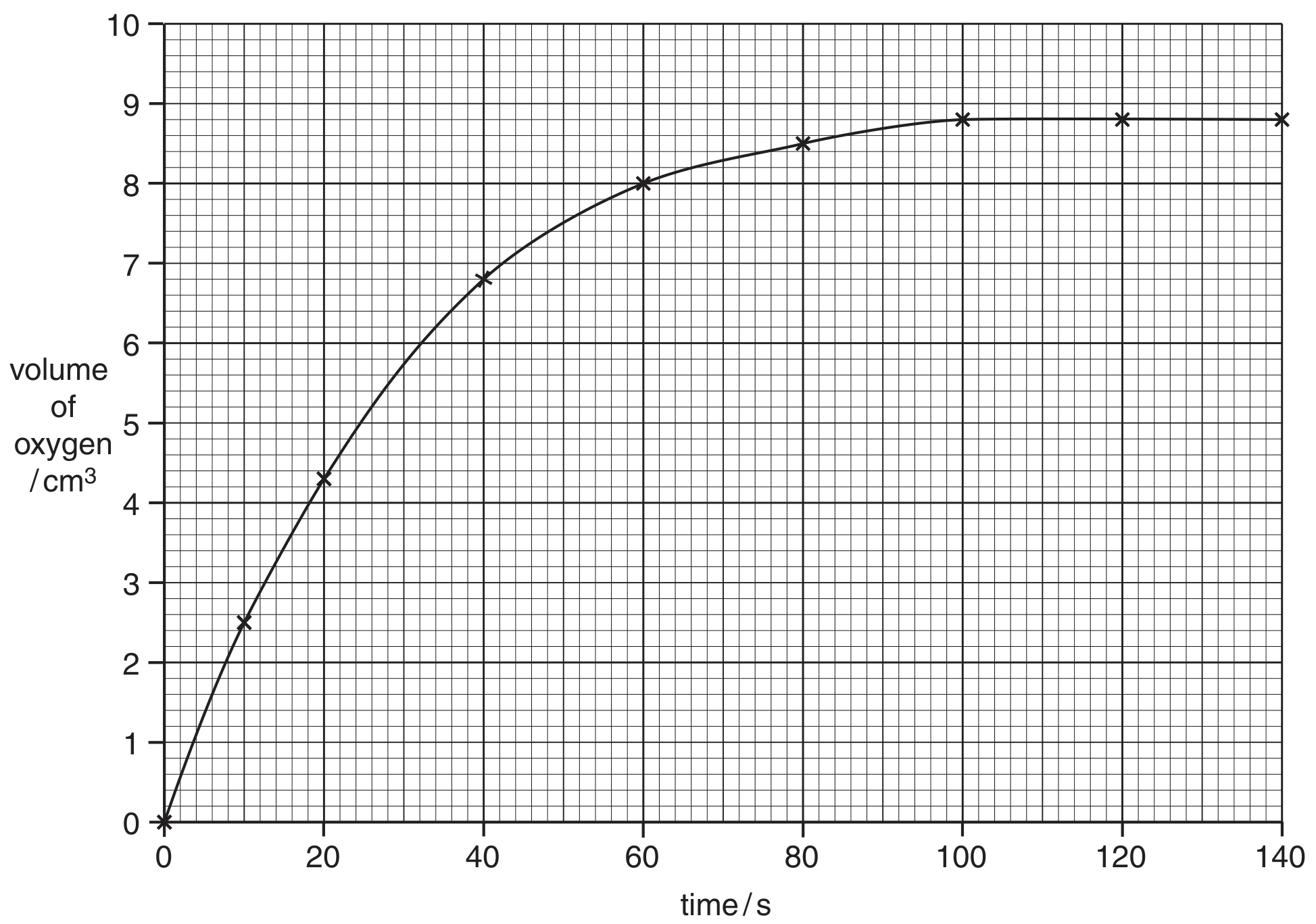
The volume of oxygen collected was recorded over a period of 140 seconds. The results are shown in Fig. 2.1.

Fig. 2.1

Fig. 2.1

(a)
(i)

Use the information in Fig. 2.1 to calculate the initial rate of reaction in cm3 s1\mathrm{cm}^{3} \mathrm{~s}^{-1}.

Show your working.
answer cm3 s1\mathrm{cm}^{3} \mathrm{~s}^{-1}

[ 2 ]
(ii)

Explain the change in volume of oxygen collected as shown in Fig. 2.1.

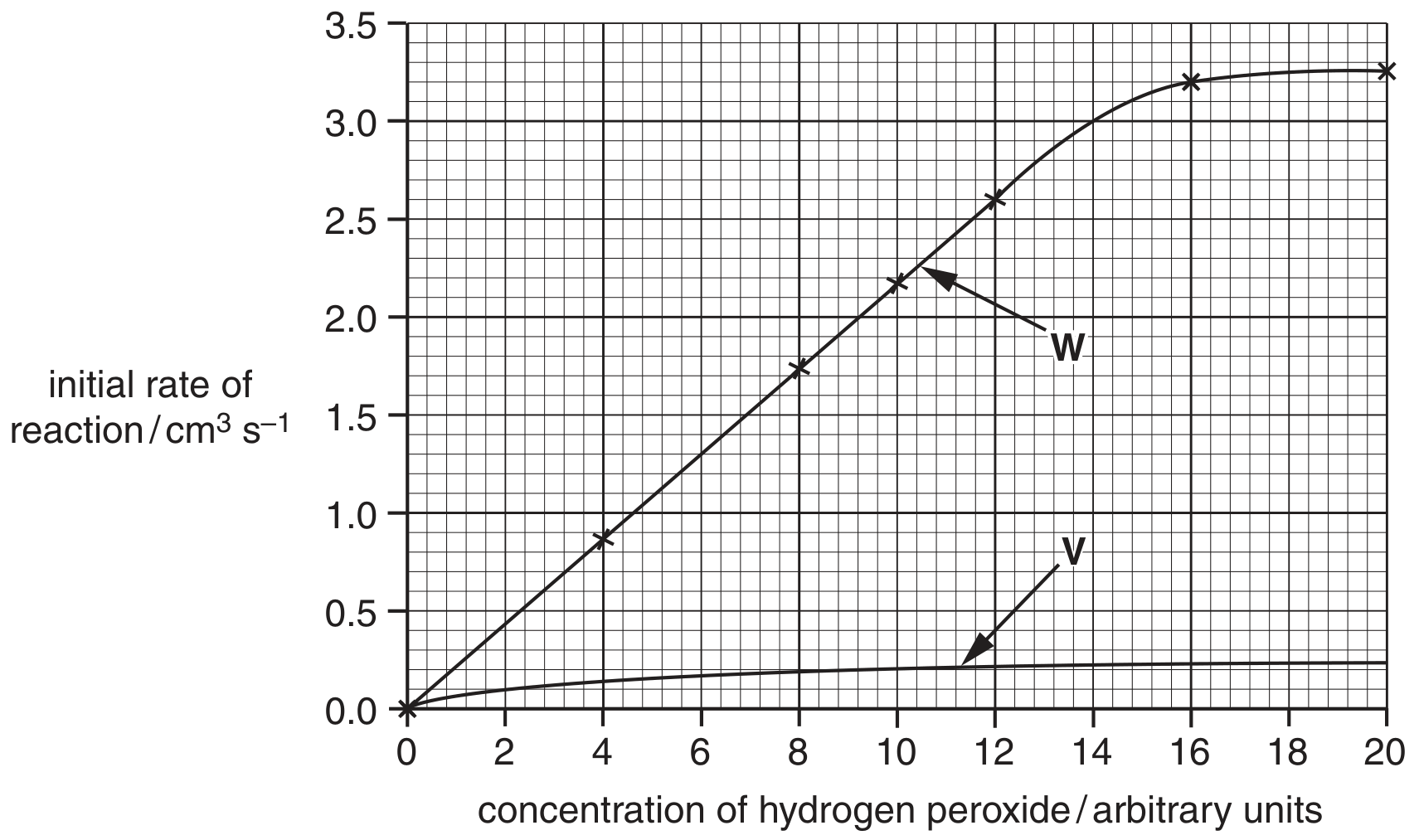
The student continued the investigation by determining the initial rates of reaction for five different concentrations of hydrogen peroxide. The line marked W in Fig. 2.2 shows the results.

The whole procedure was repeated after adding copper ions to the different concentrations of hydrogen peroxide. The line marked V on Fig. 2.2 shows the results.

Fig. 2.2

Fig. 2.2

[ 3 ]
(b)

Use the information in Fig. 2.2 to explain the effect of copper ions on the action of an enzyme, such as catalase.

[ 4 ]
[Maximum number: 7]

Keratin is the structural protein in feathers of birds. Keratin polypeptides are composed of a high proportion of cysteine amino acids, which have sulfur-containing R groups.

Keratin polypeptides form filaments. The two main types of keratin in feathers are α\alpha-keratin, which consists of many α\alpha-helices, and β\beta-keratin, consisting of many β\beta-pleated sheets.

(a)

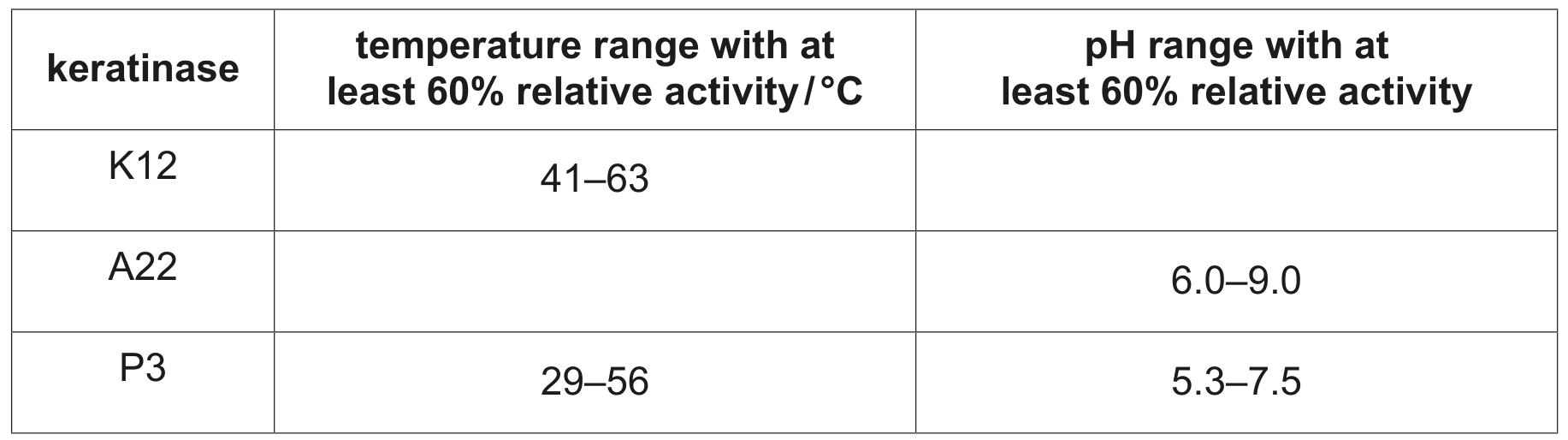
To degrade feather waste from industry, it is an advantage to use keratinases that show at least 60\% relative activity in conditions where temperature and pH can vary widely.

Table 2.1 shows, for each keratinase, the working range of temperature and pH where at least 60\% relative activity is obtained.

Use Fig. 2.1 and Fig. 2.2 to complete Table 2.1 and use the completed table to:
- name the keratinase that has the widest working range of temperature
- name the keratinase that has the widest working range of pH .

Table 2.1

Table 2.1

Keratinase with a relative activity of at least 60 % that has:
- the widest working range of temperature
- the widest working range of pH

[ 4 ]
(b)

Some detergents contain proteases to remove stains from clothes. These enzymes have a high relative activity in alkaline conditions.

The scientists reported that K12 and A22 could be suitable for use in the detergent industry.
With reference to Fig. 2.1 and Fig. 2.2, discuss the advantages and disadvantages of using K 12 and A 22 in the detergent industry.

[ 3 ]
[Maximum number: 5]

Starch molecules are the main storage molecules in many types of cereal grain, such as the grain of the barley plant.

(a)

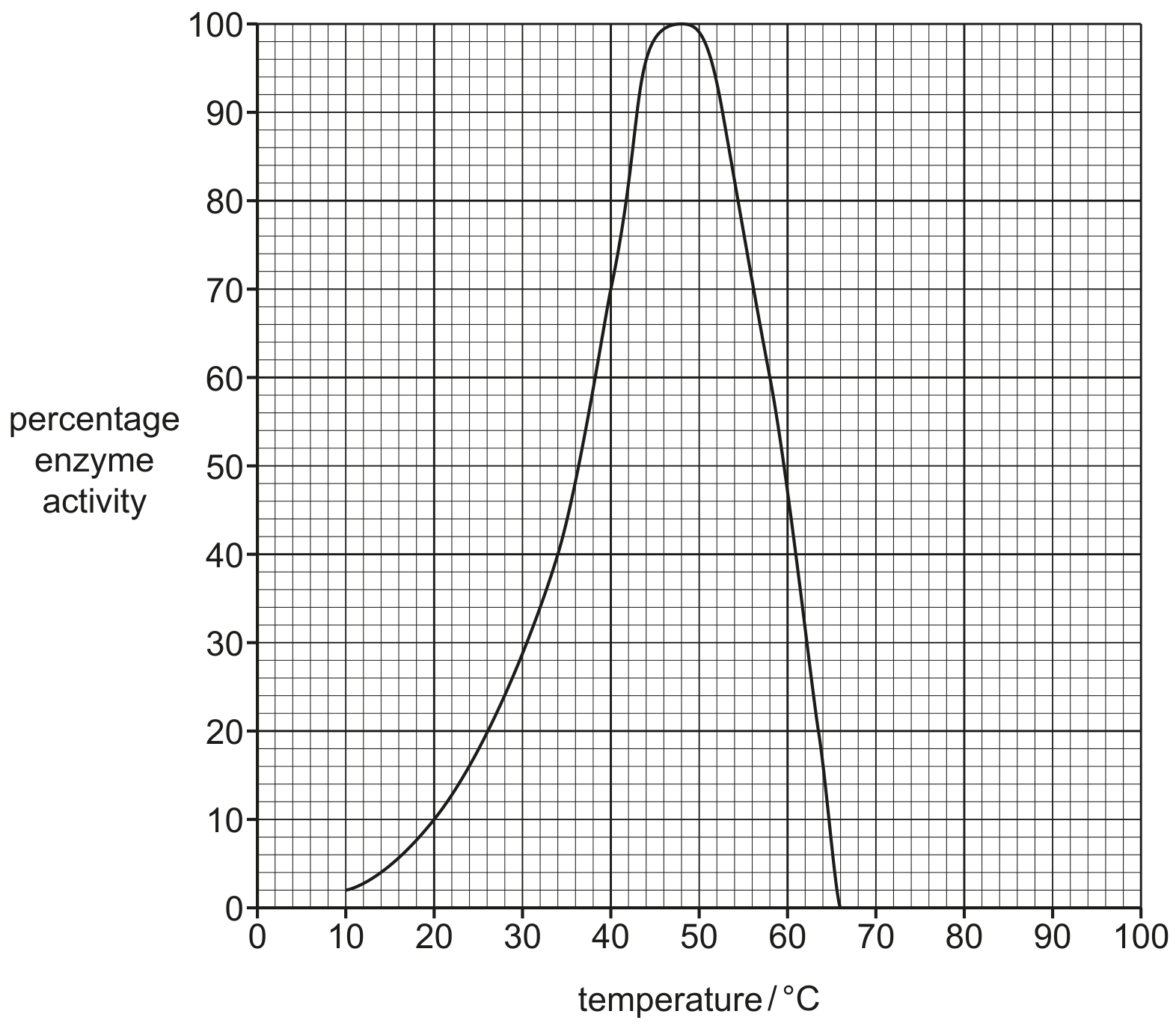
Fig. 2.3 is a graph showing how the activity of α\alpha-amylase extracted from barley seeds changes as the temperature increases from 10C10^{\circ} \mathrm{C} to 66C66^{\circ} \mathrm{C}.

Fig. 2.3

Fig. 2.3

[ 5 ]
(i)

Explain the effect of temperature on the activity of α\alpha-amylase extracted from barley seeds, as shown in Fig. 2.3.

[ 3 ]
(ii)

Sketch on Fig. 2.3 the curve that would be obtained using α\alpha-amylase enzyme that is heat stable.

[ 2 ]
[Maximum number: 4]

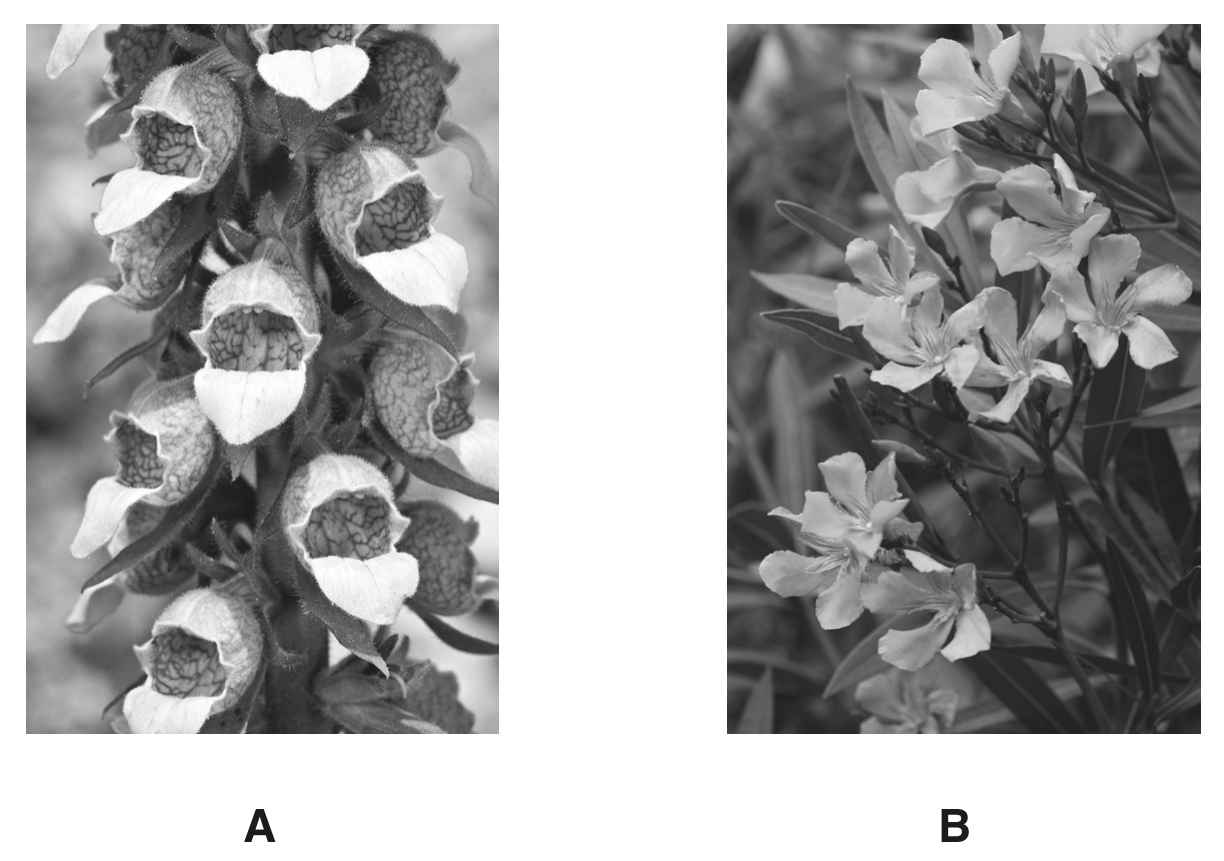
Woolly foxglove, Digitalis lanata, shown in Fig. 2.1A, and common oleander, Nerium oleander, shown in Fig. 2.1B, are plants grown for the attractive flowers that they produce.

Both plants are poisonous, as their leaves produce toxic organic compounds known as cardiac glycosides. Cardiac glycosides have a powerful effect on the action of cardiac muscle.

Fig. 2.1

Fig. 2.1

(a)

Investigations into the action of the cardiac glycoside oleandrin, extracted from N. oleander, have shown that it acts to prevent the correct functioning of Na/K-ATPase, a membrane transport protein.

Na/K-ATPase has a role as an enzyme and as a transport molecule.
- ATPase is an enzyme that catalyses the hydrolysis of ATP to ADP and inorganic phosphate.
- Energy released from this hydrolysis is used to transport sodium ions ( Na+\mathrm{Na}^{+}) out of cardiac muscle cells and potassium ions ( K+\mathrm{K}^{+}) into the cells.

[ 4 ]
(i)

Oleandrin is a non-competitive reversible inhibitor of ATPase.

Describe the mode of action of oleandrin and explain how this will affect ion movement through Na/K-ATPase transport proteins of the cell surface membranes of cardiac muscle cells.

[ 4 ]
(a)

Folic acid is a molecule used by all cells for growth. Bacteria cannot absorb folic acid from their surroundings. Bacteria use an enzyme to make a molecule called PABA. PABA is used to make folic acid.

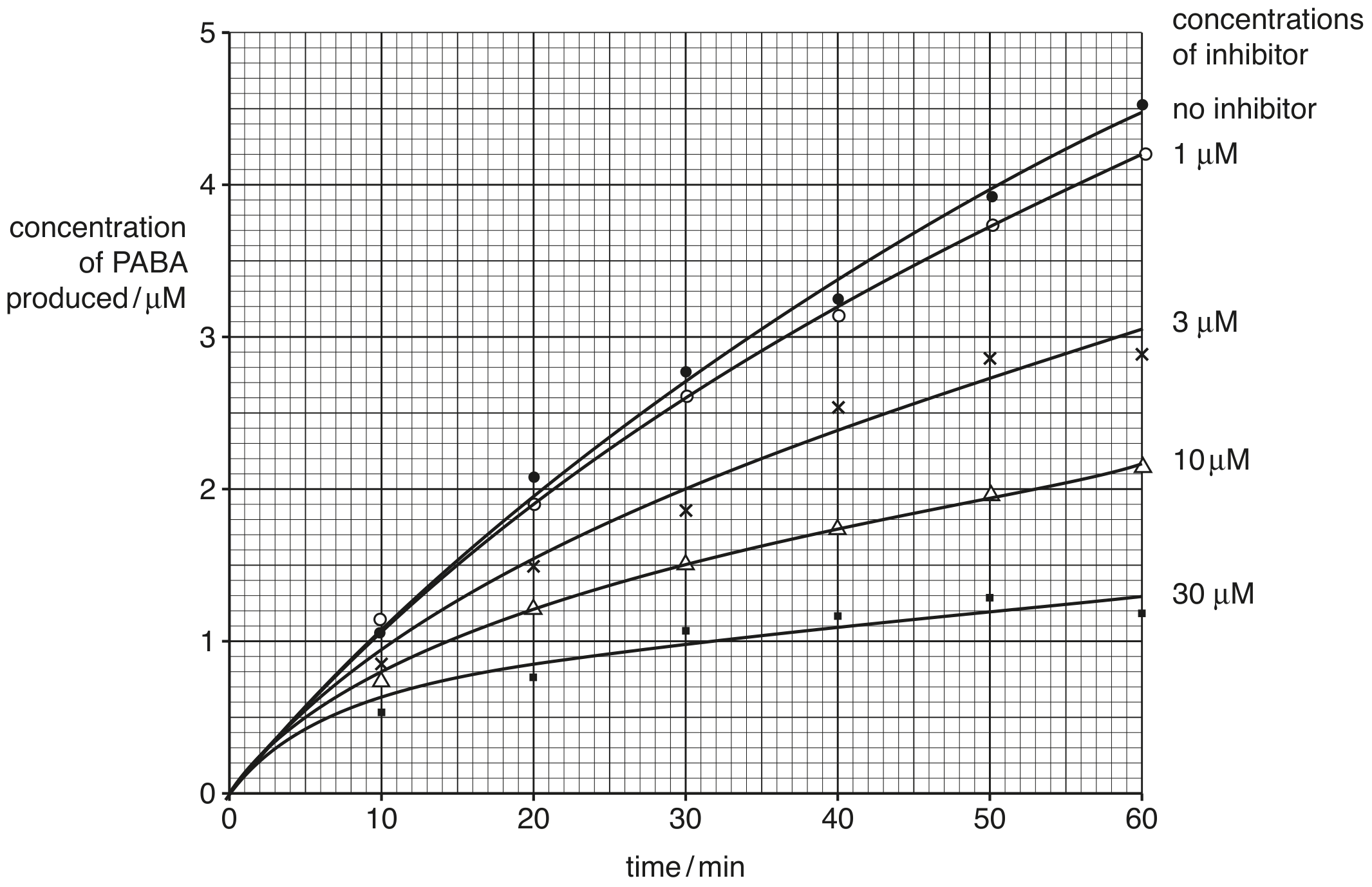
An investigation was carried out to determine the effect on the production of PABA when the concentration of an enzyme inhibitor is increased. Four different concentrations ( 1μM1 \mu \mathrm{M} to 30μM)30 \mu \mathrm{M}) of the inhibitor were used, together with a control with no inhibitor.

The concentration of PABA produced in each reaction mixture was determined at 10 minute intervals.

The results are shown in Fig. 2.1.

Fig. 2.1

Fig. 2.1

[ 7 ]
(i)

Use Fig. 2.1 to describe the results of the investigation.

[ 4 ]
(ii)

Outline an experiment that could be carried out to determine whether the inhibitor of the enzyme that catalyses the reaction to produce PABA is competitive or non-competitive.

[ 3 ]
0