EduNinja
[Maximum number: 2]

Smooth muscle is a tissue composed of smooth muscle cells. The cells contain cytoplasm packed with proteins that are involved in contraction and relaxation.

(a)

Caldesmon is a large protein with a number of binding sites to attach to other proteins.

Caldesmon exists in two different forms, H-caldesmon and L-caldesmon.
H-caldesmon helps to regulate contraction and relaxation in smooth muscle cells.
L -caldesmon is found in some non-muscle cells, where it also acts as a regulatory protein.
- Caldesmon is coded for by a gene known as CALD1.
- CALD1 has 17 exons.
- The primary structure of H-caldesmon has a repeating sequence in the middle of the amino acid chain that is not present in L-caldesmon.

[ 2 ]
(i)

Researchers now know that the two different forms of caldesmon are the result of events occurring directly after transcription of DNA. Changes occur to the primary transcript that is formed by DNA transcription.

Suggest how the smooth muscle cells and non-muscle cells can produce different forms of caldesmon from the same primary transcript.
[ 2 ]
[Maximum number: 2]

Protein production involves a complex sequence of events and a number of cell structures.

(a)

One example of protein modification is the removal of the first amino acid, methionine, from a newly formed polypeptide chain to make a functioning protein.

[ 2 ]
(i)

Suggest two other ways in which the polypeptide chain is modified to produce the functioning protein.

[ 2 ]
(a)

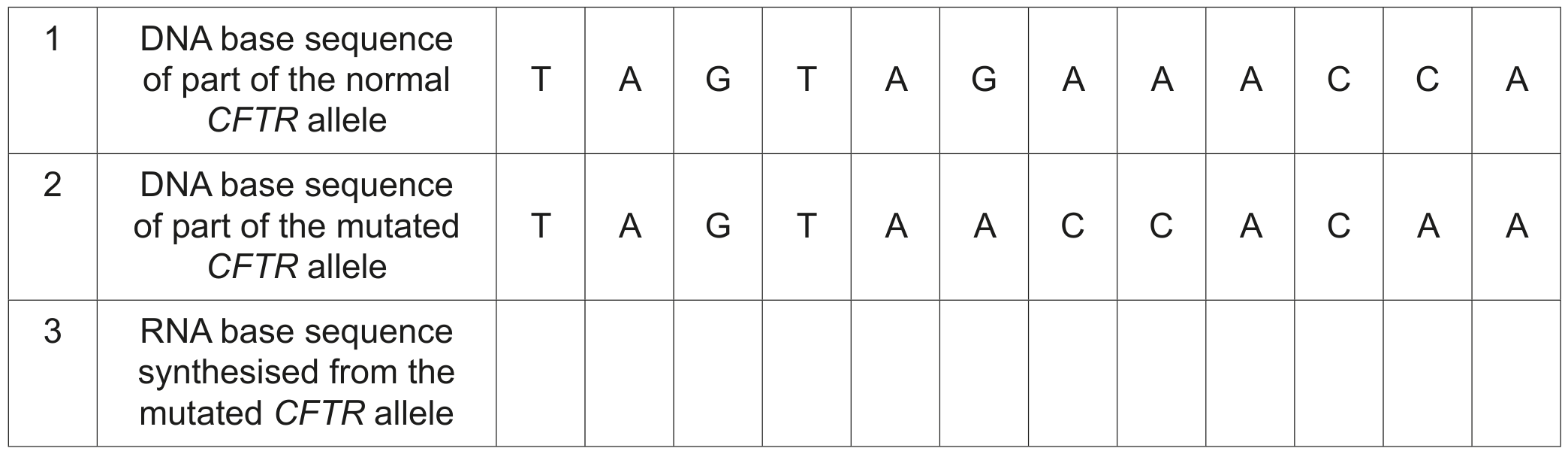
Row 1 and row 2 of Table 2.1 show the DNA base sequences of part of the normal CFTR allele and the same part of a mutated CFTR allele. The base sequences shown are for the DNA strands used in the synthesis of RNA. When Table 2.1 is completed, row 3 will show the base sequence of the RNA synthesised from the same part of the mutated CFTR allele.

Table 2.1

Table 2.1

[ 3 ]
(i)

The normal CFTR allele is approximately 189000 base pairs in length. The CFTR polypeptide consists of only 1480 amino acids.

Explain the reasons for this difference between the number of base pairs and the number of amino acids.

[ 3 ]
(a)

The nuclei of plants produce small lengths of RNA known as microRNAs.

MicroRNAs in guard cells have been shown to prevent the synthesis of some proteins.
The guard cells of the drought-tolerant tomato plants produced more microRNA molecules than the guard cells of the non-tolerant plants.

MicroRNA molecules do not prevent transcription but interact with messenger RNA (mRNA).
Suggest how this microRNA can interact with mRNA to prevent the production of proteins in guard cells of S. lycopersicum.

[ 3 ]
[Maximum number: 1]

Carbonic anhydrase is a globular protein found in red blood cells.

(a)

A protein such as carbonic anhydrase is coded for by a gene. A gene forms part of a DNA molecule.

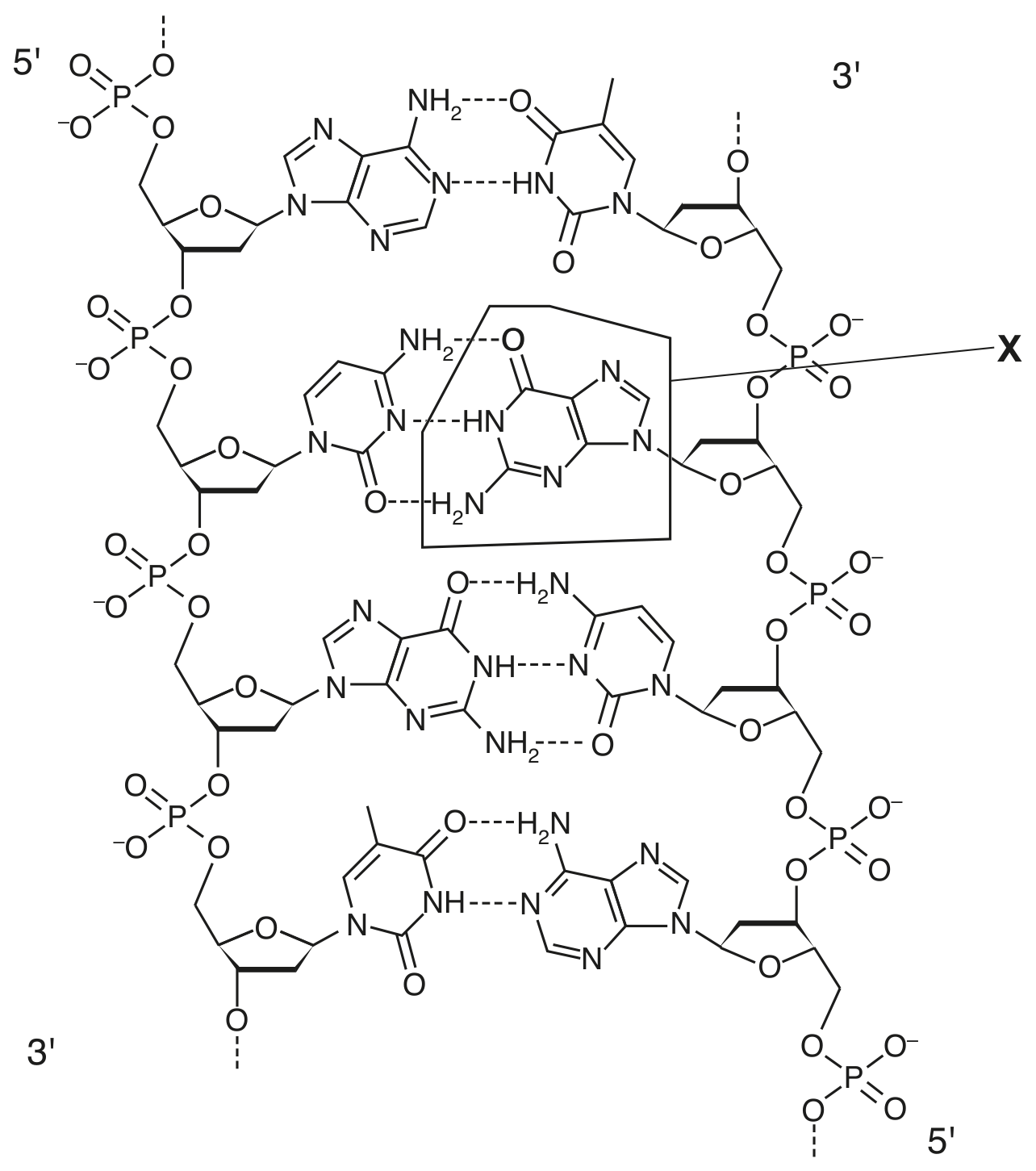
Fig. 3.1 is a diagram of a small section of a DNA molecule.

Fig. 3.1

Fig. 3.1

[ 1 ]
(i)

Gene mutations can occur in either introns or exons.

Suggest the effect of a gene mutation in an intron.

[ 1 ]
[Maximum number: 2]

The secretion of insulin by the islets of Langerhans in the pancreas stimulates the liver to reduce the blood glucose concentration.

(a)

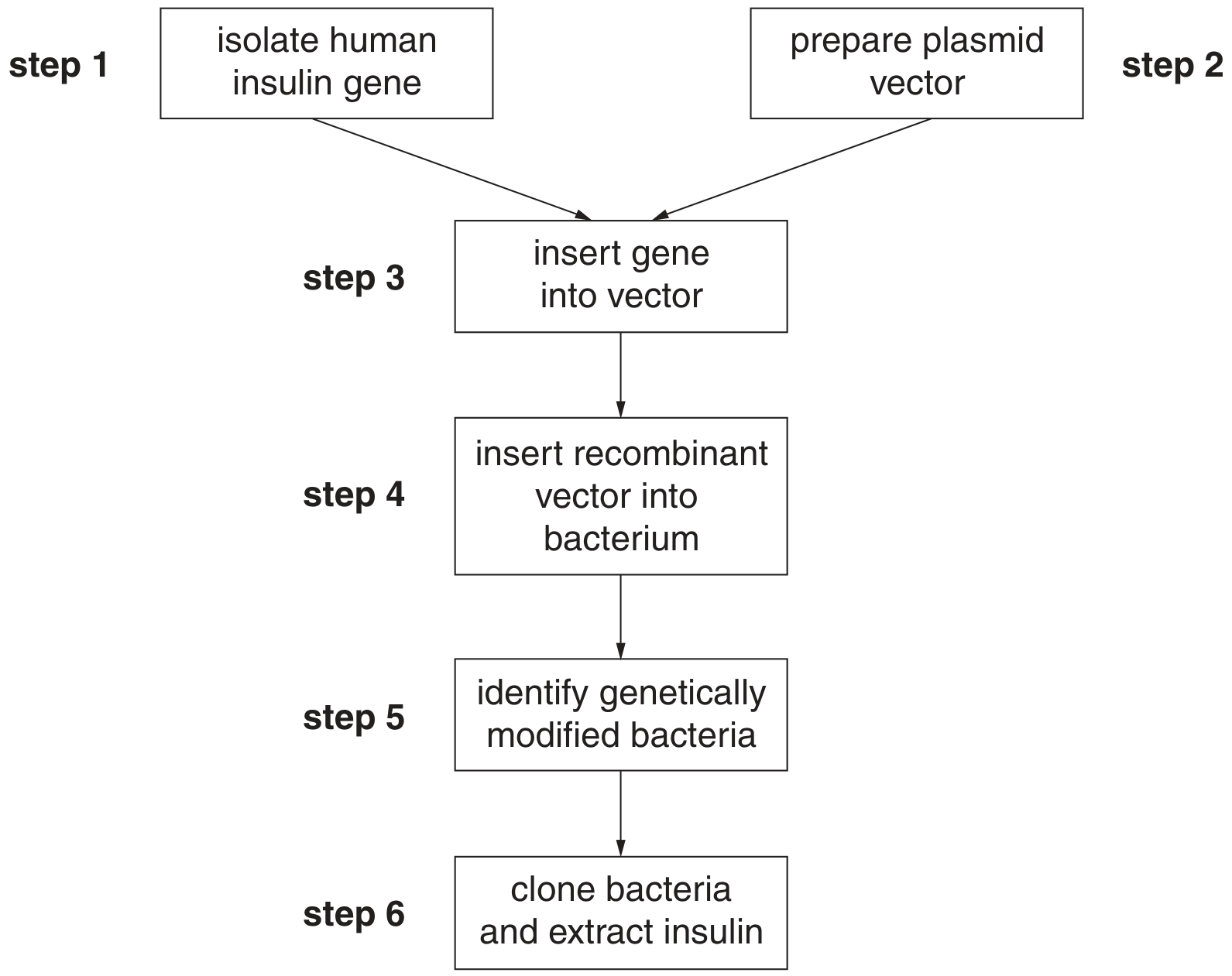
Almost all insulin used to treat type I diabetes is produced by genetically engineered bacteria or yeast. A summary of this procedure is shown in Fig. 4.1.

Fig. 4.1

Fig. 4.1

[ 2 ]
(i)

One way of carrying out step 1 is to collect mRNA from β\beta cells from the pancreas. The relevant mRNA is then isolated and used to make DNA.

Suggest why isolating the mRNA coding for insulin in a β\beta cell is easier than isolating the DNA for insulin in a β\beta cell.

[ 2 ]
[Maximum number: 3]

The alveoli of the lungs are the main gas exchange surface in humans.

(a)

The gene A B C A 3 codes for protein A B C A 3. The gene is 80 kb ( 80000 base pairs) long and is composed of introns and exons. Protein ABCA3 is composed of 1704 amino acids.

[ 3 ]
(i)

A triplet of bases codes for one amino acid. This fact only partly explains how the activity of gene A B C A 3, which is 80 kb long, can result in the protein ABCA 3 , which is only 1704 amino acids long.

Suggest other reasons to explain the difference in the number of base pairs in gene A B C A 3 compared with the number of amino acids in protein ABCA3.

[ 3 ]
[Maximum number: 1]

In eukaryotes, the RNA molecules formed during transcription are modified by the removal of non-coding sequences. This is followed by the joining together of coding sequences to form mRNA.

What are the coding sequences also called?

A

codons

B

exons

C

introns

D

primary transcripts

[Maximum number: 1]

Which statement about mRNA is correct?

A

The primary transcript becomes modified by the joining of introns to become mRNA.

B

The primary transcript is synthesised and then modified to mRNA in the nucleus.

C

mRNA contains nucleotides containing the sugar deoxyribose.

D

The bases in mRNA are held together by covalent bonds.

[Maximum number: 1]

Food crops such as barley and wheat contain gluten. Gluten contains two proteins, glutenin and gliadin.

(a)
(i)

Many genes in eukaryotic cells contain introns. The genes that code for gliadin do not contain introns.

Explain how a lack of introns in a gliadin gene affects the production of mRNA from the primary transcript.

[ 1 ]
0