(a)
Fig. 1.1 shows the breakdown of a molecule of sucrose.
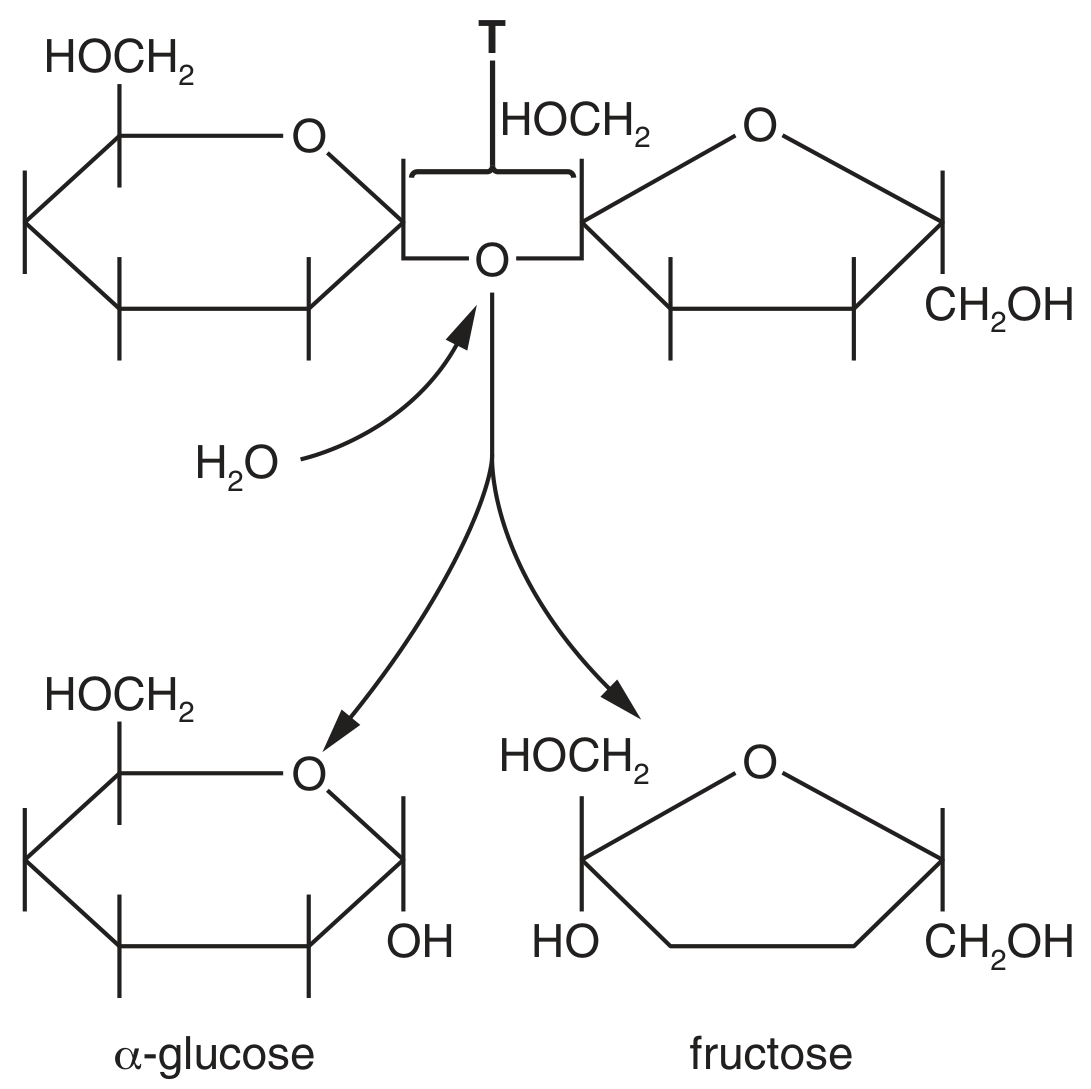
Fig. 1.1
[ 2 ]
(i)
State two roles of water within plant cells other than taking part in breakdown reactions.
1
2.
[ 2 ]
 EduNinja
Fig. 1.1 shows the breakdown of a molecule of sucrose.
Fig. 1.1
State two roles of water within plant cells other than taking part in breakdown reactions.
1
2.
Fig. 1.1 is a labelled diagram of a leaf palisade mesophyll cell, as seen with a high quality light microscope.
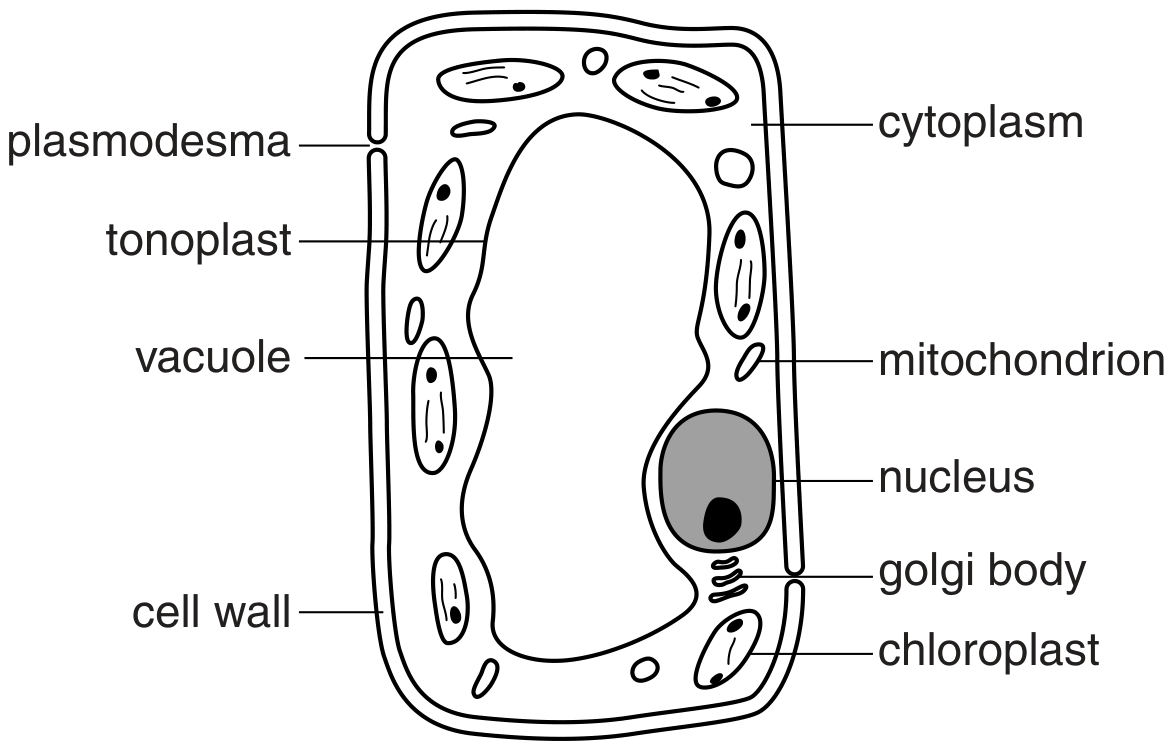
Fig. 1.1
An electron micrograph of the same leaf mesophyll cell at the same magnification would show more detail than is shown in Fig. 1.1.
In Fig. 1.1, starch granules are visible within the chloroplasts. Starch is the most common storage compound of plants. It is composed of amylopectin and amylose.
State one role of magnesium ions within chloroplasts.
Fig. 1.1 is a drawing of a photomicrograph of a spongy mesophyll cell from a leaf.
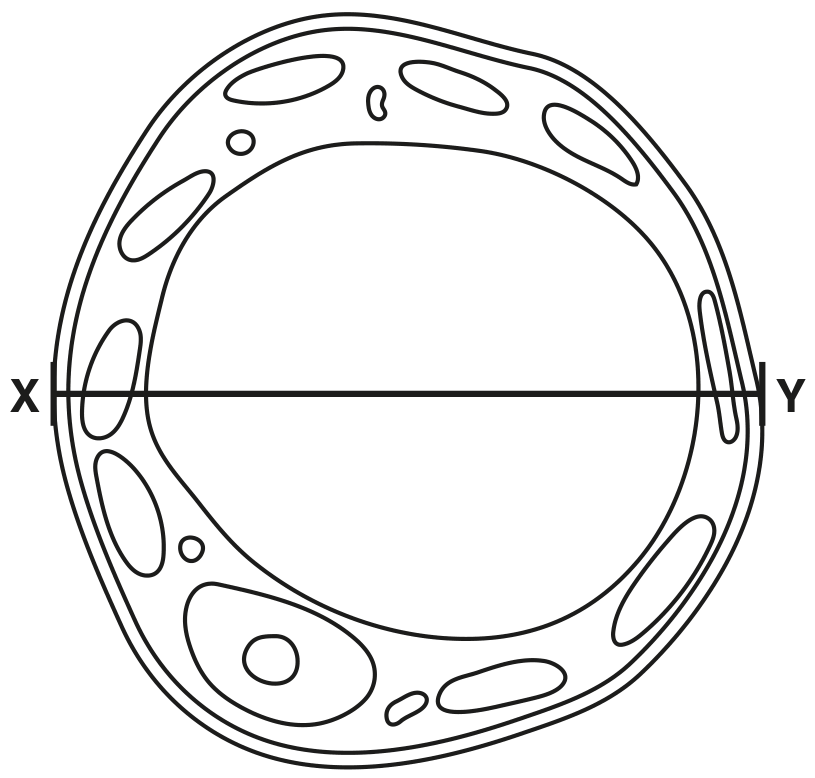
Fig. 1.1
Some of the water that moves out of the xylem within the leaves takes an apoplastic pathway to the spongy mesophyll cells. There is a film of water on the external surfaces of these cells. This allows the intercellular air spaces to become saturated with water vapour.
Outline the properties of water that contribute to the apoplastic movement of water to the spongy mesophyll cells and to the movement of water into the intercellular air spaces.
Fig. 2.1 is a photomicrograph of a longitudinal section (LS) through a root tip. Two different regions are visible:
- the root apical meristem
- the root cap.
Cells in the root cap synthesise a gel-like, sticky secretion known as mucilage, which is important in reducing friction between soil and the growing root. It is composed mainly of polysaccharides and also contains some amino acids and enzymes.
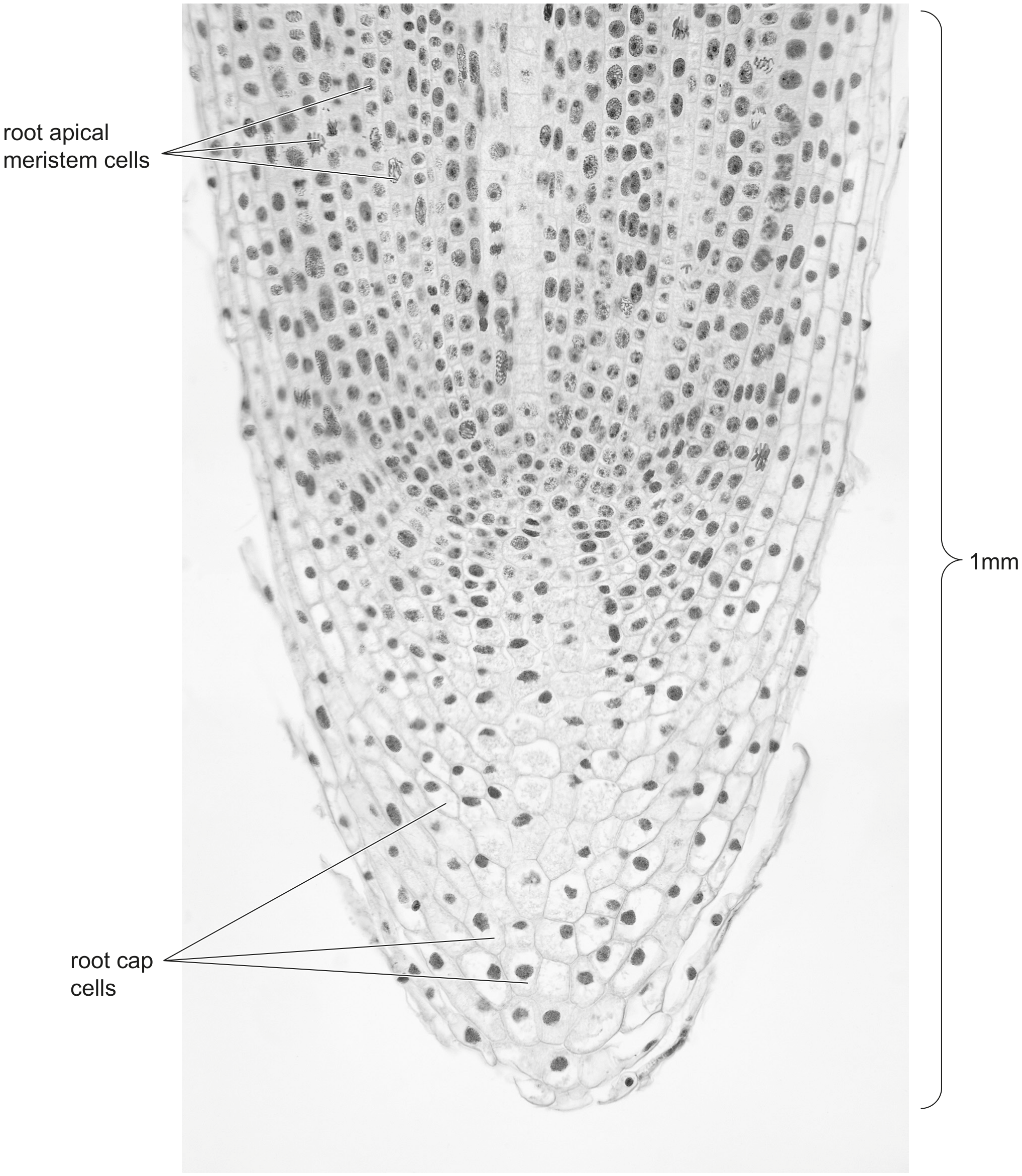
Fig. 2.1
Mucilage acts as a glue to bind tiny soil particles together, forming small clumps close to the root. These small clumps help to maintain the soil water around the root tip and prevent the loss of water.
With reference to the cohesive and adhesive properties of water, suggest and explain how the formation of small clumps of soil helps to maintain the soil water around the root tip.
What is the maximum number of hydrogen bonds that can form between a single water molecule and other water molecules?
1
2
3
4
Fig. 2.1 is a transmission electron micrograph of cells from a spinach leaf.
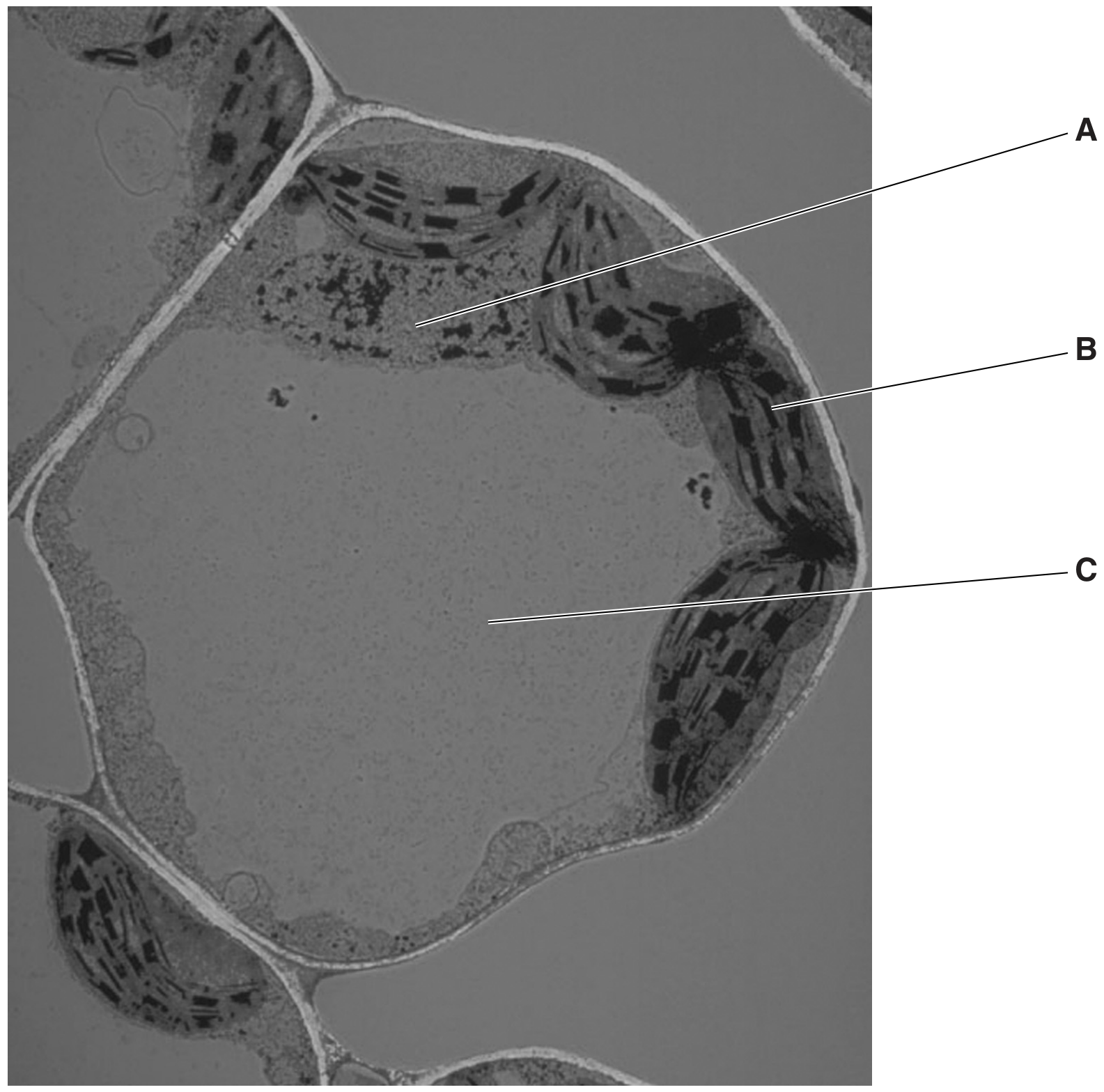
Fig. 2.1
Water, containing dissolved mineral ions such as magnesium, enters spinach leaf cells.
State two ways that water is used in the leaf cell.
1
2.
Fig. 2.1 shows three molecules of water.
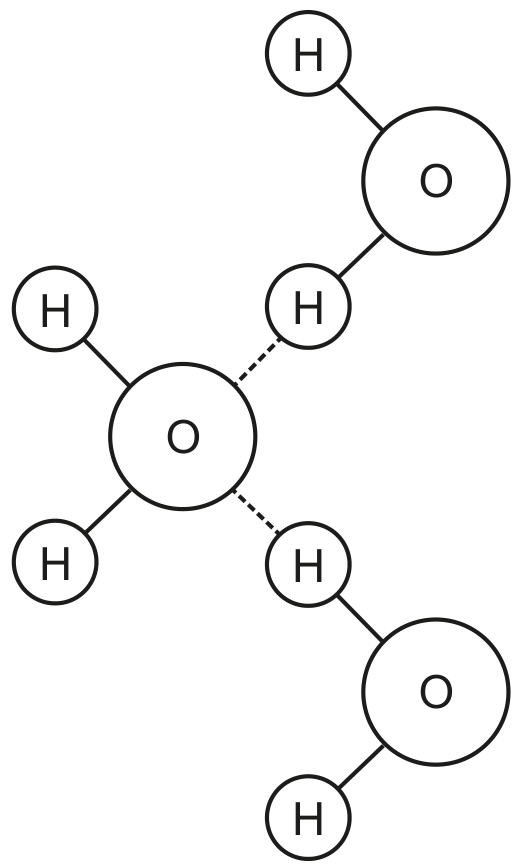
Fig. 2.1
Describe the hydrogen bonding that occurs between the water molecules shown in Fig. 2.1.
Outline the importance of water as a solvent in plants.
Water is the main component of blood.
Explain how the properties of water make it suitable as the main component of blood.
The statements are about the properties of water.
1 ability to form hydrogen bonds with other molecules
2 less dense when frozen
3 able to hold a lot of heat
What allows a small insect to rest on the surface of a pond?
1 and 2
2 and 3
1 only
2 only