EduNinja
(a)

Fig. 1.1 is a diagram representing part of the phospholipid bilayer of a cell surface membrane.
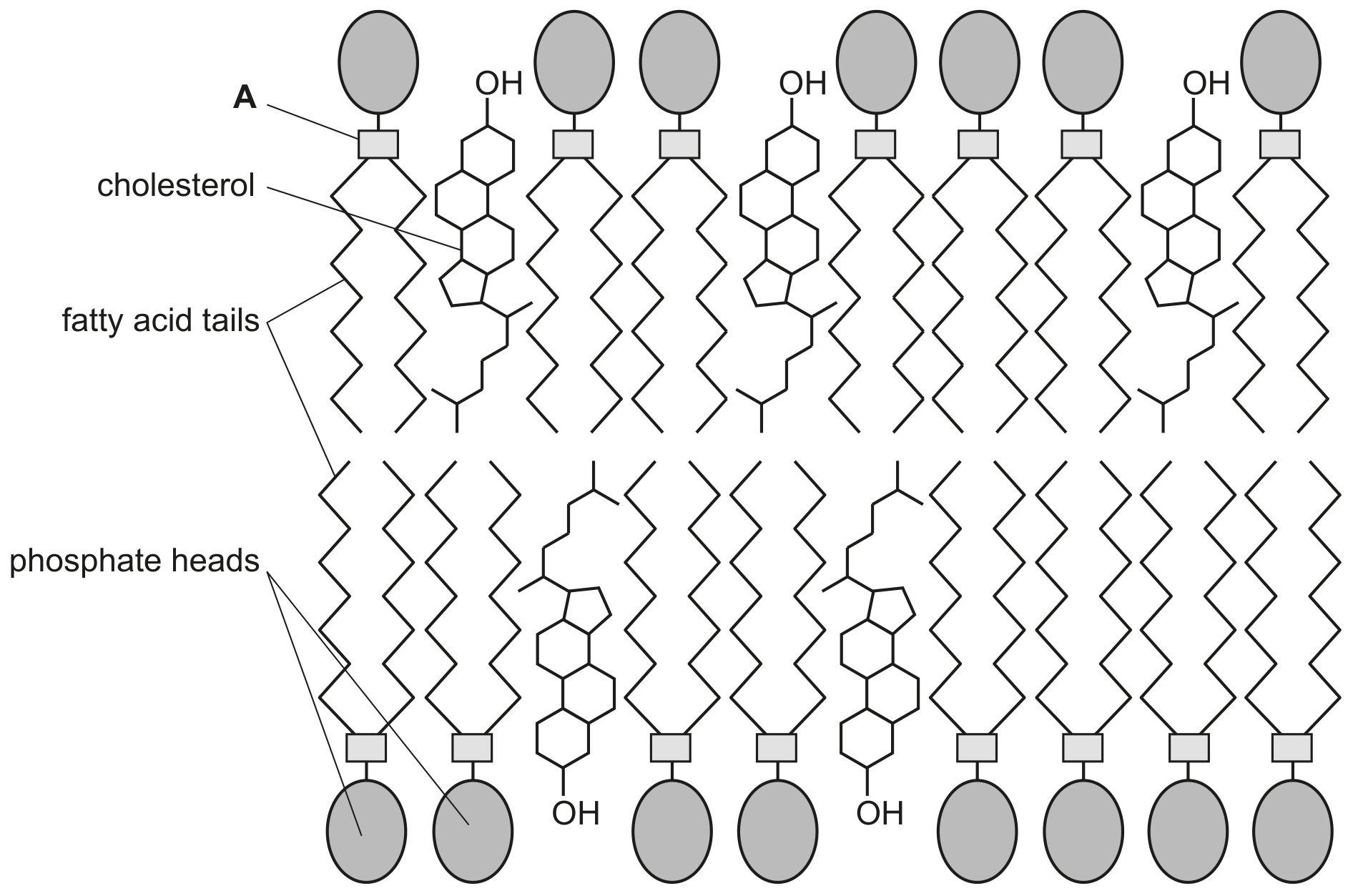
Fig. 1.1

Fig. 1.1

[ 1 ]
(i)

Identify the part of a phospholipid molecule, labelled A in Fig. 1.1, that forms bonds with the phosphate heads and with the fatty acid tails.

[ 1 ]
[Maximum number: 2]

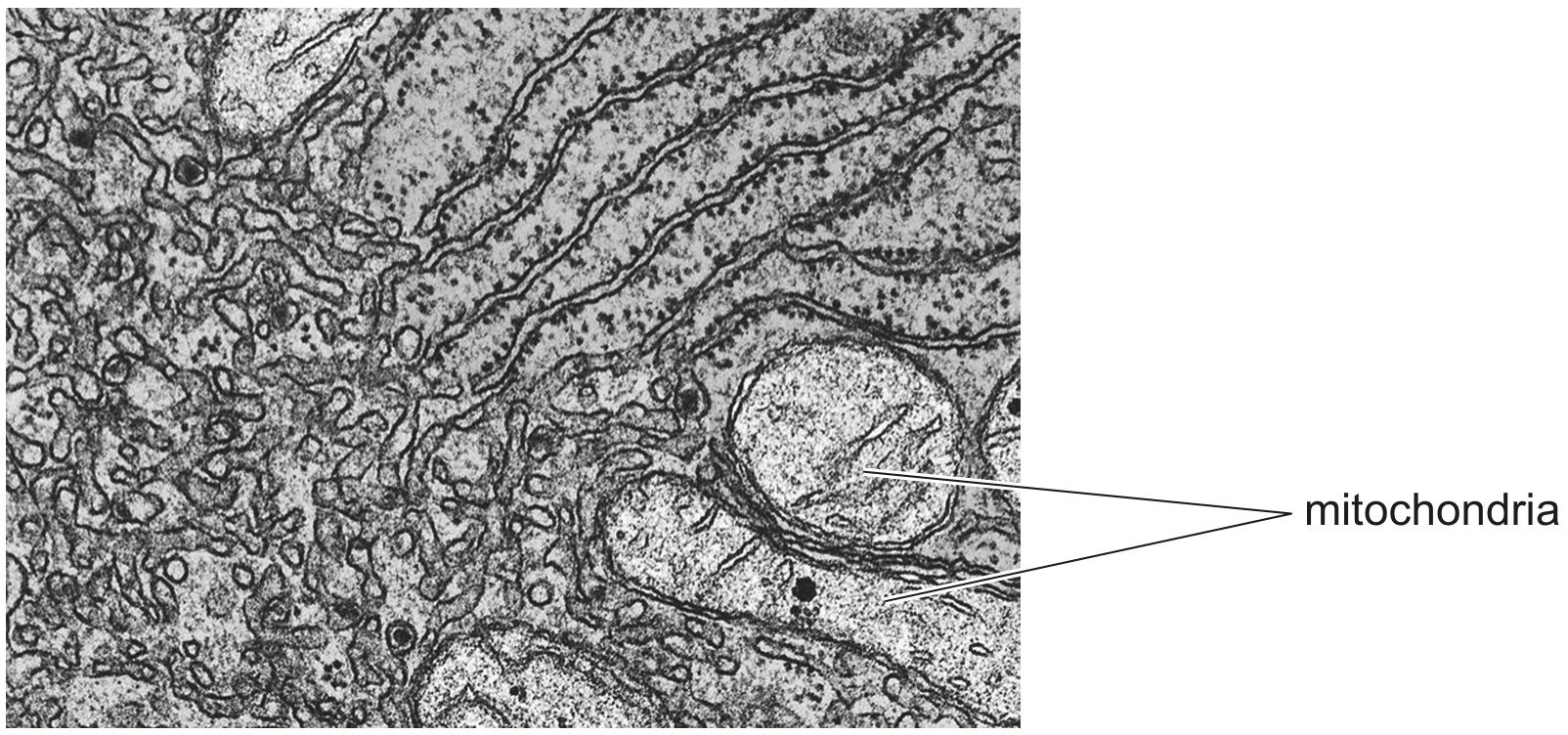
The Golgi body, rough endoplasmic reticulum (RER) and smooth endoplasmic reticulum (SER) form part of the internal membrane system of a cell. The membranes have a fluid mosaic structure.

Fig. 1.1 is a transmission electron micrograph of one area of a liver cell showing a region with RER and a region with SER. Mitochondria are also visible in the image.

Fig. 1.1

Fig. 1.1

(a)

Phospholipids are one of the main components of membranes.

Describe the structure of a phospholipid molecule.

[ 2 ]
(a)

Fig. 1.1 is a simple diagram of a phospholipid molecule.

Explain how the structure of a phospholipid molecule makes it suitable for its function in cell membranes. You may label and annotate Fig. 1.1 as part of your answer.

Fig. 1.1

Fig. 1.1

[ 3 ]
[Maximum number: 2]

Phosphatidate phosphatase (PAP) enzymes have an important role in lipid metabolism.
The reaction catalysed by PAP is shown in Fig. 2.1.

 phosphatidate +H2O diglyceride + inorganic phosphate (Pi) \text { phosphatidate }+\mathrm{H}_{2} \mathrm{O} \longrightarrow \text { diglyceride }+ \text { inorganic phosphate (Pi) }

Experiments were carried out to investigate the activity of PAP extracted from the cotyledons (seed leaves) of bitter gourd, Momordica charantia.

(a)

The diglycerides formed as a result of the action of PAP can be used to synthesise triglycerides and membrane phospholipids.

[ 2 ]
(i)

Explain why phospholipids are able to form a bilayer in cell membranes.

[ 2 ]
[Maximum number: 1]

Which molecules contain the following bonds?

ester

hydrogen

disulfide

amylase

haemoglobin

catalase

glycerol

glycogen

collagen

lipids

amylopectin

amylose

phospholipids

cellulose

antibodies

[Maximum number: 1]

The structure of phospholipids and triglycerides include the following.
1 glycerol linked to fatty acids
2 hydrophobic fatty acid chains
3 saturated fatty acid chains
Which structures enable the formation of a lipid bilayer in cell surface membranes?

A

1 and 2

B

1 and 3

C

2 and 3

D

2 only

[Maximum number: 1]

Which statement about phospholipid molecules is correct?

A

They contain one saturated fatty acid and two unsaturated fatty acids.

B

They contain three phosphodiester bonds.

C

They contain hydrophobic regions and hydrophilic regions.

D

They contain a hydrophobic phosphate group that is soluble in water.

[Maximum number: 1]

Which row shows a correct comparison between a phospholipid molecule and a triglyceride molecule?

phospholipid molecule

triglyceride molecule

contains a hydrophobic phosphate group

is a hydrophobic molecule

contains one glycerol molecule

contains three glycerol molecules

fewer ester bonds

more ester bonds

more fatty acids

fewer fatty acids

[Maximum number: 1]

The diagrams show four fatty acids, each with a chain of 18 carbon atoms.
Which fatty acid, as part of a phospholipid molecule, would contribute most to the fluidity of a cell surface membrane?

A
Question image
B
Question image
C
Question image
D
Question image
[Maximum number: 2]

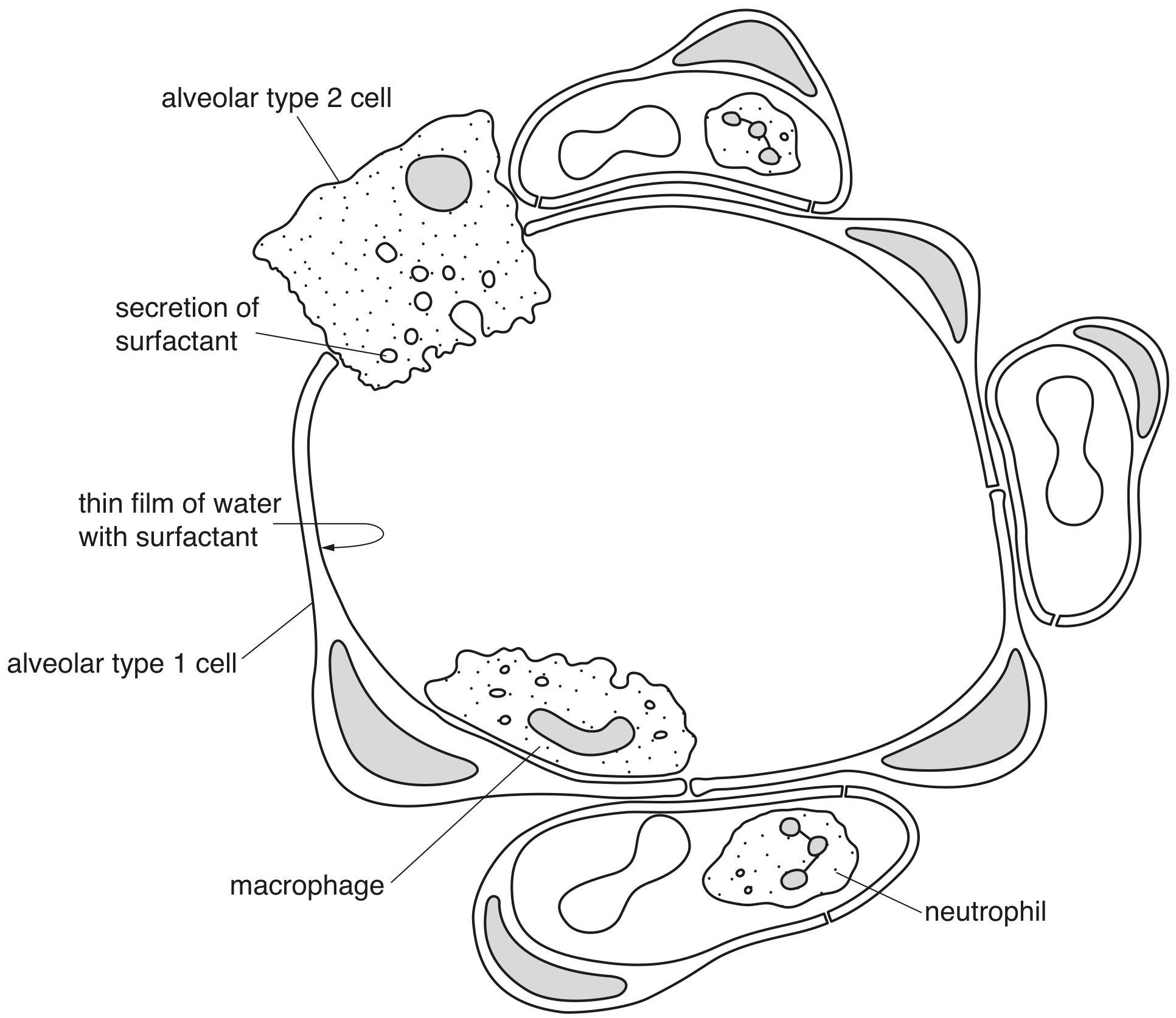
Fig. 3.1 shows the structure of an alveolus and surrounding structures in a mammalian lung. The lining of each alveolus is formed by two types of epithelial cell, alveolar type 1 and alveolar type 2.

Fig. 3.1

Fig. 3.1

(a)

Alveolar type 2 cells secrete pulmonary surfactant into the watery fluid that lines the alveolus. The surfactant reduces the surface tension of the fluid so that the alveolus does not collapse.

Pulmonary surfactant is a mixture of phospholipids and proteins. The phospholipids form a monolayer on the surface of the fluid.

Explain how phospholipids interact with water to form a monolayer on the surface of the fluid.

Macrophages and neutrophils are found in the lungs, as shown in Fig. 3.1.

[ 2 ]
0