(a)
(i)
Starch granules contain amylose and amylopectin.
Describe the similarities and differences between the structure of amylose and the structure of amylopectin.
[ 4 ]
 EduNinja
Starch granules contain amylose and amylopectin.
Describe the similarities and differences between the structure of amylose and the structure of amylopectin.
Fig. 1.1 shows the structures of four biological molecules A, B, C and D.
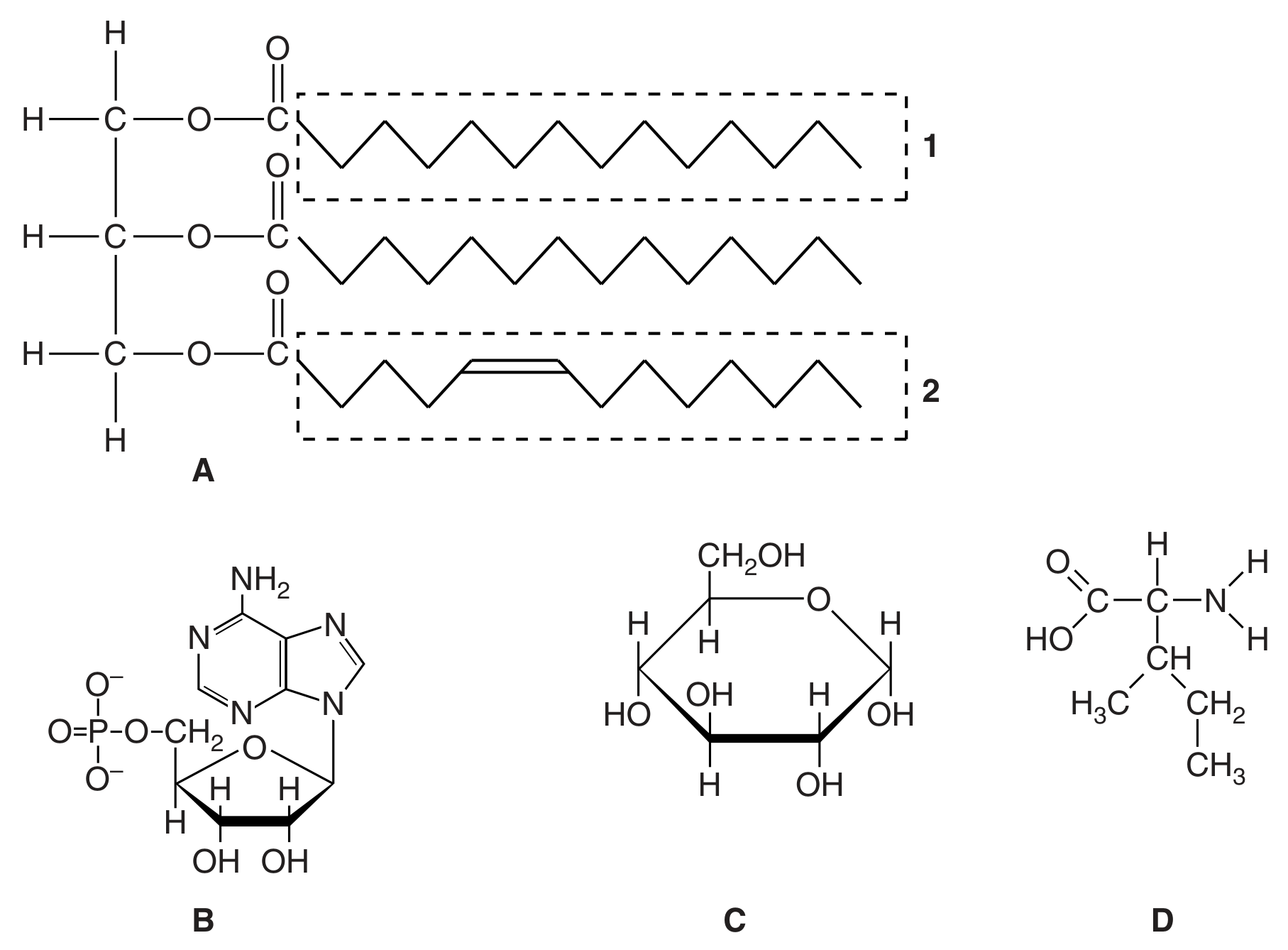
Fig. 1.1
Some of the molecules in Fig. 1.1 can form polymers.
Name a polymer which can be formed only from many molecules of C.
Fig. 1.1 is a labelled diagram of a leaf palisade mesophyll cell, as seen with a high quality light microscope.
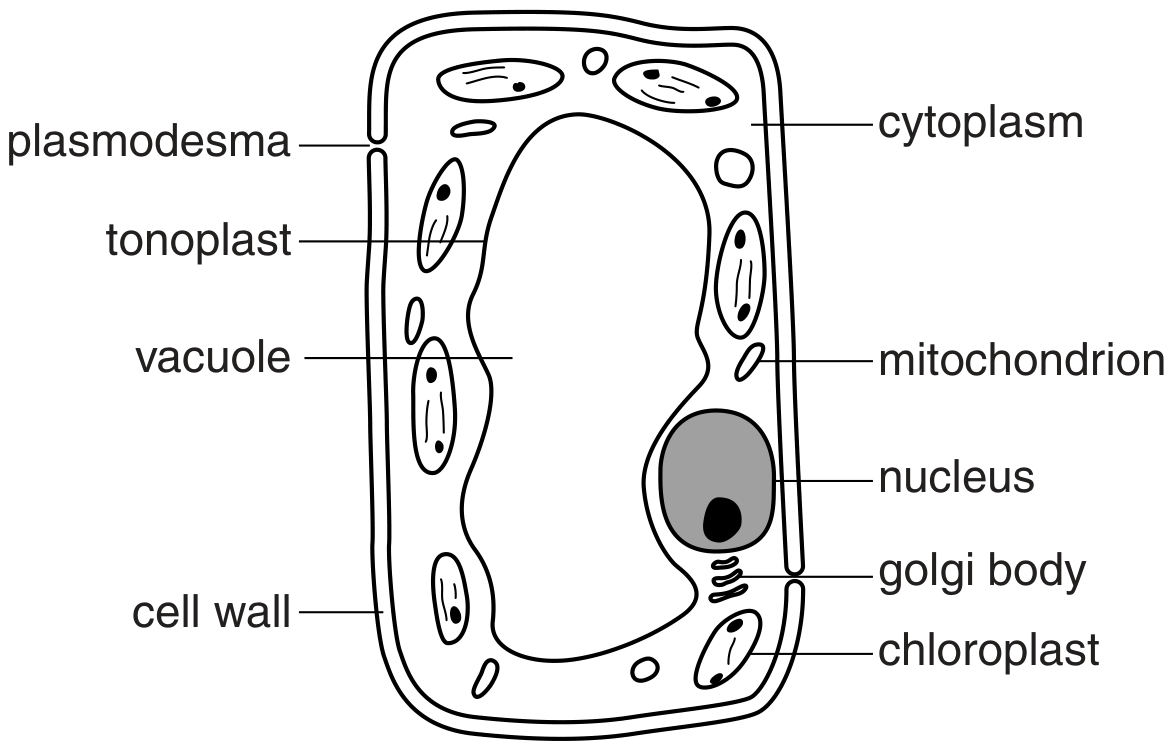
Fig. 1.1
An electron micrograph of the same leaf mesophyll cell at the same magnification would show more detail than is shown in Fig. 1.1.
In Fig. 1.1, starch granules are visible within the chloroplasts. Starch is the most common storage compound of plants. It is composed of amylopectin and amylose.
Describe the structural differences between amylopectin and amylose.
Fig. 1.2 summarises the reactions that take place after glucose has entered a certain type of cell.
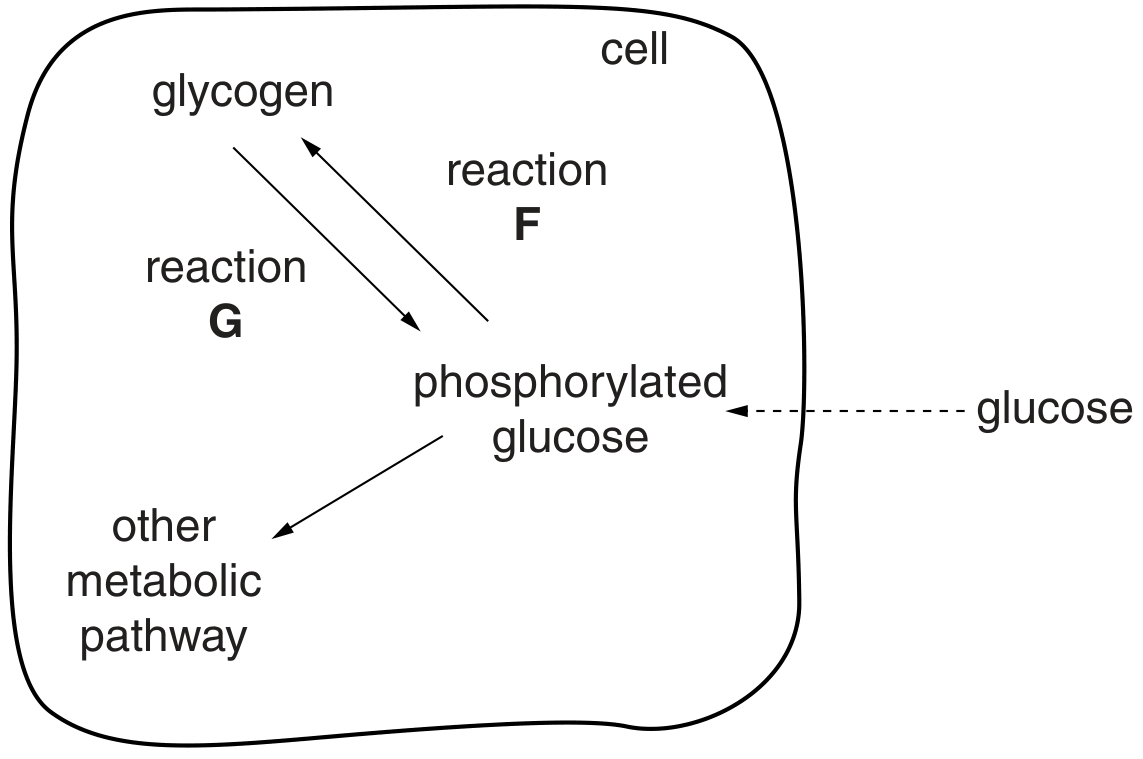
Fig. 1.2
With reference to Fig. 1.2, suggest one example of an 'other metabolic pathway' for phosphorylated glucose.
Starch molecules are the main storage molecules in many types of cereal grain, such as the grain of the barley plant.
When the seed inside a barley grain germinates, genes coding for digestive enzymes are switched on. The enzymes that are synthesised catalyse the hydrolysis of storage molecules such as proteins and starch.
Starch is a mixture of two different molecules.
Name these two molecules.
Two of the enzymes synthesised by the barley seed are -amylase and maltase. These are involved in the hydrolysis of the stored starch during seedling formation.
In the food industry, the starch extracted from barley seeds (barley starch) is used in the production of sugar syrups. Fig. 2.2 summarises the reactions catalysed by -amylase in the production of maltose syrup and by maltase in the production of glucose syrup.
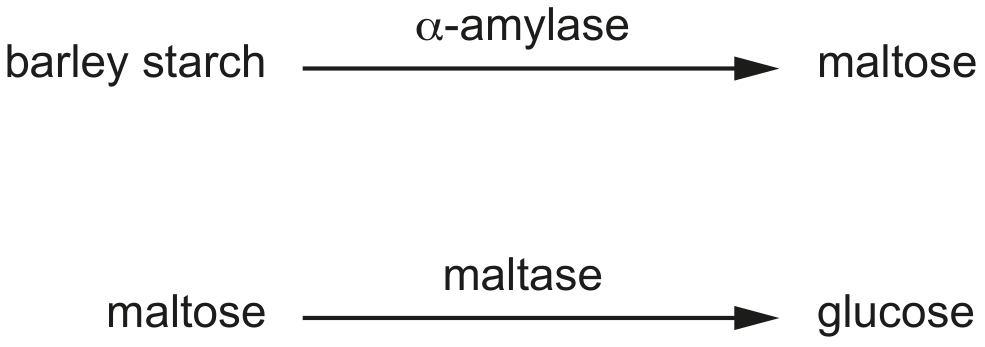
Fig. 2.2
Which statements describe features of cellulose that adapt it for its function in plant cells?
1 Three cellulose molecules coil around each other to form a triple helix structure.
2 Many hydrogen bonds form between adjacent cellulose molecules.
3 Covalent bonds form between adjacent cellulose molecules.
1, 2 and 3
1 and 3 only
2 and 3 only
2 only
Which row is correct for cellulose?
rotation of alternate monomers by
shape of molecule
hydrogen bonds between molecules
key
✓ = present
not present
✓
branched
branched
✓
unbranched
✓
unbranched
✓
Which carbohydrate gives a brick red colour when boiled with Benedict's solution?
cellulose
fructose
glycogen
sucrose
Which of the statements about polysaccharides can be used to describe amylose and cellulose?
1 contains 1,4 glycosidic bonds
2 contains 1,6 glycosidic bonds
3 polymer of glucose
1 and 2
1 and 3
1 only
2 and 3
What is the general formula for amylose?