EduNinja
[Maximum number: 2]

Fig. 1.1 shows five biological molecules.
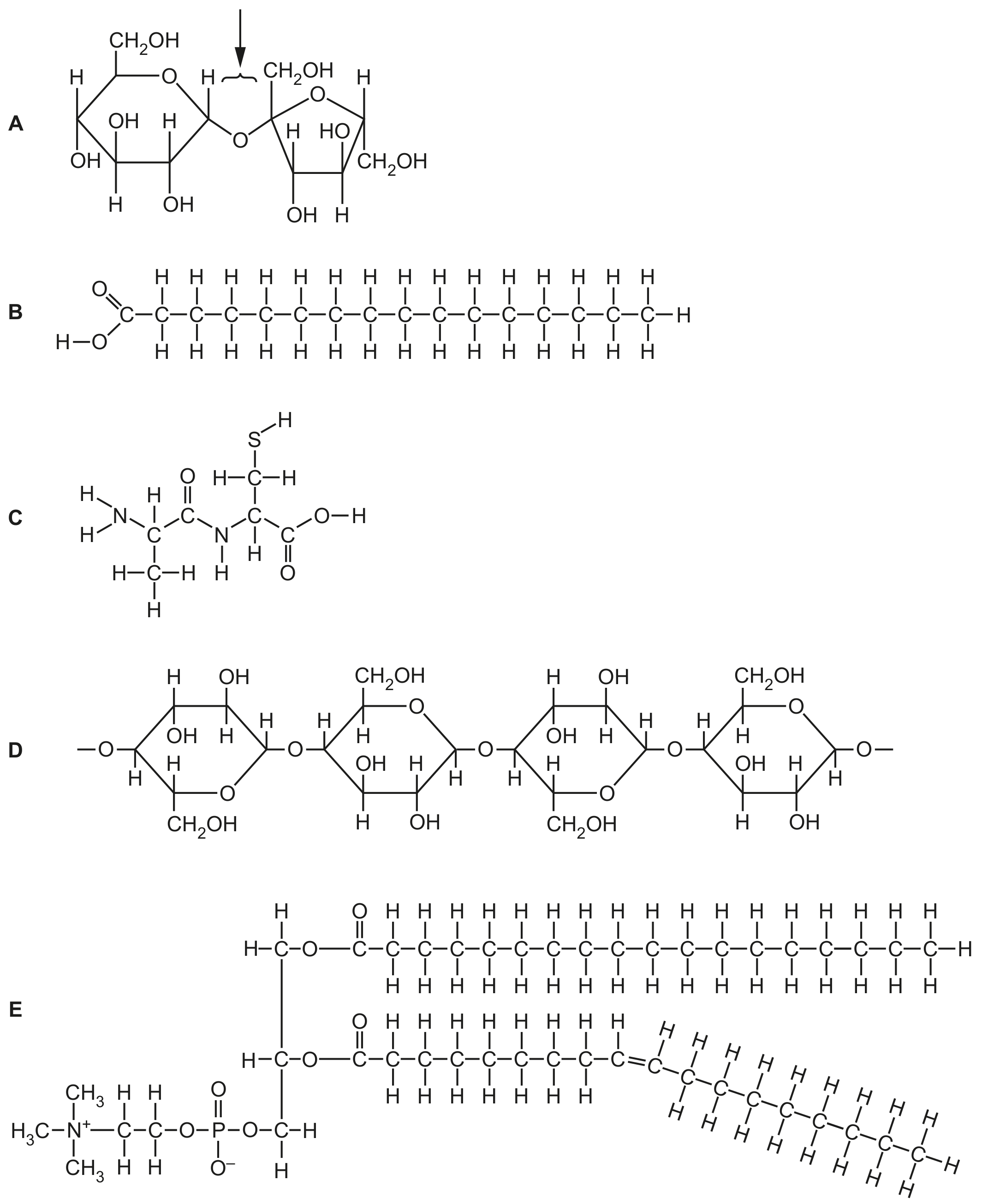
Fig. 1.1

Fig. 1.1

(a)

Molecule B is described as a saturated fatty acid.

State why molecule B is described as a saturated fatty acid.

[ 1 ]
(b)

Molecule A and molecule C dissolve in water. Molecule B does not dissolve in water.

Explain why molecule A and molecule C dissolve in water, but molecule B does not dissolve in water.

[ 1 ]
[Maximum number: 3]

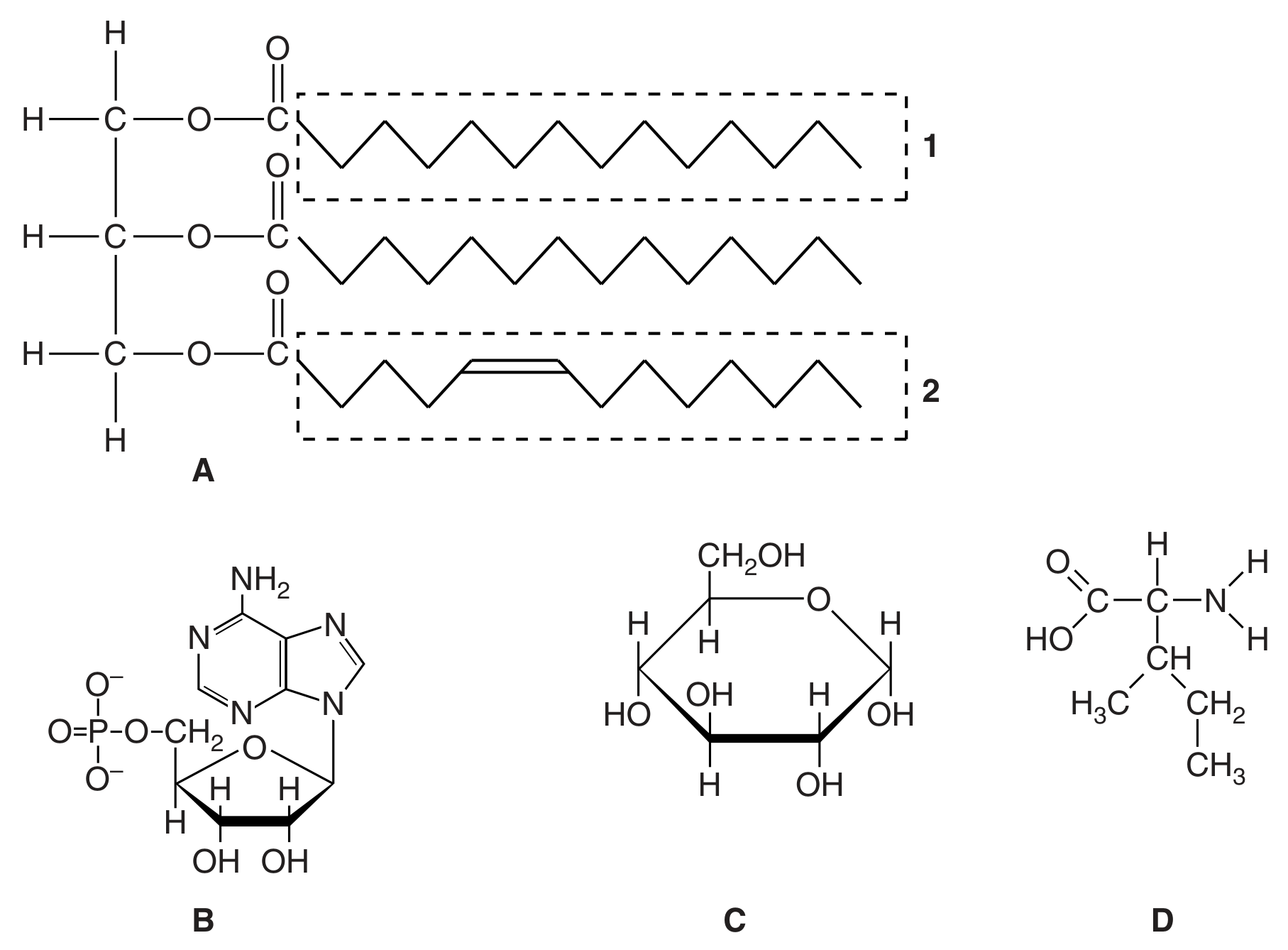
Fig. 1.1 shows the structures of four biological molecules A, B, C and D.

Fig. 1.1

Fig. 1.1

(a)

Give the letter, A to D, of the molecule in Fig. 1.1 which:

[ 3 ]
(i)

contains ester bonds.

[ 3 ]
[Maximum number: 2]

Phosphatidate phosphatase (PAP) enzymes have an important role in lipid metabolism.
The reaction catalysed by PAP is shown in Fig. 2.1.

 phosphatidate +H2O diglyceride + inorganic phosphate (Pi) \text { phosphatidate }+\mathrm{H}_{2} \mathrm{O} \longrightarrow \text { diglyceride }+ \text { inorganic phosphate (Pi) }

Experiments were carried out to investigate the activity of PAP extracted from the cotyledons (seed leaves) of bitter gourd, Momordica charantia.

(a)

The diglycerides formed as a result of the action of PAP can be used to synthesise triglycerides and membrane phospholipids.

[ 2 ]
(i)

Explain how the structure of a triglyceride is suited to its function as an energy storage molecule.

[ 2 ]
[Maximum number: 2]

Lipase is an enzyme with many commercial uses. Some species of bacteria are of great interest as they produce large quantities of lipase.

(a)

Complete Fig. 2.1 to show the hydrolysis of triglyceride by lipase.

 triglyceride +.. lipase \text { triglyceride }+\ldots \ldots \ldots \ldots \ldots \ldots \ldots . . \xrightarrow{\text { lipase }}

Researchers carried out investigations into lipase extracted from a bacterium found in hot springs.

[ 2 ]
[Maximum number: 1]

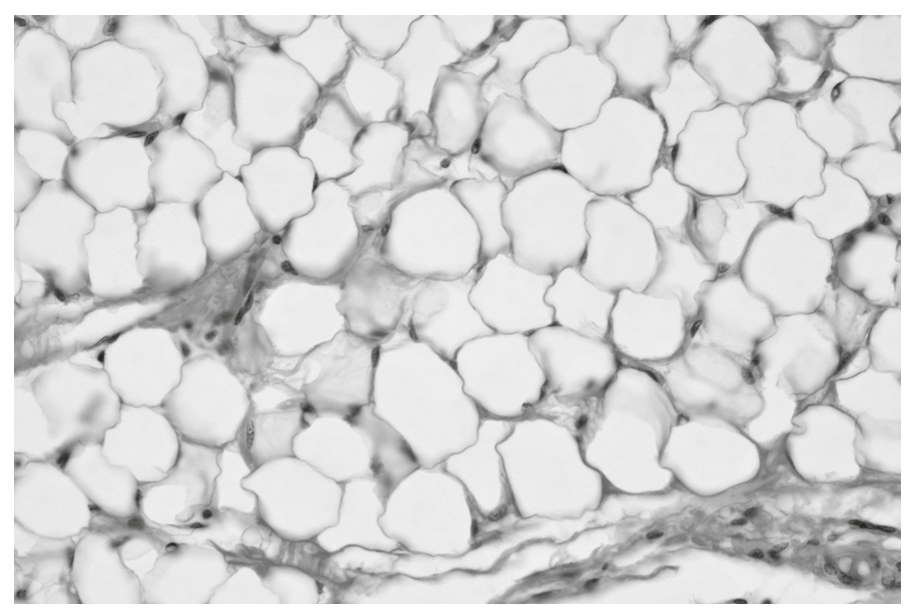
Adipose tissue, which is composed of cells known as adipocytes, stores large quantities of triglycerides and functions as an energy storage tissue.

Fig. 2.1 is a photomicrograph of adipose tissue.

Fig. 2.1

Fig. 2.1

(a)

Adipocytes synthesise triglyceride lipase (ATGL), an enzyme that catalyses the formation or breakdown of triglycerides, as shown in Fig. 2.1.

Fig. 2.1

Fig. 2.1

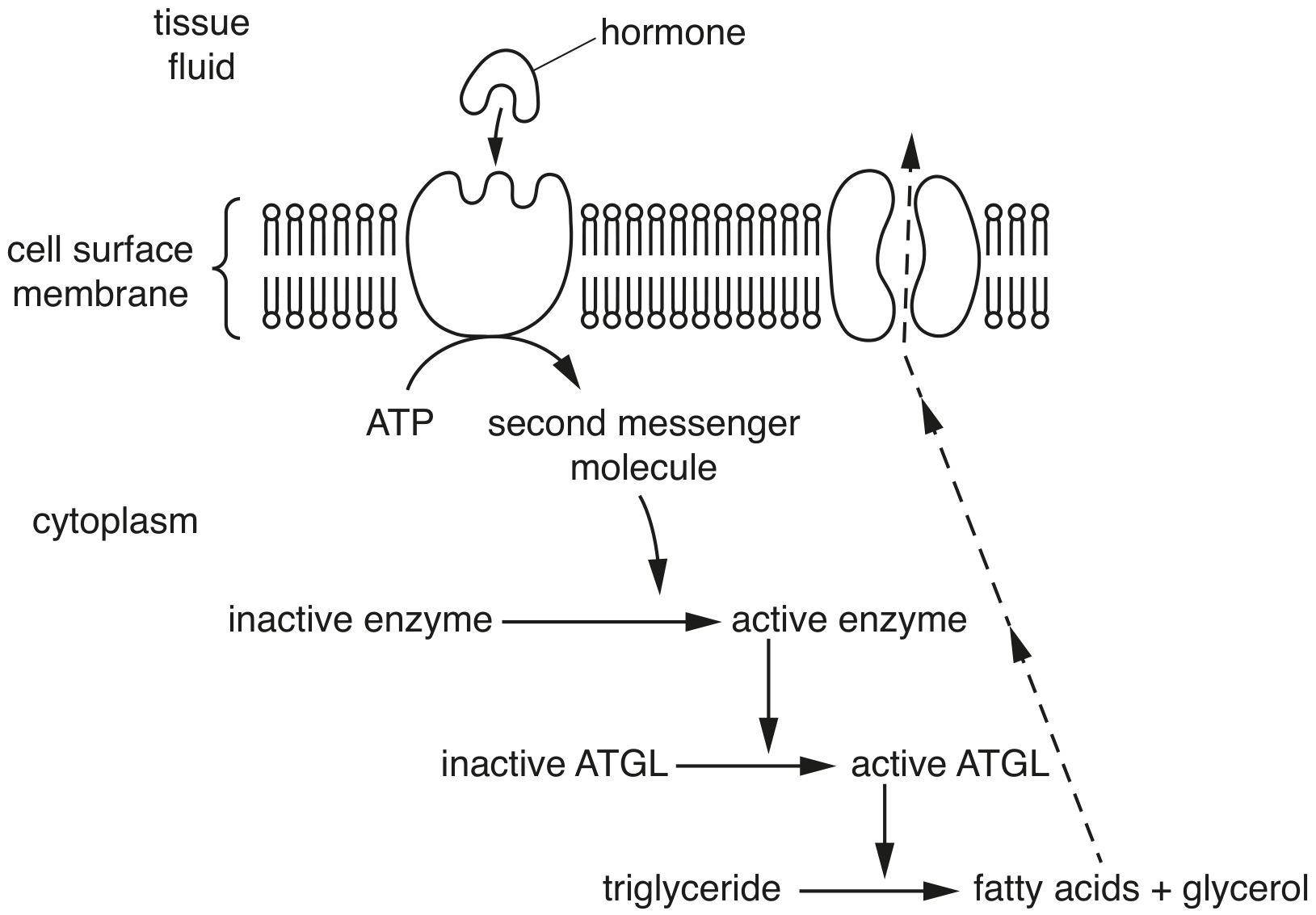
The balance between triglyceride formation and breakdown is controlled by hormones. Fig. 2.2 is a summary of events occurring in an adipocyte when glycogen energy stores have been used up.

Fig. 2.2

Fig. 2.2

[ 1 ]
(i)

Name the type of bond broken by active ATGL to produce fatty acids and glycerol.

[ 1 ]
[Maximum number: 3]

Triglycerides and phospholipids are types of lipid.
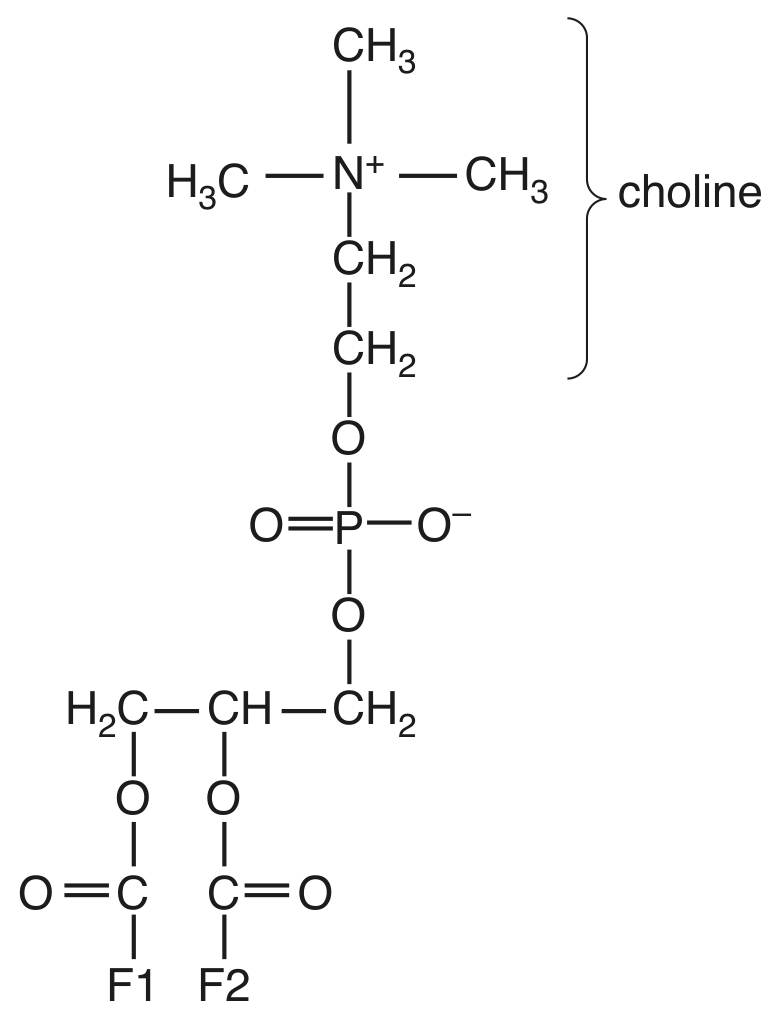
Fig. 2.1 shows the structure of one type of phospholipid known as phosphatidylcholine. F1 and F2 are fatty acid residues.

Fig. 2.1

Fig. 2.1

(a)

Name and describe the cell structure in which the synthesis of triglycerides and other lipids takes place.

[ 3 ]
[Maximum number: 1]

The diagram shows a triglyceride molecule that has been partially hydrolysed.

Question image

What will be the products of the total hydrolysis of the molecule shown?

A

a molecule of glycerol and a saturated fatty acid molecule only

B

a molecule of glycerol and an unsaturated fatty acid molecule only

C

a molecule of water, a molecule of glycerol and a saturated fatty acid molecule

D

a molecule of water, a molecule of glycerol and an unsaturated fatty acid molecule

(a)

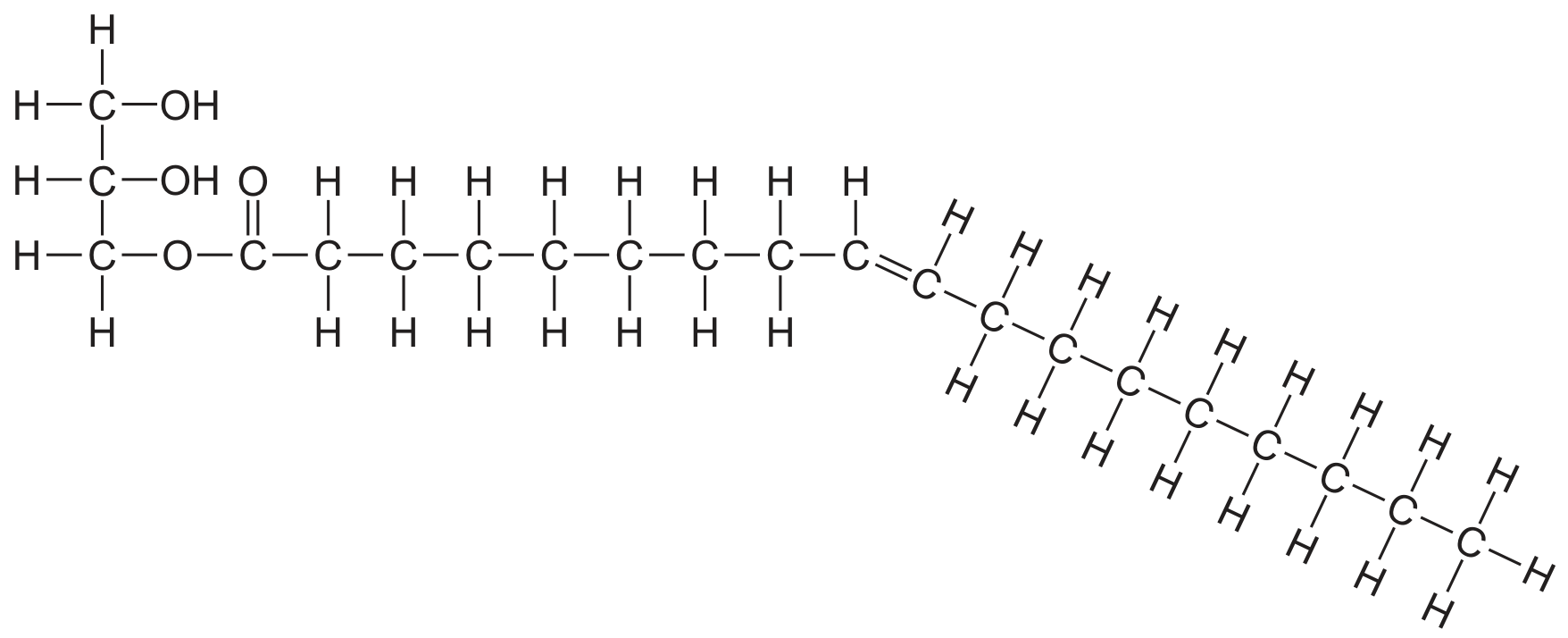
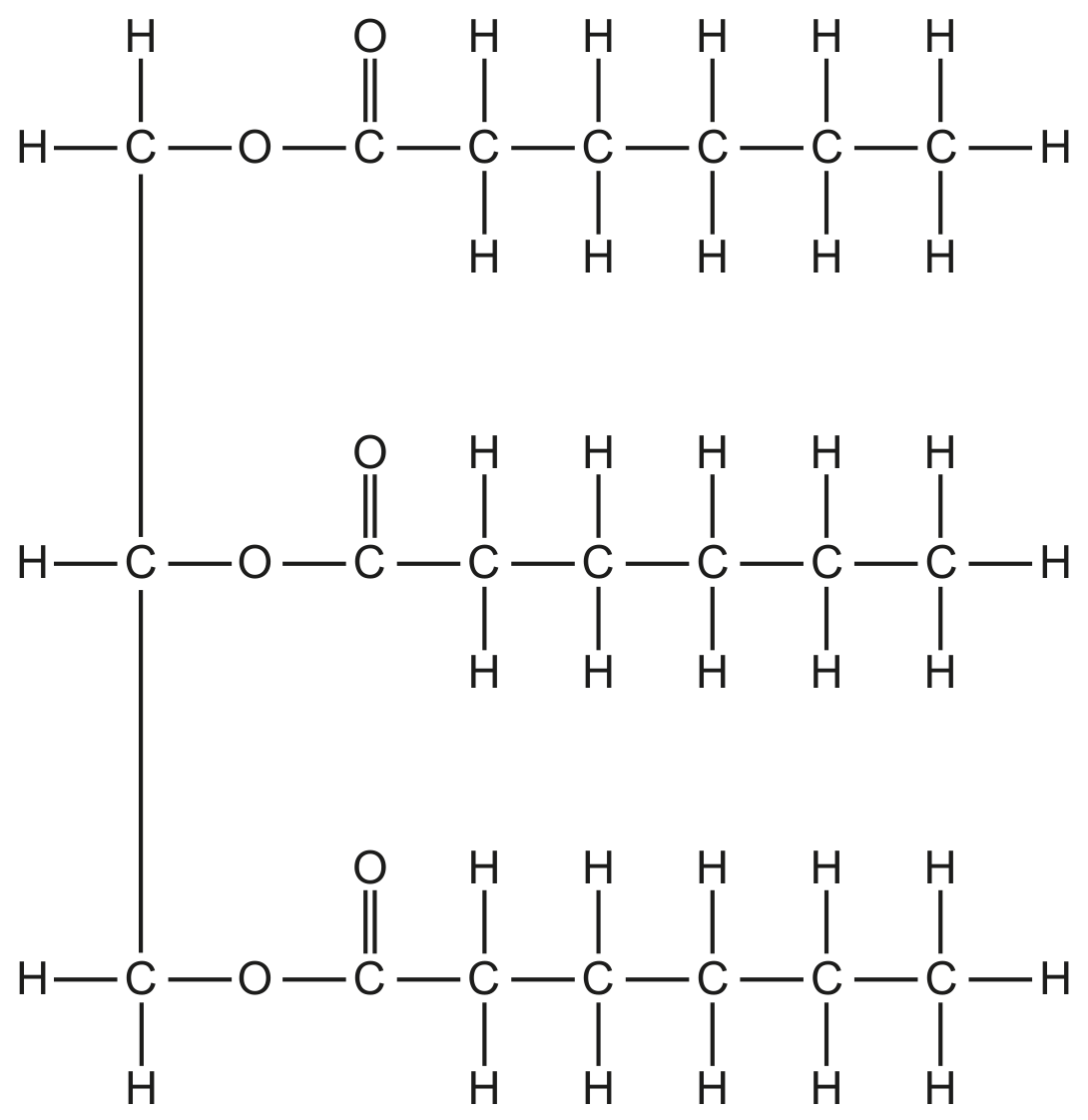
Fig. 2.1 shows the molecular structure of a triglyceride molecule.

Fig. 2.1

Fig. 2.1

[ 1 ]
(i)

Draw a circle around an ester bond shown in Fig. 2.1.

[ 1 ]
[Maximum number: 1]

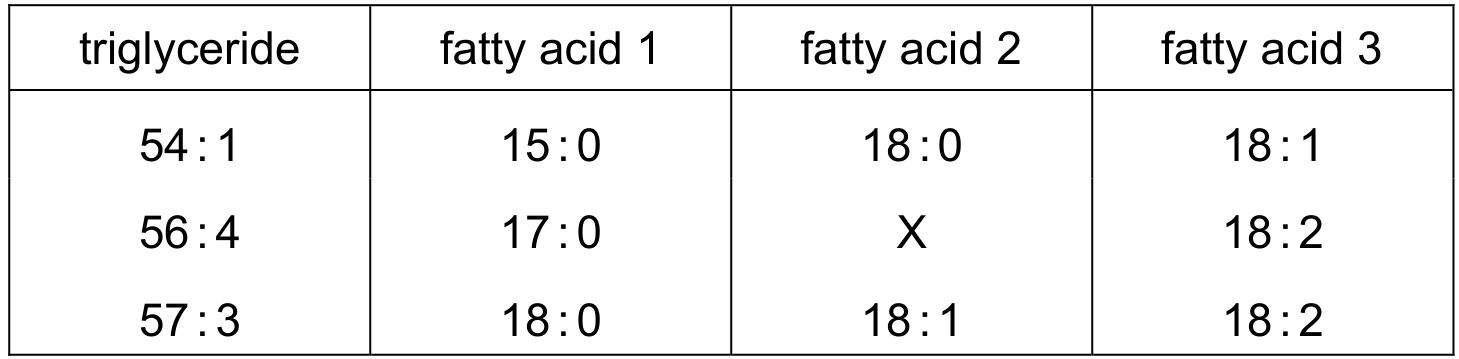
The table shows the number of carbon atoms and the number of carbon-carbon double bonds in molecules of three triglycerides and the fatty acids they contain.

The information is shown in the format 'number of carbon atoms:number of carbon-carbon double bonds'.

Table

Which description matches fatty acid 2 of the 56: 4 triglyceride, identified in the table as X ?

A

saturated with 17 carbon atoms

B

saturated with 18 carbon atoms

C

unsaturated with 17 carbon atoms

D

unsaturated with 18 carbon atoms

0