(a)
Fig. 1.2 summarises the reactions that take place after glucose has entered a certain type of cell.
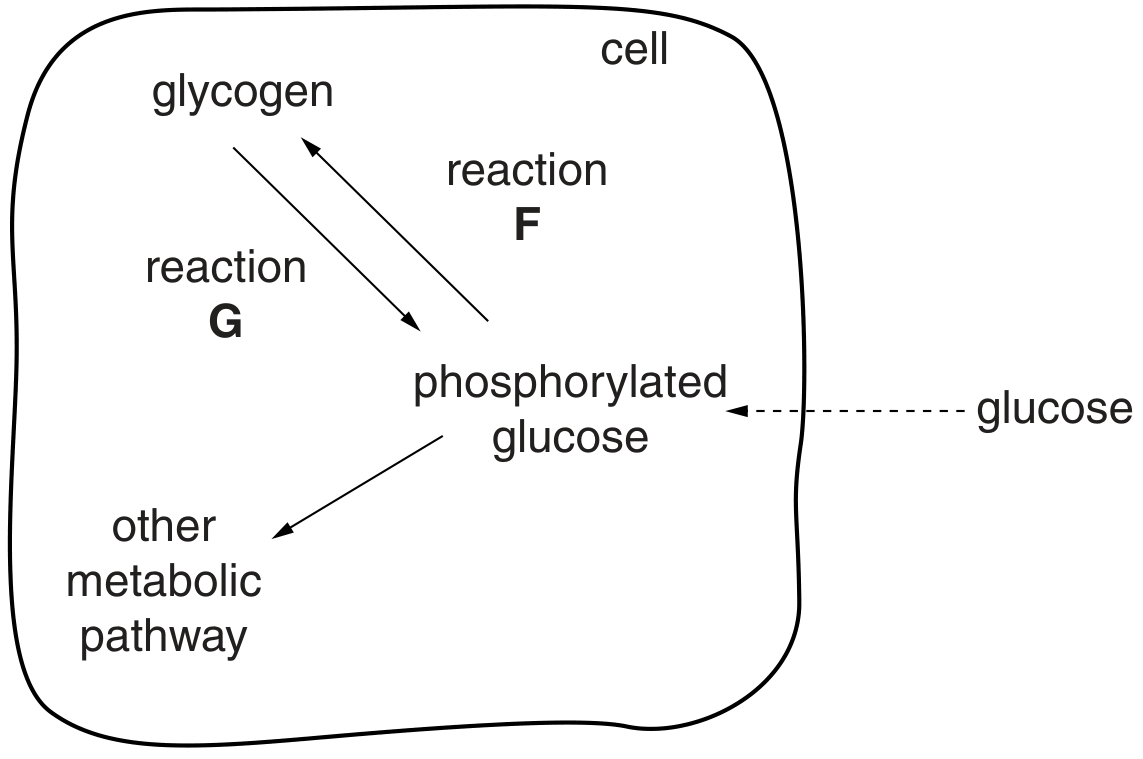
Fig. 1.2
[ 2 ]
(i)
Name the type of reaction occurring at F and the type of reaction occurring at G.
F
G
[ 2 ]
 EduNinja
Fig. 1.2 summarises the reactions that take place after glucose has entered a certain type of cell.
Fig. 1.2
Name the type of reaction occurring at F and the type of reaction occurring at G.
F
G
Fig. 1.1 shows the breakdown of a molecule of sucrose.
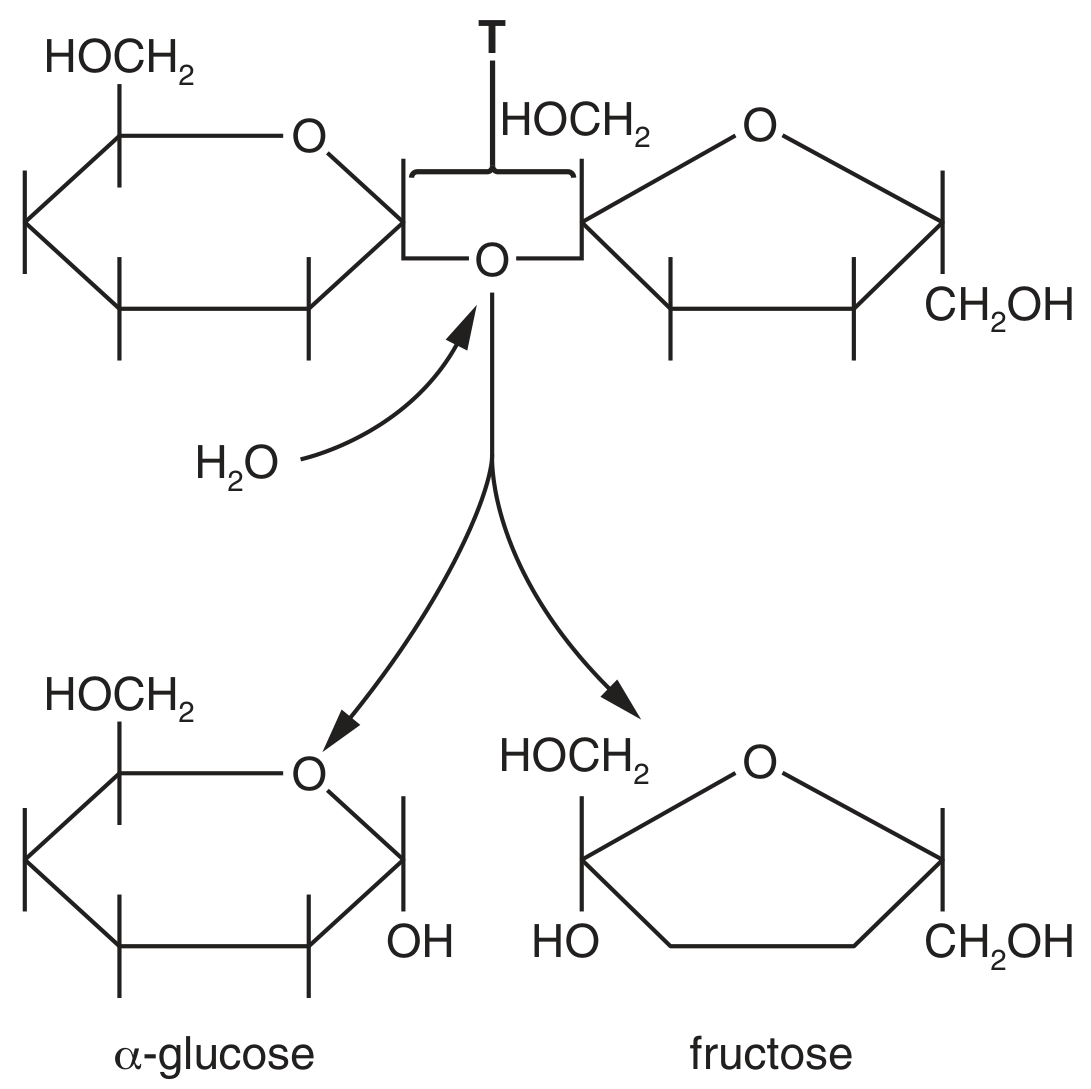
Fig. 1.1
Name the bond indicated by T.
State the name given to this type of reaction in which water is involved.
Fig. 1.1 is an electron micrograph of three cells of the same species of bacterium, Erwinia carotovora.
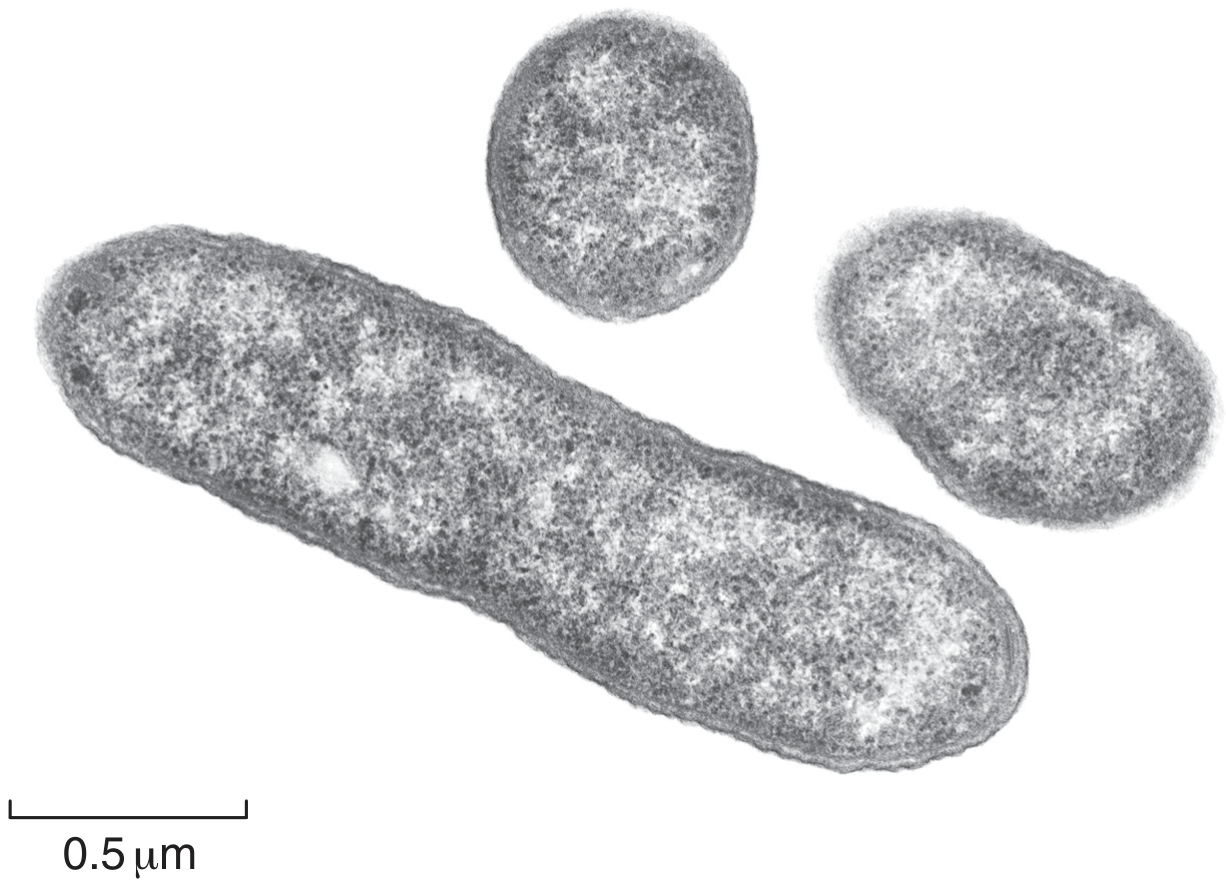
Fig. 1.1
E. carotovora causes a disease in carrot and potato plants.
The bacteria release an enzyme called pectinase which hydrolyses the polysaccharide pectin. Pectin helps plant cells to attach to each other.
Name the type of chemical bond which will be hydrolysed by pectinase.
Fig. 1.1 shows five biological molecules.
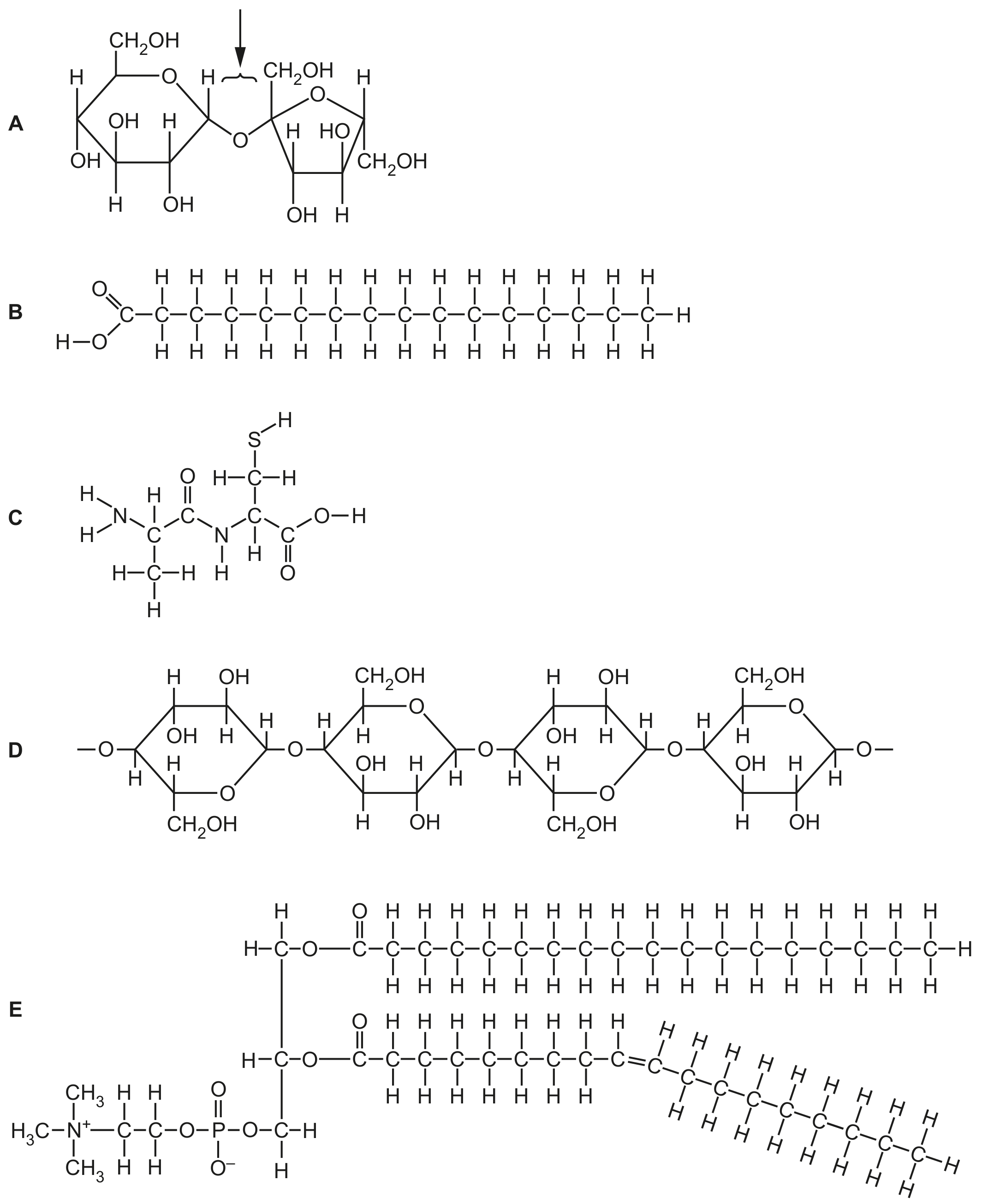
Fig. 1.1
State the name of the bond in molecule A indicated by the arrow.
Glucose is used in the synthesis of amylose. Glucose is first converted to glucose 1-phosphate (G 1-P).
Starch phosphorylase is an intracellular enzyme that can catalyse the synthesis of amylose from G 1-P, which is the substrate for the reaction:
n= a large number
Students used a colorimeter to investigate the progress of the reaction.
The students made a reaction mixture containing 1-P in a buffer solution at pH6.0. A very small quantity of amylose was added to initiate the reaction.
A solution of starch phosphorylase was added to the reaction mixture and samples were taken at 1-minute intervals. Each sample was added to a dilute iodine solution, stirred and then poured into a cuvette. The absorbance of each solution was recorded.
The results of the investigation are shown in Fig. 2.1.
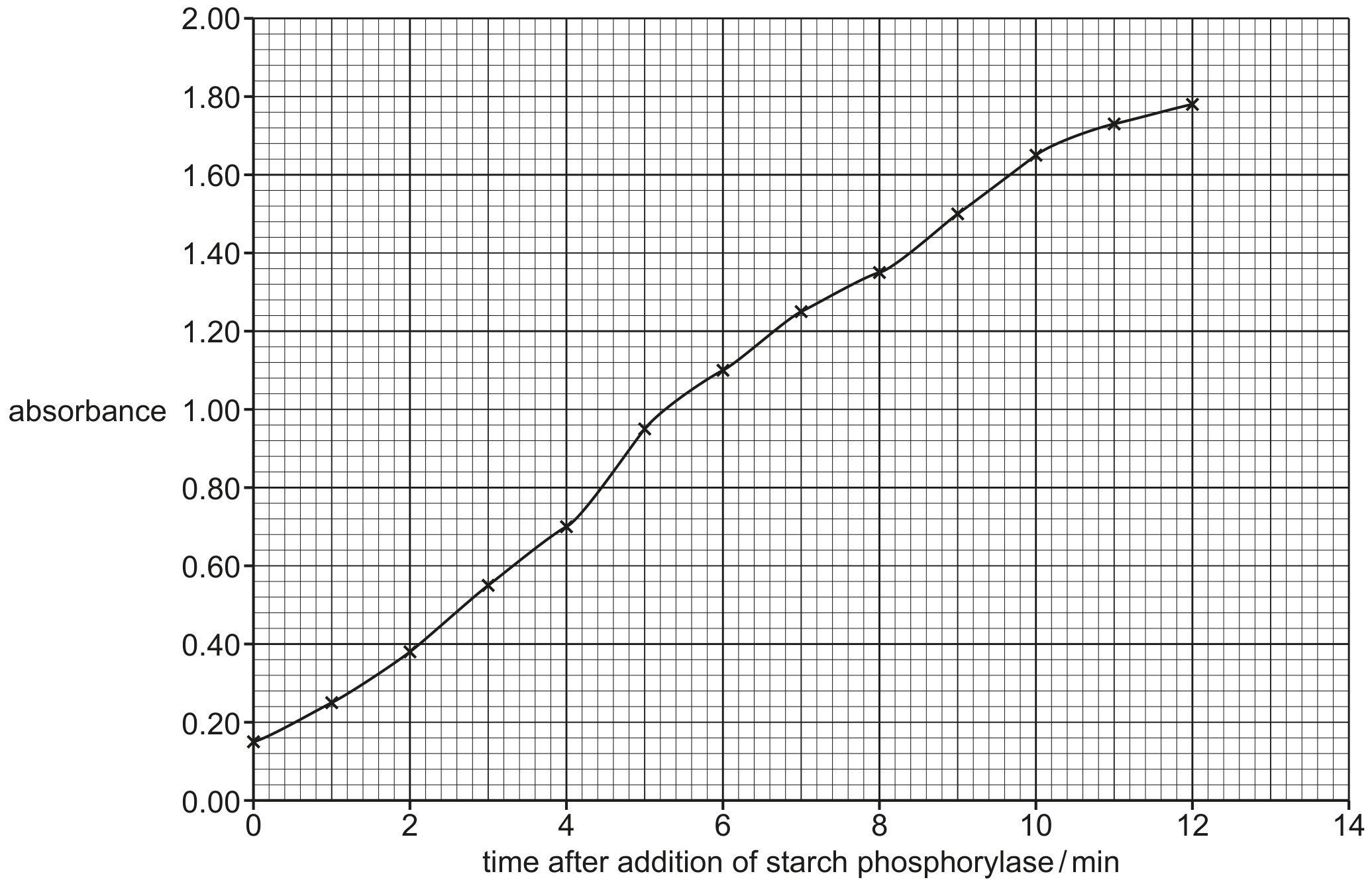
Fig. 2.1
The reaction catalysed by starch phosphorylase occurs at the ends of amylose molecules.
Describe the sequence of events that occurs when starch phosphorylase catalyses the addition of a molecule of glucose to the end of an amylose molecule.
What may take place during a hydrolysis reaction?
1 a molecule of water is produced
2 a glycosidic bond is broken
3 a sucrose molecule is split into fructose and glucose
1, 2 and 3
1 and 2 only
1 and 3 only
2 and 3 only
A student carried out four tests for biological molecules on a solution. The results are shown in the table.
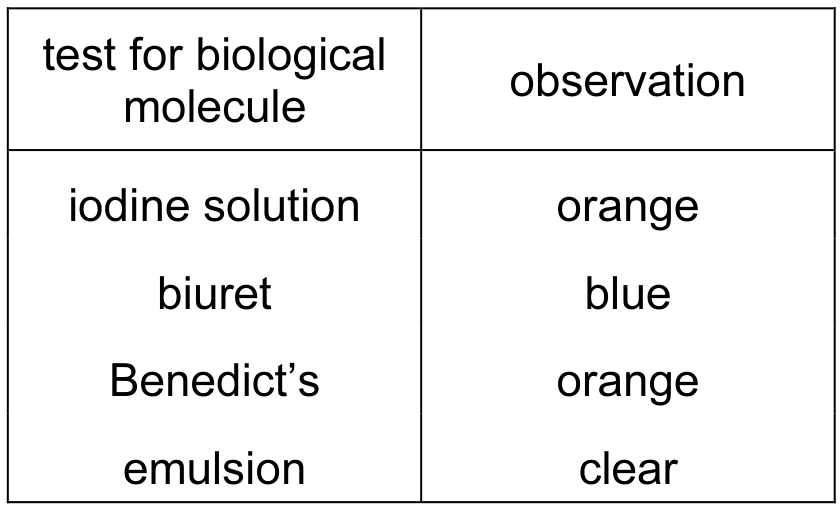
Which molecules are present in this solution?
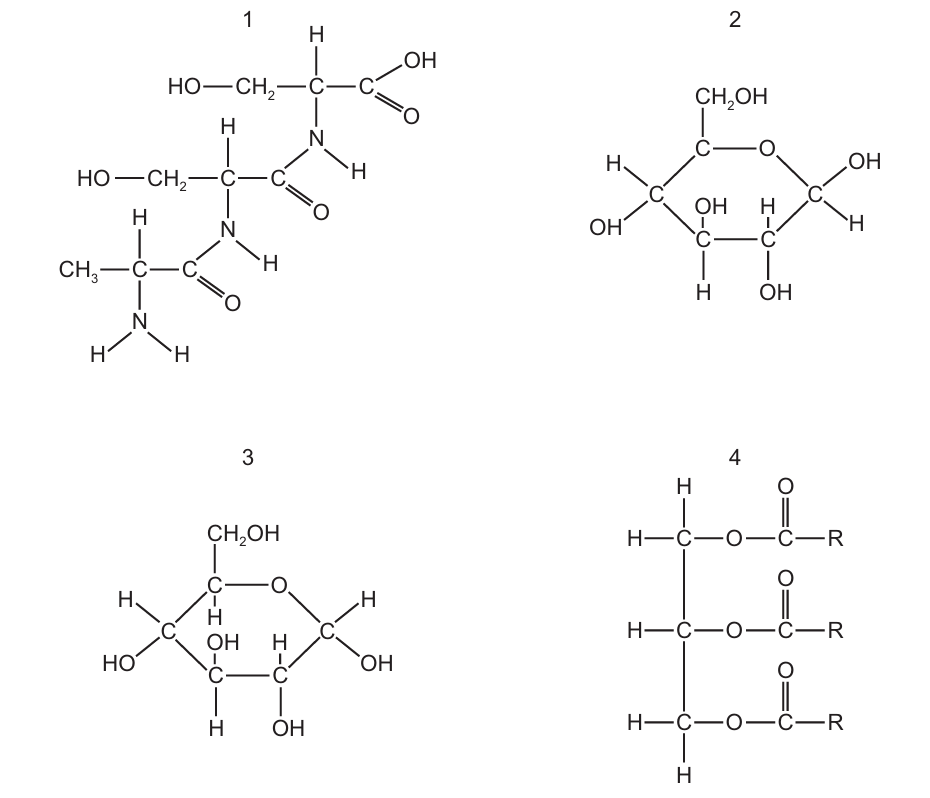
1 and 3
1 and 4
2 and 3
3 and 4
Which diagram shows the reaction that occurs to link two monomers that form cellulose?
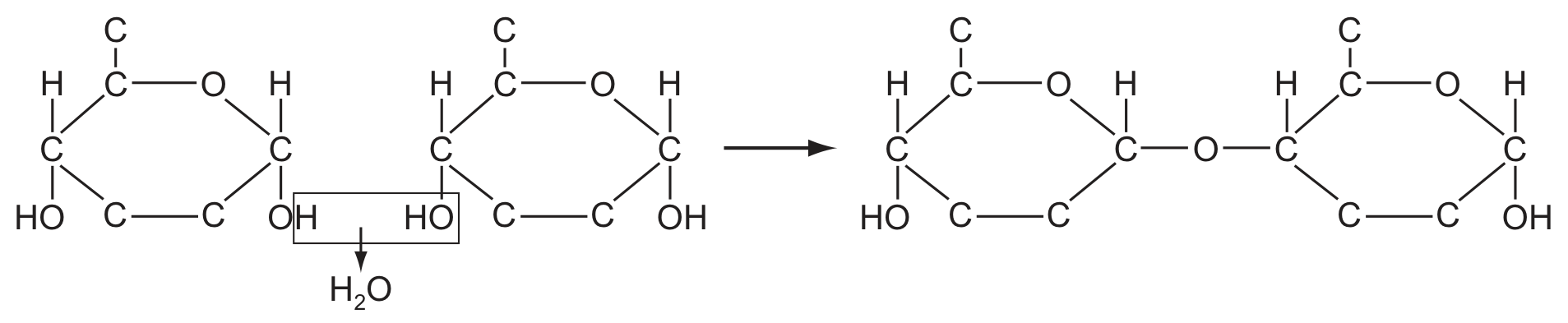

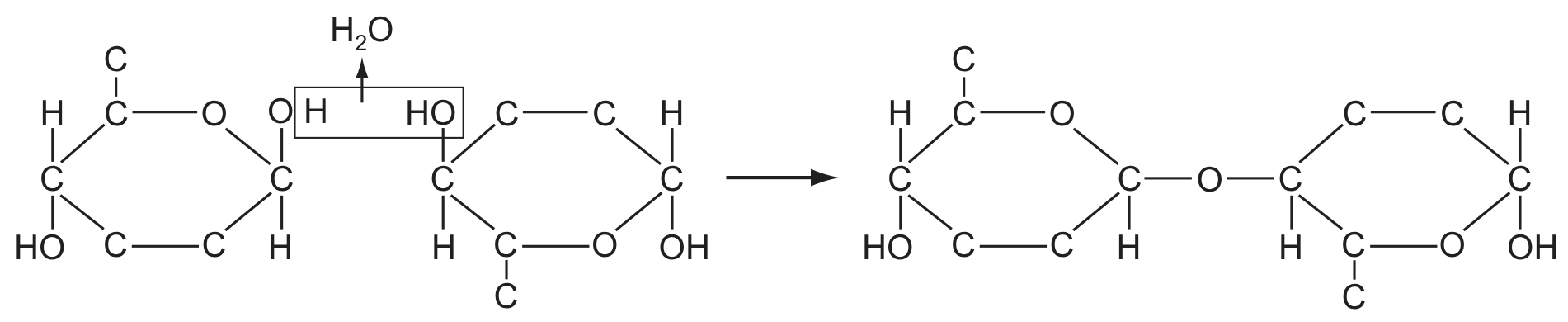
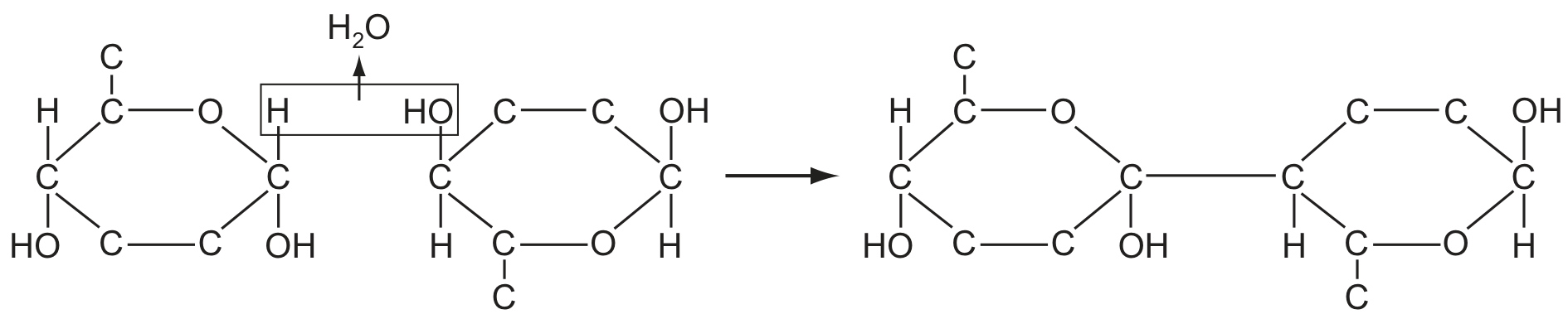
The diagram shows part of a carbohydrate molecule.
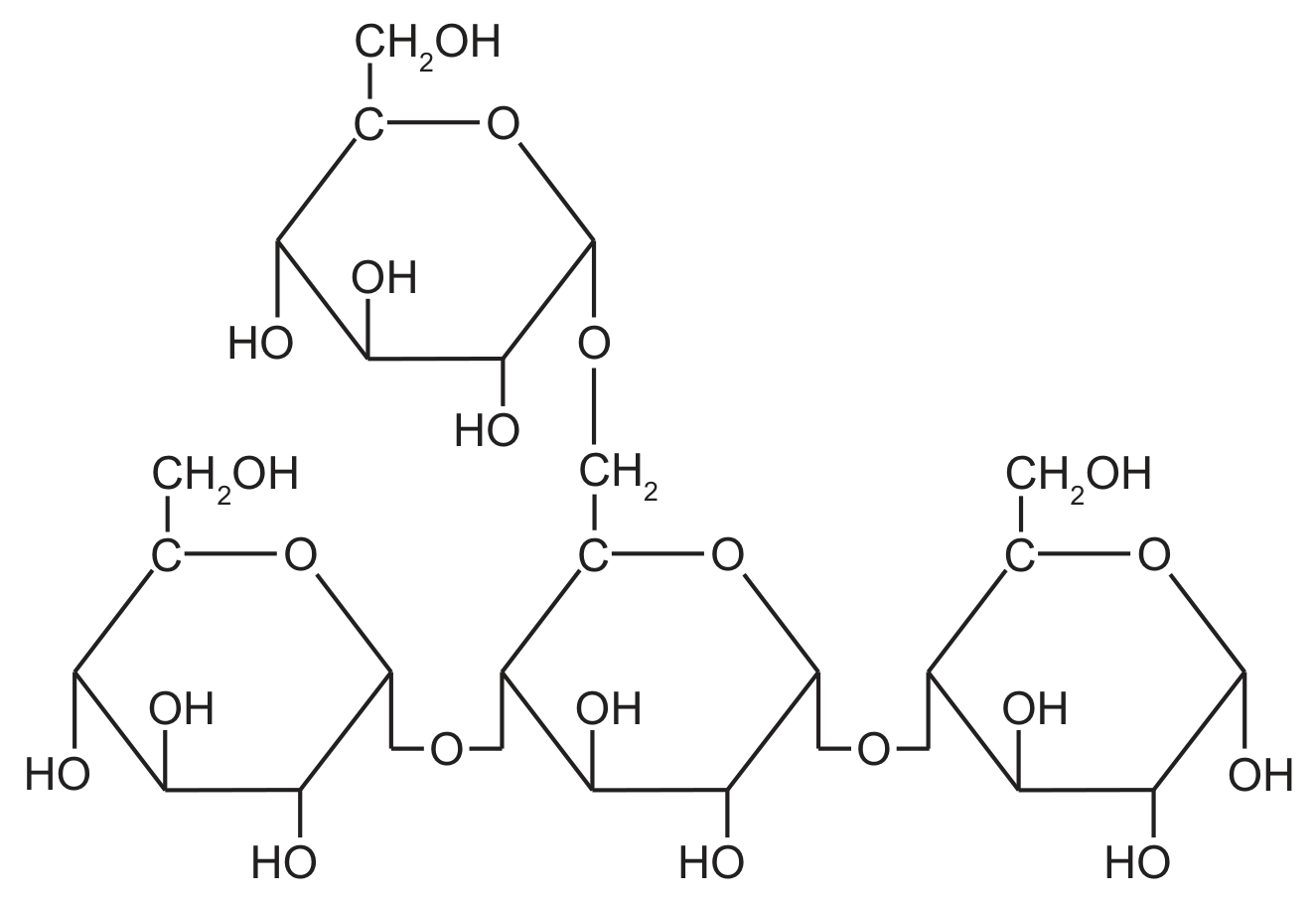
If all the 1,4 glycosidic bonds in this molecule are hydrolysed, how many water molecules will be used and how many separate glucose molecules will be produced?
number of water
molecules used
number of glucose
molecules produced
1
1
2
2
3
3
4
4
The photomicrograph shows some plant tissues and the magnification is .
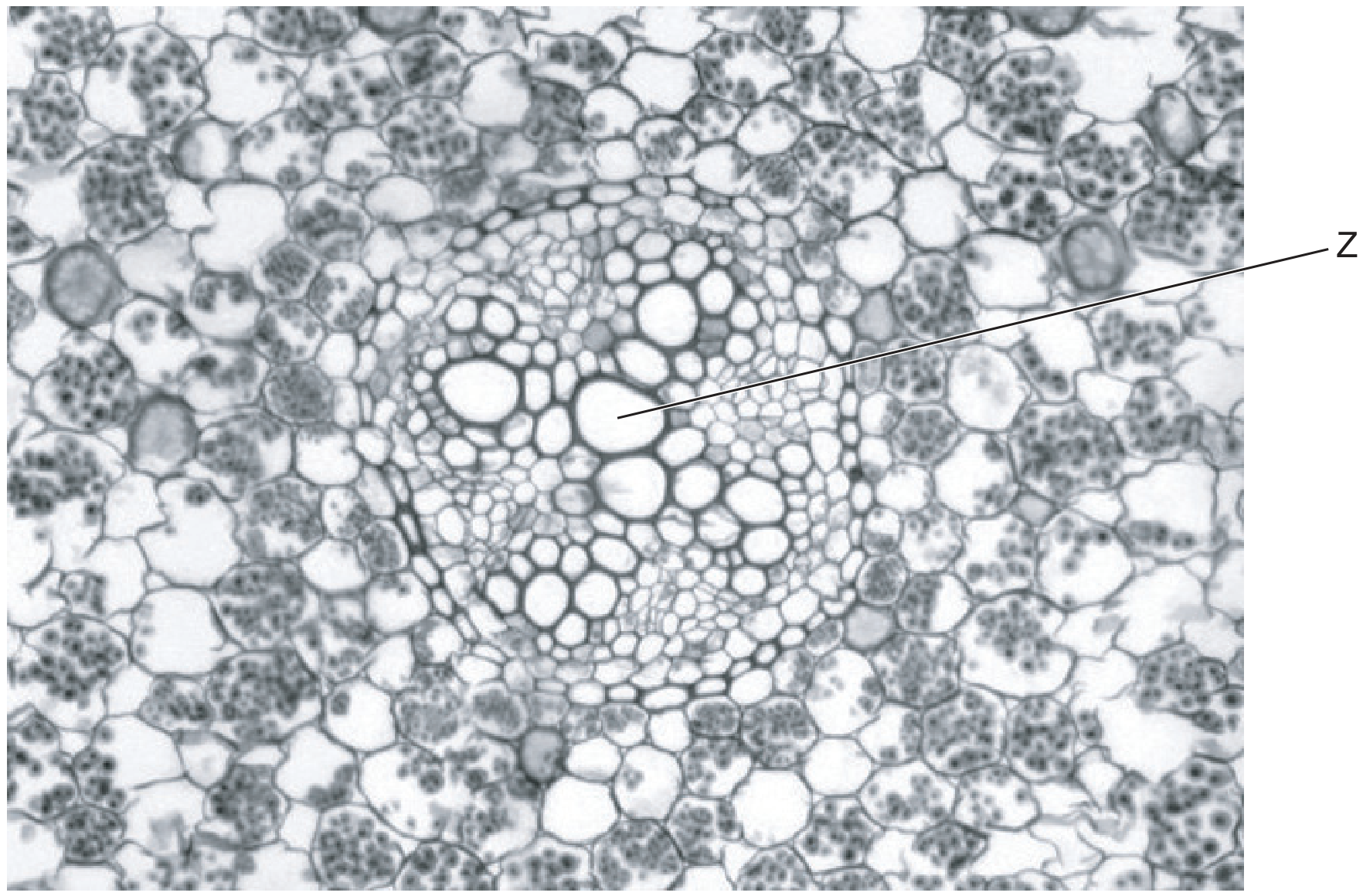
What is the diameter of the cell marked Z ?