C1.1.9—Measuring enzyme reactions

Enzyme reactions are measured by tracking product formation or substrate disappearance over time while controlling key experimental variables carefully in investigations.
Syllabus
First assessment 2025
Objective
C1.1.9
Level
HL

Exam analysis

Chance of appearing12%of analysed past papers
Latest appearanceMay 2025
Most common paperPaper3
Typical marks1–2

Common command terms

  • Calculate
  • Suggest
  • Identify
  • Describe
  • Outline
  • Evaluate
  • Deduce
  • Discuss
  • State

Recent exam appearances

May 2025Paper1B ["HL"] · TZ24(d)[ 3 ]C1.1.9—Measuring enzyme reactions
May 2025Paper1B ["HL"] · TZ24(c)[ 2 ]C1.1.9—Measuring enzyme reactions
May 2025Paper1B ["HL"] · TZ24(b)[ 1 ]C1.1.9—Measuring enzyme reactions
May 2025Paper1B ["HL"] · TZ33(c)[ 1 ]C1.1.9—Measuring enzyme reactions
May 2025Paper1B ["HL"] · TZ13(c)[ 1 ]C1.1.9—Measuring enzyme reactions
Practice this objective

Coverage 2013–2025 · Updated 15 Jul 2026

Measure Enzyme Reactions through a Changing Signal

An enzyme reaction rate is measured from the change in substrate or product concentration per unit time.
Choose a signal proportional to concentration, keep conditions controlled and use the initial linear section before substrate depletion or product inhibition changes the rate.

A sound measurement includes:

  • dependent signal and calibration
  • controlled temperature and pH
  • initial-rate interval
  • repeats and uncertainty

A colorimeter can track product colour every ten seconds; the slope of absorbance against time estimates the initial rate.

A final product amount alone cannot distinguish a fast reaction from a slow reaction allowed to run longer.

Measuring enzyme reactions

Assessment in practice

1–2 marks
How it is assessed

This objective is assessed through experimental design, commonly using Calculate / Suggest / Identify.

Command terms

Calculate / Suggest / Identify / Describe / Outline / Evaluate / Deduce / Discuss / State

What earns marks

Build the answer around this relationship: Enzyme activity can be measured through product formation or substrate disappearance.

Representative question

Question 1

[Maximum number: 3]

Suggest how the percentage of decolorization could be obtained experimentally.

Enzyme Catalysis and Rate

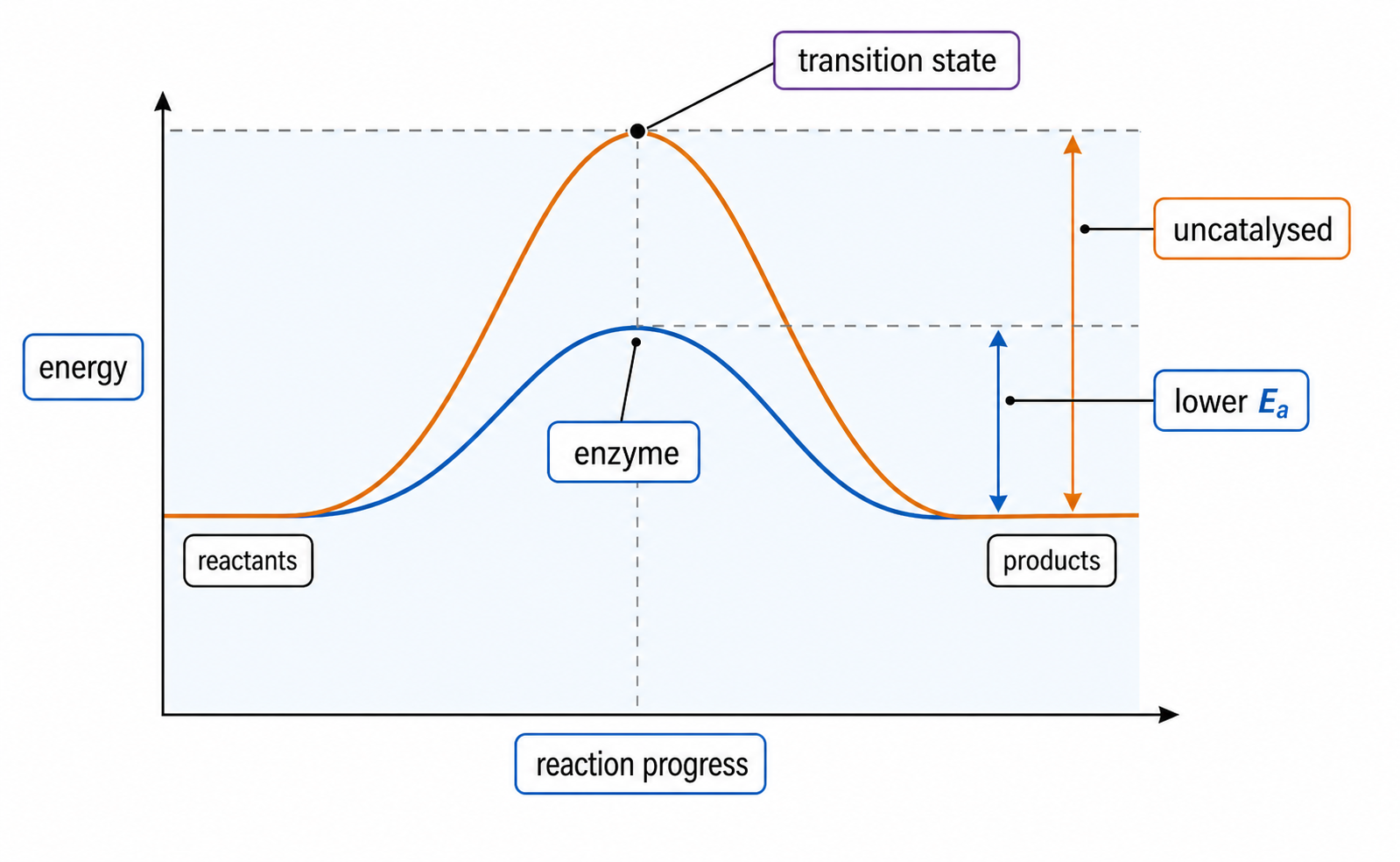
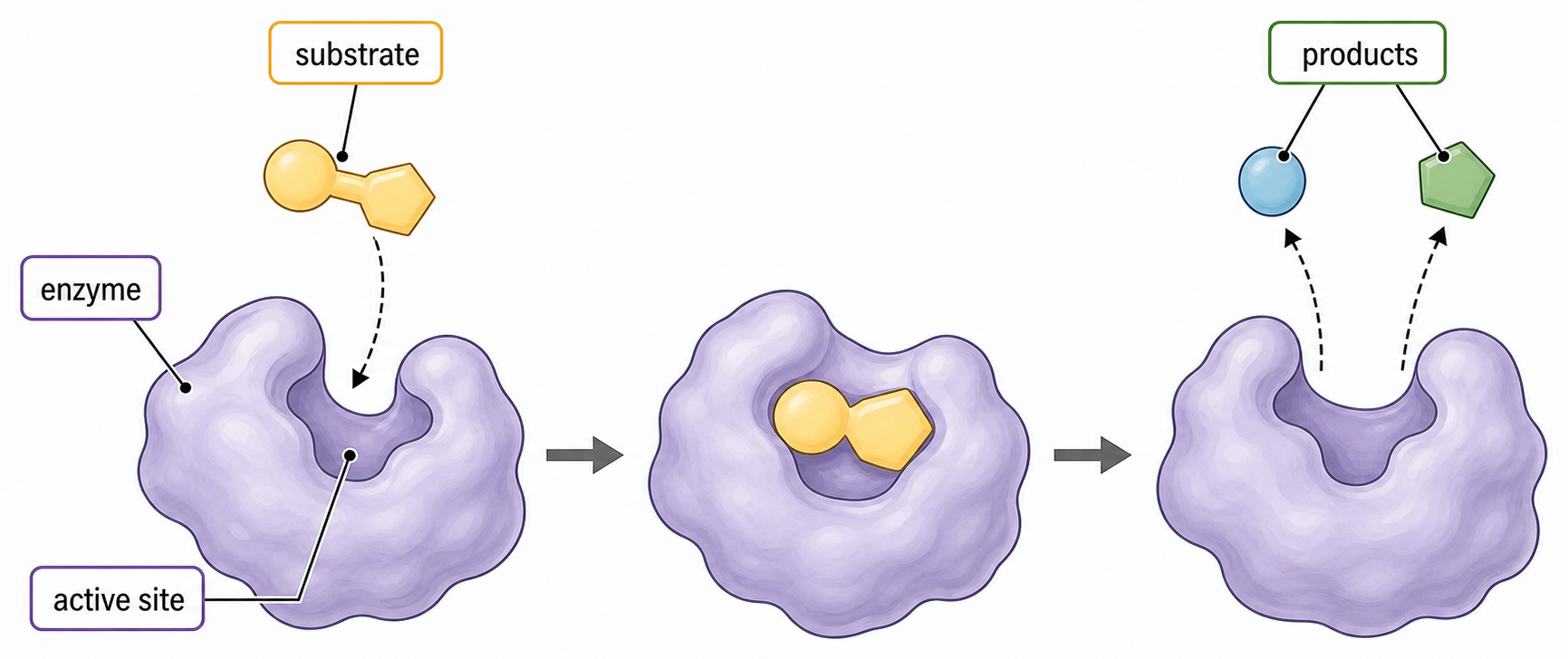
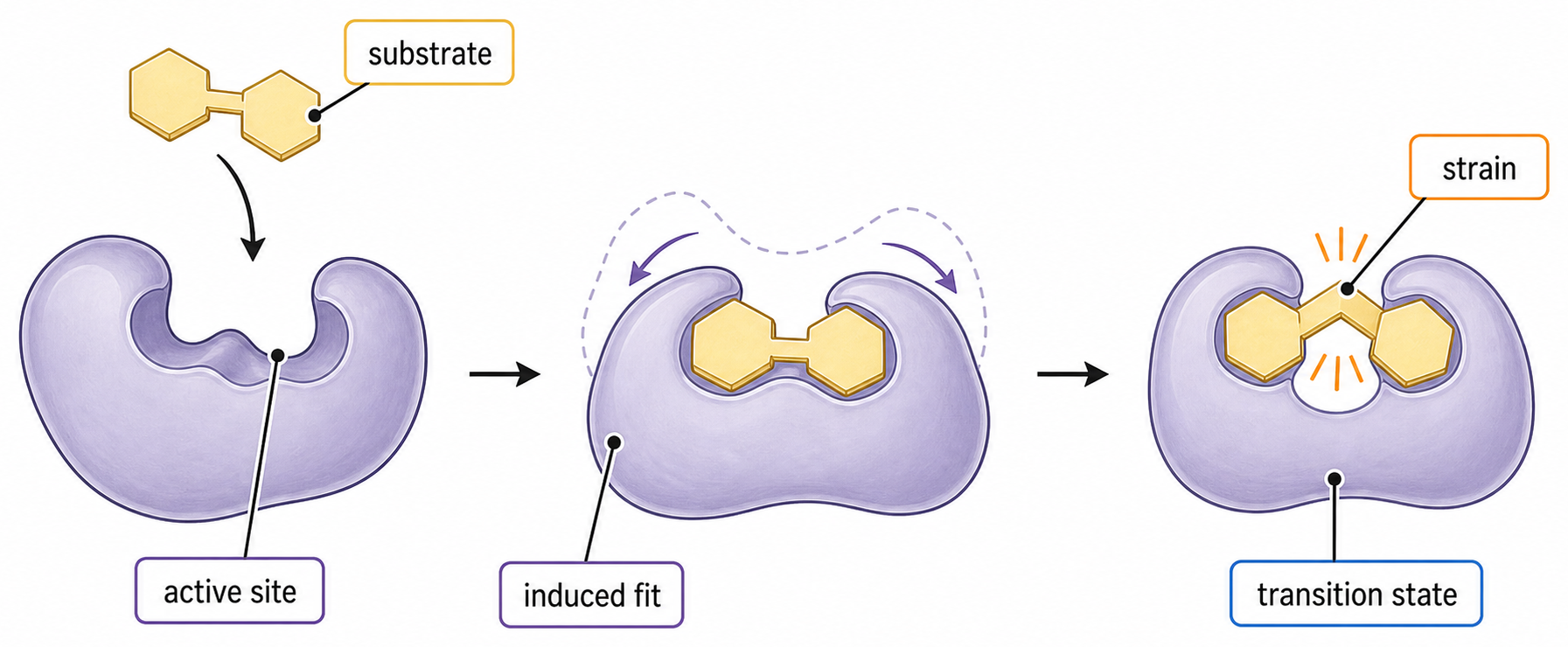
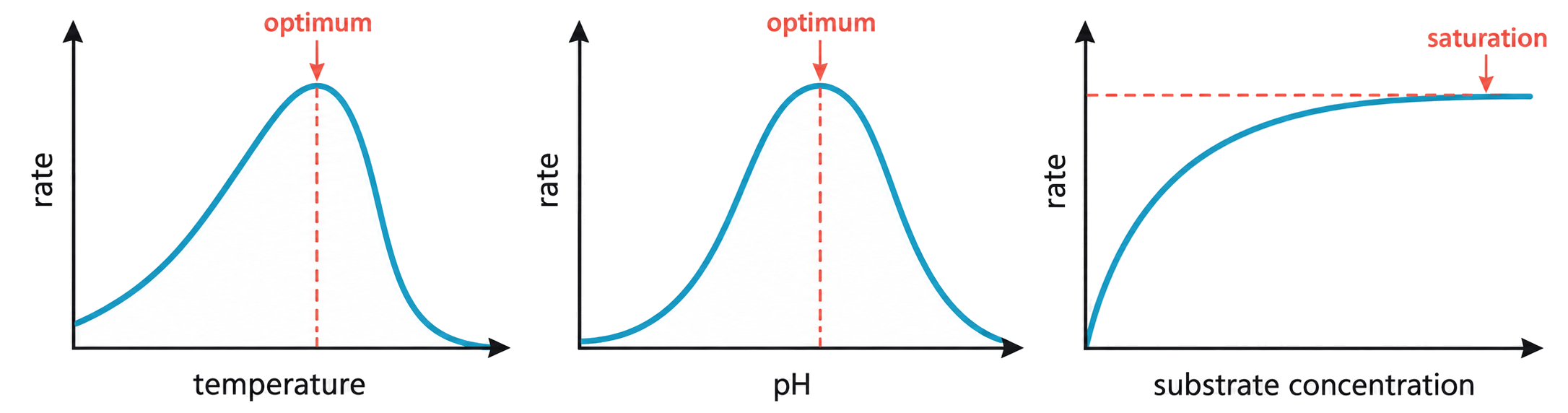
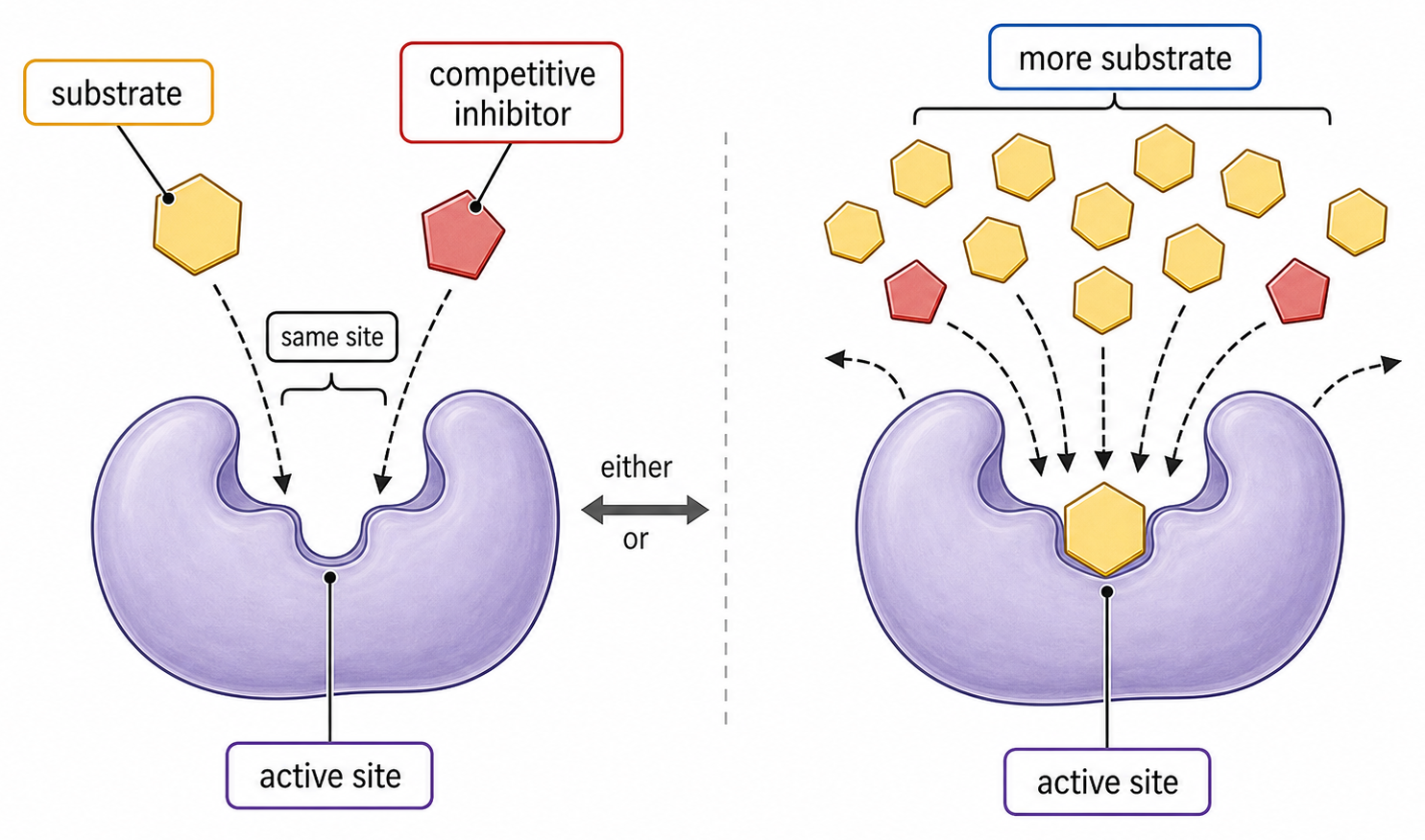
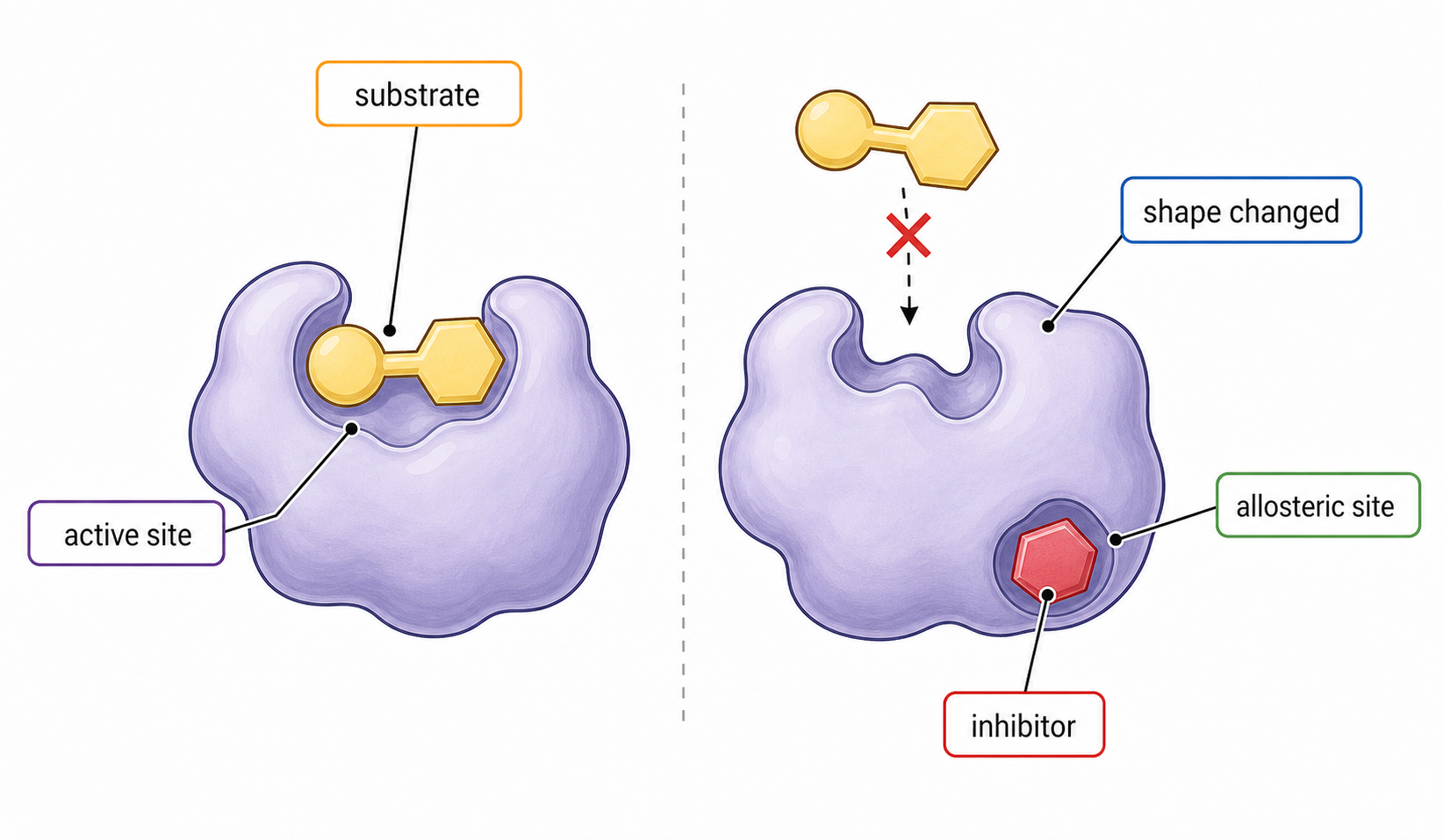
Enzymes are biological catalysts that lower activation energy and remain unchanged. Their globular protein shape creates active-site specificity; induced fit aligns substrates; molecular motion and collisions affect rate; temperature, pH, and substrate concentration change activity; assays measure substrate loss or product formation over time.

  • Define enzyme as biological catalyst, effective in small amounts and unchanged.
  • Use active site, specificity, induced fit, ES complex, and activation energy in mechanism answers.
  • Use curve shapes: temperature optimum/denaturation, pH optimum, and substrate saturation plateau.
  • For practicals, state what is measured per unit time and use initial rate, controls, and replicates.

Concept essentials

  • Enzyme activity can be measured through product formation or substrate disappearance.
  • Rate calculations require a measured change over time.
  • Temperature, pH, enzyme concentration and substrate concentration are common controlled variables.
  • Replicates and error bars help judge reliability and variation.