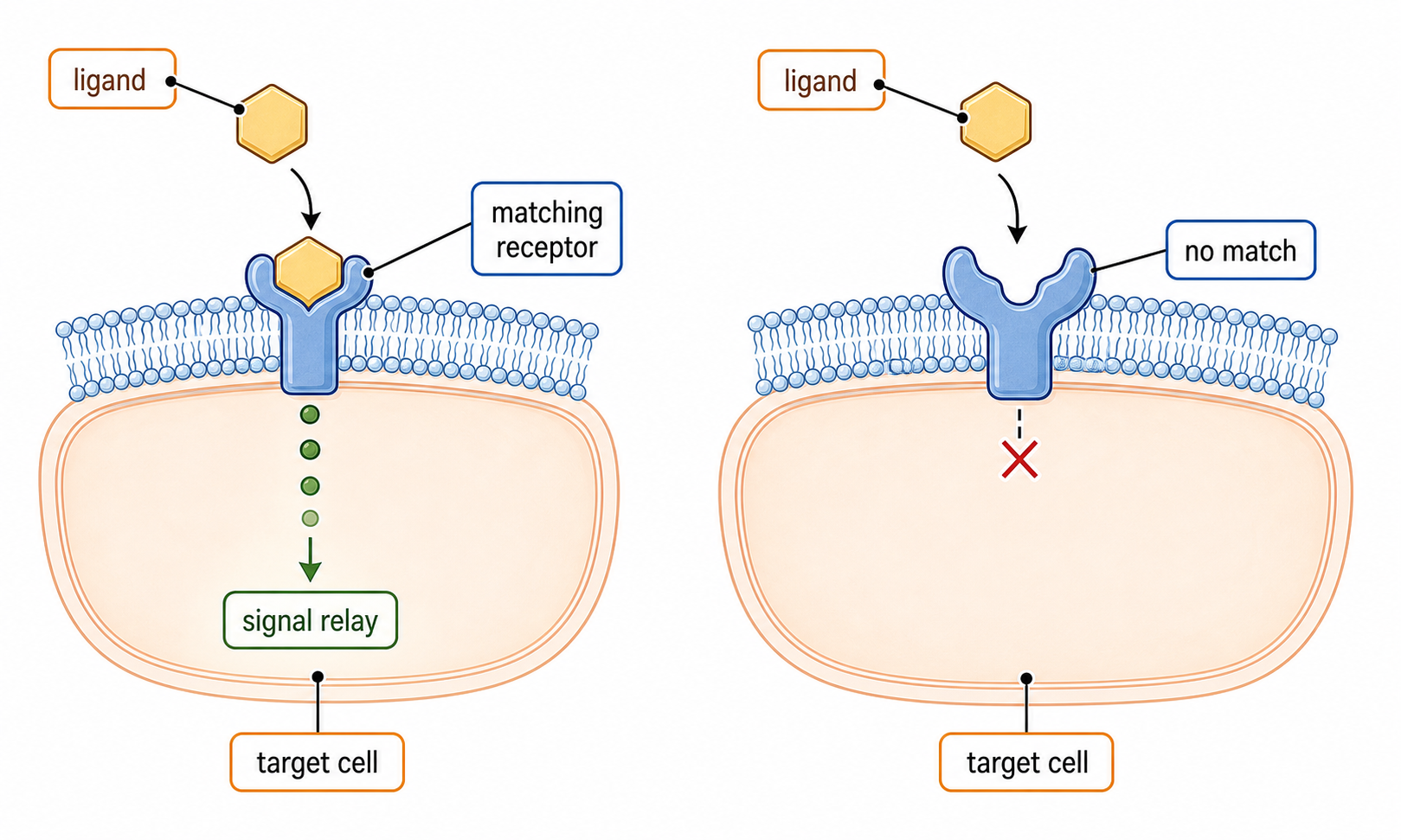
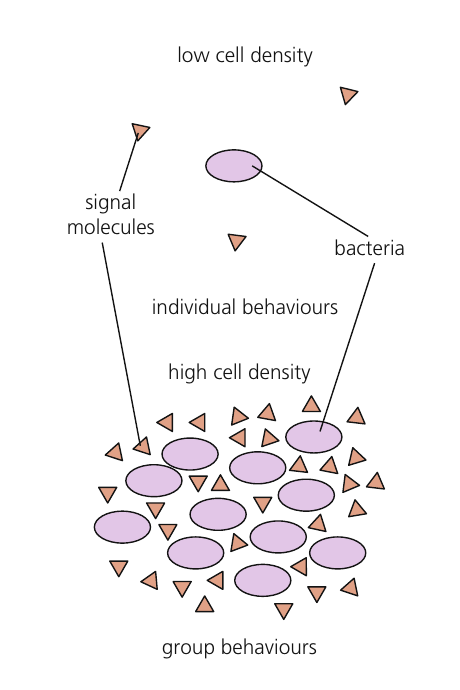
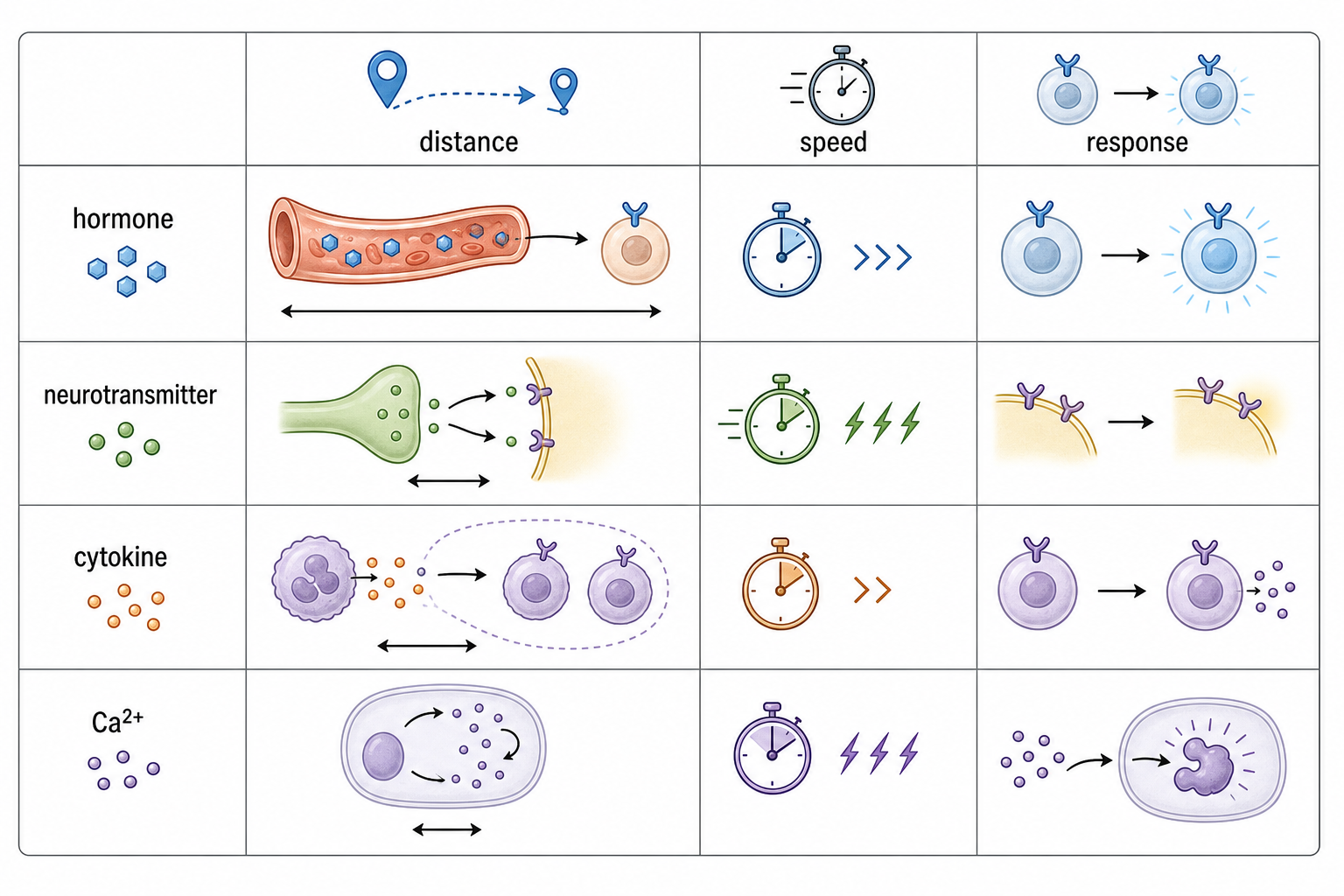
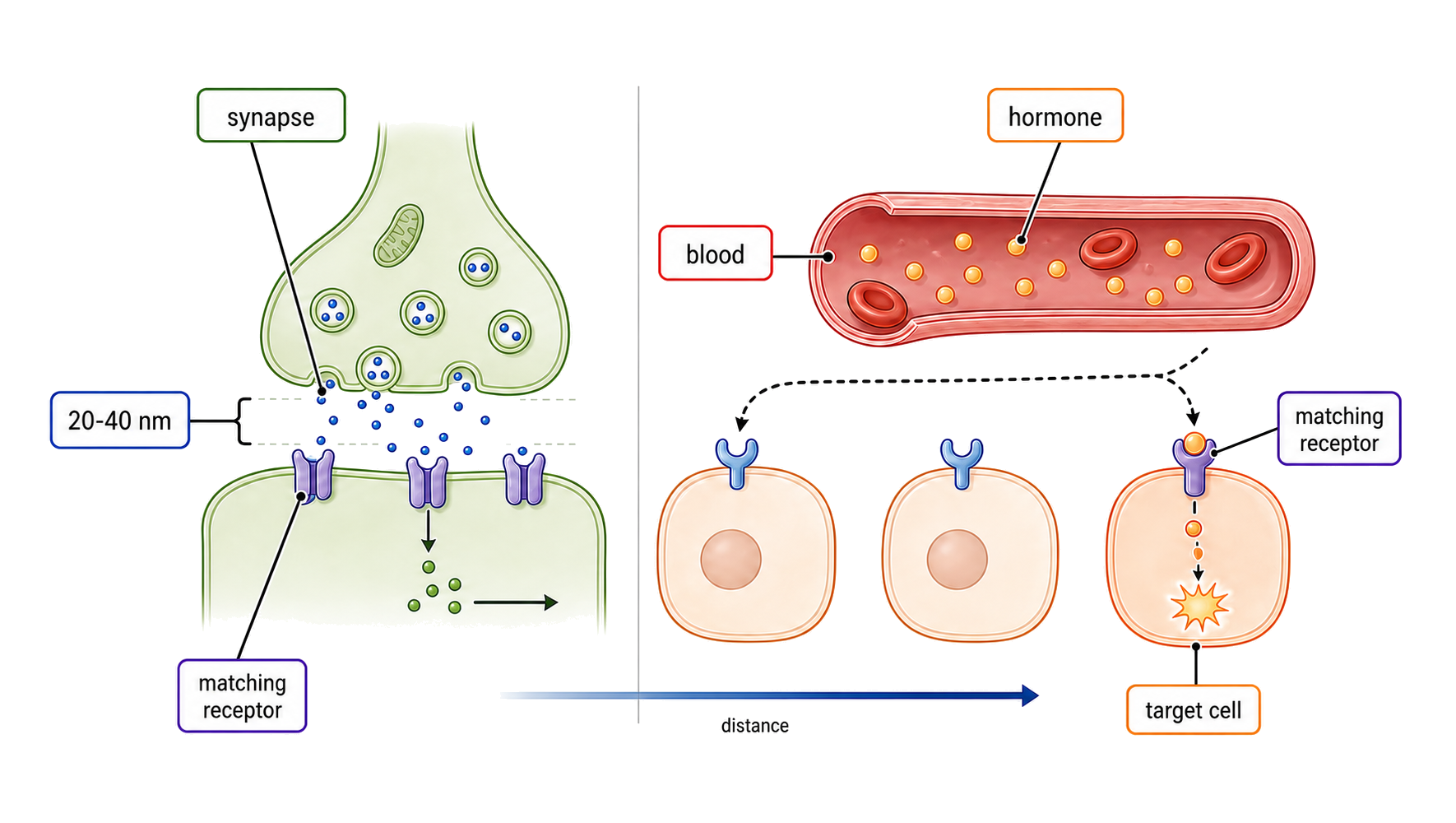
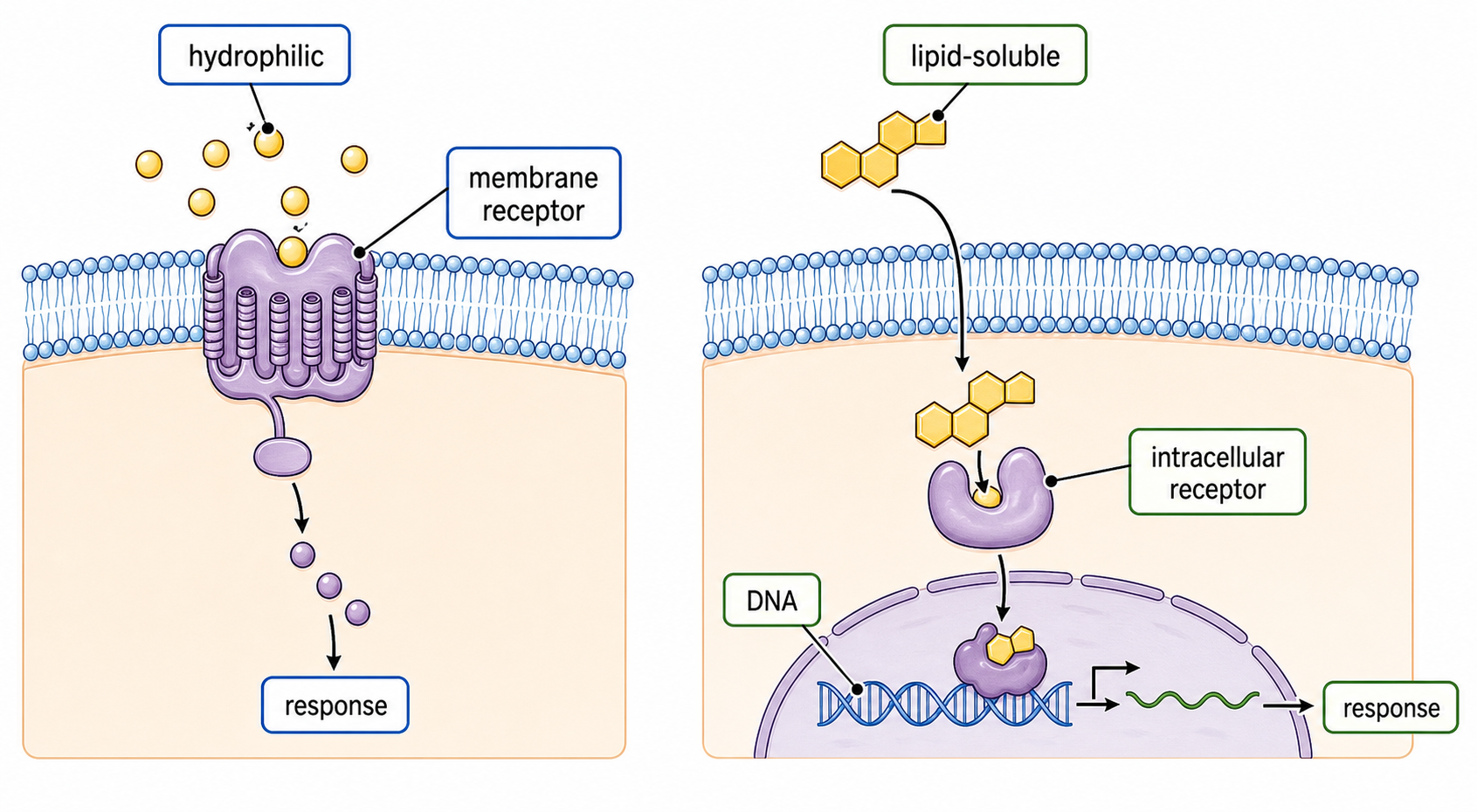
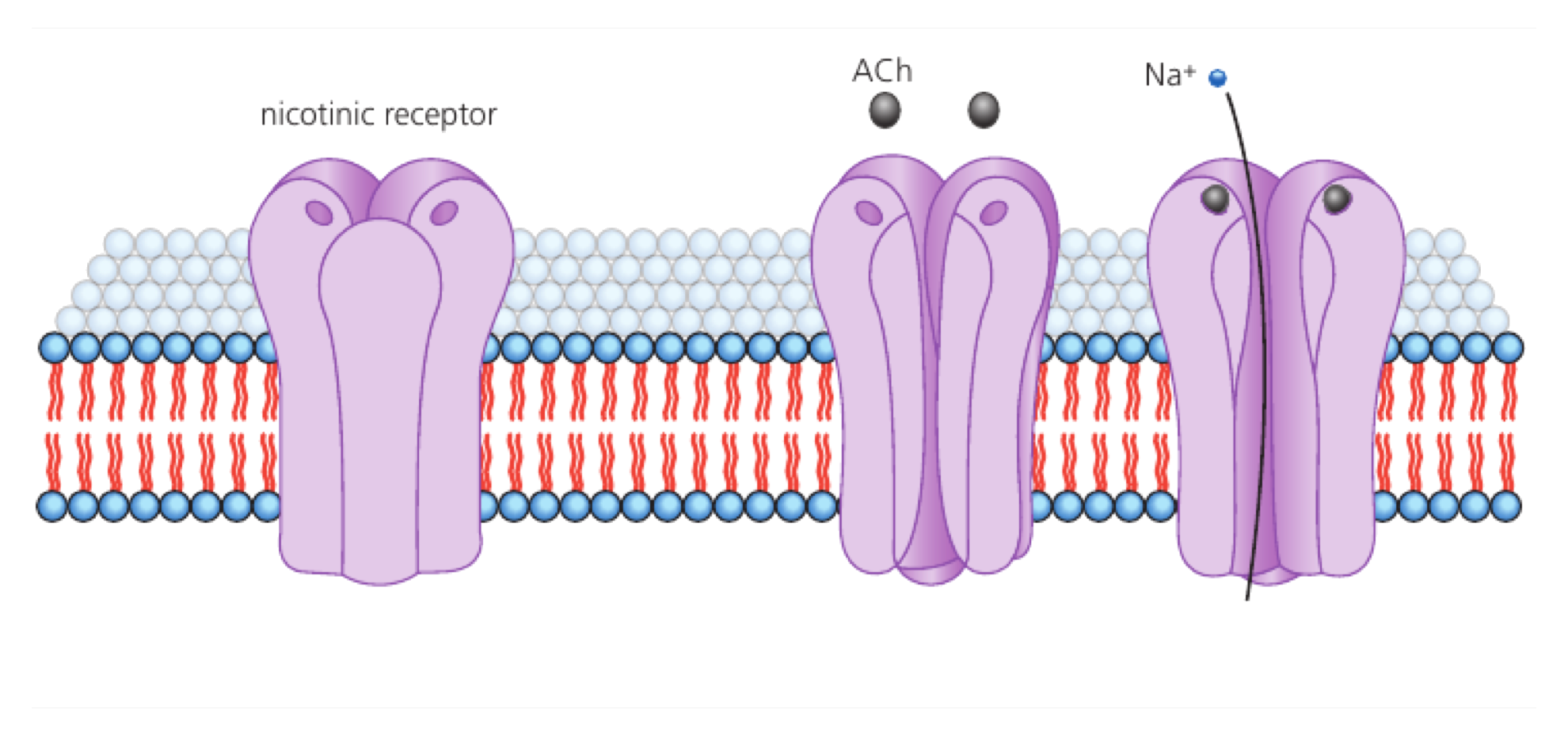
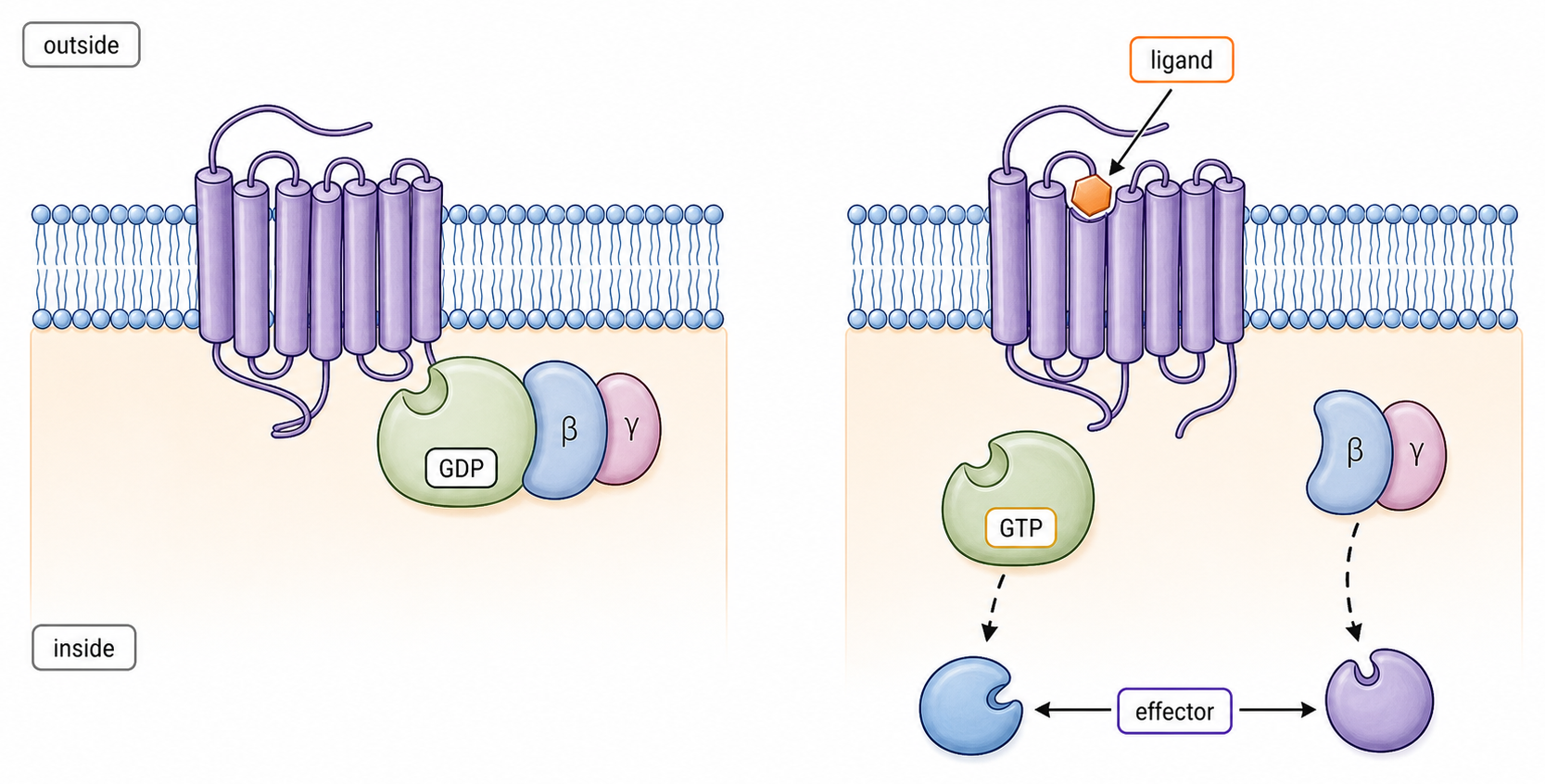
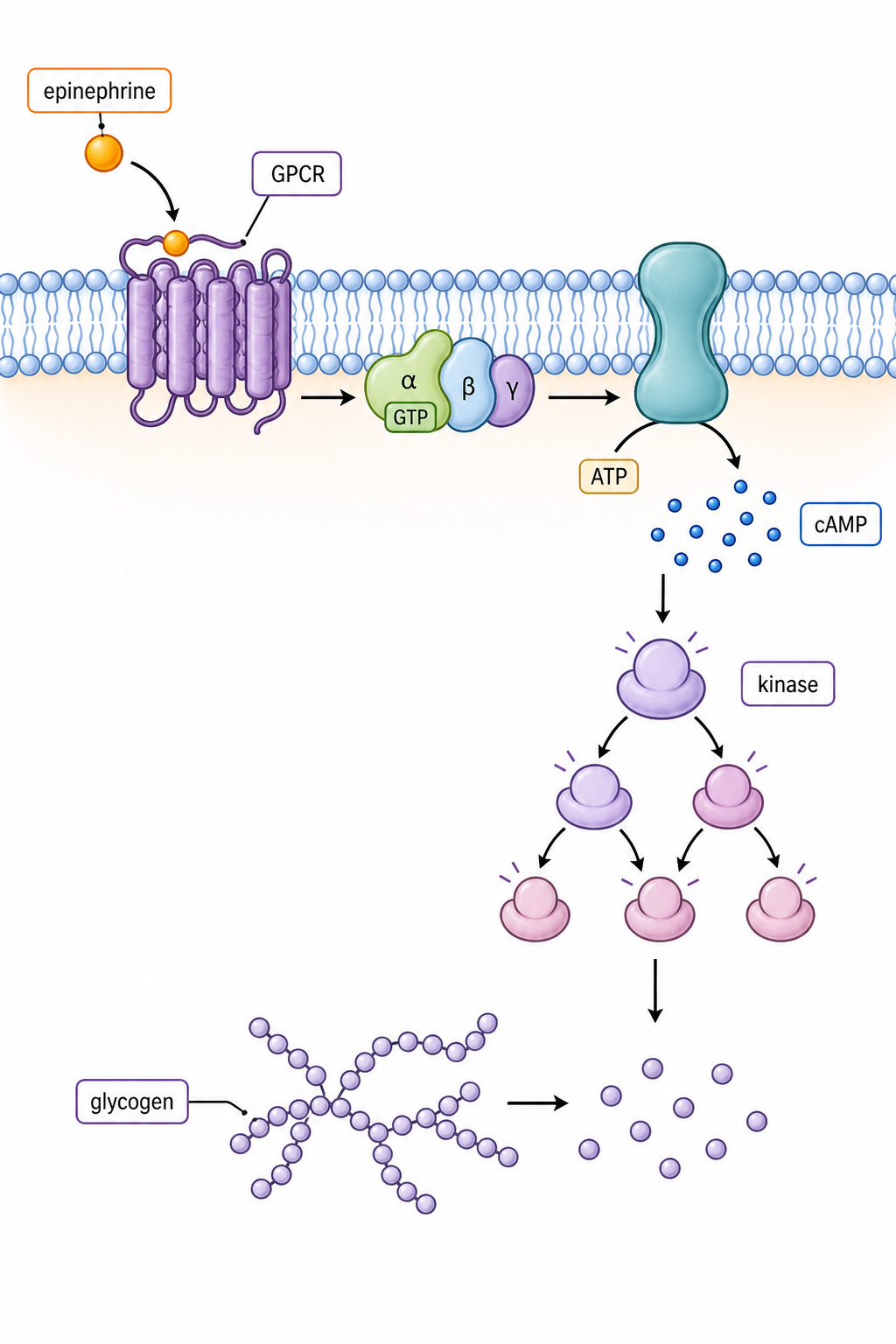
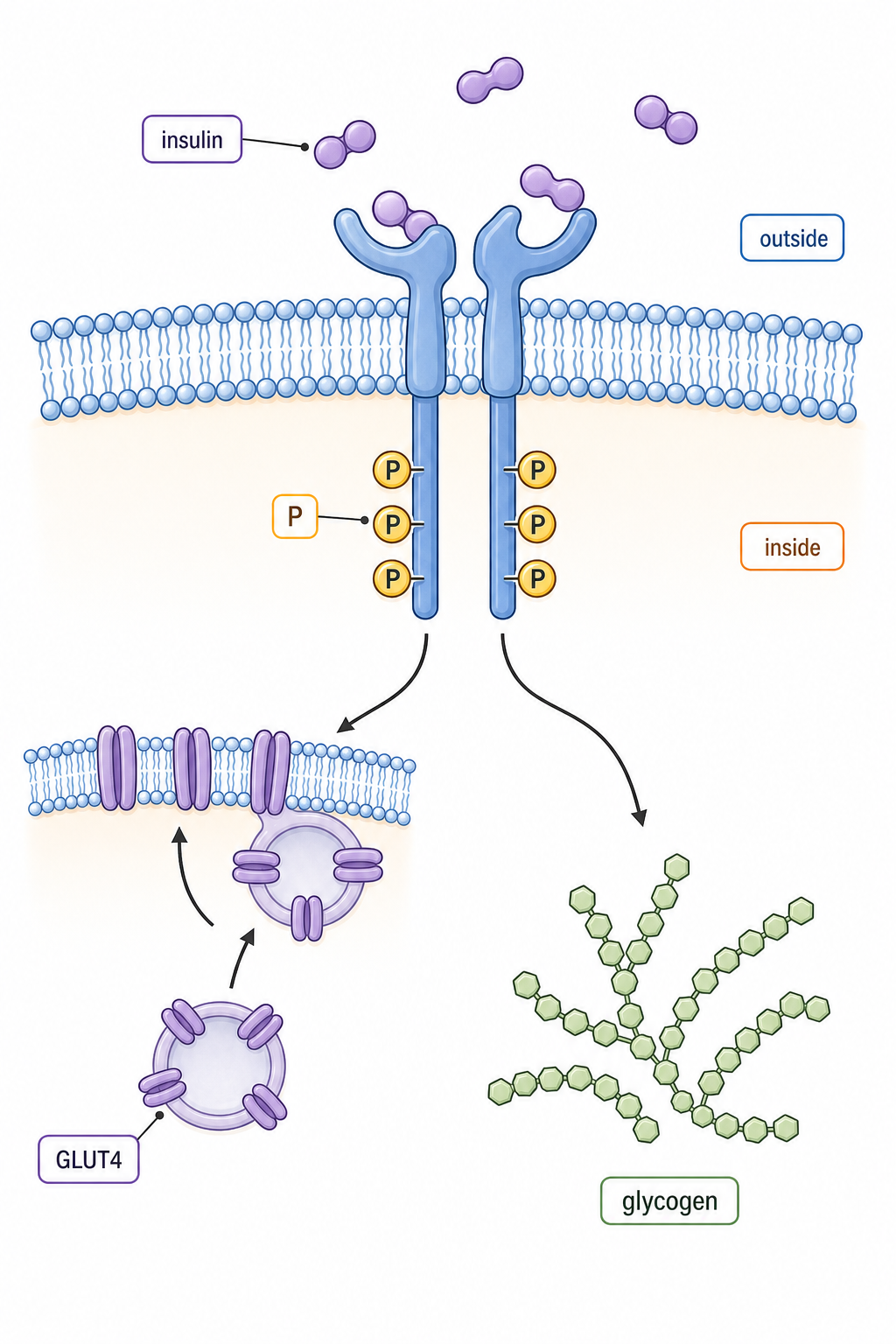
A ligand only affects target cells with the matching receptor. Quorum sensing uses autoinducers and thresholds for group behaviour. Animal signals differ by source, distance, speed, target-cell response, and chemical class. Hydrophilic ligands use transmembrane receptors and relays; steroid and thyroid hormones use intracellular receptors that affect transcription. Named pathways then show the logic: acetylcholine opens sodium channels, GPCRs switch G proteins through GDP-GTP exchange, epinephrine uses cAMP and kinase cascades, insulin RTKs use dimerisation/autophosphorylation to move GLUT4 and promote glycogenesis, steroid hormones change gene expression, and feedback either amplifies or restores stability.
- Start every signalling answer with ligand specificity and target-cell receptor matching.
- Then choose the route: local synapse, blood-borne hormone, transmembrane receptor, or intracellular receptor.
- For named mechanisms, give the sequence, not just the pathway name.
- Finish feedback comparisons with amplification versus stability.