C1.1.5—Induced-fit binding

Induced-fit binding means substrate interaction changes active-site shape, aligning catalytic groups and straining substrate bonds during enzyme action in cells.
Syllabus
First assessment 2025
Objective
C1.1.5
Level
HL

Exam analysis

Chance of appearing2%of analysed past papers
Latest appearanceMay 2014
Most common paperPaper2
Typical marks2–6

Common command terms

  • Describe
  • Outline

Recent exam appearances

May 2014Paper2 ["HL"] · TZ25(b)[ 6 ]C1.1.5—Induced-fit binding
May 2013Paper2 ["HL"] · TZ13(c)[ 2 ]C1.1.5—Induced-fit binding
Practice this objective

Coverage 2013–2014 · Updated 15 Jul 2026

Induced Fit Improves Catalysis

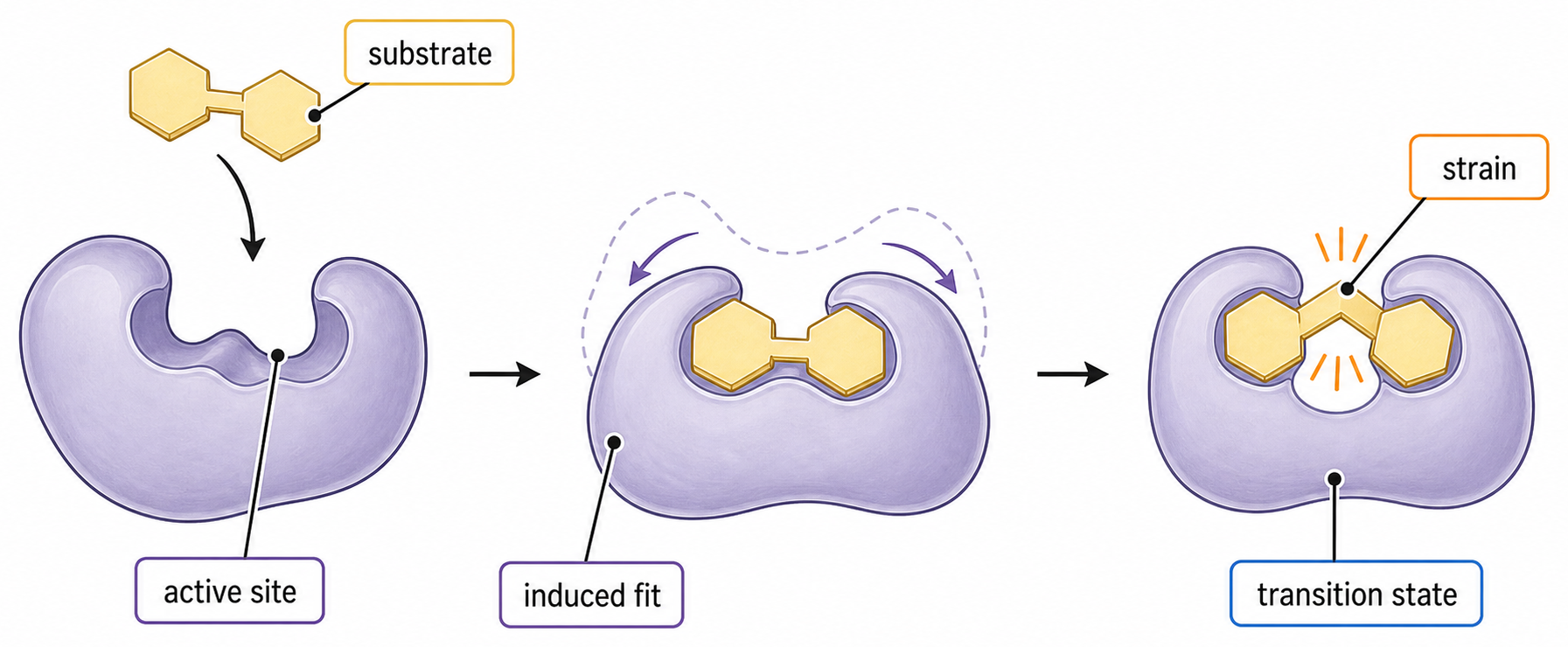
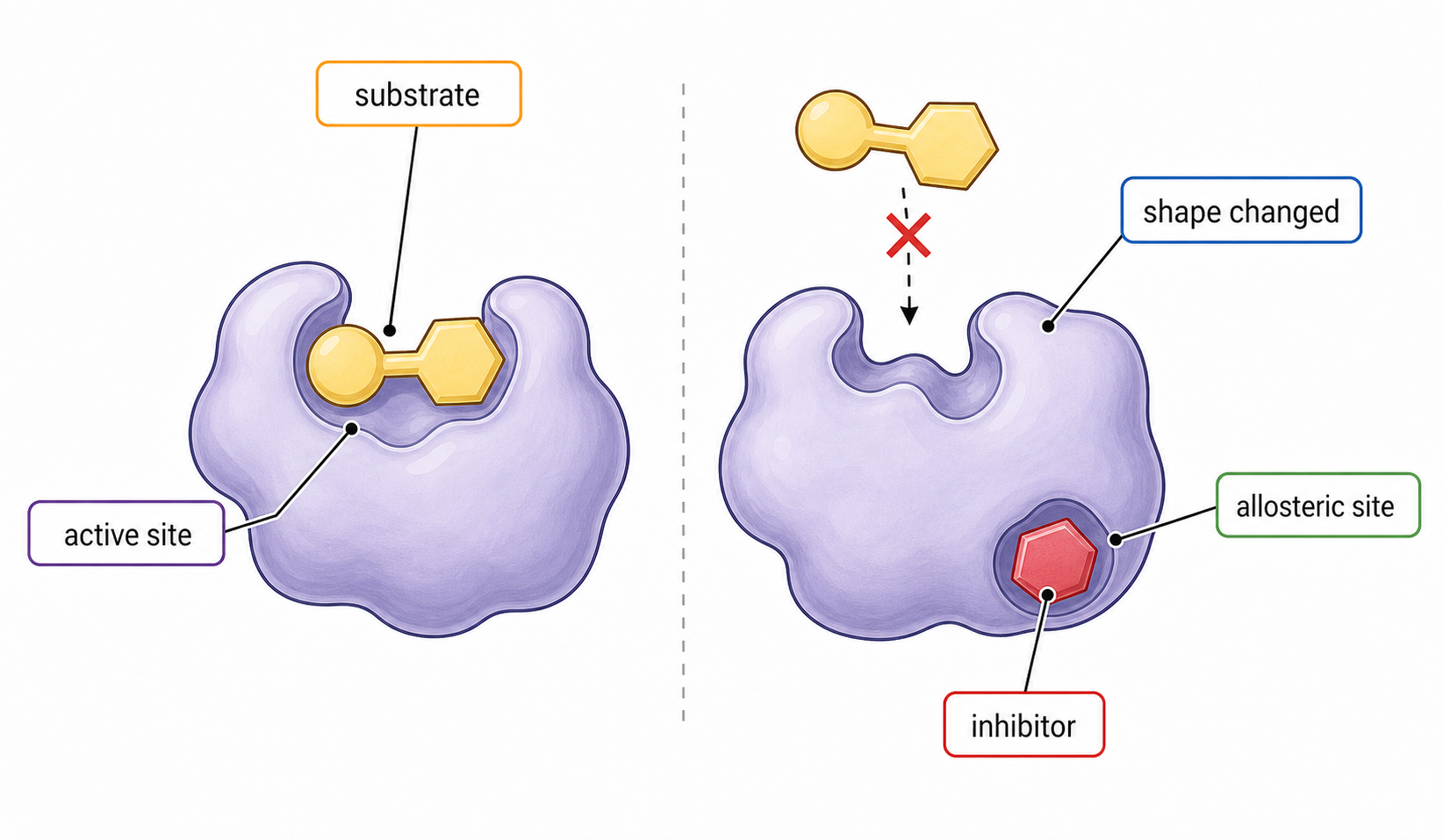
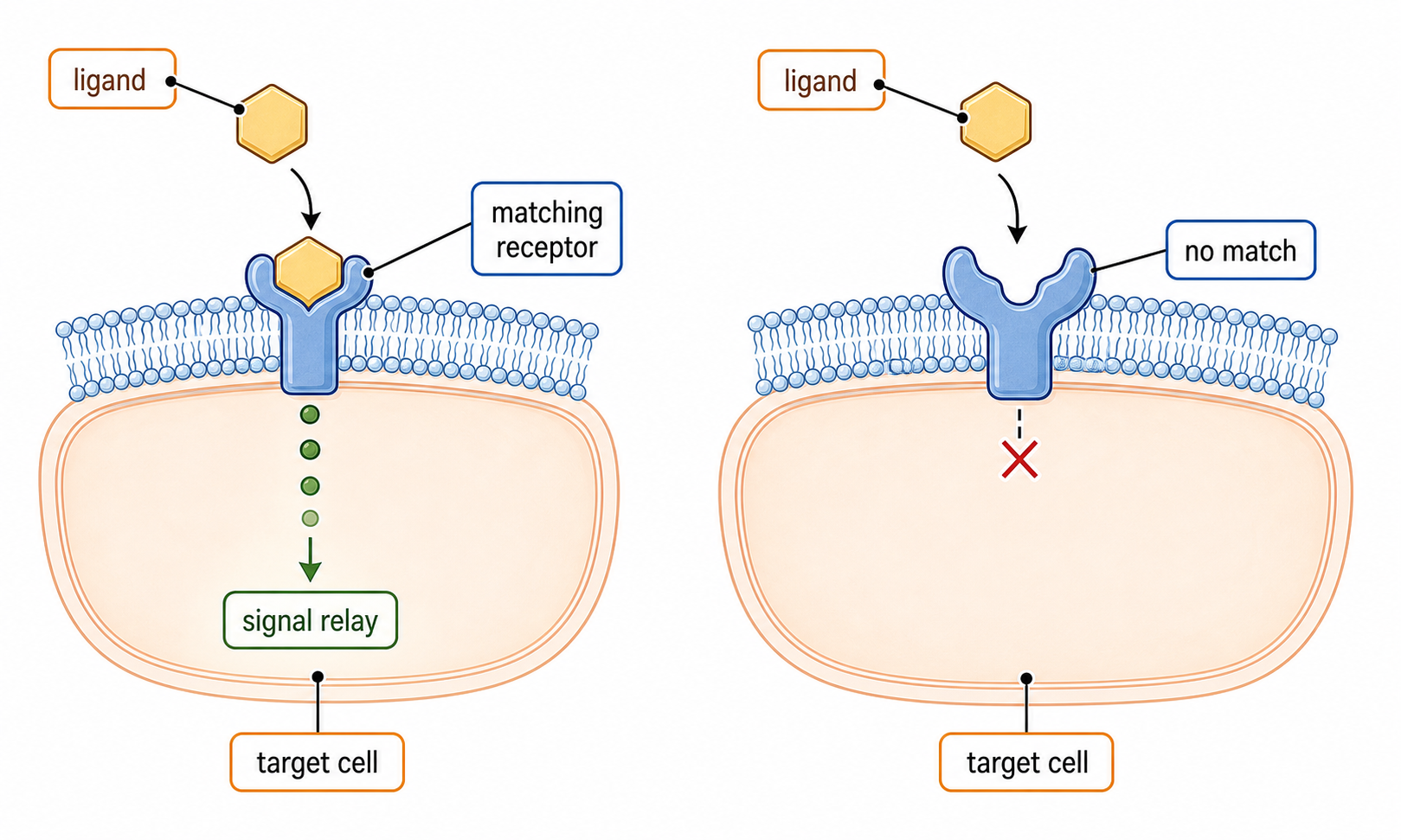
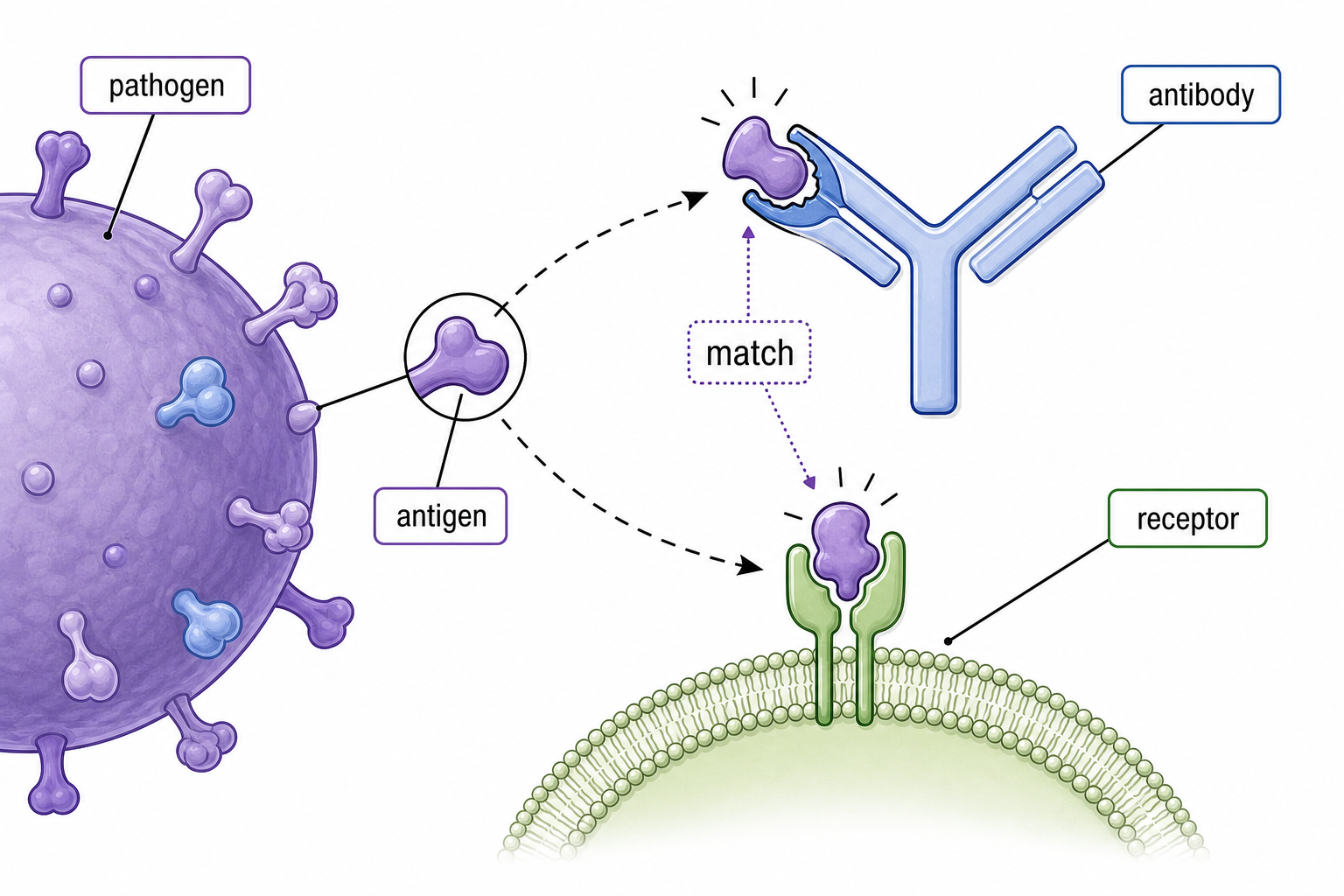
In induced-fit binding, initial substrate contact changes the conformation of both the enzyme active site and the substrate, producing a catalytically effective fit.

Enzyme side chains move to align catalytic groups, while the substrate can be bent, strained or have bonds polarized. These changes make the transition state easier to reach.

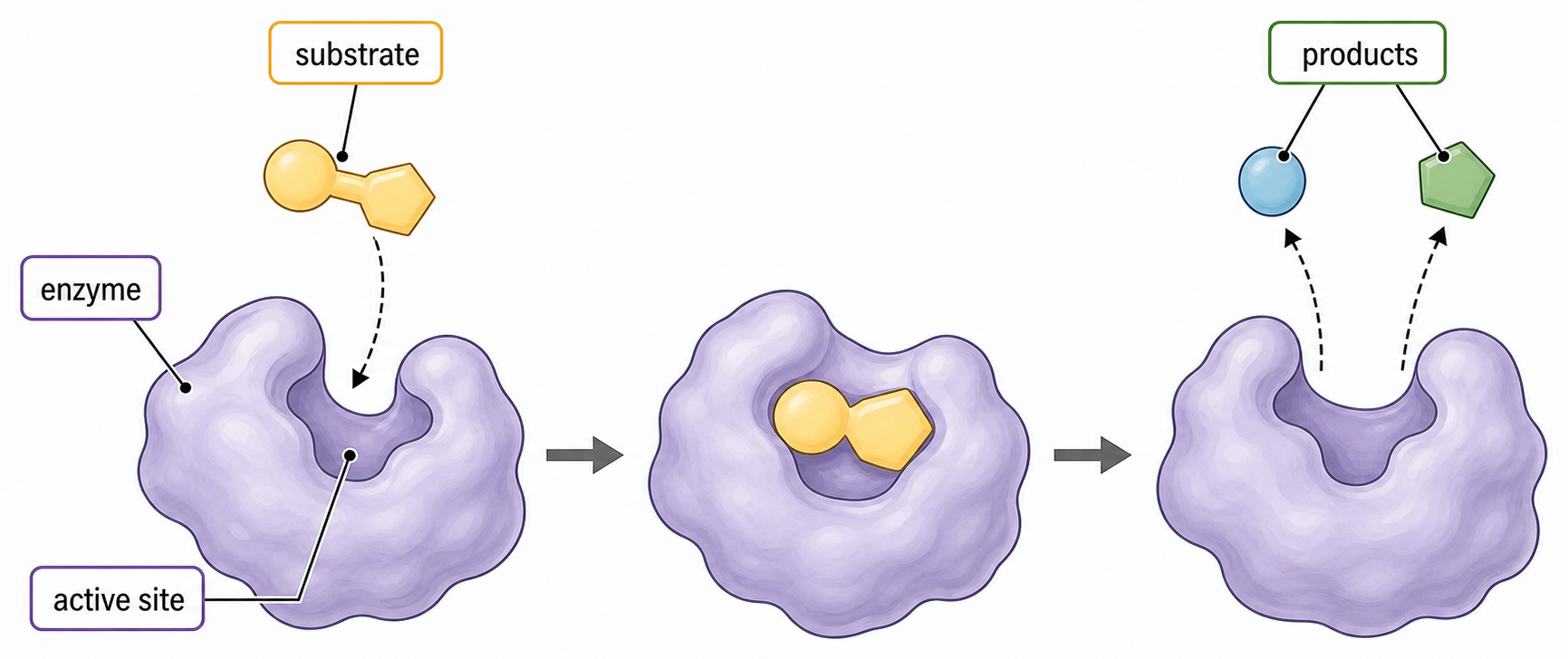
Sequence: initial recognition → enzyme–substrate complex → reciprocal conformational change → transition-state stabilization → products form and leave → enzyme returns to a reusable state.

Hexokinase closes around glucose and ATP, aligning them and excluding water; after phosphate transfer, the differently shaped products have weaker interactions and are released.

Induced fit is not a rigid lock-and-key event and does not mean the enzyme permanently changes. Specificity remains because only suitable substrates trigger productive interactions.
Induced-fit binding

Assessment in practice

2–3 marks
How it is assessed

This objective is assessed through structured response, commonly using Describe / Outline.

Command terms

Describe / Outline

What earns marks

Build the answer around this relationship: Induced fit involves a shape change when substrate binds.

Representative question

Question 1

[Maximum number: 6]

Describe the lock and key model of enzyme activity and how the induced fit model extends it.

Enzyme Catalysis and Rate

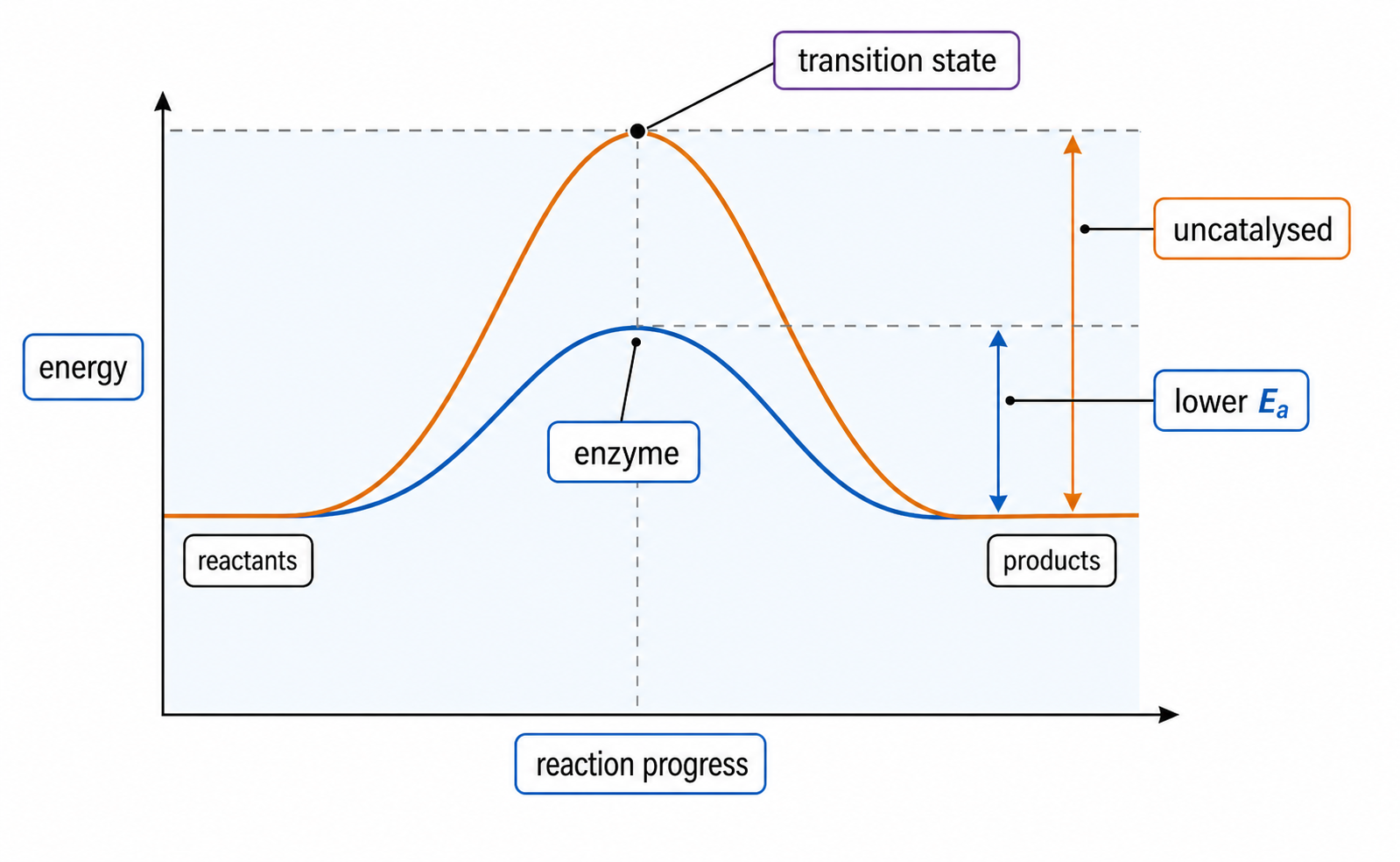
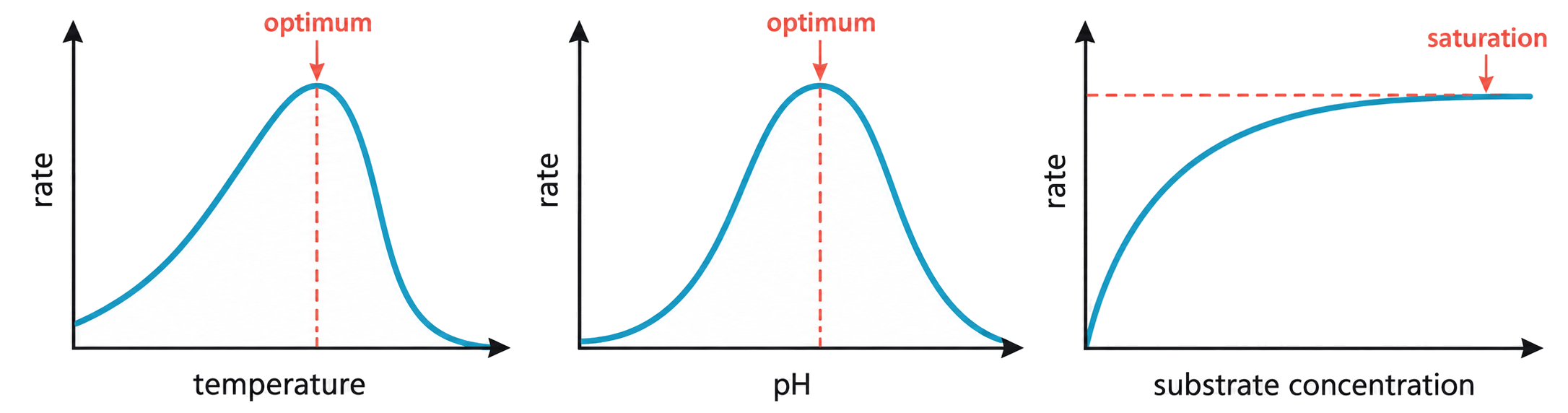
Enzymes are biological catalysts that lower activation energy and remain unchanged. Their globular protein shape creates active-site specificity; induced fit aligns substrates; molecular motion and collisions affect rate; temperature, pH, and substrate concentration change activity; assays measure substrate loss or product formation over time.

  • Define enzyme as biological catalyst, effective in small amounts and unchanged.
  • Use active site, specificity, induced fit, ES complex, and activation energy in mechanism answers.
  • Use curve shapes: temperature optimum/denaturation, pH optimum, and substrate saturation plateau.
  • For practicals, state what is measured per unit time and use initial rate, controls, and replicates.

Concept essentials

  • Induced fit involves a shape change when substrate binds.
  • The active site is not a perfect rigid match before binding.
  • Conformational change can weaken substrate bonds and lower activation energy.
  • Products leave and the enzyme can return to its active form.