C1.1.1—Enzymes as catalysts
Enzymes act as reusable biological catalysts, usually proteins, that speed reactions by forming substrate complexes and lowering activation energy in cells.
- Syllabus
- First assessment 2025
- Objective
- C1.1.1
- Level
- HL
Enzymes act as reusable biological catalysts, usually proteins, that speed reactions by forming substrate complexes and lowering activation energy in cells.
Coverage 2016–2018 · Updated 15 Jul 2026
Enzymes are biological catalysts that increase reaction rate without being consumed.
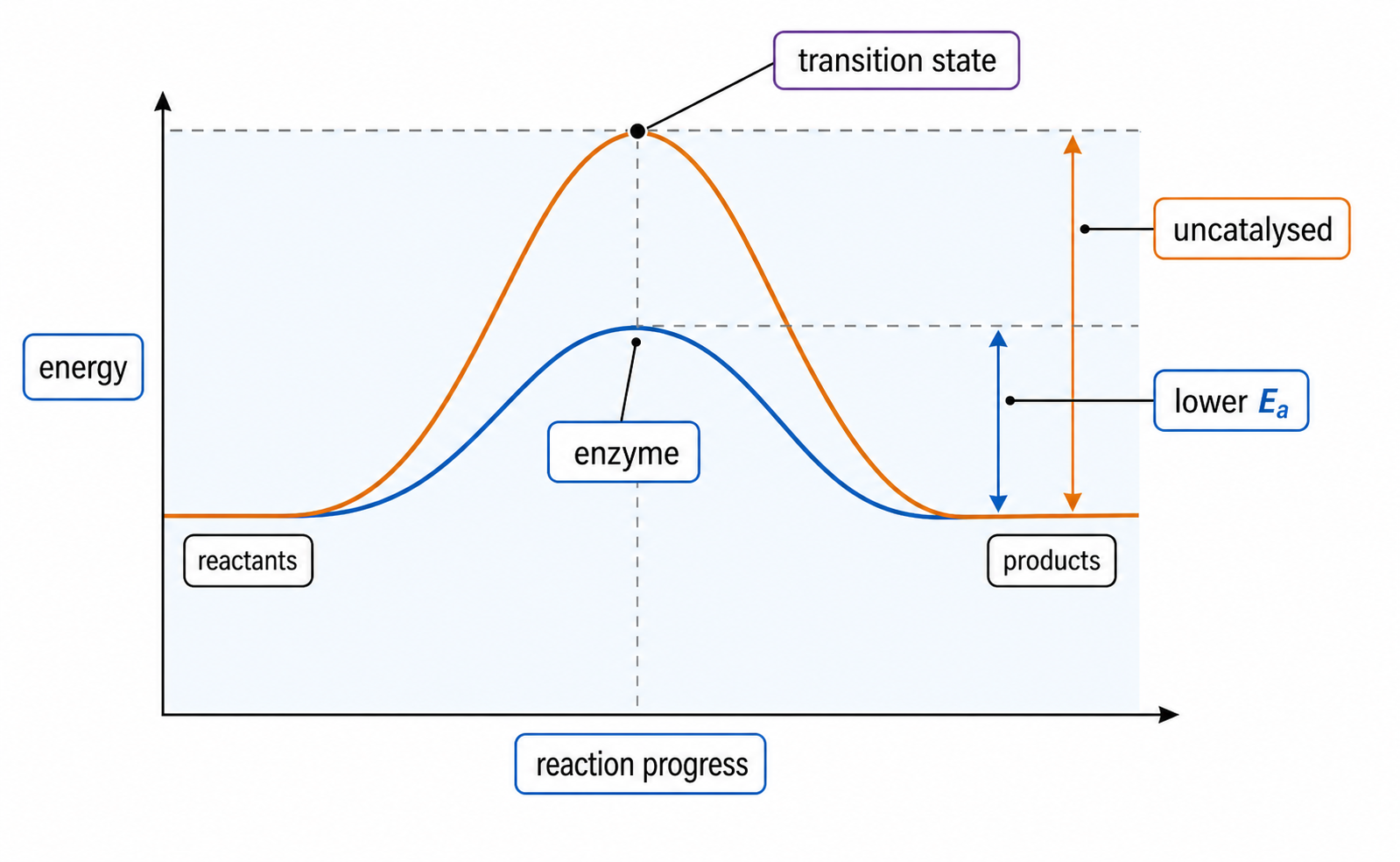
They provide an alternative pathway with lower activation energy, so more substrate molecules can react at a given temperature. The enzyme is regenerated after products leave its active site.
For a catalyst claim, check:
Adding catalase to hydrogen peroxide makes oxygen bubbles appear faster, but the catalase remains available for further reactions.
An enzyme changes kinetics, not the overall energy difference or equilibrium constant.
This objective is assessed through structured response, commonly using Outline / Explain.
Outline / Explain
Build the answer around this relationship: Enzymes speed biological reactions without being used up.
Representative question
Explain how enzymes catalyse chemical reactions.
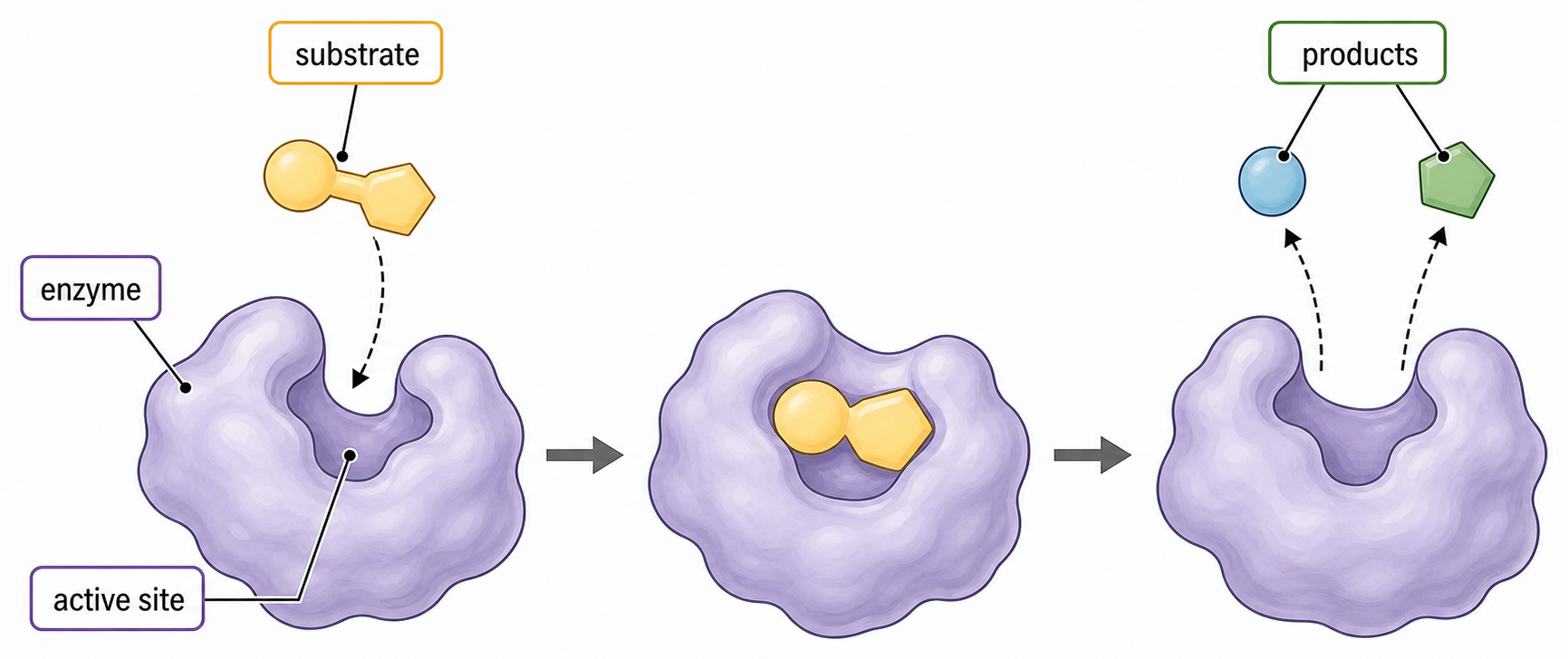
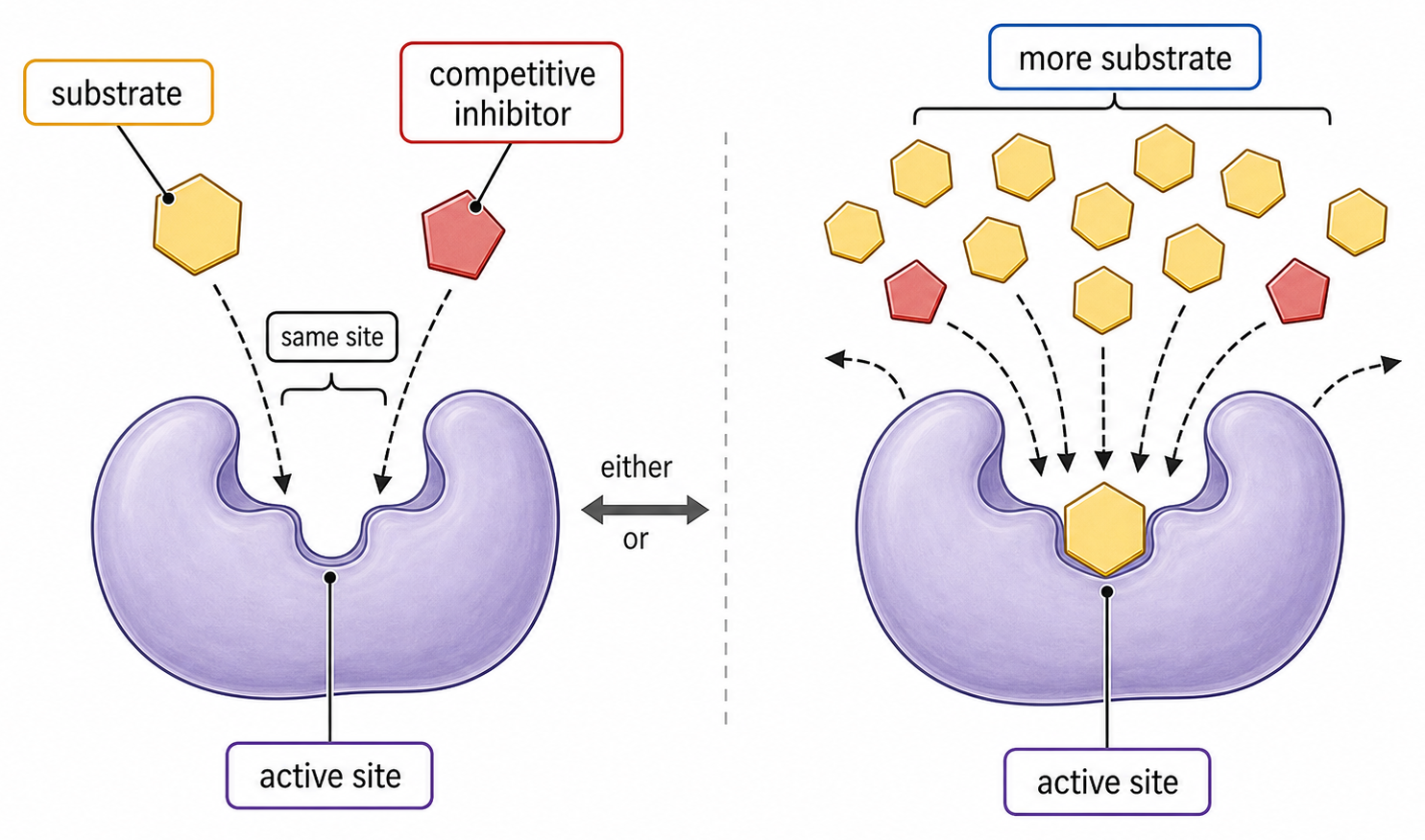
a. enzymes work by forming enzyme-substrate complexes
b. binding of substrate«s» to active site «of enzyme»
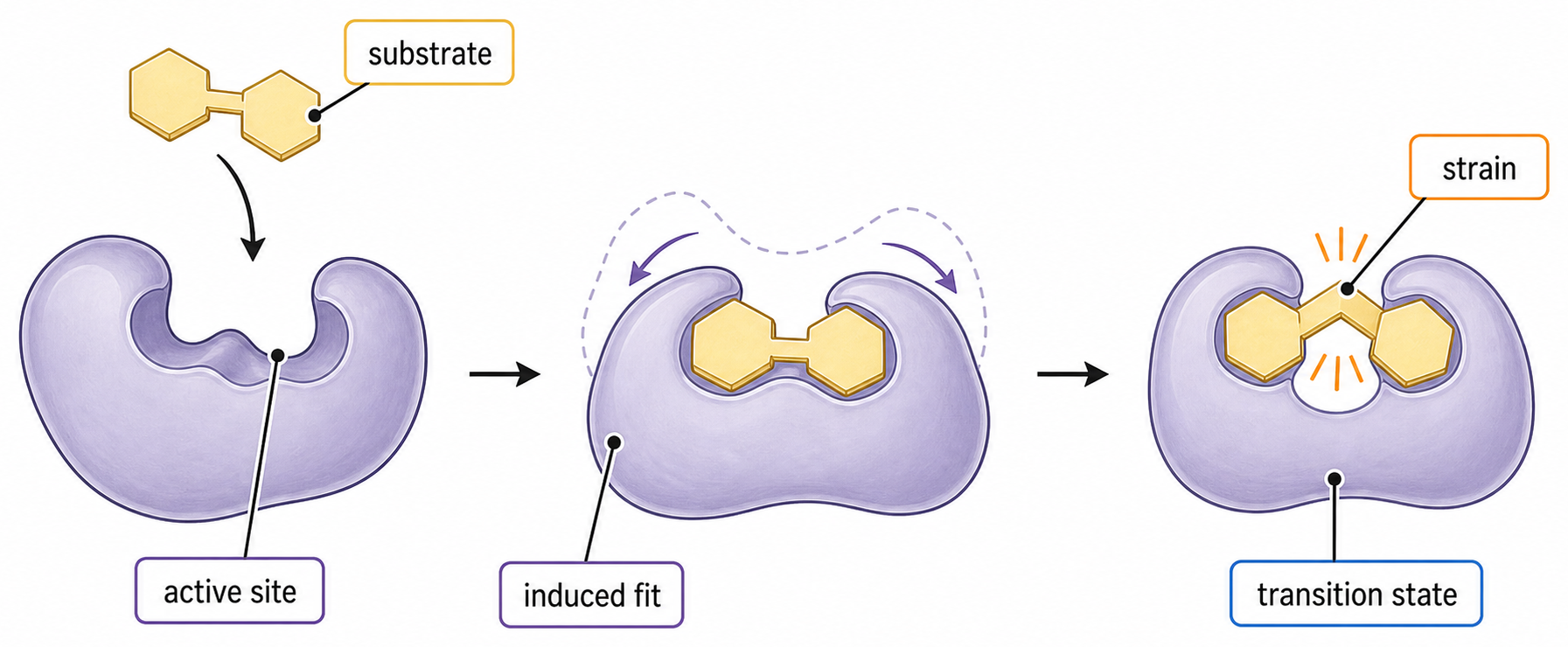
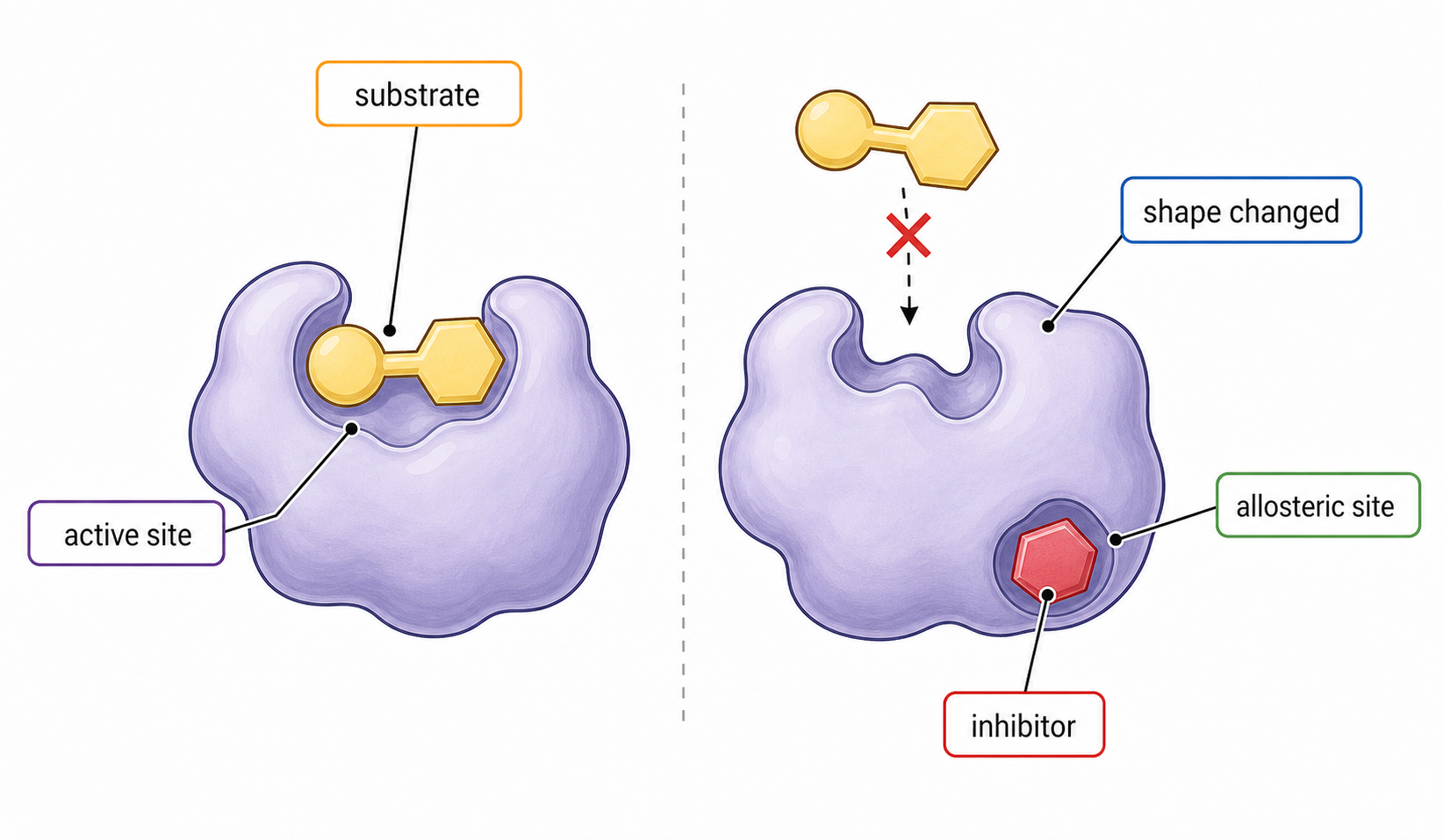
c. «enzyme» changes shape slightly
OR puts strains on chemical bonds «of substrate»
d. decreases activation energy / increases rate of reaction
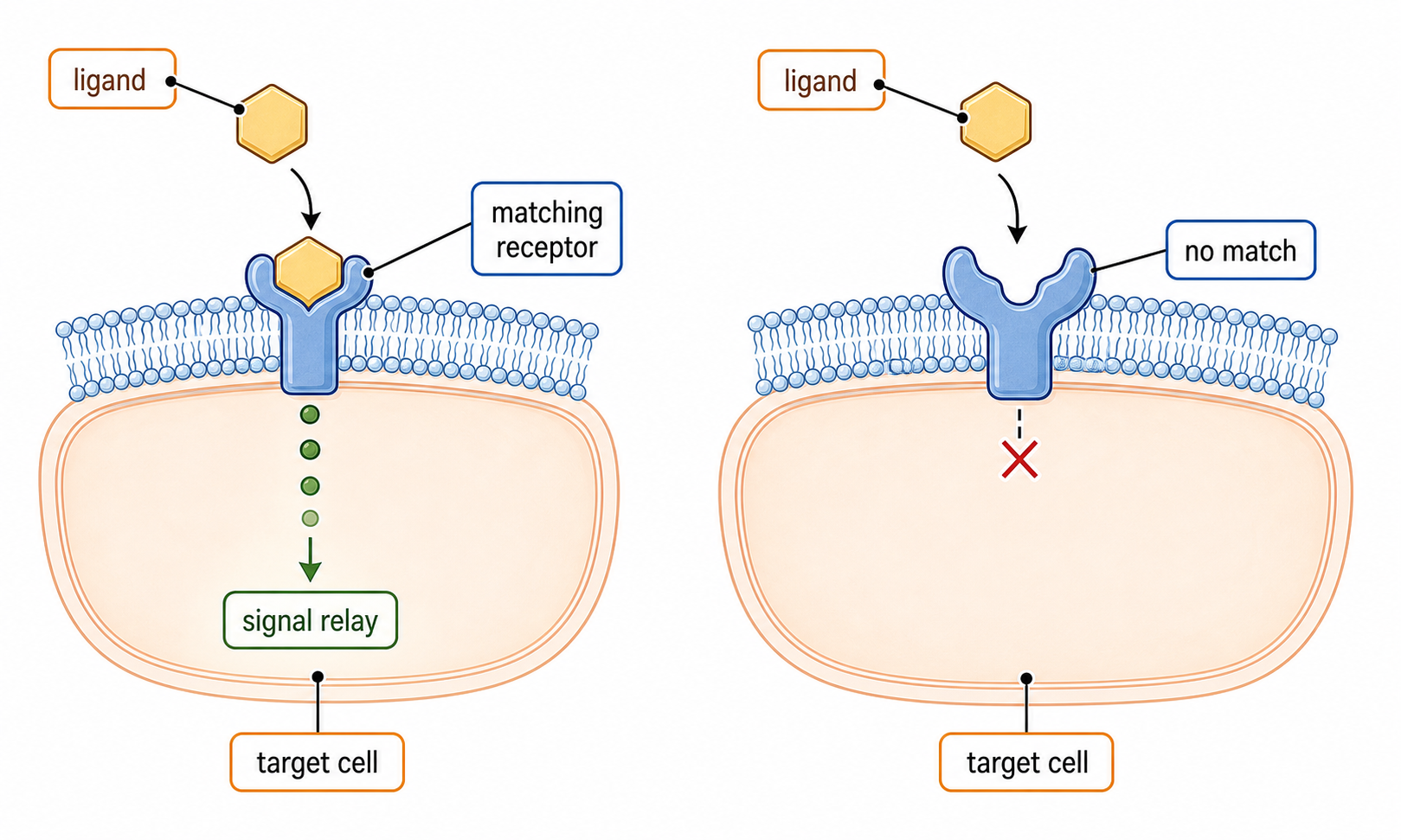
e. enzymes bind to specific substrates
Can show these points in an annotated diagram.
3 max
Clarity of communication: [1]
The candidate's answers are clear enough to be understood without re-reading. The candidate has answered the question succinctly with little or no repetition or irrelevant material.
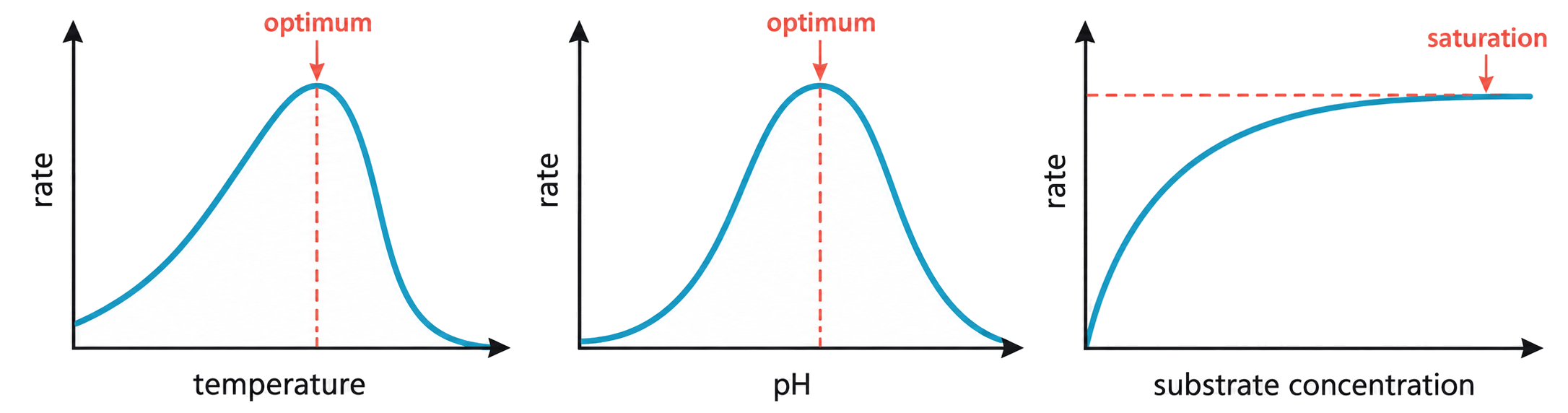
Enzymes are biological catalysts that lower activation energy and remain unchanged. Their globular protein shape creates active-site specificity; induced fit aligns substrates; molecular motion and collisions affect rate; temperature, pH, and substrate concentration change activity; assays measure substrate loss or product formation over time.