C1.1.7—Relationships between structure and function

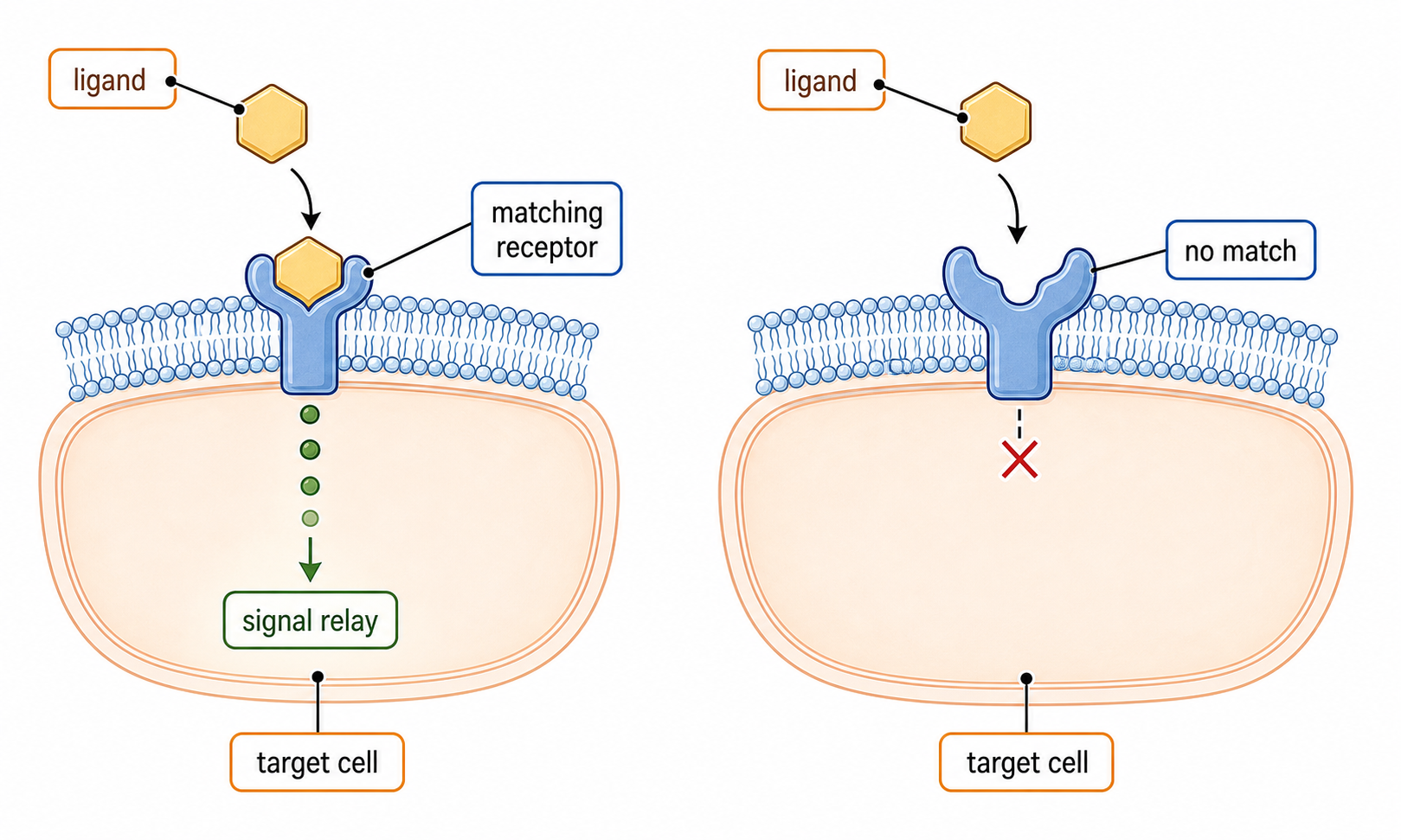
Enzyme function depends on active-site structure, chemical attraction and tertiary shape that allow only suitable substrates to bind effectively during catalysis.
Syllabus
First assessment 2025
Objective
C1.1.7
Level
HL

Exam analysis

Chance of appearing1%of analysed past papers
Latest appearanceMay 2013
Most common paperPaper2
Typical marks2

Common command terms

  • Explain

Recent exam appearances

May 2013Paper2 ["HL"] · TZ24(b)[ 2 ]C1.1.7—Relationships between structure and function
Practice this objective

Coverage 2013–2013 · Updated 15 Jul 2026

Small Structural Changes Can Alter Enzyme Function

Substrate specificity depends on the three-dimensional arrangement and chemistry of amino acids in the active site; denaturation disrupts that arrangement and lowers activity.
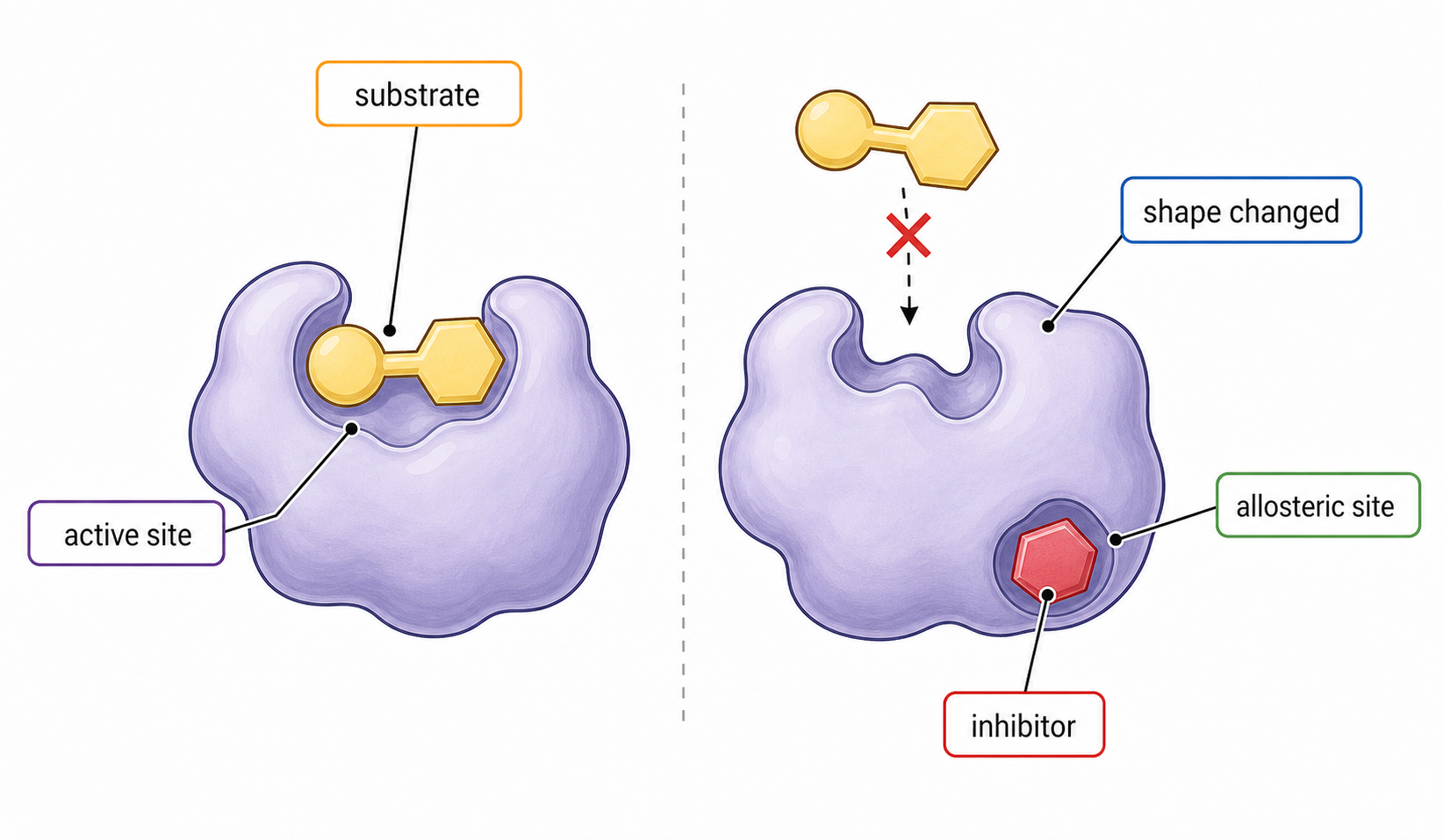
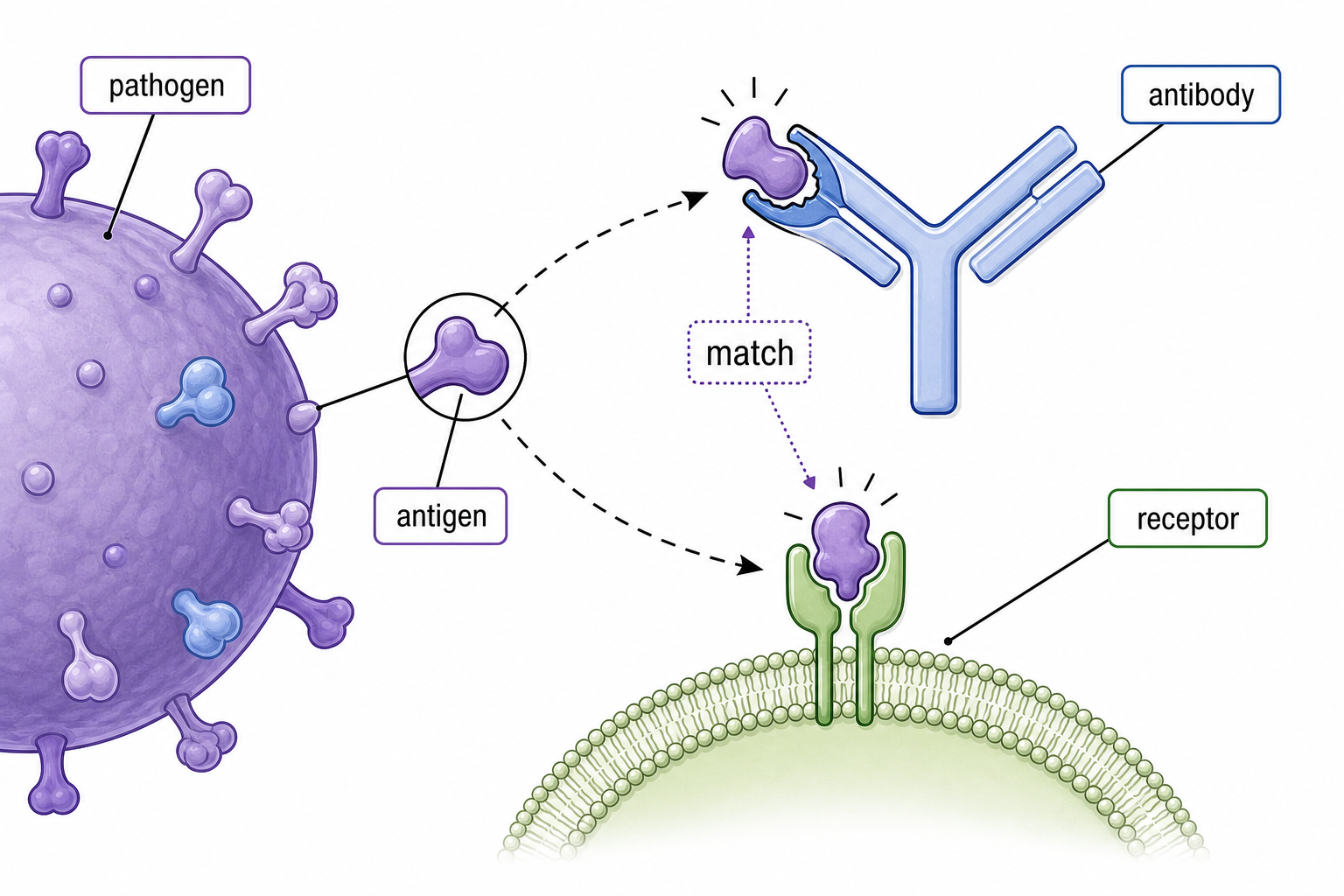
A suitable substrate forms complementary shape, charge, polarity and hydrogen-bond interactions. Temperature extremes or unsuitable pH can disrupt bonds maintaining tertiary structure, changing the active site's geometry.

Trace the relationship: amino-acid interactions maintain fold → fold positions active-site residues → substrate binds specifically → catalysis occurs. Denaturation breaks this chain without normally hydrolysing peptide bonds.

If heating moves a charged catalytic residue away from the substrate-binding position, fewer enzyme–substrate complexes form and the reaction rate falls even after the solution is cooled.

Denaturation is a structural loss, not simply temporary active-site occupancy. The protein may remain present and its peptide sequence intact while its function is lost.

Relationships between structure and function

Assessment in practice

2–6 marks
How it is assessed

This objective is assessed through structured response, commonly using Explain.

Command terms

Explain

What earns marks

Build the answer around this relationship: Active-site structure determines which substrates can bind.

Representative question

Question 1

[Maximum number: 6]

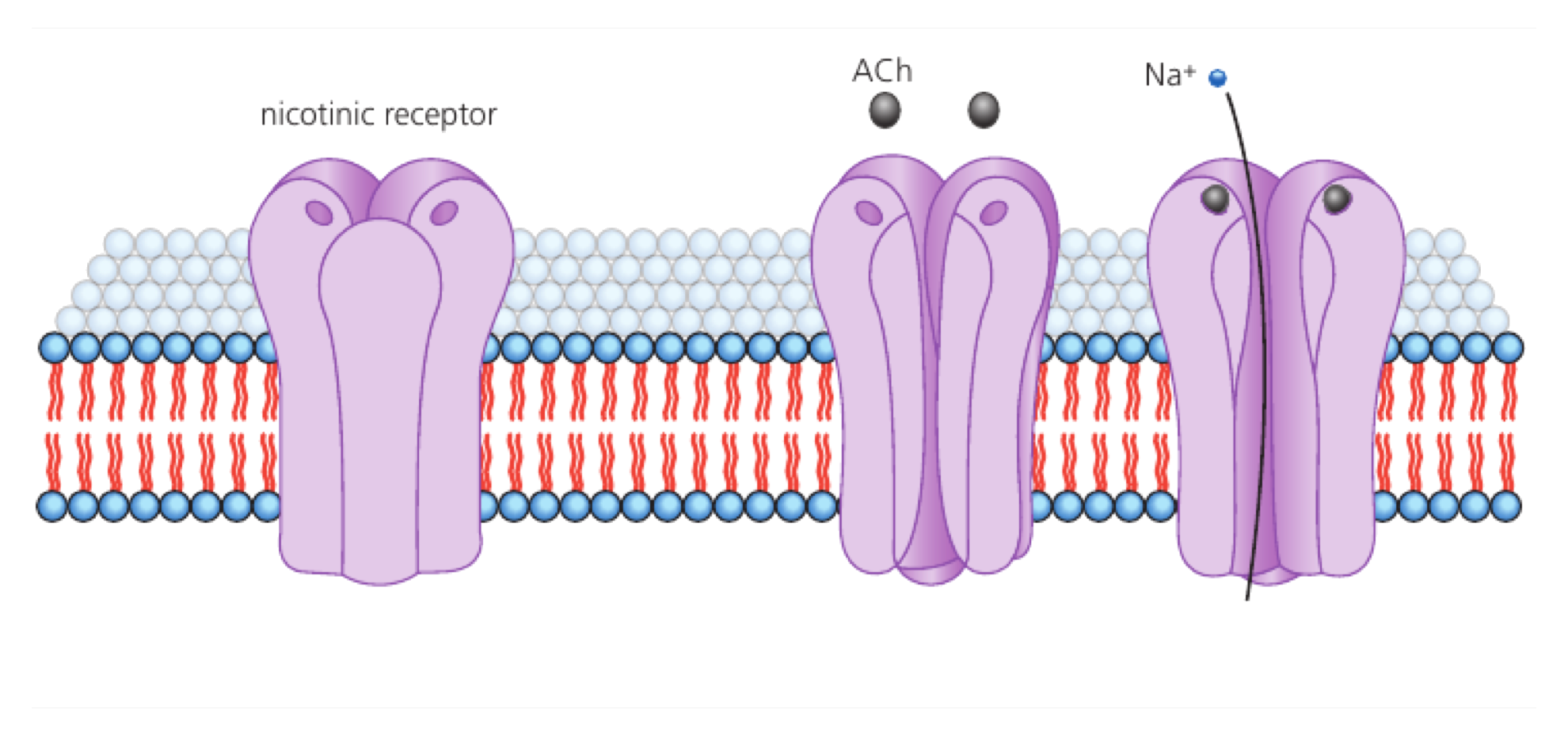
Some proteins in membranes act as enzymes. Outline enzyme-substrate specificity.

Enzyme Catalysis and Rate

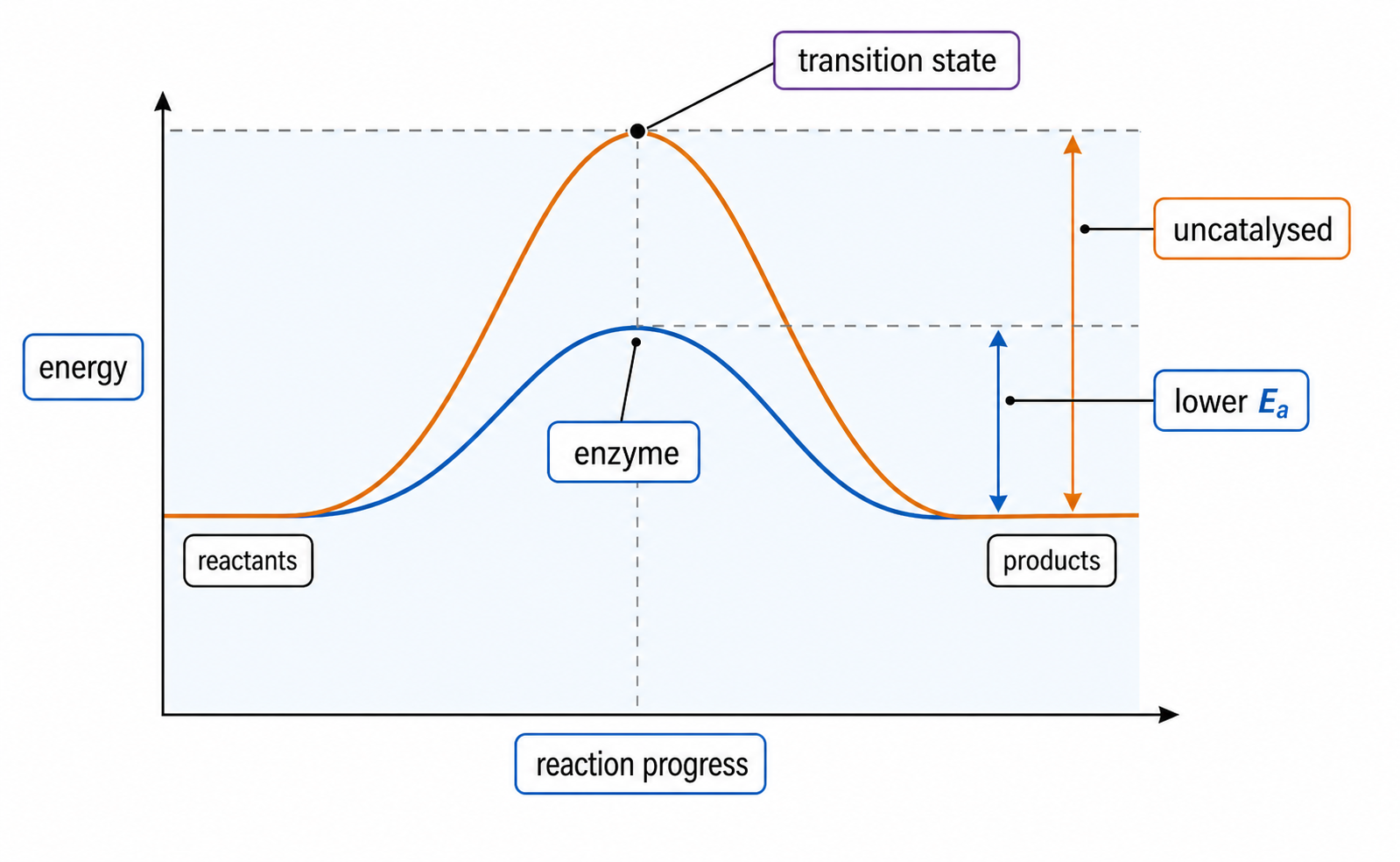
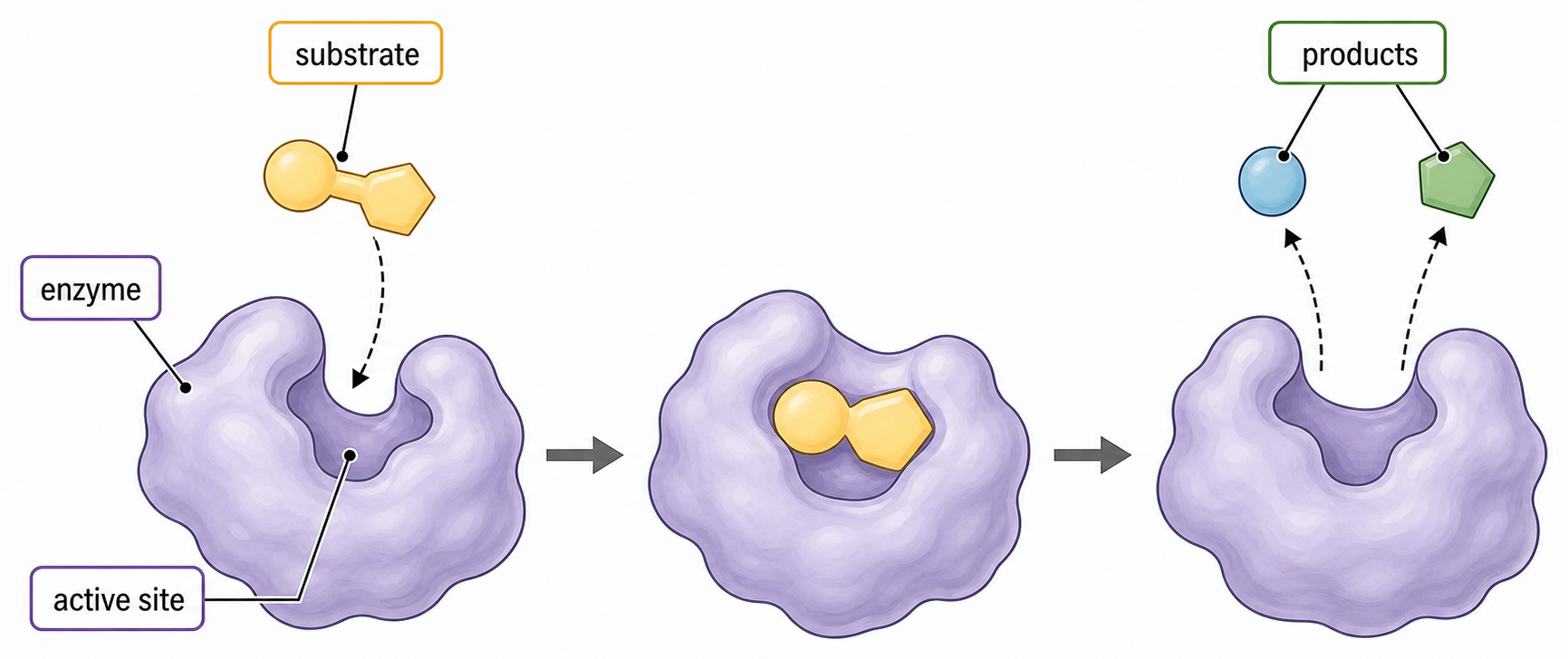
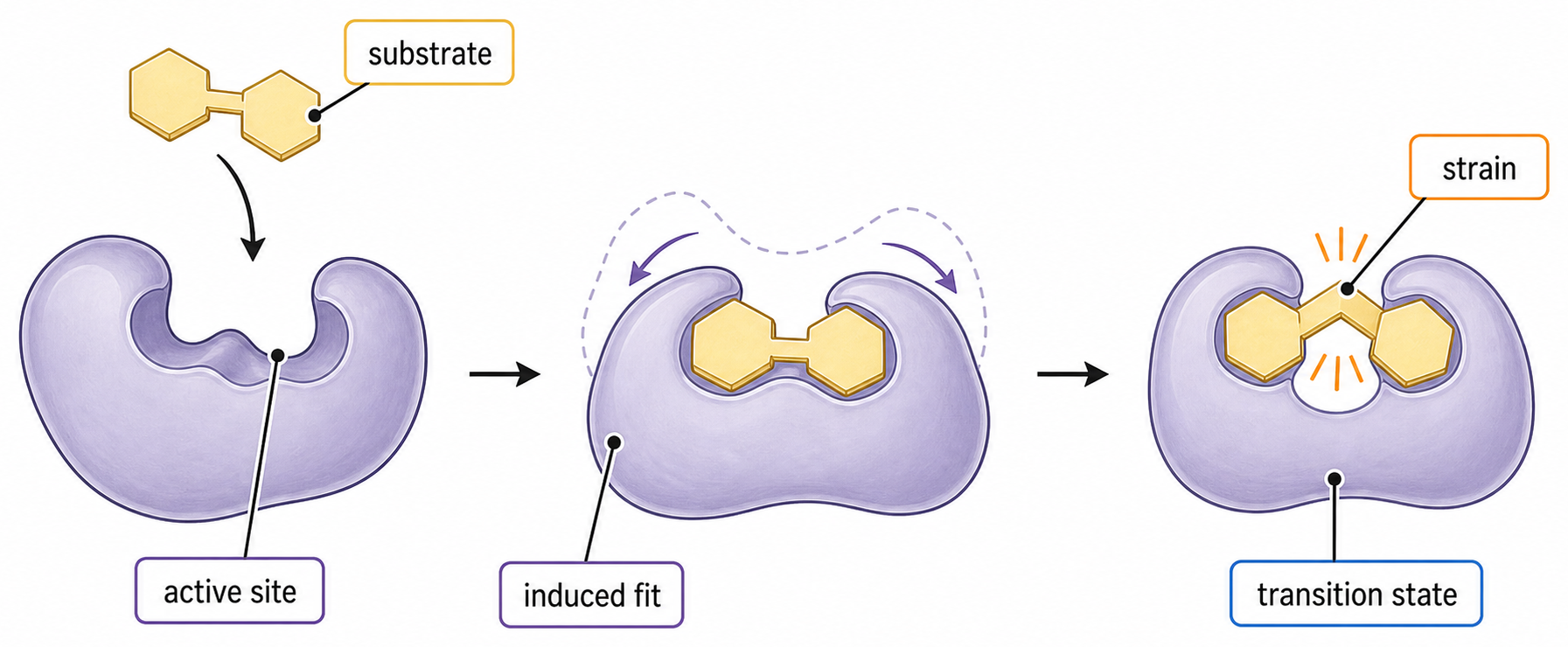
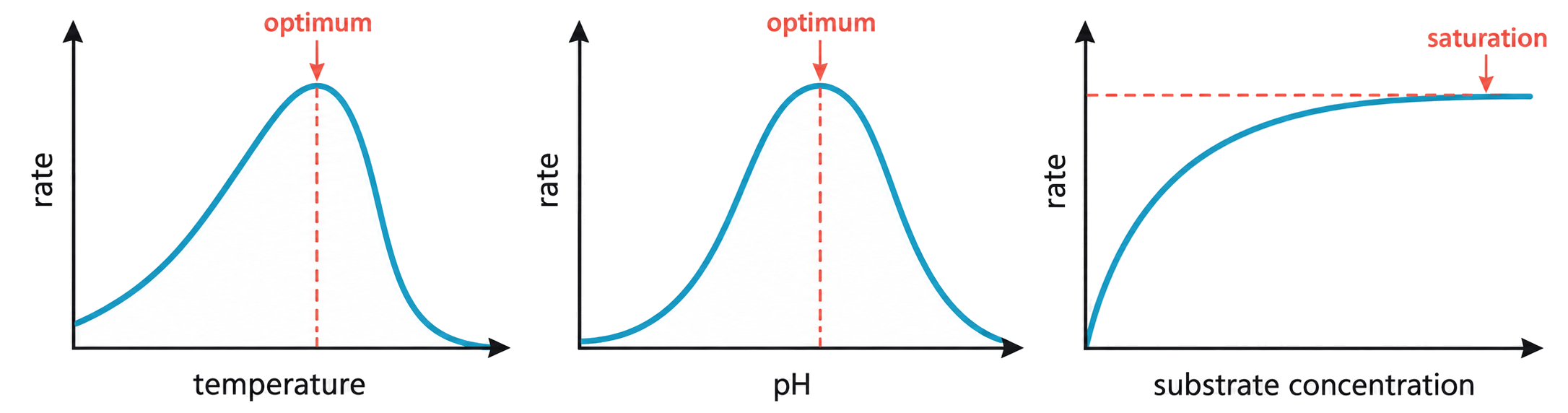
Enzymes are biological catalysts that lower activation energy and remain unchanged. Their globular protein shape creates active-site specificity; induced fit aligns substrates; molecular motion and collisions affect rate; temperature, pH, and substrate concentration change activity; assays measure substrate loss or product formation over time.

  • Define enzyme as biological catalyst, effective in small amounts and unchanged.
  • Use active site, specificity, induced fit, ES complex, and activation energy in mechanism answers.
  • Use curve shapes: temperature optimum/denaturation, pH optimum, and substrate saturation plateau.
  • For practicals, state what is measured per unit time and use initial rate, controls, and replicates.

Concept essentials

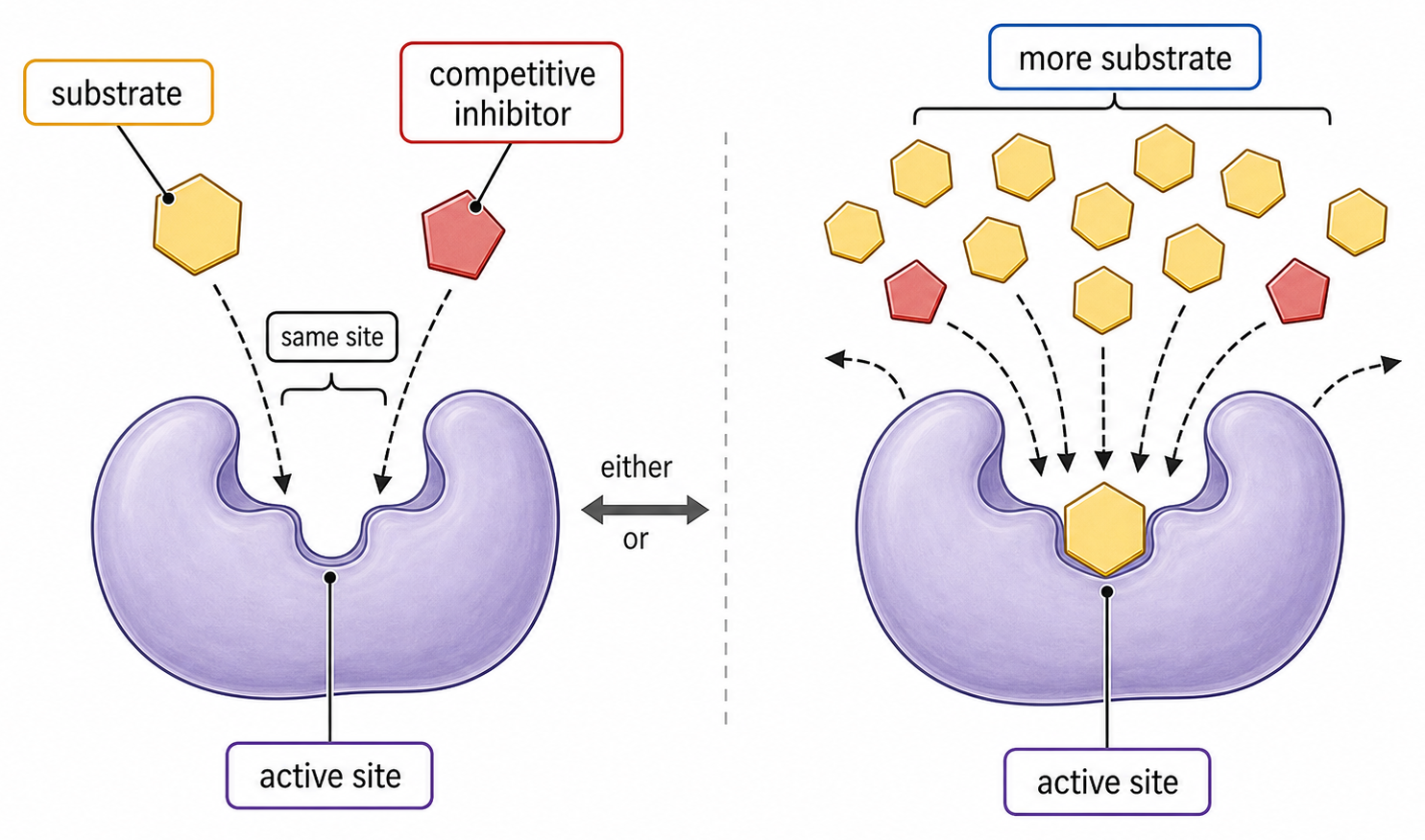
  • Active-site structure determines which substrates can bind.
  • Specificity depends on shape and chemical properties.
  • Denaturation changes tertiary structure and active-site function.
  • Enzyme-substrate complex formation depends on structural compatibility.