C1.1.16 (HL)—Feedback inhibition

Feedback inhibition occurs when a pathway end product inhibits an earlier enzyme, preventing excess product accumulation through negative feedback in pathways.
Syllabus
First assessment 2025
Objective
C1.1.16
Level
HL

Exam analysis

Chance of appearing9%of analysed past papers
Latest appearanceMay 2024
Most common paperPaper1
Typical marks1–4

Common command terms

  • Explain
  • Outline
  • State

Recent exam appearances

May 2024Paper1 ["HL"] · TZ130[ 1 ]C1.1.16 (HL)—Feedback inhibition
May 2023Paper2 ["HL"] · TZ16(b)[ 4 ]C1.1.16 (HL)—Feedback inhibition
May 2023Paper1 ["HL"] · TZ128[ 1 ]C1.1.16 (HL)—Feedback inhibition
November 2021Paper1 ["HL"] · TZ029[ 1 ]C1.1.16 (HL)—Feedback inhibition
May 2019Paper2 ["HL"] · TZ15(b)[ 5 ]C1.1.16 (HL)—Feedback inhibition
Practice this objective

Coverage 2012–2024 · Updated 15 Jul 2026

Feedback Inhibition Controls a Pathway by Its Product

HL only

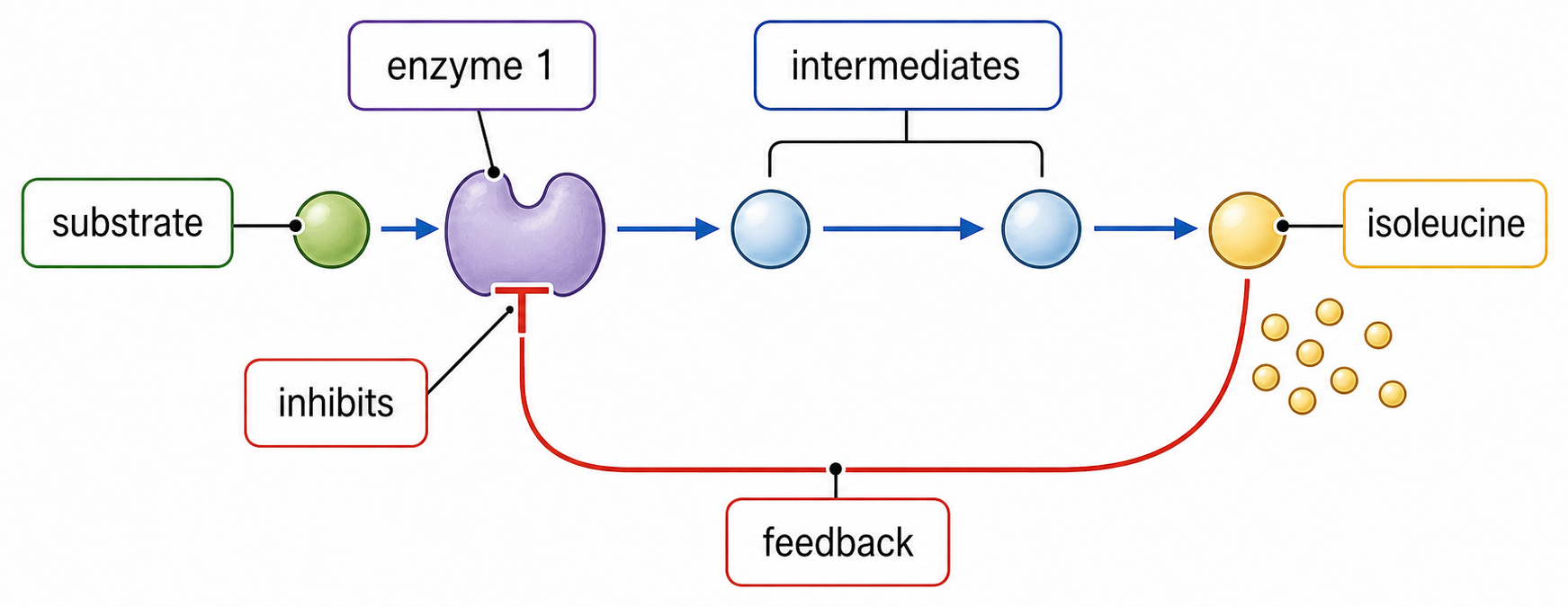
Feedback inhibition regulates a metabolic pathway when its end product reversibly inhibits an enzyme near the beginning of that pathway.
As end product accumulates, binding to a regulatory site lowers early-pathway activity and prevents unnecessary substrate and energy use. When product concentration falls, inhibition decreases and flux resumes.

In isoleucine synthesis, accumulated isoleucine inhibits an early enzyme in its own pathway. This negative-feedback loop matches production to demand without reversing the intervening reactions.

High isoleucine → early enzyme inhibited → fewer downstream intermediates → isoleucine production slows; use by the cell lowers isoleucine → inhibition eases → production increases.

The end product is a regulator, not a substrate for the inhibited step, and feedback inhibition controls pathway flux rather than proving that the pathway runs backwards.

Feedback inhibition

HL only

Assessment in practice

1–4 marks
How it is assessed

This objective is assessed through structured response, commonly using Explain / Outline / State.

Command terms

Explain / Outline / State

What earns marks

Build the answer around this relationship: End products can inhibit enzymes near the start of a pathway.

Representative question

Question 1

[Maximum number: 5]

Outline the control of metabolism by end-product inhibition.

Enzyme Regulation

HL only

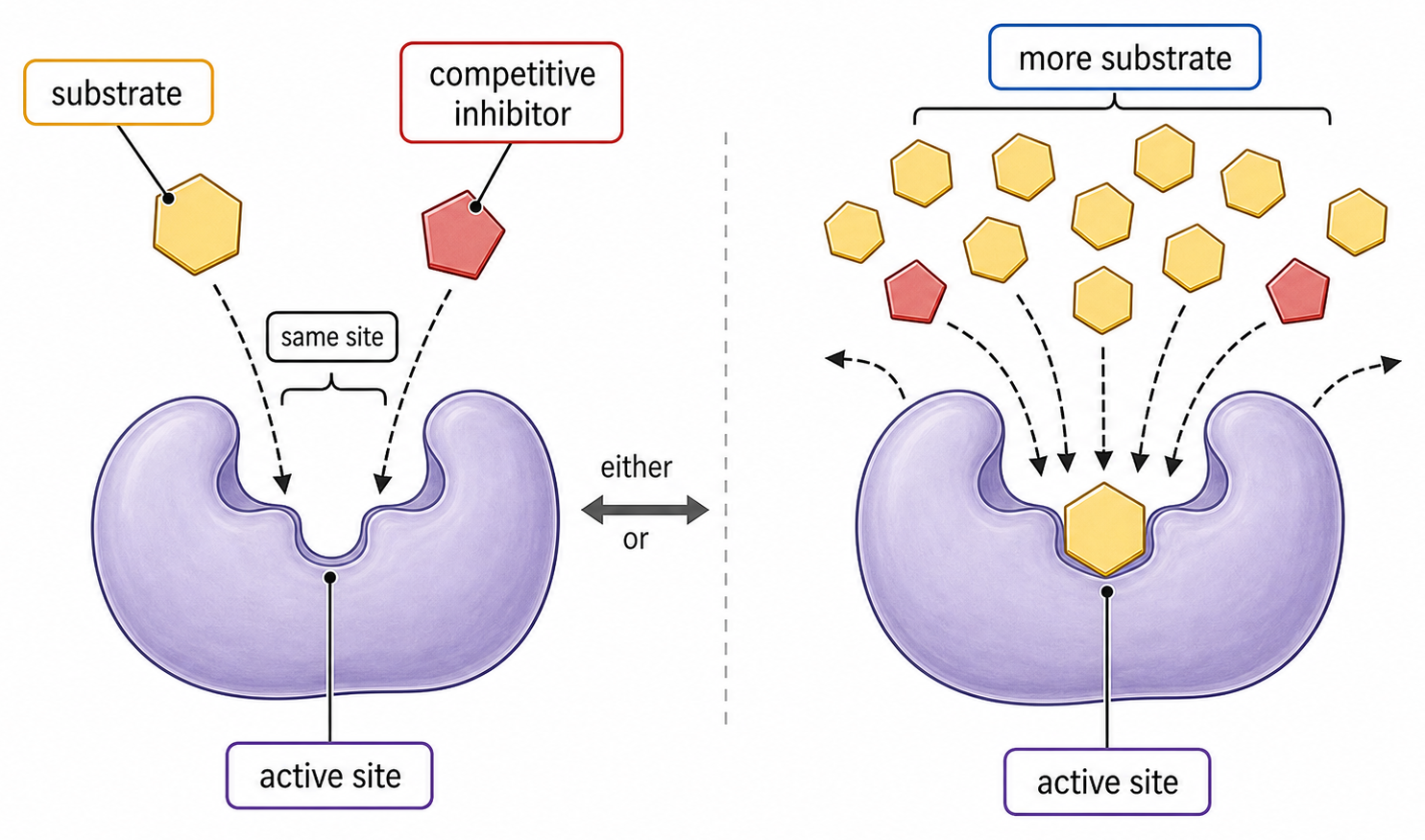
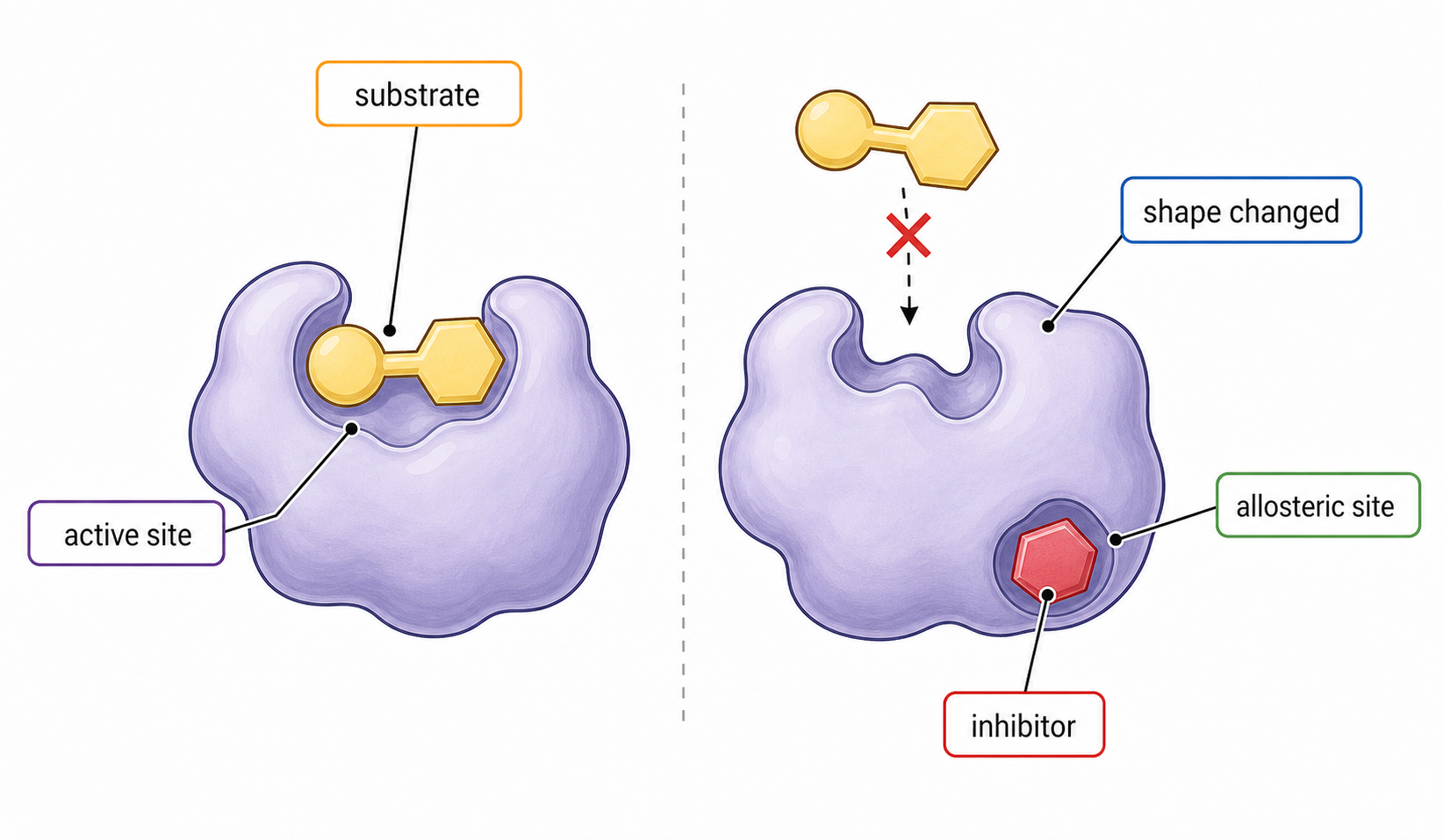
Enzymes can act inside or outside cells, metabolic reactions release heat, pathways may be linear or cyclical, and pathway output is regulated by inhibition. Competitive inhibitors bind active sites and can be overcome by more substrate; non-competitive inhibitors bind allosteric sites; feedback inhibition uses end products to inhibit earlier enzymes; mechanism-based inhibitors trap enzymes after reaction begins.

  • Location: intracellular versus extracellular enzyme action.
  • Pathway shape: linear products move forward; cyclical pathways regenerate acceptors.
  • Inhibition: competitive active-site competition, non-competitive allosteric shape change, feedback end-product control, mechanism-based irreversible trapping.

Concept essentials

  • End products can inhibit enzymes near the start of a pathway.
  • Feedback inhibition is a form of negative feedback.
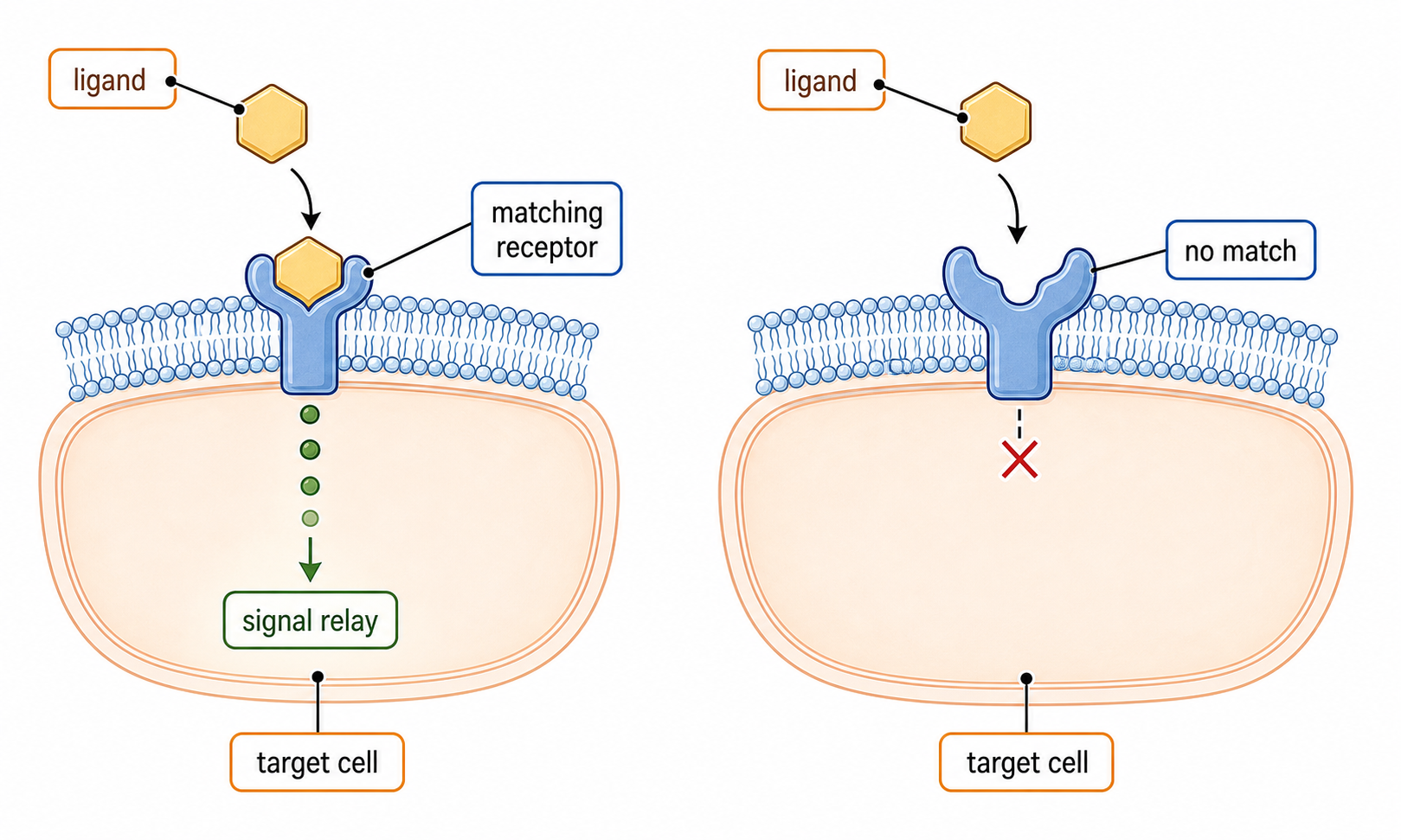
  • Allosteric binding changes enzyme shape and reduces pathway activity.
  • Pathway output can restart when end-product concentration falls.